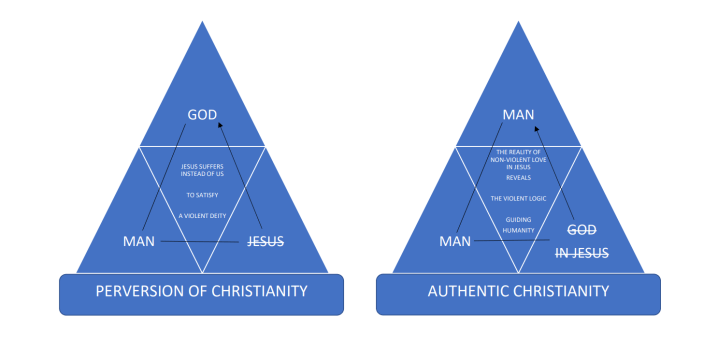
Mimetic Theory enables a kind of hermeneutics to move beyond superficial proclamations of one’s worldview and philosophical/ideological/theological convictions. For instance, in light of Mimetic Theory, the question is not so much whether someone is a theist (in whatever religious sense) or atheist, but how those identities are shaped and held together. Are they based on (sacrificial) violence, implicitly or explicitly, or on the dynamic of non-violent love (that calls for non-violent sacrifice as it refuses violent sacrifice)? As such, Mimetic Theory also makes possible a clear distinction between two types of Christianity, one that is true to the Gospel dynamic of non-violent love, and one that is not (the perversion of Christianity).
 SCAPEGOAT SHADOWS