Dear guest, It all started with… dinosaurs. From an early age I was fascinated by those strange creatures that walked the earth millions of years ago. Not surprisingly, as a young boy I wanted to become a paleontologist. This initial plan concerning my future took a slight turn from the moment I met Michaël Ghijs (1933-2008), a Catholic priest and teacher at the high school I was attending. He was also the founding conductor of the boys’ and men’s choir Schola Cantorum Cantate Domino. He enabled his singers, me being one of them, to broaden their horizon on many levels: on the geographical and cultural level by literally travelling the world with us, but also spiritually by living out the message of the Gospel. Inspired by his example and my experiences within his choir, I decided to commit myself to a further exploration of The Christian Story. I hold a master’s degree in Religious Studies at the Catholic University of Leuven (Belgium). It was in Leuven I first encountered the work of René Girard (1923-2015), one of the great intellectuals of our time and immortel of the Académie française. A little book by a great theologian, Knowing Jesus by James Alison, set me on track to discover Girard’s further developed Mimetic Theory. For me, this became an anthropological and interdisciplinary starting point to challenge the richness of the Christian tradition. It affected me in a very profound way, and I’m convinced that the thought provoking power of Mimetic Theory can support our multi-layered human society on the road to ‘post-sacrificial’ peace. Eventually, I published several books and articles on René Girard, Mimetic Theory, culture and religion. I also became a member of the Dutch Girard Society and of COV&R (the Colloquium on Violence & Religion). In 2019, I became an elected member of the board of COV&R for several years. In 2011, I started Mimetic Margins, a blog to explore the work of René Girard (and many others) further. Scapegoat Shadows, this website, is a reboot of my first online activity in that regard. It contains the Mimetic Margins Archives (with lots of instructive debates under certain posts), as well as new material. I’m currently teaching at a Jesuit High School, Sint-Jozefscollege, in Aalst (Belgium). I am also a journalist and editor-at-large for Tertio, a weekly magazine. In my spare time I keep on singing, as an alto or countertenor, trained at Schola Cantorum Cantate Domino as I mentioned (I was a member from 1991-2010). I took part in several recordings, both as a choir member and as a soloist.

White Privilege Forgotten by the Right

Another Brick in the Wall Lyric (Pink Floyd)

I’ve had students defend their rather negative attitude at school like this:

“High school is a time for rebellion. As a high school kid, you should disobey your teachers in order to discover yourself. Perhaps most of all, high school is a time for pranks and practical jokes.”

Anthropological considerations aside, from a socio-economic perspective this type of attitude towards high school is often a sign of privilege. Some parents even encourage their children to “experiment” at the very spot where their offspring should be preparing for the future. And by experimenting they don’t mean developing philosophical thought experiments or exploring a scientific hypothesis. They rather refer to a kind of mischief that is supposed to build a strong character and personality. When teachers complain about the conduct of their children, those types of parents either pretend to agree with the teachers or they try to excuse the misconduct by using phrases like “we’ve all been young” and “with youth comes youthful indiscretion…” Those parents know that what their children don’t learn at school, they will learn from high paid tutors who eventually get them into university.
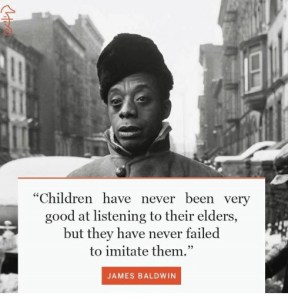
James Baldwin Quote on Imitation

Apart from developing the weak spine of a spoilt brat, adolescents who grew up that way didn’t do anything else but imitate the kind of behavior that is advertised in pop culture time and again. We all develop an identity by mimetic (i.e. imitative) processes, of course, but it is quite ironic that the high school rascal thinks of himself as an original and daring character. This is the typical narcissism of the youngster who thinks of himself as a hero and doesn’t see that there is nothing heroic about “transgressing rules” at most of today’s permissive high schools. He is unable to love the reality of his situation, but is all the more in love with an unrealistic self-image of which he wants the confirmation by his peers. In the end, however, his eventual professional ambitions are often not “original” at all, as they turn out to be imitations of the ambitions of his parents and their social network.

Malcolm X on Education

When children come from a poor neighborhood and have to walk 10 miles a day to the nearest school, they don’t have the luxury to waste the precious time and money that their community invests in providing a good education. As it happens, some of those disadvantaged children end up at schools surrounded by rich kids who behave like so-called high school rebels. However, the poor child who starts imitating his “rebellious” classmates does not have the resources to compensate for the potential voids in his education as a consequence of his so-called rebellious behavior. There is not an army of high paid tutors waiting at home.

Moreover, in the process of growing up the disadvantaged kid will also start noticing that his mischief is separated from the same mischief committed by privileged youth of the same age group. Indeed some rich parents who do excuse the misconduct of their own children as “youthful indiscretion” will condemn the same behavior as “juvenile delinquency” when it is performed by so-called uneducated poor people, even more so when these are people of color. Racism runs deep. Add to this the fact that a lot of socio-economic problems today in communities of colored people are the consequence of a history dominated by white elites, and it becomes clear why a movement against discrimination calls itself Black Lives Matter to create “privilege for all” and not predominantly “white”.
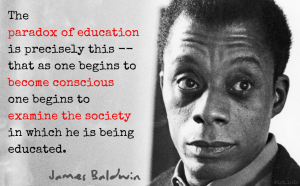
James Baldwin Quote on the Paradox of Education

People on the political right should be more aware of the double standard behind blaming disadvantaged people for their own miserable situation. The fact of the matter is that opportunities are not equal for all. Some enjoy the privilege of getting away with so-called “youthful indiscretions”, for instance, while others are incarcerated for the very same youthful sins. Those types of privilege are often forgotten by the political right. Also, if we would truly live in a meritocratic society, and not just on paper, the likes of Donald Trump would never make it into the US presidential office (even if they were backed by powerful elites who were planning to use that type of president to push their own agenda).

Condoleezza Rice on Victimhood

In a worst case scenario, the downtrodden develop a deep-seated feeling of ressentiment. They develop an aversion to the ambitions they previously imitated from their privileged peers. They comfort themselves by getting a sense of self-worth in groups that claim to oppose everything privileged people stand for. As a privileged elite points to their mistakes and blames them for their miserable condition, while at the same time that privileged elite can afford making similar mistakes without having to pay for them, they are easily manipulated by recruiters who abuse their sense of victimhood. They fall for the basic story of every manipulator: “They reject you, but I see your potential…” Thus they become the slaves of false Messiahs who promise to deliver them from victimhood, but who actually keep the victimary status alive to gain power over their followers. Gangs thrive upon ressentiment, from ISIS to the Black Disciples to groups of Neo-Nazis.

It is important to realize that the violence originating from ressentiment cannot be disconnected from instances of systemic violence and oppression as described above. Ressentiment ultimately results from a comparison by people who feel disadvantaged, one way or the other, with people who are at least perceived as privileged. Although privileged people often cannot be held personally responsible for racism and other types of discrimination, there are historically grown structural injustices, which result in some people literally having more chances than others. So gang members are indeed personally responsible for pulling the trigger in acts of violence, but the way society is structured as a whole often hands them the weapons. As for the latter, we all bear some responsibility, if just for our voting habits.

To realize the depth of historically grown structural injustices, it is good to listen to the following speech of Kimberly Jones (be sure to watch the video below of Desiree Barnes against looters to get a complete picture of what this article is all about). Jones ends her powerful statement by saying “They are lucky that as black people what we are looking for is equality and not revenge…”:

Error
This video doesn’t exist

White Privilege Forgotten by the Left

While the political right often remains blind to instances of deeply ingrained, historically grown systemic violence and social oppression, the political left often does not want to hear about individual freedom and responsibility. Since on many issues I tend to belong to a community of “white liberals” more than to a community of “white conservatives”, I will write in the first-person plural to develop a self-critical reflection. That is not to say I wouldn’t lean to the right as well sometimes. I guess I’m left in the middle.

Anyway, we liberal white folk, we think love for our neighbor should always include a recognition of our neighbor’s potential traumas. Especially in education we should be aware of the violence in its many guises children carry with them. We are all victims, one way or the other, be it of socio-economic circumstances, bullying, verbal and physical abuse, learning disabilities or mental disorders. Although the recognition of that reality is crucial to become a self-responsible person, it becomes a danger when it is used to simply excuse children for not taking part in the educational process as they should.

There is a significant difference in approaching children as being somewhat determined by their problems or as being free to learn despite their problems. In other words, there is a difference in approaching children as mere victims or as people with potential (think of the Pygmalion or Rosenthal effect in this regard). Not being demanding is not a sign of love and respect in education. You might become popular and powerful among young people in that way, but in the meantime you deny them the dignity to develop their talents. In fact, you become the double of those severe teachers who are only strict to gain a sense of power as well. It does happen, although perhaps more or less unconsciously, that the question to let a pupil pass during deliberations eventually has more to do with a powerplay between teachers than with the interest of pupils themselves. In any case, children from a privileged background will once again find ways to compensate for voids in their education as a consequence of an all too soft approach, while disadvantaged peers in the same educational situation remain the victims of oppressive circumstances. The political left often forgets that type of privilege. Again some people can afford being spoilt during the educational process, while others can’t.

Malcolm X Quote on White Liberal

We, white privileged liberals, should be aware of potentially similar dynamics in our assessment of systemic injustices experienced by people of color. Malcolm X (1925-1965) criticized a liberal approach that turns out to simply abuse the victimhood of colored people in a fight over power with white conservatives. He came to the conclusion that many white liberals, consciously or not, have an interest in maintaining that victimhood. Presenting themselves as liberators of a problem they will in fact never solve, those liberals time and again become false Messiahs who gain power and wealth by locking up their followers in an idea of victimhood. In 1963, Malcolm X formulated it this way:

“In this crooked game of power politics here in America, the Negro, namely the race problem, integration and civil rights issues are all nothing but tools, used by the whites who call themselves liberals against another group of whites who call themselves conservatives, either to get into power or to retain power. Among whites here in America, the political teams are no longer divided into Democrats and Republicans. The whites who are now struggling for control of the American political throne are divided into liberal and conservative camps. The white liberals from both parties cross party lines to work together toward the same goal, and white conservatives from both parties do likewise.

The white liberal differs from the white conservative only in one way; the liberal is more deceitful, more hypocritical, than the conservative. Both want power, but the white liberal is the one who has perfected the art of posing as the Negro’s friend and benefactor and by winning the friendship and support of the Negro, the white liberal is able to use the Negro as a pawn or a weapon in this political football game, that is constantly raging between the white liberals and the white conservatives. The American Negro is nothing but a political football.”

For more, listen to:

Against this quite cynical stance of Malcolm X I would argue that the majority of us, white liberals, is genuinely touched by the fate of disadvantaged people, especially oppressed people of color. We feel for them. We sympathize with their just cause to better their socio-economic situation. We are prepared to stand next to them in the fight against racism. Because of the prevalence of drug abuse, poverty and crime in some of their neighborhoods, we understand that it is often very difficult for young black people to fully participate in a good educational process. Hell, we know that some of our own children, growing up in the best of circumstances, wouldn’t take their chances at school if it wasn’t for the high paid tutors to pull them through. Let alone that they would be able to take their chances if they would grow up like some of their disadvantaged black counterparts.

Blaming those black youngsters for their own situation would thus be hypocritical. This is all the more so because the system we receive our privilege from is the same system that keeps them oppressed. Moreover, as privileged white folk we are always partly responsible for maintaining that system and its inherent oppressive violence. That’s why we quite easily refer to socio-economic circumstances when we are confronted with criminal conduct of black youth. We are convinced that at least some of that conduct may be excused, since it is to be partially understood as a consequence of our own violence. And so it happens that by taking up the cause of the disadvantaged fellow citizen, we clear our conscience. We take the moral high ground by judging everything and everyone we perceive as oppressive or racist, while maintaining the same privilege and wealth as them.

Reflexes of the Privileged – The White Conservative in the White Liberal

On the surface we, white liberals, might seem very different from white racists who openly look down on poor and oppressed people of color. However, we don’t really change our white privileged mindset if we merely approach those downtrodden as “helpless victims” who cannot achieve anything without “white” help. At the same time we rave about Steven Pinker’s claim that the world becomes less violent because we rarely ever have to deal with violence directly. We rave about Rutger Bregman’s observation that most people are good until we have to personally deal with those good people doing bad things. In that case we very conveniently refer to the latter as “psychos” – or we use some other convenient monstrous depiction.

James Baldwin Quote on Real Change

The same goes for our attitude towards people we perceive as having a “free spirit”. We rightfully celebrate someone like James Baldwin (1924-1987) as an icon of the Civil Rights Movement and the Gay Liberation Movement. However, we despise the 25 year old gay colleague who falls in love with a 17 year old adolescent. Perhaps this means that we would have only gossiped about James Baldwin if he would have been that colleague, because that is exactly what happened to him at 25.

This ambiguous attitude depends on the (physical or mental) distance between ourselves and the others we compare ourselves with. French American thinker René Girard (1923-2015) points out that others can become our heroes in a process of external mediation. This means that others who are somewhat external to our day-to-day life can become models or heroes we admire, and that they mediate some of our ambitions and (secret) dreams.

When those same others become part of the internal circle of our life, however, the dynamic of comparison may turn them into rivals. In a process of internal mediation our models easily become obstacles in the pursuit of our ambitions. They are often perceived as threats to our own position or way of life. That’s why we can stand the free spirited James Baldwin who is far away, and not the same free spirited person who is close by. The latter is often too intimidating. Just his mere presence is already experienced as competing with everything we unwittingly hold dear.

And so we listen to Charlie Parker (1920-1955) and Billie Holiday (1915-1959) in our hipster coffee houses, yet walk around the struggling musician, addicted to heroin, on the way home from work. We pity the poor young man who seems unable to escape a life of crime, yet condemn a poor young man from mixed descent like Diego Maradona, who did become successful and maintained his parents’ family from age 15. We Billie Holiday Quote on Plantationcuddle the rascal as long as he remains on the streets, but when he rises to the level (or beyond) our privileged situation we tend to look down on him. We actually don’t understand that you can take the man out of the street, but never completely the street out of the man, although we do pay lip service to that sentence. Someone like Maradona is a hero of the poor and the oppressed, first and foremost.

The fact that we often feel sympathy for the poor and the oppressed but sometimes look down on their heroes, is a sign of our complacent, paternalistic and condescending supremacy. Maybe we do want to remain saviors, so the problem we want to save people from has to also remain. Disadvantaged communities don’t need this type of false Messiahs. Therefore, we privileged liberals should realize that we often are more concerned with taking down our conservative “enemy” than with actually focusing on the victims of systemic injustices in our institutions. We should truly reflect on the fact and its implications that our lives, spent in the privileged layers of society, have more in common with the lives of our privileged conservative neighbors than with the lives of the disadvantaged. As long as we use movements like Black Lives Matter in a polarized political powerplay that actually drowns the potential for a policy of social reform, we will remain the folk that Malcolm X characterized so sharply.

Taking Matters into Own Hands

On February 14, 2018, 19-year-old Nikolas Cruz shoots 17 people at his former high school in Parkland, Florida. He has already attempted suicide by then. His autism is one of the factors that makes him a target of heavy harassment throughout his youth. His story makes clear that it is not his autism per se that makes him violent to himself and to others, but the social rejection he experiences by bullies, time and again.

David Dorn

On June 2, 2020, a young man shoots David Dorn in front of a pawnshop in St. Louis. David Dorn is a 77-year-old African-American retired police captain. During the social unrest after the police murder of George Floyd, he tries to protect a friend’s pawnshop from looters. It becomes fatal to him. 24-year-old Stephan Cannon is arrested a week later on suspicion of murder.

What Nikolas Cruz and Stephan Cannon have in common is the experience of social rejection. Something like that has similar effects on the brain as physical violence. The former experiences systematic rejection because of his autism, the latter experiences systemic rejection because of his skin color. Both forms of rejection are to be condemned. Unfortunately, neither Cruz nor Cannon seem to experience this condemnation. As a result, they ultimately share another violent reality: they make innocent others, i.e. scapegoats pay for the frustrations they both experience in the course of their lives.

It might be tempting to further isolate perpetrators such as Cruz and Cannon and to explain their violent actions on the basis of a hyper-individual problem from which they would suffer. However, this is all too easy and actually indicates a cowardly attitude. The way communities are made up does play a role in the way individuals behave. In other words, each community has a share and a responsibility in the violence perpetrated by some individuals. Again, a social environment might not pull the trigger, but it often does hand the weapons (see above). This is not to say that perpetrators of violence themselves bear no overwhelming responsibility. Cruz and Cannon do have a freedom of choice. In the end, they pull the trigger – or not.

It is important that Black Lives Matter acknowledges that someone like Stephan Cannon is also one of those blacks who feel rejected in a society dominated by white privilege. Stephan Cannon’s violence, as a revenge against the violence of social discrimination, is an actual imitation and continuation of white supremacy violence. It is precisely for this reason that Black Lives Matter, in addition to making an analysis of the causes of revenge against innocent third parties, must also clearly condemn this form of violence. If it doesn’t, it puts that condemnation in the hands of its opponents. The latter can then continue to live with the illusion that they have nothing to do with the frustrations of a young criminal. In that case, a society dominated by white privilege remains blind to its own violence. The condemnation of violence is therefore not a side issue in the struggles of movements such as Black Lives Matter. It belongs to their essence, at least if they don’t want to become part of the violent hatred they thought they were opposing.

So it is important that protesters against injustices listen to people like Desiree Barnes (a former Obama aide, by the way):

Error
This video doesn’t exist

Alphonso Jackson Quote on Victimization and Blame

Malcolm X did not advocate violence as a necessary means to solve the problem of racial injustices. Following Malcolm X, oppressed people of color are not helped by an approach that turns perpetrators of violence from their communities into mere victims of other violence. It only turns those communities as a whole into the poor victims privileged liberals paternalistically love to use in their rivalry over power against privileged conservatives. Again, if movements like Black Lives Matter do not condemn violence against innocent bystanders, those conservatives will easily put the blame for violence on the side of protesters and remain blind to the reality of systemic violent oppression.

In short, following Malcolm X and other African-American voices on the matter at hand, black people in America should not look at themselves through the eyes of some of the white conservatives or white liberals, who often treat them as criminals or victims respectively. They should look at themselves as people with the potential to create a more just society, who can take matters into their own hands, and who can become agents of change.

James Baldwin Quote on Higher Dreams


James Baldwin Quote on Love for America

Malcolm X Quote on Human Beings


Malcolm X Quote on White Liberal


WHY WE HATEIn de loop der jaren heb ik heel wat materiaal verzameld waarnaar expliciet in de documentaire-reeks Why We Hate wordt verwezen. Ik deel het relevante materiaal graag per aflevering, telkens ook met aanduiding van enkele kerngedachten. Wie interesse heeft in de psychosociale dynamieken die het menszijn beheersen, krijgt op die manier misschien aanzetten tot verdere reflectie.

WHY WE HATE – AFLEVERING 1: OORSPRONG

Kerngedachte 1: de bron van een bepaald soort liefde is dezelfde als die van haat

De eerste aflevering van Why We Hate laat zien hoe het vermogen dat ons in staat stelt om lief te hebben ook de bron kan zijn van haatdragend en gewelddadig gedrag. Empathie (het vermogen om je in te leven in de situatie van iemand anders) leidt niet automatisch tot liefde. Hoe meer we ons bijvoorbeeld verbonden voelen met de mensen van een eigen groep of kliek, hoe haatdragender we soms zijn tegenover mensen die we percipiëren als “vijanden” van onze bondgenoten.

De wereld van apen en mensapen houdt ons een spiegel voor aangaande de bokkesprongen van de empathie. In deze aflevering verwijst evolutionair antropoloog Brian Hare onder andere naar het onderzoek van zijn mentor, primatoloog Frans de Waal, in verband met vergelijkingsgedrag bij kapucijnaapjes. Op het moment dat één van twee zulke aapjes druiven krijgt in plaats van komkommer, wordt het aapje dat komkommer blijft krijgen gaandeweg kwaad. Het is niet de ongelijkheid op zich die voor die kwaadheid zorgt, maar wel het vermogen van het ene aapje om zich in te leven in het andere aapje. Door dat inlevingsvermogen kan het zijn eigen situatie vergelijken met de situatie van het andere aapje.

LINK: FAIRNESS STUDY (FRANS DE WAAL)

Ons menselijk rechtvaardigheidsgevoel, dat natuurlijk te maken heeft met dergelijk vergelijkingsvermogen, kan dus ook kwaadheid, haat en zelfs gewelddadige reacties veroorzaken. De paradox is dat een ervaring van verbondenheid (jezelf kunnen inleven in de situatie van een ander) in sommige omstandigheden leidt tot rivaliteit. Niet het verschil op zich veroorzaakt vaak problemen, wel de mate waarin mensen zich met elkaar identificeren. In dat identificatieproces verdwijnt juist het verschil – althans “theoretisch”. Als we iets verlangen of ambiëren omdat we ons vereenzelvigen met een bewonderde ander, dan zal die ander onze gehate rivaal worden op het moment dat we het wederzijds verlangde object niet kunnen of willen delen.

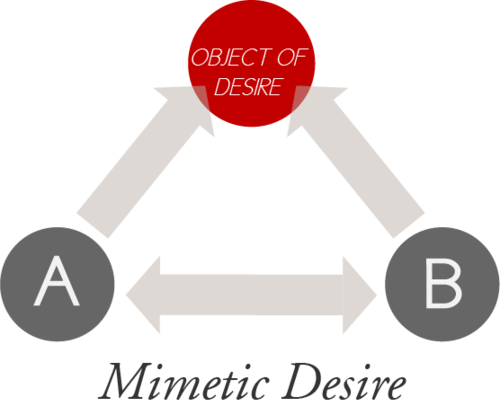
Kortom, net omdat we ons in de positie van iemand anders kunnen verplaatsen, omdat we kunnen doen alsof we iemand anders zijn, of nog anders geformuleerd, omdat we het vermogen hebben om anderen te imiteren, kunnen anderen ook onze rivaal en onze vijand worden. Het mimetisch (= imitatief) vermogen dat de basis vormt voor ons empathisch vermogen, kan resulteren in vormen van verbondenheid en liefde, maar ook in vormen van vijandschap en haat (voor meer, lees: The Two Sides of Mimesis: Girard’s Mimetic Theory, Embodied Simulation and Social Identification van Vittorio Gallese). René Girard heeft het verlangen op basis van een imitatief identificatieproces, dat soms leidt tot rivaliteit en geweld, de mimetische begeerte genoemd.

LINK: HET GEWELD ZIT DIEP IN ONS (DIRK DRAULANS)

Kerngedachte 2: de liefde voor een sociale status leidt tot zelfhaat en haat tegenover anderen

Cicela Hernandez vertelt in de eerste aflevering van Why We Hate hoe ze van “gepeste” zelf “pester” werd. Ook uit haar verhaal blijkt dat identificatieprocessen aan de basis liggen van haar haatdragend gedrag. Het slachtoffer dat ze het hardst had aangepakt, was een meisje waarin ze zichzelf herkende. Eigenlijk had Cicela naar zichzelf leren kijken door de ogen van wie haar vroeger pestte. Ze begon zichzelf in zekere zin te haten, waardoor ze ook anderen haatte in wie ze zichzelf weerspiegeld zag. Gedurende een vrij lange periode in haar middelbare schoolloopbaan imiteerde ze letterlijk het gewelddadige gedrag van de boosdoeners in haar leven. En waarschijnlijk zouden sommige van haar slachtoffers later op hun beurt pesters worden. Aldus houdt de vernietigende dynamiek van het geweld zichzelf in stand.

Het verhaal van Cicela maakt duidelijk dat het verlangen naar macht en status alweer berust op imitatieve processen. Cicela had geleerd om zich te spiegelen aan degenen die haar pestten, en op basis daarvan was ze beginnen te verlangen naar hun status en machtspositie. Tegelijk vergrootte dat de haat tegenover bepaalde aspecten van haar eigen persoonlijkheid. Kortom, de (mimetisch aangestuurde) liefde voor een sociale status binnen een “eigen” groep impliceert altijd een vorm van zelfhaat.

Anderzijds toont het verhaal van Megan Phelps-Roper in deze aflevering dat de liefde voor een groepsafhankelijk zelfbeeld niet alleen gepaard gaat met zelfhaat, maar ook met haat tegenover anderen. Megan is een voormalig lid van de Westboro Baptist Church, een fundamentalistische groep christenen die het vooral niet begrepen heeft op katholieke christenen, Joden en de LGBTQ-gemeenschap. Binnen de Westboro Baptist Church is er een grote samenhorigheid, geborgenheid, harmonie en vrede. Die vrede is echter gebaseerd op het uitsluiten en demoniseren van zogenaamde “vijanden”. Juist zoals sommige kliekjes in om het even welke context “vrede” creëren door anderen te onderdrukken of simpelweg af te wijzen.

Dat sociale afwijzing een vorm van geweld is met gelijkaardige effecten in de hersenen als fysiek geweld, komt ook aan bod in deze aflevering. School shootings zijn te begrijpen als wraakacties. De jonge daders imiteren het sociale geweld dat hun is aangedaan. Dat hun slachtoffers vaak niets met dat geweld te maken hebben, deert hen niet. In hun kwaadheid op de wereld beseffen ze zelfs niet dat ze eigenlijk zondebokken laten boeten. Bovendien leidt de grote media-aandacht soms tot copycat gedrag. Andere gefrustreerde jongeren die zich sociaal niet aanvaard voelen, zien in het gewelddadige gedrag van school shooters een manier om toch een vorm van sociale erkenning en aandacht op te eisen – zij het negatieve.

LINK: WOMEN AND THE SPIRITUAL CLASH WITH TERROR

Als lid van de Westboro Baptist Church werd Megan Phelps-Roper natuurlijk ook door een groot deel van de samenleving scheef bekeken en afgewezen. Alleen voelde zij niet de noodzaak om die ervaring van afwijzing te compenseren door een of ander fysiek haatmisdrijf. Ze ervoer immers waardering van haar familie.

Kerngedachte 3: kritiek van zelfbeelden is noodzakelijk voor waarachtige liefde en vrede

De getuigenis van Megan Phelps-Roper laat de gevaren zien van elke sociale constructie. Op het moment dat je denkt “verlicht” of “zuiver” te zijn omdat je niet behoort tot een bepaalde groep (in haar geval katholieken, Joden en de LGBTQ-gemeenschap), verblijf je eigenlijk in de duisternis die de menselijke soort al heel haar geschiedenis achtervolgt. De atheïst die zich heeft afgekeerd van bepaalde religieuze waanvoorstellingen en religie als bron van alle kwaad beschouwt, is in hetzelfde bedje ziek als de gelovige fundamentalist die vanuit eenzelfde superioriteitsgevoel het zogenaamd “kwaadaardige” atheïsme veracht.

Zolang het kwaad “buiten” de eigen groep en het eigen hart wordt geplaatst, kan het kwaad juist voortwoekeren. Je hebt dan immers een rechtvaardiging om groepen zogenaamde “boosdoeners”, “onverlichte barbaren” of “perverselingen” af te wijzen, te discrimineren of zelfs te elimineren. De geschiedenis bevat keer op keer de ironie dat het grootste geweld onder zowel religieuze als seculiere regimes wordt gedaan vanuit de overtuiging dat daarmee “een vreedzame wereld” wordt nagestreefd. Om dat soort psychisch, sociaal en/of fysiek geweld te vermijden is kritiek op die overtuiging binnen de eigen groep dus noodzakelijk.

Toevallig kwam Megan Phelps-Roper online in contact met de Jood David Abitbol en zijn blog, Jewlicious. In plaats van haar onmiddellijk te “klasseren”, ging hij met haar het inhoudelijke gesprek aan, meer specifiek het inhoudelijk theologische gesprek. Op die manier kon ze uiteindelijk breken met bepaalde ideeën uit haar groep en kon ze ook kritiek geven op het onrealistische beeld dat ze van zichzelf had gehad. Ze ontdekte dat de “buitenwereld” helemaal niet zo demonisch was als ze gewoon was te denken. Tegelijk ontdekte ze bij zichzelf dat ze helemaal niet zo “moreel superieur” was.

Megan had zich heel haar leven verbonden gevoeld met een groep die hartstochtelijk werd gehaat. In een poging om hun “vijanden” te overtroeven en zich op die manier van hen te onderscheiden, beantwoordde de groep die haat met haatberichten, wat de vicieuze cirkel van de intolerantie uiteindelijk in stand hield. De tragische paradox is dat de poging om de gelijkenissen met anderen te ontkennen ertoe leidt dat mensen juist steeds minder van elkaar verschillen en op elkaar beginnen te gelijken. Hoe meer haat met haat wordt beantwoord, hoe meer de hatende partijen elkaars dubbelgangers worden.

Daarentegen is het erkennen van een gedeelde menselijkheid de mogelijkheidsvoorwaarde om elkaars verschillen werkelijk te leren respecteren. Megans erkenning dat anderen in de eerste plaats “mens” waren zoals zij, maakte de liefde en het respect voor anderen mogelijk, alsook voor zichzelf, niettegenstaande ze werd uitgesloten door haar familie. Alleszins blijkt uit haar situatie dat intolerantie in de eerste plaats ligt bij mensen die anderen uitsluiten en de dialoog weigeren, en niet bij wie uitgesloten wordt.

Kerngedachte 4: geweldloos conflict in plaats van gewelddadige vrede is mogelijk

black-lives-matter-fontElke emancipatorische beweging moet zich afvragen in welke mate ze werkelijk emancipatorisch is. Wil de Black Lives Matter (BLM) beweging bijvoorbeeld geen factor zijn die de polarisatie in de samenleving aanwakkert, dan zal ze mogelijke kritiek niet automatisch mogen zien als een aanval op de beweging zelf. Als ze geen kritiek kan verdragen, dan kunnen vijanden van de beweging immers gemakkelijk zeggen: “Zie je wel, die beweging is niet eerlijk; ze wil bepaalde feiten niet onder ogen zien!” In dat geval speelt de beweging in de kaart van het racisme.

Als de beweging daarentegen werkelijk het racisme wil aanpakken (en dus eigenlijk zichzelf op termijn overbodig wil maken), dan zal ze mogelijke tegenstanders moeten ontwapenen door zich de reflex van een gezonde zelfkritiek eigen te maken. Want je wil niet vervallen in het mechanisme van een gesloten gemeenschap als de Westboro Baptist Church, waarbij een lid dat kritiek geeft op de eigen organisatie onmiddellijk als een “verrader” wordt verbannen. Zoiets houdt op termijn alleen maar een gewelddadige vrede in stand – een vrede die gebaseerd is op het geweld van uitsluiten, discrimineren, haten en elimineren.

Peace I leave with youHet is dus goed dat een beweging als Black Lives Matter ook zogenaamd “dissidente stemmen” uit de eigen, zwarte gemeenschap beluistert. Op die manier wordt ze niet de zoveelste beweging in de geschiedenis van de mensheid die eigenlijk het kwaad in stand houdt dat ze dacht te bestrijden omdat ze haar eigen (fysiek en ander) geweld beschouwt als “goed en gerechtvaardigd”. Het boek Virtuous Violence, dat in de eerste aflevering van Why We Hate te zien is op de tafel van Brian Hare, beschrijft dat proces (zie slides). De mogelijkheid van debat in eigen rangen kan exemplarisch zijn voor het streven naar een samenleving waarin de vrede van geweldloos conflict (respectvolle discussies) het uiteindelijk haalt van de opeenvolgende gewelddadige vredes “van deze wereld”.

LINK: DE NARCIST

LINK: GEEN VREDE, MAAR EEN ZWAARD

LINK: MIMETIC THEORY (RENÉ GIRARD) – VIDEO SERIES

Zie vooral, voor wat de laatste link betreft, het beeldmateriaal van chimpansees dat ook aan bod komt in de eerste aflevering van Why We Hate. Scroll naar PART IV – THE ORIGIN AND EVOLUTION OF CULTURAL FACTS EXPLAINED (2 VIDEOS).

P.S. Een reflectie ter illustratie van inzichten uit de eerste aflevering

Atheïsme brengt niets slechts voort. Je kan niets verkeerd doen in de naam van “er is geen god”.

Atheïsme brengt evenwel ook niets goeds voort. Je kan niets goed doen in de naam van “er is geen god”.

Atheïsme is niet immoreel. Het is ook niet moreel. Atheïsme heeft simpelweg geen onmiddellijke morele implicaties. Het is amoreel.

Vandaar dat seculiere regimes hemels kunnen zijn, maar ook de hel op aarde, wat doorheen de geschiedenis al is gebleken.

Wie denkt dat “de bron van het kwaad” ergens concreet te situeren is volledig “buiten” zichzelf – bijvoorbeeld in “godsdiensten” -, en wie denkt dat de eliminatie van die zogenaamde bron op termijn zorgt voor vrede, stapt eigenlijk mee in een proces dat juist het kwaad veroorzaakt.

Om dat proces te vermijden moet elke emancipatorische beweging – zowel van godsdienstige als van niet-godsdienstige aard – bereid zijn tot zelfkritiek. Doet ze dat niet, dan blijft ze blind voor haar eigen vooroordelen en speelt ze in de kaart van tegenstanders die haar die vooroordelen kunnen aanwrijven. In dat geval groeit de maatschappelijke polarisatie.

Een beweging die geen zelfkritiek toelaat en dissidente stemmen onmiddellijk als “verraders” verbant, wordt zelf de belichaming van een intolerantie die ze dacht te bestrijden. Ze wordt een sektarische, gesloten gemeenschap die zich opsluit in een echokamer.

De geschiedenis bewijst echter dat mensen ook de respectvolle discussies van het democratische “geweldloze conflict” aankunnen, waardoor de uitsluitingsmechanismen van totalitaire “gewelddadige vredes” worden vermeden.


WHY WE HATE OUT OF HATE INTO HOPE

Introduction

A good way to assess the passion story of Jesus and what it allegedly reveals about the God of Christ, is the parable of the prodigal son in Luke 15:11-32. Jesus uses the father in this parable to clarify something essential about the God he proclaims. When the son returns, not without opportunistic motives, the father runs towards his son from the moment he sees his son appear on the horizon. The father does not run to his son to punish him, but to forgive him and to welcome him “full of grace”. This “space of grace” gives his son the opportunity to really become aware of the evil he has done. And although grace has no power or control over this potential response (it is not guaranteed that the son will truly regret what he has done), grace is “all-powerful” in the sense that it gives itself independent of its eventual outcomes.

So, in any case, the grace of the father allows the son to no longer be ashamed of himself and to sincerely repent for his mistakes. If he truly accepts the love of his father, he will be able to take responsibility for his wrongdoings without being crushed under guilt. He will imitate the love he experiences by trying to make up for the hurt he has done to others and by trying to do justice. To quote Augustine of Hippo (354-430) (On the Spirit and the Letter Chapter X [16]): “Grace is bestowed on us, not because we have done good works, but that we may be able to do them.” (Original Latin, DE SPIRITU ET LITTERA LIBER UNUS, X: [gratia] quando quidem ideo datur, non quia bona opera fecimus, sed ut ea facere valeamus […]).

Because grace liberates us from the fear of being crushed under the weight of our mistakes, we will more easily take responsibility for them ourselves, instead of letting an easy scapegoat “pay” for what we did. If we accept the grace that does not crush us, it prevents us from crushing others as well. Grace liberates us from our damaging need to be “perfect” and thus lets us discover “the joy of being wrong”. In other words, grace liberates us from our narcissistic self-images and paradoxically prevents us from doing further harm to ourselves and others. As we experience forgiveness for our trespasses, we are enabled to forgive “those who trespass against us” (see the Lord’s Prayer in Matthew 6:9-13).

Analogous to the attitude of the father in the parable of the prodigal son, the suffering of Jesus should not be interpreted as a sign that there is a God who would punish us for our transgressions (but lets his Son take the blows we actually should receive). On the contrary, the suffering of Jesus is a consequence of a love that is radically independent of violence. It is the consequence of a love that does not answer violence with violence. It is the consequence of a forgiving withdrawal from violence, which makes room for the life of others (even “enemies” become “neighbors”).

Just like the father in the parable of the prodigal son running towards his son is not a sign that he wants to punish his son, the suffering of Jesus is not a sign that there is a God who wants to punish us. Just like the father of the parable running towards his son is a sign that he wants his son to become fully alive by bestowing a forgiving love upon him, the suffering of Jesus is a sign of a love that does not desire our death or suffering, but that wants us to be fully alive.

The cross of Jesus reveals that this love is not even affected by death, but that it is “fully alive” in the fact that neither “friend” nor “foe” died in what could have been a civil war. Jesus’ forgiving withdrawal from violence – his radical refusal to kill – saves others from death. Therefore the first followers of Jesus believe that he is “the Christ” who embodies the love that is not affected by death – the love that is thus revealed as “eternal”, as God. The suffering of Jesus is God, revealed as non-violent love, “running towards us” in the forgiving withdrawal from violence. Hence, whenever we participate in this mutual and imitative forgiving withdrawal from violence, God as love “is in our midst”. As this love is eventually not affected by death, it pierces through the narcissistic self-images we usually develop to hide ourselves from the reality of death. Thus the non-violent love that is not affected by death saves ourselves and others from alienating, destructive relationships between ourselves and others (because of that narcissism). It saves us from what is traditionally called “original sin”.

The grace that is revealed in Jesus in a unique way (but which shows itself in other “places” as well) prevents us from sacrificing others to “pay” for our sins. It allows us to truly take responsibility for our mistakes, without fear. It prevents us from hunting for scapegoats really, which is done in traditional religious systems. The following text points both to the “perversion” of Christianity (when it is understood as merely the ultimate consequence of traditional religious systems) and to an “authentic” Christianity (understood from Jesus’ obedience to a love that desires “mercy, not sacrifice”).

The traditional religious and mythical “deified” hero saves others by killing – which eventually results in the self-sacrifice of the hero. Jesus saves others because he refuses to kill – which reveals Jesus as embodying a love that gives itself and “lives” even unto death.

The Basic Religious Story

Aztec human sacrificeHumans commit transgressions of god given laws. The gods get angry. Disasters happen as divine punishment. Humans bring sacrifices which reconcile them with the gods. Peace is restored.
We all know the drill. Myriad variations of this story exist in religions old and new.

Some Christians are convinced, however, that the Christian variation of the basic religious story is quite unique. They believe that the Christian story therefore reveals “the true God” as opposed to “the bleak imitations of the divine in other religions”.

Yes, those Christians say, God is aware of us humans committing transgressions. However, according to their scenario, we should have the humility to recognize that the cost of our transgressions is too big to pay off our debt by merely human means. That’s why God sent us his only begotten Son Jesus, who loved us so much that He obediently sacrificed Himself and thus reconciled us with God, his Father.

Grace in this context is understood as God’s willingness to sacrifice his Son Jesus for our transgressions. This “final” sacrifice allegedly saves us from the desperate attempts to pay off our debts by sacrificing ourselves and our neighbors. Jesus thus is the “Savior” or the “Christ”. Instead of punishing us with disasters, God gave us the means to buy his peace through Christ’s death and resurrection (the so-called proof of the divine nature of the whole process). Well, at least until apocalyptic “end times” that is, and those who still do not repent and accept God’s laws and his Son – the means to buy his peace – are wiped off the face of the earth with Christ’s vengeful return.

The first time I heard this interpretation of the Christian faith, I remember thinking: “If that’s what Christianity is all about, count me out.” Nowadays I would still refuse to call myself a Christian if it implied playing to this so-called “divine” absurdity. However, literary critic and anthropologist René Girard (1923-2015), theologians like Dietrich Bonhoeffer (1906-1945), Raymund Schwager SJ (1935-2004), Anthony Bartlett (°1946), Wolfgang Palaver (°1958), James Alison (°1959) and Michael Hardin (°1968), as well as atheist thinkers like Slavoj Zizek (°1949) helped me discover that the Gospel actually paints a radically different picture of God.

Christianity as the Ultimate Religious Story (= The Perversion of Christianity)

If the God of Christ is what some Christians make of Him, then He is the pinnacle of narcissistic sadomasochism. He is narcissistic because He receives all kinds of presents of reconciliation, but lets you know that no present is ever good enough to satisfy Him. Instead, He provides you with the present that you should offer Him, namely the sacrifice of his Son. As far as father-son relationships are concerned in this picture of Christianity, God is the ultimate sadist who is only appeased by the terrible suffering and death of his obedient Son. Finally, from this perspective God is also the ultimate masochist. After all, He desires the experience of pain in his very Being by “becoming flesh” in a crucified Son who is actually “one” with Him. To this masochist, the pain of the crucifixion is proof that He receives his desired gift and that He has total control over the relationship between Himself and humans.

It is not just the narcissism of a so-called God that is established by this interpretation of Christianity. Perhaps this story, above all, protects the narcissistic self-image of humans. The so-called “humility” in confessing the unworthiness and inability of your efforts to make up for wrongdoings is an easy way out of the burden of responsibility. Referring to so-called uncontrollable flaws gets you off the hook from truly making mistakes altogether. If you can’t help it, then you are actually without “real” faults. Narcissists believe that any mistake they make is eventually always the responsibility of something or someone else. They actually fear the freedom of not being perfect. The narcissistic impulse even exonerates the ones who are responsible for the crucifixion of Jesus. In the end they are perceived as contributing to God’s plan.

In short, according to this interpretation of Christianity, the God of Christ is superior to the so-called “false” gods of other religions because apart from being the most powerful killer, He allegedly also is the most merciful one. Instead of punishing us for our transgressions right away, He sends his Son to die in our place. Moreover, between the resurrection of that Savior – the Christ –, the outpouring of his Spirit and the end of times with the return of Christ, we are told that we can be saved one last time if we recognize our transgressions and accept that Christ died for them. If not, we will be sacrificed anyway during Christ’s Second Coming, which fulfils God’s Last Judgment.

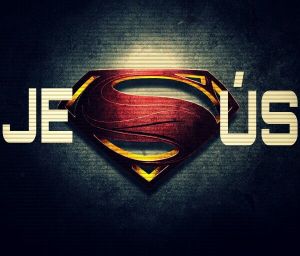
Jesus SupermanIf we are to believe this account, then the God of Christ is a hero of unmatched mythical proportions. He saves others from the deadly disasters He Himself would be responsible for by provisionally killing Himself as the potential presence of wrathful violence in the sacrifice of his Son. In other words, from this perspective the God of Christ is a force of violence that controls itself and others by violent sacrificial means. The peace of Christ is the violent peace of sterile uniformity, established by sacrifice.

Christianity as the End of the Traditional Religious Story (= Authentic Christianity)

The belief that sacrifices can be effective to end deadly catastrophes depends on the belief that sacrifices have something to do with violent sacred forces. The deities of religions old and new are depicted as causing all kinds of violent crises, like natural disasters, pandemics and the outbreak of violence within and between communities. It is believed, time and again, that those violent deities demand sacrifices to be appeased.

“God”, in a traditional religious sense, is perceived as being responsible both for violence of epidemic proportions that potentially destroys human communities and for the vaccine of sacrificial violence that preserves or restores them. When traditional religious people make a sacrifice, they believe that they are not accountable for what they are doing, but that God is the true author of the ritual. Sacrifices are perceived as not belonging to the human world. They are seen as belonging to the world of the sacred, and ritual sacrifice is simply the fulfilment of a sacred commandment. It is the so-called inevitable, fatal process of “making something or someone sacred” (Latin “sacer facere”; hence the Latin noun “sacrificium”). In short, sacrifices are part of the world of the sacred, which is traditionally understood as the world of violence.

Myths sustain the belief in the sacred nature of violence. As such, they are justifications of sacrifice. Myths are stories of so-called “redemptive” violence. In the Gospel the leaders of the Jewish people try to establish a myth concerning their fellow Jew Jesus of Nazareth. The Pharisees and chief priests describe Jesus as an increasingly popular rebel leader who could lead an uprising against the Roman occupier of Judea. A war with the Romans would mean the end of the Jewish nation and culture. Therefore the Jewish leaders see no other solution than to get rid of Jesus. It is their way of justifying his elimination (John 11:45-50):

Many of the Jews who had seen what Jesus did, believed in him. But some of them went to the Pharisees and told them what Jesus had done. Then the chief priests and the Pharisees called a meeting of the Sanhedrin.

“What are we accomplishing?” they asked. “Here is this man performing many signs. If we let him go on like this, everyone will believe in him, and then the Romans will come and take away both our temple and our nation.”

Then one of them, named Caiaphas, who was high priest that year, spoke up, “You know nothing at all! You do not realize that it is better for you that one man die for the people than that the whole nation perish.”

In the case of Jesus, the Gospel of John leaves no doubt that these allegations are false. The Evangelist lets Pontius Pilate, the Roman prefect, unwittingly declare the truth about the arrested Jesus, namely that Jesus is innocent. Jesus does not wish to establish a “kingdom” or “peace” in competition with “the kings of this world” (whose peace is based on sacrifices – like the “Pax Romana”). In other words, the Gospel of John reveals the plot against Jesus by the Pharisees and the chief priests as a scapegoat mechanism: Jesus is wrongfully accused. Indeed, Jesus refuses to start a civil war wherein friends and enemies would get killed (John 18:33-38):

Pilate summoned Jesus and asked him, “Are you the king of the Jews?” “Is that your own idea,” Jesus asked, “or did others talk to you about me?” “Am I a Jew?” Pilate replied. “Your own people and chief priests handed you over to me. What is it you have done?”

Jesus said, “My kingdom is not of this world. If it were, my servants would fight to prevent my arrest by the Jewish leaders. But now my kingdom is from another place.” 

You are a king, then!” said Pilate. Jesus answered, “You say that I am a king. In fact, the reason I was born and came into the world is to testify to the truth. Everyone on the side of truth listens to me.”

What is truth?” retorted Pilate. With this he went out again to the Jews gathered there and said, “I find no basis for a charge against him.”

The Gospel clarifies that the sacrifice of Jesus makes no sense whatsoever, as Jesus has nothing to do with the world of violence. Moreover, since the Gospel recognizes who God truly is in the non-violent love of Jesus, it also reveals that the violent God of traditional religion is actually non-existent. In the latter sense, the Christian faith contains a radical atheism and intrinsically finishes off every religious story. There is neither a God who is responsible for violent chaos to punish us for our transgressions, nor a God who demands sacrifices to restore order. Natural disasters have natural causes. Violence is not a sacred, but a human reality. There is no God as some kind of “Master of Puppets” who is in total control and who can be manipulated with sacrifices to gain control ourselves. As this God is blamed for things He cannot possibly be responsible for – since He does not exist –, He is the ultimate scapegoat.

COVID-19 End TimesThe Gospel reveals that we, humans, tend to be guided by the scapegoat mechanism. Instead of acknowledging our freedom and creative strength as human beings to deal responsibly with disasters, we tend to look for the so-called “masterminds” behind the crisis situations we encounter. Conspiracy theories are the secularized version of traditional religious and mythical thinking. They provide us with a false sense of security and the delusional entitlement to sacrifice so-called “evil” others, who are believed to be responsible for the crisis at hand in the first place. In the case of a pandemic like COVID-19, some keep believing there is a God who punishes us for allowing evildoers in our midst, while others believe powerful people developed a plot that involves deliberately spreading a virus on their path to world dominion.

In the Gospel, the scapegoat mechanism that is used by humans to falsely justify sacrifices, time and again, is personified as Satan or the devil. Jesus reveals that it is this deceitful and lying “devil” who demands sacrificial murders, while God is a God of radically non-violent love who “desires mercy, not sacrifice” (Matthew 9:13). Contrary to the above mentioned depiction of the Christian faith, the Gospel clearly reveals that humans, inspired by the devilish scapegoat mechanism, demand the sacrifice of Jesus, and not God (John 8:39-44):

“If you, Pharisees, were Abraham’s children,” said Jesus, “then you would do what Abraham did. As it is, you are looking for a way to kill me, a man who has told you the truth that I heard from God. Abraham did not do such things. You are doing the works of your own father.”

“We are not illegitimate children,” they protested. “The only Father we have is God himself.”

Jesus said to them, “If God were your Father, you would love me, for I have come here from God. I have not come on my own; God sent me. Why is my language not clear to you? Because you are unable to hear what I say. You belong to your father, the devil, and you want to carry out your father’s desires. He was a murderer from the beginning, not holding to the truth, for there is no truth in him. When he lies, he speaks his native language, for he is a liar and the father of lies.”

Those who desire the sacrifice of Jesus try everything to involve him in the world of violence, in order to still provide their act of violence with some foundation. After all, their myth of self-defense against the man who is supposed to be a violent threat only holds water if Jesus eventually does take part in the game of violence to gain controlling power. As Jesus continuously refuses to answer violence with violence, they grow increasingly desperate. This translates into the growing vehemence of the violence used against Jesus. Despite these efforts to tempt him to use violence, Jesus continues to obey “the will of his Father”, which means that he walks the path of a radically non-violent love. The powers that need the lie of an outside threat to justify their myths of self-defense cannot stand this truth about the scapegoat in their midst. That’s why Jesus is crucified.

To his opponents, the crucified Jesus seems to have lost. “He saved others, he cannot save himself” (Matthew 27:42), they exclaim mockingly. However, when Jesus dies, further attempts to draw him into the world of violence become impossible. Hence, the violent logic that needs, at least, its victim’s involvement in violence to justify itself, utterly fails. What dies on the cross is the foundation of violence. That’s why Jesus proclaims, right before dying: “It is finished” (John 19:30). The universal lie of the scapegoat mechanism behind the ever-recurring myths of redemptive violence is revealed. In that sense, Jesus is: “The Lamb of God who takes away the sin of the world” (John 1:29). René Girard writes – in I See Satan Fall Like Lightning (Maryknoll: Orbis Books, 2001), 142-143:

Je vois Satan tomber comme l'éclair (1999)“By nailing Christ to the Cross, the powers believed they were doing what they ordinarily did in unleashing the single victim mechanism. They thought they were avoiding the danger of disclosure. They did not suspect that in the end they would be doing just the opposite: they would be contributing to their own annihilation, nailing themselves to the Cross, so to speak. They did not and could not suspect the revelatory power of the Cross. […] The powers are not put on display because they are defeated, but they are defeated because they are put on display.”
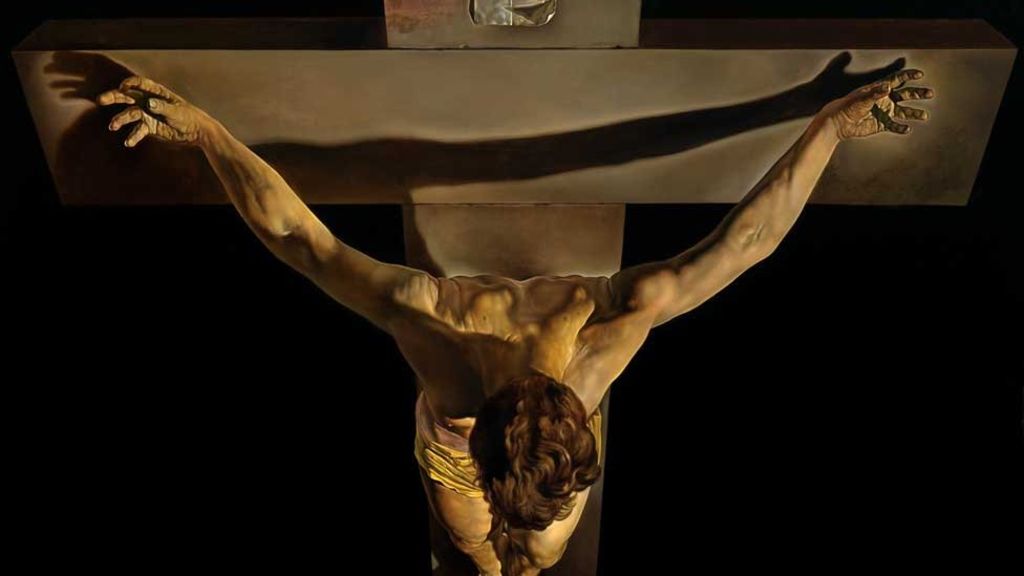
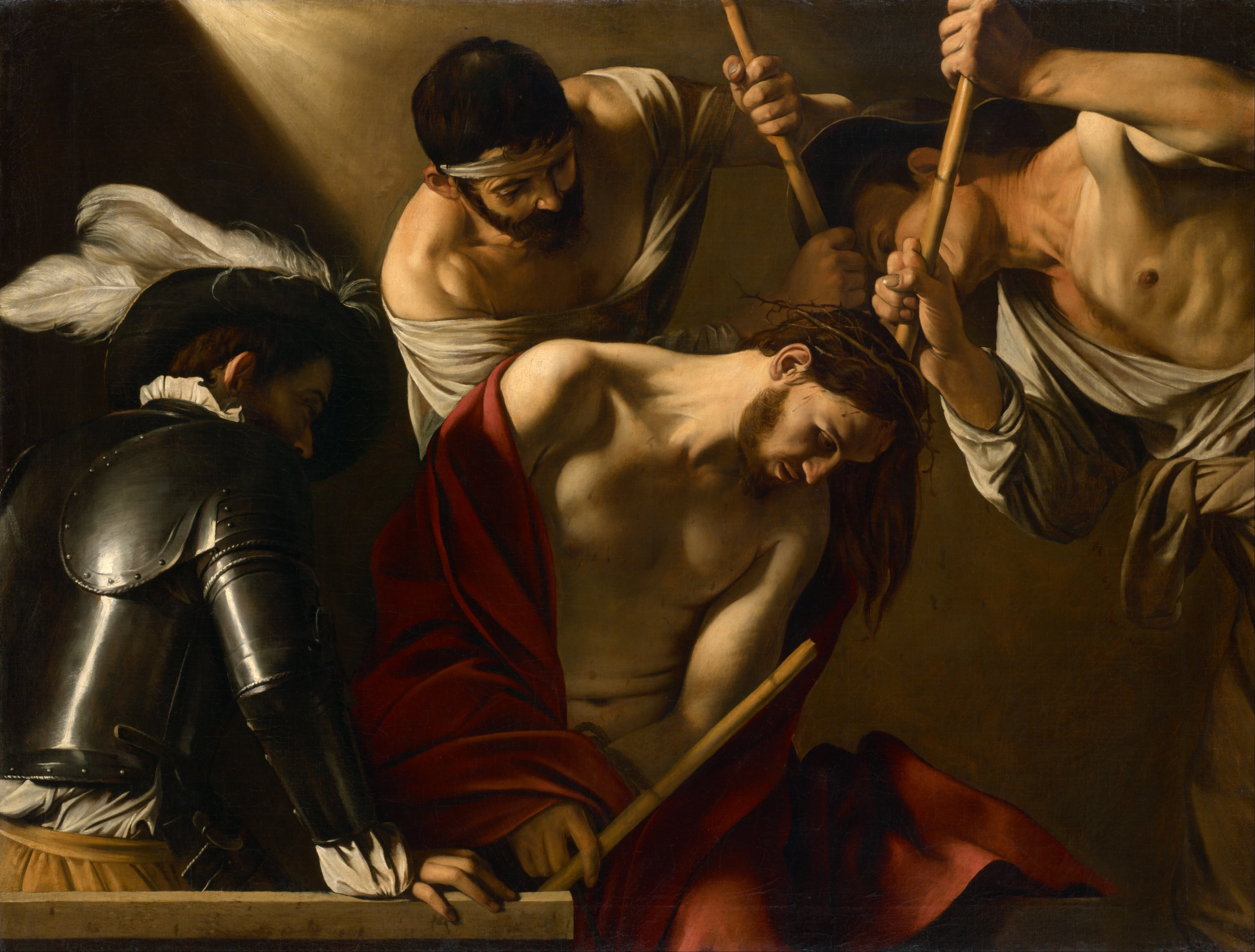
Again, what dies on the cross is the foundation of the violent logic. What lives on the cross, on the other hand, is the self-giving love that saves lives by refusing to kill. No Jew, no Roman, neither friend nor foe died. The love revealed in Jesus, which withdraws from rivalry over power altogether, is all-powerful, not in the sense that it has total control over others, but in the sense that it is not even destroyed by death and thus remains completely independent of the world of violence. The death of Jesus is the ultimate withdrawal from violence and the ultimate gift of life-giving grace.

On Easter Sunday, the crucified Jesus is revealed to his followers as the living presence and embodiment of the non-violent God, of non-violent love. Therefore, the Eucharistic commemoration of Jesus’ death is not the repetition of deadly violence to establish peace. It is the sacramental presence of Jesus as Risen Christ and true Messiah, who does not feed on violence to become a so-called savior, but who invites us to imagine ever new ways of sharing in the Spirit of his forgiving withdrawal from violence. The more we thus mutually and mimetically give room to each other’s life and each other’s differences, the more we are inhabited by and reconciled with divine love. The peace of Christ is a peace of creative, non-violent conflict. It is a life of exciting, “electrifying” fruitful tensions.

Christ Dali

GOEDE VRIJDAG

Bedrog?

Het verhaal over Jezus van Nazareth die sterft aan het kruis, lijkt het verhaal van een mislukking. Het verhaal over zijn verrijzenis, enkele dagen later, beschouwen sommigen dan ook als een frauduleuze opsmuk van zijn teleurgestelde leerlingen. In dat geval hebben de leerlingen van Jezus overigens niet alleen zichzelf bedrogen. Hun zogenaamd “goede nieuws” over Jezus’ opstanding benevelt, in de optiek van de complotdenkers, al tweeduizend jaar lang ook een groot deel van de wereldbevolking.

Naast het verhaal van Jezus’ bondgenoten, krijgen we echter ook het verhaal van zijn tegenstanders. Misschien vinden we daarin wél aanwijzingen voor de ware toedracht van de gebeurtenissen omtrent die zwerver uit Nazareth. In de gekruisigde Jezus zien zijn vijanden alvast het beste bewijs dat hij een bedrieger is. Hun argumentatie oogt onweerlegbaar: als Jezus werkelijk in het bezit was geweest van goddelijke macht, dan was hij ontsnapt aan zijn lijdensweg.

Machtswellust?

Halfdood aan het kruis krijgt Jezus het nogmaals hard te verduren. Omstanders van divers pluimage vuren het ene na het andere spotsalvo op hem af: “Als je werkelijk de goddelijke Messias bent, red dan jezelf!” Maar Jezus ontsnapt niet aan het lijden, en hij sterft een vernederende en gruwelijke folterdood. Zijn tegenstanders schijnen dus gelijk te krijgen over zijn zogenaamd bedrieglijk karakter.

Crowning of Thorns Caravaggio

De eis om de terechtstelling van Jezus had bovendien enigszins nobel geklonken. Zijn tegenstanders hadden namelijk beweerd een oorlog met veel slachtoffers te willen voorkomen. Hun redenering was de volgende. Vanwege zijn populariteit bij het Joodse volk, hadden de Romeinse bezetters Jezus wel eens kunnen beschouwen als de leider van een nakende opstand. Om te vermijden dat de Romeinen vervolgens een groot deel van de Joodse gemeenschap een kopje kleiner zouden maken, had de Joodse hogepriester Kajafas het offer van Jezus voorgesteld. “Het is beter dat één mens sterft en niet onze hele natie ten onder gaat”, had hij geconcludeerd.

Buitenspel

Er is echter een stuitend gebrek aan bewijzen voor de redenering die Kajafas en de zijnen maken. Dat blijkt onder andere uit een dilemma dat ze Jezus voorschotelen in de periode voorafgaand aan zijn arrestatie. Als ze Jezus vragen of de Joden belasting mogen betalen aan de Romeinse keizer, blijkt uit de repliek van Jezus dat hij niet deelneemt aan de wedijver tussen machthebbers en zij die de macht willen overnemen. Hij vereenzelvigt zich hoegenaamd niet met gewelddadige Joodse revolutionairen, noch met wreedaardige Romeinen die het Joodse volk onderdrukken. “Geef aan de keizer wat van de keizer is en aan God wat van God is”, antwoordt hij. In de beleving van Jezus heeft de dynamiek van een God die liefde is niets te maken met een dwangmatig verlangen naar gewelddadige almacht over de wereld.

Een sociale orde die een concurrerend spiegelbeeld is van de Pax Romana, is niet de vrede waarnaar Jezus streeft. Hij bepleit de mogelijkheid van geweldloos conflict (respectvol en vruchtbaar debat in ieders belang) tegen de gewelddadige vrede van totalitaire regimes. Zijn vrede manifesteert zich anders dan de manier waarop de vrede van deze wereld vaak vorm krijgt. Een leven vanuit waarachtige liefde offert bestaande sociale en culturele structuren niet op om zijn eigen wetten te stellen. In het licht van de liefde die Jezus bezielt, en waarin christenen God zijn gaan herkennen, is de vraag dan ook niet of je voor of tegen belastingen van het actuele regime bent. Die liefde vraagt wel om een relativering en eventuele hervorming van bestaande regels. Komen belastingen ook ten goede aan de zwaksten in de samenleving, of dienen ze juist machthebbers en hun opvolgers? Ook de rustdag van de Joden – de sabbat – beschouwt Jezus bijvoorbeeld niet als een doel op zich, maar heroriënteert hij ten dienste van elke mens en de hele samenleving. “De sabbat is er voor de mens, en niet de mens voor de sabbat”, verduidelijkt hij, wanneer zijn handelingen eigenlijk indruisen tegen de letter van de sabbatswetten. Regels en gebruiken die resulteren in een verstikking van menselijk leven – zowel van het eigen leven als dat van medemensen –, behoeven verandering volgens Jezus.

Op geen enkel moment laat Jezus zich verleiden tot het gebruik van geweld om macht te verwerven. De logica van de liefde waaraan hij zich overgeeft, weigert offers. Ze zet het spel om de macht buitenspel. Ze schenkt leven, ook aan vijanden. Als ze hem komen arresteren, slaat Jezus niet terug. Hij verbiedt zijn volgelingen om naar hun zwaarden te grijpen.

“Ik acht hem volstrekt onschuldig,” luidt het verdict van de Romeinse prefect Pilatus enkele uren later. Pilatus heeft Jezus verhoord. Het is hem duidelijk geworden dat Jezus zijn volgelingen niet oproept tot een gewapende strijd. Jezus beoogt naar eigen zeggen een ander soort leiderschap dan een heerschappij die is gebaseerd op het elimineren van vijanden of zogeheten bedreigingen. De beschuldiging dat Jezus de leider van een gewelddadige opstand dreigt te zijn, is dus vals. Niettemin blijft een hele menigte zijn kruisiging eisen, op aansturen van enkele manipulerende leiders. Om de lieve vrede te bewaren, geeft Pilatus het schreeuwende volk waar het om vraagt.

Volbracht

Tot het einde blijven omstanders Jezus provoceren. Aan het kruis is hij degene over wie wordt geoordeeld en over wie schande wordt gesproken. Tot het einde kiest Jezus echter het pad van de vergeving en geeft hij niet toe aan de verleiding om geweld met geweld te beantwoorden.

Vlak voor hij aan het kruis de geest geeft, zegt Jezus niet toevallig: “Het is volbracht.” Op het moment dat zijn stervensproces is voltooid, volbrengt Jezus inderdaad de liefde die radicaal weigert om geweld met geweld te beantwoorden. Elke poging om hem te verleiden tot de wereld van het geweld wordt dan onmogelijk. De logica van het geweld kan zichzelf echter alleen rechtvaardigen als haar slachtoffers medeplichtig zijn aan het geweld. Wat sterft met Jezus aan het kruis is, met andere woorden, het fundament van het geweld zelf. Ook dat stervensproces is volbracht. Het geweld tegen Jezus en de eis om zijn offer blijken zonder grond.

Jezus heeft expliciet geweigerd om een machtsstrijd te ontketenen waarin zowel vrienden als vijanden het leven zouden laten. De dynamiek van de genadige, geweldloze liefde die leven geeft, zowel aan vrienden als aan vijanden of trouweloze vrienden, is dus niet volbracht in de zin van vernietigd. Ze is juist tot voltooiing gebracht en is bijzonder tastbaar in het (samen)leven van mensen – Romeinen en Joden, soldaten en burgers, vrienden en vijanden – die anders misschien oorlogsslachtoffers waren geworden. De gekruisigde Jezus is, met andere woorden, de paradoxale, levende aanwezigheid van de liefde die leven geeft doordat ze zich onttrekt aan iedere machtsstrijd.

Het verhaal over Jezus die sterft aan het kruis is bijgevolg niet het verhaal van een mislukking. Niet de logica van het geweld triomfeert aan het kruis, wel de paradoxale logica van een barmhartigheid die geen offers wil… en die juist daarom zichzelf geeft tot op het kruis. Jezus’ lijden en zijn “offer tegen het offer” zijn niet het gevolg van een heroïsche machtsstrijd waarin (zelf)offers worden gerechtvaardigd. Ze zijn, integendeel, het gevolg van de weigering van die strijd.

De liefde die zichzelf tot het uiterste geeft in de kruisdood van Jezus vormt een blijvende aanklacht tegen alle rechtvaardigingen voor offers in het spel van de niets of niemand ontziende drang naar eer, genot, macht en bezit. Die liefde – kenbaar in het leven van Jezus, maar ook in tal van andere gedaanten – roept ons telkens weer op tot bekering. Ze roept ons op om een leven waarin eer, genot, macht en bezit verstikkende doelen zijn, meer en meer te keren naar een leven waarin eer, genot, macht en bezit louter gevolgen of middelen zijn van de liefde voor onszelf, voor medemensen, en voor de planeet in haar geheel.

De verrijzenis van Jezus, “op de derde dag”, is niets anders dan de openbaring en beginnende bewustwording van wat zich tijdens de kruisiging heeft afgespeeld: het gekruisigde, vergevende slachtoffer is de concrete belichaming van de levende en leven schenkende liefde. Door, met en in Jezus krijgen we misschien wel de meest expliciete uitnodiging om deelachtig te worden aan de dynamiek van die onverwoestbare – en daarom waarachtig “goddelijke” – liefde. Ze wil ons voorbij onze angsten brengen, en biedt ademruimte aan ons eigen leven en dat van anderen.

Dali Crucifixion II Corpus Hypercubus (1954)

Corona

Het verhaal over de kruisdood van Jezus ontmaskert de excuses voor ons eigen geweld. De rechtvaardigingen voor de offers die we keer op keer eisen om onze wereld te structureren, moeten eraan geloven in Jezus’ stervensuur op Goede Vrijdag. In die zin is Jezus “het Lam Gods, dat de zonden van de wereld wegneemt.”

Er zijn gelovigen van uiteenlopende gezindten, onder wie soms ook christenen, die in het coronavirus de uitwerking van een transcendente, onontkoombare logica zien. Zij claimen dat God sommige medemensen laat sterven vanwege onze zondigheid. Zij achten die offers noodzakelijk om ons tot inkeer te brengen en de wereld te redden van de totale ondergang. Een seculier equivalent van die logica is bijvoorbeeld een redenering waarbij darwinistische principes worden verabsoluteerd. Een verwijzing naar die principes moet in dat geval de dood van “zwakkeren” rechtvaardigen om zogenaamd “sterkeren” te laten overleven en de wereld, alweer, te behoeden voor de totale ondergang.

Kortom, zowel vanuit gelovige als vanuit ongelovige hoek worden offers soms gerechtvaardigd door te verwijzen naar “krachten waarvan de mens nu eenmaal de willoze speelbal is”. Zulke rechtvaardigingen reproduceren redeneringen zoals die van Kajafas aangaande Jezus’ terechtstelling: “Het is beter dat een offer wordt gebracht en niet onze hele wereld ten onder gaat.”

De liefde die zich belichaamt in Jezus tekent echter verzet aan tegen dat soort ideeën – ook van sommige christenen –, en ontmaskert ze als propagandistische sprookjes. De liefde die geen offers wil, gelooft in de relatieve vrijheid en zelfbeschikking van de mens. Ze gelooft in de menselijke creativiteit. Ze gelooft dat we ons uit dilemma’s kunnen wroeten waarin mensenlevens tegen elkaar worden afgewogen. Weliswaar gaat die onderneming vaak gepaard met mislukkingen en staan we soms wel voor die dilemma’s. Zulke ervaringen nopen alvast tot bescheidenheid over onze mogelijkheden in dit universum. Niettemin kent onze soort successen, ook op medisch vlak. Er zijn wel degelijk ziektes die honderd jaar geleden nog een doodsvonnis waren, maar nu worden overwonnen.

We leggen ons dus niet zomaar neer bij wat de natuur op een bepaald moment beslist. We doen dat tijdens de crisis, veroorzaakt door de corona-pandemie, ook niet. We verzetten ons soms met de moed der wanhoop. Tegelijk merken we hoe de verbondenheid met de zwaksten in onze samenleving ons vaak nieuwe energie geeft. We verdragen vanuit die verbondenheid elk ons eigen lijden, niet omdat we masochistisch van het lijden zelf houden, maar omdat de liefde waaraan we ons overgeven geen offers wil. Dat veroorzaakt af en toe nieuw lijden en verdriet, als we ondanks alle inspanningen toch afscheid moeten nemen van dierbaren. Maar ook dan geven we de liefde niet gemakkelijk op. Die liefde gaat verder, met vallen en opstaan, tegen alle wanhoop en cynisme in, doorheen keiharde realiteit, met vallen… en opstaan.

Ghent Altarpiece Mystic Lamb

STILLE ZATERDAG: EEN PERSOONLIJKE MEDITATIE

Op Stille Zaterdag sta ik stil bij de uitwassen van ons neoliberale model en de slachtoffers die het eist – medemensen, mededieren, medenatuur –, en besef ik meer dan ooit dat ik zelf dat systeem mede in stand houd. Ik kan die manier van leven niet met de vinger wijzen als ik niet tegelijk mezelf met de vinger wijs.

Op Stille Zaterdag sta ik stil bij onderdrukte en gediscrimineerde mensen, bij mensen over wie schande wordt gesproken en die ten prooi vallen aan gemakkelijke oordelen, bij mensen die gemeden worden als de pest en bij mensen die worden gepest.

En ik besef meer dan ooit dat ik zelf niet altijd zo inclusief ben – had ik een vriendschapsverzoek op Facebook niet eens geweigerd omdat de persoon in kwestie een slechte reputatie had of omdat die er afwijkende politieke en levensbeschouwelijke ideeën op nahield?

Op Stille Zaterdag sta ik stil bij narcisten als Donald Trump die zich beter schijnen te wanen dan anderen, en besef ik meer dan ooit dat ik soms heimelijk bij mezelf denk: “Zo verdorven als die man ben ik toch niet.” Ben ik dan niet ziek in hetzelfde bedje als Trump? Iemand als Trump kunnen overladen met alle zonden van de wereld lucht misschien wel eens op, maar het leidt af van het daadwerkelijk aanpakken van de gebreken die ik zelf heb.

Op Stille Zaterdag sta ik stil bij de onverschilligheid van wie niet door het virus wordt geaffecteerd. Wie gezond is, kan gemakkelijk theorieën verkondigen als “groepsimmuniteit kweken door het virus meer zijn gang te laten gaan”… tot die persoon zelf ziek wordt, natuurlijk (of dierbaren van die persoon). Dan smelt de onverschilligheid tegenover mogelijke slachtoffers als sneeuw voor de zon.

Maar nog meer sta ik stil bij mijn eigen onverschilligheid. Het is gemakkelijk om de kansen te zien van deze coronacrisis – tijd om uitgebreider te koken, tijd om te besteden aan werk dat is blijven liggen, tijd om oude vrienden te contacteren – als je zelf niet ziek bent of als je zelf niet dag in dag uit, met alle risico’s van dien, moet zwoegen in ziekenhuizen.

Op Stille Zaterdag sta ik stil bij het gemak waarmee ik onderdeel word van “verontwaardigde” groepen. Ik betoog mij kapot, in opiniestukken of op plaatsen met een massa gelijkgezinden, en steeds enigszins comfortabel en veilig. Tot zover gaat dan mijn heldhaftigheid en openheid. In de lafhartige echokamer van de sociale media laat ik andere stemmen misschien niet eens toe.

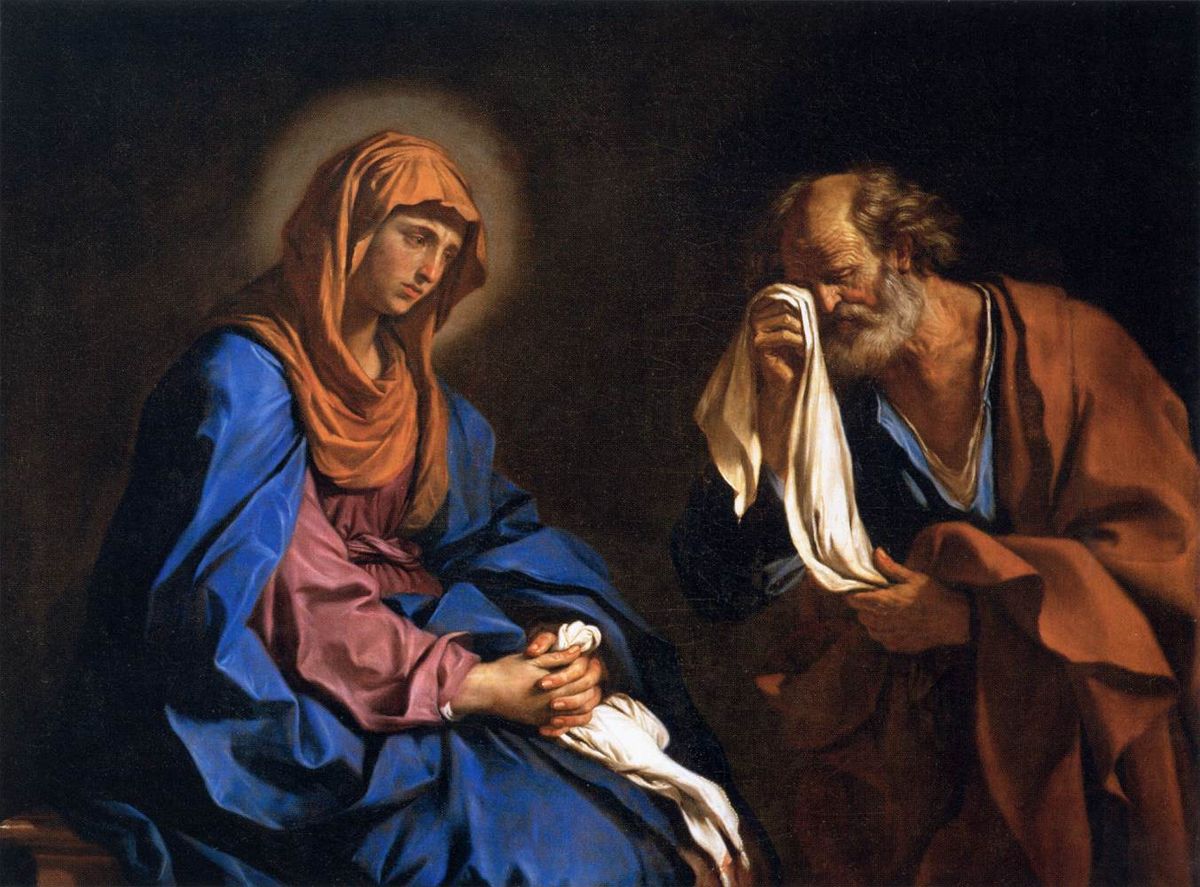
Op Stille Zaterdag sta ik stil bij Petrus. Die liet zijn beste vriend Jezus vallen toen een verontwaardigde menigte schande sprak over de gearresteerde Jezus, en toen Jezus het daadwerkelijke slachtoffer werd van het spel van de machtigen.

Op Stille Zaterdag besef ik meer dan ooit dat ik ben zoals die Petrus, en dat ik er af en toe best ootmoedig het zwijgen toe doe.

Guercino_-_St_Peter_Weeping_before_the_Virgin


“Sterk als de dood is de liefde.”

Het zijn woorden uit het Hooglied (8, 6), één van de kleinste boeken uit de Hebreeuwse Bijbel. Het is bovendien het enige boek waarin God niet expliciet wordt vermeld.

Als een bundel van rijk geschakeerde, erotische liefdespoëzie, waarin een jonge vrouw het voortouw neemt, kent het Hooglied een navenant rijk geschakeerde interpretatiegeschiedenis. De joodse filosoof Franz Rosenzweig (1886-1929) noemt het boek “Kernbuch der Offenbarung” – het boek dat de essentie van de Bijbelse Godsopenbaring bevat. In ieder geval vertegenwoordigt het Hooglied diepmenselijke ervaringen die van alle tijden zijn. The Beatles schreven ooit “Money can’t buy me love…” Eeuwen geleden zong het Hooglied (8, 7): “Al bood iemand alles wat hij bezit voor de liefde, men zou hem met verachting afwijzen.”

Jaren geleden werd het vers “Sterk als de dood is de liefde” de titel van mijn masterthesis. Een jaar na de voltooiing daarvan, op 30 april 2002, werd een concert opgenomen van de Schola Cantorum Cantate Domino in de Leuvense Abdijkerk Keizersberg. Het betrof een uitvoering van het Requiem van W.A. Mozart (1756-1791). Wijlen E.H. Michaël Ghijs vroeg mij toen om een meditatie te schrijven voor het cd-boekje. Ik was duidelijk nog in de ban van het Hooglied en dat intrigerende vers, want ik schreef onder andere:

“De onverbiddelijke dood maakt geen onderscheid. Geen mens is tegen zijn vernietigende kracht opgewassen. […] Zoals de dood maakt ook de liefde – in de Bijbel gaandeweg erkend als God – geen onderscheid. Maar de uitkomst en toekomst van de liefde zijn anders dan die van de dood. Terwijl de dood alles en allen in dezelfde duisternis en afgrond stort, is de liefde krachtig als een zorgzaam licht dat – paradoxaal genoeg – onderscheid wil maken en zegt: ‘Je mag bestaan en geheeld worden als man, als vrouw, als arme, weduwe en wees…'”

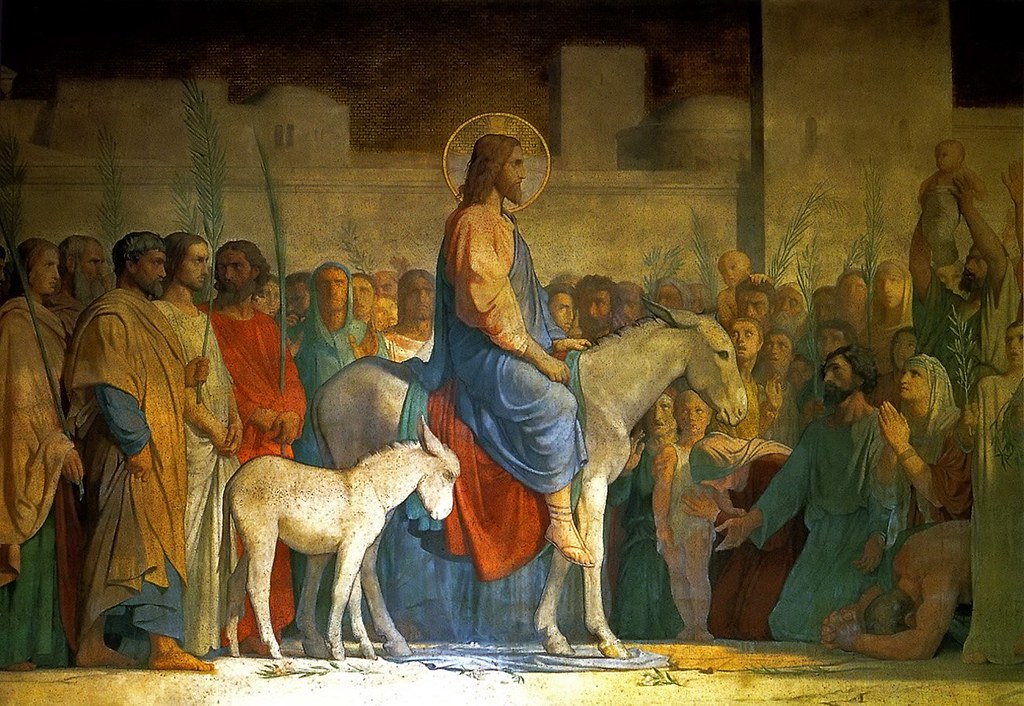
Ik heb die bezinning bij het Hooglied en bij de requiem-tekst herlezen naar aanleiding van Palmzondag en in het licht van de coronapandemie. Het Hooglied spreekt opnieuw, op een nieuwe wijze.

Christ Entry into Jerusalem_Hippolyte_Flandrin_1842

Onze wereld hecht doorgaans veel belang aan sociale status, politieke macht en invloed, rijkdom en meedogenloze sterkte. Het coronavirus niet. Zijn dodelijke angel treft CEO’s met een overvolle agenda even onverwacht als spelende kinderen, werkende mensen zowel als gepensioneerden. Het coronavirus woekert “zonder aanzien des persoons” en hecht geen belang aan wat wij doorgaans zo belangrijk vinden.

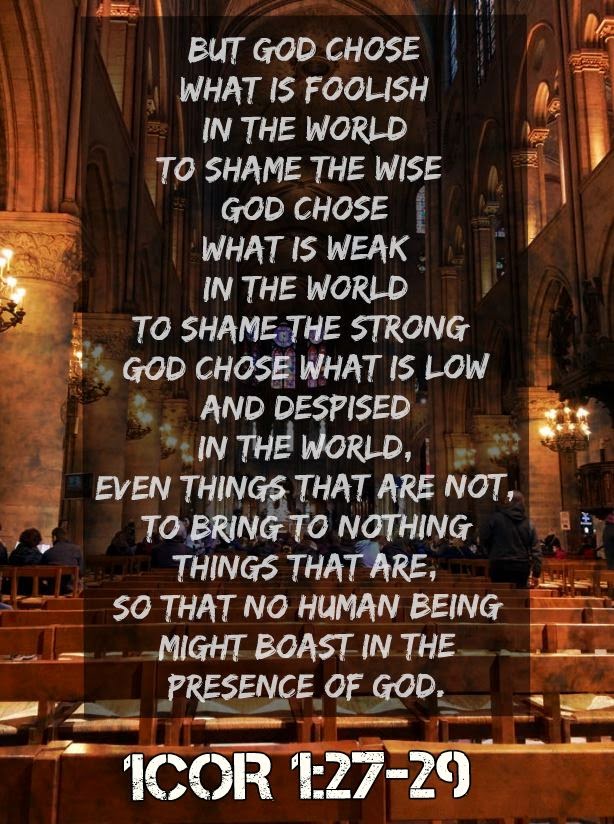
Tegelijk kunnen wij ons als mensen inschrijven in een andere dynamiek, die eveneens “zonder aanzien des persoons” waait. De liefde die in het Nieuwe Testament God wordt genoemd, houdt ook geen rekening met status, rijkdom en macht, maar hecht – niet berekenend – gelijkelijk waarde aan eenieder. Ze creëert hoop tegen alle wanhoop in, licht tegen alle duisternis, en ze maakt ons ontvankelijk voor wie wij ten diepste zijn als mensen. De liefde maakt ons ontvankelijk voor onszelf en voor elkaar – voorbij preoccupaties met status, macht, genot en rijkdom. “Wat voor de wereld van geringe afkomst is en onbeduidend, heeft God uitgekozen (1 Kor 1, 28a),” schrijft Paulus.

De liefde maakt vaak moeilijke (niet direct populaire) keuzes. Ze is ook bereid om zich over te geven aan een vermoeiende, allesbehalve automatisch aangename verantwoordelijkheidszin. En ze redt daarmee levens.

Vandaag verwelkomen wij, misschien bewuster dan andere dagen, het licht van die nederige liefde. In het bijzonder doen we dat voor onze kwetsbare en gekwetste medemensen. Et lux perpetua luceat eis – Dat het ondoofbare licht hen moge verlichten.

Het onderstaande luisterfragment – het Introitus uit Mozarts Requiem – is afkomstig van de eerder genoemde live-opname van knapen- en mannenkoor Schola Cantorum Cantate Domino uit Aalst, onder leiding van wijlen E.H. Michaël Ghijs. De solo jongenssopraan is Colin De Pelsmaker:

Error
This video doesn’t exist

The following five-part video series provides a preliminary understanding of human culture from the perspective of mimetic theory, which was first developed by René Girard (1923-2015).

I made the first parts to give an overview of some basic cultural facts. The later parts of the video series deal with mimetic theory’s explanation of those facts, ending with the role of the Judeo-Christian heritage in making that type of explanation possible. The last part of the series (PART V) clarifies how the Judeo-Christian traditions result in either a radical atheism or a radically new understanding of “God”.

CLICK HERE TO READ SOME INTRODUCTORY REMARKS FOR EACH VIDEO AND TO SEE AN OVERVIEW OF THEIR CONTENT (PDF)

PART I – THE SPELL OF THE SACRED

Error
This video doesn’t exist

PART II – THE DANCE OF THE SACRED (3 VIDEOS)

CHAPTER I-II-III

Error
This video doesn’t exist

CHAPTER IV

Error
This video doesn’t exist

CHAPTER V

Error
This video doesn’t exist

PART III – THE MYTHICAL REFLECTION OF THE AMBIGUOUS SACRED (3 VIDEOS)

CHAPTER I-II

Error
This video doesn’t exist

CHAPTER III-IV

Error
This video doesn’t exist

CHAPTER V-VI

Error
This video doesn’t exist

PART IV – THE ORIGIN AND EVOLUTION OF CULTURAL FACTS EXPLAINED (2 VIDEOS)

CHAPTER I-II

Error
This video doesn’t exist

CHAPTER III-IV

Error
This video doesn’t exist


PART V – THE GOSPEL REVELATION OF THE MYTHICAL LIE (2 VIDEOS)

CHAPTER I

Error
This video doesn’t exist

CHAPTER II

Error
This video doesn’t exist

Cave I

Misschien is het volgende goed nieuws voor de tegenstanders van het godsdienstonderwijs op katholieke scholen en van alles wat naar godsdienst ruikt:

(1) Wij, godsdienstleerkrachten, geloven niet automatisch in God.
(2) Ja, wij godsdienstleerkrachten geven grif toe dat we de jeugd trachten te “corrumperen” met “vreemde” ideeën.
(3) Ja, de christelijke traditie is – zoals andere grote levensbeschouwelijke tradities – ook zeer interessant voor andersgelovigen en niet-gelovigen.

Daaraan wil ik nog een persoonlijke noot toevoegen: ja, ik ben SJC Aalst“gebrainwasht” na jaren werken op het Sint-Jozefscollege, door de jezuïeten en de spiritualiteit van hun stichter, Ignatius van Loyola (1491-1556).

(1)

Pierre Abélard - Quote on DoubtIk twijfel vrij geregeld aan mijn geloof in God. Net zoals atheïsten die filosofisch zijn aangelegd ook wel eens aan hun ongeloof zullen twijfelen. (Niet) geloven is immers iets anders dan weten.
Intussen weet ik echter wel dat de grote spirituele tradities intrinsiek zinvol zijn.

(2)

Van de jezuïeten heb ik bijvoorbeeld geleerd dat vrij zijn niet hetzelfde is als “je zin doen”. Vrij zijn is “jezelf kunnen ontplooien”.

Een alcoholverslaafde die zijn zin doet, blijft verslaafd. Als je kinderen alleen laat eten waarin ze spontaan zin hebben, eten ze misschien teveel snoep, en onvoldoende groenten en fruit. Dat is niet bevorderlijk voor de fysieke en mentale ontwikkeling van kinderen. Door kinderen hun zin te laten doen, ontneem je hen paradoxaal genoeg dus de vrijheid om de best mogelijke versie van zichzelf te worden. Dat soort verwennerij wordt door psychiaters als Dirk De Wachter en Peter Adriaenssens terecht gekarakteriseerd als “pedagogische kindermishandeling”.

Ideaal is natuurlijk dat we vooral “zin” zouden hebben om “onszelf te ontplooien”.

Spijtig genoeg zijn we vaak overgeleverd aan impulsen waarvoor we niet zelf hebben gekozen, en beslissen die impulsen in onze plaats over ons leven. De kunst is om ons op de juiste manier tot die impulsen te verhouden, niet om ze te vernietigen.

Die impulsen kunnen van een eerder natuurlijke aard zijn – zoals in het geval van een ongecontroleerde lichamelijke drang naar snoep of alcohol. Ze kunnen ook van een eerder culturele aard zijn. We vragen ons soms te veel af wat betekenisvol is volgens de normen van het maatschappelijk systeem waarin we ons bevinden.

Wetten zijn goed als ze de voorwaarden scheppen waarin onze zelfontwikkeling kan plaatsvinden. Ze worden op een verkeerde manier benaderd als ze in onze plaats bepalen wie we zogezegd zijn. In termen van de Jezusfiguur uit de evangeliën klinkt dat als: “De sabbat is er voor de mens, en niet de mens voor de sabbat.” Een leerling die op een frauduleuze manier honderd procent haalt bijvoorbeeld, heeft het evaluatiesysteem tot doel gemaakt. Hij heeft het niet gebruikt als een middel dat hem helpt om zichzelf te ontwikkelen.

Teach us to Give and not to Count the Cost St IgnatiusHet voordeel van een beroepsopleiding is alvast dat leerlingen zichzelf en de wereld uiteindelijk moeilijk iets kunnen voorliegen: een gemetste muur is recht en blijft overeind, of ze is slecht gemetst. Leerlingen in het algemeen secundair onderwijs kunnen zichzelf langer op het verkeerde been zetten. Ze kunnen wiskundige bewijzen “van buiten” leren zonder die te begrijpen bijvoorbeeld, of vertalingen van Latijn en formules van fysica. De Einsteins van deze wereld studeren echter niet om de punten of het geld. Ze ontplooien een gepassioneerde liefde voor de werkelijkheid die ze willen leren kennen.
De ene honderd procent is dan ook de andere niet. “Plus (Latijn: magis) est en vous,” zeggen de jezuïeten. Daarmee dagen ze je uit om gebruik te maken van de ruimte om jezelf te ontwikkelen. Dat betekent niet: jezelf “verbeteren”. Dat betekent wel: jezelf “aanvaarden” met alle mogelijke begrenzingen die daarbij horen, en van daaruit “de best mogelijke versie van jezelf worden”. Als dat op een bepaald moment betekent dat je volgens de normen van een evaluatiesysteem zestig procent behaalt voor fysica, dan is dat maar zo. Die zestig procent is oneindig veel meer waard dan een frauduleus behaalde honderd procent.

De paradox, alweer, is dat jezuïeten vooral de leerling willen uitdagen die op een onwaarachtige manier “goede” punten behaalt. Aan leerlingen die hun zelfwaarde laten afhangen van hun “score” binnen een bepaald maatschappelijk systeem, zeggen zij: “Plus est en vous; wees niet tevreden met wat voldoende of excellent is voor het systeem, maar wees tevreden met wat voldoende of excellent is voor jezelf (en de rest komt dan wel).”

St Irenaeus The Glory of God is a Human Being Fully AliveDe reden waarom een katholieke spiritualiteit in navolging van Christus hamert op een realistische zelfaanvaarding, zelfliefde, zelfontplooiing en ja, een altijd zéér betrekkelijke “zelfbeschikking”, is eenvoudig: ze is de basisvoorwaarde om “God” (zijnde liefde) toe te laten in je leven. Zelfrespect leidt tot respect voor anderen. De alcoholverslaafde die zichzelf niet langer kan respecteren, kan op den duur ook geen verantwoordelijkheid meer opnemen voor anderen. De bouwkundige ingenieur die op een frauduleuze manier zijn diploma behaalt, zal misschien bruggen bouwen die in elkaar storten en slachtoffers veroorzaken.
Alle voorgaande overwegingen zijn extreem godsdienstig. Ze komen uit het hart van de christelijke traditie. Ze zijn ook heel logisch en worden bevestigd door wetenschappelijk onderzoek (zie De Wachter en Adriaenssens). De fabel dat godsdienstige tradities “irrationeel”, “anti-wetenschappelijk” of “immoreel” zouden zijn en dat ze alleen via “cherry picking” zin bevatten, geloof ik dan ook allang niet meer. Ook labels als “conservatief” of “niet meer van deze tijd” zijn niet van toepassing. Die labels getuigen van een stuitend gebrek aan realiteitszin aangaande de hierboven beschreven christelijke theologie en antropologie.

(3)

Alleszins inspireert elke parabel van de Jezusfiguur uit de evangeliën oneindig veel meer dan een gepolariseerd debat over de vraag of God bestaat. Dat weet ik wel zeker.

Zulk debat mondt immers vaak uit in kinderachtig narcistische wedstrijdjes over wie en wat het schadelijkst is voor de wereld: gelovigen en hun godsdienst of ongelovigen en hun seculiere levensbeschouwingen?

“In het dorp waar ik woon weet iedereen dat die imam kinderen misbruikt, en niemand doet er iets aan…” Dat vertelde een atheïst uit Suriname mij ooit. Hij verwees daarnaar om aan te tonen hoe verderfelijk godsdienstige organisaties wel waren. Tegelijk was hij er trots op dat hij niet tot die – in zijn ogen – “achterlijke” islamitische gemeenschap behoorde. Toen ik hem vroeg of hij al iets aan het misbruik van die kinderen had gedaan, bleef hij mij het antwoord schuldig.

Was die man echt bekommerd om het lot van die kinderen? Of was hij voornamelijk bezig met zijn zelfbeeld en wees hij op het misbruik om zich als de “moreel superieure” te profileren? Jezus’ gelijkenis over een farizeeër en een tollenaar (Lucas 18, 9-14) stelt precies die vraag. Als mens zijn we allen onderhevig aan gelijkaardige dynamieken. Precies daarnaar peilt Jezus, en dat is voor iedereen dus zinvol.

Jezus stelt trouwens nooit de vraag naar het bestaan van God. Wat hij wel doet, is mensen via onder andere verhalen een spiegel voorhouden. Hij vraagt ons naar onze diepste drijfveren. Zo ontmaskert hij vaak niet erkende jaloezie en ressentiment, of de eerzucht die zich soms verschuilt achter morele verontwaardiging. Tegelijk daagt hij ons daarbij uit om op een andere manier in het leven te staan – minder angstvallig en met meer vertrouwen. Of je die evident transcendente liefdesdynamiek ook goddelijk noemt, is een andere kwestie.I show you doubt to prove that faith exists Robert Browning

Een levensbeschouwelijk gesprek tussen atheïsten en gelovigen op basis van bijvoorbeeld een concrete parabel lijkt mij dan ook veel zinvoller dan een “wollig” dovemansgesprek over het al dan niet absurde karakter van geloven in God. In plaats van bevestiging te zoeken voor een narcistisch superioriteitsgevoel zouden we ons beter bezighouden met de altijd genuanceerde realiteit. Of is dat een vergissing?

Ignatius of Loyola

A FAMILIAR SCENE BY WAY OF INTRODUCTION

“Why don’t you girls get along with June anymore?” Regina’s mother asked. Regina and her two friends, Gretchen and Eve, stared at her in bewilderment. They were about to go on a shopping spree. For weeks they had gone out without June. “She has changed so much,” Regina answered. “Yes, she spoils the whole atmosphere of the group,” Eve added. “Quite frankly, mother, June has become this ordinary slut,” Regina concluded. Now it was her mother’s turn to stare at the three girls in bewilderment. And off they went.

About a month later, Gretchen accidently ended up next to June in the bus to school. The silence between them was awkward enough to make them talk to each other. Gretchen learned that her pretty companion had been going steady with Lysander for several months. And then it dawned on her: Regina had been gossiping about June being a slut because June had run away with Regina’s big crush, Lysander!

As soon as she had the chance Gretchen confronted Regina. “I talked to June and she is still the same old friend I knew!” she exclaimed. “You’re just jealous of her, that is the truth! You two are the same, you want that Lysander guy as much as she does! June in no way is a slut!” At that moment Eve stepped in to defend Regina and claimed both of them would turn their back on Gretchen if the latter didn’t change her opinion on June.

All of a sudden the clique of three were arguing about who betrayed who and they accused each other of being delusional. Their internal peace at the expense of an outcast had been broken. One of them had shown love for their external enemy, and had thus created internal enmity, within their own household. A new expulsion seemed imminent. Or would they all eventually be able to reconcile themselves with their former enemy?

YUVAL NOAH HARARI VS RENÉ GIRARD ON MYTH

Sapiens - A Brief History of Humankind (Yuval Noah Harari)

In his bestseller Sapiens – A Brief History of Humankind (London, Vintage, 2015), Yuval Noah Harari points out the consequences of the so-called Cognitive Revolution in human evolution. Between 70,000 and 30,000 years ago new ways of thinking and communicating allowed our ancestors to share more information with each other, not in the least about dangerous animals. Predators regularly threatened bands of humans from the outside. On the other hand, members of the same group of humans could also threaten each other. Hence, as we are primarily social animals depending on cooperation for our survival, we need even more information about each other and about potential threats from the inside.

“Our language evolved as a way of gossiping,” Harari concludes (p. 25). “Gossip usually focuses on wrongdoings. Rumour-mongers are the original fourth estate, journalists who inform society about and thus protect it from cheats and freeloaders (pp. 26-27).”

Harari paints a rather positive picture of gossip. He even refers to it as providing “reliable information about who [can] be trusted,” which allowed our ancestors to “develop tighter and more sophisticated types of cooperation (p. 26).” René Girard (1923-2015) would agree that gossip is a way to unite people. As the story of the introduction makes clear, the bond between Regina and her friends is indeed strengthened by their exclusion of June. However, Girard would also include the more common understanding of gossip as providing questionable or untruthful information. According to this scenario, June can be characterized as a scapegoat. She is accused of things she is not responsible for and seems to be the victim of Regina’s own misjudged desires. It is a type of misjudgment that is already at play very early on in human life.

When a child notices a playmate’s interest in a toy that the child had forgotten about, the child’s desire for the toy will very often be re-awakened. Instead of enjoying whatever he was doing, the child most likely will reclaim the toy as being his and insist that he was “the first” to want it. More often than not the playmate will mirror the child’s behavior and will also claim being the first. In other words, both the child and his playmate imitate and thus reinforce each other’s desire for an object until they forget about it and end up fighting about their very “being”. The more they try to distinguish themselves from each other by pretending that their own desire is not mimetic (i.e. imitative), the more they do imitate each other and become doubles. That is the tragic comic paradox of mimetic rivalry.

While the fighting children both deny the mimetic nature of their desire and claim that their desire is primary, they also both claim that their own violence is secondary. Both children will justify their own violence as a “necessary defense” against a so-called “first aggression” of the other child. Peace is restored when one of the parties either surrenders, is banned, or is somehow eliminated. Of course, the one with the most allies often has a better chance at winning a fight.

Research has shown that we more easily commit violence in groups than on our own, and this is one way by which a sense of personal responsibility for violence evaporates. After all, we are social, mimetic creatures. The well-known bystander effect is but one example of the consequences of our imitative behavior. At the same time, we tend to understand our own violence as “acts of self-defense” against potential threats and rivals, like the above mentioned two fighting children. It allows us to interpret the victim of our violence as the primary cause of that violence. This is yet another way by which a feeling of personal responsibility for violence disappears.

History knows many examples of violence that is justified by the myth of self-defense, which often gives rise to a mimetic dynamic of revenge over different generations. Al-Qaeda, for instance, justified its attacks on 9/11 as acts of self-defense. On April 24, 2002, the Islamist organization released a document about the matter, which also contained the following statement regarding the attackers:

“The only motive these young men had was to defend the religion of Allah, their dignity, and their honor. […] It was a service to Islam in defense of its people, a pure act of their will, done submissively, not grudgingly.”

In the wake of the 9/11 attacks, the US eventually decided to invade Iraq in 2003 and presented its move as a preemptive strike. The violence was justified as an act of self-defense against a regime that, according to the US, possessed weapons of mass destruction. The weapons were never found, but the aftermath of the war did create the conditions for the rise of ISIL… Violence begets violence.

The myth of self-defense indicates the flaws in Harari’s understanding of myth. Harari characterizes myths as merely fictional products of collective imagination, which allow people to develop complex networks of cooperation (pp. 30-31):

“Large numbers of strangers can cooperate successfully by believing in common myths.

Any large-scale human cooperation – whether a modern state, a medieval church, an ancient city or an archaic tribe – is rooted in common myths that exist only in people’s collective imagination. Churches are rooted in common religious myths. […] States are rooted in common national myths. […] Judicial systems are rooted in common legal myths. […]

Yet none of these things exists outside the stories that people invent and tell one another. There are no gods in the universe, no nations, no money, no human rights, no laws and no justice outside the common imagination of human beings.”

The myth of self-defense partly agrees with Harari’s line of thought. It is indeed a story that allows people to develop a large-scale cooperation towards a common goal: the establishment of a peaceful world by eliminating the (so-called) potential sources of violence. What Harari misses, however, is that myths are not merely interchangeable products of collective fiction which create new “imagined” realities, but that they are also interpretations of an already existing reality. As such, myths can be wrong, deceptive and mendacious.

The introductory story of this article already points this out. Regina and her friends justify their own behavior against June by believing the myth of their collective imagination: “June is a slut and we have to defend the group atmosphere by excluding her.” Although this kind of gossip tightens the bonds between Regina and her friends, it also turns out to perpetuate some blatant lies and unacknowledged desires: June is not the slutty girl she is accused of being, and as Regina fancies June’s boyfriend Lysander she is more like June than she likes to admit.

It is striking that Harari presents gossip as a means to provide “reliable information” about other people. It is even more striking that he separates myths – “imagined realities” – from lies (p. 35):

“An imagined reality is not a lie. […]

Unlike lying, an imagined reality is something that everyone believes in, and as long as this communal belief persists, the imagined reality exerts force in the world.

Ever since the Cognitive Revolution, Sapiens have thus been living in a dual reality. On the one hand, the objective reality of rivers, trees and lions; and on the other hand, the imagined reality of gods, nations and corporations.”

René Girard is heir to a tradition that tries to understand the human mind, and its imaginative and rational powers, from within the context of the fears and the desires of the human animal. Our imagination, whether individual or collective, is often a distorted reflection of those dynamics, not just an innocent expression thereof.

Girard more generally understands myths as stories that cover up the complete picture of violent situations. Myths allow people to deny their own responsibility for violence. Hence, for instance, managers can say “it is the economic reality which forces the company to fire half of the employees.” The economic reality is, of course, a myth or – in the words of Harari – “an imagined reality”. From Girard’s point of view, Harari’s story about myths as mere products of collective imagination is itself a myth: his story once again obscures the violent reality (or, better still, the “violence against reality”) behind the cultural imagination.

In the case of the introductory story of this article, Gretchen’s final assessment of June could still be dishonestly presented as “a matter of opinion” equally valid to Eve’s and Regina’s assessment. In the context of, say, the Oedipus myth, it is unequivocally clear that the mythical interpretation of reality does contain lies.

Myths are, apart from fictions, also lies about reality that people believe in, used to justify sacrificial violence.

The Oedipus myth presents the plague in Thebes as the consequence of the behavior of Oedipus. The citizens of Thebes believe that they are violently punished with the plague by disgruntled gods because they tolerate Oedipus as their king – a man who killed his father and married his mother. They as well as Oedipus also believe that the plague will end if Oedipus is expelled from the city.

Just like other myths, the Oedipus myth deceptively deals with the reality of violence. There is no causal relationship between killing your father and marrying your mother on the one hand, and the eruption of the plague on the other. There also is no causal relationship between the expulsion of Oedipus and the potential ending of the plague. In reality Oedipus is a scapegoat, wrongfully held responsible for a disorder and an order he is not responsible for. Nevertheless, the community of Thebes justifies the sacrifice of Oedipus as a divine commandment to finish off the disaster of the plague. The violence of the plague is interpreted as a divine punishment.

In short, the Oedipus myth reveals the two faces of the sacred in archaic religious communities. On the one hand, everything that is considered sacred is taboo because it is associated with potentially uncontrollable chaotic violence. On the other hand, if the sacred is made present in a controlled, structured way through ritual, it is believed to have beneficial peaceful outcomes. Hence destructive epidemic violence is taboo, while the violence of ritual sacrifice is allowed. The latter is the vaccine of controlled violence that should defend communities from the wildfire of violent disasters.

It is no coincidence that Oedipus pays for the wrath of the gods. After all, he is perceived as an embodiment of violence whose presence threatens the stability within the community. He did not honor the hierarchical position of the king. He violated the taboo against killing the king in an unlawful way. He also violated the taboo against desiring the wife of another. Moreover, he violated the taboo against sexuality in a ritually inappropriate way by unlawfully marrying his mother. By violating these sacred taboos, however unwittingly, Oedipus is perceived as having unleashed the violent wrath of the gods and as someone who needs to be sacrificed.

The justification of sacrificial violence is an essential component of mythic storytelling, which is not just “a figment of the imagination” but a deceptive interpretation of reality. The gossip of Regina and her friends reflects a deceptive understanding of themselves and June, which is used to justify the expulsion of June. The fighting child and his playmate have a deceptive understanding of themselves and each other, which is at work in their attempts to expel each other. The religious myth of Al-Qaeda reflects a deceptive understanding of itself and the US, which is used to justify the suicide of its members and the killing of US citizens on 9/11. The nationalist myth of the US reflects a deceptive understanding of itself and wrongfully accuses the former Iraqi regime of having weapons of mass destruction, which is used in 2003 to justify the destruction of that regime. The myth of a so-called inevitable economic reality is used to justify social and ecological sacrifices. The religious myth of the Theban community reflects a deceptive understanding of natural disasters, which is used to justify the expulsion of Oedipus. And so on. The list of stories that represent the deceptive myth of redemptive sacrificial violence is endless.

And yet Yuval Harari separates myths from lies and barely mentions sacrifice in his exploration of the religious and cultural imagination. He refers to sacrifice explicitly only twice. René Girard, on the other hand, remains much closer to today’s common parlance about myth as a story that is basically not true. His mimetic theory explains how our religious and cultural imaginations continue to develop from mimetic origins which are easily misjudged and which lead to the justification of sacrificial institutions.

It is not difficult to imagine how distorted perceptions of mimetic mechanisms underly the mythical imagination of the human animal, from the very beginning until now. Already in early human communities, mimetic rivalry over food, women, social status, power or territory could easily escalate until one of the fighting parties was overwhelmed by a group of opposing allies.

The transformation of a chaotic fight of “all against all” into an orderly unity of “all against one” has an astounding restorative effect, which is not only observable in bands of fellow humans but also in our ape cousins.

As illustrated earlier by the fight between a child and his playmate over a toy, mimetic doubles tend to blame their rival for the violence they experience. When one rival overcomes his enemy by banding together with some allies, his sense of responsibility for the violence will disappear even more. After all, humans feel less personally responsible when they are part of a group whose members imitate each other.

Hence, the phenomenon of victim blaming must have occurred regularly in early human communities as the result of restorative group violence. The rival who becomes the victim of collective deadly violence is perceived as the troublemaker. As long as he was alive, the community experienced violence. After killing him, the community experiences a renewed peace.

Instead of acknowledging its own share in the violence, the community will consider its victim as the exclusive cause of the violence, according to the two mechanisms described above. At the same time, the victim is perceived as the one who restores order in his presence as a dead creature. In other words, the victim is a scapegoat. He is exclusively held responsible for a disorder and an order he is not exclusively responsible for. He is at once villain and hero, horrifying monster and admirable savior (“mysterium tremendum et fascinans”).

On the basis of that deceitful scapegoat mechanism, violence and its victim get an ambiguous meaning. An outbreak of violence is perceived as a return of the “troublemaker” in the community. However, that victim is not visible anymore (in reality, he is dead). Nevertheless, violence more and more becomes associated with those kinds of “invisible persons” – later called ghosts, gods or forces.

Gradually, human communities will consider sacred everything they associate with violence. Insofar as sacred phenomena are associated with destructive violence resulting in disorder, they are taboo. On the other hand, insofar as sacred phenomena are associated with order, ritual allows for a controlled violation of taboos.

René Girard accurately characterizes myths as representing the taboos and the deceptive idea of “redemptive violence” by which communities maintain themselves. Myths are essentially stories that make a distinction between so-called “good” and “bad” violence in any given community.

The so-called good violence of ritual sacrifice is presented as a necessary, often sacred demand that preserves the taboo on uncontrollable violence (of sacred wrath). In terms of the introductory story, the “ritual” expulsion of June is deemed necessary to preserve the peaceful atmosphere within Regina’s group of friends. In terms of the Oedipus myth, the “ritual” expulsion of Oedipus is deemed a necessary divine commandment to restore peace and order. What these myths obscure, time and again, is the community’s own responsibility for violence. In this sense, the cultural order, in whatever guise it appears, continues to imitate the lie concerning the first victims of collective violence: every sacrificial expulsion that is justified by a myth of redemptive violence is actually a “re-presentation” of the scapegoat mechanism at the origin of human culture.

Some stories, however, challenge the ever-present myth of redemptive violence in the world of the human animal. The Gospel in particular tells the story of a man, Jesus of Nazareth, who consciously runs the risk of being sacrificed. After all, he constantly sides with the ones who are sacrificed (expelled or eliminated) on the basis of the myths of redemptive violence by their respective communities. This makes him suspect. Jesus is subversive to the extent that he reveals the lies behind every sacrificial structure. He thus challenges the core of the cultural order, as that order relies on sacrifice time and again.

Jesus of Nazareth calls people to love the external enemy of their particular groups and thus creates animosity in one’s own “household”. In this sense, he brings an end to the violent peace of the sacrificial order and creates the peace of non-violent conflict – internal debates, for instance.

To come back to the introductory story, Gretchen is a type of Jesus. She reveals that June is not that different from Regina. She reveals that June is not the monster she is called out to be. She reveals the sameness between June and Regina, which is a scandal in the context of the myth about June that Regina tries to defend.

The outcome of this revelation is not sure. Regina and Eve might restore their sacrificial order by expelling Gretchen as well, or they eventually might have a conversion and acknowledge the sameness between themselves and their former enemies.

The latter choice, acknowledging that sameness, paradoxically creates the possibility of accepting the other as other… and not just as a figment of one’s own imagination. 

P.S. Find highly recommended further reading here (pdf): Evolution and Conversion, by René Girard.

Evolution and Conversion (René Girard)

THE FOLLOWING IS THE RESULT OF A CONVERSATION WITH AN ATHEIST WHO ASKED ME SOME BASIC QUESTIONS ABOUT MY CHRISTIAN FAITH.

the-preaching-of-foolishness

What is the purpose of the New Testament?

Well, the writers of the New Testament want to enable an encounter with Jesus of Nazareth.

Why would that be important?

The New Testament authors all believe in God. They are convinced that God is revealed in the person of Jesus, who is therefore called “Christ”. Basically they claim that knowing Jesus is an excellent way to know God.

Okay, now suppose there is a God – which I don’t believe, by the way –, why on earth would it be important to know God?

Maybe you will label the following answer as an absurdity, if not as an outright offensive statement.

The New Testament writers are convinced that you cannot know yourself if you don’t know God. So, according to them, if you are interested in knowing yourself, you must know God.

Your prediction turns out to be right. The Christian faith sounds ridiculous. It claims that there is a God, which is a first absurdity to my atheist ears. Second, it claims that I should somehow learn to know a poor Jewish guy who lived and died two thousand years ago in a remote area of the Roman Empire if I want to know that “God”. Indeed, that sounds absurd!

Does the Christian tradition claim that this is the only way to know God? What about the people who lived before Jesus? What about the people who have never heared of him?

I don’t know about all the Christian churches, but I do know that the Catholic Church acknowledges other ways through which God can be known. In that sense the answer to your question is no. The Bible and the Christian tradition as a whole are not the only ways to experience the reality of Christ.

Anyway, what you are saying still sounds patronizing. I’m an atheist. I don’t have to know a fictitious “God” to know myself. Moreover, what if I’m not interested in knowing myself at all? Why would it be important to know myself?

Let me ask you this question: is it possible for people to know themselves without love?

What do you mean? What has that got to do with anything we are talking about?

Well, you will need to be a little patient now. I’ll try to explain it.

I’ve learned from child psychiatrists that there are basically three types of child neglect, which are often mixed together. All of them have to do with a lack of love. The first one is treating a child as if the child is worth nothing. That is the merely negative approach. The second is treating a child as if the child doesn’t exist. That is the indifferent approach. The third is treating a child as if the child is a superior being. That is the merely positive approach.

Children who are treated in these ways will grow up craving attention and recognition. In order to satisfy this craving, they will tend to present an image of themselves that they believe will give them the desired attention.

The child who ends up thinking he is worth nothing might try to avoid further negative criticism by attempting to meet everyone’s expectations. This child does not know who he is or what his qualities are, apart from being whoever people want him to be. He has difficulty recognizing his own talents because he suspects others might ridicule them. Being ashamed of himself in this way, he tends to look up to others – as if they are flawless and he is full of mistakes.

The child who experienced a lot of indifference while growing up might think he must be a bully to get recognition. This child does not know who he is or what his qualities are, apart from being a bully. He reduces life to a powerplay.

How seldom we weigh our neighbor in the same balance with ourselves (Thomas a Kempis)And the child who is used to be treated as a superior being might think he indeed is superior to others and might only listen to people who confirm his self-concept. This child does not know who he is or what his qualities are, apart from being the narcissist he has become. He has difficulty recognizing his own flaws. Being ashamed of himself in this way, he tends to look down on others – as if he is flawless and they are full of mistakes.

If those children would have been treated with love, they would have discovered their talents as well as their flaws without being ashamed of them. Moreover, if people can recognize their own true talents, they will be more able to recognize and appreciate the talents of others as well, beyond inferiority complexes, powerplays or jealous competition.

In short, loving others is only possible if you truly love yourself and that’s why you should know yourself in some sense. If you believe loving yourself and others is important, then you should develop a minimum of self-knowledge. This is only possible if you refuse to treat anything as divine, except love itself. If you open up yourself to receive love, you will be able to love yourself as well as others.

I understood everything you said until your next to last statement. Could you please explain what you mean by “love is only possible if you refuse to treat anything as divine, except love itself”?

It is a short version of Mark 12:28-31, in which Jesus summarizes the teachings of the Bible:

One of the teachers of the law came and heard the Sadducees debating Jesus. Noticing that Jesus had given them a good answer, the teacher of the law asked him, “Of all the commandments, which is the most important?”

“The most important one,” answered Jesus, “is this: ‘Hear, O Israel: The Lord our God, the Lord is one. Love the Lord your God with all your heart and with all your soul and with all your mind and with all your strength.’ The second is this: ‘Love your neighbor as yourself.’ There is no commandment greater than these.”

The Greatest Commandment in Hebrew.jpg

“To love God” is, in a Jewish sense, the prohibition to consider anything as divine or “perfect” (see Exodus 20:3-4). It is the prohibition on idolatry. Now let’s connect this principle to what was mentioned earlier.

If you want to learn something that will help you, learn to see yourself as God sees you (Thomas a Kempis)Someone who suffers from an inferiority complex has the tendency to idolize others and to blame himself for everything that goes wrong in his life. He also has the tendency to compare himself to those so-called “perfect” others in order to develop an acceptable self-image. Thus he is primarily interested in others as “mirrors”. Others are reduced to means who should confirm a certain self-image. Having experienced a lack of love while growing up, the person who suffers from an inferiority complex is not interested in himself apart from the image he hopes will give him some social recognition. Unable to truly respect himself he is also unable to respect others. As said, he is only interested in them as means, not as ends in themselves. His whole life is dominated by fear, more specifically by the fear of punishment or rejection by others if he doesn’t live up to a so-called acceptable image in his main social environment. His life is hell. Hell is real. 1 John 4:18 puts it this way:

“There is no fear in love. But perfect love drives out fear, because fear has to do with punishment. The one who fears is not made perfect in love.”

no fear in love

The same reasoning goes for someone who suffers from a superiority complex. This comes as no surprise, as a superiority complex is often a compensation for feelings of inferiority and shame about one’s own flaws. The person who suffers from a superiority complex has the tendency to idolize himself and is again only interested in others as means to confirm his so-called “perfect” self-image. Fearing failure the person who suffers from a superiority complex turns his own life and the life of others into hell.

Love is the abandonment of the fear of not being perfect. It is the abandonment of any kind of idolatry, which creates the possibility to “love your neighbor as yourself”. Again, “to love God” is, in a Jewish sense, the prohibition to consider anything as divine, neither yourself nor others. As such, it is the conditio sine qua non “to love your neighbor as yourself”. Respect for the prohibition on idolatry as an absolute commandment is the recognition of the singular divinity of love. That is the paradox that is at the heart of the Christian faith.

Indeed, the Christian tradition claims that “God is love”. Hence, in this light it is true to say that you can only know yourself if you know God: you can only know yourself if you know love.

See for instance 1 John 4:16b:

“God is love. Whoever lives in love lives in God, and God in them.”

agape love

Love allows us to discover the truth about ourselves and others, beyond illusory self-images. It allows us to discover each other’s beauty, as we no longer consume each other as means to satisfy our desire for recognition, but recognize each other as ends. Christians believe that Jesus of Nazareth embodies the reality of love in an excellent way. That’s why they call him the Christ and that’s why they call for an Imitatio Christi. The importance of that kind of mimesis in the Christian tradition runs from the apostle Paul over Thomas à Kempis (1380-1471) to René Girard (1923-2015) – to name but a few.

Jesus criticizes both superiority and inferiority complexes in people in order to enable “re-connections” and reconciliation between them. He offers the grace of forgiveness so that we might no longer be ashamed of ourselves and that we might be able to forgive and accept the flawed nature of others as well. Whenever that happens and the reality of love is established, there is “heaven” – “the Kingdom of God”. Love leads to the salvation of ourselves and others.

The glory of God is a human being fully alive (Irenaeus of Lyons)As Irenaeus of Lyons (130-202) writes, “the glory of God is the human person fully alive.” The human person who is “fully alive” is the person who overcomes fear in order to love more deeply. Love transforms fear from fear of the other (as a potential rival) into fear for the other (as my neighbor).
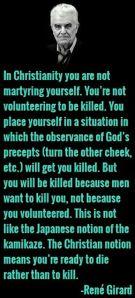
I guess my next question is superfluous. You do believe in God, heaven and hell?

In Christianity you are not martyring yourself (René Girard)Yes. I do believe in the reality of love, and I do believe that wherever it is given room to establish itself there is “heaven”. As I also believe that wherever fear takes over there is “hell”. And as far as this world is concerned, we always find ourselves between heaven and hell, between love and fear. The challenge is to distinguish between those two “spirits” or dynamics, and to rely on love ever more deeply. In reference to Ignatius of Loyola (1491-1556), discernment is key in order to follow the transformative and creative power of love, which turns fear of the other (as a potential rival) into fear for the other (as my neighbor). We can only hope people will imitate each other in this way.

So love over fear, even if love can bring you in a situation where you end up being despised, rejected or crucified by people who hate the criticism of their socially mediated self-images?

That’s the challenge, yes, in which we more often fail than succeed.

Isn’t it foolish, if not absurd to live that kind of risky life?

Hell yeah, it is! But I would rather live an authentic life in the realm of love than die to an inauthentic one because of fear. As that saying goes, derived from a poem by Alfred, Lord Tennyson (1809-1892),

“It’s better to have lost at love than never to have loved at all.”

Alfred, Lord Tennyson In Memoriam XIV_XXVII_XXXV

I believe that is true. There is a comfort in love that does not depend on its eventual outcomes. In that sense it is “all-powerful”, however much vulnerable and fragile it is.

1COR1V27-29

The following is a collection of (tragic) comical references to some of the cornerstones of René Girard’s mimetic theory, especially its analysis of the reality of mimetic desire and rivalry in human relationships. They appeared on Mimetic Margins throughout the years.

Have fun with the short videoclips from Mr Bean, Chris Rock, The Fresh Prince of Bel Air, Seinfeld and The Big Bang Theory!

***

MIMETIC MR BEAN

It’s all there below, in this classic piece of British humour – some of the basic elements of René Girard’s mimetic theory: mimetic desire, mimetic competition or rivalry and the haunting nightmare of the mimetic double. Rowan Atkinson’s Mr Bean really is the master of ceremonies here. Indeed, we often take more than we need when there are other people circling around the same buffet.

Moreover, mimetic dynamics generally are at work in the development of our eating habits. It would be very interesting to create an intensified dialogue between Paul Rozin’s research on the acquisition of likes and dislikes of foods and René Girard’s mimetic theory. Although some scholars already made some connections between the two (for instance in Culinary Cultures of Europe: Identity, Diversity and Dialogue, ed. by Darra Goldstein & Kathrin Merkle, Council of Europe Publication, 2005), much promising work remains to be done. Click here for a previous post on the subject, Mimetic Food Habits.

Enjoy this clever excerpt from Mr Bean in Room 426 (first broadcast 17th Feb 1993):

***

CHRIS ROCK ROCKS MIMETICALLY

American comedian Chris Rock refers to yet another example of mimetic dynamics (in the TV Special Never Scared, 2004), the potential rivalry between two good friends over the same potential partner:

***

WILL SMITH’S FRESH PHILOSOPHY

“I hate all this philosophical mumbo-jumbo! It just doesn’t make any sense!”

I’ve experienced reactions like these from my students quite often while trying to teach them some philosophy. They express the normal frustration people get when they just don’t seem to succeed in mastering the issues they’re facing. To be honest, I more than once imitated their feelings of despair by getting frustrated and impatient myself about their inability to understand what I was trying to say. The story of students blaming teachers for not explaining things well enough, and of teachers responding that their students just don’t try hard enough, is all too familiar. But, at the end of the day, having worked through some negative emotions, I somehow always manage to sit down at my desk and try to improve upon my part of communicating. I can only hope it stays that way.

The writings of Jewish philosopher Emmanuel Levinas are not always easy to understand, let alone agree with. Roger Burggraeve, one of my professors at the University of Leuven, has proven to be an excellent guide to introduce me to the philosophy of Levinas (click here for an excellent summary by Burggraeve). But explanations at an academic level are not always easily transferable to a high school level. Regarding Levinas I’m faced with the challenge to explain something about his thoughts on “the Other” and “the Other’s face”. Although Levinas’ musings often appear to be highly abstract for someone who didn’t receive any proper philosophical training, his thinking springs from very “earthly”, even dark realities and experiences – especially the experience of the Holocaust. Levinas’ response to the threat of totalitarianism is actually very down to earth, but because it wants to be “fundamental”, I can imagine it indeed sometimes comes across as mumbo-jumbo to sixteen year olds.

Luckily enough for me, as a teacher, an episode of The Fresh Prince of Bel Air (season 3, episode 12 The Cold War) can help to make clear what “the encounter with the Other” could be like in a particular situation. Moreover, it also serves as a good way to connect René Girard’s mimetic theory with some of Levinas’ main insights. Here’s the story:

Will and his nephew Carlton have a crush on the same girl, Paula. Carlton had been the first to date Paula, but after introducing her to Will, she also becomes Will’s object of interest. Will imitates the desire of Carlton and, upon noticing this, Carlton in turn reinforces his desire for Paula by imitating his new rival Will. This is a prime and archetypal example of what Girard has labeled mimetic (or imitative) desire, which potentially leads to mimetic rivalry. Will and Carlton become each other’s obstacles in the pursuit of an object (in this case a person, Paula) they point to each other as desirable. They become jealous of each other and try to out compete one another. They both fear the other as a threat to their self-esteem and independency. Ironically however, as they try to differ themselves from each other by unwittingly imitating each other’s desire, they resemble each other more and more. In fact, their sense of “being” becomes truly dependent on the other they despise. They end up dueling each other in a pillow fight, trying to settle the score.

At one moment, near the end of Will and Carlton’s fight, something happens which indeed illustrates what Levinas means with “response to the Other’s face” (click here for some excerpts from Levinas’ Ethics as First Philosophy). Will pretends to be severely injured (“My eye!”), whereon Carlton totally withdraws from the fight. Carlton finds himself confronted with Will’s vulnerability, and is genuinely concerned for his nephew’s well-being. The Other he was fighting turns out to be more than his rival, more than the product of his (worst) imaginations. Indeed, before being a rival the Other “is simply there“, not reducible to any of our concerns, desires or anxieties. Carlton is not concerned for his own sake: he doesn’t seem to fear any punishment, nor does he seem to desire any reward while showing his care for Will. He abandons all actions of self-interest “in the wink of an eye”.

This is an ethical moment, as Levinas understands it. It goes beyond utilitarianism which, as it turns out, justifies itself as being “good” by arguing that self-interest (i.e. what proves useful for one’s own well-being) eventually serves the interest (well-being) of others as well. Putting forward the effect on the well-being of others as justification for utilitarianism is telling, and shows that utilitarianism in itself doesn’t seem to be “enough” as a foundation for ethics. Moreover, utilitarianism serves the interests of “the majority”, which threatens to overlook what happens to minorities “other than” that majority. Sometimes sacrificing a minority might seem “logical” from this point of view. By contrast, in what is “the ethical moment” according to Levinas, one fears being a murderer more than one’s own death. In other words, provoked by the Other’s “nakedness” and “vulnerability” (the Other’s face which lies beyond our visible descriptions and labeling of the Other), OUR FEAR OF THE OTHER IS TRANSFORMED IN FEAR FOR THE OTHER. The mimetic rivalry between Will and Carlton is thus interrupted until, of course, Will reveals he was only joking about his injury… and the pillow fight continues.

CLICK TO WATCH:

Eventually, Will and Carlton quit fighting and start confessing their wrongdoings towards one another. They no longer imitate each other’s desire to assert themselves over against one another, but they imitate each other in being vulnerable and forgiving, recognizing “each Other”. They imitate each other’s withdrawal from mimetically converging desire and rivalry. It is by becoming “Other” to one another that they paradoxically gain a new sense of “self”, as an unexpected consequence…

Enjoy that grand twist of humor in Will Smith’s unexpected philosophy class…

CLICK TO WATCH:

***

SHAKESPEARE MUSTA LOVED SEINFELD

In the book Evolution and Conversion – Dialogues on the Origins of Culture (Continuum, London, New York, 2007), René Girard talks about popular culture and discusses the power of mass media. His approach is very nuanced, as he distinguishes between positive and negative aspects of these phenomena. He even dares to compare television series Seinfeld to the works of William Shakespeare (1564-1616). Girard develops his thoughts in a conversation with Pierpaolo Antonello and João Cezar de Castro Rocha. The seventh chapter, Modernity, Postmodernity and Beyond, reads the following (pp. 249-250):

Guy Debord wrote that ‘the spectacle is the material reconstruction of the religious illusion’ brought down to earth. Could we consider the expansion of the mass-media system, and the ideological use of it, as a ‘kathechetic’ instrument as well?

Of course, because it is based on a false form of transcendence, and therefore it has a containing power, but it is an unstable one. The conformism and the ethical agnosticism induced by media such as television could also produce forms of mimetic polarization at the mass level, making people more prone to be swayed by mimetic dynamics, inducing the much-feared populism in Western democracies.

Do you agree, however, that movies, TV and advertising draw heavily on mimetic principle, therefore increasing our awareness on this score?

Yes and no, because the majority of Hollywood or TV productions are very much based on the false romantic notion of the autonomy of the individual and the authenticity of his/her own desire. Of course there are exceptions, like the popular sit-com Seinfeld, which uses mimetic mechanisms constantly and depicts its characters as puppets of mimetic desire. I do not like the fact that Seinfeld constantly makes fun of high culture, which is nothing but mimetic snobbery, but it is a very clever and powerful show. It is also the only show which can afford to make fun of political correctness and can talk about important current phenomena such as the anorexia and bulimia epidemic, which clearly have strong mimetic components. From a moral point of view, it is a hellish description of our contemporary world, but at the same time, it shows a tremendous amount of talent and there are powerful insights regarding our mimetic situations.

Seinfeld is a show that gets closer to the mimetic mechanism than most, and indeed is also hugely successful. How do you explain that?

In order to be successful an artist must come as close as he can to some important social truth without inciting painful self-criticism in the spectators. This is what this show did. People do not have to understand fully in order to appreciate. They must not understand. They identify themselves with what these characters do because they do it too. They recognize something that is very common and very true, but they cannot define it. Probably the contemporaries of Shakespeare appreciated his portrayal of human relations in the same way we enjoy Seinfeld, without really understanding his perspicaciousness regarding mimetic interaction. I must say that there is more social reality in Seinfeld than in most academic sociology.”

Maybe a small example can lift a tip of the veil. I chose a short excerpt from Seinfeld’s episode 88 (season 6, episode 2, The Big Salad). Jerry Seinfeld is dating a nice lady. However, when he finds out his annoying neighbor Newman is her former lover, his face darkens… One doesn’t have to watch the whole episode to know what will happen next. Indeed, Jerry eventually breaks up with his date, imitating what Newman did and ‘ending it’. The reason Jerry’s desire for his girlfriend diminishes precisely lies in the often imitative or, as Girard would call it, ‘mimetic’ nature of desire. Jerry just doesn’t desire his date directly all the way, but he is – like all of us – sometimes heavily influenced by certain models who point out what he should or should not desire. In this case, Newman turns out to be a model who negatively influences Jerry’s desire…

This scene is fun, because it’s all too recognizable and it mirrors some aspects of our tragic comic behavior – good, refined humor as it should be!

Click to watch:

***

MIMETIC BIG BANG THEORY

Sometimes, just sometimes, quite revealing scientific insights slip into popular culture. I was watching a rerun of an episode of The Big Bang Theory sitcom on Belgian television. More specifically, I found out, I was watching The White Asparagus Triangulation (episode 9, season 2 ).

Mimetic DesireThe title itself can already be connected to a basic concept of René Girard’s mimetic theory, namely mimetic desire. As it turns out, “triangulation” indeed refers to the triangular nature of human desire (beyond instinctive needs) as described by Girard: the desire of a subject towards a certain object is positively or negatively influenced by mediators or models (click here to watch an example of negatively mediated desire from another popular sitcom, Seinfeld). Humans imitate others in orienting their desires – their desire thus is mimetic.

In the case of this episode from The Big Bang Theory: Sheldon tries to positively influence the desire of Leonard’s new girlfriend, Stephanie. After all, she is the first of Leonard’s dates to meet Sheldon’s high intellectual standards, so Sheldon does everything to increase Stephanie’s desire for Leonard. At some point he tries to persuade the girl next door, Penny, to present herself as a rival/model for Stephanie. Here’s the script for this scene.

Scene: Outside Penny’s door.

Sheldon (Knock, knock, knock) : Penny (knock, knock, knock) Penny.

Penny: What?

Sheldon (Knock, knock, knock) : Penny. Zucchini bread.

Penny: Oh, thank you.

Sheldon: May I come in?

Penny: No.

The White Asparagus Triangulation Penny and Sheldon Zucchini

Sheldon: I see. Apparently my earlier inquiry regarding you and Leonard crossed some sort of line. I apologize.

Penny: Well, thank you.

Sheldon: So, have you and I returned to a social equilibrium?

Penny: Yes.

Sheldon: Great. New topic. Where are you in your menstrual cycle?

Penny: What?

Error
This video doesn’t exist

Sheldon: I’ve been doing some research online, and apparently female primates, you know, uh, apes, chimpanzees, you, they find their mate more desirable when he’s being courted by another female. Now, this effect is intensified when the rival female is secreting the pheromones associated with ovulation. Which brings me back to my question, where are you in (Penny slams door). Clearly, I’m 14 days too early.

Female Chimpanzee Sexual Swelling KanyawaraSeveral lines of evidence indicate some female competition over mating. First, at Mahale, females sometimes directly interfered in the mating attempts of their rivals by forcing themselves between a copulating pair. In some cases, the aggressive female went on to mate with the male. At Gombe, during a day-long series of attacks by Mitumba females on a fully swollen new immigrant female, the most active attackers were also swollen and their behaviour was interpreted as ‘sexual jealousy’ by the observers. Townsend et al. found that females at Budongo suppressed copulation calls when in the presence of the dominant female, possibly to prevent direct interference in their copulations. Second, females occasionally seem to respond to the sexual swellings of others by swelling themselves. Goodall described an unusual incident in which a dominant, lactating female suddenly appeared with a full swelling a day after a young oestrous female had been followed by many males. Nishida described cases at Mahale in which a female would produce isolated swellings that were not part of her regular cycles when a second oestrous female was present in the group.

The White Asparagus Triangulation eventually gets its title from another scene in the episode. Sheldon tries to establish Leonard as “the alpha male”. Sheldon will pretend that he is unable to open a jar of asparagus. If Leonard then opens the jar he will have won the mimetic competition over the question “who is the strongest?”, resulting in an increase of his sex appeal. Of course, for the sake of comedy, things go terribly wrong :). Here’s the script for this scene.

Scene: The apartment.

Leonard: All I’m saying is if they can cure yellow fever and malaria, why can’t they do something about lactose intolerance?

Steph: Leonard, you’re going to have to let this go. You had a little cheese dip, you farted, I thought it was cute.

Sheldon: Oh, hi Stephanie.

Steph: Hi.

Leonard: Want some more wine?

Steph: Yeah, I assume I’m not driving anywhere tonight. (Sheldon lets out a loud noise).

Leonard: What are you doing?

Sheldon: I have a craving for white asparagus that apparently is destined to go unsatisfied.

Leonard: Excuse me. What the hell is wrong with you?

Sheldon: I’m helping you with Stephanie.

Leonard: By making constipated moose sounds?

The White Asparagus Triangulation Big Bang Theory

Sheldon: When I fail to open this jar and you succeed it will establish you as the alpha male. You see, when a female witnesses an exhibition of physical domination she produces the hormone oxytocin. If the two of you then engage in intercourse this will create the biochemical reaction in the brain which lay people naively interpret as falling in love.

Leonard: Huh? Would it work if I just punched you in the face?

Sheldon: Yes, actually it would, but let’s see how the lid goes. I’m not strong enough, Leonard, you’ll have to do it.

Leonard: Oh, for god’s sakes.

Sheldon: Go ahead, it’s pre-loosened.

Steph: Do you want some help with that?

Leonard: No, no, no, I got it.

Sheldon: No, yeah, yeah, he’s got it, and that’s not surprising. This is something I long ago came to peace with in my role as the beta male. Open it. (Leonard tries again. Then taps jar on counter. Jar breaks.)

Error
This video doesn’t exist

Steph: Oh my god, are you okay?

Leonard: No, I’m not. I’m bleeding.

Sheldon: Like a gladiator!

Steph: Oh, honey, you’re going to need stitches.

Leonard: Stitches? With a needle?

Steph: Well, yeah, I mean, just a few.

Leonard: Oh, okay, yeah, hang on a sec. (Throws up in sink)

Sheldon: FYI, I was defrosting a steak in there.