“Why don’t you girls get along with June anymore?” Regina’s mother asked. Regina and her two friends, Gretchen and Eve, stared at her in bewilderment. They were about to go on a shopping spree. For weeks they had gone out without June. “She has changed so much,” Regina answered. “Yes, she spoils the whole atmosphere of the group,” Eve added. “Quite frankly, mother, June has become this ordinary slut,” Regina concluded. Now it was her mother’s turn to stare at the three girls in bewilderment. And off they went.
About a month later, Gretchen accidently ended up next to June in the bus to school. The silence between them was awkward enough to make them talk to each other. Gretchen learned that her pretty companion had been going steady with Lysander for several months. And then it dawned on her: Regina had been gossiping about June being a slut because June had run away with Regina’s big crush, Lysander!
As soon as she had the chance Gretchen confronted Regina. “I talked to June and she is still the same old friend I knew!” she exclaimed. “You’re just jealous of her, that is the truth! You two are the same, you want that Lysander guy as much as she does! June in no way is a slut!” At that moment Eve stepped in to defend Regina and claimed both of them would turn their back on Gretchen if the latter didn’t change her opinion on June.
All of a sudden the clique of three were arguing about who betrayed who and they accused each other of being delusional. Their internal peace at the expense of an outcast had been broken. One of them had shown love for their external enemy, and had thus created internal enmity, within their own household. A new expulsion seemed imminent. Or would they all eventually be able to reconcile themselves with their former enemy?
YUVAL NOAH HARARI VS RENÉ GIRARD ON MYTH
In his bestseller Sapiens – A Brief History of Humankind (London, Vintage, 2015), Yuval Noah Harari points out the consequences of the so-called Cognitive Revolution in human evolution. Between 70,000 and 30,000 years ago new ways of thinking and communicating allowed our ancestors to share more information with each other, not in the least about dangerous animals. Predators regularly threatened bands of humans from the outside. On the other hand, members of the same group of humans could also threaten each other. Hence, as we are primarily social animals depending on cooperation for our survival, we need even more information about each other and about potential threats from the inside.
“Our language evolved as a way of gossiping,” Harari concludes (p. 25). “Gossip usually focuses on wrongdoings. Rumour-mongers are the original fourth estate, journalists who inform society about and thus protect it from cheats and freeloaders (pp. 26-27).”
Harari paints a rather positive picture of gossip. He even refers to it as providing “reliable information about who [can] be trusted,” which allowed our ancestors to “develop tighter and more sophisticated types of cooperation (p. 26).” René Girard (1923-2015) would agree that gossip is a way to unite people. As the story of the introduction makes clear, the bond between Regina and her friends is indeed strengthened by their exclusion of June. However, Girard would also include the more common understanding of gossip as providing questionable or untruthful information. According to this scenario, June can be characterized as a scapegoat. She is accused of things she is not responsible for and seems to be the victim of Regina’s own misjudged desires. It is a type of misjudgment that is already at play very early on in human life.
When a child notices a playmate’s interest in a toy that the child had forgotten about, the child’s desire for the toy will very often be re-awakened. Instead of enjoying whatever he was doing, the child most likely will reclaim the toy as being his and insist that he was “the first” to want it. More often than not the playmate will mirror the child’s behavior and will also claim being the first. In other words, both the child and his playmate imitate and thus reinforce each other’s desire for an object until they forget about it and end up fighting about their very “being”. The more they try to distinguish themselves from each other by pretending that their own desire is not mimetic (i.e. imitative), the more they do imitate each other and become doubles. That is the tragic comic paradox of mimetic rivalry.
While the fighting children both deny the mimetic nature of their desire and claim that their desire is primary, they also both claim that their own violence is secondary. Both children will justify their own violence as a “necessary defense” against a so-called “first aggression” of the other child. Peace is restored when one of the parties either surrenders, is banned, or is somehow eliminated. Of course, the one with the most allies often has a better chance at winning a fight.
Research has shown that we more easily commit violence in groups than on our own, and this is one way by which a sense of personal responsibility for violence evaporates. After all, we are social, mimetic creatures. The well-known bystander effect is but one example of the consequences of our imitative behavior. At the same time, we tend to understand our own violence as “acts of self-defense” against potential threats and rivals, like the above mentioned two fighting children. It allows us to interpret the victim of our violence as the primary cause of that violence. This is yet another way by which a feeling of personal responsibility for violence disappears.
History knows many examples of violence that is justified by the myth of self-defense, which often gives rise to a mimetic dynamic of revenge over different generations. Al-Qaeda, for instance, justified its attacks on 9/11 as acts of self-defense. On April 24, 2002, the Islamist organization released a document about the matter, which also contained the following statement regarding the attackers:
“The only motive these young men had was to defend the religion of Allah, their dignity, and their honor. […] It was a service to Islam in defense of its people, a pure act of their will, done submissively, not grudgingly.”
In the wake of the 9/11 attacks, the US eventually decided to invade Iraq in 2003 and presented its move as a preemptive strike. The violence was justified as an act of self-defense against a regime that, according to the US, possessed weapons of mass destruction. The weapons were never found, but the aftermath of the war did create the conditions for the rise of ISIL… Violence begets violence.
The myth of self-defense indicates the flaws in Harari’s understanding of myth. Harari characterizes myths as merely fictional products of collective imagination, which allow people to develop complex networks of cooperation (pp. 30-31):
“Large numbers of strangers can cooperate successfully by believing in common myths.
Any large-scale human cooperation – whether a modern state, a medieval church, an ancient city or an archaic tribe – is rooted in common myths that exist only in people’s collective imagination. Churches are rooted in common religious myths. […] States are rooted in common national myths. […] Judicial systems are rooted in common legal myths. […]
Yet none of these things exists outside the stories that people invent and tell one another. There are no gods in the universe, no nations, no money, no human rights, no laws and no justice outside the common imagination of human beings.”
The myth of self-defense partly agrees with Harari’s line of thought. It is indeed a story that allows people to develop a large-scale cooperation towards a common goal: the establishment of a peaceful world by eliminating the (so-called) potential sources of violence. What Harari misses, however, is that myths are not merely interchangeable products of collective fiction which create new “imagined” realities, but that they are also interpretations of an already existing reality. As such, myths can be wrong, deceptive and mendacious.
The introductory story of this article already points this out. Regina and her friends justify their own behavior against June by believing the myth of their collective imagination: “June is a slut and we have to defend the group atmosphere by excluding her.” Although this kind of gossip tightens the bonds between Regina and her friends, it also turns out to perpetuate some blatant lies and unacknowledged desires: June is not the slutty girl she is accused of being, and as Regina fancies June’s boyfriend Lysander she is more like June than she likes to admit.
It is striking that Harari presents gossip as a means to provide “reliable information” about other people. It is even more striking that he separates myths – “imagined realities” – from lies (p. 35):
“An imagined reality is not a lie. […]
Unlike lying, an imagined reality is something that everyone believes in, and as long as this communal belief persists, the imagined reality exerts force in the world.
Ever since the Cognitive Revolution, Sapiens have thus been living in a dual reality. On the one hand, the objective reality of rivers, trees and lions; and on the other hand, the imagined reality of gods, nations and corporations.”
René Girard is heir to a tradition that tries to understand the human mind, and its imaginative and rational powers, from within the context of the fears and the desires of the human animal. Our imagination, whether individual or collective, is often a distorted reflection of those dynamics, not just an innocent expression thereof.
Girard more generally understands myths as stories that cover up the complete picture of violent situations. Myths allow people to deny their own responsibility for violence. Hence, for instance, managers can say “it is the economic reality which forces the company to fire half of the employees.” The economic reality is, of course, a myth or – in the words of Harari – “an imagined reality”. From Girard’s point of view, Harari’s story about myths as mere products of collective imagination is itself a myth: his story once again obscures the violent reality (or, better still, the “violence against reality”) behind the cultural imagination.
In the case of the introductory story of this article, Gretchen’s final assessment of June could still be dishonestly presented as “a matter of opinion” equally valid to Eve’s and Regina’s assessment. In the context of, say, the Oedipus myth, it is unequivocally clear that the mythical interpretation of reality does contain lies.
Myths are, apart from fictions, also lies about reality that people believe in, used to justify sacrificial violence.
The Oedipus myth presents the plague in Thebes as the consequence of the behavior of Oedipus. The citizens of Thebes believe that they are violently punished with the plague by disgruntled gods because they tolerate Oedipus as their king – a man who killed his father and married his mother. They as well as Oedipus also believe that the plague will end if Oedipus is expelled from the city.
Just like other myths, the Oedipus myth deceptively deals with the reality of violence. There is no causal relationship between killing your father and marrying your mother on the one hand, and the eruption of the plague on the other. There also is no causal relationship between the expulsion of Oedipus and the potential ending of the plague. In reality Oedipus is a scapegoat, wrongfully held responsible for a disorder and an order he is not responsible for. Nevertheless, the community of Thebes justifies the sacrifice of Oedipus as a divine commandment to finish off the disaster of the plague. The violence of the plague is interpreted as a divine punishment.
In short, the Oedipus myth reveals the two faces of the sacred in archaic religious communities. On the one hand, everything that is considered sacred is taboo because it is associated with potentially uncontrollable chaotic violence. On the other hand, if the sacred is made present in a controlled, structured way through ritual, it is believed to have beneficial peaceful outcomes. Hence destructive epidemic violence is taboo, while the violence of ritual sacrifice is allowed. The latter is the vaccine of controlled violence that should defend communities from the wildfire of violent disasters.
It is no coincidence that Oedipus pays for the wrath of the gods. After all, he is perceived as an embodiment of violence whose presence threatens the stability within the community. He did not honor the hierarchical position of the king. He violated the taboo against killing the king in an unlawful way. He also violated the taboo against desiring the wife of another. Moreover, he violated the taboo against sexuality in a ritually inappropriate way by unlawfully marrying his mother. By violating these sacred taboos, however unwittingly, Oedipus is perceived as having unleashed the violent wrath of the gods and as someone who needs to be sacrificed.
The justification of sacrificial violence is an essential component of mythic storytelling, which is not just “a figment of the imagination” but a deceptive interpretation of reality. The gossip of Regina and her friends reflects a deceptive understanding of themselves and June, which is used to justify the expulsion of June. The fighting child and his playmate have a deceptive understanding of themselves and each other, which is at work in their attempts to expel each other. The religious myth of Al-Qaeda reflects a deceptive understanding of itself and the US, which is used to justify the suicide of its members and the killing of US citizens on 9/11. The nationalist myth of the US reflects a deceptive understanding of itself and wrongfully accuses the former Iraqi regime of having weapons of mass destruction, which is used in 2003 to justify the destruction of that regime. The myth of a so-called inevitable economic reality is used to justify social and ecological sacrifices. The religious myth of the Theban community reflects a deceptive understanding of natural disasters, which is used to justify the expulsion of Oedipus. And so on. The list of stories that represent the deceptive myth of redemptive sacrificial violence is endless.
And yet Yuval Harari separates myths from lies and barely mentions sacrifice in his exploration of the religious and cultural imagination. He refers to sacrifice explicitly only twice. René Girard, on the other hand, remains much closer to today’s common parlance about myth as a story that is basically not true. His mimetic theory explains how our religious and cultural imaginations continue to develop from mimetic origins which are easily misjudged and which lead to the justification of sacrificial institutions.
It is not difficult to imagine how distorted perceptions of mimetic mechanisms underly the mythical imagination of the human animal, from the very beginning until now. Already in early human communities, mimetic rivalry over food, women, social status, power or territory could easily escalate until one of the fighting parties was overwhelmed by a group of opposing allies.
The transformation of a chaotic fight of “all against all” into an orderly unity of “all against one” has an astounding restorative effect, which is not only observable in bands of fellow humans but also in our ape cousins.
As illustrated earlier by the fight between a child and his playmate over a toy, mimetic doubles tend to blame their rival for the violence they experience. When one rival overcomes his enemy by banding together with some allies, his sense of responsibility for the violence will disappear even more. After all, humans feel less personally responsible when they are part of a group whose members imitate each other.
Hence, the phenomenon of victim blaming must have occurred regularly in early human communities as the result of restorative group violence. The rival who becomes the victim of collective deadly violence is perceived as the troublemaker. As long as he was alive, the community experienced violence. After killing him, the community experiences a renewed peace.
Instead of acknowledging its own share in the violence, the community will consider its victim as the exclusive cause of the violence, according to the two mechanisms described above. At the same time, the victim is perceived as the one who restores order in his presence as a dead creature. In other words, the victim is a scapegoat. He is exclusively held responsible for a disorder and an order he is not exclusively responsible for. He is at once villain and hero, horrifying monster and admirable savior (“mysterium tremendum et fascinans”).
On the basis of that deceitful scapegoat mechanism, violence and its victim get an ambiguous meaning. An outbreak of violence is perceived as a return of the “troublemaker” in the community. However, that victim is not visible anymore (in reality, he is dead). Nevertheless, violence more and more becomes associated with those kinds of “invisible persons” – later called ghosts, gods or forces.
Gradually, human communities will consider sacred everything they associate with violence. Insofar as sacred phenomena are associated with destructive violence resulting in disorder, they are taboo. On the other hand, insofar as sacred phenomena are associated with order, ritual allows for a controlled violation of taboos.
René Girard accurately characterizes myths as representing the taboos and the deceptive idea of “redemptive violence” by which communities maintain themselves. Myths are essentially stories that make a distinction between so-called “good” and “bad” violence in any given community.
The so-called good violence of ritual sacrifice is presented as a necessary, often sacred demand that preserves the taboo on uncontrollable violence (of sacred wrath). In terms of the introductory story, the “ritual” expulsion of June is deemed necessary to preserve the peaceful atmosphere within Regina’s group of friends. In terms of the Oedipus myth, the “ritual” expulsion of Oedipus is deemed a necessary divine commandment to restore peace and order. What these myths obscure, time and again, is the community’s own responsibility for violence. In this sense, the cultural order, in whatever guise it appears, continues to imitate the lie concerning the first victims of collective violence: every sacrificial expulsion that is justified by a myth of redemptive violence is actually a “re-presentation” of the scapegoat mechanism at the origin of human culture.
Some stories, however, challenge the ever-present myth of redemptive violence in the world of the human animal. The Gospel in particular tells the story of a man, Jesus of Nazareth, who consciously runs the risk of being sacrificed. After all, he constantly sides with the ones who are sacrificed (expelled or eliminated) on the basis of the myths of redemptive violence by their respective communities. This makes him suspect. Jesus is subversive to the extent that he reveals the lies behind every sacrificial structure. He thus challenges the core of the cultural order, as that order relies on sacrifice time and again.
To come back to the introductory story, Gretchen is a type of Jesus. She reveals that June is not that different from Regina. She reveals that June is not the monster she is called out to be. She reveals the sameness between June and Regina, which is a scandal in the context of the myth about June that Regina tries to defend.
The outcome of this revelation is not sure. Regina and Eve might restore their sacrificial order by expelling Gretchen as well, or they eventually might have a conversion and acknowledge the sameness between themselves and their former enemies.
The latter choice, acknowledging that sameness, paradoxically creates the possibility of accepting the other as other… and not just as a figment of one’s own imagination.
P.S. Find highly recommended further reading here (pdf): Evolution and Conversion, by René Girard.
The following is a collection of (tragic) comical references to some of the cornerstones of René Girard’s mimetic theory, especially its analysis of the reality of mimetic desire and rivalry in human relationships. They appeared on Mimetic Margins throughout the years.
Have fun with the short videoclips from Mr Bean, Chris Rock, The Fresh Prince of Bel Air, Seinfeld and The Big Bang Theory!
***
MIMETIC MR BEAN
It’s all there below, in this classic piece of British humour – some of the basic elements of René Girard’s mimetic theory: mimetic desire, mimetic competition or rivalry and the haunting nightmare of the mimetic double. Rowan Atkinson’s Mr Bean really is the master of ceremonies here. Indeed, we often take more than we need when there are other people circling around the same buffet.
Moreover, mimetic dynamics generally are at work in the development of our eating habits. It would be very interesting to create an intensified dialogue between Paul Rozin’s research on the acquisition of likes and dislikes of foods and René Girard’s mimetic theory. Although some scholars already made some connections between the two (for instance in Culinary Cultures of Europe: Identity, Diversity and Dialogue, ed. by Darra Goldstein & Kathrin Merkle, Council of Europe Publication, 2005), much promising work remains to be done. Click here for a previous post on the subject, Mimetic Food Habits.
Enjoy this clever excerpt from Mr Bean in Room 426 (first broadcast 17th Feb 1993):
***
CHRIS ROCK ROCKS MIMETICALLY
American comedian Chris Rock refers to yet another example of mimetic dynamics (in the TV Special Never Scared, 2004), the potential rivalry between two good friends over the same potential partner:
***
WILL SMITH’S FRESH PHILOSOPHY
“I hate all this philosophical mumbo-jumbo! It just doesn’t make any sense!”
I’ve experienced reactions like these from my students quite often while trying to teach them some philosophy. They express the normal frustration people get when they just don’t seem to succeed in mastering the issues they’re facing. To be honest, I more than once imitated their feelings of despair by getting frustrated and impatient myself about their inability to understand what I was trying to say. The story of students blaming teachers for not explaining things well enough, and of teachers responding that their students just don’t try hard enough, is all too familiar. But, at the end of the day, having worked through some negative emotions, I somehow always manage to sit down at my desk and try to improve upon my part of communicating. I can only hope it stays that way.
The writings of Jewish philosopher Emmanuel Levinas are not always easy to understand, let alone agree with. Roger Burggraeve, one of my professors at the University of Leuven, has proven to be an excellent guide to introduce me to the philosophy of Levinas (click here for an excellent summary by Burggraeve). But explanations at an academic level are not always easily transferable to a high school level. Regarding Levinas I’m faced with the challenge to explain something about his thoughts on “the Other” and “the Other’s face”. Although Levinas’ musings often appear to be highly abstract for someone who didn’t receive any proper philosophical training, his thinking springs from very “earthly”, even dark realities and experiences – especially the experience of the Holocaust. Levinas’ response to the threat of totalitarianism is actually very down to earth, but because it wants to be “fundamental”, I can imagine it indeed sometimes comes across as mumbo-jumbo to sixteen year olds.
Luckily enough for me, as a teacher, an episode of The Fresh Prince of Bel Air (season 3, episode 12 The Cold War) can help to make clear what “the encounter with the Other” could be like in a particular situation. Moreover, it also serves as a good way to connect René Girard’s mimetic theory with some of Levinas’ main insights. Here’s the story:
Will and his nephew Carlton have a crush on the same girl, Paula. Carlton had been the first to date Paula, but after introducing her to Will, she also becomes Will’s object of interest. Will imitates the desire of Carlton and, upon noticing this, Carlton in turn reinforces his desire for Paula by imitating his new rival Will. This is a prime and archetypal example of what Girard has labeled mimetic (or imitative) desire, which potentially leads to mimetic rivalry. Will and Carlton become each other’s obstacles in the pursuit of an object (in this case a person, Paula) they point to each other as desirable. They become jealous of each other and try to out compete one another. They both fear the other as a threat to their self-esteem and independency. Ironically however, as they try to differ themselves from each other by unwittingly imitating each other’s desire, they resemble each other more and more. In fact, their sense of “being” becomes truly dependent on the other they despise. They end up dueling each other in a pillow fight, trying to settle the score.
At one moment, near the end of Will and Carlton’s fight, something happens which indeed illustrates what Levinas means with “response to the Other’s face” (click here for some excerpts from Levinas’ Ethics as First Philosophy). Will pretends to be severely injured (“My eye!”), whereon Carlton totally withdraws from the fight. Carlton finds himself confronted with Will’s vulnerability, and is genuinely concerned for his nephew’s well-being. The Other he was fighting turns out to be more than his rival, more than the product of his (worst) imaginations. Indeed, before being a rival the Other “is simply there“, not reducible to any of our concerns, desires or anxieties. Carlton is not concerned for his own sake: he doesn’t seem to fear any punishment, nor does he seem to desire any reward while showing his care for Will. He abandons all actions of self-interest “in the wink of an eye”.
This is an ethical moment, as Levinas understands it. It goes beyond utilitarianism which, as it turns out, justifies itself as being “good” by arguing that self-interest (i.e. what proves useful for one’s own well-being) eventually serves the interest (well-being) of others as well. Putting forward the effect on the well-being of others as justification for utilitarianism is telling, and shows that utilitarianism in itself doesn’t seem to be “enough” as a foundation for ethics. Moreover, utilitarianism serves the interests of “the majority”, which threatens to overlook what happens to minorities “other than” that majority. Sometimes sacrificing a minority might seem “logical” from this point of view. By contrast, in what is “the ethical moment” according to Levinas, one fears being a murderer more than one’s own death. In other words, provoked by the Other’s “nakedness” and “vulnerability” (the Other’s face which lies beyond our visible descriptions and labeling of the Other), OUR FEAR OF THE OTHER IS TRANSFORMED IN FEAR FOR THE OTHER. The mimetic rivalry between Will and Carlton is thus interrupted until, of course, Will reveals he was only joking about his injury… and the pillow fight continues.
CLICK TO WATCH:
Eventually, Will and Carlton quit fighting and start confessing their wrongdoings towards one another. They no longer imitate each other’s desire to assert themselves over against one another, but they imitate each other in being vulnerable and forgiving, recognizing “each Other”. They imitate each other’s withdrawal from mimetically converging desire and rivalry. It is by becoming “Other” to one another that they paradoxically gain a new sense of “self”, as an unexpected consequence…
Enjoy that grand twist of humor in Will Smith’s unexpected philosophy class…
CLICK TO WATCH:
***
SHAKESPEARE MUSTA LOVED SEINFELD
In the book Evolution and Conversion – Dialogues on the Origins of Culture (Continuum, London, New York, 2007), René Girard talks about popular culture and discusses the power of mass media. His approach is very nuanced, as he distinguishes between positive and negative aspects of these phenomena. He even dares to compare television seriesSeinfeldto the works of William Shakespeare (1564-1616). Girard develops his thoughts in a conversation with Pierpaolo Antonello and João Cezar de Castro Rocha. The seventh chapter, Modernity, Postmodernity and Beyond, reads the following (pp. 249-250):
“Guy Debord wrote that ‘the spectacle is the material reconstruction of the religious illusion’ brought down to earth. Could we consider the expansion of the mass-media system, and the ideological use of it, as a ‘kathechetic’ instrument as well?
Of course, because it is based on a false form of transcendence, and therefore it has a containing power, but it is an unstable one. The conformism and the ethical agnosticism induced by media such as television could also produce forms of mimetic polarization at the mass level, making people more prone to be swayed by mimetic dynamics, inducing the much-feared populism in Western democracies.
Do you agree, however, that movies, TV and advertising draw heavily on mimetic principle, therefore increasing our awareness on this score?
Yes and no, because the majority of Hollywood or TV productions are very much based on the false romantic notion of the autonomy of the individual and the authenticity of his/her own desire. Of course there are exceptions, like the popular sit-com Seinfeld, which uses mimetic mechanisms constantly and depicts its characters as puppets of mimetic desire. I do not like the fact that Seinfeld constantly makes fun of high culture, which is nothing but mimetic snobbery, but it is a very clever and powerful show. It is also the only show which can afford to make fun of political correctness and can talk about important current phenomena such as the anorexia and bulimia epidemic, which clearly have strong mimetic components. From a moral point of view, it is a hellish description of our contemporary world, but at the same time, it shows a tremendous amount of talent and there are powerful insights regarding our mimetic situations.
Seinfeld is a show that gets closer to the mimetic mechanism than most, and indeed is also hugely successful. How do you explain that?
In order to be successful an artist must come as close as he can to some important social truth without inciting painful self-criticism in the spectators. This is what this show did. People do not have to understand fully in order to appreciate. They must not understand. They identify themselves with what these characters do because they do it too. They recognize something that is very common and very true, but they cannot define it. Probably the contemporaries of Shakespeare appreciated his portrayal of human relations in the same way we enjoy Seinfeld, without really understanding his perspicaciousness regarding mimetic interaction. I must say that there is more social reality in Seinfeld than in most academic sociology.”
Maybe a small example can lift a tip of the veil. I chose a short excerpt from Seinfeld’s episode 88 (season 6, episode 2, The Big Salad). Jerry Seinfeld is dating a nice lady. However, when he finds out his annoying neighbor Newman is her former lover, his face darkens… One doesn’t have to watch the whole episode to know what will happen next. Indeed, Jerry eventually breaks up with his date, imitating what Newman did and ‘ending it’. The reason Jerry’s desire for his girlfriend diminishes precisely lies in the often imitative or, as Girard would call it, ‘mimetic’ nature of desire. Jerry just doesn’t desire his date directly all the way, but he is – like all of us – sometimes heavily influenced by certain models who point out what he should or should not desire. In this case, Newman turns out to be a model who negatively influences Jerry’s desire…
This scene is fun, because it’s all too recognizable and it mirrors some aspects of our tragic comic behavior – good, refined humor as it should be!
Click to watch:
***
MIMETIC BIG BANG THEORY
Sometimes, just sometimes, quite revealing scientific insights slip into popular culture. I was watching a rerun of an episode of The Big Bang Theory sitcom on Belgian television. More specifically, I found out, I was watching The White Asparagus Triangulation (episode 9, season 2 ).
The title itself can already be connected to a basic concept of René Girard’s mimetic theory, namely mimetic desire. As it turns out, “triangulation” indeed refers to the triangular nature of human desire (beyond instinctive needs) as described by Girard: the desire of a subject towards a certain object is positively or negatively influenced by mediators or models (click here to watch an example of negatively mediated desire from another popular sitcom,Seinfeld). Humans imitate others in orienting their desires – their desire thus is mimetic.
In the case of this episode from The Big Bang Theory: Sheldon tries to positively influence the desire of Leonard’s new girlfriend, Stephanie. After all, she is the first of Leonard’s dates to meet Sheldon’s high intellectual standards, so Sheldon does everything to increase Stephanie’s desire for Leonard. At some point he tries to persuade the girl next door, Penny, to present herself as a rival/model for Stephanie. Here’s the script for this scene.
Sheldon: I see. Apparently my earlier inquiry regarding you and Leonard crossed some sort of line. I apologize.
Penny: Well, thank you.
Sheldon: So, have you and I returned to a social equilibrium?
Penny: Yes.
Sheldon: Great. New topic. Where are you in your menstrual cycle?
Penny: What?
Error
This video doesn’t exist
Sheldon: I’ve been doing some research online, and apparently female primates, you know, uh, apes, chimpanzees, you, they find their mate more desirable when he’s being courted by another female. Now, this effect is intensified when the rival female is secreting the pheromones associated with ovulation. Which brings me back to my question, where are you in (Penny slams door). Clearly, I’m 14 days too early.
Anne E.Pusey andKaraSchroepfer-Walker wrote an interesting article on the subject mentioned by Sheldon, Female Competition in Chimpanzees (find a PDF by clicking here). Apparently, the closer to humans, the more mimetic desire and competition can be found in mammals. Chimpanzee females indeed sometimes develop a “desire” for sexual intercourse with male chimpanzees when potential competitors arrive at the scene, even disrupting their normal biological cycle! From the article:
Several lines of evidence indicate some female competition over mating. First, at Mahale, females sometimes directly interfered in the mating attempts of their rivals by forcing themselves between a copulating pair. In some cases, the aggressive female went on to mate with the male. At Gombe, during a day-long series of attacks by Mitumba females on a fully swollen new immigrant female, the most active attackers were also swollen and their behaviour was interpreted as ‘sexual jealousy’ by the observers. Townsend et al. found that females at Budongo suppressed copulation calls when in the presence of the dominant female, possibly to prevent direct interference in their copulations. Second, females occasionally seem to respond to the sexual swellings of others by swelling themselves. Goodall described an unusual incident in which a dominant, lactating female suddenly appeared with a full swelling a day after a young oestrous female had been followed by many males. Nishida described cases at Mahale in which a female would produce isolated swellings that were not part of her regular cycles when a second oestrous female was present in the group.
The White Asparagus Triangulation eventually gets its title from another scene in the episode. Sheldon tries to establish Leonard as “the alpha male”. Sheldon will pretend that he is unable to open a jar of asparagus. If Leonard then opens the jar he will have won the mimetic competition over the question “who is the strongest?”, resulting in an increase of his sex appeal. Of course, for the sake of comedy, things go terribly wrong :). Here’s the script for this scene.
Scene: The apartment.
Leonard: All I’m saying is if they can cure yellow fever and malaria, why can’t they do something about lactose intolerance?
Steph: Leonard, you’re going to have to let this go. You had a little cheese dip, you farted, I thought it was cute.
Sheldon: Oh, hi Stephanie.
Steph: Hi.
Leonard: Want some more wine?
Steph: Yeah, I assume I’m not driving anywhere tonight. (Sheldon lets out a loud noise).
Leonard: What are you doing?
Sheldon: I have a craving for white asparagus that apparently is destined to go unsatisfied.
Leonard: Excuse me. What the hell is wrong with you?
Sheldon: I’m helping you with Stephanie.
Leonard: By making constipated moose sounds?
Sheldon: When I fail to open this jar and you succeed it will establish you as the alpha male. You see, when a female witnesses an exhibition of physical domination she produces the hormone oxytocin. If the two of you then engage in intercourse this will create the biochemical reaction in the brain which lay people naively interpret as falling in love.
Leonard: Huh? Would it work if I just punched you in the face?
Sheldon: Yes, actually it would, but let’s see how the lid goes. I’m not strong enough, Leonard, you’ll have to do it.
Leonard: Oh, for god’s sakes.
Sheldon: Go ahead, it’s pre-loosened.
Steph: Do you want some help with that?
Leonard: No, no, no, I got it.
Sheldon: No, yeah, yeah, he’s got it, and that’s not surprising. This is something I long ago came to peace with in my role as the beta male. Open it. (Leonard tries again. Then taps jar on counter. Jar breaks.)
Error
This video doesn’t exist
Steph: Oh my god, are you okay?
Leonard: No, I’m not. I’m bleeding.
Sheldon: Like a gladiator!
Steph: Oh, honey, you’re going to need stitches.
Leonard: Stitches? With a needle?
Steph: Well, yeah, I mean, just a few.
Leonard: Oh, okay, yeah, hang on a sec. (Throws up in sink)
On Seven Stories – How to Study and Teach the Nonviolent Bible
SEVEN STORIES – GENERAL OUTLINE
In 2017, Anthony W. Bartlett publishes a remarkable book, Seven Stories – How to Study and Teach the Nonviolent Bible (Hopetime Press, Great Britain, 2017). It is the result of a lifelong personal engagement with Biblical texts and their existential, spiritual and cultural implications. The book’s title already suggests its multi-layered character.
First of all, the book presents itself as an instrument for individual and communal spiritual reflection. After an introductory chapter on methodology with key concepts and hermeneutical starting points, the reader is invited to reflect on key Biblical texts by following the development of seven stories throughout the Bible. Each chapter starts off with an overview containing a lesson plan, the main learning objectives, the synopsis of the story as a whole and some key words and concepts. This is followed by three lessons on the actual story, each of them containing the necessary information to understand the Biblical texts that are mentioned. Every lesson also ends with an invitation to further explorations (i.e. lesson questions, questions for personal reflection, a glossary, a list of resources and background reading, and some cultural references).
Secondly, content-wise the book lays bare the often hidden challenge represented by the Biblical texts themselves, which is to understand their two-fold revelation. On the one hand, the Biblical texts reveal how human identity is tarnished and generated by violence, resulting in a wrongful understanding of God as violent. On the other hand, the Bible also reveals that God is actually nonviolent: God is a God of love.
The seven stories thus contain, thirdly, an invitation for a transformational journey: from an awareness about our complicity in the world of violence to our participation in a reality that is not dependent on violence – the reality of the God of Jesus. That’s what the “conversion” experience is all about in a Biblical sense. In his introduction Anthony Bartlett explains the aim of the book as follows (p. 9):
“Today we are on the cusp of an enormous shift, from colluding with inherited tropes of violent divinity, to surrendering completely to the dramatic truth revealed through the whole Bible: nothing less than a nonviolent God bringing to birth a nonviolent humanity. We offer this coursebook as a heartfelt contribution to this worldwide movement.”
Bartlett follows three main interpretive principles that allow him and his readers to understand the Bible the way he does:
an academic and scholarly background of historical-critical research
the anthropology of French-American thinker René Girard (1923-2015) – explained very well in the first chapter
a faith relationship with a God of nonviolence – in the author’s case as part of the Wood Hath Hope Christian Community, among others
These principles counter the temptations of Marcionism on the one hand and of fundamentalism on the other. The God of the Old Testament is consistent with the God of the Sermon on the Mount, but this becomes clear through a collection of Biblical texts that contains both the default human understanding of God as violent and the revelation of God as nonviolent. Again from the introduction (p. 9) – emphasis mine:
“If the Bible is anthropological revelation – showing us the violence of human cultural origins – then the Bible must carry within itself a critique of its own theological forms. If on the one hand the Bible tells about human violence and on the other about God, texts about the latter will always be written and read in tension with texts about the former. It is only over the course of development of the whole Bible that resolution will be possible, but the tension must be always kept in mind. […] The whole labor of the text, from Genesis to Revelation, is a journey of decoding the Bible by the Bible.”
To understand the Biblical texts as texts “in travail”, on the way to a more complete revelation of the human and the divine, allows for a non-fundamentalist approach of the Bible’s authority. Anthony Bartlett explains this very well – once again from the introduction (pp. 12-13), emphasis mine:
“In order to get to that final twist we first must have a continuity of narrative which can bring us to that point. In order for the new to arrive there must first be the familiar and the known. Thus Seven Stories includes cycles on the Land of Israel and the Jerusalem Temple. These institutions and their symbolic value provided the necessary historical and narrative arc within which the plot of the new could emerge. In the Seven Stories understanding, the Land of Israel and the Jerusalem Temple are the stable rock of ordinary human culture in and through which the stresses of the new show themselves, and finally break through into new creation.
–
The upshot of all this is a very clear understanding of the authority of the text. To claim authority for scripture does not depend on an abstract notion of inerrancy, so that somehow every single statement in its literal and grammatical form has the weight of a courtroom statement by or about God. To assert this is to create nothing more than a weapon of authority where the authority is more important than the story, than the transformation wrought by the stories. No, the authority of scripture is much more consistent with a God of creative love, and of loving creation. Its authority lies within the transformative process itself, within its slow, gentle but unfailing agency to bring creation to perfection in peace and love. Is this not a much more credible notion of authority, represented in the slow patient progression of Biblical texts and their final realization in the person of Jesus? Rather than a rock falling from the sky the Bible is a seed sprouting from the earth. Whatever is consistent with this generative process has authority. Everything else is the rock of human culture against which the seed is slowly but irresistibly straining.
[…]
The Bible is always in discussion with itself and the informed student will see and feel this at every point. Genesis is in discussion with Exodus-through-Kings, Job with Deuteronomy, Ecclesiastes with Proverbs, Jonah with Nahum, Ruth with Nehemiah, Song of Songs with Genesis, and Daniel with almost all of the above. For a Christian the point where the discussion is resolved is with Jesus. And so the persona and teaching of Jesus always constitute the third lesson in each cycle, folding into his story the transformative changes detected in his scriptural tradition. He is also mentioned freely in the course of the Old Testament lessons, because he is indeed the final interpretive lens, the final twist that makes sense of everything.”
SEVEN STORIES – CONCRETE EXAMPLE
A concrete example from the book shows how rich and enriching the above described approach truly is. The first of the seven stories bears the title Oppression to Justice and deals with the Hebrews as Hapiru – a class of dispossessed people from different ethnic backgrounds –, their Exodus experience and the interpretation of that experience by Jesus in the Sermon on the Mount. The end of the second lesson, on the Exodus experience, combines all the different layers present in Bartlett’s book. It is but one of many superb examples of how historical-critical research, combined with Girard’s anthropology and an overall interdisciplinary approach open up well-known Biblical texts as if for the first time, allowing for personal and communal spiritual growth in unexpected ways (pp. 59-60) – emphasis mine:
“The Law’s justice includes reciprocal violence. For example, Ex. 21.29-30 (if an ox kills someone then the ox and owner must be killed). This acts as a deterrent to breaking the law – a fear of retributive violence. It also attempts to be commensurate, not excessive. Nevertheless, it remains the effect of generative violence.
–
This reciprocity is at work in the death of the first born, the ultimate violent act of God to free the Hebrews. How can we reconcile the story with a nonviolent God? The answer lies in how the Exodus Hebrews produced an interpretation of real events. The Bible reveals as much about us as it does about God. If we explain the narrative of the ten plagues as a cultural lens by which those who told the story saw God then it becomes simply a layer of text which points beyond itself. The ten plagues can be explained from a factual point of view: natural events which are then constructed as divine violence.
–
For example, the Ten Plagues theory of Dr John Marr (epidemiologist) and Curtis Malloy (medical researcher) understands the plagues as a series of closely linked natural events.
The basic point is there is a plausible natural explanation for disasters which then, in the tradition, are read as a direct effect of divine action. But it is the root change in human perspective that counts and which is the work of revelation – God is on the side of the oppressed and is creating a new people based in this relationship.
–
From a Girardian-anthropological point of view, the Egyptians could also see the plagues as caused by a cursed people who actually had to be expelled (cf. Ex. 11.1). Egyptian historians from the 3rd century BCE in fact report this viewpoint – the Exodus Hebrews were diseased and expelled. (See The Bible, Violence and the Sacred, by James G. Williams.)
–
The Hebrews fleeing Egypt perceive that God is on their side in terms of generative violence, while the Egyptians see the same events based on the same generative violence, but in terms of a cursed group. Both parties interpret the events according to the default human frame of meaning. Nevertheless, in the overall Biblical narrative something amazing is happening: a God of human transformation is being revealed. From the anthropological perspective the Exodus picture of divine violence is an interpretation of natural events, but the underlying truth is God’s intervention on behalf of a group of oppressed people, laying the foundation of a transformative divine and human journey. This is the true work of the Biblical God, changing our human perspective progressively and continually, including our perception of God as violent. In the following cycle we will see how the book of Genesis prefaces the book of Exodus with a profound critique of human violence. So, a deeper change of meaning (semiotic shift) is already set up in the Bible text before we even get to read Exodus! In our next lesson we will see how Jesus reinterprets the Law, reading its radical intent, and teaches us the full revelation of a God of nonviolence.”
Readers who are by now eager to know what more liberating spiritual treasures await them can purchase Seven Stories on Amazon. I cannot recommend it enough.
SEVEN STORIES – THE BROADER MOVEMENT
Anthony Bartlett is but one of those scholars whose theological reflections are deeply inspired by the work of the late René Girard. Not only is Girard’s work very interesting for people who embrace a vastly interdisciplinary approach to social sciences and cultural studies, but it also enables an understanding of theology and Biblical studies as anthropological resources – as resources that give a clear picture of what it means to be human (pointing out humanity’s limitations, pitfalls and possibilities).
Apart from Anthony Bartlett, I would like to take the opportunity to mention a few others (out of many scholars) who adopt a similar approach to theology and Biblical studies, and who are part of a broader movement of contemporary theology that is inspired by the work of René Girard: the late Jesuit Raymund Schwager (1935-2004), Paul Nuechterlein (editor of the highly informative and inspiring Girardian Lectionary), the people from The Raven Foundation and, last but not least, James Alison.
A couple of years ago, in 2013, James Alison in cooperation with The Raven Foundation and Imitatio produced Jesus the Forgiving Victim series (a series of videos, books and a website). In the second book of the series, God, not one of the gods (Doers Publishing, Glenview, 2013), Alison highlights a transformative reading of Joshua 7, in the same vein as Bartlett reads Biblical texts.
Joshua 7 is basically the story of the people of Israel behaving as a lynch mob, blaming a certain Achan for loosing a battle against the Amorites. The story of the stoning of Achan is told from the perspective of people who believe that God demands such a stoning. James Alison shows what a transformative reading of this story looks like by using the Emmaus story in Luke as a reference – thus, in the words of Anthony Bartlett, “the Bible decodes the Bible” (pp. 109-117); emphasis mine:
“In the Joshua passage the voice of the victimized one [can] not be heard. But in the Emmaus story we [find] ourselves in the presence of one who is telling the account of a lynching from the perspective of the person who was lynched. This was a voice that had not been heard before, as indeed it is not heard in the Achan story. It is as though at last, Achan’s version of events is beginning to pour out through the cracks between the stones which had covered him over. What I want to suggest is that when it says of Jesus on the road to Emmaus ‘… He opened up to them in all the scriptures the things concerning himself’ what we are getting is the crucified victim telling the story from Achan’s point of view. The story of how a gang of people needed to find an enemy within and set it up so that one was found, and this was what happened to him. The dead man talking would be Achan giving Achan’s account of his lynching. And indeed you can imagine many other similar stories where someone who is hated without cause can begin to tell their version of events.
–
What I wanted to bring out is that the two stories, the Achan story and the Emmaus story, are structurally identical stories, but told from opposite perspectives. There is the top-down version, the version told by the successful organizers of group togetherness, the persecutors’ account, and then there is the bottom-up version of the same story, told by the victim from under the stones, on the cross, or in the pit. All the elements of both accounts are the same: rivalry leading to a collapse of morale and structure, leaders trying to find a way to recreate morale, managing to do so by setting up a way of getting everyone together against someone else, and when this finally works, and the ‘someone else’ is got rid of, unanimity, peace, is restored, order is born again, and everyone is telling the same story.
–
The only trouble is that the moment that the victim’s story can be heard, it reveals that the other story is untrue. It is a lie. Its perpetrators need to believe it for it to work. They need to believe that they’ve really got the bad guy, and indeed in their account the bad guy even agrees with them. These are two entirely different perspectives on exactly the same story. The perspective of the survivors and those who have benefitted from the lynching, which is a lie, and the perspective which is never normally heard, and starts to emerge into our world thanks to the crucified and risen Lord, the perspective which tells the truth and which reveals the official perspective to be a lie. The survivors needed to believe the lie because they thought it would bring them together. But in fact it won’t. In fact they’ll soon be at each other’s throats about something else, and will need to go through this all over again and get someone else in the neck.
–
I hope you now see why I [refer] to the Emmaus story as not just a story but a paradigm, or model, of interpretation. The structure of how the New Testament operates is that it brings alive the same old story, but told from underneath, and it is this that is the fulfilment of Scripture.
[…]
I want to suggest to you why the Hebrew Scriptures, even a passage like [Joshua 7], are an enormous advance on the world of mythology. I’m going to do so by describing what I call two equal and opposite mistakes regarding the reading of Scripture. One I’m going to label the Marcionite error, in honour of an early Christian interpreter of the Scriptures called Marcion. In a nutshell, Marcion, faced with texts like the one we’ve just seen from the Hebrew Scriptures, said something to the effect of “These are awful stories – it cannot be the same god as the God of Jesus that is at work in them. It’s got to be another god altogether. ” So he proposed ditching the Hebrew Scriptures, as something to do with another god, and in fact he found himself pruning much of the New Testament as well, and ended up making a sort of compendium of the Gospels based on Luke, which he found to be nicer than the rest, making other things fit into it. Church authority, on the other hand, said ‘No! The Scriptures are one, and we receive both Testaments as making sense of each other.’ So Marcion’s view was rejected. Nevertheless, typically, in the modern world, it is Catholics who are tempted to his mistake.
–
The reverse of this, which is the mistake to which Protestants are more tempted in the modern world, is a fundamentalistic reading of Scripture. The fundamentalist position would be to say that, far from it being the case that there are two different gods in the different Testaments, there is in fact one God, and this God is the same at the beginning, in the middle, and at the end. So where the Old Testament says ‘God’ or ‘the Lord’ it means exactly the same as the God of Jesus Christ. Well, if you think like this, then when you are faced with a text like our Joshua text, you are going to have to come up with a complicated account of how God did in fact organize the sacrifice of Achan, but only so as to show in advance by what means he planned to undo the whole sacrificial system later, through the sacrifice of his Son. You can imagine the sort of rigorous mental gymnastics by which people seek to justify the word ‘God’ in the Joshua text, where it manifestly refers to the organizer of a lottery. How do you disentangle the sort of God who does that from doing nasty things to his Son in the crucifixion? You can see why a certain reading of Jesus’ death as being demanded by his Father, with the Father punishing the Son for the sins of others, is so popular. It fits in exactly with the need to say ‘It’s the same God.’
–
What is difficult for both parties to understand is quite how the New Testament works as interpretative key opening up the Hebrew Scriptures. What the New Testament does is allow us to see how, slowly and inexorably, the one true God, who was always making Godself known in and through the texts of the Hebrew Scriptures, was always coming into the world. And in the degree to which God comes into the world, in the degree to which the revelation of Godself as simultaneously God and Victim comes into clearer and clearer focus, so what is being done by us in the human world of victimizing gets clearer and clearer, harder not to see as obvious, before our eyes. It is the growing clarity from the self-revealing victim coming into the world that leads to the stories surrounding victimary happenings getting nastier and nastier, since they are ever less successful in ‘covering up’ and ‘making things nice’.
–
The Joshua text we’ve looked at is a particularly good example of this just because it seems so nasty. It would be easy for us to say ‘But this text is the exact opposite of the New Testament. Marcion could scarcely have asked for a better example of what he’s talking about.’ And that, as I see it, is the mistake. If the Emmaus living interpretative principle I have suggested to you is true, than what you would expect is that as it gets closer and closer to becoming clear that it is the victim who is telling the true story, what you can also expect is that it will become clearer and clearer in the texts what is really going on in the movement towards the lynching. Therefore the texts will look nastier.
–
You can imagine earlier texts, and we have plenty of such texts in mythic literature, in which it is gods who organize things, gather people together, and produce expulsions or sacrifices, and the people take no responsibility at all. Whereas in the text we listened to, from Joshua, the word ‘God’ is very easily switched on or off, but what remains absolutely clear whether it’s on or off is the anthropological dimension of what’s going on. Everything is set out in anthropological terms, without responsibility being displaced onto the gods. You can tell exactly what’s going on here. The text is teetering on the brink of giving itself away. So when we read it, our Gospel-inspired skepticism takes us over the brink. Our skepticism which is provided for us by the gift of faith. If you believe that Jesus, the crucified victim, is God, you stop believing in the gods, you stop believing in weird forces revealing who is ‘really’ to blame, and you get closer and closer to seeing things as they really, humanly, are.
–
What I’m bringing out here is an understanding of progressive revelation. How it is that as the truth emerges more and more richly in our midst we cannot expect the textual effects of that emergence to get nicer and nicer. You would expect them to get nastier and nastier, but clearer and clearer. And finally you see exactly the same story being told from exactly the inverse perspective, so that there are no longer even the remains of any mythical bits at work. It requires no great imagination to think either ‘The Old Testament is bad and the New Testament is good’ or ‘All word values are the same in both Testaments.’ It requires rather more subtlety to imagine a process in which, as the self-manifestation of the innocent victim becomes clearer and clearer, so the understanding of how humans typically are inclined to behave becomes darker and darker, but more and more realistic.
–
Compare this with, say, the story of Oedipus, which is essentially the same story as the one we saw in Joshua. There is a plague and social problems in Thebes, and a conveniently slightly deformed outsider, who has provoked jealousy by marrying a prominent heiress, is forced to agree that he was really responsible for certain things that he almost certainly didn’t do, and even if he had done them, they wouldn’t have caused a plague. He is accused of killing his father and sleeping with his mother, while not knowing that this was what he was doing. He succumbs to confessing to this. And then he is expelled, sent off to exile so that the city can return to peace. Now this story is much nicer than the Hebrew story. The townsfolk were not responsible for a violent expulsion, they were victims of a horrible plague, and were confirmed in their horrible suspicions regarding their interloper, and the guilty one got his just reward. The Greek version remains mired in self-delusion. However, the Hebrew version of the same dynamic is radically more truthful, because it is on the point of giving away what was really going on.
–
Even the editor of the text in the Book of Joshua clearly has doubts about this story – the little hints of skepticism about what’s going on are one of the wonders of the Hebrew Scriptures. The editor starts by saying ‘But the people of Israel broke faith in regard to the devoted things.’ So, it starts with a plural and then moves to a singular: ‘For Achan, son of Cami…’ and so on. And then you have the oddity of God’s behaviour. Although he might be expected to know everything, he appears to need a lottery to help find out ‘who did it’. And in fact, God tells Joshua that it is the people of Israel, in the plural, who have disobeyed him, before giving the instructions for the lottery that will find a singular victim. As you can imagine, an ancient rabbinical storyteller telling this story in a liturgical context, using this text as his Expositor’s Notes – which is very probably how such texts were handled in the ancient world – would have a good deal of fun wondering aloud about these things with his audience.”
There is much more to discover from authors like Anthony Bartlett and James Alison. I hope readers already enjoyed the above mentioned challenging and inspirational ideas.
Happy discovery!
P.S. The RavenCast did a series on Seven Stories that can be watched on YouTube. Here is one of the episodes – Adam Ericksen and Lindsey Paris-Lopez are joined by Linda and Tony Bartlett:
2019 started with a bang for some pastoral workers and teachers of Jesuit high schools from all over Europe. From Tuesday January 22nd until Friday January 25th, representatives of pastoral care groups assembled in Manresa, Spain, for a conference that was dubbed Can we talk about Jesus? About 100 participants from 17 countries gathered to learn from each other. The conference was organized by JECSE (Jesuit European Committee for Primary and Secondary Education).
The participants were divided into several “dynamic groups” to exchange experiences and reflections about their work and the speakers of the conference. This proved to be encouraging and inspiring at the same time. Encouraging, because the challenges a Christian pedagogy is faced with are similar across the European continent, and no Jesuit high school has to face these challenges all by itself (we indeed are part of “dynamic groups”). And inspiring, because people could hear new promising ways of dealing with those challenges from their international colleagues.
Apart from the different workshops, key note speakers Fr. Adrian Porter sj and Fr. José María Rodríguez Olaizola sj gave food for thought and practice. Both these Jesuits mainly focused on the multi-convictional context in which today’s Jesuit high schools have to develop their pedagogical vision.
Adrian Porter went back to the sources of the Jesuit projects, namely the life and spiritual development of the order’s founder, St. Ignatius of Loyola. Paradoxically, this “step back” presented a clearer picture of the current situation and of possible answers to that situation. José María presented some important features of the Christian faith and how these features might contribute to an emancipatory project in the face of some of today’s potentially suppressive psychosocial dynamics. The second part of his talk focused on how the emancipatory character of Christian faith could be transmitted. The following text is an attempt to summarize the content of both speeches in a reflective way. The speeches themselves can be found elsewhere.
Shifting Contexts
First of all, concerning the question about the characteristics of the situation in which Jesuit education takes place, it is clear that the context in which Ignatius developed his spiritual life and pedagogical vision is different from today’s context. Ignatius lived his life in countries whose culture was marked by Christian references. It is true that people can still encounter many of those references in contemporary Europe, but they often don’t understand them anymore. The cultural idiom has changed. Therefore, if we want to talk about Jesus at all in a sensible way and in a way that “sticks”, it is important to develop a “Jesus culture” in schools. This can be achieved through a conscious use of images, music, plays and other forms of cultural expression. The Jesuits can build on a long-lasting tradition in that respect. It is no coincidence that the pop band of the Jesuit project MUNDOSI performed at the conference one of the evenings. The group consists of lay people and Jesuits.
Jesuit education has always tried to reconcile human culture and religion. It does not consider “the world” as a place that we should liberate ourselves from to encounter God, but precisely as the place that we can co-develop in a responsible manner in order to find and even please God. This goes right back to the spiritual growth of Ignatius. At first he experienced his new life in the footsteps of great monks and saints in a military fashion (being the knight that he had been, but under different circumstances). Gradually however, he discovered that the spiritual life was not about “abandoning the world” or “conquering the life of a saint over the life of ordinary man,” but about “ordering the life of ordinary man in light of God’s vocation and grace.” Ignatius eventually no longer sought some sort of entitlement to God’s grace through his own efforts, but realized that God’s love had already been given to him apart from his efforts – which is in fact the experience of grace. In Manresa, Ignatius started writing his Spiritual Exercises. The Exercises consist of forty contemplative imaginations of the life of Jesus. Apparently, Ignatius himself developed a “Jesus culture” right from the start. It allowed him to actively accept what he saw as God’s love. Ignatius lived that love as a dynamic that allowed him to give back love and to do things for the good of the world.
One of the things that Ignatius and the first Jesuits developed for the good of the world was good education. An Irish Jesuit at the conference used to hear quite regularly that “the Jesuits know their Cicero better than their Scripture.” From the get-go, Jesuit institutions indeed focused on young people, from all kinds of social backgrounds, who were destined for a worldly career. As Ignatius perceived the world as God-given, a worldly career for the benefit of mankind could very well be a service to God. However, in today’s multi-convictional and also often secularized context, this creates a tension between the expectations of certain parents and the motivations of Jesuit pedagogy.
The Place of Ignatian Spirituality
Many parents are very much interested in the fruits of the Ignatian tradition, a good education for their children. They often are less interested in the sources of that tradition, the belief that it is God who desires human beings to be “fully alive”. Hence it comes as no surprise that a second point addressed by both speakers is the question why we should talk about Jesus if today’s context might not be interested in the so-called “good news” proclaimed by Christianity.
The answer from a merely cultural and pedagogical point of view is, essentially, that the Christian tradition played a major role in human history on several levels – for better or for worse – and that no emancipatory pedagogical project can leave its students in the dark about the way that the Christian tradition co-created the world we are living in. In order to understand and critically question today’s society, we need a basic insight into the worldviews that are still at work in that society. Since the Christian tradition is often no longer explicitly understood in today’s culture, a re-introduction into the Christian cultural idiom might be mandatory. From the sixteenth century onwards, Jesuit education has always given attention to inspiring and influential historical figures from the past, and made those figures known. One workshop in particular, Educating the Hero Within by David Tuohy sj, reclaimed that tradition. It is clear that Ignatius and Jesus are figures who could use a renaissance today.
From a spiritual point of view, the Christian tradition functions as a critical resource vis-à-vis several current and often dominant ideas on happiness, freedom, (religious) faith, the meaning of life and what it means to be human. As Friedrich Sperringer sj made clear in his workshop on his experiences in Kosovo, the focus on Jesus paradoxically might intensify an open and multi-religious conversation about those questions.
In this context, it is noteworthy that the Jesuit order does not take its name from its founder, as is the case with most other religious orders in Christianity. The Jesuits want to stress that, ultimately, Ignatian spirituality is relative to the goal of that spirituality: the challenging emancipatory yet “comforting” encounter with Jesus. Ignatian spirituality is not about Ignatius, it is about Jesus. And if it is about Jesus, then Christian spirituality should – imitating the example of Jesus – imply an openness and respect to people from other cultures and traditions.
Adrian Porter referred to a presentation by Michael R. Carey with the title If You Meet Ignatius on the Road, Kill Him! (for the Jesuits of the Oregon Province and their Collaborators in Ministry – Gonzaga University, Spokane, Washington July 30, 1992). Carey explains this title as follows:
The title is an allusion to the story of the Zen Buddhist master who struggled to bring his disciples along the road to the achievement of satori, or enlightenment. His were good disciples, reflectively reading from the Buddhist scriptures, earnestly chanting their prayers, patiently sitting in zazen, or seated meditation, in front of a great statue of the Buddha. The master understood that the disciples’ focus on Siddhartha Guatama as the historical Buddha might stand in the way of their each individually becoming the Buddha (which means, simply, ‘one who is awake’), so he asked them, ‘What should one do if he should meet the Buddha on the road?’ A few of the disciples attempted answers while others sat in reflection over this new koan, or problem, of their master. Finally, the Zen master warned, ‘If you see the Buddha on the road, kill him!’ It was said that many of his disciples achieved satori on that day. Others, very possibly, became even more confused!
The analogy is clear. If, in our search for the reality of the type of love that is present in Jesus, we get stuck in the Ignatian tradition as such (and its mediators, teachers and pastoral care workers), we should reorient our attitude towards that tradition: it is a means to another end, not an end in itself.
On the other hand, mediators are necessary in spiritual growth. Ignatius followed the example of the saints and of Jesus, and he also acknowledged the importance of intellectual work not to fall in totalitarian forms of subjectivism and relativism – wherein “the other as other” is reduced to a highly personal interpretation or experience of the other. As one participant from the Netherlands expressed it, “spirituality without reason (theology) that is merely about ‘feeling (good)’ is ‘spiritual masturbation’ and is not spirituality at all.” Eventually, every true spirituality fosters love of oneself and of others. Hence it opposes both the tendencies of a totalitarian subjectivism and objectivism.
In a previous post, Left with Right Identity Politics? – A Jewish Challenge, I wrote about the Jewishness of Jesus and the Christian tradition to explain why a truly Christian spirituality takes cultural traditions seriously as it also relativizes them:
Contrary to traditional notions of identity, the Judeo-Christian influence on history instills us with the idea that we are also free individuals. In other words, our identity is not determined by any particular cultural group, history, sexual orientation or even gender we’re born into. As individuals we do not necessarily belong to any particular group except, paradoxically, to humanity. Thus Judaism indeed opens up the possibility to perceive the other as ‘other human being’, irreducible to the particular characteristics of any ‘group’. To be a cultural animal from a traditional viewpoint means that a human being is born into a given culturethat he naturally tries to maintain and develop. (Anarchy in this context is the ability to exist without being dominated and determined by other cultures. This usually results in the exclusion or destruction of other cultures, understood as a ‘natural evolution’ in the cyclical order of things. There is no goal in this context but the goal to ‘preserve’ and ‘obey’ the endless laws governing human history.) To be a cultural animal from a Jewish or Judeo-Christian viewpoint means that a human being is born with natural gifts to adapt to and create any culture. (Anarchy in this context is the ability to exist without being dominated and determined by the physical order of things, and to consider the possibility of the beyond, the revolutionary and truly new ‘meta-physical’; it is a consideration of a non-cyclical, linear future.) It is clear that Judaism warns against the deification of any particular culture or history. Claiming the moral high ground by thinking that one’s culture is ‘superior’ might lead to the oppression of ‘others’ who are perceived as ‘less human’, and Judaism battles this inhumane outcome. In this sense, Judaism is directly opposed to many far right identity politics. On the other hand, Judaism also warns against the deification of individuality and human freedom. Claiming the moral high ground by thinking that one is ‘enlightened’ and free from particular cultural traditions and historical influences unlike ‘backward others’ leads to stores of rage and resentment from those others (who are merely ‘tolerated’ but not really engaged with in dialogue). In this sense, Judaism is directly opposed to far left-wing and all too liberal identity politics, which feed the resentment right-wing identity politics thrive upon. Jesus warns his fellow Jews against the illusion that they are not dependent on historical influences like their ancestors. To think that we would not have made the mistakes our ancestors made in their time, is to deny the inescapable historicity of our humanity, and again leads to a rejection of the other as ‘other human being’. Again we then show the tendency to reduce others to the particular characteristics of a ‘group’ different from ‘us’. In short, Judeo-Christian tradition acknowledges that there are physical forces and cultural laws which precede our existence, but they are merely starting points. They do not determine the goals and destiny of our lives. We are called to live an existence as individuals who ultimately belong to no particular group but humanity. Thus we are called ‘to love our neighbor as ourselves’. Therein lies the essence of ‘human nature’ in a Judeo-Christian sense.
Creating Opportunities for Spiritual Growth
An important third question both speakers addressed at the JECSE conference was how to share the life-giving experience of the encounter with Jesus. The present text already hinted at several ideas concerning this question: the creation of a conscious “Jesus culture”, using today’s cultural language to recount the story of Jesus (this world is not a place that should be avoided), and the creation of multi-religious communities (as is the case in Kosovo) around the figure of Jesus and figures from other traditions (“educating the hero within” by providing the experience of inspiring examples). It is also important to provide students with the intellectual means to counter both the temptations of religious fundamentalism and the so-called New Atheism. As José María Rodríguez Olaizola put it, “if you’re going to be an atheist, be an atheist in a truly critical manner.” If one thing became clear concerning the question how to transmit the idea that faith is a critical and inspiring option, it was that there is a lot of dynamic creativity in Jesuit high schools.
The JECSE conference in general proved to be a hotbed of inspiring ideas and of heartwarming international encounters. It was an opportunity for spiritual growth in itself. Mass was celebrated intensely at the place that was so important for the spiritual growth of Ignatius – the Cave in Manresa –, also because some of our colleagues had to cope with the sad news that some of their students had recently lost their lives. In the end, Ignatian spirituality is about empowering each other and about the encouragement to use all of our human faculties the best we can, for the good of ourselves and of the world, based on the faith that there is a loving God in whose hands we find shelter.
For sure the conference brought together the group of Flanders. Each of the seven high schools had sent one representative to the conference. Under the guidance of Peter Knapen and Tom De Bruyn, Wouter, Liesbet, Anne-Sophie, Heleen, Vera, Ruben and myself experienced four days of authentic, open, reflective and energizing encounters among our group. Just thinking about it makes me smile. I’m sure that I’m not the only one looking back with much gratitude, and with a great desire to develop some projects from within this group in the future.
Kingsnorth’s analysis of many current sociological attitudes towards the environmental crisis is similar to an analysis from a viewpoint inspired by René Girard or Slavoj Zizek, although the latter two wouldn’t fully embrace the conclusion proposed by Kingsnorth. All quotes by Kingsnorth in the discussion below are from the interview in tegenlicht.
First, Kingsnorth describes the myth of progress as the religious story we use in a secular society (oh, the paradox!) to make sense of the way we should behave and act in the face of the current crisis:
It seemed to me for years that the notion of progress is the religious story that we tell ourselves in western civilization. It’s the story that everything will keep getting better, because it just has to. And the more I look around me, the more I think that we don’t really know how to deal with the possibility that that might not be true.
According to René Girard, myths are stories that societies tell themselves to make a distinction between (violent) acts that are taboo (in order to avoid a crisis) and (violent) acts that are allowed to present a solution to crisis situations. The latter acts are often directed at people who are perceived as bringing about the crisis. Not surprisingly, punishing those people or removing them is believed to offer a solution to the crisis. As a myth, the story of progress identifies the so-called ‘monsters’ responsible for the crisis. At the same time, the story of progress justifies a noble ‘fight’ against those monsters: activism. Paul Kingsnorth says:
Activism is predicated on finding an enemy. So you find the bad guys, and then you go out and you campaign against the bad guys in any number of different ways.
Following René Girard, Slavoj Zizek argues that Judeo-Christian tradition gradually dismantled the sacred myths of archaic religion. The story of Christ’s Passion takes the universal pattern of mythology and criticizes it from within. The Gospel reveals that the myths of archaic religion are based on an ever recurring lie: the ones who are presented as ‘monstrous people’ in the religious stories that societies tell themselves to justify the sacrifice of those people, are really innocent or no more guilty for the crisis than other members of the society. In other words, the ‘monstrous people’ are actually scapegoats, which means that their sacrifice can no longer be justified.
The revelation of the scapegoat mechanism as the cornerstone of archaic religion also implies that a crisis situation can no longer be interpreted as ‘the wrath of gods who need sacrifices to be appeased.’ If the violent force of disruptive crisis situations can no longer be transmitted to a so-called sacred realm that would be responsible for those situations, then there are mainly two possible outcomes: or people will take responsibility for their own share in a crisis situation and refrain from further (activist) fighting, or they will become part of an ever more intense ‘endless fight’ that occasionally comes to a temporary halt with the creation of scapegoats. Paul Kingsnorth also points to the disappearance of the realm of the sacred. His ideas on the consequences of this disappearance are similar to the ideas of Zizek and Girard:
We don’t have a religion in the broad sense of the word. But more than that: we don’t have a sense of anything that’s greater than us, that we have to bow our knee to, that we have to humble ourselves before – whether it’s a god or a goddess, or the divinity of nature itself. We don’t recognize those terms really. We see them as antiquated. We see them as old-fashioned and backward and reactionary. Part of the myth of progress that we believe in is the notion that we’re evolving beyond religion. […] It’s been a long journey for me to realize that if we don’t have anything that we believe is above us, then we become destroyers.
Paul Kingsnorth, as many of us, clearly is a child of a culture that is affected by the revelation of the scapegoat mechanism. Kingsnorth criticizes the secular religion of progress that, not unlike the myths of archaic religion, tries to identify so-called ‘monsters’ we should fight against in order to save ourselves. We are ourselves part of ‘the bad guys’, Kingsnorth says:
But what if you’re the bad guy? What if you are the one on the airplane, you are the one driving the car, you are the one using the central heating, you are the one doing the things that are destroying the planet? Which you are! And I am, and everybody watching this is, right? And that’s not a blame game. That’s not anyone’s fault. We’re just born. We’re just living our lives. But by being born into this world, we are part of the problem that we are creating.
Apart from the similarities, maybe the biggest difference between archaic religion and the current secular religion of progress, which is often reduced to ‘economic growth’, lies in their assessment of human desire. Archaic religion tried to keep human desire in check by a system of prohibitions and rituals, often resulting in a structure of society that is hierarchical in principle: as a subject, you couldn’t just desire what belonged to the king, or your parents, or your neighbor. Mimetic (i.e. imitative) desire was strictly regulated. Today, however, society is not hierarchical in principle. We can imitate each other’s ambitions and desires because we are all ‘equal’. In principle, everyone can run for president.
In economic terms, the myth of progress turns into a system that generates ‘scarcity’ by creating ever new demands in order to ensure ‘economic growth’. From an economic viewpoint, human beings have to keep on desiring, which of course leads to a culture of consumerism. This, in turn, has a devastating effect on the environment. Like René Girard, Paul Kingsnorth argues in favor of a kind of spiritual control over greed (which can be understood as a variation of mimetic desire):
What do you think the problem is with this society that we’ve got to this point? I don’t think it’s a technological problem. I think it’s a cultural problem, even a spiritual problem that we’ve got in our relationship with the rest of life, in our relationship with our own desire and our own greed, and our notion of what we mean by progress – which is usually very narrowly defined. To me, there’s a kind of spiritual emptiness at the heart of it. We don’t really know what relationship we want to have with the earth. Okay, maybe you can fuel your capitalist growth society on solar power instead of oil. But you’ve still got the same problems in terms of the world that you’re eating, the amount that you’re consuming, the values that you have, the individualism, the kind of digital narcissism that we have as a culture. It’s not a healthy culture we live in.
In the end, Paul Kingsnorth believes that a type of revived archaic religion, some sort of animism or neo-paganism, might provide the means to regain control over those desires of ours that are destructive and violent:
And the conclusion – if there is a conclusion, maybe it’s just a step on the road –, is: if there’s going to be any future for the kind of culture we’re in or whatever it turns into, it’s got to be in finding some sense of the sacred in nature itself. It’s got to be going back to or going forward to some almost pagan or animist sense of the divinity in everything: the gods in the sea, the gods in the stones, the spirits of the air. I don’t know how you would put it. But if you can’t recognize this web of life that we are part of is anything more than just a resource that you think you can understand and harvest, then you’re doomed.
René Girard would agree with the call to humility and with a greater realization of our possibilities and limitations as ‘human animals’. However, he would not argue in favor of a restoration of archaic religion. At the most, from a Girardian point of view one could argue in favor of a transformation rather than restoration of archaic religion. In any case, also Kingsnorth interprets the violent consequences of the disappearance of a respect for ‘the sacred’ as ‘human violence’ (see higher: “It’s been a long journey for me to realize that if we don’t have anything that we believe is above us, then we become destroyers.”). The ancients would see the violence as a consequence of a lack of respect for ‘the sacred’ as ‘the wrath of the gods’. The Gospel reveals that violence as human violence.
Human beings not only have to come to terms with their own violence, apart from their ability to love. They also have to deal with the cruelty of nature, apart from its beauty. Moreover, apart from being children of nature, human beings are also children of a vocation that is not merely defined by nature. Some people call that vocation ‘grace’.
Paul Kingsnorth formulates the reality of grace in his own way:
Once you drop from your shoulders the self-imposed burden of having to save the world from everything, you can kind of breathe a sigh of relief and say, ‘Ah, okay, now what can I actually still do?’ For me it comes down to the work you have to do on yourself. What values have you got? What sort of person do you want to be? How can you use the few skills you have got to do what you need to do? […] Whatever it is that you have the skills and the ability to do.
P.S. ON ACTIVISM
On social media (especially in certain Facebook groups) several people pointed out that not every form of activism can be reduced to scapegoating. Rebecca Adams, for instance, commented that “telling the truth about oppression and resisting it is not automatically scapegoating.” And she added, “it’s ridiculous for instance to name Dr. Martin Luther King’s very real nonviolent activism as merely looking for an enemy.”
I fully agree with the statement of Rebecca Adams and I believe Paul Kingsnorth would as well. However, the context wherein Kingsnorth makes his claim on activism is quite particular: it is about an activism that does not question the status quo as such. It is not about an activism that wants to change or transform “the system” but about an activism that wants to “repair” the system. As such, this type of activism is a fight amongst “oppressors” themselves; it is not a struggle by “victims” against “oppressors”. In short, it is a fight over victimhood, in the sense that people are saying of themselves, “Well, we are not guilty of this crisis, we’re really the victims of the people that control the system…” The reality in this context, of course, is that we are all more or less responsible for maintaining “the system”.
Rebecca Mead wrote an article for The New Yorker (April 17, 2017) on one of today’s most famous writers, Margaret Atwood, the Prophet of Dystopia. The article particularly focuses on Atwood’s dystopian novel The Handmaid’s Tale:
In writing “The Handmaid’s Tale,” Atwood was scrupulous about including nothing that did not have a historical antecedent or a modern point of comparison. (She prefers that her future-fantasy books be labelled “speculative fiction” rather than “science fiction.” “Not because I don’t like Martians . . . they just don’t fall within my skill set,” she wrote in the introduction to “In Other Worlds: SF and the Human Imagination,” an essay collection that she published in 2011.) […]
With the novel, she intended not just to pose the essential question of dystopian fiction—”Could it happen here?”—but also to suggest ways that it had already happened, here or elsewhere.
As Mead’s article shows, the timeliness of The Handmaid’s Tale could very well rely on the novel’s depiction of women as typical scapegoats:
The U.S. in 2017 does not show immediate signs of becoming Gilead, Atwood’s imagined theocratic American republic. President Trump is not an adherent of traditional family values; he is a serial divorcer. He is not known to be a man of religious faith; his Sundays are spent on the golf course.
What does feel familiar in “The Handmaid’s Tale” is the blunt misogyny of the society that Atwood portrays, and which Trump’s vocal repudiation of “political correctness” has loosed into common parlance today. Trump’s vilification of Hillary Clinton, Atwood believes, is more explicable when seen through the lens of the Puritan witch-hunts. “You can find Web sites that say Hillary was actually a Satanist with demonic powers,” she said. “It is so seventeenth-century that you can hardly believe it. It’s right out of the subconscious—just lying there, waiting to be applied to people.” The legacy of witch-hunting, and the sense of shame that it engendered, Atwood suggests, is an enduring American blight. “Only one of the judges ever apologized for the witch trials, and only one of the accusers ever apologized,” she said. Whenever tyranny is exercised, Atwood warns, it is wise to ask, “Cui bono?” Who profits by it? Even when those who survived the accusations levelled against them were later exonerated, only meagre reparations were made. “One of the keys to America is that your neighbor may be a Communist, a serial killer, or in league with satanic forces,” Atwood said. “You really don’t trust your fellow-citizens very much.”
Error
This video doesn’t exist
In 2006 Margaret Atwood was interviewed by Bill Moyers for his Faith & Reason series. Talking about her novel The Handmaid’s Tale, Atwood already expressed the idea contained in the above mentioned interview, an idea that could have come straight from the work of René Girard. Here are some transcribed quotes from Margaret Atwood during her interview with Bill Moyers:
Quote 1:
“[The Handmaid’s Tale] is a blueprint of the kind of thing that human beings do when they’re put under a certain sort of pressure. And I made it a rule for the writing of this book that I would not put anything into it that human societies have not already done.”
Quote 2:
“The Salem witchcraft trial is in my opinion one of the foundation events of American history.And it was an event where you can call it a clash between mythology and politics if you like. Because it depended very much on a belief in the invisible world. Cotton Mather, who was a very prominent divine at the time, wrote a book called The Wonders of the Invisible World, which was all about the behavior of witches.
And the devil. And this is what people believed. They weren’t being hypocrites when they did these things. They were actually scared of witchcraft and the devil. And they believed that the devil could work his way into their community through witches, so it was serious business. But it was also a hysteria. The surprise to me has been all of the stuff I learned long ago. I thought, ‘Nobody’s going to be interested in this again. You know what good is knowing 17th-century theology ever going to be to me? Or anybody else. Surely nobody’s interested.’ And now suddenly it’s all come back. Because things do go around in cycles.”
Quote 3:
“I think the Salem witchcraft trial is the kind of event that replays itself throughout history when cultures come under stress. When societies come under stress these kinds of things happen. People start looking around for essentially human sacrifices. They start looking around for somebody they can blame. And they feel if only they can demolish that person, then everything’s going to be okay. And it’s of course never true, but there are these periods in history. If things aren’t going well, it must be the Communists. Let’s have Joe McCarthy. You know things aren’t going well. It must be them liberals. Whoever it may be.”
In the words of René Girard (from The Scapegoat – thanks to Brandon J. Brown for providing the quote): “Ultimately, the persecutors always convince themselves that a small number of people, or even a single individual, despite his relative weakness, is extremely harmful to the whole of society. The stereotypical accusation justifies and facilitates this belief by ostensibly acting the role of mediator.”
And here’s one last quote from Margaret Atwood on mimetic rivalry:
“What has amazed me is the theocracy that I’ve put in Handmaid’s Tale never calls itself Christian. And in fact it never says anything about Christianity whatsoever. Its slogans, etc., etc., are all from the Old Testament. So what has amazed me was the rapidity with which a number of Christians put up their hands and said, “This is an insult to us.” What did it mean? It meant they hadn’t read the book. You know they hadn’t read the book.
Because in the book the regime does what all such [totalitarian] regimes immediately do. It eliminates the opposition. The Bolsheviks got rid of their nearest ideological neighbors, the Mensheviks, as soon as they had the power. They killed the lot. You know? Too close to them. They got rid of any other socialists. They wanted to be the only true church brand of socialists. So any theocracy in this country would immediately eliminate all other competing religions if they could. So the Quakers in my book have gone underground.”
For more on women as scapegoats, the gradual Biblical revelation of the scapegoat mechanism and the so-called mimetic theory of René Girard, suggested reading includes:
Here are some highlights from Martha Reineke’s above mentioned brilliant article “The Devils Are Come Down Upon Us: Myth, History and the Witch as Scapegoat:
When we ask of a woman accused of witchcraft, “Was she who her accuser said she was?” and, by appeal to analyses such as those reviewed in this essay, gather evidence, put her on trial again, and pronounce her innocent, we play a strange game with truth. We say that the accuser, speaking as he did about demons, diabolic contagion, and the witch’s pact, was unaware of what he was doing: he was frustrated by changing marriage patterns, confused by economic instability, angered by plague and famine, and embattled over claims to political turf. Angered, frustrated, confused, and embattled, he picked out an innocent woman and killed her. What we do not say in all of this language is that this man was a persecutor. The reason we do not say this is that the language of witch persecution had only one home: sacred myth. If we alter the language of witch persecution, severing it from its roots in myth in order to render its meaning in other terms, we will never unpack the meaning of the word “scapegoat.”
[…]
Two stories highlight René Girard’s analysis of the stereotypes of persecution. In one story a Jewish woman is depicted contemplating two pigs to whom she has just given birth. In another story, a woman has intercourse with a dog and gives birth to six puppies. Her tribe banishes her and she is forced to hunt for her own food. The first story is from a 1575 German text describing the Jewish proclivity for witchcraft. The second is from a myth of the Dogrib people. Each story bears the marks of the stereotypes of persecution. The background for each, explicit in the former and implicit in the latter, is crisis. The women flaunt cultural distinctions, engaging in bestiality. Because they are women, they bear essential victim marks. Moreover, they fail to differ as they should from others, inviting the scapegoat mechanism. That lack of differenceis implicit in the former story of the Jewish woman and explicit in the Dogrib myth, which tells us that the puppy children are really human, having the ability to remove their fur coats at will and reenter the world of human society.
With these examples, we begin to see that lines separating history and myth are arbitrary in stories of persecution. The structure of persecution is indifferent to such categorical distinctions, for the Dogrib and the author of the 1575 German text are telling the same story. Yet we want to read them differently. We want to deny the mythic meaning of the story from Germany and translate its meaning, following rules of witchcraft interpretation represented by scholars such as Midelfort, Klaits, and Larner.
[…]
The key dynamic of the witches’ ordeal is not “brainwashing,” but “ritual.” And the end to be achieved is not psychological catharsis or successful thought reform, but the expiation of sin and the restoration of cosmic order.
This mythic model accounts best for an accuser’s confidence in the truthfulness of his victim’s confession. How could he believe that the witch had real power, that all initiative came from her, that she alone was responsible for the cure as she was for the sickness in the society? Proper neither to political ideology nor to psychological thought control, the logic of his discourse expressed the sacred and appealed to a pattern of causality proper to it: expiatory powers had to cross the threshold of death, and only that which was transcendent and supernatural could cross that line. The witch had to be made to appeal to powers beyond herself if, at her death, those powers were to live on after her.The woman accused of witchcraft had to be tortured and killed because only those actions followed the trail of death and summoned the transcendent powers of good to do battle with the powers of evil, so that sin could be vanquished and godly order reign again.
[…]
If we resist the mythic reading of the witch craze, the persecutors cease to be persecutors. If the persecutors were not persecutors, then the women whose innocence we wish to proclaim were not victims. We must read the tales of persecution through the eyes of the persecutors because in their eyes alone lies the full structure of persecution undisguised.
We will not save the victims of the witch craze by snatching them from the grip of history to put them on trial again and to declare them the innocent victims of economic unrest, political change, or psychological manipulation. Rather we will save them by putting their persecutors on trial. Such a trial will be as much or more the task of the theologian as of the historian or sociologist, for the primary texts of human sacrifice are religious texts whose myths plumb the human spirit at its innermost depths. To truly challenge the persecutors we must challenge them there, on their own turf. Only then will we be able to name the myth that has fueled their violence and to free the victims from the place of their incarceration. Only then will we know enough about the persecutor — his motives and his weapons — to condemn him. We must turn to myth if we are to grasp the persecutory structure at its roots and break its power.
If we are to protect victims of scapegoating we must examine why the religions of the West and, in particular, Christianity, have been religions of sacrifice. We must find out why humans live by myths of persecution, and we must seek alternate myths to live by that can account for crisis, anomie, and angst in human life without need for the expiatory sacrifice. Vigilance is required to protect victims: past and potential. But we practice vigilance on behalf of victims only by turning toward the persecutors and the myths by which they live, seeking them out wherever they may be. Ironically, faithfulness to history is possible only if we embrace myth.
[…]
In a movement directly opposed to that taken by the physicians who viewed the new theory of the plague as part of a persecutory myth, and sought real causes elsewhere, we deny to the witch craze its mythic elements, confident in the truths offered by the social sciences. Both we and the medieval physicians have denied myth in order to make room for truth. The medieval physicians got it backwards. Have we?
My confidence in the adequacy of the discourse of the social sciences to the phenomenon of witch hunting has been profoundly challenged by Girard, who writes that, “if our ancestors had thought in the same mode as do today’s masters, they would never have put an end to the witch trials.” Challenged by his vision, I believe increasingly that, only if feminist scholars look at the mythic investment humans have in the scapegoat, will we be able to come to terms with the terrors of persecution and recount our foresisters’ stories in memoriam.
Even so, when we work to redeem the past on behalf of a future freed from terror, we must wonder whether, in our own time, if humans have not lost the capacity to create scapegoats, we may have lost the capacity to recognize that a scapegoat who has no expiatory powers is no scapegoat. Unless we can confront that problem directly, and take its lessons to heart, the risk of new witch hunts remains high, for we continue to live in a society that searches for scapegoats and lives by the scapegoat myth, even as its capacity to recognize myth fades from memory. The tragedy of this cultural amnesia may be not only that our society can recognize everyone’s scapegoats but its own. The tragedy may be also that, no longer at home in a mythic universe, yet still in need of scapegoats, those who live in the modern age, more than those of the past, may seek them in evermore virulent ways.
Some stories are more true than others. This statement runs the risk of being loaded so much with criticisms by postmodern epistemologies that it might ultimately be abandoned, destined to become a lone voice crying in the wilderness of supposedly interchangeable cultural narratives. And yet the idea that there are different degrees of truth in storytelling is one of the major claims made by René Girard’s so-called mimetic theory. His work basically explores two sides of the storytelling process regarding the origin and maintenance of culture.
First, human beings make up stories for a number of reasons. On a formal level, however, this make-up seems to maintain some general characteristics, regardless of the specific contexts in which it appears. As a mimesis of reality storytelling always relates to actual events with different degrees of interconnectedness. Stories can represent actual events, can represent a fictional situation that shows what potentially happens in the actual world, or can represent a fictional situation whose fictitious character is realized precisely because it exceeds the limits of what could happen in the actual world. Each representation reveals its own character in a comparison with the actual world. From this comparison we may conclude in what sense a certain representation is true. In any case, every narrative representation always also includes, as a mimesis of reality, a distance from reality. No story is reality itself (outside the story). One of the questions that could be addressed is how and to what extent this distance can be considered positive or negative.
It should be stressed that the acute awareness of a distance, or even a divide, between different representations of reality and reality itself is not as old as humanity itself. It probably coincides with the birth of Western philosophy in ancient Greece. From that time onwards, the cultural experience of reality becomes an issue. Whereas in archaic cultures man seems to mainly consider himself as a receiver or transmitter of truthful stories forged by sacred powers (great ancestors, spirits or gods), in Western culture man begins to discover himself as the author of stories (and gradually as a historical being). This also means that he becomes more aware of his potential to deceive others. Hence traditional stories, as they are told by man, should not necessarily be considered true anymore. Those stories become unreliable myths, while the search for truth becomes the quest for a language that uncovers reality from behind particular cultural deceptions.
The shift from a mythological to a philosophical worldview thus is twofold:
In mythological cultures stories represent the subject of meaningful speech, while man is the object that is spoken to. In other words, man is shaped by the stories of his culture. In post-mythological cultures man gradually becomes the subject of meaning, while stories become objects of inquiry. In other words, man shapes the stories of his culture.
In mythological cultures truth is only accessible to man insofar as sacred powers don’t trick him and grant him knowledge and truth. In post-mythological cultures man himself becomes capable of and responsible for gaining knowledge and truth.
The pinnacle of the belief that there is a culturally independent, universal language for accessing an objective truth is reached in the Age of Enlightenment. Of course, as is known, that universal language is provided by a so-called transcendent reason and the modern scientific method. Today, however, there is a well-established tradition in the humanities where the enlightened reason is believed to have overstepped itself. Enlightened reason not only claimed objectivity regarding the explanation of the natural world, but also regarding the justification and evaluation of cultural values, which became highly problematic on the political level. For indeed, by reducing reality to a so-called objective and inevitable truth, modern political ideologies like fascism and communism became violent totalitarianisms. One could say that, in these contexts, reason became violently unreasonable in ‘forgetting’ that it doesn’t escape being embedded in a cultural narrative as well (a ‘made up’ story).
The unprecedented scale of the violence of modern political ideologies in a paradoxical way reveals the second side of the storytelling process regarding the origin and maintenance of culture. Cultural narratives serve as an attempt to escape social disintegration by distinguishing so-called justified sacrificial violence from so-called unjustified escalating violence. This is essentially René Girard’s definition of myth.
In other words, cultural narratives contain violence. They keep violence in check… by violent means. From the perspective of Girard’s mimetic theory, modern totalitarianisms therefore can be interpreted as failed myths. They were stories that could not ‘make up’ human beings, meaning that they produced more violence than that they provided human beings with protections against violence. Exactly why this kind of mythmaking increasingly fails in the course of history is yet another issue that could be explored.
In short, man and his culture are not only the cause of potential mimetic representations of reality, they are also the result of mimetic dynamics represented in mythic storytelling. As René Girard shows, mythic representations exteriorize the potentially violent nature of those mimetic dynamics (violence in this context is understood as a possible outcome of mimetic desire). This exteriorization at the same time is a kind of exorcism of uncontrollable violence. Through myths man claims to ‘know’ which habits, desires and creatures are taboo or should be ritually sacrificed in order to prevent (social) chaos. The cultural order thus not only produces sacrificial violence, it is itself also the product of such violence; it is the result of violence ‘kept in check’.
Today, however, we find ourselves confronted with the opportunity to be highly suspicious of whatever cultural justification (i.e. myth) for taboos or sacrifices. According to René Girard, Judeo-Christian tradition especially revealed archaic cultural justifications as part of a scapegoat mechanism. Cultural justifications, in other words, were discovered as at least partly blaming the wrong phenomena for certain events. In this sense, Judeo-Christian tradition hurts the ‘ego’ or narcissistic identity of any cultural order, insofar as this order is maintained through scapegoat mechanisms. It is perhaps possible to understand and examine the heritage of Judeo-Christian spirituality, and other spiritual traditions, as a criticism of individual and collective narcissism (as this narcissism is shaped by particular cultures and preserved by their narratives). I would like to show that a spiritual realm of forgiveness allows for individual self-honesty as an epistemic device for truth, as it also allows for freedom and responsibility beyond guilt. If man acknowledges his initial vulnerability and powerlessness in the face of what happens beyond his control, he might neither punish himself nor others to regain power over a certain situation. Instead, he might start looking for the real causes of what happened and no longer exteriorize his fears and frustrations as entities apart from him.
Finally, in this regard it could be investigated how stories can function as ‘safeguards of transcendence’. This could be a major concern. In other words, the question could be how stories do not get locked up in themselves as a kind of tautological reduction of reality (a deviated transcendence). The history of science-fiction stories, and especially the influence of the graphic novel Watchmen as a ‘meta-story’, might be a good way to address this issue. More specifically those stories, under certain circumstances, might help to transform (physically or mentally) violent sacrifice into non-violent sacrifice (a concept that could be developed).
As for now, it seems there are two major pitfalls in storytelling. On the one hand, there is the temptation of using modern technical reason and the scientific method to establish a totalitarian story of universalism wherein individuality is defined within limits relevant to a system of ‘technical management’ (politically speaking this is the temptation of a communist or neo-liberal globalism). On the other hand, there is the temptation of making truth wholly relative of individual particularities and thus establish a totalitarian story of particularism (politically speaking this is the temptation of nationalism). This totalitarian particularism refuses to acknowledge the sameness with others and therefore, paradoxically, excludes otherness. In this context, it would be interesting to bring scientific insights into mimetic processes to the table and also explore what happens when these processes are denied.
II. DE JOODS-CHRISTELIJKE TRADITIE ALS KRITIEK OP “RELIGIEUS DENKEN”:
IN ARCHAÏSCHE ZIN, MET DE OEDIPUSMYTHE ALS SAMENVATTING VAN “KLASSIEK RELIGIEUS DENKEN”
IN ZOGENAAMD “CHRISTELIJKE” MIDDENS
IN SECULIERE MIDDENS
III. DE MOGELIJKE GEVOLGEN VAN DE JOODS-CHRISTELIJKE OPENBARING:
“APOCALYPS” (MET TIJDELIJKE SACRIFICIËLE VREDES “VAN DEZE WERELD”)?
“RIJK GODS”?
I. De wereldwijde puzzel van archaïsche religies “uit-gelegd”
In de Boliviaanse Andes organiseren inheemse volkeren elk jaar Tinku, een festival waarbij vooral mannen uit verschillende dorpen hevig met elkaar op de vuist gaan. Het rituele gevecht vindt plaats begin mei. Wie eraan deelneemt, gelooft dat het offeren van menselijk bloed nodig is om van de berggeesten een goede oogst af te smeken. Vaak omhelzen strijdende partijen elkaar na afloop. De bedoeling van het ritueel is immers het creëren en bestendigen van orde en vrede.
Als westerlingen staan we er een beetje van te kijken. Dat de uitbraak van oncontroleerbaar geweld taboe is, kunnen we nog begrijpen. Maar dat je gewelddadige rivaliteit ten gevolge van eventuele voedseltekorten bij misoogsten zou vermijden door… gewelddadige rivaliteit toch toe te laten tijdens een duidelijk afgebakende periode van enkele dagen, vinden we op zijn minst vreemd. Bovendien geloven we niet dat een vruchtbare oogst afhangt van de vraag of je wel hard genoeg op het gezicht van een volksgenoot hebt getimmerd. De traditionele bewoners van de Andes zijn al eeuwenlang overtuigd van het tegendeel. Ze vertellen mythes over berggeesten en over Pachamama (Moeder Aarde), goddelijke wezens die mensenoffers vragen. Het valt op hoe die goddelijke wezens op twee manieren in verband worden gebracht met geweld: enerzijds is de mogelijk gewelddadige desintegratie van een gemeenschap het gevolg van “goddelijke toorn”; anderzijds vragen de goddelijke krachten om gewelddadige ceremonieën.
De vergoddelijking of sacralisering van geweld kent dus twee aspecten: het geweld is taboe (in de mate dat het oncontroleerbaar is), tenzij het wordt benaderd in de context van een ritueel (in de mate dat het controleerbaar is). Het ritueel moet potentieel destructieve sacrale krachten ombuigen in vruchtbare dynamieken. Overtredingen van taboes, door slecht of niet-uitgevoerde rituelen, vergroten de kans op crisissituaties (een slechte oogst, bijvoorbeeld, of de uitbraak van besmettelijke ziektes). Die crisissituaties worden steevast gepercipieerd als straffen van de goden. Goed uitgevoerde rituelen functioneren dan ook als een vaccin: een kleine dosis geritualiseerd (offer)geweld moet gemeenschappen immuun maken tegen epidemieën van oncontroleerbaar geweld allerhande.
Samen met veel andere antropologen heeft de Frans-Amerikaanse denker René Girard (1923-2015) vastgesteld dat archaïsche religies over heel de wereld geweld als iets sacraals beschouwen. Het zopas beschreven Tinku festival is slechts een van duizenden voorbeelden waaruit dat blijkt. Dat geweld bij de erfgenamen van oeroude religies als iets goddelijks wordt gezien, is een feit. Het is geen theoretische hypothese. Dat rituelen in die context worden onderhouden om het voortbestaan van gemeenschappen te verzekeren, is eveneens een feit.Dat geweld het eerste verschijnsel zou zijn dat gesacraliseerd werd, is dan weer wel een hypothese. Ze behoort tot de kern van Girards zogenaamde “mimetische theorie” over geweld, cultuur en religie. Girard weigert te geloven dat religie ontstaan zou zijn als primitief verklaringsmiddel. Hij veronderstelt dat de prehistorische mens vooral bezig was met overleven, niet dat die mens een soort filosoof of wetenschapper avant la lettre was. Natuurlijk wordt religie soms gebruikt als verklaringsmiddel, maar dat betekent nog niet dat religie ontsproten is aan de poging om de werkelijkheid te verklaren. Het is niet omdat elektriciteit wordt gebruikt om treinen te doen rijden, dat elektriciteit ontstaan zou zijn vanuit de poging om treinen te doen rijden.
De prehistorische mens kende bedreigingen zoals andere dieren: natuurrampen, roofdieren, ziektes… Archeologische vondsten wijzen uit dat er echter ook een andere, meer specifieke bedreiging opdook voor de prehistorische mens: het probleem van escalerend dodelijk geweld onder soortgenoten, zowel binnen als tussen gemeenschappen. Bij onze naaste verwanten, de apen, kunnen we op zeldzame ogenblikken waarnemen hoe er bij uiterst sociale dieren soms een einde komt aan intern groepsgeweld. In de documentaire Clever Monkeys geeft David Attenborough onder andere commentaar bij een uit de hand gelopen rivaliteit om macht in een groep ceylonkroonapen (makaken):
“Er is een groepslid gedood tijdens een gevecht. Hij was de leider. Het was een strijd om controle over de groep. De dieren zijn ongewoon kalm terwijl ze zich rond het lijk verzamelen. De triomferende nieuwe leider slaat het tafereel gade vanop een afstand. Zijn verwondingen worden genegeerd. Sommige groepsleden die mede verantwoordelijk zijn voor de neergang van de oude leider zijn nu teder en respectvol tegenover hem…”
Naar verluidt zijn meer makaken het slachtoffer van soortgenoten dan van roofdieren. Zoals andere onderzoekers observeerde antropoloog David Watts gelijkaardige uitbarstingen van geweld bij chimpansees. Een groep chimpansees staat quasi voortdurend onder druk door interne rivaliteiten. Vooral mannetjes vormen regelmatig veranderende allianties om op te klimmen in de sociale hiërarchie. Daarnaast vormen de dieren geregeld patrouilles die naburige groepen chimpansees of andere apen aanvallen. Een gemeenschappelijke externe vijand blijkt, althans kortstondig, het samenhorigheidsgevoel binnen een groep te versterken, zeker als die vijand gezamenlijk wordt opgepeuzeld.
Bij de grootste groep wilde chimpansees die ooit werd onderzocht, observeerde David Watts vooralsnog een unicum: enkele mannetjes vielen een ander mannelijk lid van de eigen groep aan, en enkele dagen later bezweek dat groepslid in afzondering aan zijn verwondingen. De groep bestond uit meer dan 150 chimpansees. Het is waarschijnlijk geen toeval dat de dodelijke aanval op een eigen groepslid precies in die groep gebeurde. Ook bij mensen blijken groepen vanaf 150 leden de integratie van sommige individuen te bemoeilijken. Tegelijk nemen interne spanningen nogal eens toe. René Girard veronderstelt dat het bij de prehistorische mens niet anders was. De mimetische (d.i. imitatieve) vermogens bij de mens zijn immers groter dan die van apen, en daardoor kan rivaliteit gemakkelijker escaleren. Aan de ene kant leert de mens beter van anderen door mimesis (imitatie), maar aan de andere kant kunnen mimetische processen in de context van begeerte aanleiding geven tot geweld. Mensen begeren niet alleen vanuit instinct en natuurlijke behoefte, ze kopiëren ook elkaars begeerte en ambitie. In dat opzicht kent de menselijke begeerte geen grenzen, wat vandaag ecologische rampen veroorzaakt. Wie bijvoorbeeld kleren genoeg heeft om enkele winters te overleven, doet vaak toch nog aankopen van winterkledij tijdens solden.
De menselijke identiteit is een combinatie van nature en nurture. Elk mens wordt wel geboren met de behoefte aan water, maar geen enkel mens wordt geboren met pakweg het verlangen om advocaat te worden. Bepaalde begeertes en ambities nemen we in de loop van ons leven over van onze omgeving. De begeerte die berust op imitatie, de zogenaamde mimetische begeerte, leidt tot rivaliteit en geweld als mensen het object van hun begeerte niet kunnen of willen delen. Zelfs als er genoeg van iets is voor iedereen, kan er dus geweld ontstaan. Daarnaast kan de niet-instinctieve, cultureel gevormde begeerte bij de mens soms zo sterk ontwikkeld zijn dat natuurlijke behoeftes worden onderdrukt. Een ziekte als anorexia (het verslavende verlangen aan niet eten) zou bijvoorbeeld niet mogelijk zijn als de mens louter door nature werd gedreven.
René Girard wijst erop dat mimetische rivaliteit om voedsel, territorium, vrouwen en macht in prehistorische mensengroepen soms zodanig moet zijn geëscaleerd dat het voortbestaan van die groepen in het gedrang kwam. Mimetische begeerte veroorzaakt, met andere woorden, een soms allesvernietigende verdeeldheid in een groep (een situatie van “allen tegen allen”). Een ander mimetisch proces kan een complete desintegratie van een groep echter voorkomen: de door imitatie van bondgenoten verkregen eenheid tegen een gemeenschappelijke vijand (een situatie van “allen tegen een”). Girard gaat ervan uit dat de prehistorische aapmens veel vaker het gebeuren van verenigend en kalmerend (zie hoger) groepsgeweld moet hebben ervaren dan apen dat doorgaans ervaren, precies wegens een groter mimetisch vermogen. Daardoor wordt het doden van een gemeenschappelijk slachtoffer uiteindelijk als een oplossing voor allerlei spanningen en problemen ervaren, en beginnen aapmensen dat met opzet te doen. Volgens René Girard ligt daar de breuklijn tussen apen en mensen: in prehistorische mensengroepen wordt het doden van een slachtoffer geritualiseerd in offergeweld, terwijl apen geen offer(ritueel) ontwikkelen. Het zou toch wel heel toevallig zijn dat de oudste offerrituelen opzettelijk de structuur aannemen van wat apen soms spontaan ervaren. De oorsprong van het offerritueel zoeken in gelijkaardige ervaringen bij onze voorouders, de aapmensen, is dus allesbehalve vergezocht. Bij de oudste offerrituelen beginnen leden van een gemeenschap opzettelijk met elkaar te vechten, waarna het offer wordt gebracht, vanuit de overtuiging dat heel dat gebeuren voor orde en vrede zorgt (zie Tinku).
René Girard benadrukt in zijn werk keer op keer dat er een vergissing ten grondslag ligt aan het ooit wijdverspreide geloof in de werking van offers. Slachtoffers van groepsgeweld krijgen bij de prehistorische mens, via associatie, verkeerdelijk een dubbelzinnige betekenis: de levende aanwezigheid van een slachtoffer betekent geweld (wanorde), terwijl de dode aanwezigheid van dat slachtoffer vrede (orde) betekent. In werkelijkheid is het slachtoffer natuurlijk niet schuldig aan het geweld, noch aan de vrede. Mimetische processen zijn de ware oorzaak van verdeeldheid en eenheid binnen een groep. Hoogstens is het slachtoffer een van de vele deelnemers aan het spel van mimetische rivaliteit, maar is het lang niet exclusief verantwoordelijk voor die rivaliteit.Met andere woorden, het slachtoffer is een zondebok: het wordt onterecht schuldig bevonden aan een desintegratie van de groep waarvoor het niet, of slechts gedeeltelijk, verantwoordelijk is. Zodra die dubbelzinnige betekenis evenwel ontstaan is, wordt een nieuwe uitbraak van geweld geïnterpreteerd als de spokende, opnieuw “levende” aanwezigheid van een eerder geslachtofferde persoon die zogezegd verantwoordelijk is voor geweld. Met andere woorden, aapmensen beginnen geweld als de aanwezigheid van een onzichtbare persoon te ervaren, terwijl apen dat niet doen. Op die manier wordt het geloof in geesten en goden geboren. Tegelijk beginnen aapmensen de gewelddadige aanwezigheid van de zogezegde geesten en goden tegen te werken door opnieuw een slachtoffer te doden: geritualiseerd offergeweld aan de goden moet het taboe op de gewelddadige goddelijke toorn in stand houden. Kortom, geweld wordt een sacraal fenomeen. Het offer maakt van geweld een geoorloofde, gecontroleerde weldaad tegen de ongeoorloofde, mogelijke werkelijkheid van oncontroleerbaar geweld.
Vandaag geloven velen niet meer in de effectiviteit van archaïsch religieuze (offer)rituelen. Het is een illusie dat regendansen zorgen voor regen. Het is een illusie dat het offeren van zogezegd behekste personen een oplossing vormt voor epidemieën. Vertoornde geesten en goden bestaan voor velen niet meer als oorzaken van natuurrampen en ziektes. René Girard toont overtuigend aan hoe het zondebokmechanisme het verborgen fundament kan vormen voor het traditionele geloof in allerlei geesten, goden, taboes en rituelen. Zijn cultuurtheorie is dan ook in de eerste plaats te begrijpen als een fundamenteel atheïsme: hoe uiteenlopend religies zich ook hebben ontwikkeld, ze zijn allemaal gebaseerd op dezelfde leugen omtrent slachtoffers van een specifiek soort geweld in de prehistorie.Religies zijn sindsdien gekomen en gegaan, maar de verkeerde associaties aangaande geweld zijn blijven bestaan.De traditionele goden zijn, wegens hun associatie met verdelend en verenigend geweld, ambigu zoals de zondebokken waaruit ze zijn geboren. Ze zijn gevreesd en bewonderd, gehaat en geliefd, ongewild en gewenst, schurk en held, monster en redder, vergif en medicijn, taboe en toch aanwezig gesteld via (offer)rituelen.
Vanuit de stelling dat geweld het eerst gesacraliseerde verschijnsel werd, voorspelt de mimetische theorie dat aan elkaar verwante verschijnselen in verschillende religies op verschillende manieren worden gesacraliseerd, precies omdat ze in verband worden gebracht met geweld.Dat blijkt wel degelijk het geval te zijn.
Gesacraliseerde natuurverschijnselen als gevolg van de sacralisering van geweld
Animistische religies sacraliseren de natuur: er bestaan, bij dat soort religies, over heel de wereld diverse taboes en rituelen rond natuurverschijnselen. Het verband tussen de wereld van de natuur en de wereld van het geweld is niet ver te zoeken.Bosbranden, aardbevingen, wervelwinden en overstromingen hebben allemaal een potentieel vernietigende impact op de sociale structuur van een gemeenschap. Zoals hoger reeds werd aangegeven (zie de uitleg over Tinku), kunnen natuurrampen bijvoorbeeld een slechte oogst veroorzaken, waardoor een gewelddadige strijd om voedsel en water kan losbarsten.
Natuurverschijnselen moeten volgens de overtuigingen van oude culturen op een geritualiseerde manier benaderd worden opdat ze positieve uitwerkingen zouden hebben. De toe-eigening van sacrale natuurelementen buiten een rituele context, is taboe omdat het nadelig zou zijn op sociaal vlak. De Griekse mythe over Prometheus die het vuur steelt van de goden en die vervolgens – bij wijze van straf – wordt verbannen en moet lijden, benadrukt bijvoorbeeld de sacralisering van zowel een natuur- als een sociaal verschijnsel: het vuur is goddelijk, en de maatschappelijke hiërarchie in de wereld is goddelijk. Wie het vuur zomaar gebruikt, creëert een oncontroleerbaar gevaar. Op een geritualiseerde manier het vuur laten smeulen door bijvoorbeeld te roken, transformeert het potentieel vernietigende sacrale vuur daarentegen in iets vruchtbaars. Sommige culturen kennen de zogenaamde “vredespijp”. Daarnaast moet in oude culturen ook het respect voor de bestaande hiërarchie voor vrede en orde zorgen. Het kastensysteem van het hindoeïsme vormt een bekend voorbeeld daarvan. Het wordt gerechtvaardigd op basis van de mythe over het offer van Purusha, een goddelijke reus (klik hier om een Engelse vertaling te vinden van de Vedische tekst van de mythe over Purusha). In dergelijke systemen is het taboe om te begeren wat aan een andere stand toebehoort. Die mimetische begeerte zou immers voor destabiliserende rivaliteit zorgen. Wie in het hindoeïsme de goddelijke orde respecteert, bouwt goed karma op (voor alle duidelijkheid: karma is het geheel van menselijke handelingen die al dan niet in overeenstemming zijn met dharma, de kosmische goddelijke orde op micro- en macrovlak). Wie dat niet doet, wordt in een later leven gestraft.
Het is niet verwonderlijk dat Karl Marx (1818-1883) religie de “opium van het volk” noemde.Volgens hem was religie het middel bij uitstek waarmee de onderdrukte mens zichzelf troostte in de hoop op een beter leven na dit leven, waardoor die ook zijn huidige positie in de samenleving aanvaardde. Overtredingen van het respect voor de hiërarchie zijn in traditioneel religieuze culturen dan ook alleen toegelaten op gezette tijden en plaatsen, telkens in de context van rituelen (zoals carnavalsfeesten).
Gesacraliseerde ziektes als gevolg van de sacralisering van geweld
Ook ziektes worden vanouds in verschillende religies gezien als verschijnselen die afkomstig zijn van geesten of goden.Alweer is het verband tussen de wereld van ziektes en de wereld van het geweld niet ver te zoeken: beide verschijnselen hebben soms de dood tot gevolg, en beide verschijnselen kunnen zich “als een lopend vuurtje” in een gemeenschap verspreiden. Het imitatieve geweld van wraak en wederwraak kan even besmettelijk zijn als een epidemie. Epidemieën zijn natuurlijk taboe omdat ze een uiterst negatieve impact hebben op gemeenschappen. Koortsdromen in de context van sjamanistische ceremonieën of initiatierituelen worden dan weer wel als positieve krachten beschouwd.
Documentairemaker Bruce Parry bezocht de Kombai, een volk in Papoea-Nieuw-Guinea, en hoorde hoe oeroude overtuigingen over ziektes nog altijd springlevend konden zijn. Als iemand ziek wordt, zoeken de Kombai de oorzaak van de ziekte bij een kwade geest, de zogenaamde Khakua-Kumu. Die behekste figuur is een klassieke zondebok, verantwoordelijk geacht voor een dodelijk verschijnsel waarvan de werkelijke oorzaak elders ligt. Een lid van een Kombai-stam vertelde aan Bruce Parry het volgende over zijn ervaringen met een Khakua-Kumu:
“Vorig jaar lag mijn jongste broer op sterven. Ik vroeg hem ‘Wie had je te pakken?’, en hij gaf mij een naam. Ik huilde uit liefde voor mijn broer toen hij stierf. Ik nam mijn boog en vertelde een van de ouderen over de Khakua-Kumu. Hij zei dat ik die man mocht vermoorden. Ik vermoordde hem en droeg hem op mijn schouder. Op weg naar huis besloot ik hem niet op te eten. Ik heb vroeger reeds twee mensen opgegeten, en daarom dacht ik het deze keer hierbij te laten. Ik zou opnieuw doden. Als een Khakua-Kumu een van mijn broeders doodt, dan zal ik die man doden. Als hij van een andere stam komt, dan zal ik hem doden en zelf opeten. Als hij van bij ons komt, dan zal ik hem aan anderen van mijn stam geven om op te eten.”
In het verhaal van die man valt eerst en vooral op hoe empathie soms in de weg staat van een algemenere naastenliefde: hoe meer het stamlid zich verbonden voelt met sommige mensen van zijn eigen clan, hoe minder liefde hij blijkbaar kan ontwikkelen voor de zogenaamde vijanden van die clan. Voorts is het opmerkelijk dat een Khakua-Kumu van de eigen stam op een andere manier geofferd wordt dan de Khakua-Kumu die afkomstig is van een andere stam: de eerste wordt verdeeld onder de stamgenoten en opgegeten, de laatste wordt alleen door de offeraar eventueel opgegeten. In het eerste geval bestaat natuurlijk de kans dat er spanningen in de stam ontstaan omdat de geofferde misschien vrienden en bondgenoten heeft. Daarom wordt iedereen uitgenodigd voor de kannibalistische maaltijd. Op die manier wordt iedereen medeplichtig gemaakt aan het offer, en geeft iedereen ook impliciet zijn fiat ervoor. Dat moet de samenhorigheid versterken. In oude culturen is de bedoeling van een offer, niet te vergeten, het herstel of de bestendiging van orde en vrede. Een Khakua-Kumu van een andere stam heeft geen bondgenoten in de eigen stam, en dus is het ook niet nodig om hem gezamenlijk te verorberen als teken van eendrachtigheid.
Gesacraliseerde adolescentie als gevolg van de sacralisering van geweld
Behalve natuurverschijnselen en ziektes, wordt verder onder andere de adolescent als een sacraal verschijnsel beschouwd in typisch archaïsch religieuze culturen. Dat betekent, opnieuw, dat de adolescent taboe is, tenzij die via zogenaamde inwijdingsrituelen (initiatierituelen) een plaats krijgt in de gemeenschap. Ook in het geval van de adolescent ligt het verband met de wereld van het geweld voor de hand: vooral jongere opgroeiende mannen hebben de neiging om het gezag en de macht van ouderen in vraag te stellen, waardoor ze voor onhoudbare spanningen kunnen zorgen in traditioneel hiërarchisch gestructureerde gemeenschappen. Bij apen en mensapen zie je iets gelijkaardigs: sterker wordende jonge mannetjes binden geregeld de strijd aan met de heersende alfa-mannetjes. Die jonge mannetjes begeren immers dezelfde status en machtspositie als de oudere. Onze voorouders hebben blijkbaar taboes, rituelen en mythen ontwikkeld om dat soort rivaliteit zoveel mogelijk af te wenden. Adolescente jongens worden vaak afgezonderd van de gemeenschap (ze zijn tijdelijk taboe), en moeten dan een periode van beproevingen doorstaan (het eigenlijke initiatieritueel met het “offer” van hun oude, kinderlijke identiteit), waarna ze opnieuw verwelkomd worden om op een vruchtbare manier de aloude sociale orde te verzekeren (hun “wedergeboorte” als volwaardige leden van de gemeenschap). Van potentieel gevaarlijke “monsters” en “lelijke jonge eendjes” worden ze, via hun opofferingen en ontberingen tijdens het inwijdingsritueel, veranderd in “redders” en “behoeders” van de gemeenschap.
Een berucht geworden voorbeeld van een adolescentieritueel is het inwijdingsritueel bij de Sambia. Antropoloog Gilbert Herdt werd op slag beroemd toen hij zijn onderzoek ervan publiceerde. Seksuologe Lee Wallace vat de bevindingen van Herdt samen in een artikel voor het boek Gay Life and Culture: A World History [Wallace, L. (2006). Discovering Homosexuality: Cross-Cultural Comparison and the History of Sexuality. In Robert Aldrich (Eds.), Gay Life and Culture: A World History, (pp. 248-269). London: Thames & Hudson Ltd. – vertaling: André Abeling, Gert Hekma, Huub Stegeman en Joost Zwart, 2006, p. 250]:
“Herdt heeft school gemaakt met zijn onderzoek naar seksuele rituelen bij de Sambia, een van de hooglandstammen van Nieuw-Guinea, doordat hij op voorbeeldige wijze inzicht geeft in een masculiene ideologie waarin homoseksueel gedrag belangrijk is omdat seksuele inwijding van jongens door oudere jongens er een noodzakelijk onderdeel van de ontwikkeling tot man is. Herdt vertelt ons dat jonge jongens bij de Sambia fellatie leren bedrijven bij oudere vrijgezellen om zo het zaad te verkrijgen en in te slikken dat ze nodig hebben om tot fysiek sterke, sociaal volwassen en reproductief competente mannen uit te groeien. De jongens wonen in het mannenhuis van de stam en beginnen met tien jaar aan het geheime initiatieproces en gaan op hun vijftiende over op de rol van zaaddonor voor jongere jongens. Weer later krijgen deze jonge vrijgezellen seksuele relaties met vrouwen als onderdeel van hun sociale leven. Bij de Sambia zijn homoseksuele relaties dus geen afwijking van de normale seksuele en sociale ontwikkeling, maar een noodzakelijk onderdeel van de rite de passage naar volwassenheid, die uiteindelijk als exclusief heteroseksueel wordt beschouwd.”
Uit de laatste zin van het zopas geciteerde fragment blijkt dat ook homoseksualiteit wordt gesacraliseerd in de cultuur van de Sambia. Daarin vormt ze lang geen uitzondering tegenover andere culturen. Het verband met geweld als verklaring hiervoor lijkt iets minder evident, tenzij we de associaties van naderbij bekijken die culturen zélf maken. Bij de Sambia is homoseksualiteit taboe, tenzij ze plaatsvindt in de context van een adolescentieritueel. Voor de mannelijke adolescent geldt hetzelfde: hij is taboe, tenzij hij via een ritueel met homoseksuele praktijken uiteindelijk een “plaats vindt” in de gemeenschap van de Sambia. Homoseksualiteit wordt in dit geval, met andere woorden, verbonden met een mogelijke bron van geweld: de adolescent (zie hoger)! Gelijkaardige gebruiken komen ook voor op andere plaatsen in de wereld, bijvoorbeeld bij de Ndembu en andere Bantoe-volken in Centraal-Afrika. Ook de Xhosa in Zuid-Afrika kennen een keihard initiatieritueel voor jonge mannen, waarbij besnijdenis wordt gevolgd door een langdurige afzondering in een mannenverblijf. Het is een gevaarlijk ritueel waarbij regelmatig jongens het leven laten. In 2017 verscheen daarover de controversiële film Inxeba.
Gesacraliseerde “spiegelfenomenen” als gevolg van de sacralisering van geweld
Op een algemener niveau kunnen we stellen dat mimetische fenomenen – zoals homoseksualiteit (de verdubbeling van hetzelfde geslacht), spiegels en tweelingen (telkens een soort verdubbeling van dezelfde identiteit) – worden gesacraliseerd voor zover ze gelinkt worden aan geweld of aan een potentiële destabilisering van een gemeenschap. Het is bekend dat honden, katten en andere dieren hun spiegelbeeld dikwijls zien als de verschijning van een angstwekkend rivaal. In plaats van zichzelf te herkennen, vallen ze dat “mimetische rivaal” soms aan, wat voor hilarische taferelen zorgt. Het is allesbehalve vergezocht dat de sacralisering van “spiegelfenomenen” precies daarin haar oorsprong zou vinden. Dubbelgangers worden ervaren als mogelijke rivalen van elkaar, als broeihaarden van spanningen en geweld. Het is dus geen toeval dat tweelingen in veel archaïsche culturen taboe zijn, tot vandaag. In sommige culturen worden ze bij de geboorte onmiddellijk gedood. In andere worden ze geofferd tijdens crisissituaties; ze worden, anders gezegd, geduld in de mate dat ze op een rituele manier kunnen worden uitgebuit (klik hier om meer informatie te vinden over tweelingen en andere “spiegelfenomenen” aan de hand van een bespreking van de film Black Swan).
Sacralisering van koningschap en dieren als gevolg van de sacralisering van geweld
Belangrijker dan tweelingen, en misschien ook dan adolescenten, zijn koningen in archaïsch religieuze samenlevingen. Ook de koning en zijn positie worden traditioneel gesacraliseerd. Hij is de behoeder en hoeksteen van een vruchtbare orde binnen de gemeenschap. De wereld van de archaïsch religieuze koning is, als een wereld waarin gangbare taboes geregeld worden overtreden, taboe en zijn positie verdient respect. Zijn wereld mag alleen op een geritualiseerde manier worden benaderd. Hij belichaamt als het ware de wereld van het geweld zelf. Als de gemeenschap dan toch in een crisis terechtkomt, moet die “wereld van het geweld” in haar midden opnieuw taboe worden. Dat kan dan vaak alleen door de zogenaamde “belichamer van het geweld” op een ultiem geritualiseerde manier aanwezig te stellen: als offer belichaamt de koning niet langer het ongeoorloofde geweld dat desintegreert, maar wordt hij het geoorloofde geweld dat zogezegd redding brengt.
Voor feitenmateriaal betreffende het voorgaande zij onder andere verwezen naar het werk van Simon Simonse. Die Nederlandse antropoloog publiceerde een monumentale studie over de zogenaamde “zondebokkoningen” in zuidoostelijk Soedan (Simon Simonse, Kings of Disaster. Dualism, Centralism and the Scapegoat King in Southeastern Sudan. Kampala: Fountain Publishers, 2017 – eerst gepubliceerd in 1992, als vijfde volume in de serie Studies in Human Society, door E.J. Brill, Leiden). Daaruit blijkt alvast de inderdaad dubbelzinnige positie die koningen in archaïsche samenlevingen bekleden, en hoe zij in aanmerking komen om in tijden van crisis te worden geofferd.
Niet toevallig beschouwt René Girard de eerste vormen van koningschap als “uitgestelde offers”, die in crisissituaties toch nog konden worden geofferd. Dierenoffers, waarmee de domesticatie van een aantal dieren gepaard ging, beschouwt hij dan weer als vervangingen van mensenoffers. Bij mensenoffers bestaat immers nog altijd het gevaar dat het offer niet leidt tot vrede, maar dat bondgenoten van de geofferde persoon in opstand komen (zie hoger de opmerkingen bij de zogenaamde Khakua-Kumu). Het “vermenselijken van dieren” die dan als offers kunnen dienen (en dus worden gesacraliseerd), blijkt een goed alternatief voor mensenoffers (zie als voorbeeld de berenceremonie bij de Japanse Ainu). Voorts mogen in sommige culturen bepaalde dieren niet worden geofferd of gegeten, en lijken ze wel “wandelende rituelen” (zie bijvoorbeeld het fenomeen van “heilige koeien” in India).
Gesacraliseerde seksualiteit als gevolg van de sacralisering van geweld
Een laatste belangwekkend fenomeen dat in oude culturen over de hele wereld wordt gesacraliseerd, is de seksualiteit, in het bijzonder de vrouwelijke. Het verband tussen de wereld van de seksualiteit en de wereld van het geweld is gemakkelijk gelegd: in de dierenwereld vechten mannetjes om wijfjes tijdens het paringsseizoen, en ook mensen kennen dat soort gewelddadige rivaliteiten. Als sacraal fenomeen in oude culturen is seksualiteit taboe, tenzij ze wordt beoefend in de context van rituelen.
In sommige van die culturen bestaat zoiets als een zogenaamde “derde sekse”: mannen of vrouwen die zich kleden als de andere sekse, en gedragingen stellen die in hun respectieve culturen als behorend tot die andere sekse worden beschouwd. De oorspronkelijke bewoners van Noord-Amerika kennen de zogenaamde berdache, ook wel “persoon met twee zielen” genoemd. Rituele dansen voor de berdache herinneren aan zijn dubbelzinnig karakter, enerzijds als belichaming van een potentieel gewelddadig fenomeen (seksualiteit), en anderzijds als belichaming van een vruchtbare ritualisering van datzelfde fenomeen. Lee Wallace verwijst in dat verband naar een observatie van George Catlin (in het reeds aangehaalde artikel, zie hoger). In 1835 was die getuige van de ceremoniële dans voor de berdache bij de Sauk en Fox. Stamgenoten verzamelden zich rond de berdache en plaagden hem, terwijl ze ook zijn aandacht verlangden. Aandacht krijgen van een berdache gold als een eer. Op andere plaatsen in de wereld, zoals in Azië en Oceanië, komen gelijkaardige figuren als de berdache voor – de Tahitiaanse mahu, bijvoorbeeld. Lee Wallace schrijft daarover het volgende (ibid., p. 265):
“… oude verslagen van Europese reizigers die over de Grote Oceaan voeren, verhalen over … figuren die de geslachtsgrens oversteken op Samoa, Tonga en de Marquesa Eilanden. Net als de Tahitiaanse mahu gelden deze figuren (respectievelijk fa’afafine, fakaleiti en mahui) als leden van een derde geslacht, en hun toename in het postkoloniale Oceanië wordt vaak verbonden met veranderingen in de traditionele seksuele relaties tussen de geslachten, vooral als gevolg van de toegenomen controle op de vrouwelijke seksualiteit door de kerstening. Deze vrouwelijke en (in uiteenlopende mate) als travestiet te bestempelen mannen verlenen seksuele diensten aan mannen die zichzelf als masculien beschouwen, meestal in de vorm van fellatie… Omdat er geen seksueel etiket wordt geplakt op de mannen die zich zo laten bevredigen en die zelf niet de geslachtsgrens overschrijden, kan de seksuele rol die de persoon van het derde geslacht speelt als stabiliserend worden gezien in de potentieel beladen relaties tussen mannen en vrouwen in een cultuur waarin de maagdelijkheid van de vrouw erg belangrijk is en de seksuele toegang van mannen tot vrouwen strikt geregeld is.“
De laatste zin van het voorgaande citaat plaatst de sociale aanvaarding van “personen van het derde geslacht” in traditionele culturen duidelijk in de context van een ritualisering van de seksualiteit die mogelijk geweld moet verhinderen. Personen van de derde sekse worden niet voor niets tot de behoeders van hun traditionele cultuur gerekend.
Andere archaïsche ritualiseringen van seksualiteit zijn pijnlijker. De reeds vermelde documentairemaker Bruce Parry trok bijvoorbeeld naar de Dassanech in Ethiopië en moest vaststellen dat (vrouwelijke) seksualiteit taboe was bij hen, tenzij jonge vrouwen het ritueel van de besnijdenis ondergingen en op die manier toegang kregen tot het huwelijksritueel. Alleen in die geritualiseerde settingen was een overtreding van het taboe op seksualiteit toegelaten. Hierna volgt een fragment uit het verslag van Parry, waarbij een soort priesteres beschrijft waarom de Dassanech de praktijk van vrouwelijke genitale verminking blijven beoefenen:
Bruce Parry: “Een van de vrouwen die de meisjes besnijdt is aangekomen in het dorp. Ik zal er niet meer bij zijn op het moment dat de ceremonie plaatsvindt. Vandaar dat Bunta uitbeeldt wat ze enkele weken later zal doen.”
Bunta: “Hou haar stevig vast… Doe alsof je huilt…”
Bruce Parry: “Enkele van de meisjes die reeds besneden zijn komen erbij.”
Bunta: “Dit is een helft… Dit is de andere helft… Dit is de clitoris, breng me een beetje water…”
Bruce Parry: “Ze doen maar alsof, maar het echte gebeuren verandert voor altijd het leven van vrouwen.”
Bunta: “Besnijdenis is onze cultuur… Als we onze cultuur stoppen, zullen we allemaal sterven.”
Bruce Parry: “Er wordt mij gezegd dat ze niet kan trouwen als ze niet besneden wordt, en dat ze dan uit de stam gestoten zal worden.”
Bunta: “Als een vrouw met een clitoris bevalt, zullen zij, haar kind, en iedereen sterven. Haar clitoris zal door haar hoofd heen groeien. De clitoris zal uit haar neus komen, en daarna weerkeren in haar hoofd. Het zal haar doden, ze zal sterven. Haar vader zal sterven, haar moeder zal sterven. Daarom kunnen we niet stoppen met vrouwenbesnijdenis.”
Dat ook in dit geval een zondebokmechanisme aan het werk is, is evident: onbesneden jonge vrouwen worden beschuldigd van groteske absurditeiten waaraan ze geenszins schuldig kunnen zijn. Een verslag van de Europese campagne om een einde te maken aan FGM, female genital mutilation (www.endfgm.eu) verraadt bovendien een seksistische redenering aangaande mogelijke rivaliteit tussen mannen die dezelfde vrouw begeren. Het verslag wijst uit dat genitale verminking van vrouwen in verschillende culturen vandaag nog wordt verdedigd omdat het seksueel genot van vrouwen daardoor zou verminderen. Dat zou op zijn beurt de kans op overspel door vrouwen verkleinen, waardoor ten slotte een bron van mogelijke spanningen tussen mannen in de gemeenschap wordt ingedijkt.
In tegenstelling tot het adolescentieritueel, waarbij het mogelijke subject van mimetische begeerte en rivaliteit wordt gesacraliseerd, wordt in het geval van de ceremonie van de vrouwenbesnijdenis het mogelijke object van mimetische begeerte en rivaliteit gesacraliseerd. Dat maakt van de vrouw een ultieme zondebok: niet de mannen worden opgeroepen om hun begeertes en onderlinge rivaliteiten in toom te houden, maar vrouwen worden verantwoordelijk gesteld voor het eventuele geweld dat eigenlijk van mannen uitgaat, en waarvan ze zelf het slachtoffer kunnen worden. Het is genoegzaam bekend dat in sommige culturen ook de hoofddoek op die manier functioneert: de vrouw als object van begeerte is taboe, en zij mag mogelijke lust van en rivaliteit tussen mannen zogezegd niet “uitlokken”.
Sacralisering van voedsel en territorium als gevolg van de sacralisering van geweld
Vaak kennen culturen ook een sacralisering van voedsel of territorium. Spijswetten maken sommig voedsel tot taboe, terwijl “etiquetteregels” het nuttigen van voedsel “ritualiseren”. Daarnaast kennen culturen ook hun “sacrale plaatsen” (van grafmonumenten tot plaatsen waar geesten of goden zouden huizen). Het verband met de wereld van het geweld is alweer evident: voedsel en territoria kunnen, zoals vrouwen (zie hoger), objecten zijn van uit de hand gelopen gewelddadige rivaliteit.
De gewelddadige oorsprong van de sacralisering van allerlei verschijnselen werd in de loop van de geschiedenis dikwijls vergeten. Hedendaagse resten van oeroude taboes en rituelen tonen niet altijd direct meer een band met geweld.Toch blijven bekende hedendaagse rituelen vaak impliciet verwijzingen naar geweld bewaren. Carnavalsrituelen eindigen traditioneel met een “popverbranding”, wat eigenlijk een offermoment is. Welnu, hoe verder je teruggaat in de tijd, hoe gewelddadiger dergelijke rituelen worden, tot je terechtkomt bij de verre voorouders van die rituelen: mensenoffers. Zoals bij hedendaagse carnavalsfeesten wordt het offermoment van oudere festivals voorafgegaan door een geritualiseerde sociale crisis. Festivals als de Tinku (zie hoger voor een bespreking) zijn “levende fossielen” die iets van de culturele evolutie tonen waaruit een feest als carnaval uiteindelijk voortkomt.
De hardnekkige fundamenten van immer vernieuwde “religieuze structuren”
In grote delen van de wereld mogen de hierboven beschreven religieuze gebruiken dan wel verdwenen zijn, de menselijke eigenschappen die eraan de basis van liggen zijn springlevend en creëren soms nieuwe “religieuze” en “sacrale” fenomenen, zelfs los van een verwijzing naar geesten of god(en). De zelfkritische blik van spirituele figuren op de misleidende fundamenten van hun eigen religieuze cultuur, blijft dan ook relevant voor wie niet tot die cultuur behoort, precies omdat die zelfkritiek betrekking heeft op de universeel menselijke eigenschappen die telkens nieuwe “religieuze structuren” genereren (ook in zogenaamde tijden “zonder god”!).
Elke religieuze traditie kent een zelfkritische, spirituele onderstroom, maar volgens denkers als Dietrich Bonhoeffer (1906-1945), René Girard (1923-2015) en Slavoj Zizek (°1949) komt de meest radicale kritiek op de fundamenten van “klassiek religieus denken” uit de joods-christelijke traditie. Bonhoeffer en Girard zijn ervan overtuigd dat de joods-christelijke traditie daardoor openbaart wie God werkelijk is, terwijl Zizek het christelijk verhaal beschouwt als het meest grondige atheïsme. Beide posities kunnen in bepaalde opzichten “mystiek” worden genoemd.
II. Koning Oedipus versus Christus Jezus, koning “van een andere wereld”
Terroristen hebben niet per definitie een verwijzing naar een goddelijke autoriteit nodig om een onderscheid te maken tussen zogezegd “gerechtvaardigd” en “ongerechtvaardigd” geweld. Soms verwijzen ze wel naar een goddelijke autoriteit, andere keren niet. Dat blijkt bijvoorbeeld uit de seksistische terreur die vrouwen vaak ondervinden.
Godsdienstige patriarchale samenlevingen beschouwen geëmancipeerde, vrijpostige vrouwen vaak als overtreders van goddelijke taboes. Die vrouwen lijken een bedreiging voor de stabiliteit in de samenleving. Ze zouden het straffende geweld dat hen te beurt valt dan ook zelf uitlokken. Als ze het slachtoffer worden van eerwraak, of van een verkrachting, dan is dat volgens de klassieke redeneringen in typisch godsdienstige mannenmaatschappijen gerechtvaardigd. Mannen beschouwen zichzelf in dat geval als louter instrumenten van “goddelijke toorn”. Het fenomeen van blaming the victim komt echter ook in niet-godsdienstige contexten voor. Een bekend voorbeeld – waarvan er jammer genoeg veel andere te geven zijn – is de zaak van de Amerikaanse Cheryl Ann Araujo (1961-1986). Zij werd in 1983 het slachtoffer van een groepsverkrachting. De advocaten van de verdediging suggereerden tijdens het proces dat ze de brutale aanval van haar verkrachters ergens had “verdiend” of “opgewekt”. De speelfilm The Accused, met Jodie Foster in de hoofdrol, is losjes gebaseerd op haar verhaal.
Sommige zogenaamd christelijke middens ontsnappen eveneens niet aan de verleiding om de verantwoordelijkheid voor geweld bij de slachtoffers van dat geweld te leggen. Berucht zijn de uitspraken van de bekende Amerikaanse evangelicals Jerry Falwell (1933-2007) en Pat Robertson (°1930) twee dagen na 9/11 (klik hier voor meer). Volgens hen ontwrichten feministische groeperingen, burgerrechtenbewegingen, vakbonden en LGBT-activisten de Amerikaanse samenleving. Al die organisaties stellen klassieke hiërarchische structuren en rolpatronen in vraag. Ze overtreden, met andere woorden, taboes die door Falwell en Robertson noodzakelijk worden geacht om orde te creëren. De aanslagen van 9/11 beschouwen die twee mannen, verrassend misschien, dan ook als middelen waarlangs “de wraak van God” zich manifesteert.
Het is diep tragisch en ironisch dat zelfverklaarde christelijke gemeenschappen zich in de loop van de geschiedenis hebben overgegeven aan redeneringen die gruwelijk geweld en offers rechtvaardigen (van kruistochten tot heksenverbrandingen). Dat ligt echter niet aan het christelijk verhaal zelf, wel integendeel. Dat ligt aan neigingen die ieder mens kent.
De joods-christelijke traditie vernietigt eigenlijk de klassieke rechtvaardigingen voor het onderhouden van allerlei taboes en rituelen. Ze vernietigt de mythologie – in deze context te definiëren als de verzameling van verhalen die mensen zichzelf vertellen om een onderscheid te maken tussen “geoorloofd” en “ongeoorloofd” geweld(een onderscheid dat ten grondslag ligt aan eigensoortige culturele taboes en rituelen binnen een samenleving). Als zodanig geeft de joods-christelijke traditie kritiek op élke cultuur, of ze zichzelf nu seculier noemt of godsdienstig, niet-christelijk of christelijk. Ze geeft ook kritiek op élk individu, of dat individu zich nu atheïstisch noemt of niet.
Dat het probleem van menselijke gemeenschappen bij geloof of een gebrek eraan zou liggen, is telkens een uiterst oppervlakkige overweging, die opnieuw vervalt in “klassiek religieus denken” – met een rechtvaardiging van “offergeweld” om “oncontroleerbaar geweld” te vermijden. In beide scenario’s zoeken respectieve voorstanders naar een mogelijke “bron van geweld” die moet worden “geofferd” om de vrede en orde in een samenleving te bewaren. De enen zijn overtuigd dat godsgeloof moet verdwijnen, de anderen dat atheïsme best wordt geëlimineerd. De enen plegen bijvoorbeeld geweld tegen moslims en andere gelovigen in hun maatschappij, de anderen tegen zogenaamd “decadente, geseculariseerde kosmopolieten”.
De werkelijke uitdaging voor de mens ligt elders. Ze laat zich al heel vroeg voelen, bijvoorbeeld op een speelplaats met kinderen en jongvolwassenen. Onder andere daar speelde zich het verhaal van Linde af. Zij was een meisje dat op een bepaald moment het slachtoffer werd van venijnige pesterijen door haar voormalige vriendinnen. Alles begon na een zomervakantie. Blijkbaar kreeg Linde plotseling veel positieve aandacht van jongens. Ze liet het zich weliswaar welgevallen, maar ze ging niet onmiddellijk engagementen aan met die jongens – geen langdurige, noch kortstondige. Haar vriendinnen vonden echter dat ze “veranderd” was, dat ze een “aandachtshoer” was, en “dat ze de groepssfeer verziekte” door haar “sletterige geflirt” met jongens. Volgens haar vriendinnen was Linde dus zélf verantwoordelijk voor haar “ballingschap uit de groep”. Ze beëindigden hun vriendschap met Linde.
De voormalige vriendinnen van Linde hadden hun “mythe” klaar op basis waarvan ze hun psychosociale en verbale geweld tegenover haar rechtvaardigden. Een van de meisjes, Lotte, kwam bij een schooluitstap evenwel naast Linde terecht op de bus, en moest vaststellen dat Linde eigenlijk helemaal geen “aandachtshoer” was (althans niet meer dan de andere meisjes), en dat ze nog altijd “same old Linde” bleek. Lotte moest uiteindelijk een pijnlijke waarheid toegeven: ze had de uitsluiting van Linde aanvaard uit angst om haar sociale status te verliezen, én omdat ze heimelijk jaloers was op Linde. De erkenning van die waarheid omtrent haarzelf, maakte Lotte vrij om opnieuw liefde voor Linde te ontwikkelen. Door zichzelf eerlijk in de spiegel te bekijken, herwon Lotte dus niet alleen haar zelfrespect (in plaats van zich masochistisch en auto-agressief op te offeren aan een sociaal aanvaardbaar imago), maar ook haar respect voor Linde (in plaats van deel te nemen aan sadistische vormen van hetero-agressie). Datgene waarvan Linde beschuldigd werd, bleek een leugen. Linde was dus een zondebok. Mimetische processen (van groepsconformisme, gevoed door angst, tot jaloezie en ressentiment) vormden de werkelijke, ware grondslag voor de “sociale kruisiging” van Linde.
De waarheid die Lotte over zichzelf ontdekt, is het soort waarheid waarop Jezus doelt als hij zegt (Joh 8,32b):
“De waarheid zal u vrij maken.”
In het Johannesevangelie verwijt Jezus zijn tegenstanders, enkele van de leiders van zijn Joodse volksgenoten, dat ze “niet doen wat Abraham deed” (Joh 8,39-40). Abraham ontwikkelde een andere visie op God. Aanvankelijk geloofde Abraham dat God mensenoffers verlangde, en was hij zelfs bereid om zijn zoon Isaak te offeren, maar uiteindelijk “ontdekt” hij een God die het mensenoffer weigert (Gen 22).
Recent wetenschappelijk onderzoek bevestigt in dit verband enkele essentiële culturele evoluties die vanuit René Girards mimetische theorie worden voorspeld, onafhankelijk van dat theoretisch referentiekader (klik hier voor een pdf-artikel over het onderzoek uit The Atlantic). Onderzoekers hebben twee grote gegevensbanken over oude culturen verzameld, waarmee nu systematische analyses worden gemaakt. De zogenaamde Pulotu databank slaat informatie op over meer dan 100 traditionele Austronesische culturen. Seshat, een andere databank, bevat informatie over meer dan 400 samenlevingen van over heel de wereld van de laatste tienduizend jaar. De groep die Pulotu bestudeert, bevestigt dat mensenoffers essentieel waren voor samenlevingen die complexer en hiërarchischer werden. De onderzoekers van Seshat beweren dan weer dat niet rede maar wel een andersoortige religie mensen afkeerde van religieus gemotiveerde mensenoffers. In samenlevingen die nóg groter werden en uitgroeiden tot imperia hadden mensenoffers vaak een averechts effect. Volgens de onderzoekers zijn de andersoortige religies die dan opgang maken niet gecentreerd rond de vergoddelijking van een sterfelijke god-koning, maar rond een bovennatuurlijke “grote god”. Die religies waren de voorlopers van de hedendaagse grote, monotheïstische godsdiensten, en de verspreiders ervan protesteerden hevig tegen mensenoffers. De onderzoekers stellen dat die verspreiders ervan overtuigd waren dat God in werkelijkheid walgde van mensenoffers. De joods-christelijke traditie is natuurlijk een van die grote godsdiensten, en in het Genesisverhaal over het verhinderde offer van Isaak komt inderdaad een evolutie in het idee over God aan de oppervlakte: Abraham offert zijn zoon niet meer.
Jezus stelt vast dat zijn tegenstanders, in tegenstelling tot Abraham, het offer van een mens toch willen volbrengen, meer bepaald het offer van Jezus zelf! En ze menen zelfs dat God dat wil! Jezus daarentegen gelooft niet in een God die zijn kruisdood verlangt, en hij maakt dat ook duidelijk aan zijn tegenstanders, zelfverklaarde “afstammelingen van Abraham” (Joh 8,37-42a):
“Natuurlijk bent u afstammelingen van Abraham! Maar toch bent u eropuit om Mij te doden, want mijn woord vindt geen weerklank bij u.Ik verkondig niets anders dan wat Ik bij de Vader heb gezien, en u doet niets anders dan wat u van uw vader hebt gehoord.’‘Onze vader is Abraham!’ antwoordden ze. Daarop zei Jezus: ‘Als u werkelijk kinderen van Abraham bent, zou u doen wat Abraham deed.In plaats daarvan bent u eropuit om Mij te doden, iemand nog wel die u de waarheid heeft verkondigd die Hij van God heeft vernomen. Zoiets zou Abraham nooit gedaan hebben.Nee, u hebt een andere vader, en u doet zoals hij.’ – ‘Wij zijn geen onechte kinderen’, antwoordden ze. ‘We hebben maar één Vader, en dat is God!’‘Als God uw vader was,’ zei Jezus, ‘dan zou u Mij liefhebben’…”
De schrijver van het Johannesevangelie zal het verhaal, de “mythe” waarmee de tegenstanders van Jezus het offer van Jezus trachten te rechtvaardigen, als een leugen ontmaskeren. Jezus wordt beschuldigd van zaken waaraan hij niet schuldig is. Volgens de evangelist is de menselijke geschiedenis van meet af aan getekend door dat soort bedrieglijke rechtvaardigingen voor offers. De auteur van het Johannesevangelie en de andere nieuwtestamentische schrijvers openbaren daardoor het zondebokmechanisme als het leugenachtige, universele fundament waarop niet alleen klassieke rituelen, taboes en mythes zijn gebaseerd, maar waaruit ook het klassieke geloof voortkomt in goden en geesten die offers zouden vragen om hun “gewelddadige toorn” af te wenden. Kortom, de joods-christelijke traditie ontmaskert de klassieke goden als leugenachtige illusies. In dat opzicht is het kloppende hart van het christelijk verhaal radicaal atheïstisch. Tegelijk laat het ook een God zien die zich als “kwetsbare liefde” te kennen zou geven, als een “barmhartigheid die geen offer wil” (Mt 9,13 in verwijzing naar Hos 6,6).
Een vergelijking tussen de klassieke mythe over Oedipus en het evangelie over Jezus laat duidelijk het verschil zien tussen, aan de ene kant, een verhaal dat de leugen van het zondebokmechanisme in stand houdt en aan de andere kant een verhaal dat de waarheid over klassieke offers openbaart.
De mythe over Oedipus en het evangelie over Jezus
Er alles aan doen om je lot te ontlopen en het net daardoor voltrekken: o, ironie. In sommige gevallen leidt die ironie tot komische situaties, in andere tot tragische verwikkelingen, of “tragikomische”. Ook Oedipus manifesteert het tegenovergestelde van waarop hij doelt: hoe meer hij tegenspartelt en zichzelf probeert te redden, hoe meer hij verstrikt geraakt in het weefsel dat de goden voor hem hebben gesponnen. Geen Ariadne komt hem bevrijden. Oedipus is overmoedig. “Wie zijn leven wil redden, zal het verliezen” (zie onder andere Lc 9,24a), stelt ene Jezus van Nazareth, en daarmee geeft hij het wezen weer van elke menselijke tragedie.
Oedipus heeft de koning (zijn vader) vermoord en diens vrouw (zijn moeder) tot de zijne gemaakt, aanvankelijk zonder het zelf te beseffen. Vanouds hebben samenlevingen de strijd tussen mannen om vrouwen gevreesd, en zeker als het om de vrouw van een gezagsdrager gaat. Als een hiërarchische orde niet wordt gerespecteerd, dreigt immers de chaos van een besmettelijk en oncontroleerbaar geweld.
Dat vrouwen vaak voor problemen zorgen, is een idee dat wijdverspreid is in het culturele geheugen. Het seksisme van patriarchale samenlevingen kent een lange geschiedenis. Alom bekende verhalen stellen vrouwen voor als bronnen van ellende doordat ze levensnoodzakelijke taboes zouden breken: de Bijbelse Eva eet van een verboden vrucht, de Griekse Pandora opent een doos die gesloten moest blijven, Helena ontketent een oorlog tussen Troje en Griekenland. De patriarchale mentaliteit wordt beheerst door het idee dat mannen zich moeten hoeden voor verleidelijke vrouwen, al helemaal als die een ander toebehoren. Daardoor zou de maatschappelijke orde bewaard blijven. Niet toevallig luidt een van de Bijbelse tien geboden (Ex 20,17): “Gij zult de vrouw van uw naaste niet begeren.”
Ook bij Sophocles is het respect voor de maatschappelijke taboes een goddelijke eis. Overtredingen ervan wekken dan ook goddelijke toorn. In het Thebe van Oedipus veruitwendigt die toorn zich als de pest. De Thebanen zijn er evenwel van overtuigd dat ze die goddelijke, gewelddadige rampspoed kunnen bezweren door het juiste offer te brengen. En wie komt daar meer voor in aanmerking dan Oedipus, de man die op een incestueuze manier een ordelijke samenleving verziekt als koningsmoordenaar en vrouwensteler? Uiteindelijk zal Oedipus de redenering van zijn stadsgenoten volgen en op een heroïsche wijze zijn schuld en boete aanvaarden. Daardoor is de eeuwige, door goddelijke krachten bepaalde orde, alvast tijdelijk opnieuw hersteld. En Oedipus die als een redder is binnengehaald en vervolgens als een monster is verguisd, wordt door zijn zelfopoffering opnieuw redder. Eind goed, al goed.
Dat mythologisch wereldbeeld, waarbij mensen slechts figureren in een scenario dat door hogere krachten wordt geschreven en dat ten allen tijde vastligt, is ook aanwezig in de Bijbel. Tegelijk echter zal, zoals hoger reeds werd gesteld, de joods-christelijke traditie de fundamenten van het mythologische wereldbeeld gaandeweg ontmaskeren en aan de kaak stellen. In het boek Job bijvoorbeeld, wordt het hoofdpersonage door opeenvolgende rampen getroffen. De vrienden van Job trachten hem ervan te overtuigen dat al die ellende onvermijdelijk is en deel moet uitmaken van een of ander goddelijk plan. Ze suggereren zelfs dat Job de goddelijke toorn waarschijnlijk zelf heeft opgewekt. In tegenstelling tot Oedipus volgt Job de redenering van zijn omgeving niet. Hij plaatst fundamentele vraagtekens bij het geloof in de onvermijdelijkheid van een door hogere krachten opgelegd scenario.
In joodse middens breekt het besef door dat de mens zijn lot enigszins in eigen handen kan nemen, zélf zijn levensscenario kan schrijven, en niet zomaar overgeleverd is aan de overweldigende krachten van natuur of fatum (zelfs niet als die krachten op een wetenschappelijke, neodarwinistische manier worden gedefinieerd; vandaar dat Slavoj Zizek mensen als Richard Dawkins and the like geen volwaardige atheïsten noemt).
Een christelijke cultuur, die uiteraard schatplichtig is aan de joodse erfenis, plaatst de menselijke vrijheid zeer expliciet in de context van een ethische verantwoordelijkheid voor de naaste. De tegenstanders van Jezus zijn ervan overtuigd dat Jezus moet verdwijnen om de orde te bewaren, alsof ze geen andere keuze hebben! De schrijver van het Johannesevangelie laat Jezus daarover het volgende zeggen (Joh 8,42-44):
“‘Als God uw vader was,’ zei Jezus, ‘dan zou u Mij liefhebben, want Ik ben van God uitgegaan en van Godswege ben Ik hier: Ik ben niet uit Mijzelf gekomen, maar Hij heeft Mij gezonden.Weet u waarom u mijn taal niet verstaat? Omdat u niet in staat bent te luisteren naar mijn woord.U bent zonen van de duivel, die is uw vader, en u doet niets liever dan uitvoeren wat uw vader in de zin heeft. Vanaf het begin was hij een moordenaar en bevond hij zich buiten de waarheid, omdat er in hem geen waarheid is. Als hij leugentaal spreekt, spreekt hij zoals hij geaard is: hij is een geboren leugenaar.’”
De “duivel” waarop Jezus doelt, is niets anders dan een verpersoonlijking van het zondebokmechanisme. De duivel is “vanaf het begin een moordenaar en een leugenaar”. De menselijke cultuur “begint met een moord en een leugen” – het zondebokmechanisme – en vertelt telkens opnieuw leugenachtige verhalen om uitsluitingsmechanismen en offers te rechtvaardigen. De tegenstanders van Jezus doen hetzelfde. Met zogezegd nobele bedoelingen verhullen ze hun angst om hun machtspositie kwijt te spelen, evenals hun jaloezie tegenover Jezus. De Joodse leiders, vooral farizeeën en hogepriesters, blijven Jezus voorstellen als een bedreiging voor het voortbestaan van de Joodse natie. Volgens hen zou Jezus’ populariteit immers uiteindelijk de Romeinse bezetter verontrusten, en die zou dan vroegtijdig een gevreesde opstand in de kiem willen smoren (Joh 11,47-48):
“De hogepriesters en farizeeën belegden toen een vergadering en zeiden: ‘Wat bereiken we eigenlijk? Kijk maar eens hoeveel tekenen Hij verricht!Als we Hem zo laten doorgaan, zal iedereen nog in Hem gaan geloven, en dan komen de Romeinen en zien we alles verloren gaan: onze heilige plaats en onze natie.’”
Zodra ze Jezus als een pretendent van het koningschap hebben afgeschilderd, en als veroorzaker van een mogelijke burgeroorlog, kunnen de Joodse leiders zijn dood gemakkelijker legitimeren (Joh 11,49-50):
“Een van hen, Kajafas – hij was dat jaar hogepriester – nam het woord en zei: ‘Gebruik toch uw verstand!U ziet niet in dat het in uw eigen belang is wanneer één mens sterft voor het volk en niet onze hele natie ten onder gaat.’”
De evangeliën houden echter de onschuld van Jezus staande: hij heeft niet de intentie om een chaotische burgeroorlog te ontketenen in concurrentie met de machthebbers van zijn tijd. Een rijk waarin liefde en barmhartigheid heerst, is een rijk dat niet gebaseerd is op het offeren van een “vijandige concurrent”. Jezus is geen leider die zijn volgelingen oproept tot een gewapende strijd. Vandaar dat Jezus na zijn arrestatie kan zeggen, tijdens een ondervraging door de Romeinse gouverneur Pilatus, dat hij een ander soort koning is (Joh 18,36):
“Jezus antwoordde: ‘Mijn koningschap is niet van deze wereld. Als mijn koningschap van deze wereld was, zouden mijn dienaars er wel voor gevochten hebben dat Ik niet aan de Joden werd overgeleverd. Mijn koningschap is echter niet van deze wereld.’”
Daarop verkondigt Pilatus aan de verzamelde menigte (Joh 18,38):
“Ik acht Hem volstrekt onschuldig.”
De waarheid is dat Jezus een zondebok is zoals ook Linde dat was (zie hoger). De werkelijke oorzaak van het verlangen om Jezus uit te sluiten, ligt niet bij het slachtoffer zelf – Jezus -, maar alweer bij mimetische processen, waaronder jaloezie. Onder andere de auteur van het Matteüsevangelie wijst daarop door aan Pilatus een gedachte toe te schrijven (Mt 27,18):
“Pilatus wist dat ze Jezus uit afgunst hadden overgeleverd.”
Jezus’ eigen leerlingen laten zich dan weer vooral leiden door de angst om uit de sociale boot te vallen (het mimetische proces van groepsconformisme). Petrus beschouwt zichzelf aanvankelijk als een held die Jezus nooit in de steek zal laten, maar als puntje bij paaltje komt en Jezus is gearresteerd, beweert hij Jezus niet te kennen (het christelijk verhaal is pijnlijk realistisch voor wie in romantische en narcistische utopieën aangaande zichzelf en de wereld gelooft).Op die manier zijn hij en de andere leerlingen medeverantwoordelijk voor het offer van Jezus. Hun angst voor sociale afstraffingen, en hun liefde voor een sociaal aanvaardbaar imago, zijn groter dan hun liefde voor Jezus en voor wie ze zelf werkelijk zijn. In plaats van hun leugenachtig sociaal profiel te verliezen omwille van Jezus en daardoor ook zichzelf te redden, offeren ze zichzelf en Jezus op aan “de afgodendienst van sociaal prestige”. In de poging om hun leven te redden, verliezen ze hun leven aan een leugenachtige, inauthentieke identiteit.
Als anderen je aanvaarden omwille van je imago, aanvaarden ze je niet om wie je werkelijk bent. Je “schaadt jezelf” om succesvol te zijn, om “de wereld te winnen”. Je geeft je dus over aan een dynamiek die scherp door Jezus wordt geobserveerd (Lc 9,24-25):
“Wie zijn leven wil redden, zal het verliezen, maar wie zijn leven om Mij verliest, die zal het redden.Wat immers baat het de mens als hij de hele wereld wint, maar zichzelf verliest of schaadt?”
De duivel als verpersoonlijking van het zondebokmechanisme eist het offer van Jezus. Een God die liefde is, weigert offers. Jezus laat zich leiden door die liefde, een liefde die allesbehalve uit is op macht. Als hij, uit gehoorzaamheid aan die liefde, geen gewelddadige opstand ontketent om zijn kruisdood te voorkomen, dan doet hij dat precies omdat hij geen slachtoffers wil maken. In die zin en op een paradoxale manier, “offert Jezus zichzelf tegen het offer”.
Jezus kan dus wel degelijk zeggen: “Mijn koningschap is niet van deze wereld.” Jezus, die net als Oedipus aanvankelijk als de grote koninklijke redder wordt verwelkomd en daarna even hard wordt veracht, “redt” op een potentieel waarachtige manier. De gemeenschap van Thebe gelooft nog dat een zogezegd behekste figuur als Oedipus schuldig kan zijn aan een pestepidemie. Ze gelooft nog in goden die vanuit hun toorn om offers vragen. Het joods-christelijke gedachtegoed daagt daarentegen de mens uit om geen schijnoplossing te aanvaarden, maar echte verantwoordelijkheid op te nemen. De mythe over Oedipus houdt het zondebokmechanisme in stand. Hoe moreel laakbaar de daden van Oedipus ook zijn, ze zijn in werkelijkheid natuurlijk niet de oorzaak van de pest.
De christelijke versie van het Oedipusverhaal zou er radicaal anders uitzien: een gemeenschap die het offer van Oedipus als oplossing voor de pest weigert, gaat op zoek naar de werkelijke oorzaak van de pest en doet een revolutionaire medische ontdekking. De ontmaskering van het zondebokmechanisme als leugenachtig fundament voor het geloof in “pseudo-oorzaken” van rampen, maakt dus onder andere ook de wetenschap mogelijk als zoektocht naar de werkelijke oorzaken van allerlei problemen.
Een schema van de vergelijking tussen het Oedipusverhaal en het Jezusverhaal laat ook andere mogelijke uitwerkingen van de ontmaskering van het zondebokmechanisme zien. Een “vrede gebaseerd op offers” wordt een vraagteken, precies omdat de rechtvaardigingen voor die offers wegvallen:
Het evangelie over de ongerechtvaardigde kruisdood van Jezus maakt principieel een kruis over de leugenachtige propagandamythes waarmee zowel godsdienstige als seculiere religies uitsluitingsmechanismen en offers rechtvaardigen om “vrede” te verkrijgen (ook als die religies zichzelf “christelijk” noemen!). Precies omdat die leugenachtige mythes telkens weer opduiken in allerlei nieuwe gedaantes (groot en klein; in totalitaire regimes of op de speelplaats) blijft het christelijk verhaal urgent. Het is niet iets van het verleden, maar van een reeds aangezegde toekomst.
Het verhaal over Linde (zie hoger) eindigt met een pleidooi van Lotte in het voordeel van Linde. Linde vindt plots een “advocaat” die haar zaak bepleit, bij Lottes eigen kliekje vriendinnen. Daardoor ontstaat er natuurlijk een conflict in dat kliekje. De gemakkelijke eensgezindheid ten koste van een gemeenschappelijke vijand valt weg. Niettemin verkiest Lotte het geweldloze conflict van een discussie, met alle risico’s voor haar eigen positie binnen de groep, boven de gewelddadige vrede door uitsluiting van Linde. Haar liefde voor Linde is groter dan haar angst om zelf te worden “geofferd”. Lotte laat, in tegenstelling tot Petrus en de andere apostelen bij de arrestatie van hun vriend Jezus (zie hoger), haar eigen identiteit dus niet langer afhangen van de immer tijdelijke en vergankelijke processen die sociaal prestige opleveren, maar van een liefde waarvoor ze geen prestaties moet leveren, en die haar vrij maakt om het voor zichzelf en anderen op te nemen.
Lotte krijgt aanvankelijk van Carolien, een beetje de leidster van haar kliekje, de raad om “te zwijgen” over Linde en niet langer de discussie aan te gaan, omwille van “de lieve vrede”. De meeste vriendinnen waren toch niet op andere gedachten te brengen, ze hadden hun oordeel over Linde klaar, en Lotte moest gewoon “de mening van anderen aanvaarden”. Lotte liet zich echter niet uit haar lood slaan, en ze vond inspiratie in het evangelie: “Jezus zweeg nooit om de lieve vrede, en hij toonde aan dat die vrede meestal eigenlijk helemaal niet zo lief is, en dat meningen vaak narcistische zelfrechtvaardigingen zijn die de waarheid geweld aandoen!” Carolien antwoordde: “Die Jezus liet zich uiteindelijk wel kruisigen!”
Er bestaat geen groter pervertering van het christelijk verhaal dan die uitspraak van Carolien. Ze suggereert dat Lotte gewoon moet “slikken en knikken” om de sociale orde in stand te houden. Carolien gebruikt de kruisdood van Jezus om een nieuw, leugenachtig offermechanisme te rechtvaardigen, terwijl Jezus is gestorven opdat niemand meer zou worden geofferd, en om voor eens en altijd de leugenachtige rechtvaardigingen voor offers aan het licht te brengen. Jezus laat zich kruisigen opdat niemand anders meer zou moeten sterven. In die zin is hij “het lam Gods, dat de zonden van de wereld wegneemt”. De film Silence, een spiritueel meesterwerk waaraan regisseur Martin Scorsese 28 jaar werkte, laat dat zien op een weergaloze manier. Het verhaal is de verfilming van de gelijknamige roman van Shusaku Endo, en het vertelt de lotgevallen van enkele jezuïeten in het Japan van de 17de eeuw. Christenen worden er vervolgd, en worden gedwongen om publiekelijk hun geloof af te zweren. Als ze dat niet doen, worden ze terechtgesteld. Een van de jezuïeten, Sebastião Rodrigues, komt op een bepaald moment tot het inzicht dat zijn pleidooi voor offerbereidheid is gebaseerd op trots, op een soort concurrentiestrijd met Jezus. Hij maakt van Jezus een idool, en gaat uiteindelijk een “mimetische rivaliteit” met hem aan in plaats van Jezus werkelijk “na te volgen” – zie Sören Kierkegaard (1813-1855): “Christus komt in de wereld als het voorbeeld, ons voortdurend op het hart drukkend: ‘Volg mij na, imiteer mij.’ Wij mensen geven er de voorkeur aan om hem in plaats daarvan te verafgoden.”
Rodrigues wil als het ware “een nieuwe Jezus” worden en diens plaats innemen, maar uiteindelijk ontdekt hij dat Jezus is gestorven “opdat niemand meer die plaats moet betrekken en aan de dood zou zijn overgeleverd”. De paradox van de film is dat Rodrigues zich pas waarlijk tot Christus bekeert op het moment dat hij zijn geloof publiekelijk afzweert (door een fumie, een prent met een afbeelding van Christus, te vertrappelen). Zijn identiteit is dan niet langer afhankelijk van sociaal prestige (hij is de zogezegde lafaard), van wat anderen over hem denken, maar ze wordt afhankelijk van een liefde die hem vraagt om zijn sociaal prestige “te verliezen”. Daardoor redt hij bovendien niet alleen zichzelf, maar ook anderen (die werden gemarteld zolang hij zijn geloof niet publiekelijk afzweerde).
In Silence zwijgt Rodrigues publiekelijk over wat er ten diepste leeft in zijn hart “om offers te vermijden”. In het verhaal over Linde is de context anders. De kunst is om te onderscheiden wat in een specifieke situatie de beste manier van handelen is. In het geval van Linde móet Lotte spreken “om offers te vermijden”. Het is bekend dat paus Franciscus ook vaak de binnenkerkelijke gemoederen beroert door niet te zwijgen over misstanden.
Lotte stapt in de barmhartige dynamiek waarvan Jezus van Nazareth de belichaming is. Jezus zaait tweedracht in de groep of maatschappelijke orde waartoe iemand behoort en die zich vaak manifesteert ten koste van een gemeenschappelijke vijand (bijvoorbeeld de overspelige vrouw in Joh 8,1-11). Niet toevallig beweert hij (Mt 10,34-36):
“Ik ben geen vrede komen brengen, maar een zwaard. Want Ik ben gekomen om een wig te drijven tussen zoon en vader, tussen dochter en moeder, tussen schoondochter en schoonmoeder; ja, huisgenoten worden vijanden.”
Die intentie van Jezus, om conflict te brengen waar een bepaalde orde heerst, vormt paradoxaal genoeg een pleidooi tegen geweld. “Bemin uw vijand,” zegt hij (Mt 5,44). Wie de externe vijand van de eigen groep niet langer veroordeelt op basis van een opgeklopt superioriteitsgevoel, creëert intern verdeeldheid (Mt 10,36): “Huisgenoten worden vijanden.” Dat is de logica zelve, wat zogenaamd “nieuwe atheïsten” ook mogen beweren over de veronderstelde irrationaliteit van godsdienstige tradities.
Kortom, Jezus pleit voor niet-gewelddadig conflict om een einde te stellen aan gewelddadige vrede (van deze wereld, gebaseerd op offers). Vandaar dat hij uiteindelijk kan zeggen (Joh 14, 27):
“Vrede laat Ik jullie na, mijn eigen vrede geef Ik jullie, een andere dan de wereld te bieden heeft.”
Daarbij laat hij niet na om bestaande structuren te herijken en te transformeren, eerder dan ze simpelweg te vernietigen (wat manicheïstisch zou zijn, en alweer zou resulteren in een “vrede gebaseerd op offers”).
III. “Barmhartigheid wil ik en geen offer” (Mt 9,13)
De figuur van Christus plaatst ieder mens, of die zichzelf nu gelovig noemt of niet, voor een fundamentele, tweevoudige uitdaging. Hij stelt vooreerst de vraag wat er zou gebeuren als je geen angst moet hebben voor mogelijke straffen bij de overtreding van allerlei regels en taboes. Daarnaast vraagt hij wat er zou gebeuren als je geen automatische beloning ontvangt voor het respecteren van diezelfde regels.
Als er geen (godsdienstige of wereldse) autoriteit is die de macht bezit om te straffen of te belonen, noch om zogenaamd “geoorloofd geweld” te gebruiken, dan zijn er fundamenteel twee mogelijkheden: ofwel breekt een chaotische strijd los om macht (die, eventueel, periodiek in vrede resulteert door het offeren van gemeenschappelijke vijanden en de schepping van nieuwe “zondeboksystemen” – zie fenomenen als IS en neonazistische groeperingen), ofwel ontstaat er een vrede die is gebaseerd op waarachtige liefde.Dat soort vrede is anders dan de “vrede” die is gebaseerd op de liefde voor de “hemel” van sociaal prestige en op de angst voor de “hel” van sociale afstraffingen. Het eerste mogelijke gevolg van machtsverlies bij gezagsdragers noemt de christelijke traditie het scenario van de “Apocalyps”, het tweede dat van het “Rijk Gods” (vanuit de overtuiging dat de liefde God is). Als leerkrachten niet meer de macht hebben om te straffen of te belonen, kan inderdaad een chaos losbarsten in klaslokalen, óf de leerkrachten zullen autoriteit toegewezen krijgen omdat leerlingen hen oprecht respecteren.
Slavoj Zizek wijst op die dubbelzinnige impact van de joods-christelijke traditie op de geschiedenis van de mensheid. Als de klassieke, leugenachtige “mythes” als rechtvaardigingen voor het respecteren van een bepaald soort “sacrale” hiërarchie wegvallen, dan wordt de mens vrij om oprecht lief te hebben, maar kan de mens ook vervallen in allesvernietigende rivaliteit met zijn medemens (Citaat uit Slavoj Zizek & Boris Gunjevic, God in Pain: Inversions of Apocalypse – [Essay] Christianity Against the Sacred, Seven Stories Press, New York, 2012, p. 64; vertaling: Erik Buys):
“Hierin schuilt de wereldhistorische breuk die wordt geïntroduceerd door de christelijke traditie: nu kennen we de waarheid over het sacrale, en kunnen we niet langer doen alsof we die waarheid niet kennen. De impact van die kennis is niet alleen bevrijdend, maar ook ten diepste ambigu: het ontneemt de samenleving de stabiliserende rol van het zondebokmechanisme en opent op die manier de ruimte voor geweld dat niet meer wordt ingedijkt door enige mythische limiet.”
Als kritiek op de klassieke, mythische rechtvaardigingen van hiërarchische systemen, is de joods-christelijke traditie op een principieel niveau een wegbereider van essentiële Verlichtingswaarden. Gezag en posities in de samenleving worden niet afgedwongen op basis van een soort “goddelijke wilsbeschikking” aangaande afkomst en traditie, maar op basis van verdiensten en wederzijds begrip voor elkaars zwakheden. De god als hoeksteen van een hiërarchisch gestructureerde samenleving, gebouwd op goddelijk gesanctioneerde taboes, rituelen en offers, kan dus nooit de christelijke god zijn, niettegenstaande die in de geschiedenis soms op die manier werd voorgesteld. Grote christelijke denkers hebben telkens kritiek geleverd op de pervertering van hun geloof, en het is bijvoorbeeld geen toeval dat het humanisme van Erasmus ontspringt aan het evangelie.
Kortom, de realiteit van de liefde wordt pas mogelijk als mensen elkaar niet “liefhebben” uit angst voor straffen of uit liefde voor een aimabel imago, maar uit de vrije dimensie van zelfrespect. De eerste Johannesbrief verwoordt het als volgt (1 Joh 4,18):
“De liefde laat geen ruimte voor angst; volmaakte liefde sluit angst uit, want angst veronderstelt straf. In iemand die angst kent, is de liefde geen werkelijkheid geworden.”
Een vrouw die een sluier draagt omwille van sociaal prestige, of wegens angst voor sociale represailles, ziet noch zichzelf, noch haar man graag. Een vrouw die de vrijheid heeft om van haar man te scheiden en om geen sluier te dragen, zonder dat ze sancties moet vrezen, kan pas bij haar man blijven en een sluier dragen uit oprechte liefde. Alleen de mondige, vrije, geëmancipeerde mens kan waarachtig liefhebben. Zolang de mens onderworpen blijft aan de angst voor een gewelddadige autoriteit (goddelijk of niet), is die liefde niet mogelijk. De gekruisigde Christus, als openbaring van de kwetsbare liefde die – volgens christenen – God is, bezit geen macht om liefde af te dwingen van mensen. Als mensen hem liefhebben, dan doen ze dat uit vrije wil. De machteloze Christus kan dus alleen oprechte liefde ontketenen. Als hij niet machteloos zou zijn, dan zou hij de “ruimte en macht” voor de authentieke liefde niet creëren. In een brief van 16 juli 1944 beschrijft Dietrich Bonhoeffer het verschil tussen de God van Christus en de archaïsch religieuze goden (de klassieke “behoeders van geweld” en de angstwekkende hoekstenen van een hiërarchisch gestructureerde wereld) op de volgende manier:
“We kunnen niet redelijk zijn, als we niet erkennen dat we in de wereld moeten leven, ‘etsi deus non daretur’. En dat erkennen wij voor God! God zelf dwingt ons dit te erkennen. Zo brengt onze mondigheid ons tot de waarachtige kennis van onze situatie tegenover God. God doet ons weten dat wij moeten leven als diegenen, die hun leven inrichten zonder God. De God, die met ons is, is de God die ons verlaat (Mc 15,34)! De God die ons in de wereld doet leven zonder de werkhypothese God, is de God voor wiens aanschijn wij staan. Voor en met God leven wij zonder God. God laat zich uit de wereld terugdringen tot op het kruis, God is zwak en machteloos in de wereld en juist zo en alleen zo is Hij met ons en helpt Hij ons. In Mt 8,17 staat overduidelijk dat Christus ons niet helpt krachtens zijn almacht, maar krachtens zijn zwakheid, zijn lijden! Hier ligt het wezenlijke verschil met alle religies. Het religieuze in de mens verwijst hem in zijn nood naar Gods macht in de wereld, God is de deus ex machina. De Bijbel verwijst de mens naar Gods onmacht en lijden; alleen de lijdende God kan helpen. In zoverre kan men zeggen dat de geschetste ontwikkeling tot mondigheid, die afrekent met een verkeerde voorstelling van God, de blik vrijmaakt voor de God van de Bijbel, die door zijn machteloosheid in de wereld macht en ruimte krijgt.”
Zoals blijkt uit het voorbeeld van gesluierde vrouwen, pleit het christelijk verhaal niet zozeer voor de afschaffing van wettelijke regels en culturele zeden in samenlevingen, maar bekritiseert ze wel de gebruikelijke rechtvaardigingen voor het respecteren van die regels en zeden. Angst voor mogelijk geweld zou geen drijfveer mogen zijn, wel liefde voor jezelf en de naaste. [Onderscheiden in welke mate je wordt gedreven door angst of liefde voor sociaal prestige enerzijds, en in welke mate door liefde voor jezelf en anderen anderzijds, noemt Ignatius van Loyola (1491-1556) “de onderscheiding van de geesten”.] Zie in dat verband bijvoorbeeld “Dilige et quod vis fac” van Augustinus (354-430) of Mc 2,27: “De sabbat is er voor de mens en niet de mens voor de sabbat.” In navolging van die laatste zin is het christelijk verhaal principieel gekant tegen de idolatrie van culturen: in de mate dat culturele gebruiken de liefde voor de mens in de weg staan, zijn ze relatief. Christelijk gezien moet een cultuur dus niet omwille van zichzelf in stand worden gehouden. Het is bijzonder vreemd dat sommige christenen dat schijnen te denken.
De eis tot liefde kan lastig lijken, maar dan vooral voor wie de gewoonte heeft ontwikkeld om anderen te respecteren op basis van angst voor straffen en streven naar beloningen. Het kereltje dat zich voorbeeldig gedraagt in de klas vanuit de hoop daarvoor betere punten te krijgen op het rapport, kan nog altijd een “wolf” voor zijn medeleerlingen zijn op de speelplaats. Interesse en respect voor leerstof omwille van de leerstof zelf, voor leerkrachten en medeleerlingen omwille van die mensen zelf – wat telkens getuigt van een spirituele houding –, schijnt hem door een vervreemdende schoolloopbaan bijna ondenkbaar geworden. En toch, beweert Jezus, is er niets menselijker dan het vermogen om lief te hebben, en is zijn oproep tot die liefde helemaal niet “zwaar” (Mt 11,28-30):
“Kom allen naar Mij toe die afgemat en belast zijn, en Ik zal u rust geven.Neem mijn juk op en kom bij Mij in de leer, omdat Ik zachtmoedig ben en eenvoudig van hart, en u zult rust vinden voor uw ziel.Want mijn juk is zacht en mijn last is licht.”
Het is nooit te laat om “lief te hebben, en daardoor over te gaan van een doods bestaan naar waarachtig leven” (zie 1 Joh 3,14). Het is nooit te laat om te “verrijzen”. “Voor alle mensen van goede wil” is de “vrede van een andere wereld” mogelijk, een vrede van een “barmhartigheid die geen offers wil” (Mt 9,13). Het is nooit te laat om vergeving te ontvangen van de Verrezen Gekruisigde. Door die vergeving hoef je je niet langer te verbergen achter leugenachtige zelfrechtvaardigingen, en kan je je opnieuw associëren met wie “sociaal gekruisigd” wordt. De geschonken ruimte van de zelfliefde maakt de liefde tot anderen mogelijk; het is die “Geest”, die dynamiek van liefde die de wereld “redt”.
I can’t help but quote the following article by Philip Ball in its entirety. It summarizes an interesting paper that appeared in Nature by Joseph Watts, Ritual human sacrifice promoted and sustained the evolution of stratified societies – Nature 532, 228–231 (14 April 2016). For those of us who are familiar with the work of René Girard and mimetic theory, it offers some great factual perspectives. I’ve highlighted sentences that are especially remarkable from a Girardian point of view in purple.
James Frazer’s classic anthropological study The Golden Bough1 contains a harrowing chapter on human sacrifice in rituals of crop fertility and harvest among historical cultures around the world. Frazer describes sacrificial victims being crushed under huge toppling stones, slow-roasted over fires and dismembered alive.
Frazer’s methods of analysis wouldn’t all pass muster among anthropologists today (his work was first published in 1890), but it is hard not to conclude from his descriptions that what industrialized societies today would regard as the most extreme psychopathy has in the past been seen as normal — and indeed sacred — behaviour.
In almost all societies, killing within a tribe or clan has been strongly taboo; exemption is granted only to those with great authority. Anthropologists have suspected that ritual human sacrifice serves to cement power structures — that is, it signifies who sits at the top of the social hierarchy.
Florilegius/SSPL/Getty Images
An Aztec priest removes a man’s heart in a sacrificial ritual and offers it to the god Huitzilopochtli (from handcoloured engraving by Giulio Ferrario’s Ancient and Modern Costumes of all the Peoples of the World, Florence, Italy, 1843).
Sacrifice for social order
The idea makes intuitive sense, but until now there has been no clear evidence to support it. In a study published in Nature2, Joseph Watts, a specialist in cultural evolution at the University of Auckland in New Zealand, and his colleagues have analysed 93 traditional cultures in Austronesia (the region that loosely embraces the many small and island states in the Pacific and Indonesia) as they were before they were influenced by colonization and major world religions (generally in the late 19th and early 20th centuries).
By delving into ethnographic records, the researchers tried to tease out the relationship between human sacrifice and social hierarchy. They find that the prevalence of sacrifice increased with the degree of social stratification: it occurred in 25% of cultures with little or no stratification, 37% of those with moderately stratified societies, and 67% of those that had a pronounced hierarchy.
And by mapping the evolutionary relationships between cultures, the team suggests that human sacrifice and social hierarchy co-evolved. Although societies can become more or less stratified over time, societies that practised sacrifice were less apt to revert to milder degrees of stratification.
In other words, human sacrifice seems to bolster stratification: it helped to stabilize hierarchy, and conceivably, therefore, had a common role in the development of highly stratified societies that generally persist even today.
Religious undertones
Human sacrifice seems to have been largely the privilege of priests or others who claimed religious authority. Watts and colleagues say that their results therefore disclose a “dark side” to the social role of religion. (They have previously shown that belief in supernatural punishing agencies in Austronesian cultures encouraged moral observance, and thereby promoted the emergence of stratified and complex social structures3).
There’s a danger of overgeneralization from any study of this kind. Human sacrifice is no more likely than, for instance, music to have had a single role in early societies. In the third century bc, for example, Chinese administrator Li Bing eliminated the sacrifice of young maidens to a river god during the conquest of Sichuan by the First Emperor. Some have suggested that he called the bluff of a local racket in which families rid themselves of unwanted daughters while getting rich on the compensation they received. Whether or not that is true, it’s easy to imagine how rituals could be abused for prosaic gain.
And even in Austronesia, add Watts’s team, sacrifice wasn’t always conducted for purely religious reasons. It could have other motivations, including to punish taboo violations, demoralize underclasses, mark class boundaries and instil fear of social elites, all of which aim at building and maintaining social control. For this reason, says Michael Winkelman, an anthropologist now retired from Arizona State University in Tempe, “I suspect that Watts et al. are assessing some general notion of social legitimated killing.”
Such considerations complicate any interpretation of Watts’s results, but it also gives them considerably more contemporary resonance.
Death-penalty parallels
By today’s standards, human sacrifice scarcely seems to fall within the norms of good morality. But one doesn’t need to be a moral relativist to accept that the connections between human sacrifice, obedience to authority and stable governance persist. To perceive a link between ancient, “savage” human sacrifices and the death penalty in some modern societies isn’t to exaggerate or indulge in melodrama, as Winkelman’s remarks testify.
Certainly the suggestion could seem glib, and the parallels cannot be taken too far. Unlike today’s death penalties, traditional ritual sacrifice was generally for religious purposes and it tended to exhibit no bloodlust or contempt for the victims. Often they were seen as godlike, and before their sacrifice, they might be treated with reverence and affection, and perhaps fed well like the biblical fatted calf. The remains of the dead body — it’s not even clear whether the word “victim” is appropriate — were imbued with power. If the flesh was chopped up, it was to share out this potent relic among the tribe.
Yet a contemporary state’s arrogation of the right to slaughter through the death penalty — breaking an otherwise rigid prohibition — still serves as, among other things, a demonstration of authority and a ritual of appeasement, whether towards supposed religious strictures or public opinion.
To future anthropologists, whatever explanations or justifications states offer today for imposing capital punishment may seem less revealing than the broader view of how such sanctified killing reinforces the social order. We can expect time’s retrospective gaze to lay bare the real reasons why we, no less than the ancient Aztecs or Samoans, valorize murder.
Watts, J.et al. Proc. R. Soc. B282, 20142556 (2015).
One of the oldest written religious texts, the Rig-Veda (the oldest of the four Vedas of Hindu religion), contains a creation myth that tells about the sacrifice of the giant Purusha. This sacrifice serves as the basis for the Indian caste system. Once again, in light of mimetic theory and the above mentioned scientific research, the existence of such stories comes as no surprise.
From the Rig-Veda
Thousand-headed Purusha, thousand-eyed, thousand-footed he, having pervaded the earth on all sides, still extends ten fingers beyond it.
Purusha alone is all this—whatever has been and whatever is going to be. Further, he is the lord of immortality and also of what grows on account of food.
Such is his greatness; greater, indeed, than this is Purusha. All creatures constitute but one quarter of him, his three-quarters are the immortal in the heaven.
With his three-quarters did Purusha rise up; one quarter of him again remains here. With it did he variously spread out on all sides over what eats and what eats not.
From him was Viraj born, from Viraj evolved Purusha. He, being born, projected himself behind the earth as also before it.
When the gods performed the sacrifice with Purusha as the oblation, then the spring was its clarified butter, the summer the sacrificial fuel, and the autumn the oblation.
The sacrificial victim, namely, Purusha, born at the very beginning, they sprinkled with sacred water upon the sacrificial grass. With him as oblation the gods performed the sacrifice, and also the Sadhyas [a class of semidivine beings] and the rishis [ancient seers].
From that wholly offered sacrificial oblation were born the verses and the sacred chants; from it were born the meters; the sacrificial formula was born from it.
From it horses were born and also those animals who have double rows [i.e., upper and lower] of teeth; cows were born from it, from it were born goats and sheep.
When they divided Purusha, in how many different portions did they arrange him? What became of his mouth, what of his two arms? What were his two thighs and his two feet called?
His mouth became the brahman; his two arms were made into the rajanya; his two thighs the vaishyas; from his two feet the shudra was born.
The moon was born from the mind, from the eye the sun was born; from the mouth Indra and Agni, from the breath the wind was born.
From the navel was the atmosphere created, from the head the heaven issued forth; from the two feet was born the earth and the quarters [the cardinal directions] from the ear. Thus did they fashion the worlds.
Seven were the enclosing sticks in this sacrifice, thrice seven were the fire-sticks made, when the gods, performing the sacrifice, bound down Purusha, the sacrificial victim.
With this sacrificial oblation did the gods offer the sacrifice. These were the first norms [dharma] of sacrifice. These greatnesses reached to the sky wherein live the ancient Sadhyas and gods.
Source: The Rig-Veda, 10.90, in Sources of Indian Tradition by Theodore de Bary (New York: Columbia University Press, 1958), pp. 16-17.
In 1973, cultural anthropologist Ernest Becker (1924-1974) published his seminal book The Denial of Death. Because of this publication, a year later and two months after his death, Becker was granted the Pulitzer Prize for general non-fiction.
The Denial of Death elaborates the following thesis:
The basic motivation for human behavior is our biological need to control our basic anxiety, to deny the terror of death.
One of the most important functions of culture therefore is to provide symbolic defense mechanisms against the knowledge of mortality. Culture, and religion in particular, can be understood as an attempt to deny death. In this context Becker writes about immortality projects. These projects allow us to create a symbolic, so-called meaningful and heroic self-concept that we feel outlasts our physical self and time on earth.
Combined with the insights of yet another “out of the box” thinking literary critic and anthropologist, René Girard (1923-2015), we might conclude that the creation of our heroic self-concepts is possible because of our mimetic (i.e. imitative) nature.
The way we think about ourselves and the way we develop a sense of identity is always mediated by our social environment. And that which makes something like a social environment possible precisely is our – indeed mimetic – ability to put ourselves in each other’s shoes. Neuroscientists have discovered that so-called mirror neurons in our brains play a very important role in this regard. These brain cells allow us to imitate others. They allow us to pretend that we’re someone else and to take another person’s point of view. And this allows us to imagine what others are experiencing, thinking, expecting or even desiring. In short, our mimetic ability is the conditio sine qua non to empathize and bond with others, and to develop a sense of self.
Of course our imaginative projections about others can be wrong. That’s why we, rather unwittingly, constantly look for the confirmation of mutually established social expectations. The question “Am I doing this right?” seems to be the ever present subtext to our behavior. It really structures the interaction between ourselves and others. To quote sociologist Niklas Luhmann (1927-1998), we expect that others have certain expectations and act accordingly. That’s how a social order is established in a particular culture.
Each (sub-)cultural environment establishes its own identity concepts, based on particular mimetic interactions. Those identity concepts are models that we use to create a meaningful image for ourselves. As stated earlier, according to Becker, a meaningful culturally defined self-image can be understood as an attempt to escape the realization that we are mortal beings. In other words,
our attempt to create an image that is loved by others whose respect we (mimetically) learned to desire = an attempt to deny death.
Although they might provide us with a good and secure feeling, there’s a downside to our immortality projects. We might become so obsessed with our symbolic, so-called meaningful self-image that we might be prepared to literally sacrifice ourselves to it. As anxious persons, we show the tendency to act according to the supposed expectations of “meaningful” others in order to gain their approval. As we become more obsessed with our social status, we might accomplish exactly what we were trying to move away from, death! Think of workaholics who destroy their own health, or think of ISIL suicide bombers, who sacrifice themselves in order to gain a supposedly “sacred” identity. Jesus of Nazareth formulates this tragic, failed and paradoxical attempt at “the denial of death” in our cultural and/or religious projects very succinctly in the Gospels (Matthew 16:25a-26a):
For whoever would save his life will lose it. For what will it profit a man if he gains the whole world and forfeits his soul?
And not only that, we might also be prepared to sacrifice those others we deem a threat to our self-image. Jesus himself becomes a victim of people (among them are his own disciples!) who try to protect their “socially acceptable” self-image.
In short, if we make it our goal “to be loved” by so-called meaningful others, we tend to become auto- and hetero-aggressive.
The question is whether we can be saved from our sacrificial tendencies. Since we are relational beings [or since our being is essentially relational], we can only be saved from these tendencies if we receive an identity from a being that is not at all interested in “being loved” (a being that comes from outside the human game of mutually established social expectations). This can only be a being that is not mortal, since it is mortality that leads human beings to the desire “to be loved”. If we experience the love of such a being, we can distance ourselves more and more from the desire to adjust ourselves to a self-image that seeks the approval of others. Moreover, since we diminish our auto-aggressive tendencies we will also diminish our hetero-aggressive tendencies. We will no longer defend a so-called socially acceptable self-image at the expense of others. Paradoxically, the acknowledgment of ourselves and our mortality might allow us to surrender to that Love that is “not defined by death”. Our newly found ability “to love” will enable others to love themselves as well, and save them as well from their auto-aggressive tendencies, thus enabling them to love others, etcetera. Until the whole world is “saved” by this Love.
Christians are convinced that the “Spirit of Love” springs from the relationship between Jesus of Nazareth and his so-called “Father”. They believe that God can be experienced as a Love – at least at the human level – that is not defined by death. One of the images they use to speak of this Love indeed is the image of the Trinity (love means “relation”, thus the image of a relation between a Father and a Son, and the Spirit that springs from that relation, is appropriate). To be loved by Jesus of Nazareth thus means to be loved by a being that allows us to more fully accept ourselves and others.
In other words,
the Love incarnated by Jesus potentially saves us from our cultural (be it secular or religious) illusional immortality projects.



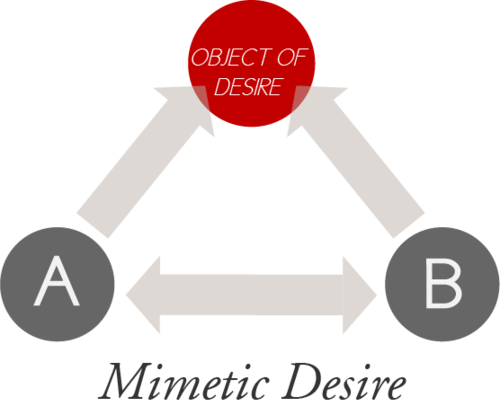

 Several lines of evidence indicate some female competition over mating. First, at Mahale, females sometimes directly interfered in the mating attempts of their rivals by forcing themselves between a copulating pair. In some cases, the aggressive female went on to mate with the male. At Gombe, during a day-long series of attacks by Mitumba females on a fully swollen new immigrant female, the most active attackers were also swollen and their behaviour was interpreted as ‘sexual jealousy’ by the observers. Townsend et al. found that females at Budongo suppressed copulation calls when in the presence of the dominant female, possibly to prevent direct interference in their copulations. Second, females occasionally seem to respond to the sexual swellings of others by swelling themselves. Goodall described an unusual incident in which a dominant, lactating female suddenly appeared with a full swelling a day after a young oestrous female had been followed by many males. Nishida described cases at Mahale in which a female would produce isolated swellings that were not part of her regular cycles when a second oestrous female was present in the group.


 The Jesuits can build on a long-lasting tradition in that respect. It is no coincidence that the pop band of the Jesuit project
  The title is an allusion to the story of the Zen Buddhist master who struggled to bring his disciples along the road to the achievement of satori, or enlightenment. His were good disciples, reflectively reading from the Buddhist scriptures, earnestly chanting their prayers, patiently sitting in zazen, or seated meditation, in front of a great statue of the Buddha. The master understood that the disciples’ focus on Siddhartha Guatama as the historical Buddha might stand in the way of their each individually becoming the Buddha (which means, simply, ‘one who is awake’), so he asked them, ‘What should one do if he should meet the Buddha on the road?’ A few of the disciples attempted answers while others sat in reflection over this new koan, or problem, of their master. Finally, the Zen master warned, ‘If you see the Buddha on the road, kill him!’ It was said that many of his disciples achieved satori on that day. Others, very possibly, became even more confused!


 On social media (especially in certain Facebook groups) several people pointed out that not every form of activism can be reduced to scapegoating. Rebecca Adams, for instance, commented that “t
 “
“ And the devil. And this is what people believed.

 In de Boliviaanse Andes organiseren inheemse volkeren elk jaar Tinku, een festival waarbij vooral mannen uit verschillende dorpen hevig met elkaar op de vuist gaan. Het rituele gevecht vindt plaats begin mei. Wie eraan deelneemt, gelooft dat het offeren van menselijk bloed nodig is om van de berggeesten een goede oogst af te smeken. Vaak omhelzen strijdende partijen elkaar na afloop. De bedoeling van het ritueel is immers het creëren en bestendigen van orde en vrede.
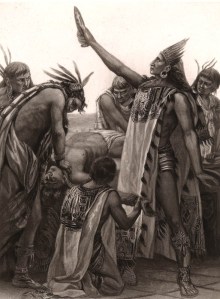 René Girard wijst erop dat mimetische rivaliteit om voedsel, territorium, vrouwen en macht in prehistorische mensengroepen soms zodanig moet zijn geëscaleerd dat het voortbestaan van die groepen in het gedrang kwam.
  Natuurverschijnselen moeten volgens de overtuigingen van oude culturen op een geritualiseerde manier benaderd worden opdat ze positieve uitwerkingen zouden hebben. De toe-eigening van sacrale natuurelementen buiten een rituele context, is taboe omdat het nadelig zou zijn op sociaal vlak.
 Ook ziektes worden vanouds in verschillende religies gezien als verschijnselen die afkomstig zijn van geesten of goden.
 Documentairemaker Bruce Parry bezocht de Kombai, een volk in Papoea-Nieuw-Guinea, en hoorde hoe oeroude overtuigingen over ziektes nog altijd springlevend konden zijn.
  Een berucht geworden voorbeeld van een adolescentieritueel is het inwijdingsritueel bij de Sambia. Antropoloog Gilbert Herdt werd op slag beroemd toen hij zijn onderzoek ervan publiceerde. Seksuologe Lee Wallace vat de bevindingen van Herdt samen in een artikel voor het boek Gay Life and Culture: A World History [Wallace, L. (2006). Discovering Homosexuality: Cross-Cultural Comparison and the History of Sexuality. In Robert Aldrich (Eds.), Gay Life and Culture: A World History, (pp. 248-269). London: Thames & Hudson Ltd. – vertaling: André Abeling, Gert Hekma, Huub Stegeman en Joost Zwart, 2006, p. 250]:
 Uit de laatste zin van het zopas geciteerde fragment blijkt dat ook homoseksualiteit wordt gesacraliseerd in de cultuur van de Sambia. Daarin vormt ze lang geen uitzondering tegenover andere culturen. Het verband met geweld als verklaring hiervoor lijkt iets minder evident, tenzij we de associaties van naderbij bekijken die culturen zélf maken. Bij de Sambia is homoseksualiteit taboe, tenzij ze plaatsvindt in de context van een adolescentieritueel. Voor de mannelijke adolescent geldt hetzelfde: hij is taboe, tenzij hij via een ritueel met homoseksuele praktijken uiteindelijk een “plaats vindt” in de gemeenschap van de Sambia. Homoseksualiteit wordt in dit geval, met andere woorden, verbonden met een mogelijke bron van geweld: de adolescent (zie hoger)! Gelijkaardige gebruiken komen ook voor op andere plaatsen in de wereld, bijvoorbeeld bij de Ndembu en andere Bantoe-volken in Centraal-Afrika. Ook de Xhosa in Zuid-Afrika kennen een keihard initiatieritueel voor jonge mannen, waarbij besnijdenis wordt gevolgd door een langdurige afzondering in een mannenverblijf. Het is een gevaarlijk ritueel waarbij regelmatig jongens het leven laten. In 2017 verscheen daarover de controversiële film
  Op een algemener niveau kunnen we stellen dat mimetische fenomenen – zoals homoseksualiteit (de verdubbeling van hetzelfde geslacht), spiegels en tweelingen (telkens een soort verdubbeling van dezelfde identiteit) – worden gesacraliseerd voor zover ze gelinkt worden aan geweld of aan een potentiële destabilisering van een gemeenschap.

 die dan als offers kunnen dienen (en dus worden gesacraliseerd), blijkt een goed alternatief voor mensenoffers (zie als voorbeeld de berenceremonie bij de Japanse Ainu). Voorts mogen in sommige culturen bepaalde dieren niet worden geofferd of gegeten, en lijken ze wel “wandelende rituelen” (zie bijvoorbeeld het fenomeen van “heilige koeien” in India).
 In sommige van die culturen bestaat zoiets als
 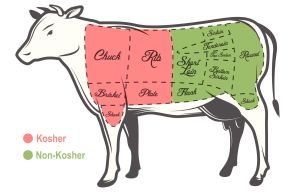 Vaak kennen culturen ook een sacralisering van voedsel of territorium. Spijswetten maken sommig voedsel tot taboe, terwijl “etiquetteregels” het nuttigen van voedsel “ritualiseren”. Daarnaast kennen culturen ook hun “sacrale plaatsen” (van grafmonumenten tot plaatsen waar geesten of goden zouden huizen). Het verband met de wereld van het geweld is alweer evident:
  De gewelddadige oorsprong van de sacralisering van allerlei verschijnselen werd in de loop van de geschiedenis dikwijls vergeten. Hedendaagse resten van oeroude taboes en rituelen tonen niet altijd direct meer een band met geweld. Toch blijven bekende hedendaagse rituelen vaak impliciet verwijzingen naar geweld bewaren.
  voorouders van die rituelen: mensenoffers. Zoals bij hedendaagse carnavalsfeesten wordt het offermoment van oudere festivals voorafgegaan door een geritualiseerde sociale crisis. Festivals als de Tinku (zie hoger voor een bespreking) zijn “levende fossielen” die iets van de culturele evolutie tonen waaruit een feest als carnaval uiteindelijk voortkomt.
 Godsdienstige patriarchale samenlevingen beschouwen geëmancipeerde, vrijpostige vrouwen vaak als overtreders van goddelijke taboes. Die vrouwen lijken een bedreiging voor de stabiliteit in de samenleving. Ze zouden het straffende geweld dat hen te beurt valt dan ook zelf uitlokken. Als ze het slachtoffer worden van eerwraak, of van een verkrachting, dan is dat volgens de klassieke redeneringen in typisch godsdienstige mannenmaatschappijen gerechtvaardigd. Mannen beschouwen zichzelf in dat geval als louter instrumenten van “goddelijke toorn”. Het fenomeen van blaming the victim komt echter ook in niet-godsdienstige contexten voor. Een bekend voorbeeld – waarvan er jammer genoeg veel andere te geven zijn – is de zaak van de Amerikaanse Cheryl Ann Araujo (1961-1986). Zij werd in 1983 het slachtoffer van een groepsverkrachting. De advocaten van de verdediging suggereerden tijdens het proces dat ze de brutale aanval van haar verkrachters ergens had “verdiend” of “opgewekt”. De speelfilm The Accused, met Jodie Foster in de hoofdrol, is losjes gebaseerd op haar verhaal.
 Sommige zogenaamd christelijke middens ontsnappen eveneens niet aan de verleiding om de verantwoordelijkheid voor geweld bij de slachtoffers van dat geweld te leggen. Berucht zijn de uitspraken van de bekende Amerikaanse evangelicals Jerry Falwell (1933-2007) en Pat Robertson (°1930) twee dagen na 9/11
  Recent wetenschappelijk onderzoek bevestigt in dit verband enkele essentiële culturele evoluties die vanuit René Girards mimetische theorie worden voorspeld, onafhankelijk van dat theoretisch referentiekader
 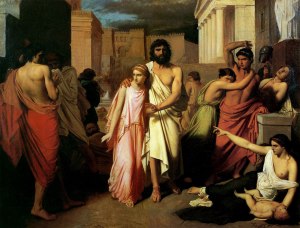 Ook bij Sophocles is het respect voor de maatschappelijke taboes een goddelijke eis. Overtredingen ervan wekken dan ook goddelijke toorn. In het Thebe van Oedipus veruitwendigt die toorn zich als de pest. De Thebanen zijn er evenwel van overtuigd dat ze die goddelijke, gewelddadige rampspoed kunnen bezweren door het juiste offer te brengen. En wie komt daar meer voor in aanmerking dan Oedipus, de man die op een incestueuze manier een ordelijke samenleving verziekt als koningsmoordenaar en vrouwensteler? Uiteindelijk zal Oedipus de redenering van zijn stadsgenoten volgen en op een heroïsche wijze zijn schuld en boete aanvaarden. Daardoor is de eeuwige, door goddelijke krachten bepaalde orde, alvast tijdelijk opnieuw hersteld. En Oedipus die als een redder is binnengehaald en vervolgens als een monster is verguisd, wordt door zijn zelfopoffering opnieuw redder. Eind goed, al goed.
 Daarop verkondigt Pilatus aan de verzamelde menigte (Joh 18,38):

 Er bestaat geen groter pervertering van het christelijk verhaal dan die uitspraak van Carolien. Ze suggereert dat Lotte gewoon moet “slikken en knikken” om de sociale orde in stand te houden. Carolien gebruikt de kruisdood van Jezus om een nieuw, leugenachtig offermechanisme te rechtvaardigen, terwijl Jezus is gestorven opdat niemand meer zou worden geofferd, en om voor eens en altijd de leugenachtige rechtvaardigingen voor offers aan het licht te brengen. Jezus laat zich kruisigen opdat niemand anders meer zou moeten sterven. In die zin is hij “het lam Gods, dat de zonden van de wereld wegneemt”. De film Silence, een spiritueel meesterwerk waaraan regisseur Martin Scorsese 28 jaar werkte, laat dat zien op een weergaloze manier. Het verhaal is de verfilming van de gelijknamige roman van Shusaku Endo, en het vertelt de lotgevallen van enkele jezuïeten in het Japan van de 17de eeuw. Christenen worden er vervolgd, en worden gedwongen om publiekelijk hun geloof af te zweren. Als ze dat niet doen, worden ze terechtgesteld. Een van de jezuïeten, Sebastião Rodrigues, komt op een bepaald moment tot het inzicht dat zijn pleidooi voor offerbereidheid is gebaseerd op trots, op een soort concurrentiestrijd met Jezus. Hij maakt van Jezus een idool, en gaat uiteindelijk een “mimetische rivaliteit” met hem aan in plaats van Jezus werkelijk “na te volgen” – zie Sören Kierkegaard (1813-1855): “Christus komt in de wereld als het voorbeeld, ons voortdurend op het hart drukkend: ‘Volg mij na, imiteer mij.’ Wij mensen geven er de voorkeur aan om hem in plaats daarvan te verafgoden.”

 “We kunnen niet redelijk zijn, als we niet erkennen dat we in de wereld moeten leven, ‘etsi deus non daretur’. En dat erkennen wij voor God! God zelf dwingt ons dit te erkennen. Zo brengt onze mondigheid ons tot de waarachtige kennis van onze situatie tegenover God. God doet ons weten dat wij moeten leven als diegenen, die hun leven inrichten zonder God. De God, die met ons is, is de God die ons verlaat (Mc 15,34)! De God die ons in de wereld doet leven zonder de werkhypothese God, is de God voor wiens aanschijn wij staan. Voor en met God leven wij zonder God. God laat zich uit de wereld terugdringen tot op het kruis, God is zwak en machteloos in de wereld en juist zo en alleen zo is Hij met ons en helpt Hij ons. In Mt 8,17 staat overduidelijk dat Christus ons niet helpt krachtens zijn almacht, maar krachtens zijn zwakheid, zijn lijden! Hier ligt het wezenlijke verschil met alle religies. Het religieuze in de mens verwijst hem in zijn nood naar Gods macht in de wereld, God is de deus ex machina. De Bijbel verwijst de mens naar Gods onmacht en lijden; alleen de lijdende God kan helpen.
 Florilegius/SSPL/Getty Images
 In 1973, cultural anthropologist
  The question is whether we can be saved from our sacrificial tendencies. Since we are relational beings [or since our being is essentially relational], we can only be saved from these tendencies if we receive an identity from a being that is not at all interested in “being loved” (a being that comes from outside the human game of mutually established social expectations). This can only be a being that is not mortal, since it is mortality that leads human beings to the desire “to be loved”. If we experience the love of such a being, we can distance ourselves more and more from the desire to adjust ourselves to a self-image that seeks the approval of others. Moreover, since we diminish our auto-aggressive tendencies we will also diminish our hetero-aggressive tendencies. We will no longer defend a so-called socially acceptable self-image at the expense of others.
  SCAPEGOAT SHADOWS