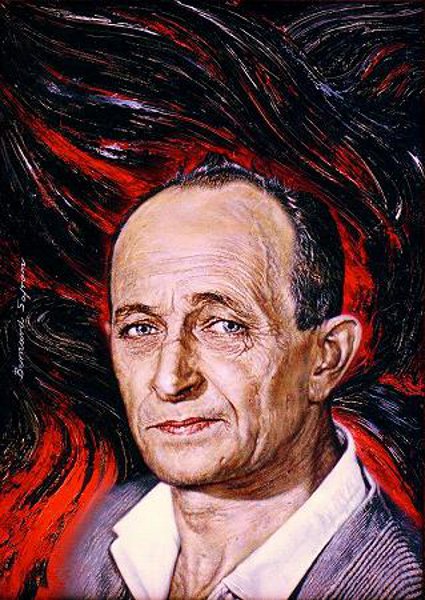
de donkere kamer van damokles

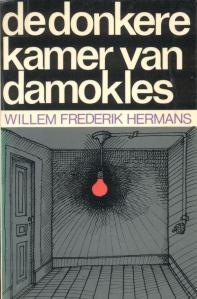
Graag verwijs ik naar een boeiend initiatief van de Nederlandse Girard Studiekring (Dutch Girard Society): een lesbrief over De donkere kamer van Damokles van W.F. Hermans, naar aanleiding van het evenement Nederland Leest.

KLIK HIER OM DE BRIEF TE LEZEN (PDF).

Dorbeck is alles!De brief is gebaseerd op een proefschrift van Sonja Pos. Over haar benadering van De donkere kamer van Damokles schreef W.F. Hermans aan een vriend: Sommige beschouwingen over mijn werk kan ik niet lezen zonder angstgevoelens. Ken jij: Mimese en geweld, beschouwingen over het werk van René Girard, Kampen 1988? Hierin staat een opstel van Sonja Pos over De donkere kamer van Damokles, dat me bang van mijzelf liet worden toen ik het las. Nou ja, ik overdrijf een beetje. Het is een van de beste beschouwingen die er ooit over dat veelbesproken verhaal zijn verschenen.”

Klik hier om een verrijkend interview met Sonja Pos te lezen over de dialoog tussen het werk van Hermans en Girard (interview door Els Launspach).

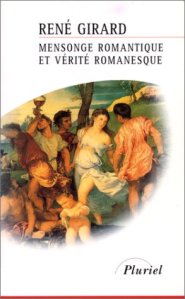
Milan KunderaHermans’ enthousiasme doet denken aan een bewering van een andere grote romancier, Milan Kundera. Deze Tsjechisch-Franse auteur schreef over het eerste boek van Girard: “Mensonge romantique et vérité romanesque is het beste dat ik ooit over de romankunst heb gelezen.” (uit Verraden Testamenten, Baarn, Ambo, 1994, p.160).

Uit de lesbrief:

Girards mimetische theorie is goed te herkennen in toneelstukken en literaire werken. Een mooi voorbeeld is De donkere kamer van Damokles(1958) door Willem Frederik Hermans. In haar proefschrift Dorbeck is alles! Navolging als sleutel tot enkele romans en verhalen van W.F. Hermans heeft literatuurwetenschapper Sonja Pos overtuigend aangetoond dat Girards belangrijkste ideeën, waaronder navolging, in De donkere kamer van Damokles opduiken zonder dat de schrijver Hermans zich dat bewust is geweest. Toen zij hem daarop attent maakte, was hij uitermate verrast. “Het [werk van Sonja Pos] is een van de beste beschouwingen die er ooit over dat veelbesproken verhaal zijn verschenen”, schreef hij aan een vriend. De roman, die in de Tweede Wereldoorlog speelt, laat zien hoe de mens door navolging ten onder kan gaan.

Mensonge romantique et vérité romanesque (René Girard)René Girard beschreef in De romantische leugen en de romaneske waarheid Europese literatuur waarin de hoofdpersonen een model navolgen. Soms zijn dat geen daadwerkelijke personages, maar verre geïdealiseerde voorbeelden zoals in Don Quichot van Cervantes. Deze relatie is eenzijdig: de hoofdpersoon oefent geen invloed uit op het model. Maar wat als het model dat door de hoofdpersoon van een roman wordt nagevolgd, niet veraf maar dichtbij is? Dan kan er rivaliteit ontstaan waarbij het model een obstakel voor de navolger gaat vormen, een voorwerp van haat. De mimetische rivaliteit is volgens Girard niet alleen besmettelijk maar ook destructief.

De donkere kamer van Damokles draait om Henri Osewoudt die een andere persoon, Dorbeck, wil navolgen. Juist door deze navolging gaat Osewoudt uiteindelijk ten onder. Girards mimetische theorie kan worden gebruikt om tot een beter begrip van Hermans’ roman te komen, en verschaft nieuwe inzichten over geweld in het algemeen.

Cartoonist Bill Waterson is spot-on regarding the destructive mimetic dynamics of war with this cartoon of Calvin and Hobbes. It succinctly evokes what Carl von Clausewitz (1780-1831) called “the escalation to extremes”.

How to avoid bellum omnium contra omnes (the war of all against all), as Thomas Hobbes (1588-1679) phrased it? Let’s begin by taking a look at the cartoon character that was named after this philosopher. Seeing the kind of killing “games” some people play, we might truly have the need for “more role models of peace”.

CLICK IMAGE TO ENLARGE:

“I hate all this philosophical mumbo-jumbo! It just doesn’t make any sense!”

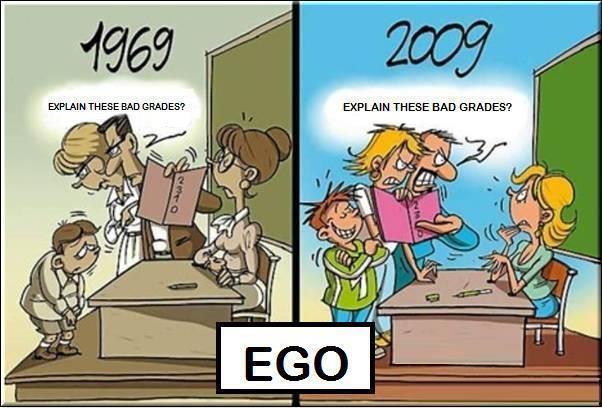
I’ve experienced reactions like these from my students quite often while trying to teach them some philosophy. They express the normal frustration people get when they just don’t seem to succeed in mastering the issues they’re facing. To be honest, I more than once imitated their feelings of despair by getting frustrated and impatient myself about their inability to understand what I was trying to say. The story of students blaming teachers for not explaining things well enough, and of teachers responding that their students just don’t try hard enough, is all too familiar. But, at the end of the day, having worked through some negative emotions, I somehow always manage to sit down at my desk and try to improve upon my part of communicating. I can only hope it stays that way.

The writings of Jewish philosopher Emmanuel Levinas are not always easy to understand, let alone agree with. Roger Burggraeve, one of my professors at the University of Leuven, has proven to be an excellent guide to introduce me to the philosophy of Levinas (click here for an excellent summary by Burggraeve). But explanations at an academic level are not always easily transferable to a high school level. Regarding Levinas I’m faced with the challenge to explain something about his thoughts on “the Other” and “the Other’s face”. Although Levinas’ musings often appear to be highly abstract for someone who didn’t receive any proper philosophical training, his thinking springs from very “earthly”, even dark realities and experiences – especially the experience of the Holocaust. Levinas’ response to the threat of totalitarianism is actually very down to earth, but because it wants to be “fundamental”, I can imagine it indeed sometimes comes across as mumbo-jumbo to sixteen year olds.

Luckily enough for me, as a teacher, an episode of The Fresh Prince of Bel Air (season 3, episode 12 The Cold War) can help to make clear what “the encounter with the Other” could be like in a particular situation. Moreover, it also serves as a good way to connect René Girard’s mimetic theory with some of Levinas’ main insights. Here’s the story:

Will and his nephew Carlton have a crush on the same girl, Paula. Carlton had been the first to date Paula, but after introducing her to Will, she also becomes Will’s object of interest. Will imitates the desire of Carlton and, upon noticing this, Carlton in turn reinforces his desire for Paula by imitating his new rival Will. This is a prime and archetypal example of what Girard has labeled mimetic (or imitative) desire, which potentially leads to mimetic rivalry. Will and Carlton become each other’s obstacles in the pursuit of an object (in this case a person, Paula) they point to each other as desirable. They become jealous of each other and try to out compete one another. They both fear the other as a threat to their self-esteem and independency. Ironically however, as they try to differ themselves from each other by unwittingly imitating each other’s desire, they resemble each other more and more. In fact, their sense of “being” becomes truly dependent on the other they despise. They end up dueling each other in a pillow fight, trying to settle the score.

At one moment, near the end of Will and Carlton’s fight, something happens which indeed illustrates what Levinas means with “response to the Other’s face” (click here for some excerpts from Levinas’ Ethics as First Philosophy). Will pretends to be severely injured (“My eye!”), whereon Carlton totally withdraws from the fight. Carlton finds himself confronted with Will’s vulnerability, and is genuinely concerned for his nephew’s well-being. The Other he was fighting turns out to be more than his rival, more than the product of his (worst) imaginations. Indeed, before being a rival the Other “is simply there“, not reducible to any of our concerns, desires or anxieties. Carlton is not concerned for his own sake: he doesn’t seem to fear any punishment, nor does he seem to desire any reward while showing his care for Will. He abandons all actions of self-interest “in the wink of an eye”.

This is an ethical moment, as Levinas understands it. It goes beyond utilitarianism which, as it turns out, justifies itself as being “good” by arguing that self-interest (i.e. what proves useful for one’s own well-being) eventually serves the interest (well-being) of others as well. Putting forward the effect on the well-being of others as justification for utilitarianism is telling, and shows that utilitarianism in itself doesn’t seem to be “enough” as a foundation for ethics. Moreover, utilitarianism serves the interests of “the majority”, which threatens to overlook what happens to minorities “other than” that majority. Sometimes sacrificing a minority might seem “logical” from this point of view. By contrast, in what is “the ethical moment” according to Levinas, one fears being a murderer more than one’s own death. In other words, provoked by the Other’s “nakedness” and “vulnerability” (the Other’s face which lies beyond our visible descriptions and labeling of the Other), OUR FEAR OF THE OTHER IS TRANSFORMED IN FEAR FOR THE OTHER. The mimetic rivalry between Will and Carlton is thus interrupted until, of course, Will reveals he was only joking about his injury… and the pillow fight continues.

CLICK TO WATCH:

Eventually, Will and Carlton quit fighting and start confessing their wrongdoings towards one another. They no longer imitate each other’s desire to assert themselves over against one another, but they imitate each other in being vulnerable and forgiving, recognizing “each Other”. They imitate each other’s withdrawal from mimetically converging desire and rivalry. It is by becoming “Other” to one another that they paradoxically gain a new sense of “self”, as an unexpected consequence…

Enjoy that grand twist of humor in Will Smith’s unexpected philosophy class…

CLICK TO WATCH:

I found this on YouTube: a short clip from American comedian Chris Rock, with a reference to mimetic rivalry. Indeed it is a funny example.

CLICK TO WATCH:

[on two types of “rewards” – goals or consequences of one’s actions? – and the implications for human interactions]

“If there is no God, everything is permitted…”

This is basically the challenging idea of Ivan Karamazov, one of the main characters in The Brothers Karamazov, the famous novel by Fyodor Dostoevsky (1821-1881). Could this be true in any way?

At the beginning of a new year, I always ask my students the following questions:

Suppose there is no principal’s office, suppose you could never be punished for any of your actions – would you still respect your fellow students and your teacher?

Suppose there are no grades to win, and you didn’t receive any reward for studying your courses and reading your books – would you still listen to your teachers and study?

What would you do if you are not watched, if you live outside “the empire of the watchmen”?

Consider Matthew 6:1-2 & 6:5: Be careful not to practice your righteousness in front of others to be seen by them. […] So when you give to the needy, do not announce it with trumpets, as the hypocrites do in the synagogues and on the streets, to be honored by others. Truly I tell you, they have received their reward in full. […] And when you pray, do not be like the hypocrites, for they love to pray standing in the synagogues and on the street corners to be seen by others. Truly I tell you, they have received their reward in full.

To put things slightly differently:

Suppose there is no hell, no punishment in any way, would you still respect your fellow man?

Suppose there is no heaven, no reward in any way, would you still respect your fellow man?

Actually, this is the kind of challenge Christianity puts us to. Christ teaches us that there isn’t something like a heaven as an established “world” for which we should bring all kinds of sacrifices in order to obtain it. As if heaven would be the ultimate goal and justification of our existence. That’s exactly like the reasoning of a student who is prepared to work hard at his courses and to obey his teachers, not because he’s intrinsically interested in his courses or respectful of his teachers, but because he considers getting good grades as his ticket to success, power and happiness – “paradise”.

Christ subverts this sacrificial logic. Rather than being an ultimate goal that justifies, explains and gives meaning to our life, “heaven” is the potential consequence of our actions. By taking up responsibility for ourselves and one another, by loving our neighbor (which is “the righteousness of God’s Kingdom”), we co-create “heaven”. To use the student-analogy again: the student who learns to be genuinely interested in his courses will get good grades as a logical consequence of his love for studying. And he will have learned something!

Consider Matthew 6:25-34: Therefore I tell you, do not be anxious about your life, what you will eat or what you will drink, nor about your body, what you will put on. Is not life more than food, and the body more than clothing? Look at the birds of the air: they neither sow nor reap nor gather into barns, and yet your heavenly Father feeds them. Are you not of more value than they? And which of you by being anxious can add a single hour to his span of life? And why are you anxious about clothing? Consider the lilies of the field, how they grow: they neither toil nor spin, yet I tell you, even Solomon in all his glory was not arrayed like one of these. But if God so clothes the grass of the field, which today is alive and tomorrow is thrown into the oven, will he not much more clothe you, O you of little faith? Therefore do not be anxious, saying, ‘What shall we eat?’ or ‘What shall we drink?’ or ‘What shall we wear?’ For the Gentiles seek after all these things, and your heavenly Father knows that you need them all. But seek first the kingdom of God and his righteousness, and all these things will be added to you.

Therefore do not be anxious about tomorrow, for tomorrow will be anxious for itself. Sufficient for the day is its own trouble.

On the other hand, those students who are focused only on getting good grades and who fear failure will tend to forget what they have learned from the moment they have their grades and no longer “need” the information from their courses. Or they will stop being friendly to their former teachers once they have graduated.

In short, Christ doesn’t want us to respect our neighbor because we fear hellish punishment or long for some heavenly reward. He wants us to respect our neighbor because of our neighbor. He liberates us from a system of fear and anxiety based on punishments and rewards, creates the possibility of responsibility (because only a free man can be responsible) and genuine love – without ulterior motives -, and transforms the nature of sacrifice. In Christ’s view, sacrifice is not a gift to receive something from someone you need, nor is it a necessary obligation to protect some kind of “honor gone mad” (see the tragedy of Japanese kamikaze pilots during the Second World War),  but it is a gift from people who are thankful for what they already received by living up to the possibilities of their freedom.

Consider Matthew 5:23-24: So if you are offering your gift at the altar and there remember that your brother has something against you, leave your gift there before the altar and go. First be reconciled to your brother, and then come and offer your gift.

Of course, there’s a dark side as well to this liberation. Let’s go to the classroom once more. If a teacher tells his students that he will not punish them or, on the other hand, reward them with good grades, there are two possibilities: there will either be an atmosphere of cooperation guided by a genuine motivation to study, or… total mayhem – “hell”!

In Battling to the End, a book in which René Girard reconsiders the treatise On War by Carl von Clausewitz (1780-1831), the apocalyptic dimensions of Christ’s teachings are related to Christ’s deconstruction of “the god(s) of sacrifice” and of sacrificial systems in general. Girard makes clear that the biblical revelation indeed has two possible outcomes: either a world of ever more rivalry and violence, or a world of ever more Love.

Reading Battling to the End a while ago, I couldn’t stop thinking about two stories in the shadow of a potential apocalypse: Empire of the Sun and Watchmen. In both these stories further mayhem and violence is avoided – at least for the time being – by the restoration of a sacrificial system of fear. Empire of the Sun reminds us how the Second World War came to an end in Japan: by sacrificing tens of thousands of innocent people, victims of the atomic bombings in Hiroshima and Nagasaki. Watchmen also displays this kind of sacrificial logic. In the fictional story of this graphic novel, the tensions between the US and the USSR during the Cold War are released after an alleged nuclear attack from outer space. Once again the death of millions of civilians provides a “peaceful world”, some sort of “paradise” – however precarious.

In Empire of the Sun, the way the Second World War unfolds in the Far East creates the setting for a boy’s coming of age story. Empire of the Sun actually is an autobiographical novel by J.G. Ballard, and tells the story of an aristocratic British boy, James (“Jim”) Graham. In 1987, Steven Spielberg made a film based on Ballard’s novel, with a young and astonishing Christian Bale taking the lead role. In the film, Jim’s privileged life is upturned by the Japanese invasion of Shanghai, December 8, 1941. Separated from his parents, he is eventually captured, and taken to Soo Chow confinement camp, next to a former Chinese airfield. Amidst the sickness and food shortages in the camp, Jim manages to survive and becomes a token of spirit and dignity to those around him, all the while hoping to get back “home” again. Jim eventually finds comfort in the arms of his mother, after losing his Japanese kamikaze-friend among many others… The scene of Jim reunited with his mother sheds a little light of hope in a world which seems condemned to the sacrificial peace of the atomic bomb – and a seemingly never ending story of fear and worries, with no peace of mind…

I made a compilation using scenes from both Empire of the Sun and Zack Snyder’s 2009 movie adaptation of the graphic novel Watchmen. The two stories raise powerful questions regarding humanity’s possibility to cope with freedom and responsibility. I think they’re opening up a lot of issues that are also discussed at the COV&R Conference in Tokyo, Japan (July 5-8, 2012). As Jim learns towards the end of the film: there are no clear-cut, magical solutions to overcome the devastations of a world at war… But to follow Christ’s footsteps, one step at a time, might take us to unexpected and new dimensions. Watch out!

TO READ MORE ABOUT WATCHMEN AND MIMETIC THEORY, CLICK HERE TO READ – PDF

(this essay already appeared at The Raven Foundation and the Dutch Girard Society)

CLICK HERE TO RECEIVE INFORMATION ON MUSIC AND LYRICS USED IN THE COMPILATION – PDF

CLICK TO WATCH:

[For more, check out a previous post – click: Religulous Atheism]

The books of the bible have left an indelible mark on humanity’s cultural idiom, moreover because they are themselves already important, somewhat reinterpreted, summaries of different ancient strands. Throughout the ages, storytellers, novelists, directors, painters, sculptors, architects and musicians have consciously and unconsciously transmitted basic biblical sayings, motives, symbols and archetypes (René Girard is among those who reveals this, time and again, in his work on western literature). This continued tradition makes clear that “man does not live by bread alone…”

Up to this day, we create images and tales to gain insight and different perspectives on our lives. Stories aren’t just a way of entertaining ourselves to escape reality. On the contrary, they allow us to get in touch with and reflect upon questions which are part of our everyday existence as human beings. Beyond scientific questions and concerns, we are confronted with layers of meaning in our everyday experience which broaden our assessment of reality. To reduce the experience of sexual intercourse, for instance, to what can be said of it on a purely scientific level, is to mistakenly consider a partial description of the experience as the experience itself. That’s why we naturally develop a language to express and cultivate other aspects of the same experience, aspects which transcend the purely scientifically describable domain.

Biblical stories have always been part of the language of the soul, and they still are. Songwriters like Bruce Springsteen or Leonard Cohen – to name but two – very often use biblical motives to express their life experiences. For example, just recently, Springsteen recaptured the story of the prophet Jonah and the big fish – in his song Swallowed Up (In The Belly Of The Whale). [Click here for Springsteen’s interpretation of Christ’s Passion].

Although literalist interpretations of biblical stories are on the rise since the fundamentalist movement started in the 19th century, and since some atheists took over this approach only to come to opposing conclusions, a majority of Christians still engages in a creative dialogue with the stories as stories (meaning that they are viewed as attempts to also symbolically and metaphorically convey real and profound human experiences).

It’s a shame that some people dismiss the anthropological and cultural potential of the bible because they “don’t believe in a burning bush that can talk”. As if that is expected! It’s like thinking we should believe Prince made love to a car in the song Little Red Corvette. Maybe it’s wise to remember how people approached the biblical stories during Antiquity and the Middle Ages. The important Christian thinker Geert Groote, for example, writes the following around 1383 A.D.:

“No child believes that the trees or the animals in the fables could speak. After all, the literal meaning of the poems or of the epic writings precisely is their figurative sense, and not the sense the bare words seem to hold at first glance. Who would actually believe that, as the book of Judges tells it, the trees would choose a king and that the fig tree, the vine, the olive tree and the bush would have responded to that choice in that way or another? Christ uses all kinds of images in his teaching. Matthew the evangelist even says that Christ never spoke without images. And even though it is Christ who uses these images, I do not think that those things actually (literally) took place.”

Nevertheless, some people today think they can approach the biblical stories as attempts to answer questions of the natural sciences like we know them today – apparently not realizing modern science didn’t exist in a, well, pre-modernist era. Reading a book of natural sciences to know what the bible is all about (or vice versa) is like reading a cookbook to assemble a piece of furniture.

Biblical stories should be approached from the point of view of storytelling and what this entails on a cultural level in general. Throughout history biblical stories have always been open to different interpretations, generating different (layers of) meaning. They were considered highly symbolical stories, used to highlight the depths and transcending nature of any authentic human experience.

CLICK HERE TO GET A BASIC UNDERSTANDING

OF THE PRINCIPLES OF ANCIENT AND MODERN (HISTORICAL-CRITICAL) BIBLE INTERPRETATION

Sometimes people ask: “How do you know what is to be considered symbolical?” Regarding ancient or literary texts in general, that’s a wrong question. For even historical events were only told when they were considered as transmitting a significance beyond a certain place and time (a “trans-historical” meaning). Once you get to know the basics of the biblical “idiom”, it’s not very hard to engage in a creative and personal dialogue with biblical texts, “knowing” how to read and interpret them (without expecting one, “final” interpretation).

Maybe we get a better picture of what I’m writing here if we compare this kind of dialogue with the way we keep on developing and interpreting particular images, stories and myths up to the present. That’s why I assembled some pop and rock songs using the modern mythology of the road and the car. Jack Kerouac (1922-1969) really instigated this mythology with his famous novel On the Road. Although inspired by autobiographical events, the story remains an allegory for every person’s “life journey”. In Kerouac’s own words: “Dean and I were embarked on a journey through post-Whitman America to FIND that America and to FIND the inherent goodness in American man. It was really a story about 2 Catholic buddies roaming the country in search of God. And we found him.” (Leland, John (2007). Why Kerouac Matters: The Lessons of On the Road (They’re Not What You Think) – New York: Viking. pp. 17).

So, take a look and a listen at the (excerpts of) songs I assembled in seven sections, and ask yourself if it’s really that hard to “understand” that they’re also about an inward journey (moving from alienation of self and other towards following the – divine? – dynamic of a love which saves and which allows, obeying its call, to rediscover oneself and other). Modern cultural archetypes (“highway” and “car”) stand side by side with religious and Christian ones (“highway… to hell”, indeed).

Maybe you’ll also understand what the general idea of these seven sections is all about? “Loss and redemption” would be a fine interpretative starting point. Never mind the Catholic imagination of Bruce Springsteen, among others… Enjoy artists like Willie Nelson, Ben Harper, Joshua Kadison, Toto, Metallica, The Killers, Green Day, Hanoi Rocks, Prince, John Lennon and Tracy Chapman – and many more!

CLICK TO READ THE SONG LYRICS (PDF)

CLICK TO LISTEN TO THE SONGS:

Leonard Cohen’s song Show Me The Place, a meditation on Christ’s willingness to surrender to Compassion and to suffer because of that surrender (and NOT because of a so-called necessity of suffering itself), inspired me to make a new Via Crucis – I also made one last year, click here to watch it.

Whatever some people might think of Mother Teresa’s choice to live amidst the sick and the poor, I believe she was genuinely touched by their humanity. I think she recognized the people she lived with in Calcutta as human beings, first and foremost, and that she did not want to reduce them to their sickness, their poverty and their suffering. She wanted to be a human being among other human beings. Her life is an inspiring example, following Christ’s footsteps, and that’s why my meditation starts off with her.

The Life of Christ testifies to a Love which “doesn’t want sacrifice nor suffering”. Sometimes we try to justify evil by saying it belongs to some “higher, even divine plan” which would in some ways be “rewarding”. Sometimes we make bad choices and identify them as “necessary evil” to achieve some ultimate goal – like studying something we really don’t like because of a so-called magical diploma which we believe will function as a key to open doors to a “happy, fulfilled life”. Opiate for the masses?

Christ’s God of Love reveals how suffering is not necessary, that it indeed is “evil” and not something we should easily justify. We should instead try to oppose it! Human beings are worth more than whatever plan we might come up with. They should not be means to another end, but ends in themselves. The story of the resurrection indeed reveals how Christ’s God of Love refuses the sacrifice of his Son, and that Christ gave his life because of Love – to let others come alive…

Christ’s Love is a Love which desires LIFE, liberating us to do everything we can to make life worth living, opposing the easy cynicism that “there are far worse things than never being born”.

Can we listen to the Voice of Love and experience (from within our natural, bodily conditions) that the suffering of fellow human beings is unjust? Or do we surrender to the silence of the stars, which, although they brightly shine, don’t give a damn about our trials and tribulations – even if we look for “reasons” and “necessities of fate” in our horoscope? Can we believe that Compassion is our deepest human faculty? Bruce Springsteen says it well (click to watch my post Bruce Springsteen’s Passion): “When we let our compassion go, we let go of what little claim we have to the divine…”

Besides music by Leonard Cohen, I used music by Linkin Park (an alternative version of their hit song Crawling) and Thomas Newman (Any Other Name, from the movie American Beauty). Images of the Way of the Cross are primarily by Jon Reischl and Nigel Groom. The final image is a painting by Fritz von Uhde (1848-1911), Das Tischgebet (Komm, Herr Jesu, sei unser Gast).

CLICK TO WATCH, LISTEN AND MEDITATE:

Even to this day human culture is drenched with archetypal images of magic mirrors and evil twins. It is clear that both mirrors and twins traditionally evoke mysterium tremendum et fascinans – the common object of all religious or numinous experience as described by Rudolf Otto (1869-1937).

We could ask ourselves why such phenomena are often surrounded by a mysterious, religious aura. Why have human beings been fascinated and frightened by them, at the same time? According to mimetic theory, in ancient times everything associated with mimetic rivalry and violence had the potential to become sacred. To get some understanding of how mirrors and twins (and the ‘twin’ in the mirror) are connected with rivalry and violence, I compiled the following short movie.

CLICK TO WATCH:

I hope this movie shows how classic tales of horror imaginatively portray a profound anthropological truth: in trying to master and hide the bad side of yourself – the parts you don’t want to acknowledge, the parts you don’t want others to see; your evil twin -, you create the monster you are trying to control. Eventually you lose yourself in the process. Moreover, in trying to protect the secret of your so-called bad side, others will have to be destroyed as well – because they could potentially betray your secret. Hypocrisy generates paranoia. Rockers The Smashing Pumpkins are spot on with the line the killer in me is the killer in you, in their song Disarm. I guess we all have two sides. Are we able to acknowledge them? The life of Adolf Eichmann (1906-1962), one of the main organizers of the Nazi Holocaust, reads as the story of Dr. Jekyll becoming Mr. Hyde – but his was not a merely fictitious tale of horror, it was real history becoming sheer terror. A warning.

It’s all there in this classic piece of British humour – all the basic elements of René Girard’s mimetic theory: mimetic desire, mimetic competition or rivalry and the haunting nightmare of the mimetic double. Rowan Atkinson’s Mr Bean really is the master of ceremonies here.

Enjoy this clever excerpt from Mr Bean in Room 426 (first broadcast 17th Feb 1993) – click to watch:

As a kid, René Magritte used to play at an abandoned cemetery, together with a little girl. He saw a painter there, who seemed to him to possess magical powers… (thanks to Marcel Paquet’s Taschen book, for this and the following information on Magritte).

Of course, later on, Magritte (1898-1967) became a painter himself, and an intriguing one. The Belgian surrealist managed to create a world of ideas and suggestions on the canvas. As it turns out, many of his paintings drew from the experiences he had at the cemetery of his childhood. His surreal work contains a world of opposites: a heavy rock is painted as a levitating object, a nocturnal landscape is depicted under a blue, white clouded and sunlit sky… These and other examples remind of the contrasting experiences Magritte underwent at the cemetery: the promising life of two young children contrasts with a place of dead, decaying bodies, as the first hints of a sensual interplay between a boy and a girl contrast with the barrenness of the graveyard surroundings. At the same time, Magritte’s paintings convey the paradoxes of any artist’s ‘magical’ creativity: at once all-powerful and powerless. Indeed, a painter is able to create a world according to his own laws (levitating rocks, for example), yet he never manages to capture reality itself. The Treachery of Images (French: La trahison des images; 1928-1929), Magritte’s well-known painting of a pipe, makes this clear. The subscript Ceci n’est pas une pipe shows the idea that we only access reality through images, representations, or indeed, mimesis. The image of a pipe is not the pipe itself. A poetic equivalent could be the expression ‘I’m speechless’. For saying ‘I’m speechless’ actually implies speaking, so the reality of being speechless is misrepresented by the expression itself. The Italian movie La vita è bella (Roberto Benigni, 1997) contains a riddle in a similar sense: “When you say my name, I’m gone… Who am I? Answer: ‘Silence’…”

Medieval thinkers were very much aware of these paradoxes and of the mediated nature of all human knowledge. Reality, which was ultimately divine to them, is always bigger and ‘different’ than our representations of it. We live by symbols and images, referring to ‘what lies beyond’ them. Somehow we seem to lose this awareness more and more. We seem to lose ourselves to the impression we can control many aspects of our own life, and many aspects – if not all – of ‘reality’. We live in a world where everything is said to be ‘manageable’, a world of plans and strategies, of ideologies and calculations – calculated ‘risks’ and false certainties. We think we can master reality, that we are free and independent ‘Masters of the Universe’, yet the background radiation of our day-to-day conscience tells a different story: climate change gets at us in unexpected ways, terrorist attacks stun us time and again, and accidents ‘do happen’.

I just finished reading The Book of Illusions, a novel by Paul Auster. He’s on my list of favorites already (next to Milan Kundera and John Maxwell Coetzee – who are, as I discovered after I’d read them, both admirers of René Girard’s work –, and next to the not so well-known Craig Strete). I loved reading the story because of its surreal feel, because it breathes both the anguish and hope that ‘nothing is what it seems’. The story is carried by the character of a David Zimmer, a Vermont professor who lost his wife and two young sons in a plane crash. As fate would have it, he delves into the life of the mysterious silent comedian and film director Hector Mann. Writing the story of Mann’s life and films somehow saves Zimmer’s life from despair. As it turns out, there are some remarkable analogies between the two men. In some ways, the life of Zimmer is an imitation of Mann’s life. Moreover, one of Mann’s later films, The Inner Life of Martin Frost, represents an important aspect of Mann’s own life. So we have one imitation after the other. As a whole, Auster’s novel reflects aspects of our own ‘condition’. We are mimetic creatures, we live by ‘representations’ of ourselves and of reality as a whole. We construct our own ‘story’. Yet life is not a story. Louis Paul Boon (1912-1979), a famous Flemish writer, honorary citizen of my hometown Aalst, conveyed this insight in a great way. A book has a beginning and an end, while we don’t actually know when ‘we’ begin, nor can plan when we catch a deadly disease or undergo a life threatening accident. Our lives are ‘open endings’, fractures, interrupted beyond our control by unplanned experiences. Paul Auster seems to also make clear that in order to give life a chance, an author must be prepared to ‘burn’ his own work. He has to ‘question mark’ it. The chapter on The Inner Life of Martin Frost, the one late movie of Hector Mann watched by Zimmer, magnificently reflects this indeed ‘surreal’ and ‘poetic’ idea. The movie is about the muse of writer Martin Frost. Claire Martin, as she calls herself, is slowly dying while he finishes his story. In order to bring her back to life, Frost burns his story, thereby expressing the irreducibility of any human being’s character. He understands that capturing someone else’s life in a well-defined story (with beginning and ending) actually ‘kills’ this person in a way. Writing about Claire is also stating ‘this is not Claire’. Here’s the fragment:

Martin shakes out three aspirins from the bottle and hands them to her with a glass of water. As Claire swallows the pills, Martin says: This isn’t good. I really think a doctor should take a look at you.

            Claire gives Martin the empty glass, and he puts it back on the table. Tell me what’s happening in the story, she says. That will make me feel better.

            You should rest.

            Please, Martin. Just a little bit.

            Not wanting to disappoint her, and yet not wanting to tax her strength, Martin confines his summary to just a few sentences. It’s dark now, he says. Nordstrum has left the house. Anna is on her way, but he doesn’t know that. If she doesn’t get there soon, he’s going to walk into the trap.

            Will she make it?

            It doesn’t matter. The important thing is that she’s going to him.

            She’s fallen in love with him, hasn’t she?

            In her own way, yes. She’s putting her life in danger for him. That’s a form of love, isn’t it?

            Claire doesn’t answer. Martin’s question has overwhelmed her, and she is too moved to give a response. Her eyes fill up with tears; her mouth trembles; a look of rapturous intensity shines forth from her face. It’s as if she has reached some new understanding of herself, as if her whole body were suddenly giving off light. How much more to go? she asks.

            Two or three pages, Martin says. I’m almost at the end.

            Write them now.

            They can wait. I’ll do them tomorrow.

            No, Martin, do them now. You must do them now.

            The camera lingers on Claire’s face for a moment or two– and then, as if propelled by the force of her command, Martin cuts between the two characters. We go from Martin back to Claire, from Claire back to Martin, and in the space of ten simple shots, we finally get it, we finally understand what’s been happening. Then Martin returns to the bedroom, and in ten more shots he finally understands as well.

            1. Claire is writhing around on the bed, in acute pain, struggling not to call out for help.

            2. Martin comes to the bottom of a page, pulls it out of the machine, and rolls in another. He begins typing again.

            3. We see the fireplace. The fire has nearly gone out.

            4. A close-up of Martin’s fingers, typing.

            5. A close-up of Claire’s face. She is weaker than before, no longer struggling.

            6. A close-up of Martin’s face. At his desk, typing.

            7. A close-up of the fireplace. Just a few glowing embers.

            8. A medium shot of Martin. He types the last word of his story. A brief pause. Then he pulls the page out of the machine.

            9. A medium shot of Claire. She shudders slightly–and then appears to die.

            10. Martin is standing beside his desk, gathering up the pages of the manuscript. He walks out of the study, holding the finished story in his hand.

            11. Martin enters the room, smiling. He glances at the bed, and an instant later the smile is gone.

            12. A medium shot of Claire. Martin sits down beside her, puts his hand on her forehead, and gets no response. He presses his ear against her chest–still no response. In a mounting panic, he tosses aside the manuscript and begins rubbing her body with both hands, desperately trying to warm her up. She is limp; her skin is cold; she has stopped breathing.

            13. A shot of the fireplace. We see the dying embers. There are no more logs on the hearth.

            14. Martin jumps off the bed. Snatching the manuscript as he goes, he wheels around and rushes toward the fireplace. He looks possessed, out of his mind with fear. There is only one thing left to be done–and it must be done now. Without hesitation, Martin crumples up the first page of his story and throws it into the fire.

            15. A close-up of the fire. The ball of paper lands in the ashes and bursts into flame. We hear Martin crumpling up another page. A moment later, the second ball lands in the ashes and ignites.

            16. Cut to a close-up of Claire’s face. Her eyelids begin to flutter.

            17. A medium shot of Martin, crouched in front of the fire. He grabs hold of the next sheet, crumples it up, and throws it in as well. Another sudden burst of flame.

            18. Claire opens her eyes.

            19. Working as fast as he can now, Martin goes on bunching up pages and throwing them into the fire. One by one, they all begin to burn, each one lighting the other as the flames intensify.

            20. Claire sits up. Blinking in confusion; yawning; stretching out her arms; showing no traces of illness. She has been brought back from the dead.

            Gradually coming to her senses, Claire begins to glance around the room, and when she sees Martin in front of the fireplace, madly crumpling up his manuscript and throwing it into the fire, she looks stricken. What are you doing? she says. My God, Martin, what are you doing?

            I’m buying you back, he says. Thirty-seven pages for your life, Claire. It’s the best bargain I’ve ever made.

            But you can’t do that. It’s not allowed.

            Maybe not. But I’m doing it, aren’t I? I’ve changed the rules.

            Claire is overwrought, about to break down in tears. Oh Martin, she says. You don’t know what you’ve done.

            Undaunted by Claire’s objections, Martin goes on feeding his story to the flames. When he comes to the last page, he turns to her with a triumphant look in his eyes. You see, Claire? he says. It’s only words. Thirty-seven pages–and nothing but words.

            He sits down on the bed, and Claire throws her arms around him. It is a surprisingly fierce and passionate gesture, and for the first time since the beginning of the film, Claire looks afraid. She wants him, and she doesn’t want him. She is ecstatic; she is horrified. She has always been the strong one, the one with all the courage and confidence, but now that Martin has solved the riddle of his enchantment, she seems lost. What are you going to do? she says. Tell me, Martin, what on earth are we going to do?

            Before Martin can answer her, the scene shifts to the outside. We see the house from a distance of about fifty feet, sitting in the middle of nowhere. The camera tilts upward, pans to the right, and comes to rest on the boughs of a large cottonwood. Everything is still. No wind is blowing; no air is rushing through the branches; not a single leaf moves. Ten seconds go by, fifteen seconds go by, and then, very abruptly, the screen goes black and the film is over.

(Taken from Paul Auster, The Book of Illusions, Faber and Faber open market edition, 2003, p.265-269).

As a Phoenix rising from her ashes, Claire breathes new life into Martin Frost’s existence, melting away his ‘frost’, taking him away from the reflections in his books to the tangible reality of her ‘body’ – born, nevertheless, from the sparks of his imagination… Spicy, ‘mimetic’ detail: as Claire (‘the brightness’) was willing to sacrifice herself to let Martin’s story come alive, Hector was willing to sacrifice himself to save… well, you’ll have to read the book to know ;-).

Paul Auster’s is a story of the paradoxical power of art, storytelling and human communication in general. In order to ‘experience’ reality, we cannot but refer to it by ‘duplicating’ or ‘imitating’ it. As this is also a ‘treason’ of reality it’s exactly what ‘saves’ it at the same time. For that which we ‘possess’ in words, images and gestures is not reality ‘itself’, reality remains ‘untouched’ and ‘unspoiled’ in a way. It’s what lies ‘beyond’, as that sublime, ungraspable mystery…
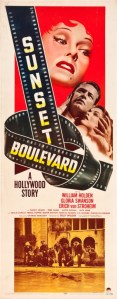
sunset-boulevard-posterWhile reading the book, I couldn’t help but imagine the films of one of my favorite directors, namely Billy Wilder (1906-2002). In more than one way, the story of Hector Mann in Auster’s book reminded me of the story in Wilder’s Sunset Boulevard. I also had to think, surprisingly perhaps, of another kind of moviemaking. I was reminded of a video-clip by Norwegian pop-band a-ha, for their big hit song ‘Take on Me’. 25 years after the song earned six awards at the 1986 MTV Video Music Awards (September 5, 1986), I’d like to celebrate the art and craftsmanship of the video once more. Like Paul Auster refers to moviemaking in his novel, a-ha made a video-clip with references to yet another art-form, comics. Scott McCloud points to the distinction between animation and comics in his truly inspiring book Understanding Comics – The Invisible Art: “Each successive frame of a movie is projected on exactly the same space – the screen – while each frame of comics must occupy a different space. Space does for comics what time does for film!” Makes one think about the mysteries of space and time, and our vain attempts to grasp them…

understanding-comics-the-treachery-of-imagesWell, what kind of storytelling you prefer, doesn’t really matter. However, I’m strongly convinced that what we need today is the art of storytelling. Too many tragedies seem to happen nowadays because of people who live from ‘indisputable ideologies’ (stories turned frigid) – the Norwegian had their tragedy, the world as a whole had 9/11. To write the story to let others come alive, while also realizing that ‘the other’ is  always bigger than ‘our story’ – that’s what we need… “In the beginning was the Word…” (John 1:1). The Word between one man and the other, the Poet creating proximity and distance at the same time, creating tenderness… Like a painter, who caresses the image of his beloved model with a paintbrush, leaving the model herself ‘untouched’…

‘She’ is always the one who saves us from ‘the labyrinth’ – from the dark cave of the womb into the light. ‘She’ is reality beyond our words and imaginations, beyond the games we play, beyond virtual competitions where we try to find a sense of ‘victory’, beyond the illusion that we are ‘masters’ of reality. Life is not a programmed, predestined computer game (Tron, the movie, anyone?).

Enjoy ‘Take on Me’… and the life bringers. Click to watch a pop defining moment – ‘mirror, mirror…’ indeed: