A most interesting article appeared in a special edition of EOS, a science magazine in Dutch. It was about the quest for the historical Jesus. For those familiar with the material it was not a very revealing article. Nonetheless, it provided a kind of summary, albeit sometimes in a tendentious manner (click here for a better article on the subject from skepp). Take, for instance, this statement at the end of the article: “The scepticism of Christian researchers turns out to be quite a bit more flexible than the scepticism of atheist researchers.” This is a poor statement because it is made without any arguments. The article itself even provides some counterarguments. Let’s have a closer look.
First of all, the information contained in the article primarily comes from Christian researchers, and some of them are briefly mentioned. John P. Meier is quoted with this claim: “Jesus was a marginal Jew leading a marginal movement in a marginal province of a vast Roman empire.” Whoever is familiar with research on the historical Jesus knows that John Meier, a Catholic priest, has written the contemporary standard for historical Jesus studies. Meier’s four part magnum opus, entitled A Marginal Jew – Rethinking the Historical Jesus, is an instant classic. The first volume appeared November first, 1991. The fourth and final volume appeared 18 years later, May 26th 2009, completing the series with a total of 3102 pages.
Jona Lendering, a well-known Dutch historian who also writes columns as a “mild atheist”, claims that “the most important book any historian of antiquity should read is, actually, John P. Meier’s brilliant series A Marginal Jew – Rethinking the Historical Jesus. Better still, the quest for the historical Jesus is the most innovative and methodically most advanced specialism in ancient history. A Marginal Jew simply is the best book in the best developed research on ancient history.” (click here for pdf of “De joodse Jezus”).
It is strange that Marc Meuleman, author of the article on the historical Jesus in EOS magazine, makes a statement about the supposed confirmation bias of Christian researchers while he simultaneously refers to websites like The Jesus Puzzle and a podcast like The Bible Geek. These atheist sources deny that Jesus ever existed. Some people all too easily accept and believe conspiracy theories. Meuleman correctly mentions that this claim is not the scientific consensus. Christian and atheist historians alike, concerned with research on the historical Jesus, agree on the historical existence of Jesus of Nazareth and certain facts about his life.
In short, Marc Meuleman gives evidence for all too flexible and exaggerated scepticism by atheist researchers regarding the historical Jesus in his article, while he does not give any evidence to support his claim on the so-called lack of scepticism by Christian researchers. On the contrary, by mentioning John Meier he gives an example of a Christian researcher who meticulously distinguishes what can be said “as a historian” and what can be said “as a believer or non-believer (interpreting from different ideological backgrounds)” on the figure of Jesus.
Atheists with a strong emotional aversion towards the Christian faith, apparently suffer from a confirmation bias regarding ancient history similar to the confirmation bias of certain Christian fundamentalists regarding the theory of evolution. Seen from their respective scientific specialisms, the claim that Jesus never existed is as stupid as the claim that evolution never happened. Richard Dawkins used to make the former claim (click here), followed later on by a statement that “it doesn’t really matter whether or not Jesus existed.” Well, maybe it doesn’t matter to someone who is not interested in scientific research, although Dawkins claims to foster “science and rationality”. And now we’re at it, how “rational” is Dawkins if he continuously minimizes “positive” examples of faith and religion in order to confirm his conviction that faith and religion are, in most cases, a “bad, delusional thing”? Confirmation bias, anyone? For instance, Dawkins claims that Martin Luther King’s leadership of the civil rights movement did not arise from King’s Christian beliefs. Maybe he should read King’s work first before making such statements. That’s what a scientist should do…
Perhaps Marc Meuleman’s statement on Christian researchers in his article can be understood by taking into account the influence of the anti-theistic “new atheism” of people like Richard Dawkins on the minds of the average atheist. Many atheists hold a confirmation bias on the supposedly ever present confirmation bias of “believers”. That’s why Marc Meuleman fails to see that he somewhat contradicts himself in his article. Atheists often ask for the author of an article to judge whether or not they will read the article, or whether or not they can trust its “objectivity”. Actually, a scientific mindset should focus on “what is being said” and judge by rational and scientific criteria, and not judge on the basis of a preliminary argument from authority. Everyone who reads John Meier’s work on the historical Jesus can judge this work by rational and scientific criteria and will most likely agree with Jona Lendering’s appraisal of it.
Anyway, whether we’re believers or atheists, we’re all human 🙂 and we often judge something by looking at others first – “Who said what?” Yep, we’re mimetic creatures, imitating the ones we’ve (again mimetically) learned to trust, even if this clouds our judgment…
It seems the more we become so-called autonomous individuals the more we become dependent on official rules and legislation. It’s one of the big paradoxes in today’s western society.
We have to be sure that others respect our so-called freedom and therefore force them, by means of law, to satisfy our supposedly very own needs and desires. Others are indeed often approached from a perspective of usefulness, as means to other ends, and not as ends in themselves. Another paradox. We all know what will happen if we are no longer surrounded by the others whose services we’re accustomed to. Most of us so-called self-reliant and independent western individuals are actually so dependent on the others we learned to need that we wouldn’t last a year in the jungle.
Looked at more closely, our celebrated autonomy turns out to be a grand illusion. Perhaps we so strongly cling to it because we actually don’t have that autonomy. The grand illusion of autonomy is “the romantic illusion” René Girard speaks of – the belief that we own ourselves and our desires.
The upcoming legislation on euthanasia for minors in Belgium painfully uncovers the failure of the vain quest for autonomy, once again. Instead of trusting and allowing medical teams, parents and other family members the greater freedom (and thus the greater responsibility) to maintain an ever delicate care for children who are terminally ill in their own experienced ways, we once again try to “control” and “manage” the complexity of intimate and vulnerable human relationships by laws and procedures. Where’s the freedom in a society with ever more rules to live by?
I know that we want to prevent abuses from happening. I know that we want to prevent unnecessary suffering. And that’s a good thing. The law on euthanasia for minors might be good in the sense that it has “good intentions”. But laws can be abused as well. Procedural errors sometimes get in the way of the demand for justice and for sound judgment. Should we put the pressure on the people responsible for the minors in their care? Should we make them afraid of possible “procedural errors”? Or should we trust them with freedom and responsibility? Should we grant them, as well as the children, greater autonomy? In other words: should we truly become a liberal society?
I guess the apostle Paul has a point (Romans 7:7-15.21-24a) about the possible perversion of good-intended laws:
What shall we say, then? Is the law sinful? Certainly not! Nevertheless, I would not have known what sin was had it not been for the law. For I would not have known what coveting really was if the law had not said, “You shall not covet.”But sin, seizing the opportunity afforded by the commandment, produced in me every kind of coveting. For apart from the law, sin was dead.Once I was alive apart from the law; but when the commandment came, sin sprang to life and I died.I found that the very commandment that was intended to bring life actually brought death.For sin, seizing the opportunity afforded by the commandment, deceived me, and through the commandment put me to death.So then, the law is holy, and the commandment is holy, righteous and good.
Did that which is good, then, become death to me? By no means! Nevertheless, in order that sin might be recognized as sin, it used what is good to bring about my death, so that through the commandment sin might become utterly sinful.
We know that the law is spiritual; but I am unspiritual, sold as a slave to sin.I do not understand what I do. For what I want to do I do not do, but what I hate I do. […]
So I find this law at work: Although I want to do good, evil is right there with me.For in my inner being I delight in God’s law;but I see another law at work in me, waging war against the law of my mind and making me a prisoner of the law of sin at work within me.What a wretched man I am!
2. TOTALITARIANISM IN THE NAME OF SACRED AUTONOMY
Using the thought of René Girard and mimetic theory, it is possible to sketch out a history of the western world as something which evolves according to ever changing attempts to contain our own violence. Throughout history mankind has been in search of scapegoats to get rid of in order to safeguard society from actual and potential violent disasters. The paradox, of course, is that this “sacred” search often turns out to be physically or mentally violent as well, creating exactly what it is trying to destroy. Indeed, “Satan cannot drive out Satan” (Mark 3:23). So what happened?
Well, at first we had religion as a means to contain violence. After a while, however, too many guys claiming to know the divine Truth were fighting each other, constantly waging war and causing violent mayhem in the western world. So we tried to get rid of God, sacrificing some believers here and there.
Reason and science came in. But after we tried to build a world on so-called purely rational and scientific principles, developing ideas on “the necessary development towards the dictatorship of the proletariat” or on “the superiority of the Aryan race”, and after experiencing that these principles led to mass sacrifices as well, we could no longer believe in the reasonable Truth as well. So we tried to get rid of Reason, making way for “emocracy” and so-called “own opinions”.
In 1948 we got The Universal Declaration of Human Rights, which is in fact a declaration on individual rights. After the traumatic experience of two world wars, it can be read as an attempt to protect the individual from too much influence by the Church or the State. What matters now is our “own opinion” and our “own desire” – in short, our Autonomy. We now believe in the unquestionable autonomous Truth (really a perversion of the Human Rights, which were intended to foster tolerance and the possibility of critical dialogue).
After the sacred totalitarianism of people who claimed to speak and act in the name of “God”, we got the sacred totalitarianism of people who claimed to speak and act in the name of “Reason”, followed eventually by the sacred totalitarianism of people who claim to speak and act in the name of “Autonomy”.
All three forms of totalitarianism are closed to what’s Other than themselves, closed to what transcends and reveals itself beyond the needs of the totalitarian impulse. They destroy the possibility of any relationship with the Other. All three forms of totalitarianism justify the sacrifice (physically and/or mentally) of “otherness” in the name of “peace and harmony”.
The totalitarian impulse is in our hearts. Unless we accept ourselves as “relational beings” or “being essentially relational before being an I”, we won’t find the freedom and autonomy we so desperately long for.
So yes, I do believe in a God who transcends man and liberates us from the crushing burden of having to be “the measure of all things”. And yes, I do believe in the gift of Reason as a means to explore the mysteries of a world that’s given. In the end, I also believe in Others, my fellow human beings who grant me my personal freedom and allow me to discover myself.
I believe I’m created in the image of a God whose very being is “relational” – an idea expressed as The Holy Trinity -, and I’m called to imitate that Love to become “who I am”. This hopefully helps me to protect myself against the perversions of faith, reason and autonomy. I do hope that faith does not become an ideological certitude but a starting point that allows us to meet “others”. I do hope that reason does not become unreasonable. And I do hope that autonomy does not end up in enslavement.
The question is whether an atheist world would be a better world.
Slavoj Zizek, atheist philosopher, refers to René Girard’s analysis of Christianity in God in Pain: Inversions of Apocalypse and concludes that Christianity, revealing the innocence of erstwhile sacrificial victims, “[undermines] the efficiency of the entire sacrificial mechanism of scapegoating: sacrifices (even of the magnitude of a holocaust) become hypocritical, inoperative, fake…” As this sacrificial mechanism is the cornerstone of religious behavior, Christianity thus indeed is “the religion of the end of religion” (atheist historian Marcel Gauchet). Zizek, still in the aforementioned essay, also briefly explains how Christianity potentially brings to an end the ever- present sacrificial temptation: “Following René Girard, Dupuy demonstrates how Christianity stages the same sacrificial process [of archaic religion], but with a crucially different cognitive spin: the story is not told by the collective which stages the sacrifice, but by the victim, from the standpoint of the victim whose full innocence is thereby asserted. (The first step towards this reversal can be discerned already in the book of Job, where the story is told from the standpoint of the innocent victim of divine wrath.)” This assessment of Christianity could also help to understand Dietrich Bonhoeffer’s call for a “religionless Christianity” (or maybe we should speak of a Christianity transforming religion rather than destroying it – click here for more).
In other words, Christianity is – in a profound sense – one of the main sources of secularization. Secular societies are challenged to build a world without “sacred sacrifices”. As Zizek notes, “the sacred sacrifice to the gods is the same as an act of murder – what makes it sacred is that it limits/contains violence, including murder, in everyday life.” Precisely because a secular society, heir to the dismantlement of “the archaic sacred” by Christianity, no longer possesses the traditional religious means to contain violence, it has to find other ways to deal with violence, or else destroy itself. Zizek quotes Jean-Pierre Dupuy in this regard: “Concerning Christianity, it is not a morality but an epistemology: it says the truth about the sacred, and thereby deprives it of its creative power, for better or for worse.” And Zizek continues: “Therein resides the world-historical rupture introduced by Christianity: now we know [the truth about the sacred], and can no longer pretend that we don’t. And, as we have already seen, the impact of this knowledge is not only liberating, but deeply ambiguous: it also deprives society of the stabilizing role of scapegoating and thus opens up the space for violence not contained by any mythic limit.”
(Quotes from Zizek in Slavoj Zizek & Boris Gunjevic, God in Pain: Inversions of Apocalypse – [Essay] Christianity Against the Sacred, Seven Stories Press, New York, 2012, p. 63-64).
With these thoughts in mind, we can frame the question about the atheist world in another way. Can our world survive its own potential for violence without religion, without the traditional sacrificial mechanisms that try to limit violence?
NEW ATHEIST RELIGION & AMORAL ATHEISM
As it happens, we seem to regenerate the religious impulse. To this day we keep looking for scapegoats to be cast out of society in order to purify ourselves from the evils in our midst. It’s part of the way we build ‘the City of Man’. Richard Dawkins and Christopher Hitchens, two well-known spokesmen of the so-called ‘New Atheism’, clearly consider religion as one of the main sources of evil in the world. Hence, in their views, we would be better off without religion. But, precisely because of their tendency to blame theistic religion for “much of the evil in the world” and their attempts to expel or even sacrifice it, they create a new sacrificial religion, albeit an atheist one. How long before believers – without whom their theistic religion would not exist – no longer have the right to voice their views in the public sphere if the new atheists had their way?
The demonization of theistic religion by the new atheists is their way of suggesting the moral superiority of atheism. Their reasoning, however, is flawed and incomplete. Take, for instance, this challenge by Christopher Hitchens:
“Name one ethical statement made, or one ethical action performed, by a believer that could not have been uttered or done by a nonbeliever. And here is my second challenge. Can anyone think of a wicked statement made, or an evil action performed, precisely because of religious faith?”
Some people, thinking of the atrocities committed by Stalin, Mao and Pol Pot, try to make this a more balanced rhetorical statement by adding a question: Can anyone think of a wicked statement made, or an evil action performed, precisely because of atheism?
The new atheists already have their response to those who think that the crimes of Stalin et al. had anything to do with atheism. Richard Dawkins:
“What I do think is that there is some logical connection between believing in God and doing some, sometimes, evil things, but there’s no logical connection between them [Stalin, Mao, and Pol Pot] being atheists and doing evil things. It’s just incidentally true that, say, Mao Zedong and Joseph Stalin happened to be atheists, but that wasn’t what drove them. What drove them was a political ideology. It had nothing to do with atheism.”
Another atheist puts it this way:
“While Stalin and Mao were atheists, they did not perpetrate their atrocities because of their atheism. Atheism is simply the lack of belief in god. One cannot commit a crime in the name of ‘there is no god’. On the other hand, one can commit a crime in the name of ‘god’.”
This statement also implies that nothing good can be done in the name of atheism. Atheists can do good things like believers can do good things. The difference is that believers can do good things “in the name of god”. Atheists can do bad things like believers can do bad things. The difference is that believers can do bad things “in the name of god”. But, just like crimes cannot be done in the name of “there is no god”, good deeds cannot be done in the name of “there is no god”. Atheism is not immoral, neither is it moral. Atheism is amoral – it literally has no moral implications.
Therefore, it is not guaranteed that an atheist world would be a better world. It all depends on the ethics that will be developed in such a world. Moreover, theists and atheists alike can only believe that one ethical decision or even system is better than another. They can never prove this. Science observes and describes facts, it doesn’t morally judge them – we cannot move from what is to what ought. We’ve already seen the ethics of Stalin’s political ideology, to name but one example, and it’s highly questionable whether that was a good thing… And if we would put some of the new atheist ideas into practice, we would regenerate a sacrificial system of potentially apocalyptic proportions. Sam Harris, for instance:
“Some propositions are so dangerous that it may even be ethical to kill people for believing them. This may seem an extraordinary claim, but it merely enunciates an ordinary fact about the world in which we live. Certain beliefs place their adherents beyond the reach of every peaceful means of persuasion, while inspiring them to commit acts of extraordinary violence against others. There is, in fact, no talking to some people. If they cannot be captured, and they often cannot, otherwise tolerant people may be justified in killing them in self-defense. This is what the United States attempted in Afghanistan, and it is what we and other Western powers are bound to attempt, at an even greater cost to ourselves and to innocents abroad, elsewhere in the Muslim world. We will continue to spill blood in what is, at bottom, a war of ideas.“
Seen from the perspective of René Girard’s mimetic theory, these ideas of new atheists mirror the ideas of some of their fundamentalist counterparts (for more on this, click here to read and watch ReligulousAtheism). The tiny proportion of theistic fundamentalists that take part in acts of violence justify their violence in a similar way. They think it is ethical to kill certain people in order to cleanse the world of evil. New atheists and theistic fundamentalists become mimetic (i.e. imitative) doubles – imitating each other’s ways of scapegoating. However, as a wise man once said, “Satan cannot cast out Satan”. We cannot destroy (the possibility of) violence by using violence. We cannot destroy fear if our politics of security justify themselves by constantly referring to the things we should be afraid of. We cannot destroy evil by using evil.
In the end we’ll have to imagine a new peace, but not the (theist and atheist religious) peace of “this world”, which is based on sacrifice. It might be the peace this man speaks of:
“Peace I leave with you; my peace I give you. I do not give to you as the world gives. Do not let your hearts be troubled and do not be afraid.” (John 14:27)
Michael Meuleman, one of my students, briefly talked about his passion for brain imaging and brain imaging technologies. It’s his dream to further work on speech reconstruction for disabled persons, using and developing brain imaging technology himself. Michael referred to famous physicist Stephen Hawking as one of many who could benefit from this research. As a matter of fact, Hawking already participated in attempts to convert his brainwaves into speech. Soon, RoboCop won’t be science-fiction anymore!
On my way home from school, I kept thinking about what Michael had said, and decided to do some reading on the subject matter. In amazing times like these, when valuable information is just a few worldwide web clicks away, I discovered the research my student was referring to quite easily: click to read it here.
Speaking of Stephen Hawking I remembered how Oxford mathematician John Lennox responded to some of Hawking’s philosophical claims in a book called God and Stephen Hawking: Whose Design Is It Anyway? This again reminded me of something that same John Lennox said during a lecture – it actually blew me away at the time:
Applied to the research on brain activity for speech reconstruction, Lennox reasoning implies the following.
When we identify a person’s brain activity while that person is hearing or thinking about, for instance, the word jazz, we might see something like this:
In order to enable people like Stephen Hawking to communicate more rapidly by using their brain activity, computers need to do two fundamental things (among many processes):
Register the type of brain activity that is ignited by certain sounds – vowels, syllables, words…
Interpret brain activity so it can be translated to certain sounds – vowels, syllables, words…
The thing is, brain activity as such does not give you any word. In other “words”, thefull picture or complete reality of a word like jazz is not given in a scientific representation of brain activity. That activity needs to be connected to the word in question. Computers need to be programmed to decode certain brain activity and to recognize or interpret it as the word jazz. Brain activity itself is nor produces the word jazz. There already has to be meaning (and an entity which produces it) before we can ask ourselves what that meaning looks like in scientific terms. More broadly speaking, the things we can say in scientific terms don’t ever give us the essential reality of a particular phenomenon. Science can only begin to explore reality because of the mysterious fact that there is something to explore to begin with! It comes as no surprise then that science can be considered a highly spiritual activity, as it continuously refers to a reality which transcends its endeavors.
The tendency for scientism by the “secular fundamentalist” (see Chris Hedges) new atheist movement, as if science can answer all important or relevant questions, as if science can provide us full knowledge about the true nature of reality, should be discarded as a perversion of science. If phenomena would not reveal themselves to our eyes – whether we look through telescopes or microscopes -, we would not be able to gain any scientific knowledge at all. No scientific knowledge without the mystical realization of revelation. And no scientific or other knowledge that can ever “solve” the mysterious fact that there is something rather than nothing. In the words of theoretical physicist and mathematician Freeman John Dyson (born December 15, 1923, only ten days before René Girard :)):
“The public has a distorted view of science because children are taught in school that science is a collection of firmly established truths. In fact, science is not a collection of truths. It is a continuing exploration of mysteries.”
It’s amazing what science can do, but it’s even more amazing that there is anything to do at all. Hopefully we, human beings, learn to use scientific and technological knowledge for some good. At least one of my students seems up to it :), and I’m sure most of them are. And while we’re at it: science can never answer the question what goals it should help to accomplish – those questions are and remain philosophical and draw from many sources…
“The public has a distorted view of science because children are taught in school that science is a collection of firmly established truths. In fact, science is not a collection of truths. It is a continuing exploration of mysteries.”
Freeman John Dyson (born 1923).
1. THE INTRO
Last week, one of my pupils said something what countless others already said before him, and what countless others will repeat after him – it’s a cultural thing foremost, in our so-called secularized Belgian society:
“I don’t need any theological speculation. I’m an atheist. I don’t need God! I don’t need to go any further than psychology and the social sciences…”
In the same week, on Monday (April 15th, 2013), I read an article in the newspaper about a young professor who had tampered with data and search results (read the article here, in Dutch; for more information in English click here). He allegedly committed large-scale fraud, investigating the causes of epilepsy.
One might ask what one observation has to do with the other. Well, for one, it’s clear that the young scientist was especially interested in the things he needed to promote his career. His desire for recognition and for prestige became more important than science itself. He used scientific research as a means to another end, to satisfy his pride. In the end, he accomplished exactly what he was trying to avoid. Instead of promoting his career and his own future in academia, he ruined it. Jesus points to the tragic nature of attempts like these:
“For whoever wants to save their life will lose it… What good is it for someone to gain the whole world, and yet lose or forfeit their very self?”(Luke 9:24a-25).
But there’s more. According to Christian tradition, whenever we are guided by pride we not only tend to ruin ourselves. We also tend to ruin our surroundings. Indeed, the young ambitious scientist violated the scientific truth in order to protect his self-image, next to endangering the career of his co-workers. Once again, the Christian tradition is spot-on: the person who cannot love himself, and seeks comfort in the creation of an admirable image, cannot truly love others, for he is primarily interested in others insofar as they are useful for developing and recognizing that image. Our desire for mutual, social recognition – understood as the ultimate goal of our efforts, which is vanity – often gets in the way of our capacity to perceive what is actually happening. This truth is retold in a magnificent way by Hans Christian Andersen’s fairytale The Emperor’s New Clothes.
Precisely because we very often approach reality from the perspective of its eventual usefulness, and from the question whether we need it or not, we remain blind for a fuller understanding of reality. This one’s for my pupils:
THE TRUTH DOES NOT PRIMARILY HAVE TO BE USEFUL
(ALTHOUGH IT CAN BE), THE TRUTH HAS TO BE TRUE!
For instance, if we only focus on the aspects of another person that seem useful to us, we might miss out on other aspects that can actually turn out to be more fundamental than the ones we’re focusing on. More generally, we might get a better picture of reality if we not only focus on purely scientific questions and explanations, but also deal with more philosophical issues and questions.
Rationality should not be restricted to scientific rationality. Actually, we never do this on a day-to-day basis. For instance, scientific rationality might explain why we become jealous sometimes, but we need the more philosophical rationality of ethics to discuss whether or not and to what degree jealousy is a good thing.
Another example: scientific rationality might explain how the universe came into being, but we need philosophical rationality to deal with the question whether or not there is an ultimate purpose of “all that is”, whether or not there will be some “perfection” of the universe. Scientifically speaking, there is none, but it’s logically very debatable that the scientific answer is the only meaningful or true answer to this question. The belief that only scientific claims are true or meaningful is known as scientism, which is problematic. From The Skeptic’s Dictionary: “Scientism, in the strong sense, is the self-annihilating view that only scientific claims are meaningful, which is not a scientific claim and hence, if true, not meaningful. Thus, scientism is either false or meaningless.”
Again, in order to understand reality more fully – in its ethical, aesthetic, and mysterious (non-manipulable) aspects -, we might have to go beyond merely scientific concerns, and also go beyond our immediate “needs”. We might even have to pose theological questions. Moreover, it’s not because we can scientifically explain why we pose certain questions that these questions themselves can be answered by science. To “understand” reality is to contemplate it in all its aspects.
It is no coincidence that, from a Christian point of view, there are prayers like the one ascribed to Saint Francis of Assisi, containing the words:
“O Divine Master, grant that I may not so much seek to be understood as to understand…”
Although some consider it to be a sign of freedom to be able to approach reality from the perspective of their supposedly very own needs, desires and interests, this is actually a sign of enslavement…
FOR THE THINGS YOU NEED OR LEARNED TO NEED
ARE THINGS YOU ARE DEPENDENT UPON
(OTHERWISE YOU WOULDN’T NEED THEM)
2. THE MIDDLE
“Need” is a complicated affair when it comes to humans.
Psychologist Abraham Maslow (1908-1970) became famous for mapping our needs in a veritable Hierarchy of Needs – a five-stage model, originally. Once physiological and basic survival needs are met, other needs come to the fore. It is interesting to notice that Maslow characterizes the stages we normally associate with “human freedom” as “needs”. Although we might have the impression that we are free to choose whom we want to belong to, we didn’t choose the need to belong to a group or a person. The same goes for the two highest stages of human needs. We can seemingly choose the things that bring us self-esteem, status or prestige, but we can’t escape the desire for these matters. The biggest paradox, of course, is Maslow’s characterization of self-actualization as a need: we are bound to be free. In other words, reminiscing the thought of Jean-Paul Sartre (1905-1980) and other existentialist philosophers, we face the command to develop ourselves.
Several questions arise here, namely, how do we know who we are, who we want to be, how to gain prestige and self-esteem? René Girard’s answer is quite simple: we imitate others in modeling our desires, ambitions, and sense of self. More specifically those others we’ve (mimetically, i.e. imitatively) learned to appreciate and whose appreciation we’ve (again, mimetically) learned to desire.
As Emmanuel Levinas (1906-1995) pointed out time and again, we tend to approach reality as a whole and fellow human beings in particular from the perspective of our needs. We’re often interested in other people basically because they are experienced as “useful” one way or the other (as friends, as suppliers of security and/or happiness, as financial support, etc.). In fact, we tend to reduce others to their “usefulness”, and to apply this as a criterion to decide whether or not someone or something is valuable. Utilitarian ethics are actually an attempt to found morality on the tendency to focus on our needs. For instance, we should help the poor, not necessarily because we love them, but because not helping them could ultimately cause problems to ourselves. We “need” to help them because we – or the majority of human beings – benefit from it. On a collective level, helping the poor could be one of the roads to a more secure and safer world. On an individual level it could perhaps be a way to gain some status or prestige as “hero”.
Levinas fundamentally criticizes the utilitarian approach to reality. The Other, our fellow human being, our “neighbor”, transcends our needs and desires. If we reduce the Other to the question how he can be useful to us, we will never get to “know” anything about the Other. Moreover, before we can reduce the Other to his usefulness, the Other is simply there, and he might in no way answer to the demands of our actual needs and desires. On the contrary, the Other might reveal himself as a burden or even an enemy to our interests.
The same applies to reality as a whole. It is even said that “reality hits us” whenever we are confronted with aspects of it that we don’t need at all! Reality often reveals itself in shapes we failed to foresee or manipulate according to our needs.
The search for truth therefore begins with the question whether or not we can free ourselves partially from our immediate needs, and from the tendency to control our environment. Are we able to honestly face reality in all its fearful as well as promising possibilities? This is especially challenging in encountering the reality of other persons. For only if we become relatively free from our own needs, anxieties, interests, and prejudices, can we allow the other to freely approach us as “Other” – meaning that we don’t mold him according to the contours of our self-image and our desire for recognition.
3. THE OUTRO
It’s important to notice that, although Christianity reveals the pitfalls of our desire for recognition, it is not about sacrificing this desire. It’s about giving it the right place. I often explain this to my pupils by describing two basic types of students:
Student A is basically motivated by the desire to get good grades, because he believes these are his “ticket to paradise” (i.e. recognition by his parents and teachers, and all kinds of “rewards”). In other words, student A is only interested in his courses insofar as he can use them to gain an admirable self-image – which is his ultimate goal. He is guided by his pride. He has lost the capacity to enjoy many of the things he is doing, and that’s why he generally needs to be compensated for what he’s done. Kneeling to the idol of an admirable self-image, student A is no longer capable of loving himself, let alone love others (it’s the kind of student that will pay his teachers some respect because he expects some reward, but who will also tend to get angry if the reward is not granted – which means that his self-image is stained). He finds solace in the recognition for his good grades. However, while focusing on “getting to paradise” (or, in other words, while focusing on the desire to “save his life” and “get into heaven”), he’ll find himself less and less able to study properly, and his grades will go down (he’ll “lose his life” and “get into hell”).
In the words of the great and late Christian writer, G.K. Chesterton (1874-1936), the situation of student A can be characterized as follows:
“The moment men begin to care more for education than for religion they begin to care more for ambition than for education. It is no longer a world in which the souls of all are equal before heaven, but a world in which the mind of each is bent on achieving unequal advantage over the other. There begins to be a mere vanity in being educated whether it be self-educated or merely state-educated. Education ought to be a searchlight given to a man to explore everything, but very specially the things most distant from himself. Education tends to be a spotlight; which is centered entirely on himself. Some improvement may be made by turning equally vivid and perhaps vulgar spotlights upon a large number of other people as well. But the only final cure is to turn off the limelight and let him realize the stars.”
Student B is basically motivated by the desire to know and understand his courses. As a consequence, he’ll often get good grades (“get into heaven”), but this never was his primary goal. Precisely because he considers his courses as ends in themselves, he’ll eventually get and enjoy recognition. Of course, being proud of an achievement is not a crime. It becomes malicious, though, when it is the goal and not the consequence of one’s actions.
Whenever Jesus talks about heaven or hell in the Gospels, he presents them as possible consequences of one’s actions and not as goals. He even says that we shouldn’t do good and help our neighbor in order to gain some kind of heavenly reward and to avoid hell, but that we should help our neighbor because of our neighbor (as end in himself). Then we’ll get “heaven” as a quite unexpected reward, as a logical consequence. The same reasoning applies to his approach of reality as a whole.
False prophets or false messiahs (in religion, politics, health care, etc.) are people who try to tell us what we need to get to paradise (a nice house, a good career, a healthy body, a safe but entertaining life etc.), and also scare us with the evil dangers that could send us to hell. They are doctors who constantly produce the disease they supposedly liberate us from. But, of course, they never really liberate us, for they are dependent on the disease to be able to manifest themselves as “liberators” or “messiahs”. They produce one self-fulfilling prophecy after the other. For instance, the more a gun lobby convinces us that we should protect ourselves with weapons to keep safe in an “evil, ugly world”, the more people will get killed because of gun fire, the more we will feel unsafe, the more the gun lobby will be able to convince us of “the unsafe world”, the more we buy guns, etc.
Jesus, on the other hand, points out that “Satan cannot cast out Satan”. We cannot free ourselves and the world if the means we use to make this world a better place actually (and tragically) continue the diseases we try to cure the world from. Contrary to all kinds of false prophets, he advises us – as a fundamental attitude towards life – “not to be afraid” and “not to worry” too much.
I guess he is right, also in the case of the two types of students.
In short,
Student A becomes a SLAVE of an ambition he has learned to aspire for himself. The system of “getting good grades” is more important to him than anything else in class. Everything, including himself, is subjected to this GOAL. Student A might become a scientific investigator who uses scientific research to promote his career and thereby satisfy his pride.
Student B remains FREE. The system of “getting good grades” is not important in itself. It is a means to check whether or not the studied courses are sufficiently understood. Student B might become a scientific investigator who really gets a better scientific understanding of reality, and therefore gets his academic career going as a logical CONSEQUENCE.
Student B imitates Jesus’ approach to all kinds of laws and regulations (more specifically the Mosaic Law in the case of Jesus). Jesus says that he didn’t come to abolish the Law just like that, but that he came to fulfill it, meaning that rules should always be relative to the end they help to accomplish. A system of rules and laws should never be an end in itself. It should be considered a means to another end. What counts for Jesus is love for one’s neighbor, and if rules become obstacles in accomplishing this goal, they should be adapted or even suspended.
Student B uses the grade system to get more information on his knowledge of the courses he’s presented with, because he tries to respect what the courses are saying (without, however, automatically agreeing with their statements). This indeed is analogous to Jesus’ approach of the Mosaic Law. Jesus tries to create mutual respect between fellow human beings, thereby constantly evaluating if regulations allow others to live fully. Jesus criticizes any use of the Mosaic Law that justifies the sacrifice of others to satisfy one’s (or a group’s) pride or self-image.
Mark 2:23-27 puts it this way – and I’ll leave it at that:
One Sabbath Jesus was going through the grainfields, and as his disciples walked along, they began to pick some heads of grain. The Pharisees said to him, “Look, why are they doing what is unlawful on the Sabbath?”
He answered, “Have you never read what David did when he and his companions were hungry and in need?In the days of Abiathar the high priest, he entered the house of God and ate the consecrated bread, which is lawful only for priests to eat. And he also gave some to his companions.”
Then he said to them, “The Sabbath was made for man, not man for the Sabbath.So the Son of Man is Lord even of the Sabbath.”
A while ago I had a conversation with two atheist colleagues of mine at the school where I’m teaching religion. I asked them the following question:
“Do you believe that things become valuable only if people accord them some value, and, on the other hand, that they no longer possess any value once people stop according them value?”
My colleagues answered: “Yes, we do…”
I went further: “So, if no one grants an individual any respect at all, including the individual himself, that individual actually doesn’t have any value? He’s worth nothing because no human being acknowledges him?”
They said: “Yes, of course…”
I’m sorry, but I cannot believe this. I cannot believe that the weight of what’s valuable and what’s not in the universe rests on our tiny, petty little shoulders. It’s too heavy a burden to be carried by mere mortals, who appear and disappear in the blink of an eye. I don’t believe that someone is worth nothing if he’s considered worthless by the human community, including himself. In short, I don’t believe, unlike the old Greek philosopher Protagoras, that “man is the measure of all things” in these matters.
A person’s worth cannot be determined solely by human perception and judgment. Man is not simply the child of a “social other”, i.e. the product of a man-made social environment in which he gains or loses a sense of (self-) worth. He’s also, following the thoughts of people like James Alison and Emmanuel Levinas, a child of “the other Other”, and we should postpone any final judgment on other people and ourselves.
Theologically speaking, this kind of “eschatological reservation” is quite liberating, not just for ourselves, but also for our neighbors. The lurking alternative seems human totalitarianism, meaning the aspiration of man – on an individual or collective level – to have total control in determining what and who is valuable, and what and who is worthless. I’d say we better accept the limitedness of our existence, and leave the perfection of the world to “the Infinite One”, you know, “God”.
Unlike my atheist colleagues, I don’t believe we should try to occupy His kind of place. This unbelief makes me a believer, I believe… And indeed: “Every finite spirit believes either in a God or in an idol” (Max Scheler, 1874-1928). Right on, Max!
In het bijzonder richt ik dit ‘sermoen’ aan Patrick De Witte, Patrick Loobuyck, Johan Braeckman, Anne Provoost, Nic Balthazar en Etienne Vermeersch. Jullie geëxpliciteerde ideeën over religie, en meer bepaald over de christelijke tradities en de verhouding tussen kerk en samenleving, vertolken immers vaak nogal gangbare veronderstellingen uit de onderbuik van onze geseculariseerde samenleving. Het ware boeiend geweest jullie aan tafel te zien met Mieke Van Hecke, Pieter De Crem, Annemie Struyf en Monseigneur Léonard. Dat is misschien voor een volgende Reyers Laat… Lees hier (ook op de Thomassite te lezen):
In 2010, renowned physicist Stephen Hawking made a statement in his book The Grand Design (co-written by Leonard Mlodinow), which raised quite a few eyebrows:
“Because there is a law such as gravity, the universe can and will create itself from nothing. Spontaneous creation is the reason there is something rather than nothing, why the universe exists, why we exist. It is not necessary to invoke God to light the blue touch paper and set the universe going.”
Of course Richard Dawkins was among the first to welcome this statement, proving once again that his emotionally driven campaign against religion sometimes gets in the way of more rational judgments. Despite the overwhelming availability of objections, I’m still confronted with this issue from time to time, and with some misconceptions surrounding it. So I decided to summarize what I consider the main problems with Hawking’s statement, problems which someone like Dawkins doesn’t seem to consider.
Hawking’s statement implies that we don’t need anything else than a scientific explanation to present our world ‘as it is’. Moreover, it implies that a scientific explanation is the only valuable explanation, the only ‘true’ explanation so to speak.
Problems:
1. The claim that reality is presented ‘as it is’ only in a scientific explanation can never be proven.
2. If we can never prove that science presents the world ‘as it is’, then the statement that ‘we don’t need God to explain the universe as it is’, cannot be proven either.
Hawking seems to forget that his variation of scientism concerning the origin of our universe is a philosophical position and nota scientific one. One can believe that science eventually reveals the complete and true nature of reality, but this metaphysicalclaim can never be proven. Moreover:
Scientism, in the strong sense, is the self-annihilating view that only scientific claims are meaningful, which is not a scientific claim and hence, if true, not meaningful. Thus, scientism is either false or meaningless. – The Skeptic’s Dictionary.
Maybe an analogy can broaden the discussion.
Applied to the phenomenon of sex, the implicit principle of scientism used by Stephen Hawking might raise the following questions:
1. Does a scientific explanation of sex present you sex ‘as it is’?
2. If so, why don’t we experience the same thrill of sexual intercourse during biology class?
3. Can it be proven that the only ‘real’ and ‘true’ goal of sexual intercourse is the one that’s scientifically revealed by biology?
4. Actually, we know that some things cannot be proven scientifically (e.g. the statement that science eventually tells you all there is to know). Doesn’t this fact show that there’s more to know than science can reveal? Applied to the phenomenon of sex: isn’t there anything more to ‘know’ about sex than what a scientific description can teach us – or any other description for that matter? Isn’t reality ‘as it is’ far more than what we can say about it, scientifically or otherwise? A mystery which transcends us, anywhere, anytime?
No explanation, scientific or otherwise, can ever resolve the mysterious fact “that there is something rather than nothing”, or “that there is something which came to be in such and such a way”.
AN AFTERTHOUGHT
I can imagine not needing God to practice science… I don’t need God to explain or describe the world (and its origin) scientifically. It’s like I don’t need my brothers to work at school, or to go to bed, or to enjoy a song one of them recorded, or to tie my shoelaces, or to breathe… But if I wanted to love them – specifically them -, I’d need them. By the way, I do, you guys… And if I desired life for a child who died at a very young age, because I experience this as something unjust, I couldn’t count on myself or any other human being to fulfill this desire. I’d need something or someone beyond our human capacities. Well, all I’ve got is a bag of hope, with some other matters of the heart…
For more on the relationship between “faith” and “modern science” as distinguishable spheres, I recommend some articles by Joseph R. Laracy, mainly focusing on Georges Lemaître, a well-known astrophysicist and a Catholic priest who formulated the Big Bang hypothesis. Lemaître refused to mix “matters of science” with “matters of faith” and claimed he could not say anything about “God as creator (or not)” from a scientific point of view.
TO READ THE ARTICLES BY JOSEPH R. LARACY, CLICK THE FOLLOWING:
The books of the bible have left an indelible mark on humanity’s cultural idiom, moreover because they are themselves already important, somewhat reinterpreted, summaries of different ancient strands. Throughout the ages, storytellers, novelists, directors, painters, sculptors, architects and musicians have consciously and unconsciously transmitted basic biblical sayings, motives, symbols and archetypes (René Girard is among those who reveals this, time and again, in his work on western literature). This continued tradition makes clear that “man does not live by bread alone…”
Up to this day, we create images and tales to gain insight and different perspectives on our lives. Stories aren’t just a way of entertaining ourselves to escape reality. On the contrary, they allow us to get in touch with and reflect upon questions which are part of our everyday existence as human beings. Beyond scientific questions and concerns, we are confronted with layers of meaning in our everyday experience which broaden our assessment of reality. To reduce the experience of sexual intercourse, for instance, to what can be said of it on a purely scientific level, is to mistakenly consider a partial description of the experience as the experience itself. That’s why we naturally develop a language to express and cultivate other aspects of the same experience, aspects which transcend the purely scientifically describable domain.
Biblical stories have always been part of the language of the soul, and they still are. Songwriters like Bruce Springsteen or Leonard Cohen – to name but two – very often use biblical motives to express their life experiences. For example, just recently, Springsteen recaptured the story of the prophet Jonah and the big fish – in his song Swallowed Up (In The Belly Of The Whale). [Click here for Springsteen’s interpretation of Christ’s Passion].
Although literalist interpretations of biblical stories are on the rise since the fundamentalist movement started in the 19th century, and since some atheists took over this approach only to come to opposing conclusions, a majority of Christians still engages in a creative dialogue with the stories as stories (meaning that they are viewed as attempts to also symbolically and metaphorically convey real and profound human experiences).
It’s a shame that some people dismiss the anthropological and cultural potential of the bible because they “don’t believe in a burning bush that can talk”. As if that is expected! It’s like thinking we should believe Prince made love to a car in the song Little Red Corvette. Maybe it’s wise to remember how people approached the biblical stories during Antiquity and the Middle Ages. The important Christian thinker Geert Groote, for example, writes the following around 1383 A.D.:
“No child believes that the trees or the animals in the fables could speak. After all, the literal meaning of the poems or of the epic writings precisely is their figurative sense, and not the sense the bare words seem to hold at first glance. Who would actually believe that, as the book of Judges tells it, the trees would choose a king and that the fig tree, the vine, the olive tree and the bush would have responded to that choice in that way or another? Christ uses all kinds of images in his teaching. Matthew the evangelist even says that Christ never spoke without images. And even though it is Christ who uses these images, I do not think that those things actually (literally) took place.”
Nevertheless, some people today think they can approach the biblical stories as attempts to answer questions of the natural sciences like we know them today – apparently not realizing modern science didn’t exist in a, well, pre-modernist era. Reading a book of natural sciences to know what the bible is all about (or vice versa) is like reading a cookbook to assemble a piece of furniture.
Biblical stories should be approached from the point of view of storytelling and what this entails on a cultural level in general. Throughout history biblical stories have always been open to different interpretations, generating different (layers of) meaning. They were considered highly symbolical stories, used to highlight the depths and transcending nature of any authentic human experience.
Sometimes people ask: “How do you know what is to be considered symbolical?” Regarding ancient or literary texts in general, that’s a wrong question. For even historical events were only told when they were considered as transmitting a significance beyond a certain place and time (a “trans-historical” meaning). Once you get to know the basics of the biblical “idiom”, it’s not very hard to engage in a creative and personal dialogue with biblical texts, “knowing” how to read and interpret them (without expecting one, “final” interpretation).
Maybe we get a better picture of what I’m writing here if we compare this kind of dialogue with the way we keep on developing and interpreting particular images, stories and myths up to the present. That’s why I assembled some pop and rock songs using the modern mythology of the road and the car. Jack Kerouac (1922-1969) really instigated this mythology with his famous novel On the Road. Although inspired by autobiographical events, the story remains an allegory for every person’s “life journey”. In Kerouac’s own words: “Dean and I were embarked on a journey through post-Whitman America to FIND that America and to FIND the inherent goodness in American man. It was really a story about 2 Catholic buddies roaming the country in search of God. And we found him.” (Leland, John (2007). Why Kerouac Matters: The Lessons of On the Road (They’re Not What You Think) – New York: Viking. pp. 17).
So, take a look and a listen at the (excerpts of) songs I assembled in seven sections, and ask yourself if it’s really that hard to “understand” that they’re also about an inward journey (moving from alienation of self and other towards following the – divine? – dynamic of a love which saves and which allows, obeying its call, to rediscover oneself and other). Modern cultural archetypes (“highway” and “car”) stand side by side with religious and Christian ones (“highway… to hell”, indeed).
Maybe you’ll also understand what the general idea of these seven sections is all about? “Loss and redemption” would be a fine interpretative starting point. Never mind the Catholic imagination of Bruce Springsteen, among others… Enjoy artists like Willie Nelson, Ben Harper, Joshua Kadison, Toto, Metallica, The Killers, Green Day, Hanoi Rocks, Prince, John Lennon and Tracy Chapman – and many more!
The contemporary French atheist historian Marcel Gauchet proposed the idea that Christianity is “the religion of the end of religion” in his book The Disenchantment of the World: A Political History of Religion (original French title: Le Désenchantement du monde. Une histoire politique de la religion, Gallimard, Paris, 1985). Together with fellow French atheist and philosopher Luc Ferry, he recaptured this idea among others in Le Religieux après la religion (Grasset, Paris, 2004).
The idea that the Judeo-Christian traditions play a major role in the secularization of western society is not new. It has been adopted time and again by researchers and intellectuals who each highlight different aspects of this process. German atheist philosopher Ernst Bloch (1885-1977) goes so far as to say that “only a Christian can be a good atheist and only an atheist can be a good Christian” in his book Atheism in Christianity. Bloch’s quote is reminiscent of accusations directed at Christians from time to time in Antiquity, namely that Christians were atheists. One finds a good example of this in The Martyrdom of Polycarp (2nd-3th century AD), an early Christian work recounting how Polycarp, bishop of Smyrna, was burned to death at the demands of a crowd that screamed against ChristiansAway with the Atheists; let Polycarp be sought out!
The reaction of the pagan crowds becomes especially clear from the point of view of René Girard’s reading of the biblical stories. Girard claims that “Christianity destroys mythology”. He convincingly argues that the Judeo-Christian scriptures eventually reveal the scapegoat mechanism as the cornerstone of ancient religious communities and their sacrificial rites. Hence it is not surprising that the gospels repeatedly denounce the importance of sacrificial rituals, for instance in Mark 12:33: “To love Him with all your heart, with all your understanding and with all your strength, and to love your neighbor as yourself is more important than all burnt offerings and sacrifices…” Referring to the prophetic traditions of the Old Testament, Jesus clearly reacts against a certain understanding of sacrifice – Matthew 9:13: “Go and learn what this means: ‘I desire mercy and not sacrifice…'” (see for example Hosea 6:6: “For I take pleasure in love, and not in sacrifices; and in the knowledge of God more than inburnt-offerings…”; or Psalm 51:16-17: “You do not delight in sacrifice, or I would bring it; you do not take pleasure in burnt offerings. My sacrifice, O God, is a broken spirit; a broken and contrite heart you, God, will not despise…”).
TRANSFORMING RELIGION
Perhaps it’s better to speak of a Christianity transforming religion and mythology than of a Christianity destroying them. In the Sermon on the Mount, Jesus says (Matthew 5:23-24): “If you are offering your gift at the altar and there remember that your brother or sister has something against you, leave your gift there in front of the altar. First go and be reconciled to them; then come and offer your gift.” So, instead of sacrifice being a means by which people try to resolve a crisis, it becomes a means by which people say grace for a peace they obtained by taking up their own responsibility.
The apostle Paul radically relativizes religious regulations and rituals – for instance in his letter to the Colossians (2:16-23): “Therefore do not let anyone judge you by what you eat or drink, or with regard to a religious festival, a New Moon celebration or a Sabbath day. These are a shadow of the things that were to come; the reality, however, is found in Christ. Do not let anyone who delights in false humility and the worship of angels disqualify you. Such a person also goes into great detail about what they have seen; they are puffed up with idle notions by their unspiritual mind. They have lost connection with the head, from whom the whole body, supported and held together by its ligaments and sinews, grows as God causes it to grow. Since you died with Christ to the elemental spiritual forces of this world, why, as though you still belonged to the world, do you submit to its rules: “Do not handle! Do not taste! Do not touch!”? These rules, which have to do with things that are all destined to perish with use, are based on merely human commands and teachings. Such regulations indeed have an appearance of wisdom, with their self-imposed worship, their false humility and their harsh treatment of the body, but they lack any value in restraining sensual indulgence.”
No wonder the early Christians were called ‘atheists’!
TRANSFORMING HUMAN RELATIONSHIPS:
FROM KARMA TO GRACE
The system of do ut des or quid pro quo as the main way to relate to others and to God is abandoned by Jesus. From the perspective of the gospels, a heavenly situation is a consequence of one’s actions, it is not the ultimate goal. The goal is to love others, even if this implies that one is not loved by others in return – although of course one loves guided by the hope that one will be loved (see: “Give and you shall be given…”, Luke 6:38). From this perspective one loves not in order to gain a reward in ‘heaven’, but the experience of Love has ‘heavenly effects’. A life of charity is guided by the question “What can I give to others who I don’t necessarily need (to others outside my usual circle of friends)?” That’s what Jesus is saying, among others, in his parable of the good Samaritan. We usually tend to pay attention to people who give us something that we seem to desire: some sort of recognition, comfort, a good feeling, nurturing, love and understanding. But other people are more than mere means to satisfy our needs and desires. If we only focus on what we are missing – on a ‘yin’ side that has to be complemented by a certain ‘yang’ – then we run the risk of walking passed the other we don’t seem to need to fill our voids, but who is in need himself.
The reality of charity and grace breaks through the balanced harmony of mutual friendships (see Matthew 5:43-48 and Luke 6:27-38). The story of grace disturbs the story of karma. It implies that we are willing to approach others out of freedom, and not because we depend on them to fulfill certain needs. It implies that we are willing to give ourselves to others from the fullness of our personality, sharing the qualities and talents we discovered in ourselves and dared to accept. That’s why, during the Catholic sacrament of marriage, weds are asked: “Have you come here freely and without reservation to give yourselves to each other in marriage?” That’s why Saint Francis prays: “Grant that I may not so much seek to be loved as to love…” For if we only seek to be loved, we will sooner or later take sides with the powerful to gain social recognition against the victims of the establishment.
Anyway: heavenly, paradisiac, indeed ‘peaceful’ situations which are based on sacrifice and scapegoating impulses are condemned by the Christ of the gospels. Jesus questions ‘natural’ ties of loyalty (Matthew 10:34-36: “Do not suppose that I have come to bring peace to the earth. I did not come to bring peace, but a sword. For I have come to turn a man against his father, a daughter against her mother, a daughter-in-law against her mother-in-law— a man’s enemies will be the members of his own household.”). We should never accept injustices, even if they are produced by our friends or relatives.
That’s why one could say, within this context, that “Christianity destroys religion” – the term religion referring to a “sacrificial system”. Dietrich Bonhoeffer (1906-1945) became very aware of the difference between sacrifical religions of the atheist Nazi regime and certain churches on the one hand, and the non-sacrificial ‘religion’ of Christ on the other.
DIETRICH BONHOEFFER’S RELIGIONLESS CHRISTIANITY
Dietrich Bonhoeffer was a German Lutheran pastor and theologian who actively opposed the state-controlled German Evangelical Church under Adolf Hitler. He co-founded the so-called Confessing Church. Because of his political involvement, he would eventually be imprisoned. On April 5th 1943, Bonhoeffer was arrested and taken to Tegel prison in Berlin. After a stay in the Buchenwald Concentration Camp, he ended up at Flossenburg, where he was hanged on April 9th 1945. He was 39 years old and died just 23 days before the end of the Second World War.
Bonhoeffer’s spiritual and theological writings, not least those from the time of his captivity, became very influential. Of special note is Bonhoeffer’s mention of a “religionless Christianity”. Hermes Donald Kreilkamp elaborates on Bonhoeffer’s understanding of the distinction between ‘religion’ and ‘Christianity’ (from Dietrich Bonhoeffer: Prophet of Human Solidarity):
Religion, for Bonhoeffer, was worship which had little contact or concern with the deeper currents of life. It was religion fostered by the Enlightenment, religion which involved the worship of a God remote from human life and worship little concerned with biblical social teachings. For some it might include a feeling of admiration for the universe or nature, with the divine as the origin of it all, but it was a kind of religion which included little or no sensitivity to God’s immanence in the world here and now, much less a sensitivity to his involvement in human suffering. For others such religion might foster a comfortable feeling of inward piety, of calm and repose, but with little concern for the needs of the hungry or the poor. A renewed Christianity, Bonhoeffer was convinced, will slough off such religion, to be true to the ideals set by Christ its Lord and by James.
The philosophers of the age of Enlightenment had talked much about proving the existence of God by abstract reasoning, proceeding from various intellectual data or abstract principles. Such philosophers or theologians could spend hours showing the harmony of the universe and the unity of its laws, giving every indication of their divine origin. Such thinkers took religion as a quite natural phenomenon and considered it fitting to regard the being of such a God with awe, but they had little concern about how one actually went about, from day to day, worshiping such a God in human community.
Insofar as the Deistic notion of God and of religion took hold on the minds even of Christians, religion became simply an extolling of the glory of God in nature rather than an involvement with his struggle in human nature. As Bonhoeffer noted, the outcome even of the Lutheran reform was, unfortunately, not the perception of grace as something bought for us at a great price, but the notion of it as easily obtained, or, to use contemporary parlance, as cheap. What Bonhoeffer often pondered was what grace cost Jesus, and what it still costs to live as Jesus lived. Bonhoeffer reflected still more on the continuing need for renewal and reconciliation which, it seemed to him, his church refused to consider, choosing not to preach about, or to speak out on, the social injustices of the time – the needs of the poor and those in prisons and concentration camps.
Adam Ericksen of The Raven Foundation wrote a sermon, commenting on Isaiah 65:17-25, Psalm 98 and Luke 21:5-9, in which he refers to Dietrich Bonhoeffer and the notion of “religionless Christianity”. Ericksen sketches out the context in which Bonhoeffer used this notion:
During the first half of the 20th century, there was a major German theologian. He was brilliant and his books, especially those on the great reformer Martin Luther, remain influential. As a man, he was well respected and well-liked by his colleagues and his students. He was gracious to his friends and his foes. He was known for being a mediator. He didn’t like the theological or political extremes and he avoided making radical statements. His name was Paul Althaus. Althaus was described by his colleagues as having “no character defects … he [exhibited] … a warm and humane personality. He was the perfect gentleman, friend and teacher.” (Robert P. Ericksen, Theologians Under Hitler, [New Haven, CT: Yale University Press, 1985] 79).
We tend to value moderation and especially as we look upon the present American political climate, we can appreciate Althaus’s spirit of moderation.
But, moderation is relative to any culture. You see, by mediating between the extremes of his theological and political cultural context, Althaus gave his support to Adolf Hitler and the Nazi regime.
You and I, of course, can easily judge this not as moderation, but as extremely reprehensible. Still, Althaus and his colleagues saw him as a moderate, and according to his cultural context, in many ways he was. He critiqued some Nazi practices, but overall he was pleased with the political climate. Some theologians within Germany even thought Hitler would deliver the Kingdom of God. This sentiment was too extreme for Althaus, but he associated Hitler’s rise to power in 1933 with a religious sentiment. For Hitler gave the German people “a sense of unity, of calling, of obedience and of profound meaning in life, all of which are religious in nature.” (Ericksen, 85).
[…]
Rather than being a mediator, Dietrich Bonhoeffer was a radical. He knew that his culture demanded a divided loyalty. Indeed, this was an apocalyptic moment in world history. Hitler came, saying, “I am he!” Jesus warned us about just such a person, but Althaus, like many German Christians, wanted both Hitler and Christ. But Bonhoeffer knew the way of Hitler was incompatible with the way of Christ. Like the early Christians had to choose between Caesar and Christ, Bonhoeffer knew that his 20th century Germans had to choose between Hitler and Christ. There could be no middle ground; there was no room for moderation.
[…]
Racist Nazi laws defined the Jewish people as less than Volk; indeed, as less than human. This, as we know, led to the most horrific genocide the world has known. And it was supported by many religious people.
If this is what religion does, Bonhoeffer asserted, then the world needed a “religionless Christianity.” Rather than emphasizing “religion” Christianity should emphasize the God revealed through Christ. A Christ centered Christianity has nothing to do with a religion that devalues human beings and makes them into victims. Rather, a Christ centered Christianity means that Christians would confront abuses of power and stand with the victims of political regimes. Bonhoeffer wrote that Christians, and the church, are obliged to do just that. He wrote, “In the first place, [the church] can ask the state whether its actions are legitimate and in accordance with its character as state, [in other words] [the church] can throw the state back on its responsibilities. Secondly, [the church] can aid the victims of state action. The church has an unconditional obligation to the victims of any ordering of society, even if they do not belong to the Christian community. The third possibility is not just to bandage the victims under the wheel, but to put a spoke in the wheel itself.” (Dietrich Bonhoeffer, No Rusty Swords, 221. Quoted from Renate Wind, Dietrich Bonhoeffer: A Spoke in the Wheel, [Gran Rapids: Wm. B. Eerdmans, 2002] 69).
It was this unconditional obligation to the victims that led Bonhoeffer to stand with the Jewish people, and yet he didn’t want to create further victims. For most of his life, he took a non-violent stance against Hitler. In his most influential book, The Cost of Discipleship, Bonhoeffer had to have had Hitler in mind when he wrote that when Jesus says, “love your enemies”, “Jesus means those who are quite intractable and utterly unresponsive to our love, who forgive us nothing when we forgive them all, who requite our love with hatred and our service with derision … Love asks nothing in return, but seeks those who need it. And who needs it more than those who are consumed with hatred and are utterly devoid of love.” (Dietrich Bonhoeffer, The Cost of Discipleship, 148).
And, yet, we know that Bonhoeffer participated in a plot to kill his enemy, Hitler. He took no pleasure in that plot. He didn’t see it as the will of God. It is a false religion that supports killing another person in the name of God. Bonhoeffer’s reasons for participating in the plot to kill Hitler primarily had to do with guilt and responsibility; the modern German theologian Renate Wind states that Bonhoeffer “faced the question which was the greater guilt, that of tolerating the Hitler dictatorship or that of removing it. In particular,” Bonhoeffer believed that “anyone who was not ready to kill Hitler was guilty of mass murder.” And yet, Wind claims that Bonhoeffer “left no doubt that any use of force is and remains guilt.” (All quotes in this paragraph from Renate Wind, Dietrich Bonhoeffer: A Spoke in the Wheel, 144).
Human violence and the age old human religion that pits “us against them” put Bonhoeffer in a lose-lose situation. There were no good choices. He now felt the most responsible choice was to use violence. But he took responsibility for it. He never projected that violence upon the God revealed in Christ. So, as a man of integrity, before he plotted to kill Hitler, Bonhoeffer officially and deliberately left the church of Christ.
The plot to kill Hitler failed and Bonhoeffer was imprisoned. While in prison, he wrote letters to his friends. In one of those letters he reflected upon his life and upon his own sense of responsibility and of guilt. He wrote that the only hope we have amidst “life’s duties, problems … experiences and perplexities” is to “throw ourselves completely into the arms of God.”
Near the end of that letter Bonhoeffer gave this blessing to his friend, “May God in his mercy lead us through these times; but above all, may he lead us to himself.” (Dietrich Bonhoeffer, Letters and Papers From Prison [New York: Simon and Schuster, 1997] 370).
Despite his own experience of persecution and the horrors surrounding him, Bonhoeffer lived and died believing in the God revealed through Christ. Bonhoeffer was executed just a few weeks before World War II ended. His last words were, “This is the end. For me, the beginning of life.” (Renate Wind, Dietrich Bonhoeffer: A Spoke in the Wheel, 180).
WHY I HATE RELIGION, BUT LOVE JESUS
Jeff Bethke wrote a rap poem that caused quite a stir on YouTube, recapturing the idea that Christianity brings an end to religion. I understand Why I Hate Religion, But Love Jesus as a poetic expression. From a Girardian point of view there might arise some problems in his depiction of atonement. Nevertheless, it should be quite clear from what is mentioned in this post so far why Bethke distinguishes between ‘religion’ and ‘Christ’s way of life’ (transforming ‘religion’ I’d say).
CLICK TO WATCH:
RELIGIOUS NEW ATHEISM
This video got a response from someone who calls himself The Amazing Atheist. It’s clear that The Amazing Atheist is not interested in a constructive dialogue with Christianity or other theistic traditions, unlike the above mentioned atheists (Marcel Gauchet, Luc Ferry, Ernst Bloch). He doesn’t seem to have the slightest idea where the distinction between ‘religion’ and ‘Christ’ comes from. It’s clear that The Amazing Atheist belongs to the religion of ‘new atheism’, which once again unites certain people against a common enemy, this time ‘theistic religions’. The religion of new atheism has some adherents in the Netherlands as well, and holds the ideology that theistic beliefs are stupid and that they are main sources of evil in the world. A religious upbringing, for example, is called ‘child abuse’. Not surprisingly, the website which brings some Dutch new atheists together is called god.voor.dommen, which translates to ‘god.for.stupids’. Reading that site, one gets the impression that many (not all!) atheists think of themselves as being intellectually and morally superior to theists.
Of course not every atheist is an anti-theist. It should be noted, however, that anti-theists base their conversations regarding theistic traditions on an initial aversion or even hatred against those traditions. A rationality guided by such sentiments is highly questionable. It has the tendency to stereotype ‘the enemy’, and to focus only on elements which seem to prove the stereotype. For example, the new atheists of god.voor.dommen sometimes accuse theists of having no sense of humour – theists should be able to accept all kinds of mockery regarding their religious traditions. I’d say: of course, but there are limits to humour. We all have our sensitivities, and it’s not too hard to take them into account. I discovered that some of the anti-theists on god.voor.dommen don’t like ‘copy paste’ procedures from previously posted messages in an online discussion. At first I thought it couldn’t be that irritating, but finally I realized some of my interlocutors were really annoyed by it. They didn’t think it was funny or helping the discussion.
People have the right to say they feel offended, and we shouldn’t justify our own actions too easily by holding the offended responsible for having “no sense of humour”. Normally, people don’t want to offend each other, and I guess most of us will apologize whenever we make a joke that is interpreted as an insult. I know I’ve had to say “I didn’t mean it that way” a couple of times. English model Katie Price is right for asking apologies from stand-up comedian Frankie Boyle after his ‘joke’ about her mentally disabled son Harvey – saying Price needed protection from a new boyfriend because her son might rape her. The defenders of Frankie Boyle appeal to the right to freedom of expression and of speech. As if Frankie Boyle is the real victim!
Freedom of speech is one of the great accomplishments of modernity, but it was intended to foster tolerance between citizens who have the right to hold different opinions. Nowadays it is often used to insult others. Hence the original idea of the freedom of speech is perverted. If someone feels insulted, it’s his problem… If he kills himself because of continuous verbal harassment and verbal violence, likewise… Apart from that, humour as a creative weapon that the powerless use to criticize the powerful is also threatened. Nazi Germany presented German citizens as victims of the so-called powerful Jews, mocking the Jews in caricatures, but the mass murder of Jews during the Holocaust reveals the real victims. Seeing Frankie Boyle next to Katie Price’s son Harvey I wonder if it’s so difficult to know which one of the two belongs to the powerless…
A NEW LANGUAGE
A NEW WAY OF COMMUNICATING WITH OTHERS
The final words of this post come from Dietrich Bonhoeffer, who really testified to the Word of Christ’s God of Love, hoping for new ways of communicating Christ’s grace in ever changing times:
“It will be a new language, perhaps quite non-religious, but liberating and redeeming – as was Jesus’ language; it will shock people and yet overcome them by its power; it will be the language of a new righteousness and truth, proclaiming God’s peace with men and the coming of his kingdom… Till then the Christian cause will be a silent and hidden affair, but there will be those who pray and do right and wait for God’s own time.”
CLICK TO WATCH a fragment from the biopic Bonhoeffer: Agent of Grace (2000, director: Eric Till):
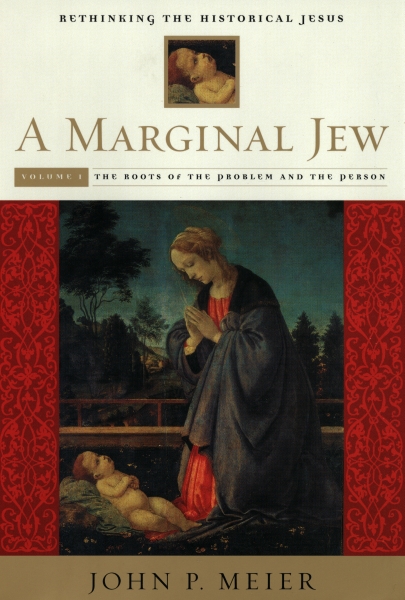 First of all, the information contained in the article primarily comes from Christian researchers, and some of them are briefly mentioned. John P. Meier is quoted with this claim: “Jesus was a marginal Jew leading a marginal movement in a marginal province of a vast Roman empire.” Whoever is familiar with research on the historical Jesus knows that John Meier, a Catholic priest, has written the contemporary standard for historical Jesus studies. Meier’s four part magnum opus, entitled A Marginal Jew – Rethinking the Historical Jesus, is an instant classic. The first volume appeared November first, 1991. The fourth and final volume appeared 18 years later, May 26th 2009, completing the series with a total of 3102 pages.
 It is strange that Marc Meuleman, author of the article on the historical Jesus in EOS magazine, makes a statement about the supposed confirmation bias of Christian researchers while he simultaneously refers to websites like The Jesus Puzzle and a podcast like The Bible Geek. These atheist sources deny that Jesus ever existed. Some people all too easily accept and believe conspiracy theories. Meuleman correctly mentions that this claim is not the scientific consensus. Christian and atheist historians alike, concerned with research on the historical Jesus, agree on the historical existence of Jesus of Nazareth and certain facts about his life.
 Atheists with a strong emotional aversion towards the Christian faith, apparently suffer from a confirmation bias regarding ancient history similar to the confirmation bias of certain Christian fundamentalists regarding the theory of evolution. Seen from their respective scientific specialisms, the claim that Jesus never existed is as stupid as the claim that evolution never happened. Richard Dawkins used to make the former claim (click here), followed later on by a statement that “it doesn’t really matter whether or not Jesus existed.” Well, maybe it doesn’t matter to someone who is not interested in scientific research, although Dawkins claims to foster “science and rationality”. And now we’re at it, how “rational” is Dawkins if he continuously minimizes “positive” examples of faith and religion in order to confirm his conviction that faith and religion are, in most cases, a “bad, delusional thing”? Confirmation bias, anyone? For instance, Dawkins claims that Martin Luther King’s leadership of the civil rights movement did not arise from King’s Christian beliefs. Maybe he should read King’s work first before making such statements. That’s what a scientist should do…
 Perhaps Marc Meuleman’s statement on Christian researchers in his article can be understood by taking into account the influence of the anti-theistic “new atheism” of people like Richard Dawkins on the minds of the average atheist. Many atheists hold a confirmation bias on the supposedly ever present confirmation bias of “believers”. That’s why Marc Meuleman fails to see that he somewhat contradicts himself in his article. Atheists often ask for the author of an article to judge whether or not they will read the article, or whether or not they can trust its “objectivity”. Actually, a scientific mindset should focus on “what is being said” and judge by rational and scientific criteria, and not judge on the basis of a preliminary argument from authority. Everyone who reads John Meier’s work on the historical Jesus can judge this work by rational and scientific criteria and will most likely agree with Jona Lendering’s appraisal of it.

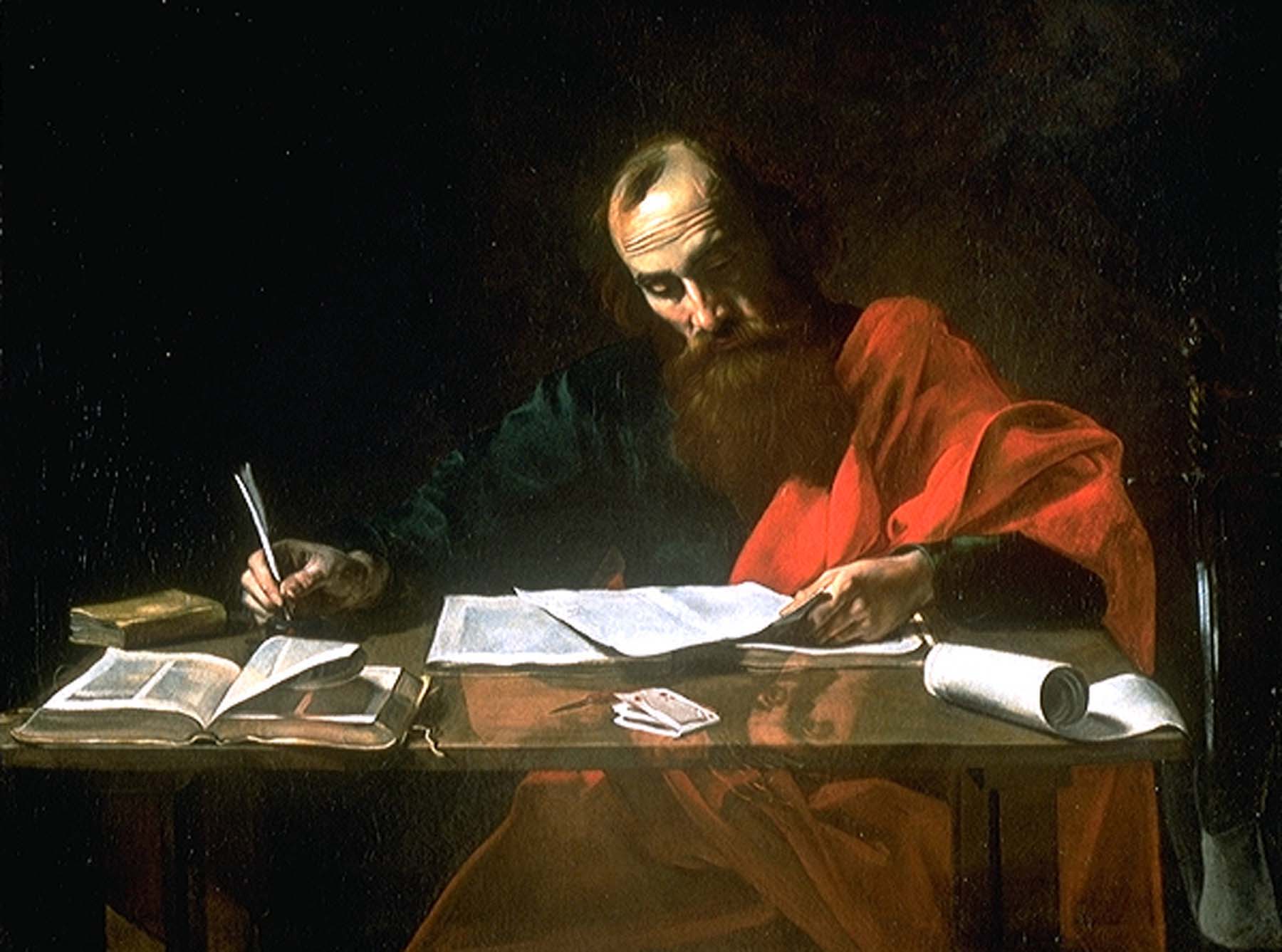

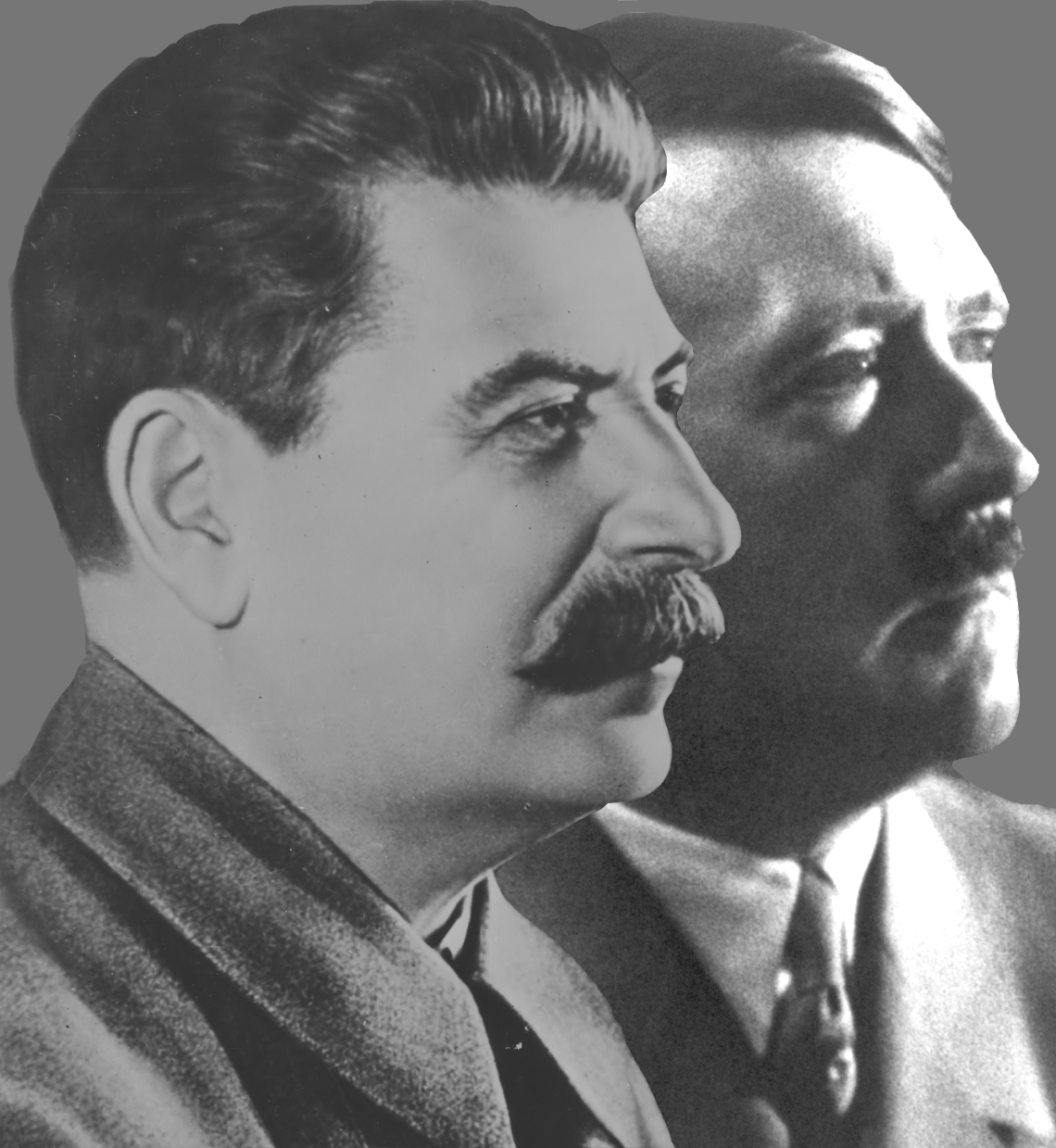
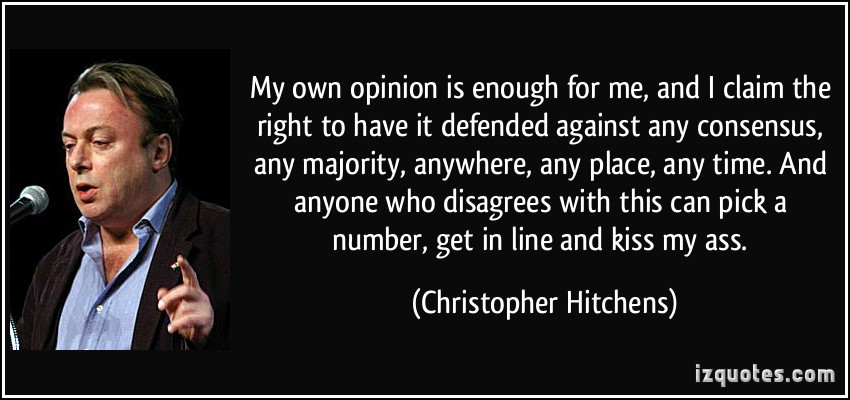

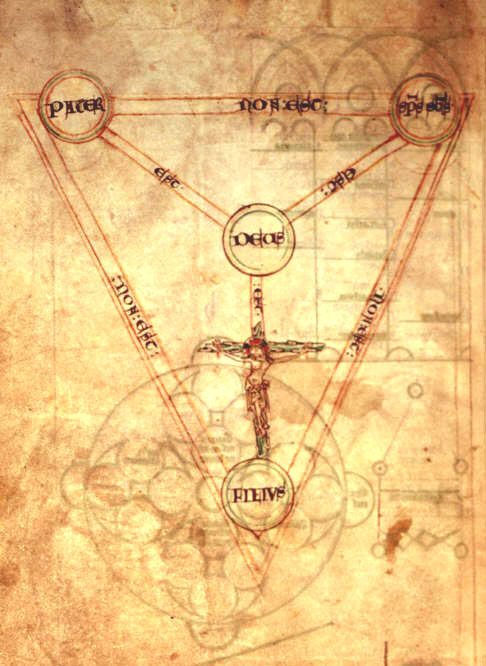
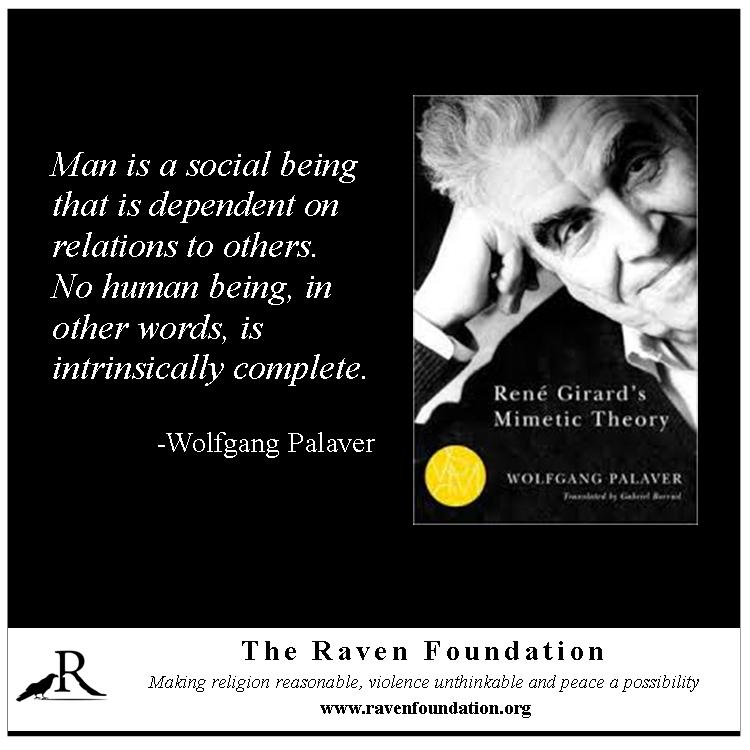
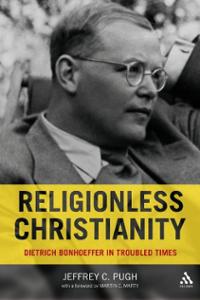


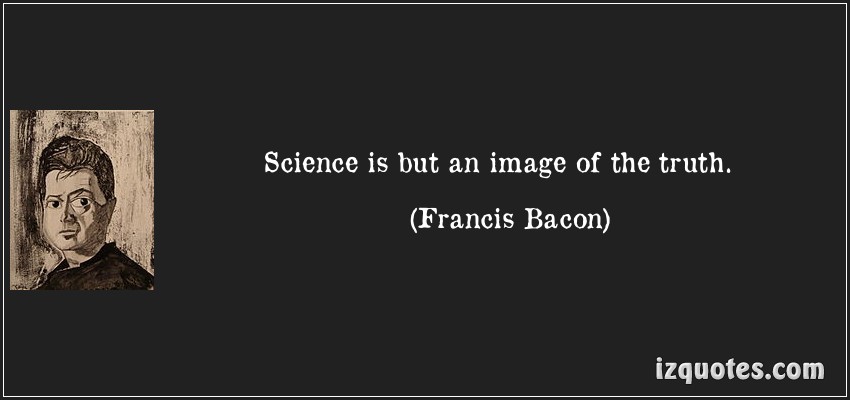

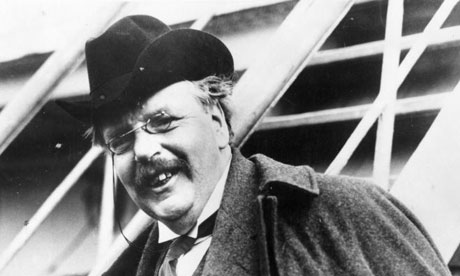
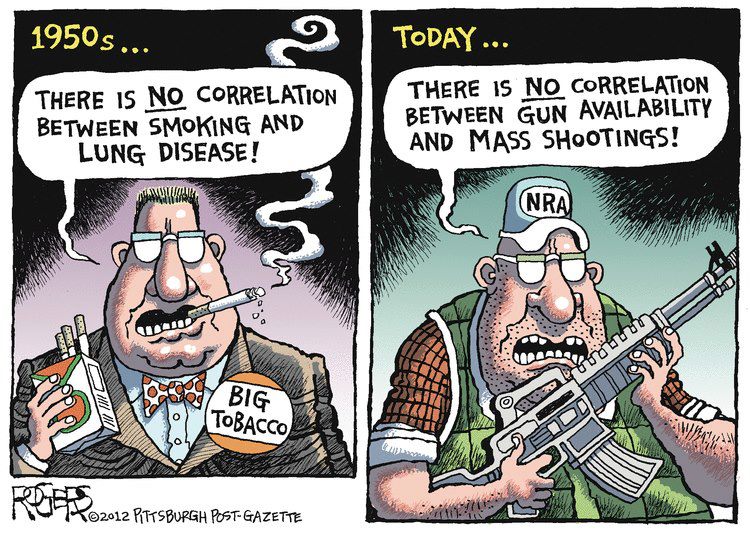


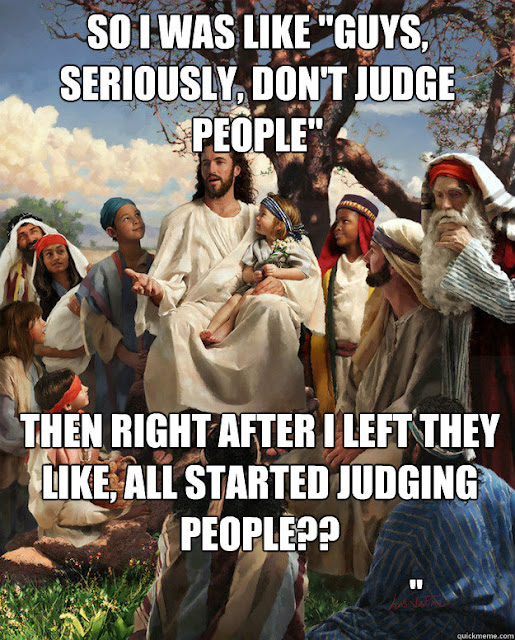

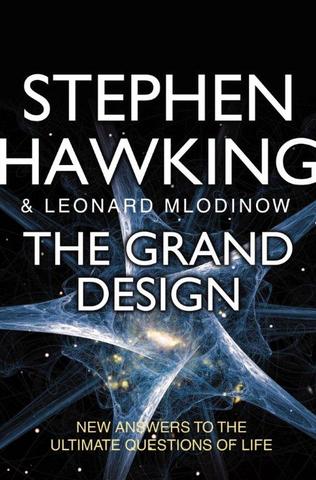





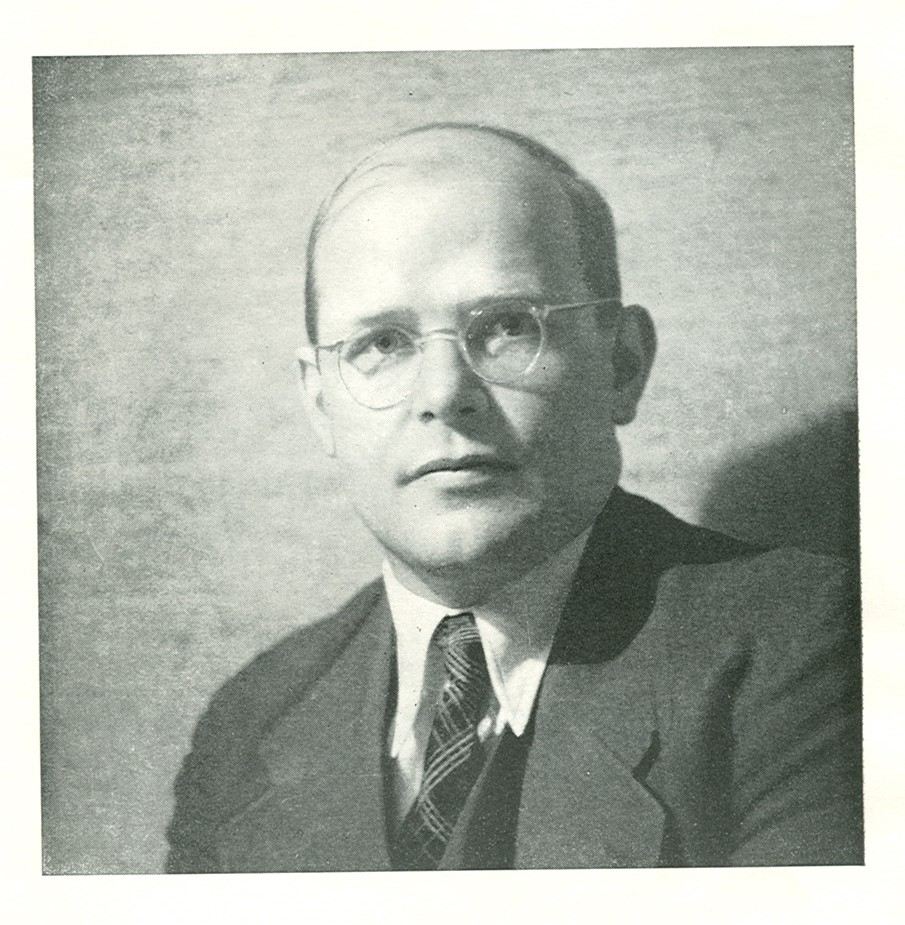


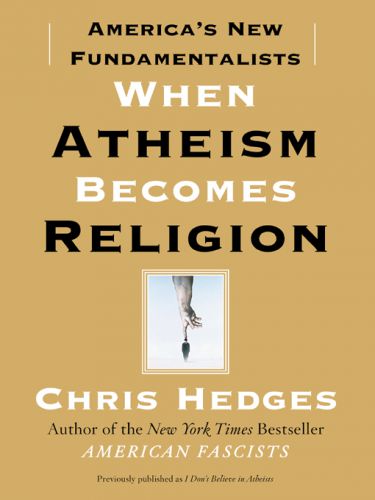

 SCAPEGOAT SHADOWS