September 11, 2002. The Schola Cantorum Cantate Domino boys’ and men’s choir (from Sint-Maarteninstituut, Aalst, Belgium) and its conductor Rev. Michaël Ghijs participate in an event called The Rolling Requiem, a worldwide choral commemoration of all those lost and all those who helped others on September 11th, 2001. The event means that Mozart’s Requiem is performed throughout the world, in every time zone, beginning one year after the first terrorist attack on the World Trade Center in New York. Since then, The Rolling Requiemhas become an institution on its own, supporting the victims of catastrophes throughout the world.
Yesterday, September 11, 2011, Cantate Domino once again performed Mozart’s Requiem, commemorating the victims of 9/11 ten years later. This time the commemoration was organized by U.S. Ambassador Howard Gutman, and took the shape of a Celebration for Peace. Once again the event was held in the Cathedral of St. Michael and St. Gudula, in Brussels. New conductor David De Geest asked me if I would want to join ‘the troops’ one more time, and I was grateful to be able to accept the invitation. So, yesterday I found myself among the other choristers, singing one of the most beautiful and moving Requiems ever written, on an equally moving occasion…
The music was alternated with reflections and prayers by representatives of the different Abrahamic religions. Here are some excerpts from their meditations:
Jew:A 2nd century quote in Hebrew learns: “The whole Torah exists only for the sake of peace”. The echoes of this basic truth resound throughout the three millennia-long Jewish tradition. Thus, Nahmanides, one of the Spanish-Jewish sages of the 13th century writes: “The sword is diametrical opposite to our Hebrew bible, it is in fact the ultimate antithesis of our Hebrew text”.
Maintaining peace is for Judaism an absolute must. In fact, in Hebrew thinking, man is to transcend the easily spoken word, to pass from the project stage to concretization, from parabolic utopia to concrete action. According to Haim Nahman from Braslaw (1772-1810), one of the wise men of hasidism, “Educating our youth has only one goal, i.e. to develop in the individual the qualities and habits necessary to channel aggressive tendencies. This is supported by teaching the duties toward our fellow creatures”. These duties are presented in the concise and energetic form of a maxim which we must apply as a reference point amidst the labyrinth of hazards in our lives: “Love thy neighbor as thyself” (Leviticus 19:18). That is the founding principle, the summary of our duty toward humanity. That is the genesis of this universal peace that we have been awaiting for too long a time.
(Prof. Dr. J. Klener, President of the Central Jewish Consistoire of Belgium).
Western Christian:Peace is an irrepressible yearning present in the heart of each person, regardless of his or her particular cultural identity. Consequently, everyone should feel committed to service of this great good, and should strive to prevent any form of untruth from poisoning relationships. All people are members of one and the same family. An extreme exaltation of differences clashes with this fundamental truth. We need to regain an awareness that we share a common destiny which is ultimately transcendent, so as to maximize our historical and cultural differences, not in opposition to, but in cooperation with, people belonging to other cultures. These simple truths are what make peace possible; they are easily understood whenever we listen to our own hearts with pure intentions. Peace thus comes to be seen in a new light: not as the mere absence of war, but as a harmonious coexistence of individual citizens within a society governed by justice, one in which the good is also achieved, to the extent possible, for each of them. The truth of peace calls upon everyone to cultivate productive and sincere relationships; it encourages them to seek out and to follow the paths of forgiveness and reconciliation, to be transparent in their dealings with others, and to be faithful to their word. – Pope Benedict XVI, Message for the world day of peace, 1.1.2006
(Quoted by Canon Herman Cosijns, Secretary of the Belgian Bishops’ Conference).
Eastern Christian:In his letter dated May 22, 2011, His Holiness Patriarch Bartholomew talked about peace as follows:
“During the celebration of the Holy Liturgy, we ask the Lord three things: ‘peace’, ‘peace from above’ and ‘peace for the whole world’. We aspire with our whole being that the world reflects the Lord’s Kingdom and that God’s love reigns ‘on earth as well as in Heaven’.
As faithful disciples of the Lord of peace, we have to constantly look for and continuously recommend ways of acting which rebuff violence and war. Of course, human conflicts may turn out to be inevitable in our world but this is not the case for war or violence.
Justice and peace are key topics in the Scriptures. However, the Orthodox Christians should not refrain from the great tradition of the Philokalia which emphasizes that ultimately peace always begins in the hearts. Saint Isaac the Syrian wrote in the seventh century: ‘If you make peace with yourself, heaven and earth will make peace with you’.
Peace… is a way of life which reflects human participation in God’s love for the world.”
(Quoted by Father Psallas Evangelos, Representative of the Orthodox Church in Belgium).
Muslim: We cannot emphasize enough the sacred aspect of human life. In the Holy Qur’an, God says: “Whosoever killeth a human being, it shall be as if he had killed all mankind, and whoso saveth the life of one, it shall be as if he had saved the life of all mankind.” [Surah 5;32]
That is the message of Islam which is also spread by other religions.
All attempts and movements to associate Islam and Muslims with “terrorism” are unacceptable.
This is why we have to unite so that these kinds of actions never happen again. Every community has the responsibility to build a just and peaceful society by bringing together the different philosophical views that are inherent to our society.
If we want to give our children a peaceful future, we will all have to make efforts to promote dialogue, respect and tolerance within our own homes, our religious community and society at large.
The actions of a small minority should not have any impact on the efforts of men and women who are working to build a society that respects differences.
I am convinced that, despite the tensions of the last few years around the world, we have not come to a point of no return. The crisis we are currently experiencing should make us conscious of the fact that living together is a challenge that each of us must embrace.
I ask for the help of God to guide us on the right path, to protect us from the dark forces of all kinds of ignorance and to give us the strength and courage for a peaceful world and to live in peace.
(Reflection by Mr. Semsettin Ugurlu, President of the Muslim Executive of Belgium).
In 2005 I had the chance to visit World Youth Day (WYD) in Cologne, Germany, as a participant and mentor of the Jesuit Magis program. It was an enriching experience, to say the least. I met some good souls there…
Today, August 15th 2011, the youth from all over the world is once again invited to celebrate LIFE in a gathering that will last for a couple of days, this time in Madrid, Spain. “Planted and built up in Jesus Christ, firm in the faith…” (cf. Col.2:7) has become the theme phrase of this event.
It’s always been a challenge to have faith. Youngsters are called to keep hope alive for a globalized world which faces many problems (ranging from the issue of increased violence against our natural resources to violence amongst ourselves as human beings). WYD symbolically takes the shape of a little pilgrimage, as it is especially designed for adolescents on the brink of making some fundamental choices in life. Will they be able to make authentic choices for themselves, keeping faith in their own unique gifts, walk the path ahead of them? Or will they base their choices on fear and insecurity, imitating others in a rivaling quest for status, power and wealth – wasting their god-given talents and losing themselves in the process? With these youngsters, we are challenged to listen to others that ‘show us the way’ to freedom and love. One of those others is Jesus of Nazareth, who is called ‘the Christ’ because of his liberating preoccupation and association with victims: “For whosoever will save his life shall lose it: but whosoever will lose his life for my sake, the same shall save it. For what is a man advantaged, if he gain the whole world, and lose himself, or be cast away?” (Luke 9:24-25).
West Side Story (the well known American musical on a script by Arthur Laurents, lyrics by Stephen Sondheim and music by Leonard Bernstein) surely portrays some of the dangers our youth is confronted with today: the temptation to seek recognition from peers in a violent way on the streets (because security appears to be insufficient in traditional surroundings like family), the pressure to stop dreaming of a better future in an increasingly cynical world, and the increasing opposition between representatives of ‘the law’ and ever more frustrated youngsters (just think of the recent upheaval in London).
West Side Story in fact is a modern-day adaptation of Shakespeare’s Romeo and Juliet, set in the upper west side of New York City. The rivaling families of Shakespeare’s tragedy, the house of Montague and the house of Capulet, are replaced in the musical by two competing teenage street gangs, the Puerto Rican Sharks and the white working-class Jets. Sharks and Jets are tied to each other by what René Girard calls ‘mimetic rivalry’: the violence they inflict on each other is always an imitation (mimesis) of the violence by ‘the other party’. In other words, the two groups are guided by revengefulness. As in the story of Romeo and Juliet, the feud (and the play) eventually ends at the expense of victims (and this rings a bell for ‘Girardians’, of course…). The house of Montague and the house of Capulet make peace when they find their children, the lovers Romeo and Juliet, dead in each other’s arms. In West Side Story the Sharks and the Jets quit fighting when Tony, belonging to the Jets, is killed. His body is held by Maria, his lover who belongs to the Sharks and who calls for an end to the violence… In this sense, she lives up to the life-bearing properties ascribed to a biblical counterpart of hers with the same name, Mary, the mother of Jesus.
In a love song for Maria, early on in the play, the character of Tony makes reference to ‘the Holy Mother’, whom Christians traditionally pray to a lot, by uttering the following words:
“Maria! Say it loud and there’s music playing. Say it soft and it’s almost like praying.”
For your listening pleasure I’ve added the song in a special performance by Les Contre-Ténors (The Countertenors), Andreas Scholl, Dominique Visse and Pascal Bertin. These three men are among the top male altos in the world. Listen by clicking here (you won’t be disappointed)
– CLICK TO WATCH:
In a world consumed by rivalry and violence, the character of Maria represents today’s youth who faces the challenge of finding new ways to mould the future. Perhaps not coincidentally she carries the name of Mary, the Mother of Jesus. Mary is the biblical figure who gives birth to a ‘Child’ incarnating the hope for a future where people can be vulnerable as children towards each other. Would that be possible, a world where we are no longer guided by the temptation to assert ourselves in exploiting the other’s so-called weaknesses?
Today, the Catholic Church celebrates the Assumption of Mary, the traditional story of the bodily taking up of the Virgin Mary into Heaven at the end of her life. According to this story, the apostle Thomas was the only witness of the assumption of Mary. During the event Thomas is said to have received Mary’s girdle. In this way, Mary helps him to convince the other apostles, who were skeptical at first, that his account of Mary’s assumption is indeed truthful. So, in the Assumption story Mary becomes a cornerstone of faith, transforming the once doubtful apostle Thomas who couldn’t believe in Christ’s resurrection (see John 20) in a person who enables others to ‘have faith’.
By imitating biblical and other stories of faith in the Christian tradition, WYD 2011 aims to support and inspire youngsters in their quest for a peaceful future that’s not built by sacrificing other human beings. The story of Christ indeed ultimately is the story of a Victim who ‘returns’ to ‘turn the other cheek’, so the age-old mechanism of ‘an eye for an eye’ violence might end before it only provisionally comes to a halt at the expense of more victims.
To end this post, I’d like to dedicate a prayer to the young Maria’s of West Side and other dangerous places, to these ‘mothers of tomorrow’ who carry life and hope within them. They will have to guide us with their girdles, like some Ariadne, out of the labyrinths of our trials and tribulations. I chose a prayer from the famous Llibre Vermell de Montserrat, a 14th century collection of songs and prayers, kept in the Benedictine abbey Santa Maria of Montserrat (near Barcelona in Catalonia, Spain). The songs are especially fit for pilgrims, even the contemporary ones at WYD. This becomes clear by what the anonymous compiler himself writes on why he made the manuscript:
Quia interdum peregrini quando vigilant in ecclesia Beate Marie de Monte Serrato volunt cantare et trepudiare, et etiam in platea de die, et ibi non debeant nisi honestas ac devotas cantilenas cantare, idcirco superius et inferius alique sunt scripte. Et de hoc uti debent honeste et parce, ne perturbent perseverantes in orationibus et devotis contemplationibus.
Translation:
“Because the pilgrims wish to sing and dance while they keep their watch at night in the church of the Blessed Mary of Montserrat, and also in the light of day; and in the church no songs should be sung unless they are chaste and pious, for that reason these songs that appear here have been written. And these should be used modestly, and take care that no one who keeps watch in prayer and contemplation is disturbed.”
Maybe the prayer Mariam Matrem Virginem can bring pilgrims together, even closing the gap between those belonging to ‘the house of Barcelona’ and the traditional rivals of ‘the house of Madrid’. It definitely wants to convey the spirit behind the ‘Black Madonna’, a beautiful statue of the Virgin Mary (probably from the late 12th century). In 1522, Ignatius of Loyola laid down his arms for her and began a new life, turning away from his ‘violent ways’. As is known, he eventually became the founder of the Jesuit order… So, for those of you in search of magis (‘more’), a new life of faith, hope and life giving grace, I added the Mariam Matrem Virginem. To see the score, click here (pdf). To read the lyrics with translation, click here (pdf). To listen to the song in a performance by Hespèrion XXI under the direction of Jordi Savall, click the following
Christ comes to the world as the example, constantly enjoining: Imitate me. We humans prefer to adore him instead. – Quote by Soren Kierkegaard (1813-1855).
To adore Christ means, in the sense that Kierkegaard uses the verb, to idolize him. When you idolize someone else, it often means that you secretly want to become this other person, that you want to take his ‘royal’ place, sometimes even by ‘murdering’ him. In other words, to idolize someone means that you’re not satisfied with yourself, that you’re not accepting yourself, that you don’t experience love for who you are. This explains why we tend to look for what others designate as desirable, and why we want to obtain a desirable position ourselves – i.e. why we want to become ‘perfect’ and ‘divine’ idols ourselves. For obtaining a desirable position seems to fulfill our need to feel loved. However, in the process of surrendering to an imitation of the desires of others we simply lose ourselves. Guided by what René Girard calls ‘mimetic’ (i.e. ‘imitative’) desire, we often want things for ourselves which alienate us from our ‘true’ nature and from our own, unique vocation. So, near the end of this process we’re not loved for who we are but because of the ‘status’ we seem to have gained. Jesus magnificently points out this tragic paradox: “For whoever wants to save their life will lose it… What good is it for someone to gain the whole world, and yet lose or forfeit their very self?” (Luke 9:24a-25).
Sometimes the devil wants you to think that until you’re perfect don’t go talking to God. – Quote by C.C. DeVille.
As you can see in the film below, C.C. DeVille – what’s in an artist’s name? –, guitarist of ‘hair metal, glam rock’ band Poison, clearly understands how his early life relied heavily on the principles I just described. He admits giving in to an unhealthy sense of pride, to a desire for ‘status’. He quite literally says he wanted others to be envious of him. Indeed, envy is the negative side of mimetic desire, the flipside of admiration, and for a person who desires to be desirable it is a big achievement to feel envied. Yet C.C. DeVille felt his life was not fulfilled. He was not happy until he experienced, in his own words, ‘God’s grace’. He discovered the ‘unconditional love’ by which he was finally able to accept himself. The paradox is that, by obeying God’s call through Christ, he became free. “For whoever wants to save their life will lose it but whoever loses their life for me will save it,” Christ claims (in the completed Luke 9:24). That’s exactly what C.C. DeVille discovered, for truly imitating Christ means to accept yourself and others, not to be ashamed of oneself, and to be enabled to grow towards one’s ‘real’ and ‘honest’ vocation. It’s only when we’re accepting ourselves that we are able to approach others, not as means to fulfill our need to feel loved, but as the true ‘goals’ of our lives in the realm of Love, in the realm of a giving Grace that wants to be ‘imitated’ – and to imitate giving means to become ‘givers’ ourselves. That’s why St. Francis (1181-1226) prays: “O Lord, grant that I may not so much seek to be loved, as to love…”
Being free means ‘being free for the other,’ because the other has bound me to him. Only in relationship with the other am I free. – Quote by Dietrich Bonhoeffer.
We are relational beings. We don’t develop relationships ‘out of the blue’, from a primal ‘individual freedom’. On the contrary, it’s the quality of our relationships which decides whether we become free or not – are we led by fear, envy and pride or by trust, grace and truthful honesty?
This post might seem a little weird. I realize that. Few of my friends in the world of music understand why I like ‘hair metal’ so much. This particular brand of rock music has never been a favorite among established pop criticism. I discovered it as a kid, and I was attracted first by the colorful extravaganza of the bands, the big choruses of the songs and the sheer joy displayed in live shows. ‘Hair metal’ felt like summer to me. Later on I discovered that behind this joyful image there often lurked an empty world of drug abuse, superficial relationships without real intimacy and just plain decadence. Yet, at the same time, some of the songs had a melancholic feel which betrayed a longing for more sustainable experiences in life.
Guitarist C.C. DeVille articulates this longing of ‘the soul’ in the following interview. I combined it with quotes by famous thinkers, mostly Christian. One of my pupils, who commences studies in philosophy next year, convinced me to try working with quotes. So, here you have it. I hope I’m able to show in this way that C.C. DeVille really understands what Christianity is all about. Because, let’s face it, especially in the academic world we all too often look down on the so-called ‘superficial’ world of popular culture. Well, at the margins of that world, at what seems to be the pinnacle of superficiality, we have a band like Poison. I dare you, dear reader, to look beyond everything you think to know about bands like these, and to move beyond certain ‘mimetic’ processes which convinced you to dismiss the members of ‘glam metal’ bands. True, Poison might not have written the best songs ever, but I do believe their music is honest – ‘what you hear is what you get’. And if you’re still looking for unexpected complexity and sophistication in this music genre, try a band like Winger – great musicianship combined with the compositional talents of lead singer Kip Winger (as is evidenced by his solo efforts).
Now, watch the interview with C.C. – what you see is what you get –, and click here
Voor haar 85-jarig bestaan vroeg de Nederlandse Christelijke Radio Vereniging (NCRV) Stef Bos een cd over Bijbelse figuren te schrijven. Dat leidde tot het krachtige album ‘In een ander licht’ dat alle Bijbelse toonaarden laat weerklinken: van de lofzang op de liefde, over het profetische verzet, tot de klaagzang tegen het lijden en de schreeuw om hoop. (Uit het weekblad Tertio, 16 december 2009).
Het oudtestamentische boek Prediker, een wijsheidsboek, dient als uitgangspunt voor Alles is lucht (lied van Prediker). Zelf heb ik de tekst van Prediker altijd ervaren als een gedicht van ‘hoopvolle troosteloosheid’. Bij Stef Bos schijnt dat niet anders. In het boekje bij het muziekalbum schrijft hij: “Misschien een van de meest filosofische boeken in de Bijbel met Job. Zeer taoïstisch in zijn denken omdat het dualisme van goed en kwaad voortdurend verschuift. De Prediker spreekt zich niet uit. Verklaart alles tot lucht en leegte maar stuurt ons ook in de richting van het genot. Een soort existentialist die ons niet moedeloos maakt door alleen het zinloze te benadrukken. Een boek waarmee een dogmatische denker niet uit de voeten kan want het geeft weinig houvast om anderen te veroordelen en de duvel aan te doen. Daarom een man naar mijn hart… wie het ook was.”
In navolging van Prediker brengt Stef Bos in een duet met Frank Boeijen een lied van paradoxen en contradicties die iets van de ‘zinloosheid’ (‘nonsens’) van het bestaan uitdrukken. Tegelijk maakt de bruisende muziek duidelijk dat precies daar, in de leegte van de zinloosheid, iets nieuws kan geboren worden. In mijn oren suggereren de tekst en de muziek dat God inderdaad misschien daar is, zowel in onze momenten van wanhoop als van onuitsprekelijke vreugde… Dat God daar is, in onze momenten van verstomming… Kortom, dat God daar is, in de leegtes die we niet kunnen opvullen met onszelf. Daar waar wij niet zijn is ruimte voor een Ander… Misschien moeten we bij het begin van de zomervakantie ook eens vakantie nemen van onszelf, onszelf ‘vacant’ verklaren om werkelijk te ge-niet-en? Alles is lucht mag, wat mij betreft, al een vacature opvullen.
Het lied wordt gebracht in een ideale context: ook de uitvoerende zangers zelf laten iets ‘zien’ van de tegenstellingen in het menselijk bestaan – het soms ‘hoekige’ en ‘cleane’ karakter van de stem van Stef Bos contrasteert wonderwel met de rauwe, maar vloeiende warmte van Boeijens geluid.
Luister naar hun duet (de tekst staat onderaan) en klik hier:
Ik heb de wereld gezien
In het licht van de liefde
En in de schaduw van de haat
Er zijn altijd twee kanten
Ware woorden zijn niet mooi
Mooie woorden zijn niet waar
En alles beweegt zolang als het leeft
Zoals een rivier die stroomt naar de zee
Wij zijn een deel
Van een groter geheel
Wij vallen als bladeren
En de wind neemt ons mee
Er is een tijd van verliezen
Er is een tijd van vertrouwen
Er is een tijd van verlangen
Er is een tijd van vergeten
Er is een tijd van vergeven
Er is een tijd voor alles
En alles is lucht
Groei naar het licht
En klim langs de stralen naar de hemel omhoog
Hou je niet vast aan dat wat voorbij is
En laat alles los wat spookt in je hoofd
Want het licht in je ogen verdwijnt met de tijd
Zoals de zon in de verte aan het eind van de dag
Maar alles verandert en
Beweegt in een cirkel
Keert terug naar de bron
En wordt wat het was
Er is een tijd van verliezen
Er is een tijd van vertrouwen
Er is een tijd van verlangen
Er is een tijd van vergeten
Er is een tijd van vergeven
Er is een tijd voor alles
En alles is lucht
En alles is leegte
En alles is zinloos
En alles is leven
Alles heeft waarde
En alles is iets
Alles is alles
En alles is niets
Er is een tijd van verliezen
Er is een tijd van vertrouwen
Er is een tijd van verlangen
Er is een tijd van vergeten
Er is een tijd van vergeven
Er is een tijd voor alles
En alles is lucht
Nog wat meer achtergrondinformatie bij het hele project:
De Bijbel is voor Stef Bos een boek van gestolde menselijke ervaring. Daarom maakte hij van die Bijbelfiguren herkenbare mensen. Los van kerk en dogma kwamen ze in een ander licht te staan. “De Bijbel is niet het bezit van welke denkrichting dan ook. Dat boek kan onze wereld beklemmen of onze verbeelding vrijmaken. Het kan een dogma zijn of een inspiratie. Ik wou terug naar het boek zelf. Ik hou van filosofische en theologische discussies, maar zowel fanatieke religiositeit als het fanatieke atheïsme van een Etienne Vermeersch kan ik niet volgen”, zegt Bos.
Uit een interview met Thomas(website van de faculteit Godgeleerdheid van de KU Leuven) blijkt dat Stef Bos zich bewust is van de processen die, met een verwijzing naar wat hij hierboven vermeldde, ‘de verbeelding gevangen houden’. Wie bekend is met de mimetische theorie en het denken van René Girard zal onmiddellijk opmerken welke rol Stef Bos toedicht aan ‘de mode’. Bepaalde processen van imitatie (wat Girard ‘mimesis’ noemt) verhinderen inderdaad een frisse blik op wat waardevol is, ook in de Bijbel en de christelijke traditie. Niets zo verlammend en beknottend als een ‘gewoontekatholicisme’ en het ‘gewoonteatheïsme’ dat er een reactie op vormt. Stef Bos in het interview met Thomas:
“Ik vond het [Bijbelproject] een geweldige idee omdat de Bijbel, of je nu gelooft of niet, een belangrijk geschrift is voor onze westerse cultuur en altijd een inspiratie is geweest voor veel kunstenaars. Ik ben zelf ook met de Bijbel grootgebracht op een manier die niet dwingend was waardoor ik nooit het kind met het badwater heb weggegooid. Veel mensen van mijn generatie hebben de uitwassen van machtspolitiek van de kerk op één hoop gegooid met de Bijbel zelf en dat is jammer… alsof je de Faust van Goethe niet mag lezen omdat deze in het Duits is en Duits door de recente geschiedenis een beladen taal is.”
Op de vraag waarom jongeren vandaag soms een afkeer hebben van de Bijbel, antwoordt Bos het volgende:
“Omdat dat de mode is. Omdat de Bijbel wordt gelinkt aan de Kerk. Omdat de Kerk in het algemeen een slecht imago heeft opgebouwd en er volstrekt achterhaalde ideeën op nahoudt. (Terwijl ik reizend door Afrika veel goede kanten van individuen in de kerk gezien heb waar NGO’s het dikwijls lieten afweten.) Omdat diezelfde anti-kerk mode (politiek correcte atheïsme) zich ook weer als een kerk gaat gedragen met een morele code die ze mensen oplegt om erbij te mogen horen waardoor ze iets gaan denken wat ze zelf niet bedacht hebben. Omdat… omdat… omdat… omdat… omdat er over het algemeen te weinig genuanceerd gedacht wordt over dingen, zeker in deze tijd van media geschreeuw en politieke populisten.”
Three years ago, in 2008, I lost a very dear friend who was also my mentor: Rev. Michaël Ghijs, a priest and conductor of Schola Cantorum Cantate Domino, the choir I have been a member of for nearly 20 years. I remember going through all kinds of different emotions while preparing and rehearsing songs for the funeral. One state of mind prevailed, however, one of great gratitude.
This was enhanced by a particular experience which, in hindsight, contained the seeds of a new and unexpected discovery. The weeks after the funeral I became acquainted with the spiritual power of hip-hop, rap and r&b music – by spiritual I mean the power this music sometimes has to address the paradoxes and complexities of ‘reality’. You might ask how that came about. Well, the days before the funeral I was also involved in a creative project at the Jesuit high school where I’m teaching religion. Together with one of our music teachers and a disparate ‘bunch’ of younger pupils I don’t actually teach, I had prepared an acoustic arrangement of Heaven, a hit love song by Canadian rocker Bryan Adams. The night of the ‘concert’ (actually a ‘happening’ with all sorts of dramatic acts) I went from rehearsing for the funeral to the stage at our school and back. I didn’t even bother my bike got stolen during the process.
Everything I experienced during those days was of an immense intensity. My senses were sharpened. That particular night was a high point in that respect. We performed the song Heaven at our beautiful little Baroque church. Laura accompanied on the piano, introducing first singer Sandra – a ‘black beauty’ who sounds like pop diva Alicia Keys. At the same time I kind of improvised a second voice – falsetto during the verses and then a ‘bass line’ each time the chorus kicked in. Tim took over for the second verse, while Soufiane led the ‘backing vocals’ together with Mieke, my colleague. The so-called ‘bridge’ was sung by Angela and Charlotte, two Philippine girls testifying that they indeed belonged to a ‘singing nation’.
It was a wonderful moment, and one of great comfort to me. I’ll always be very grateful for what that ‘bunch’ of young people gave me that evening. The way Rev. Michaël Ghijs always tried to make young people discover their own gifts and talents was present right there. In allowing me and the audience to hear their voices, the eleven, twelve and thirteen year olds brought a message of hope to this world. It was a moment of sheer beauty. They sang, not to ‘gain’ anything, not because it was ‘useful’ in any way, but because they received the opportunity to ‘be’, to ‘shine’ and to ‘enjoy’. In the weeks that followed I more and more discovered how Rev. Michaël Ghijs had been a model for me, and how much I imitated him in dealing with youngsters. Both some of my qualities and flaws can be attributed to him, and I’m willing to accept these flaws because I know they come from someone I love. So it’s definitely true I learned a lot from my mentor, but I also learned, and keep on learning, a lot from my pupils – and maybe this willingness to learn from youngsters can also be traced back to how Rev. Michaël Ghijs related to his choristers.
Working together with Laura and Sandra, for example, opened me up to the fascinating world of hip-hop and r&b. They both performed a song by Alicia Keys. Surprisingly perhaps, I discovered traces of Christian mysticism in this music.
So, in this post, I’ll try to point out some ‘mystical elements’ in the world of hip-hop and r&b. I’m guided by two articles on hip-hop and a course by Thomas Merton (1915-1968) on Christian mysticism:
Thomas Merton starts off with a definition of The Oxford Dictionary to describe the mystic person. – Merton, p.29: What is a “mystic”? {The} Oxford Dictionary says: “An exponent of mystical theology; also, one who maintains the importance of this – one who seeks by contemplation and self-surrender to obtain union with or absorption in the deity, or who believes in the spiritual apprehension of truths inaccessible to the understanding.”
It is important to stress how this self-surrender should be understood. It does not imply masochism or the glorification of suffering (‘dolorism’) in any way. Merton refers to the martyrdom of Polycarp to make clear martyrdom is not something we should ‘seek deliberately’. As far as contemporary Christian thinkers are concerned, next to Thomas Merton also René Girard is right for having pointed out possible misunderstandings of Christian sacrifice and martyrdom. – Merton, p.45: Martyrdom is a gift of God – it must not be sought deliberately by our own will (see Martyrdom of Polycarp, c.4; Fathers of {the} Church, Apostolic Fathers, p.153 – [Footnote here: This chapter mentions one who “had forced himself and some others to come forward voluntarily” and then apostasized; it concludes, “For this reason, therefore, brethren, we do not approve those who give themselves up, because the Gospel does not teach us this.”]). But it should be accepted with humility and joy when God offers it as a great gift.
In the introduction to Merton’s course on Christian Mysticism, Patrick F. O’Connell elaborates on this issue and makes clear how Christian sacrifice and self-surrender should be understood as a change in the way people lead their lives (and not in a simple ‘replacement’ by one life through the destruction of another). – Merton, Introduction, p.xxiv-xxv: […] It is only through dying to the alienated, sinful self and rising to new life with and in the resurrected Christ that one shares in the divine life of Trinitarian love. Asceticism is initially identified, based on Mark 8:34, with taking up one’s cross (19) through self-denial and following Christ, and is linked to martyrdom as a participation in Christ’s death and resurrection that in Ignatius of Antioch becomes an early articulation of mystical union (43). But the paschal journey is not restricted to the literal surrender of life in physical martyrdom: this pattern must be reproduced in any authentic Christian spiritual life. As Merton summarizes, what the martyr undergoes physically every Christian must undergo spiritually.
The pattern of the ‘paschal journey’ as a ‘change of life’ is sacramentally sealed and established by baptism. – Merton, p.46: Martyrdom is a second baptism. It is the perfect fulfillment of our baptismal vocation. In baptism we die to the world and rise in Christ sacramentally. In martyrdom we do so in all truth. To baptize is to symbolically communicate that every human being has a vocation to live a life that is not guided by envy, jealousy and self-assertion (which are the building blocks of what the Gospel calls the life of ‘this world’).
In short, the mystical experience as an experience of union with God through Christ is a liberating experience, not in the sense that our ‘earthly’ and ‘bodily’ conditions are destroyed, but in the sense that these conditions are transformed by being directed at their ultimate goal. Because we are conditioned by the limits of a bodily, mortal life we didn’t choose for ourselves, we are able to experience ourselves and the whole of reality as a gift handed over to us (‘beyond our will’). So before we can ask how something or someone can be useful to us, we are confronted with the fact that everything and everyone simply ‘is’ – even if we don’t ‘need’ the things and neighbors we are confronted with. The ultimate goal therefore, from a mystical ‘point of view’, is precisely to creatively preserve everything handed over to us. In this sense mysticism has to do with a non-utilitarian attitude towards nature and respect for the ecosystem. It also implies valorizing others because of who they are, not because of their eventual ‘usefulness’.
Theologically speaking, this means discovering these others as ‘imitations’ or ‘images’ of Christ – Him being understood as One revealing our true nature as belonging to and shaped by others and, ultimately ‘the’ Other (likewise: ‘Christ belongs to his Father’ and is an ‘imitation’ of his ‘Father’). – Merton, p.128: The logos of a man is therefore something hidden in him,spiritual, simple, profound, unitive, loving, selfless, self-forgetting,oriented to love and to unity with God and other men inChrist. It is not an abstract essence, “rationality plus animality.”It is however the divine image in him. More deeply it is Christ inhim, either actually or potentially. To love Christ in our brotherwe must be able to see Him in our brother, and this demandsreally the gift of theoria physike [p.127: Theoria is contemplation of the splendor of divine wisdom in Christ with nature [Elias] on one side and law [Moses] on the other, both looking to Him as to their fulfillment. In the full development of theoria they both disappear and we see Christ alone.] Christ in us must be liberated, bypurification, so that the “image” in us, clothed anew with light of the divine likeness, is able connaturally to recognize the same likeness in another, the same tendency to love, to simplicity, to unity. Without love this is completely impossible.
In other words, to become imitators of Christ means to become loving human beings, and love seeks to be ‘materialized’, ‘incarnated’. It means to valorize our body and our material, natural world to its full potential. True Christian mysticism therefore is not manicheistic, it doesn’t separate the ‘soul’ from the ‘body’ or ‘earth’ and ‘heaven’ in a Cartesian, dualistic split.
Merton, p.128: […] the vision given by theoria physike shows us that all creatures are good and pure. This is the first thing, the complement of the active detachment in apatheia. Evagrius declares, following the desert tradition (especially St. Anthony) that “nothing created by God is evil”, and St. Maximus adds, “nothing created is impure.”
Merton, p.127: Von Balthasarsays: “The meaning of each natural thing and the meaning ofevery law and commandment is to be an Incarnation of the divineWord; to realize fully its proper nature or its proper law is to cooperatefully in the total realization of the Word in the world”.
2. THE MYSTICAL MEANING OF THE LANGUAGE OF THE SENSES:
SPIRITUALITY AT THE ‘CROSSROADS’
Pseudo-Denys the Areopagite (5th, 6th century AD) was the first to use the term Theologia Mystica (Merton, p.136). The adjective ‘mystical’ was first used by Clement (c.150-c.215) and Origen (185-254), and their understanding of the word already makes clear the close connection between mysticism and theology. – Merton, p.67-68: The Greek classical term, mystikos, refers to the hidden rites of the mystery religions – not to a hidden experience, but to the mystery which is revealed only to the initiates and through which they pass. […] Christian use of the term mystic (mystikos): Clement and Origen take over the pagan term and use it in reference to the spiritual (mystical or typological) sense of Scripture. For them the mystical sense is the real sense. To discover the mystical sense is to penetrate to the real meaning of revelation and hence to penetrate into the hidden things of God, the mystery of Christ. This mystery, the mysterion of the Cross, is the central reality of all cosmic life: the salvation of the world, the recapitulation of all in Christ. Hence […] the “gnostic” is the man who has entered into the “mystical” understanding of Scripture. Originally, the mystical sense of Scripture is: (a) that which points to Christ; (b) that which deals with invisible realities of faith; (c) that which is spiritual and not carnal, i.e. not involved in {the} “letter” of the Law and of Scripture. It cannot be too often repeated that this “mystical sense” of Scripture is not a hidden idea about God or a mere complex of difficult or secret truths. It is a reality experienced and lived. One might say that for the Fathers the letter tended to be doctrine and law, the spirit tended to be reality and life. Their theology was therefore not simply constructed with the literal elements of revelation, or of God revealed in the mystery of Christ. Hence it is clear that already to enter into the mystical sense or real sense of Scripture, which is interior and spiritual, one must “die to” the letter, to the exterior and apparent meaning; one must “go beyond”, one must “stand outside” (ekstasis) the apparent meaning. This does not necessarily imply a strict opposition between the letter and the spirit, but simply a fulfillment of the letter in the spirit.
In other words, the ultimate goal of studying the Scripture is to be able to experience life ‘in Christ’. Merton seems very much in line with the earliest traditions of Christian mysticism when he warns against a separation of ‘mystical experience’ and ‘theological inquiry’:
Merton, p.65: [The treatment of divinization by the Fathers in the Anti-Arian controversy] makes very clear the close relationship between mysticism and theology. In a certain sense it shows them to be one and the same thing. By “mysticism” we can mean the personal experience of what is revealed to all and realized in all in the mystery of Christ. And by “theology” we mean the common revelation of the mystery which is to be lived by all. The two belong together. There is no theology without mysticism (for it would have no relation to the real life of God in us) and there is no mysticism without theology (because it would be at the mercy of individual and subjective fantasy).
Theological study forces us to reorient our focus towards ‘revelation’. It draws our attention to something we didn’t create ourselves. We didn’t write the Bible and we didn’t create the Christian tradition. Therefore theological study is a preparation, a spiritual exercise to guide our attention towards ‘the Other’ – and therefore also towards our neighbors, approached, not as ‘objects’ of our practical concerns (by which we are only interested in others insofar as they respond to the needs we create for ourselves) but as ‘irreducible beings’. The more you get to ‘know’ someone else in the sense that you lovingly experience his or her ‘being’, the more you might want to develop a language to express, share and communicate that experience. The ongoing theological articulation of Christianity not only tries to do this, but it also establishes the fact that the experience of the God of Christ, of Love itself, is ultimately not communicable. However, to realize the irreducible character of God we should – paradoxically – continue to develop our language! So-called ‘spiritual’ or ‘mystical’ experiences that are used to dismiss responsibility for the development of theological dialogue and that are used to disguise actual intellectual laziness should be questioned at any time. Patrick F. O’Connell explains Merton’s view on the connection between the experience of love (mystical union) and the desire to study and ‘know’ the Christian theological traditions:
Merton, Introduction, p.xxvi: Merton much preferred the idea maintained in his own Cistercian tradition, that love was itself a way of knowing (“Amor ipse notitia est” [84]) to any sharp dichotomizing of knowledge and love. Though he made no pretensions to being a systematic theologian himself, Merton makes clear in these lectures that he considers solid systematic theology neither a threat nor a distraction to contemplation, but its vitally necessary foundation.
So, no dualistic ‘Cartesian split’ between ‘body’ and ‘soul’, ‘earth’ and ‘heaven’, ‘theology’ and ‘mysticism’. This desire to transcend manicheistic tendencies once again becomes very clear in the way mystics make use of the language of the senses to convey a glimpse of their deeply felt spiritual experience. – Merton, p.82: […] the experience of God by the spiritual senses is in fact more direct and more immediate than the perception of a sensible object by the bodily senses. The mystic has to appeal to ordinary sense experience in order to attempt to express an experience which is ineffable because even more immediate than an experience by the exterior senses. We must understand when the mystic says he is “touched” by God it means that he experiences not only something analogous to a bodily touch but far more, in a spiritual order, which cannot be expressed directly.
Already in the Bible ‘spiritual bliss’ is expressed in ‘earthly’ realities. – Merton, p.83: […] It is quite true that when the Bible wishes to express the experience of God it is always in the language of the senses. But at the same time we must realize that there must be a distinction between genuinely spiritual experience which is eo ipso not sensible, and an interior spiritual experience in which the senses (of the body or at least the interior senses) have a part. [See Ps. 33 (34):9.]
Merton sees no dichotomization between the ‘bodily’ and ‘spiritual’ senses. – Merton, p.91: Mystical experience is spiritual, and it reaches the senses in a spiritual way through and in the spirit. The “spiritual senses” are thus the senses themselves, but spiritualized and under the sway of the spirit, rather than new spiritual faculties. Also interesting in this regard is Merton’s reference to Gregory Palamas (1296-1359): Merton, p.91-92: {See} Gregory Palamas, The Defense of the Holy Hesychasts (tr. In French by Meyendorff): “That which takes place in the body coming from the soul filled with spiritual joy, is a spiritual reality even though it is active in the body” (Meyendorff I:334-5). “The spiritual joy that comes from the spirit into the body is not at all corrupted by communion with the body, but transforms the body and makes it spiritual” (id.). Such spiritual activities do not carnalize the spirit but “deify the body” (id. 342-43).
On the other hand, Merton also warns against an ‘unordered’ use of the senses. – Merton, p.135-136: […] when sense attains to the material object, the spirit attains to the spiritual logos of that object and the sense pleasure is forgotten. There may indeed be a coincidence of contemplation in the spirit and suffering in sense. Let us be careful not to be misled by legitimate protests against “dolorism” into asserting that the senses have {a} right to more than is naturally due to them—that is to say, to emphasize sense satisfaction as a natural flowering of the spirit, when such satisfaction has to be disciplined and brought into subordination by suffering and sacrifice. Again this ‘sacrifice’ should not be understood in a masochistic way – as something which is desired because of painfulness itself. It should be understood as a state of wakefulness, really as a ‘freedom’ of the illusory concerns of this world (caused by self-assertion or envy – René Girard would call this ‘mimetic desire’) to really direct oneself towards ‘the Other’. – Merton, p.304: It is one of the characteristic doctrines of St. John of the Cross [1542-1591] that unless one is passively purifiedof all imperfections by the divine action, one cannot attain perfectly to union with Him; also, that our cooperation, which isabsolutely necessary, consists more in disposing ourselves to accept God’s action, without placing obstacles in His way, rather than in any positive action of our own (on the higher levels—in the lower levels of the spiritual life the initiative belongs to us, and this must not be neglected; if one is not generous in sacrifice in the beginning, one cannot go on to the more difficult and mysterious work of cooperating with the mystical purifications sent by God).
3. HIP-HOP, R&B AND MYSTICISM
Thomas Merton and, this time to a lesser extent, René Girard guided me to get a basic understanding of the way the mystical traditions of Catholic Christianity look at human beings and (their place in) the world. In this final, third ‘chapter’ I’d like to raise the question if and to what extent modern-day hip-hoppers and r&b artists are continuers of this tradition. Of course most of them never received a proper theological training, but they nevertheless experienced moments in their life they clearly refer to in biblical and Christian terms, indeed experiences we could call ‘mystical’. They also seem able, although not always but many times, to convey their experiences of ‘unity with God’ – in other words, of moments in their life almost completely in line with the demands of agape, of Love – in accordance with a ‘Catholic’ theological framework as described by Thomas Merton. Maybe this is more true for hip-hop than for r&b, although there is a very close connection between these two predominantly African American music genres with respect to their origin. – Burke, p.27: The origins of hip-hop can be traced to black “rhythm and blues” music; to the early days of black slavery in America and its gospel songs; to reggae and Rastafarian culture, and to West Africa where, centuries ago, ancient traditions and folklore were passed down through generations by a select group of revered members of communities who were known as griots. These storytellers orally recited both tribal history and real-time events, to the rhythmic accompaniment of the beat of drums. Today’s rap and hip-hop artists, having resurrected these verbal skills, are considered by many to be modern-day prophets, “the new griots… the wellsprings of true knowledge… tell[ing] the real story of the ghetto” (Imani & Vera, 1996, p.170).
3.1 STORIES OF IDOLS IN POPULAR CULTURE – 2PAC AS A ‘HERO’
First of all, hip-hop is an important cultural phenomenon for many adolescents in this world, especially for those who have a difficult time growing up (like most of us?). Like other popular music genres, the world of hip-hop contains a host of ‘heroes’ and ‘idols’ functioning as ‘role models’. René Girard is right to have stressed the importance and tremendous impact of mimetic processes (i.e. processes of imitation) in human life. The impact of certain hip-hoppers, presenting themselves as ‘models for imitation’, should not be underestimated:
Burke, p.28: In their journey of self-discovery, adolescents push boundaries, test new ground, experiment with different personae, and find a sense of security by identifying with a larger group. While originally created as music by and for the black community, today’s hip-hop is a genre that appeals across all cultures and ethnicities internationally. In the words of Dimitriadis (2001), hip-hop, “[i]f nothing else… speaks to the urgency with which youth from all across the economic, ethnic, and racial spectrum are trying to define and redefine themselves in the face of massive and ever-present uncertainties about identity” (p.xii). In this postmodern age, more than ever before, young people are experiencing and struggling with the impact of such issues as poverty, high unemployment, broken families, lack of parental support, and uncertain futures. See also p.29: It is well recognized that adolescents adopt the mannerisms of their heroes through the process of modeling. With respect to hip-hop, this is visible in adolescents’ adoption of the same dress code, values, language, and symbols as the artists use: they walk the walk and talk the talk.
Empathizing and identifying with someone else is but a first step in a spiritual enterprise. When hip-hop artists are experienced as mere idols by their fans there’s a good chance both artists and fans alike will fall victim to self-referential mechanisms of masochism and sadism. Then any type of ‘otherness’ disappears. Identification indeed can degenerate into an unhealthy desire to take the place of someone else by attempts to take over his or her very ‘being’. Some fans sacrifice their own identity to become another person – to become a flat imitation, a copy of their divinized idol. True spirituality, on the other hand, has to do with the desire to ‘love’ and ‘know’ the other. We can only know others if we don’t ‘destroy’ them by completely ‘absorbing’ their personality. Imitation in a Christian sense therefore has nothing to do with becoming mere copies of Christ and his life (for example, Christ doesn’t want us to literally get crucified), but with taking the life of Christ as an inspiration for our own life, in our own historically defined time and place. Eventually, that’s also how the more talented hip-hop and r&b artists experience their art. Imitating the artists they look up to themselves means to be as creative as these predecessors. It also means recognizing that ‘no man is an island’. Watch for example the induction of legendary pop artist Prince into the Rock and Roll Hall of Fame by Alicia Keys, and how grateful she is for his legacy
– CLICK TO WATCH:
In any case contemporary artists, in turn, ‘give’ themselves to be an inspiration for other people, especially younger people so they can find their own ‘place’ and ‘vocation’ in life.
Burke, p.33-34:Rap lyrics narrate the life experiences of the artists, and it is through stories that individuals come to understand themselves, their place in society and their relationship to others. In a study of adolescents’ constructions of self, history, and identity, Dimitriadis (2001) found that the most influential narratives are provided by popular culture. Most of hip-hop’s raps are centered on a small number of what Dimitriadis (2001) refers to as powerful psychologised figures whose stories – their characters, plots, messages, and powerful symbols – are extremely important in respect to adolescent identity. One such example is the life story of Tupac Shakur, an American hip-hop artist who was killed when in his early twenties. When alive, Tupac drew on myths for his lyrics, and myths have since been created around his life and death.
Much of what Tupac spoke of in his raps centered on a violent and criminal lifestyle. He portrayed himself as invulnerable, living a life of crime whereby all problems were settled with violence, promoting himself as being invincible to any form of retribution. He would verbally attack other rappers, show defiance toward any form of law and authority, but at the same time expressed respect and tenderness towards women, in particular his mother. Since his death he has been “resurrected” and become something of an icon to young people, for through his songs he was an inspiration to many who identified with his stories in their everyday lives. Despite his death, it has been suggested that Tupac has come to represent the modern-day archetype of invulnerability, and indeed, because some believe he knew of it in advance, the events surrounding his death have been likened to the crucifixion, and Tupac as a willing participant in his own sacrifice (Dimitriadis, 2001).
In the telling of these specific narratives, hip-hop artists express themselves creatively through a unique form of language that Shute (2005) believes is an artform in itself, one that has strong links to poetry. He draws attention to the artists’ concentration on delivering lyrics against a minimal musical backing, although the rhythmic qualities are built around the rhyme structure of the lines. Each song track has a beat, a base line, and a single melody line, with the lyrics remaining of fundamental importance at its core. In this way, hip-hop links to the history of poetry which exists somewhere between the spoken and singing voice. Shute (2005) points to poetic techniques that hip-hop artists have adopted, such as the use of alliteration, assonance, metaphors, and similes. In addition, words are deliberately misspelled so as to emphasize the language’s individuality, and to suggest new meanings.
Yet beyond this take on hip-hop storytelling as a means for mere self-assertion, Alison Burke once again points to the spiritual underpinning of this particular art-form. The ultimate goal of hip-hop is to create a sphere for connections between human beings:
Burke, p.36-37: Hip-hop is more than just music. It is a culture, a way of life that provides not only a unique form of language and dress code but also a value system that raises self-esteem and instills pride in indigenous ethnicity as its rappers call their listeners to unite as a people, take pride in their race, and learn their language. In describing how individuals’ spirituality and soulfulness work together to form the foundations of human life, Moore (1992) has said that the “goal of the soul path [is] to feel existence… to know life first hand, to exist fully in context. [That] spiritual practice is sometimes described as walking in the footsteps of another… [and accordingly] [t]he soul becomes greater and deeper through the living out of the messes and the gaps” (p.260). Hip-hop and rap fulfill this spiritual practice and goal of the soul path as their artists speak of the realities of life in the raw as they are experienced. The artists tell the truth; they “tell it like it is.” They form a creative and powerful voice that calls to the masses globally, and to individual souls at a deep experiential and emotional level, and in so doing they speak into the soulfulness of adolescent spirituality.
3.2 A ‘CHRISTIAN’ UNDERSTANDING OF SACRIFICE IN HIP-HOP – 2PAC AS A ‘MARTYR’?
From what Alison Burke wrote on 2Pac and on hip-hop storytelling in general so far, it would be tempting to conclude the world of hip-hop shows nothing but a misunderstanding regarding the person of Christ and his life. Instead of writing a story about an invulnerable, invincible hero, the Gospels display Christ as being prepared to take a vulnerable position. Instead of describing a person who was prepared to sacrifice himself in order to gain a ‘higher’ status for himself, the Gospels display Christ as someone who is prepared to suffer only because he doesn’t want others to sacrifice their lives for him. Jesus believed God, whom he calls his Father, demanded ‘compassion, not sacrifice’ (Matthew 9:13). That’s why he always took sides with those who didn’t receive compassion, with those who were on the brink of being sacrificed. Hence he always ran the risk of being sacrificed himself. Indeed if, for example, he took sides with an adulterous woman against a crowd that wanted to stone her (John 8:1-11), he could have been stoned himself, but of course he hoped the crowd would turn to compassion. Christ certainly was not on a ‘suicide mission’. The Gospels tell he fled his attackers several times, until finally, there was no escaping them anymore. He didn’t want others to fight for him, because that would maybe imply their death. So Christ died ‘so that others could live’. His love for others was stronger than his fear of his own suffering and death. Finally, the stories of Christ’s resurrection show his followers could also believe the God of Jesus (the Compassion and Love – ‘Agape’ – he lived by) doesn’t want sacrifice (the resurrection can be described as ‘the Father’s refusal of the death of the Son’).
Rapper DMX clearly understands the nature of Christ’s sacrifice when he prays (in one of his famous Prayers): ‘If it takes for me to suffer, for my brother to see the light, give me pain till I die, but Lord treat him right.’ Listen to an excerpt from this prayer
– CLICK TO WATCH:
Many other hip-hop artists seem to experience this kind of sacrifice, this martyrdom, as a true locus for meeting with God (in other words, for ‘union with Love’). Indeed, ‘to die for your brother to live’ is to transform your life to a creative Love which ultimate goal it is to let others come alive and to give them the opportunity to ‘live fully’. That’s why a lot of rappers embrace the potential martyrdom as a result of their life ‘on the streets’ as a ‘baptism’, as a transformation of their life by God. The terminology rappers use to express their ‘mystical’ experiences shows a remarkable resemblance with the earliest traditions of Christian mysticism. Many a rapper seems to lead a ‘liminal’ life, a life ‘on the edge’, ‘on the crossroads’, discovering the unexpected, creative power of Love and finding light in the darkest of places. Christina Zanfagna sums up the contradictions of life on the streets and the spiritual power gained from these in her very interesting essay:
Performers and listeners of hip-hop claim to undergo ecstatic experiences – proof that spirituality resides in so-called profane expressions as well. Without the luxury of having religion and spirit exist outside of daily life, Michael Eric Dyson appropriately labels hip-hop’s unique brand of spirit-seeking “ghetto spirituality, street religion, urban piety” and “thug theology” (2003:280). The inherent contradiction in these terms reflects the explosive hybridity and “trickster” nature of hip-hop culture, often embodied in African American folklore and literature as the divine trickster, Esu Elegba. Hip-hop’s spirituality – its mystical allusions, contradictory images, and profaned exterior – can be “tricky” and elusive to the average outsider not borne of or “baptized” in the streets. Prodigy of rap duo Mobb Deep talks about the comforting presence of God in what seems to be an “evil” situation on the track “Shook Ones Part Two”:
If I die I couldn’t choose a better location
When the slugs penetrate you feel a burning sensation
Getting closer to God in a tight situation
Similarly, Brooklyn MC, the Notorious B.I.G., who has had an inconsistent relationship to organized religion, hints at the spiritual purification that comes with the blow of his 9mm, in the song, “Long Kiss Goodnight”:
My nine flies, baptize, rap guys
With the Holy Ghost, I put holes in most
Both of these excerpts resonate with Cheryl Keyes’s interpretation of the “crossroads” – one of rap music’s most potent Africanisms – which she describes as “recalling the imaginary location where life ends and death begins” or “the place where all spiritual forces or creations are activated” (2002:219, 1996:235). But these spiritual forces are often secreted in the thorny arenas of sexuality, suffering and materialism. Furthermore, the difficulty of revealing the sacred underbelly of rap music is due to its allusive character. Conjuring up the African nexus again, Keyes explains that rap’s poetic speech is a continuation of the linguistic practices developed by enslaved Africans in the New World, who “devised ways by which to encode messages about their condition” (1996:22).
Alison Burke comes to similar conclusions as Zanfagna when she refers to hip-hop as a ‘spiritual practice’:
Burke, p.35-36: Describing hip-hop as a spiritual practice, Taylor (2003) refers to it as being liminal, liberatory, and integrative. The nature of hip-hop discourse is such that it creates, within its audience, agency of protest, action, social comment, and therefore of liberation. Taylor (2003) views the hip-hop artists’ narratives – in relating their criticisms of society and the challenges and indictments they make against hypocrisy and inequality – as being “a struggle for liberatory experience amid entrapment” (p.119). He suggests such actions form spiritual practices that are also liminal, as the discourse is placed “on a threshold… between entrapment and liberation” (p.122). Perkinson (2003) likens the impact of hip-hop and rap to that of shamanism, as he views adolescents as living on a threshold between the death of childhood and the life of adulthood which they are not entitled to join until their late twenties. In this respect, because much of hip-hop focuses on death and “echo[es] with transcendent and tragic power” (p.143), it is liminal, sitting on the threshold between one world and the next.
In an interview with digital magazine Vibe 2Pac describes the experience of liberation exactly in these terms. He refuses a dualistic view, meaning that he doesn’t consider liberation as a destruction of one ‘bad’ world (‘earth’) in favor of another and second ‘good’ world (‘heaven’). Though it would be tempting to flee the problems of this world in an imaginary ‘paradise’, especially in the case of 2Pac and other rappers who are sometimes confronted with extremely violent situations, 2Pac doesn’t agree with this dynamic. He clearly understands words as ‘heaven’ and ‘hell’ in a ‘spiritual’ sense, thereby avoiding his faith would become an easy ‘opiate for the masses’ – he even warns against (organized) religion because in his view it often operates in this way. Here are some words from 2Pac from the interview with Vibe:
‘[…] I believe God blesses us, I believe God blesses those that hustle. Those that use their minds and those that overall are righteous. I believe that everything you do bad comes back to you. So everything that I do that’s bad, I’m going to suffer for it. But in my heart, I believe what I’m doing in my heart is right. So I feel like I’m going to heaven. I think heaven is just when you sleep, you sleep with a good conscience – you don’t have nightmares. Hell is when you sleep, the last thing you see is all the fucked up things you did in your life and you just see it over and over again… Because you don’t burn. […] There’s people that got burned in fires, does that mean they went to hell already? All that [heaven and hell] is here. What do you got there that we ain’t seen here? What, we’re gonna walk around aimlessly like zombies? That’s here! You ain’t been on the streets lately? Heaven [is here] now, look [referring to his plush apartment]. We’re sitting up here in the living room – big screen TV – this is heaven, for the moment. Hell is jail. I’ve seen that one. Trust me, this is what’s real. And all that other shit is to control you.’
2Pac understands the material world in the same way the earliest mystics of Christianity understood it: as a ‘given’ – something we didn’t create ourselves –, as a ‘creation’ handed over to us. The right attitude towards this material world therefore is to consider and treat it as exactly that: as something we ‘received’, something which does not belong to ourselves and which we should respect out of respect for the One who gave it to us. So, from this ‘mystical’ point of view, we should never try to get rid of our ‘bodily’ and ‘material’ conditions, but we should continuously allow our attitude towards ‘the natural world’ to be transformed. This means, essentially (and as 2Pac testifies it), to realize that ‘we don’t belong to ourselves’ but ‘to others’. It means our ‘blessings’ are not our own merit, but the result of opportunities given to us by these others and by the One who ‘created all’. 2Pac is very much in line with the Scriptures when he considers ‘salvation’ as a transformation of this world we live in (and not as a destruction of this world). In line with Judaism, he understands God’s blessings in very ‘materialistic’ terms. Again, some of his words from the interview with Vibe:
‘I’m not saying I’m Jesus but I’m saying we go through that type of thing [the confrontation with violent and dangerous situations] everyday. We don’t part the Red Sea but we walk through the hood without getting shot. We don’t turn water to wine but we turn dope fiends and dope heads into productive citizens of society. We turn words into money. What greater gift can there be? So I believe God blesses us, I believe God blesses those that hustle.’
Watch 2Pac saying the words you just read
– CLICK TO WATCH:
Maybe 2Pac depicts the transformational power of God’s creativity best in his beautiful short poem The Rose that grew from Concrete:
Did you hear about the rose that grew from a crack in the concrete?
Proving nature’s law is wrong it learned to walk without having feet.
Funny it seems, but by keeping its dreams, it learned to breathe fresh air.
Long live the rose that grew from concrete when no one else even cared.
Listen to the poem
– CLICK TO WATCH:
3.3 THE ART OF ‘BLACK MUSIC’ AS ‘LIBERATION THEOLOGY’
Soul artist and r&b singer songwriter Alicia Keys begins her album The Element of Freedom with a reference to a quote by Anaïs Nin (1903-1979): ‘And the day came when the risk it took to remain tightly closed in a bud was more painful than the risk it took to bloom. This is the element of freedom.’ This metaphor of a flower opening up is closely related to the poem of that other black artist discussed in the previous paragraph, rapper 2Pac. Alicia Keys links freedom to ‘taking risks’. Her ancestors, the Afro-American slaves, would have understood this very well. They always expressed their longing to become free by singing Psalms and by referring to the Old Testament book of Exodus. Reggae legend Bob Marley (1945-1981) even had a hit song by the same name, wherein he compares the black struggle for freedom to the journey of Israel out of Egyptian slavery. The black struggle for freedom of course entailed many risks. Sometimes it seems indeed safer to remain imprisoned than to strife for liberty. In the story of Exodus the Israelites long for their time as captives of Egypt several times, because their flight through the desert is a time of great incertitude. However, as the late and great Rev. Martin Luther King Jr. (1929-1968) has shown in really imitating Christ, sometimes the fear of being ‘unsafe’ is overwhelmed by the desire to save the oppressed. King was convinced the biblical God wants the oppressed to become free. To consider yourself as an ‘image’ of that God means then that you desire to become a liberator of the oppressed yourself. This means peaceful opposition against systems of oppression, because in experiencing yourself as a liberator of the oppressed you indeed refuse to become an oppressor overall, including not wanting to become an oppressor of your ‘enemies’. Martin Luther King Jr. certainly became an embodiment of peaceful resistance against the forces which eventually demanded his sacrifice.
2Pac already referred to dualistic systems which try to install different kinds of oppressions: oppression of the ‘body’ by the ‘mind’, of a ‘natural’ world by a ‘supernatural’ one, of so-called ‘decadent black’ communities by a so-called ‘righteous’ and ‘white’ ‘civilization’. By looking more closely to the world of black music today, I discovered that black hip-hop and r&b artists are heir to the protest songs of their ancestors. I discovered that their songs sometimes convey deeply spiritual, even mystical experiences. This little investigation also convinced me that, maybe now more than ever, we need artists ‘outside the box’ to inspire us to enjoy ourselves, each other and the world as a whole ‘without ulterior motives’. So that we give ‘what we didn’t create ourselves’ the liberty ‘to bloom’. I sincerely hope every one of you might meet a person in his life like I met in Rev. Michaël Ghijs, our late choir master.
The final words of my longest post so far (and perhaps forever) are from Zanfagna and Thomas Merton – just to make you think a little ;-). Zanfagna’s depiction of hip-hop’s erotic language and symbolism resembles the mystic’s use of ‘the language of the senses’ to express the mystical experience.
Zanfagna: Is it possible that the seemingly blasphemous pairing of sexual and religious symbols in rap videos, where men don diamond encrusted crosses in Jacuzzis full of eager and thonged women, clinking flutes of champagne, actually speaks to a deep spiritual awareness? As theologian Tom Beaudoin has argued, “offensive images or practices may indicate a familiarity with deep religious truths” (1998:123). One must understand the authority of “official” sacraments to forcefully de-valorize them. Likewise, it takes a true believer in the power of worship to turn curses into praise, the word “nigga” into a nomination of the highest respect. Pieties may be permanent qualities in human life, but the shape they take changes through the years. My point here is not to defend the use of degrading terms, but to acknowledge that such rhetorical devices are making a serious philosophical attempt at grasping a practice of inequality that is very real. Marcyliena Morgan’s application of “semantic inversion” in hip-hop language ideology (2001) and Lucius Outlaw’s concept of “symbolic reversal” – a reversing of symbolic meanings – exemplify the move by hip-hoppers to perform such inversions (1974:403). Just as the blues attempted to dissolve the puritan ethos instilled by white slave masters, hip-hop delivers ironic protest as it turns traditional Christian imagery on its head. Such protest involves a process of reflection and projection that transforms symbols of oppression into symbols of critique and empowerment.
Listen to some excerpts of contemporary ‘black’ music and catch a glimpse of its spirituality
– CLICK TO WATCH:
Zanfagna: To understand the spiritual tradition within black music, one must be familiar with the African American approach to tapping spiritual energies through media, images and vernaculars that European-American culture tends to regard automatically as profane (Royster 1991:60). Returning to the hot tub scene, it is possible to interpret this context as metaphor of a person in the waters of a spiritual struggle, simultaneously wrestling with and delighting in bodily pleasures and religious beliefs, ultimately resisting the destructive legacy of the Cartesian split. By pushing the limits of excess and hedonism, hip-hoppers hint at the other dimension of their being: their stripped down and naked souls. This scene may also speak to the ubiquitous presence of the sacred in popular culture and places regarded as unholy. For many hip-hoppers, their faith in a higher power is not divorced from their sexuality or the material wealth; they are all “in bed” with each other – in the all-inclusive gumbo of life. Rap music also serves as a public outlet for confession and admission. Outkast raps, “We missed a lot of church so the music is our confessional” (1998). They treat music as the sacred wooden stall where one confesses their weaknesses and wrongs, and also where one professes their faith, loyalties and love. And what makes the sin a “sin”, the wrong a “wrong”? Outkast continues:
Sin all depends on what you believing in
Faith is what you make it, that’s the hardest shit since MC Ren
In other words, morality is fluid, contextual, and self-prescribed. Hip-hop artists apply a sense of playfulness to serious subject matter to reach their own spiritual Truth.
Well, reading on how black artists also profess their faith with their art, I couldn’t resist to add some words by Alicia Keys once more. This time she’s talking about her faith and God
– CLICK TO WATCH:
Merton, p.132: Maximus sums it up: “The whole world is a game of God. As one amuses children with flowers and bright colored clothes and then gets them later used to more serious games, literary studies, so God raises us up first of all by the great game of nature, then by the Scriptures [with their poetic symbols]. Beyond the symbols of Scripture is the Word…” […] By the logoi of things the Divine Creator draws men who are attuned to logoi, the logical men, logikoi, to communion with the Logos. When a man has been purified and humbled, when his eye is single, and he is his own real self, then the logoi of things jump out at him spontaneously. He is then a logikos. […] here we can see the importance of theoria physike for sacred art. The sacred artist of all people should be a logikos. Hence it is not true that he does not need to be purified. He must in some sense be one who has attained to the summit of apatheia—not of course in the conventional way in which the average pious Catholic might conceive it. He does not necessarily have to be fully respectable in a conventional sense. A kind of unconventionality may be in him a form of humility and folly for Christ, and part of his apatheia. We must not forbid the artist a necessary element of paradox in his life. Conformism will perhaps blind him and enslave his talent.
Merton, p.62: In the De Incarnatione, Athanasius tells us to consider the works of Christ and recognize that they are divine, to realize that by His death (Athanasius by no means ignores the redemptive death of Christ) He has given us immortality, and that He has become the choregos in the great work of divine providence. (Note {the} implicit comparison of the economy of redemption to a dance.)
We celebrate Pentecost. It’s a celebration of community. Of Spirit. The ‘Holy Spirit’. When we look at the history of humanity, we’re all too often confronted with a history of violence, bloodshed, sacrifice, disease, disaster and despair. Yet it’s there, in the midst of all the ‘mud’ and the ‘dirt’, that the transformational Spirit of Love is at work.
If we were to raise the question ‘Why is the Church necessary for salvation?’, the Pentecost text and Alison’s treatment of it could provide a good start on an answer. In the interpretation of original sin guided by mimetic theory, personal fallenness is related to living in a fallen state of human community. The mimetic rivalry that grips each person’s life feeds off of the scapegoating mechanisms that grip human community, and vice versa. Thus, for a person to experience salvation there must also be a re-socialization that transforms the powers of the scapegoating mechanisms into the power of life received through self-sacrifice. As part of Alison’s brilliant laying out of original sin in light of mimetic theory, he devotes Chapter 6 [of The Joy of Being Wrong] to what he calls ‘ecclesial hypostasis,’ a living under the power of community formed around the forgiving victim, Jesus Christ, as opposed to living under the power of the ‘an-ecclesial hypostasis,’ or life under the Generative Mimetic Scapegoating Mechanism, as Robert Hamerton-Kelly calls it.
Alison makes use of the Pentecost story, as remedy to the Tower of Babel story, as a gathering of what has been scattered. In this vein, he also cites Luke 11:23: ‘He who does not gather with me scatters.’ (Note: Gil Bailie in his taped lectures on Luke uses the gathering-scattering motif a great deal in his interpretation of Luke’s gospel, especially over the last several tapes in the series.) Alison concludes:
In the account of Babel … God is still a continuation of the ‘envious’ God of Genesis 3:22. In Jesus’ phrase, however, the essential evangelical work of anthropological de-mythification has been carried out: it is God who founds, and men who scatter. Thus the representation of Pentecost as the undoing of Babel is not only a fulfilment of the prophecies that God would gather his scattered people together. It is a decisive recasting in anthropological terms of human foundational order: The real foundation is God’s foundation of the new people of Israel in Christ. It was not that God had scattered the people of Babel, but their foundational order, one grasped at avidly so as to avoid being scattered (Gen 11:4) was in fact cast in the mode of human scattering. All human societal foundations are futile exercises in the production of a fragile order. The only real foundation is the one given in Christ’s gathering. Behind the New Testament reworking of biblical images there is a quite specific understanding of the universal futility of human social order that is being overcome by the revelation of the true foundation. (p. 167)
I couldn’t resist to share some thoughts with you by an avid reader of James Alison’s work, Rowan Williams, Archbishop of Canterbury. In the following video he comments on the feast of Pentecost. Click to watch:
For more meditation I thought of music by John Dunstable (c.1380-1453), on the poem Veni Sancte Spiritus, in a performance by The Hilliard Ensemble. The poem with translation and some more background information can be read below. It shows how rich the Christian tradition really is. As human beings we belong to a place, a time, history, traditions … We belong to the ‘mud’ as well as to the unexpected beauty that comes out of it, a beauty which is our ‘future’. It’s from this future we belong to, our ‘vocation’ which is there to be loved, that our will receives direction. That’s why Saint Augustine of Hippo (354-430) says “Dilige et quod vis fac” – “Love and then what you will, do” (In epistulam Ioannis ad Parthos; Tractatus VII,8). We are relational beings, and therefore our freedom lies in the maintenance of loving relationships. So much is already given to us before we are able to give ourselves. The beautiful music of John Dunstable is but one of those gifts.
Veni, Sancte Spiritus, known as the Golden Sequence, is the sequence for the Mass for Pentecost. It is commonly regarded as one of the greatest masterpieces of sacred Latin poetry ever written. Its beauty and depth have been praised by many. The hymn has been attributed to three different authors, King Robert II the Pious of France (970-1031), Pope Innocent III (1161-1216), and Stephen Langton (d 1228), Archbishop of Canterbury, of which the last is most likely the author.
This text is taken from the Roman Missal, translation by John Austin (1613-1669):
VENI, Sancte Spiritus,
et emitte caelitus
lucis tuae radium.
COME, Holy Ghost,
send down those beams,
which sweetly flow in silent streams
from Thy bright throne above.
Veni, pater pauperum,
veni, dator munerum
veni, lumen cordium.
O come, Thou Father of the poor;
O come, Thou source of all our store,
come, fill our hearts with love.
I’ve put the word ‘religulous’ in this post’s title after a documentary, or should I say ‘mockumentary’ of the same name by director Larry Charles. In it, Bill Maher goes around the US primarily to investigate certain people’s religious beliefs and comes to the conclusion these beliefs are ‘ridiculous’ – hence the title: Religulous.
Bill Maher is right to point out some absurdities in certain people’s convictions, although stylistically spoken he could have done it a little less ad hominem. It’s a pity, however, that he limits his investigation to people who say they believe in ‘God’. I think it would have been much more interesting if he had shown how the psychological and sociological mechanisms that produce certain convictions are also hugely conditioning people who claim they don’t believe in ‘God’. Maybe he would have called his documentary Anthropologulous then. Whether we do or do not believe in God, we’re susceptible, as human beings, to some very strange convictions and behavior.
In fact, what I’ve learned from René Girard (among others) is that ‘belief in God’ is not ‘the real problem’. Atheists are no less capable of the kind of ‘religious’ behavior Bill Maher calls ‘ridiculous’. Similar to the rituals surrounding the deities of traditional religion are, for example, pop festivals or the ceremonies honoring dictatorial leaders of atheistic regimes (such as some of the annual festivities held in North Korea). So the question should not be ‘do you believe in God’? Maybe we should rather reflect on the social and psychological mechanisms, the desires and deeper motivations which shape our life.
To me, German philosopher Max Scheler (1874-1928) seems to summarize the ‘real’ dilemma when he claims “Man has either a God or an idol”. Or, to put it differently, the question isn’t so much ‘do you believe in God’ as it is ‘what (kind of) God do you believe in?’ So it’s not only a pity that Bill Maher doesn’t reveal the parallels between potentially ridiculous behavior of both ‘theists’ and ‘atheists’, it’s also a shame he doesn’t interview more people who try to develop their faith in a constant and frank dialogue with the natural and social sciences. Too bad he doesn’t get into the rich philosophical and theological traditions of Christianity. Actually, the way he reads the Bible is none other than the way his adversaries read it – he just comes to a different conclusion. In this sense he imitates his adversaries and becomes somewhat of a ‘mimetic rival’. Bill Maher is oblivious to the basic hermeneutical principles that were used by educated theologians throughout the ages (and from the get-go, meaning these principles were also used by the biblical writers themselves!).
Nevertheless, all these remarks on content and style aside, it must be said I did enjoy quite a few hilarious moments in this documentary. I thought about it when I recently visited Barcelona together with my wife to celebrate her birthday [Was she happy? Yes, she was!]. We were there when Barca, the unmatched and world-famous soccer team that is, had to play the Champions League final at Wembley against Manchester United. So we were confronted with exuberant Barcelona soccer fans the night their team won this important match. At the same time we witnessed a leftist manifestation that went on for a few days at the Plaça de Catalunya. Mostly young people were gathered there to demand governmental and economic reform that should result, among other things, in job creation, since unemployment is on the rise in Spain. In both instances we witnessed what Bill Maher would call ‘religulous’ behavior.
I don’t want to imply that supporting a soccer team is ridiculous as such. It is, however, a social phenomenon that is susceptible to extreme and bizarre behavior, as it tends to produce processes of idolatry. The picture on the left indeed shows that Lionel Messi is treated like a god by some of his fans. I neither want to imply that the unemployment claims made by the Spanish youth at the large square in central Barcelona should not be taken seriously. I just wanted to record how people sometimes ‘strangely’ behave when they’re united against a ‘common enemy’ (in this case ‘the system’).
Amidst all of this social upheaval and turmoil both my wife and I were driven by yet another herd of people towards the work of famous architect Antoni Gaudí (1852-1926), especially his Basilica Church La Sagrada Família. Never to be completed during the architect’s lifetime, this amazing monument is now finished on the inside and, perhaps needless to say, visiting it opened my senses and heart to another kind of religious, even ‘spiritual’ experience. It was like walking into the spatial mind of a genius who devoted his life to the creation of a sphere where people could ‘reconnect’ with themselves, each other, nature and, ultimately ‘God’. As is known, Gaudí was a devoted Catholic who put all of his talents as a scientist, mathematician and artist at the service of ‘The Holy Family’. His work displays a deep awareness of the interconnectedness, indeed ‘familiarity’ of all that is. Moreover, Gaudí was convinced people could only ‘find’ them‘selves’ if they discovered there was no ‘self’ apart from a ‘being’ that ‘is’ always already ‘in relationships’. What and who we are is first and foremost ‘given’ – it is not something we autonomously create. To deny this, is to surrender to what René Girard would call a ‘romantic deception’.
The following quotes of Gaudí show how he considered any artist’s creativity as something that doesn’t spring from a purely ‘original’ mind. Rather, his view on ‘originality’ is closely connected to the discovery of a creation that always precedes the work of the artist:
“Originality consists in returning to the origin.”
“Man does not create… he discovers.”
Artists like Gaudí consider themselves ‘co-creators’ or ‘collaborators’, only relatively ‘free’ as ‘imitators’ of Nature:
“The creation continues incessantly through the media of man.”
“Those who look for the laws of Nature as a support for their new works collaborate with the creator.”
Gaudí seems to distinguish between two kinds of imitation, ‘blindly copying’ and ‘creatively mimicking’:
“Copiers do not collaborate.”
From the point of view of Girard’s theory on imitation (his ‘mimetic’ theory) blindly copying exactly occurs when people feel they are not imitating at all. On the other hand, people who realize they are dependent on others will develop a creative kind of imitation, allowing ‘originality’. By consciously imitating something or someone other you’re indeed saying two things: that there is a likeness between yourself and that other and that there’s also a ‘distance’ (otherwise imitation would not be possible). One could even say that imitation somehow creates this distance, a kind of ‘space’ where men each become ‘others’ towards… others.
As said, the Sagrada Família, as a building that so closely resembles the ‘mathematical’ mystique of natural forms, precisely produces a realm wherein people are not swallowed by the unifying yet destructive powers of ‘wild’ crowd mechanisms, but a ‘breathing’ sphere where people really become aware of each other in the ‘space’ surrounding them. To Christians like Gaudí and Girard this kind of awareness allows for the experience of a divine Love which creates us. From the contrasting situations in Barcelona I start to see what they’re getting at…
Lorenzi Marcella Giulia and Francaviglia Mauro wrote a very interesting article on Gaudí’s La Sagrada Família in the Journal of Applied Mathematics (click on the title to read it): Art & Mathematics in Antoni Gaudí’s architecture: “La Sagrada Família”. I especially recommend it to those mathematicians who want to taste something of Gaudí’s peculiar spiritual take on science.
Of course there are other ways to enjoy the swarming life in God’s grace – “His ways are manifold”.
Try for example the Hard Rock Cafe in Barcelona, and discover “God is my Co-Pilot”, celebrating that good old rock ‘n’ roll music!
Let me start off with a short introduction to the spiritual life of David LaChapelle – click to watch the following interview (online version October 15, 2008)
– CLICK TO WATCH:
A lot of Christians might feel shocked when they first encounter the work of David LaChapelle. A renowned photographer and film-maker, LaChapelle is equally ranked among The Top Ten Most Important People in Photography in the World by American Photo as he is sometimes scornfully called the king of ‘kitsch’ or, bluntly, of ‘bad taste’ by his adversaries. The artist isn’t too proud to answer his critics:
“I use pop imagery – that’s my vocabulary; glamour and beauty is my vocabulary. They get angry when you use pop imagery (the things that are accessible) to talk about anything other than the completely superficial. And you know what? Let ’em be angry … I’m into narrative and clarity. I’m not into obscurity. I’m not into people having to read and research – I’m just into the title, and the image, and the image being the language. If people don’t want to take ten seconds to look at a picture and put it together, I can’t help that, but I stand by it and I love it. And I will keep doing it. And I ain’t going away.” (Taken from an interview for Dazed and Confused, March 2010, by Anna Carnick).
LaChapelle’s work displays a tremendous knowledge and admiration of western art’s history, and is peppered with Christian symbolism and imagery, as is shown especially by the ‘Jesus is My Homeboy’ and ‘American Jesus’ series.
The American Jesus series revolves around images of Michael Jackson (a lookalike that is), depicted in various Biblical and even typically Catholic scenes. If some Christians already find these questionable or offensive, they will really get irritated by the image entitled ‘Thy Kingdom Come’, which features a papal figure sitting on a throne before a pile of dead, naked men. The photographer seems to easily condemn the Catholic Church. However, when asked about his intentions behind his particular treatment of forms of corruption within the Church, LaChapelle answers with wit and nuance:
“I’m not condemning the Catholic Church — it’s too big, it’s like condemning a nation and that would be prejudiced. But what I’m doing here is pointing out an irony: Here you have an institution that has systematically protected pedophile priests and then you have an innocent Michael Jackson, who California spent millions of dollars trying to prosecute and could not do it because it was complete bulls–t.” (Taken from an interview for WWD, issue 07/13/2010, by Amanda Fitzsimons).
Moreover, LaChapelle has no problems whatsoever referring to his Catholic upbringing (the quote is taken from the same interview for WWD):
“I still go to church occasionally. I went the other day and found peace. I had this duality growing up with my dad being a strict Catholic and his brother being a priest and my mother finding God in nature, so I’ve taken a little from both [traditions].”
From the point of view of his Christian background, it’s no coincidence that LaChapelle has developed a special interest for two groups of people in particular: rich and famous celebrities on the one hand, and economically deprived young people on the other. His preoccupation with the Christ figure has led him to some enthralling insights. Those familiar with mimetic theory will find them fascinating as well.
I’m glad to share David LaChapelle’s views in the following two sections.
1. The sacrificial celebrity cults as producers of modern day ‘scapegoat-gods’
The biblical writings unanimously reject phenomena like gossip and the spread of false rumors about other people. Already one of the ten commandments forbids ‘to give false testimony against a neighbor’ (Exodus 20:16).
Those who gossip – and we are all tempted to do so from time to time – create alliances based on the exclusion of the one who is gossiped about. The Book of Proverbs warns for the seductive nature of voyeurism, and its destructive, dehumanizing consequences. People shouldn’t deliver themselves too easily to the delights of gossip:
Remove perverse speech from your mouth; keep devious talk far from your lips. (Proverbs 4:24).
The north wind brings forth rain, and a gossiping tongue brings forth an angry look. (Proverbs 25:23).
Where there is no wood, a fire goes out, and where there is no gossip, contention ceases. Like charcoal is to burning coals, and wood to fire, so is a contentious person to kindle strife. The words of a gossip are like delicious morsels; they go down into a person’s innermost being. Like a coating of glaze over earthenware are fervent lips with an evil heart. The one who hates others disguises it with his lips, but he stores up deceit within him. When he speaks graciously, do not believe him, for there are seven abominations within him. Though his hatred may be concealed by deceit, his evil will be uncovered in the assembly. The one who digs a pit will fall into it; the one who rolls a stone – it will come back on him. A lying tongue hates those crushed by it, and a flattering mouth works ruin. (Proverbs 26:20-28).
A gossiped-about person is either spoken of in unrealistically praiseful terms, or, on the contrary, in a non-proportional degrading way. In other words, gossiped-about persons become the ‘sacred’ glue that hold certain communities together. The gossiped-about persons become divinized idols or equally deceitfully presented demonized ‘monsters’. David LaChapelle, inspired by his Christian background, clearly understands these mechanisms, as is demonstrated in an interview with digital magazine Nowness:
It is definitely true that celebrities are our modern day gods and goddesses, and we build them up and tear them down.
Madonna has been torn down. Michael Jordan has been torn down. Michael Jackson was destroyed. Like no other person in our times. You have to remember that Michael Jackson was innocent. He was proved innocent in our courts. If you read the transcripts of the trial it is insanity, it should never have gone to court. We spent tens of millions of dollars to prosecute him when we don’t have money for schools in California.
Why is that?
Not because he was a celebrity but because he looked different. He was obsessive about privacy and it made him “other,” it made him different, and he went from being the most famous, most beloved singer to the most reviled, joked about—he couldn’t open a newspaper without reading horror stories about himself.
Judeo Christian Scripture unveils and denounces the mechanisms by which a human being’s true, imperfect ‘black-and-white’ nature is sacrificed for the sake of an unreal ‘image’. David LaChapelle saw this happening to Michael Jackson (in the aforementioned interview with WWD):
WWD: Why did you choose to photograph Michael in a variety of religious scenes?
David LaChapelle: Michael had paintings of himself at Neverland depicting himself as a knight and surrounded by cherubs and angels. People might think he’s an egomaniac, but he’s not. It’s because the world turned against him. I mean, Michael couldn’t even get B-listers to show up for the second trial. [With these pictures he’s saying] “I’m not the joke and the horror the media is making me out to be.”
WWD: Michael stars in the show’s title piece “American Jesus.” Do you believe him to be a modern-day Jesus?
D.L.: I believe Michael in a sense is an American martyr. Martyrs are persecuted and Michael was persecuted. Michael was innocent and martyrs are innocent. If you go on YouTube and watch interviews with Michael, you don’t see a crack in the facade. There’s this purity and this innocence that continued [throughout his life]. If it had been an act, he couldn’t have kept it up. If you watch his [1992] concerts from Budapest and compare it to a Madonna concert of today, you’ll see such uplifting beauty and a message that you won’t see in any other artist of our time.
In the interview with the aforementioned Nowness LaChapelle goes even further and states:
We persecuted Michael Jackson. Every person who ever bought a tabloid or watched the news, we all contributed to his death by taking in that form of gossip.
The Bible is concerned with ‘truth’ and takes sides with the wrongfully presented and the wrongfully accused persons – the scapegoats! The prophet Isaiah calls out to the people of Israel:
“You mustremovethe burdensome yokefrom amongyou and stop pointing fingers and speaking sinfully.” (Isaiah 58:9b).
Jesus, the one who is called the Christ, even goes so far as to bless the victims of gossip and false rumors:
“Blessed are you when people insult you and persecute you and say all kinds of evil things about you falsely on account of me.” (Matthew 5:11).
It is no coincidence then that the easily gossiped-about persons in the Jewish community at the time of the New Testament, like prostitutes or the infamous tax collectors, are among Christ’s favorites. He shares meals with these ‘sinners’, like with the tax collector Zacchaeus (Luke 19:1-10). Even one of his apostles – Levi or ‘Matthew’ – is known to be a former tax collector (Luke 5:27-39).
The apostle Paul asks us to transform our imitative, mimetic abilities in order to become ‘children of God’. Instead of reinforcing processes of victimization by imitating the ones who gossip and ‘point fingers’, he asks us to become ‘imitators of Christ’. Christ is the One who was eventually sacrificed, because he completely delivered himself to Compassion:
Be imitators of God as dearly loved children and live in love, just as Christ also loved us and gave himself for us, a sacrificial and fragrant offering to God. […] There should be no vulgar speech, foolish talk, or coarse jesting – all of which are out of character – but rather thanksgiving. For you can be confident of this one thing: that no person who is immoral, impure, or greedy (such a person is an idolater) has any inheritance in the kingdom of Christ and God. (Ephesians 5:1-5).
Christ completely imitated and ‘incarnated’ his ‘Father’ – a Love which ‘refuses sacrifice and desires mercy’ – see for instance Matthew 9:13. Therefore Christ could not defend himself by starting some sort of ‘civil war’, because that would imply sacrifices of others. In any case, Christ doesn’t want us to be suicidal, but he is very much aware of the risks in taking sides with the excluded and the outcasts. It might mean that these become members of the community again, but it might also have as a consequence that the outcast’s defender is excluded oneself and that he ‘has to take up his cross’ to be ‘crucified’. Christ’s preference for the victims of gossip and rumors indeed often meant he himself became gossiped-about. Nevertheless, he kept approaching people like tax collectors in liberating ways. Many a victim of gossip, like these tax collectors at the time of Jesus, imitates the reasoning of his attackers and thinks it’s ‘part of the deal’ of being a ‘celebrity’. Jesus points out that people shouldn’t accept being gossiped about by the self-declared ‘righteous’ and ‘elected’:
Jesus told this parable to some who were confident that they were righteous and looked down on everyone else. “Two men went up to the temple to pray, one a Pharisee and the other a tax collector. The Pharisee stood and prayed about himself like this: ‘God, I thank you that I am not like other people: extortionists, unrighteous people, adulterers – or even like this tax collector. I fast twice a week; I give a tenth of everything I get.’ The tax collector, however, stood far off and would not even look up to heaven, but beat his breast and said, ‘God, be merciful to me, sinner that I am!’ I tell you that this man went down to his home justified rather than the Pharisee. For everyone who exalts himself will be humbled, but he who humbles himself will be exalted.” (Luke 18:9-14).
2. The ‘richness’ of ‘poor’ people and the ‘poverty’ of the ‘rich’
Jesus distinguishes two kinds of motivations to give (of) oneself: there are those who give and sacrifice in order to receive some kind of ‘reward’, and there are those who give in order to let others come to life. The first are the real ‘poor people’ in the eyes of Jesus because they worryingly adhere and enslave themselves to ‘material’, ‘worldly’ things like ‘wealth’ or ‘social status’. They also have the ‘mimetic’ (i.e. imitative) tendency to enviously compare themselves to others and to compete with their thus conceived ‘enemies’ in order to ‘rise above’ them. In the above mentioned parable, Jesus denounces this mechanism wherein people not only sacrifice themselves to a deceitful self-image, but also sacrifice others in presenting them in an equally deceitful and degrading way. Real richness, according to Jesus, comes with those who develop a realistic, ‘truthful’ view about themselves and who are able to give whatever they received:
Jesus looked up and saw the rich putting their gifts into the offering box. He also saw a poor widow put in two small copper coins. He said, “I tell you the truth, this poor widow has put in more than all of them. For they all offered their gifts out of their wealth. But she, out of her poverty, put in everything she had to live on.” (Luke 21:1-4).
David LaChapelle pays particular attention to this kind of unconditional life bringing and therefore community enhancing way of ‘giving’ in his film Rize. Therein socially and economically deprived youngsters aren’t reduced to their situation, but are shown as talented people who are able to rebuild their communities in new, joyful and colorful ways. They really are ‘Church builders’, able to ‘give back’ inspired by the love they experience from each other. From the point of view of mimetic theory, their dancing not only ritualizes mimetic rivalry and restrains violence, but it also celebrates the grateful experience of life itself. Here’s what the synopsis of the film has to say:
“Rize” reveals a groundbreaking dance phenomenon that’s exploding on the streets of South Central, Los Angeles. Taking advantage of unprecedented access, this documentary film brings to first light a revolutionary form of artistic expression borne from oppression. The aggressive and visually stunning dance modernizes moves indigenous to African tribal rituals and features mind-blowing, athletic movement sped up to impossible speeds. “Rize” tracks the fascinating evolution of the dance: we meet Tommy Johnson (Tommy the Clown), who first created the style as a response to the 1992 Rodney King riots and named it “Clowning”, as well as the kids who developed the movement into what they now call Krumping. The kids use dance as an alternative to gangs and hustling: they form their own troupes and paint their faces like warriors, meeting to outperform rival gangs of dancers or just to hone their skills. For the dancers, Krumping becomes a way of life – and, because it’s authentic expression (in complete opposition to the bling-bling hip-hop culture), the dance becomes a vital part of who they are.
Like “Paris is Burning” or “Style Wars” before it, “Rize” illuminates an entire community by focusing on an artform as a movement that the disenfranchised have created. But the true stars of the film are the dancers themselves: surrounded by drug addiction, gang activity, and impoverishment, they have managed to somehow rise above. The film offers an intimate, completely fresh portrayal of kids in South Central as they reveal their spirit and creativity. These kids have created art – and often family – where before there was none.
It is evident that the young dancers are able to found communities in non-exclusive ways. In this way, they really are building the Church – the Community – Jesus dreamt of:
Realizing THOMAS “TOMMY THE CLOWN” JOHNSON had become a positive role model for the kids in South Central, he created the Battle Zone to provide an alternative outlet for the kids in the community to battle it out on the dance floor instead of on the streets. In 2003, Tommy the Clown’s Battle Zone hosted a sold-out performance at the Los Angeles Forum. Tommy continues the battles every third Saturday of every month at Debbie Allen Dance Academy – a non-profit dance studio where kids from the community can learn all forms of dance training. Tommy the Clown emerged as a community icon and was asked to be a spokesperson for Governor Gray Davis’ Census Campaign which involved outreach to schools, neighborhood questionnaire assistance centers and statewide agencies which succeeded with the highest mail-in response rates in four decades. He formed strategic partnerships with counties and cities, all while delivering smiles and laughter. […] Truly an entertainer for all ages, Tommy the Clown’s mission is to reach out to communities across the world that are in need of a positive alternative lifestyle.
DRAGON was born Jason Green in Frankfurt on November 2, 1981. A military baby, he spent his initial years living throughout Germany, his very first in a hospital, the result of being born prematurely. His family eventually moved to California and settled in Compton. Dragon first crossed paths with Tommy the Clown while dancing for Platinum Clowns, a rival clown group, in competition. Dancing since the age of 19, Dragon has appeared in such music videos as Blink 182’s “I’m Feelin’ It,” and in various awards shows including the Choreographer Awards and the 2005 NAACP Awards. Outside of the Clowning world, Dragon is also an accomplished artist whose experience spans across fashion design, the graphic arts, multi-media, airbrushing, and comic book art. Now residing in Carson, CA, Dragon is currently studying to be a minister. He rediscovered the church after years of distancing himself from it, only to realize how truly unhappy he was with his life. Dragon now believes that the principles our nation was established upon – religion, principle, respect – have been compromised by our drive for material things which have no true value. Through the church, he hopes to someday help others find their own spiritual foundation for a happy life.
TIGHT EYEZ, real name Ceasare Willis, is one of the founders of Krumping. He created the Krump movement in 2000 with his brothers and Lil C and Mijo. While living in New York, Tight Eyez dreamed of launching a dance that would get everyone “hyped up.” He soon moved to Los Angeles and founded Clown dancing, which thereafter evolved into Krumping. He went on to perform with many clown groups before finally meeting and joining creative forces with Tommy the Clown. Tight Eyez has turned his life over to God and changed his life through Jesus. He uses the Krump movement to help young people in faith to change their lives. His goal is to establish his own Krump Organization, of which he would be the CEO, and hopes to open schools for youth to dance, exercise their talent and utilize their inner gifts. Hopefully, by the age of 23…
Christian Jones, a/k/a BABY TIGHT EYEZ, was born and raised in the Church. His grandfather was the founder of the Christian Tabernacle of Love, Faith and Deliverance, and his Aunt is now Pastor of Christian Tabernacle Ministries. After his grandfather passed on in 1998, he took up the organ, which he plays at services. Baby Tight Eyez learned how to Krump dance at the heels of Tight Eyez, Lil C, Mijo, and Dragon, and considers them among his closest friends in the Krump movement. When he is not dancing, he loves to hang with his homies. His goal is to launch a big dance studio where everyone could Krump for free. He would also like to buy his pastors a new church. He hopes to give back to those who do not have, to give back to his neighborhood, to give those who are as he once was.
I compiled a film with some of the documentary’s testimonies, and combined them with fragments of pop diva Madonna‘s 2006 Confessions Tour. I know that her allusion to the crucifixion of Christ – as shown at the ending of this compilation – stirred a lot of controversy, but I hope people are able to see it as an artistic commentary on what happens when deprived people are given voice and rediscover their dignity: it means that the love of Christ, Christ himself, is in our midst. Although some of the youngsters explain their life story in a sacrificial way (in the sense of ‘I had to endure what happened to me to receive a rewarding insight or gift’ – the Nietzschean ‘What doesn’t kill me, makes me stronger’ type of explanation), above all they try to ‘enlighten’ the world with their dance talents. These are really ‘tales of resurrection’ wherein the gift of life is passed on to others. Watch my video compilation right here
Last year I made a video for our school, allowing pupils as well as colleagues to contemplate the Stations of the Cross. Originally this video used Dutch translations of the biblical texts, but for this blog I replaced them by English ones, so the video can be understood by a wider audience.
My interpretation of the Via Crucis is based on the so-called biblical Way of the Cross, which is a variation on the more traditional forms from the Middle Ages.
The music and paintings I used are mainly from 20th century and contemporary artists. Even the excerpt from Allegri’s Miserere is presented in a modern arrangement. I explicitly and consciously chose certain music to accompany the images and texts of the Via Crucis. If you’re interested, and want to contemplate even more intensely, click here to read the lyrics from the music. The prayer at the ending is ascribed to Saint Francis of Assisi (1181-1226).
CLICK TO WATCH the video right here:
Archbishop Piero Marini writes the following on the biblical Way of the Cross (text from the ‘Office for the Liturgical Celebrations of the Supreme Pontiff’):
Compared with the traditional text, the biblical Way of the Cross celebrated by the Holy Father at the Colosseum for the first time in 1991 presented certain variants in the «subjects» of the stations. In the light of history, these variants, rather than new, are – if anything – simply rediscovered.The biblical Way of the Cross omits stations which lack precise biblical reference such as the Lord’s three falls (III, V, VII), Jesus’ encounter with his Mother (IV) and with Veronica (VI). Instead we have stations such as Jesus’ agony in the Garden of Olives (I), the unjust sentence passed by Pilate (V), the promise of paradise to the Good Thief (XI), the presence of the Mother and the Disciple at the foot of the Cross (XIII). Clearly these episodes are of great salvific import and theological significance for the drama of Christ’s passion: an ever-present drama in which every man and woman, knowingly or unknowingly, plays a part.
[…] The Congregation for Divine Worship on various occasions in recent years authorised the use of formulas alternative to the traditional text of the Way of the Cross.
With the biblical Way of the Cross the intention was not to change the traditional text, which remains fully valid, but quite simply to highlight a few «important stations» which in the textus receptus are either absent or in the background. And indeed this only emphasises the extraordinary richness of the Way of the Cross which no schema can ever fully express.
The biblical Way of the Cross sheds light on the tragic role of the various characters involved, and the struggle between light and darkness, between truth and falsehood, which they embody. They all participate in the mystery of the Passion, taking a stance for or against Jesus, the «sign of contradiction» (Lk 2,34), and thus revealing their hidden thoughts with regard to Christ.
Making the Way of the Cross, we, the followers of Jesus, must declare once more our discipleship: weeping like Peter for sins committed; opening our hearts to faith in Jesus the suffering Messiah, like the Good Thief; remaining there at the foot of the Cross of Christ like the Mother and the Disciple, and there with them receiving the Word which redeems, the Blood which purifies, the Spirit which gives life.
(Piero Marini is Titular Archbishop of Martirano and Master of the Liturgical Celebrations of the Supreme Pontiff).
Bruce Springsteen‘s take on the story of Christ’s Passion certainly reflects a profound spiritual awareness of what this event is actually about. In an episode for VH1 Storytellers, Springsteen meditates on his song Jesus was an only son, and brings out the universal and existential truths the story of the Passion reveals.
CLICK TO WATCH it right here:
Click here to read a full transcription of this video.
Springsteen’s interpretation of the song’s ending is especially moving. A transformation takes place. Whilst in the beginning of the song Jesus is comforted by his mother Mary, at the end it’s the son who comforts his mother. Mary is asked to respect the particular destiny of her child. Jesus chose the path of compassion and love. He was touched, so deeply, by the suffering of the outcasts that he couldn’t do anything else but reach out to them. By associating him with these scapegoats, he eventually became a victim himself. In refusing to take part in a social system that constructs itself by means of sacrifices, Jesus was eventually sacrificed himself.
Following Springsteen’s reasoning, Jesus cannot start some sort of ‘civil war’ to defend himself, because that would make him the imitator of his persecutors – Jesus would thus become a sacrificer himself, a ‘prince of this world’, a ‘Muammar Gaddafi’… Christ’s kingdom, on the other hand, is ‘not of this world’. Jesus follows, in the song’s words, ‘the soul of the universe’ which ‘willed a world and it appeared’. Indeed, by withdrawing from vengeance (i.e. the imitation of the persecutors), Jesus creates the possibility of a new world. Imitating the one who ‘offers the other cheek’, the one who forgives and approaches his persecutors and betrayers with compassion, allows us to accept our own and each other’s weaknesses and iniquities, without us being victimized or ‘crucified’ for doing so…
At the end of Springsteen’s song, Jesus seems confident that his ‘Heavenly Father’ would ultimately refuse the sacrifice of his son – and this confidence is reflected in the stories of Christ’s resurrection. Jesus fully imitates ‘the One who doesn’t want sacrifices or victims’ and therefore he is said to be the ultimate incarnation or ‘materialization’ of Love: “A bruised reed shall he not break, and smoking flax shall he not quench, till he send forth judgment unto victory.” (KJV, Matthew 12:20). Bruce Springsteen speaks of this mystery of the incarnation at the end of his ‘sermon’:
“Whatever divinity we can lay claim to is hidden in the core of our humanity… When we let our compassion go, we let go of what little claim we have to the divine.”
Love seeks to be concrete and ’embodied’. The very nature of Love is to throw off its spiritual garment, to ’empty’ itself from the ‘sacred’ realm in order to become ‘flesh’ – which is called ‘kenosis’. The story of Christ’s Passover can be considered a pinnacle in our clumsy attempts to express this reality. However, if these attempts produce songs like Bruce Springsteen’s Jesus was an only son, we should be grateful, as we are comforted by the fragile light of hope amidst our own ‘darkness on the edge of town’.
Faith, hope and love have always played a part in Bruce Springsteen’s songs, but this has become more explicit in recent years. Springsteen’s willingness to talk about these themes also is relatively new.
“The loss and search for faith and meaning have been at the core of my own work for most of my adult life. I’d like to think that perhaps that is what Dr. Percy heard and was what moved him to write me. Those issues are still what motivate me to sit down, pick up my guitar and write.”



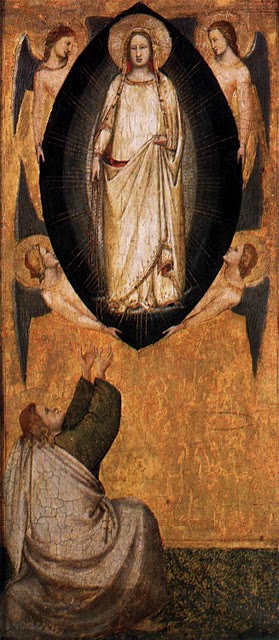


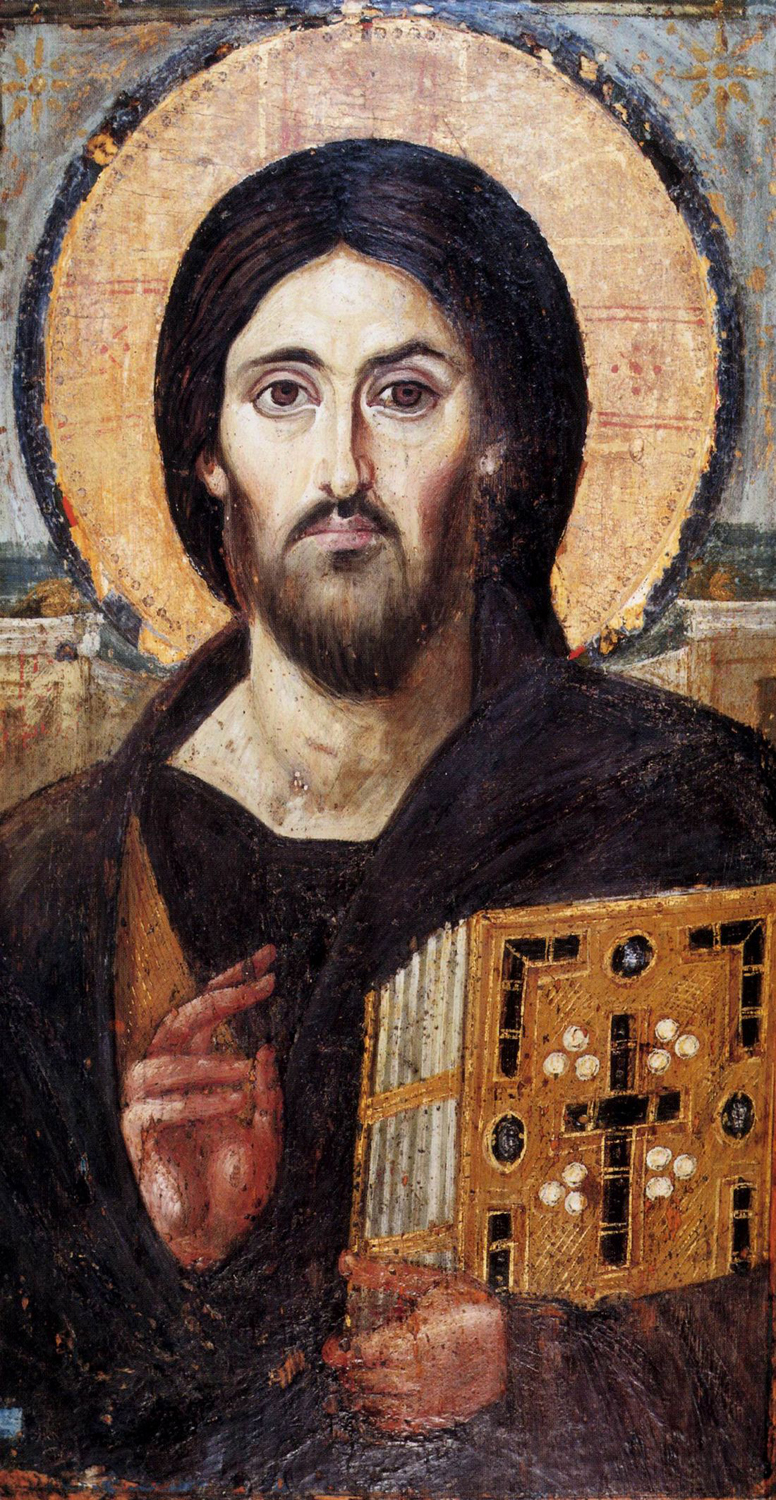
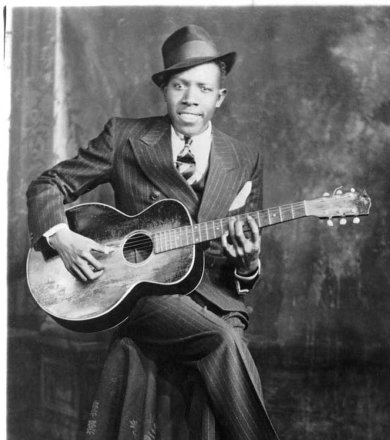
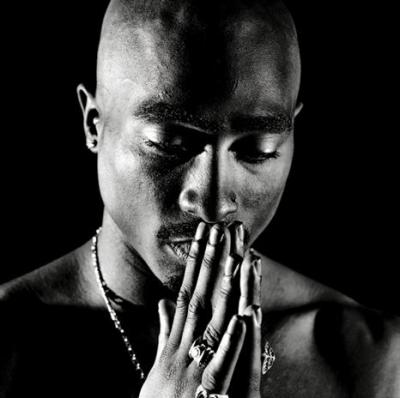







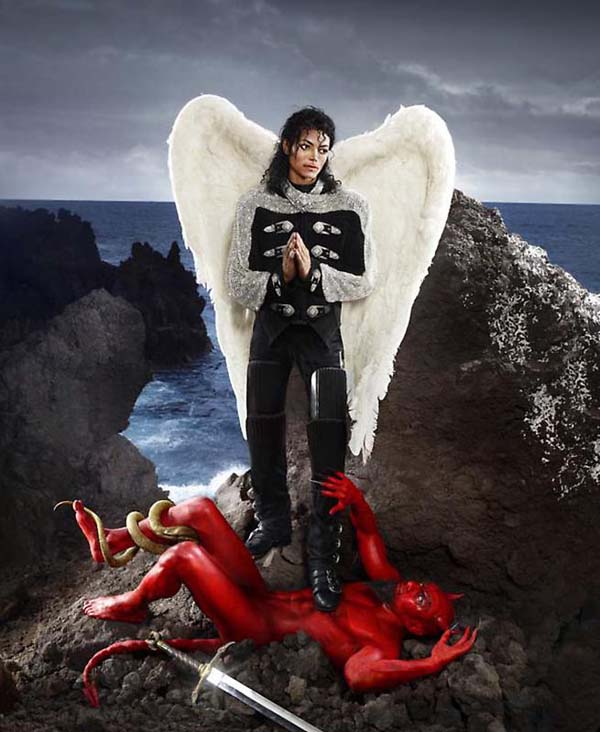

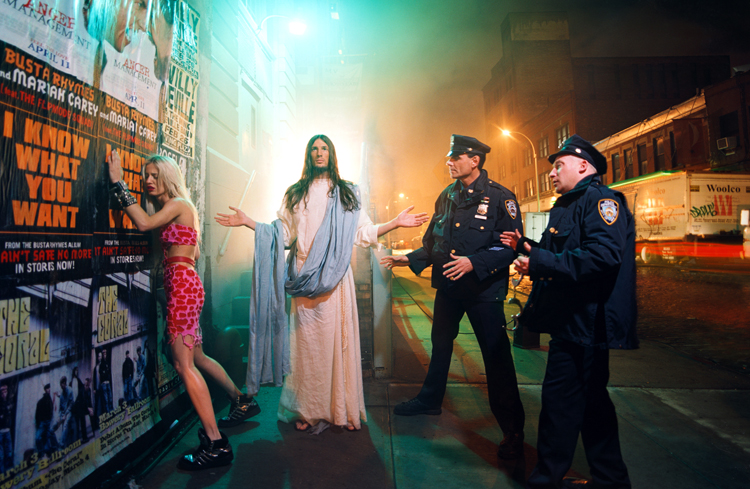
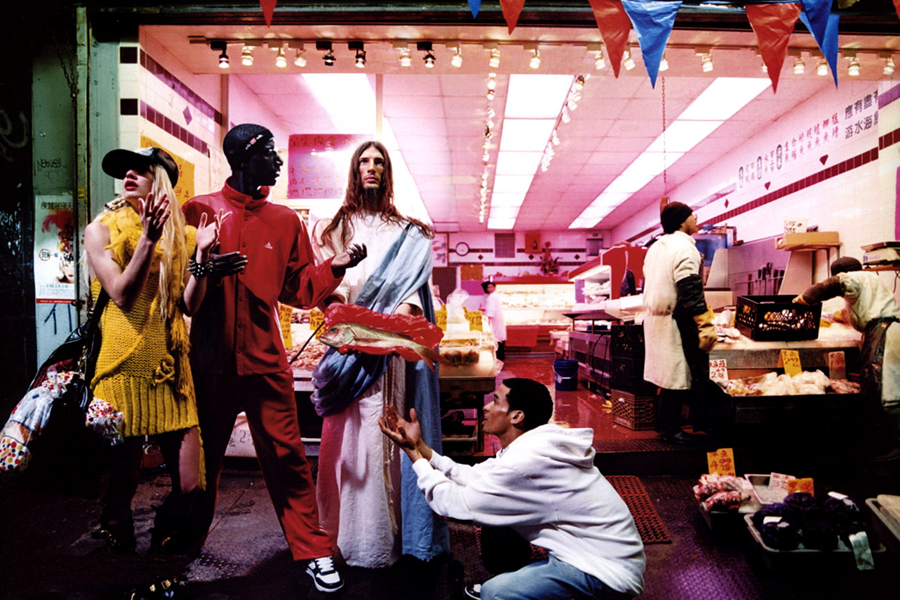


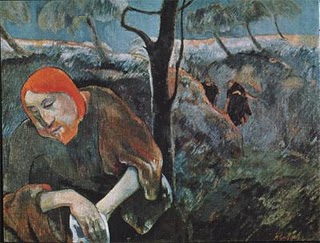

 SCAPEGOAT SHADOWS