Once there was this girl, having the time of her life in a happy relationship. Until her boyfriend cheated on her. After that, she couldn’t go on with him. So they broke up.
A year later, she met this other guy. Love at first sight. They started dating. A few months down the road of this new romantic affair, a little fear started creeping into her mind: “What if I’ll be cheated on, again?” The fear grew bigger, as did her desire to safeguard her relationship. So she started controlling her new boyfriend, pressing him to inform her about his whereabouts. He didn’t do anything wrong, but he nevertheless had to suffer from her anxieties. Until he couldn’t stand it any longer, and her worst fear came true: he broke up with her. Tragic. Ironic. All she had done to avoid the destruction of the relationship brought about the relationship’s downfall. For whoever wants to save his life will lose it… (Matthew 16:25a).
What happened? Well, the girl was hurt, and she had been sad and angry because of it. Instead of letting go of her sadness and frustration, she started focusing on these emotions again while being in a new relationship. And she started hurting a guy who hadn’t done anything to cause her pain, insinuating he was not trustworthy and accusing him of being a liar and a cheater. In other words, she imitated the blows inflicted on her persona by inflicting similar blows on someone else. It was her way of taking revenge. Her new boyfriend turned out to be her scapegoat: someone who had to answer for her anger, although he was innocent. There is indeed, as René Girard and so many other Christian thinkers rightly point out, a nearly inextricable connection between the mimetic principle of vengeance and the scapegoating impulse.
In order to break the vicious cycle of hurt inflicting hurt – the cycle of original sin -, Christ invites us to take part in an act of creation. This is a creatio ex nihilo (creation out of nothing), meaning that our actions are no longer defined by the lesser and greater evil we endured in the past. To return to the situation of the girl: Christ invites her to “turn the other cheek” as she begins a new relationship. To turn the other cheek indeed means that you refuse to let your relationships and yourself be defined by the hurtful mechanisms that eventually destroy relationships. Christ invites the girl to trust being vulnerable again. He invites her to keep faith over fear – for “fear leads to anger, to hate, to suffering” as some famous wise man summarized Christ’s advice…
Forgiveness is at the heart of creation, destabilizing the balance of “eye for eye, tooth for tooth” – for, as some other wise man allegedly said: “An eye for an eye leaves the whole world blind”. Coming from outside the cycle of bad deeds or “bad karma“, the grace of forgiveness opens up the possibility of a new kind of imitation or mimesis. Instead of imitating each other in trying to assert ourselves over against one another – as theologian James Alison would say –, “turning the other cheek” is an invitation to begin an imitation of recognizing and accepting each other’s vulnerability. Recognizing that “no one is without sin”, in order to end “casting the first stone”. It’s an invitation to shy away from self-assertion over against one another – which would be called a movement of kenosis (“self-emptying”) in theological terms. The imitatio Christi would thus lead to the recovery of human beings, for “being human” means “being in relationships”, and the act of grace Christ invites us to take part in is precisely aimed at restoring those relationships. Therefore: Whoever loses his life for me will find it… (Matthew 16:25b).
So Matthew 5:38-39 is not an invitation to be masochistic. It’s quite the opposite. It’s a radical refusal to surrender to the evil that we experience from time to time. It’s an invitation to obey the creative call of Love (click here to read more) – which is, paradoxically, truly liberating:
“You have heard that it was said, ‘Eye for eye, and tooth for tooth.’But I tell you, Do not resist an evil person. If someone strikes you on the right cheek, turn to him the other also…”
[on two types of “rewards” – goals or consequences of one’s actions? – and the implications for human interactions]
“If there is no God, everything is permitted…”
This is basically the challenging idea of Ivan Karamazov, one of the main characters in The Brothers Karamazov, the famous novel by Fyodor Dostoevsky (1821-1881). Could this be true in any way?
At the beginning of a new year, I always ask my students the following questions:
Suppose there is no principal’s office, suppose you could never be punished for any of your actions – would you still respect your fellow students and your teacher?
Suppose there are no grades to win, and you didn’t receive any reward for studying your courses and reading your books – would you still listen to your teachers and study?
What would you do if you are not watched, if you live outside “the empire of the watchmen”?
Consider Matthew 6:1-2 & 6:5: Be careful not to practice your righteousness in front of others to be seen by them. […] So when you give to the needy, do not announce it with trumpets, as the hypocrites do in the synagogues and on the streets, to be honored by others. Truly I tell you, they have received their reward in full. […] And when you pray, do not be like the hypocrites, for they love to pray standing in the synagogues and on the street corners to be seen by others. Truly I tell you, they have received their reward in full.
To put things slightly differently:
Suppose there is no hell, no punishment in any way, would you still respect your fellow man?
Suppose there is no heaven, no reward in any way, would you still respect your fellow man?
Actually, this is the kind of challenge Christianity puts us to. Christ teaches us that there isn’t something like a heaven as an established “world” for which we should bring all kinds of sacrifices in order to obtain it. As if heaven would be the ultimate goal and justification of our existence. That’s exactly like the reasoning of a student who is prepared to work hard at his courses and to obey his teachers, not because he’s intrinsically interested in his courses or respectful of his teachers, but because he considers getting good grades as his ticket to success, power and happiness – “paradise”.
Christ subverts this sacrificial logic. Rather than being an ultimate goal that justifies, explains and gives meaning to our life, “heaven” is the potential consequenceof our actions. By taking up responsibility for ourselves and one another, by loving our neighbor (which is “the righteousness of God’s Kingdom”), we co-create “heaven”. To use the student-analogy again: the student who learns to be genuinely interested in his courses will get good grades as a logical consequence of his love for studying. And he will have learned something!
Consider Matthew 6:25-34: Therefore I tell you, do not be anxious about your life, what you will eat or what you will drink, nor about your body, what you will put on. Is not life more than food, and the body more than clothing? Look at the birds of the air: they neither sow nor reap nor gather into barns, and yet your heavenly Father feeds them. Are you not of more value than they? And which of you by being anxious can add a single hour to his span of life? And why are you anxious about clothing? Consider the lilies of the field, how they grow: they neither toil nor spin, yet I tell you, even Solomon in all his glory was not arrayed like one of these. But if God so clothes the grass of the field, which today is alive and tomorrow is thrown into the oven, will he not much more clothe you, O you of little faith? Therefore do not be anxious, saying, ‘What shall we eat?’ or ‘What shall we drink?’ or ‘What shall we wear?’ For the Gentiles seek after all these things, and your heavenly Father knows that you need them all. But seek first the kingdom of God and his righteousness, and all these things will be added to you.
Therefore do not be anxious about tomorrow, for tomorrow will be anxious for itself. Sufficient for the day is its own trouble.
On the other hand, those students who are focused only on getting good grades and who fear failure will tend to forget what they have learned from the moment they have their grades and no longer “need” the information from their courses. Or they will stop being friendly to their former teachers once they have graduated.
In short, Christ doesn’t want us to respect our neighbor because we fear hellish punishment or long for some heavenly reward. He wants us to respect our neighbor because of our neighbor. He liberates us from a system of fear and anxiety based on punishments and rewards, creates the possibility of responsibility (because only a free man can be responsible) and genuine love – without ulterior motives -, and transforms the nature of sacrifice. In Christ’s view, sacrifice is not a gift to receive something from someone you need, nor is it a necessary obligation to protect some kind of “honor gone mad” (see the tragedy of Japanese kamikaze pilots during the Second World War), but it is a gift from people who are thankful for what they already received by living up to the possibilities of their freedom.
Consider Matthew 5:23-24: So if you are offering your gift at the altar and there remember that your brother has something against you, leave your gift there before the altar and go. First be reconciled to your brother, and then come and offer your gift.
Of course, there’s a dark side as well to this liberation. Let’s go to the classroom once more. If a teacher tells his students that he will not punish them or, on the other hand, reward them with good grades, there are two possibilities: there will either be an atmosphere of cooperation guided by a genuine motivation to study, or… total mayhem – “hell”!
In Battling to the End, a book in which René Girard reconsiders the treatise On War by Carl von Clausewitz (1780-1831), the apocalyptic dimensions of Christ’s teachings are related to Christ’s deconstruction of “the god(s) of sacrifice” and of sacrificial systems in general. Girard makes clear that the biblical revelation indeed has two possible outcomes: either a world of ever more rivalry and violence, or a world of ever more Love.
Reading Battling to the End a while ago, I couldn’t stop thinking about two stories in the shadow of a potential apocalypse: Empire of the Sun and Watchmen. In both these stories further mayhem and violence is avoided – at least for the time being – by the restoration of a sacrificial system of fear. Empire of the Sun reminds us how the Second World War came to an end in Japan: by sacrificing tens of thousands of innocent people, victims of the atomic bombings in Hiroshima and Nagasaki. Watchmen also displays this kind of sacrificial logic. In the fictional story of this graphic novel, the tensions between the US and the USSR during the Cold War are released after an alleged nuclear attack from outer space. Once again the death of millions of civilians provides a “peaceful world”, some sort of “paradise” – however precarious.
In Empire of the Sun, the way the Second World War unfolds in the Far East creates the setting for a boy’s coming of age story. Empire of the Sun actually is an autobiographical novel by J.G. Ballard, and tells the story of an aristocratic British boy, James (“Jim”) Graham. In 1987, Steven Spielberg made a film based on Ballard’s novel, with a young and astonishing Christian Bale taking the lead role. In the film, Jim’s privileged life is upturned by the Japanese invasion of Shanghai, December 8, 1941. Separated from his parents, he is eventually captured, and taken to Soo Chow confinement camp, next to a former Chinese airfield. Amidst the sickness and food shortages in the camp, Jim manages to survive and becomes a token of spirit and dignity to those around him, all the while hoping to get back “home” again. Jim eventually finds comfort in the arms of his mother, after losing his Japanese kamikaze-friend among many others… The scene of Jim reunited with his mother sheds a little light of hope in a world which seems condemned to the sacrificial peace of the atomic bomb – and a seemingly never ending story of fear and worries, with no peace of mind…
I made a compilation using scenes from both Empire of the Sun and Zack Snyder’s 2009 movie adaptation of the graphic novel Watchmen. The two stories raise powerful questions regarding humanity’s possibility to cope with freedom and responsibility. I think they’re opening up a lot of issues that are also discussed at the COV&R Conference in Tokyo, Japan (July 5-8, 2012). As Jim learns towards the end of the film: there are no clear-cut, magical solutions to overcome the devastations of a world at war… But to follow Christ’s footsteps, one step at a time, might take us to unexpected and new dimensions. Watch out!
Some thoughts inspired by C.S. Lewis’s Mere Christianity and mimetic theory
Who is this man who forgives sins? Is he entitled to forgive a woman accused of adultery? Shouldn’t this be up to the husband of this woman?
Who has been hurt by the adultery? The husband, sure, but also Love itself… This man, Jesus of Nazareth, the one who is called the Christ, forgives sins and mistakes committed between human beings… He either is a complete lunatic, or he is who he claims to be – namely: the incarnation of Love himself, violated time and again by our great sin, which is pride…
These thoughts on Jesus of Nazareth are inspired by C.S. Lewis (1898-1963), a former atheist who converted to Christianity because it made more reasonable sense to him than his atheism. Of course Lewis became well-known for his series of seven fantasy novels The Chronicles of Narnia, but the fame of this series sometimes overshadows other work by this fascinating author. And that’s a shame because, up to this day, Lewis remains a surprisingly fresh Christian thinker.
In Mere Christianity, Lewis tries to explain, as a lay-man, what Christianity is essentially about. I’ve tried to summarize some of his main insights on “the fall of the human race” and “the need for salvation” in three sections (paradise – the fall – salvation). References to familiar biblical stories should be clear. Relevant inspirational fragments of Mere Christianity can be read in enclosed pdf. Those familiar with mimetic theory will certainly recognize major themes of Girard’s approximation of Christianity in my summary – reading of The Great Sin (fragment 2 of Mere Christianity in pdf, see below) is highly recommended. Enjoy!
Experiencing that someone is interested in you as you are, is the fulfillment of a deep human desire. It’s paradise.
THE FALL – A PARASITE IN PARADISE
Because we are interested in each other, we may also get interested in our neighbor’s peculiar activities and possessions. There’s nothing wrong with that.
But in comes this surreptitious fear, whispering in our ear: “The difference between yourself and the other is not something to be joyful or inspired about. It means that you are less important than the other, that you are less…” And you indeed start asking yourself why you shouldn’t have, for example, a fruit tree of your own like your neighbor. You start wondering why your neighbor should hold more proprietary rights to cultivate a particular kind of fruit, and why you should be less entitled to enjoy that fruit.
Soon after this kind of competitive comparison we become interested in our neighbor because of what he or she seems to represent – an importance because of certain activities and possessions –, and no longer because of him- or herself. Moreover, instead of questioning ourselves on our deepest desires, we get focused on the idea that the other finds pride in “being more important” than ourselves. Like a child who thinks his parents are trying to boss him around, and that responds to this impression in trying to become the boss himself. Of course, in imitating the supposed pride of someone else, we’ll never notice the reality of the situation, namely that the other might as well give us advice because he really cares about us – and not because he’s trying to protect his own interests or prestige…
All too often a supposed pride is imitated: we develop pride ourselves, deceiving ourselves by thinking “we are better than the one who displays pride” – which is of course an utterance of pride itself! That’s why we often desire recognition, not for ourselves, but for the prestige we have constructed in jealously comparing ourselves – not to others, but to what we imagine about others. Blinding ourselves for the attention we do receive (as someone is indeed asking us: “What is bothering you, why are you so angry?”), we find it all the more difficult to live close to a neighbor who seems to receive all the recognition in the world. A destructive, self-fulfilling prophecy…
It’s pride – a mimetic, mutually reinforcing desire for recognition of one another’s prestige – which poisons human relationships. Because of this poison, we are no longer interested in each other, hell, we’re not even interested in ourselves anymore. The devilish dynamic of pride takes its toll: unable to exist by itself, it parasitizes on our initial interest in each other to pervert this interest. In the end, because of pride, we are no longer capable of respecting ourselves and others, as we are obsessed with the vanity of some prestige…
Hell is the twisted opposite of the original heavenly situation between human beings: while we are initially attentive to certain objects, activities and goals because of a natural and basic interest in others, we gradually become interested in others only because of the allegedly weighty importance of certain objects, activities and goals. Others become means to achieve this alleged importance ourselves. They no longer are the alpha and omega (source and destination, origin and goal) of our interest. In other words, we are no longer capable of fulfilling our neighbor’s deepest desire: being interested in our neighbor for his or her own sake. Moreover, we are equally no longer capable of receiving the interest of others in ourselves, because we mainly focus on others who seem to be interested in (and seem to confirm) our prestige.
SALVATION
Christianity is convinced that human beings can only exist fully “in relationships”. It is also convinced that pride always, time and again, threatens to poison human relationships, and alienates men from themselves and each other. Therefore it keeps on visiting this “doctor” (apart from other doctors within and outside the world of religion) who is believed to have revealed the human sickness – the epidemic of pride and jealousy (the original sin) – in all its hidden depths, and who is also believed to have offered an ultimate cure for this. This doctor is known as Jesus of Nazareth, the one who is called the Christ.
Christ is believed to infect humankind – as no other before or after him – with the restoring epidemic of creative Love (understood as genuine interest in others, without ulterior motives).
CHRISTIANS AND NON-CHRISTIANS
So Christianity, although aimed at all, is – at the explicit level – not for people:
who don’t believe there’s anything ALIENATING or WRONG with human relationships based on a (jealous) competition for prestige (pride), and based on a fear of others who are mistrusted as potential rivals (“who could take my life and safety away – things I’m entitled to have…”).
who don’t believe there’s a PERFECT VERSION of something like genuine interest in others; who don’t believe in the existence of a kind OF LOVE WITHOUT ULTERIOR MOTIVES, which creates an exemplary, inspiring and redeeming dynamic whenever we “get lost” in the temptations of pride and jealousy.
who don’t believe that SALVATION lies in the cultivation and (otherworldly) fulfillment of the dynamic of “genuine love for or interest in others”.
who don’t believe, in short, that there’s any SICKNESS they themselves and humankind as a whole needs to be CURED or SAVED from.
who don’t believe, even if they agree on the question of our typical “sickness” as human beings, that salvation has been offered to us in Jesus Christ.
On the other hand, Christianity is for people:
who believe we tend to attach importance to prestige and other “things of this world” because we are possessed by a deep and largely hidden FEAR OF DEATH – which makes our life seem of “no importance”, hence we try to give it some “weight” (the weight of vanity that is, of things that will pass just the same).
who believe it is ultimately fear of death which keeps us from developing full and perfect love for one another. Our desire to love one another is crossed by the dynamic of pride and jealousy – THE LOVE AND AMBITION FOR IMAGE, STATUS, PRESTIGE, REPUTATION, CONTROLLING POWER and for recognition because of that… Because we fear death, we tend to look for things which promise “immortal fame” – the PARADOX being that some of us are willing to literally SACRIFICE their own life TO ACHIEVE this kind of IMMORTALITY (examples of this kind of masochistic sacrifice are suicidal terrorist attacks, or suicide because one feels like a loser if one doesn’t achieve what is supposed to be “a worthwhile life by the standards of this world”).
who believe that a being, capable of perfect love, can only be a being that is NOT DEFINED BY DEATH.
who believe that a being, capable of perfect love, is Love in itself, and is “essentially relational” – this idea is expressed symbolically in the idea of the Trinity (“God” or “(Perfect) Love” as the relationship between “Father, Son and Holy Ghost”).
who believe that God, as an immortal being, is other than us humans (who are mortal), but is genuinely concerned with those who are other – because Love is “being interested in the other for the sake of the other”, because Love is “wanting the other to exist and to live in happiness”. Of course the condition for real and full happiness is freedom…
who believe God, this being of Love, offers salvation to the whole of humankind in eventually becoming the incarnated victim of the Pride of the whole of humankind. Expelled as “the common enemy” or forsaken “by all” (including his so-called friends), this victim – Christ – offers “the other cheek” (which is the mystery of the resurrection), challenging and freeing us to include the ones who, time and again, become the victim of our worst fears, of our pride, envy and frustration… To be forgiven by a victim who has every right to “take revenge” because of his total innocence, is an experience of FORGIVENESS and GRACE in its most outspoken form.
who believe that Christ desires to LIBERATE us from the fear of death, so that we can start loving each other more fully and perfectly, creating another basis to build human relationships – the basis or PARADISE we naturally start from (our genuine interest in others) which is all too soon corrupted by our fears and frustrations.
who believe that IMMORTALITY should not be the goal of (or “reward” for) one’s actions, but IS A MEANS to start developing actions of a perfecting love for one’s neighbor…
who believe that Christ shows that a God of Love is not “almighty” in the sense of being “all-controlling”; God is almighty seen from the perspective of a Christ who is not deceived by the temptation of pride and “this-worldly ambition”. By resisting the temptation for some kind of “prestige” (in other words by RESISTING MASOCHISM) Christ is able “to become the Servant of all” and to keep on loving others for the sake of those others… Because Christ is true to the “Spirit” of his “Father”, because Christ remains “the incarnation of Love”, he can resist sacrificing others (in other words RESIST SADISM) for the sake of some pride.
who believe suffering is not the ultimate definition and goal of life, but who are WILLING TO SUFFER BECAUSE OF LOVE FOR ONE’S NEIGHBOR.
who believe they still have A LONG WAY TO GO, but that there’s Someone giving them life, time and again, to GET BACK UP (leaving the ‘dead way of pride’ and choosing the ‘living path of love’), even if they don’t immediately see it or experience it…
who don’t wish to take pride in being CHRISTIANS, knowing that some of the people who call themselves NON-BELIEVERS or NON-CHRISTIANS are much closer to the reality incarnated by Christ than they are themselves…
THE MESSAGE
1 John 3:11-14:
For this is the message you heard from the beginning: We should love one another. Do not be like Cain, who belonged to the evil one and murdered his brother. And why did he murder him? Because his own actions were evil and his brother’s were righteous. Do not be surprised, my brothers and sisters, if the world hates you. We know that we have passed from death to life, because we love each other. Anyone who does not love remains in death.
Matthew 23:29-39:
Jesus said: “Woe to you, teachers of the law and Pharisees, you hypocrites! You build tombs for the prophets and decorate the graves of the righteous. And you say, ‘If we had lived in the days of our ancestors, we would not have taken part with them in shedding the blood of the prophets.’ So you testify against yourselves that you are the descendants of those who murdered the prophets. Go ahead, then, and complete what your ancestors started!”
“You snakes! You brood of vipers! How will you escape being condemned to hell? Therefore I am sending you prophets and sages and teachers. Some of them you will kill and crucify; others you will flog in your synagogues and pursue from town to town. And so upon you will come all the righteous blood that has been shed on earth, from the blood of righteous Abel to the blood of Zechariah son of Berekiah, whom you murdered between the temple and the altar. Truly I tell you, all this will come on this generation.”
“Jerusalem, Jerusalem, you who kill the prophets and stone those sent to you, how often I have longed to gather your children together, as a hen gathers her chicks under her wings, and you were not willing. Look, your house is left to you desolate. For I tell you, you will not see me again until you say, ‘Blessed is he who comes in the name of the Lord.'”
The books of the bible have left an indelible mark on humanity’s cultural idiom, moreover because they are themselves already important, somewhat reinterpreted, summaries of different ancient strands. Throughout the ages, storytellers, novelists, directors, painters, sculptors, architects and musicians have consciously and unconsciously transmitted basic biblical sayings, motives, symbols and archetypes (René Girard is among those who reveals this, time and again, in his work on western literature). This continued tradition makes clear that “man does not live by bread alone…”
Up to this day, we create images and tales to gain insight and different perspectives on our lives. Stories aren’t just a way of entertaining ourselves to escape reality. On the contrary, they allow us to get in touch with and reflect upon questions which are part of our everyday existence as human beings. Beyond scientific questions and concerns, we are confronted with layers of meaning in our everyday experience which broaden our assessment of reality. To reduce the experience of sexual intercourse, for instance, to what can be said of it on a purely scientific level, is to mistakenly consider a partial description of the experience as the experience itself. That’s why we naturally develop a language to express and cultivate other aspects of the same experience, aspects which transcend the purely scientifically describable domain.
Biblical stories have always been part of the language of the soul, and they still are. Songwriters like Bruce Springsteen or Leonard Cohen – to name but two – very often use biblical motives to express their life experiences. For example, just recently, Springsteen recaptured the story of the prophet Jonah and the big fish – in his song Swallowed Up (In The Belly Of The Whale). [Click here for Springsteen’s interpretation of Christ’s Passion].
Although literalist interpretations of biblical stories are on the rise since the fundamentalist movement started in the 19th century, and since some atheists took over this approach only to come to opposing conclusions, a majority of Christians still engages in a creative dialogue with the stories as stories (meaning that they are viewed as attempts to also symbolically and metaphorically convey real and profound human experiences).
It’s a shame that some people dismiss the anthropological and cultural potential of the bible because they “don’t believe in a burning bush that can talk”. As if that is expected! It’s like thinking we should believe Prince made love to a car in the song Little Red Corvette. Maybe it’s wise to remember how people approached the biblical stories during Antiquity and the Middle Ages. The important Christian thinker Geert Groote, for example, writes the following around 1383 A.D.:
“No child believes that the trees or the animals in the fables could speak. After all, the literal meaning of the poems or of the epic writings precisely is their figurative sense, and not the sense the bare words seem to hold at first glance. Who would actually believe that, as the book of Judges tells it, the trees would choose a king and that the fig tree, the vine, the olive tree and the bush would have responded to that choice in that way or another? Christ uses all kinds of images in his teaching. Matthew the evangelist even says that Christ never spoke without images. And even though it is Christ who uses these images, I do not think that those things actually (literally) took place.”
Nevertheless, some people today think they can approach the biblical stories as attempts to answer questions of the natural sciences like we know them today – apparently not realizing modern science didn’t exist in a, well, pre-modernist era. Reading a book of natural sciences to know what the bible is all about (or vice versa) is like reading a cookbook to assemble a piece of furniture.
Biblical stories should be approached from the point of view of storytelling and what this entails on a cultural level in general. Throughout history biblical stories have always been open to different interpretations, generating different (layers of) meaning. They were considered highly symbolical stories, used to highlight the depths and transcending nature of any authentic human experience.
Sometimes people ask: “How do you know what is to be considered symbolical?” Regarding ancient or literary texts in general, that’s a wrong question. For even historical events were only told when they were considered as transmitting a significance beyond a certain place and time (a “trans-historical” meaning). Once you get to know the basics of the biblical “idiom”, it’s not very hard to engage in a creative and personal dialogue with biblical texts, “knowing” how to read and interpret them (without expecting one, “final” interpretation).
Maybe we get a better picture of what I’m writing here if we compare this kind of dialogue with the way we keep on developing and interpreting particular images, stories and myths up to the present. That’s why I assembled some pop and rock songs using the modern mythology of the road and the car. Jack Kerouac (1922-1969) really instigated this mythology with his famous novel On the Road. Although inspired by autobiographical events, the story remains an allegory for every person’s “life journey”. In Kerouac’s own words: “Dean and I were embarked on a journey through post-Whitman America to FIND that America and to FIND the inherent goodness in American man. It was really a story about 2 Catholic buddies roaming the country in search of God. And we found him.” (Leland, John (2007). Why Kerouac Matters: The Lessons of On the Road (They’re Not What You Think) – New York: Viking. pp. 17).
So, take a look and a listen at the (excerpts of) songs I assembled in seven sections, and ask yourself if it’s really that hard to “understand” that they’re also about an inward journey (moving from alienation of self and other towards following the – divine? – dynamic of a love which saves and which allows, obeying its call, to rediscover oneself and other). Modern cultural archetypes (“highway” and “car”) stand side by side with religious and Christian ones (“highway… to hell”, indeed).
Maybe you’ll also understand what the general idea of these seven sections is all about? “Loss and redemption” would be a fine interpretative starting point. Never mind the Catholic imagination of Bruce Springsteen, among others… Enjoy artists like Willie Nelson, Ben Harper, Joshua Kadison, Toto, Metallica, The Killers, Green Day, Hanoi Rocks, Prince, John Lennon and Tracy Chapman – and many more!
The contemporary French atheist historian Marcel Gauchet proposed the idea that Christianity is “the religion of the end of religion” in his book The Disenchantment of the World: A Political History of Religion (original French title: Le Désenchantement du monde. Une histoire politique de la religion, Gallimard, Paris, 1985). Together with fellow French atheist and philosopher Luc Ferry, he recaptured this idea among others in Le Religieux après la religion (Grasset, Paris, 2004).
The idea that the Judeo-Christian traditions play a major role in the secularization of western society is not new. It has been adopted time and again by researchers and intellectuals who each highlight different aspects of this process. German atheist philosopher Ernst Bloch (1885-1977) goes so far as to say that “only a Christian can be a good atheist and only an atheist can be a good Christian” in his book Atheism in Christianity. Bloch’s quote is reminiscent of accusations directed at Christians from time to time in Antiquity, namely that Christians were atheists. One finds a good example of this in The Martyrdom of Polycarp (2nd-3th century AD), an early Christian work recounting how Polycarp, bishop of Smyrna, was burned to death at the demands of a crowd that screamed against ChristiansAway with the Atheists; let Polycarp be sought out!
The reaction of the pagan crowds becomes especially clear from the point of view of René Girard’s reading of the biblical stories. Girard claims that “Christianity destroys mythology”. He convincingly argues that the Judeo-Christian scriptures eventually reveal the scapegoat mechanism as the cornerstone of ancient religious communities and their sacrificial rites. Hence it is not surprising that the gospels repeatedly denounce the importance of sacrificial rituals, for instance in Mark 12:33: “To love Him with all your heart, with all your understanding and with all your strength, and to love your neighbor as yourself is more important than all burnt offerings and sacrifices…” Referring to the prophetic traditions of the Old Testament, Jesus clearly reacts against a certain understanding of sacrifice – Matthew 9:13: “Go and learn what this means: ‘I desire mercy and not sacrifice…'” (see for example Hosea 6:6: “For I take pleasure in love, and not in sacrifices; and in the knowledge of God more than inburnt-offerings…”; or Psalm 51:16-17: “You do not delight in sacrifice, or I would bring it; you do not take pleasure in burnt offerings. My sacrifice, O God, is a broken spirit; a broken and contrite heart you, God, will not despise…”).
TRANSFORMING RELIGION
Perhaps it’s better to speak of a Christianity transforming religion and mythology than of a Christianity destroying them. In the Sermon on the Mount, Jesus says (Matthew 5:23-24): “If you are offering your gift at the altar and there remember that your brother or sister has something against you, leave your gift there in front of the altar. First go and be reconciled to them; then come and offer your gift.” So, instead of sacrifice being a means by which people try to resolve a crisis, it becomes a means by which people say grace for a peace they obtained by taking up their own responsibility.
The apostle Paul radically relativizes religious regulations and rituals – for instance in his letter to the Colossians (2:16-23): “Therefore do not let anyone judge you by what you eat or drink, or with regard to a religious festival, a New Moon celebration or a Sabbath day. These are a shadow of the things that were to come; the reality, however, is found in Christ. Do not let anyone who delights in false humility and the worship of angels disqualify you. Such a person also goes into great detail about what they have seen; they are puffed up with idle notions by their unspiritual mind. They have lost connection with the head, from whom the whole body, supported and held together by its ligaments and sinews, grows as God causes it to grow. Since you died with Christ to the elemental spiritual forces of this world, why, as though you still belonged to the world, do you submit to its rules: “Do not handle! Do not taste! Do not touch!”? These rules, which have to do with things that are all destined to perish with use, are based on merely human commands and teachings. Such regulations indeed have an appearance of wisdom, with their self-imposed worship, their false humility and their harsh treatment of the body, but they lack any value in restraining sensual indulgence.”
No wonder the early Christians were called ‘atheists’!
TRANSFORMING HUMAN RELATIONSHIPS:
FROM KARMA TO GRACE
The system of do ut des or quid pro quo as the main way to relate to others and to God is abandoned by Jesus. From the perspective of the gospels, a heavenly situation is a consequence of one’s actions, it is not the ultimate goal. The goal is to love others, even if this implies that one is not loved by others in return – although of course one loves guided by the hope that one will be loved (see: “Give and you shall be given…”, Luke 6:38). From this perspective one loves not in order to gain a reward in ‘heaven’, but the experience of Love has ‘heavenly effects’. A life of charity is guided by the question “What can I give to others who I don’t necessarily need (to others outside my usual circle of friends)?” That’s what Jesus is saying, among others, in his parable of the good Samaritan. We usually tend to pay attention to people who give us something that we seem to desire: some sort of recognition, comfort, a good feeling, nurturing, love and understanding. But other people are more than mere means to satisfy our needs and desires. If we only focus on what we are missing – on a ‘yin’ side that has to be complemented by a certain ‘yang’ – then we run the risk of walking passed the other we don’t seem to need to fill our voids, but who is in need himself.
The reality of charity and grace breaks through the balanced harmony of mutual friendships (see Matthew 5:43-48 and Luke 6:27-38). The story of grace disturbs the story of karma. It implies that we are willing to approach others out of freedom, and not because we depend on them to fulfill certain needs. It implies that we are willing to give ourselves to others from the fullness of our personality, sharing the qualities and talents we discovered in ourselves and dared to accept. That’s why, during the Catholic sacrament of marriage, weds are asked: “Have you come here freely and without reservation to give yourselves to each other in marriage?” That’s why Saint Francis prays: “Grant that I may not so much seek to be loved as to love…” For if we only seek to be loved, we will sooner or later take sides with the powerful to gain social recognition against the victims of the establishment.
Anyway: heavenly, paradisiac, indeed ‘peaceful’ situations which are based on sacrifice and scapegoating impulses are condemned by the Christ of the gospels. Jesus questions ‘natural’ ties of loyalty (Matthew 10:34-36: “Do not suppose that I have come to bring peace to the earth. I did not come to bring peace, but a sword. For I have come to turn a man against his father, a daughter against her mother, a daughter-in-law against her mother-in-law— a man’s enemies will be the members of his own household.”). We should never accept injustices, even if they are produced by our friends or relatives.
That’s why one could say, within this context, that “Christianity destroys religion” – the term religion referring to a “sacrificial system”. Dietrich Bonhoeffer (1906-1945) became very aware of the difference between sacrifical religions of the atheist Nazi regime and certain churches on the one hand, and the non-sacrificial ‘religion’ of Christ on the other.
DIETRICH BONHOEFFER’S RELIGIONLESS CHRISTIANITY
Dietrich Bonhoeffer was a German Lutheran pastor and theologian who actively opposed the state-controlled German Evangelical Church under Adolf Hitler. He co-founded the so-called Confessing Church. Because of his political involvement, he would eventually be imprisoned. On April 5th 1943, Bonhoeffer was arrested and taken to Tegel prison in Berlin. After a stay in the Buchenwald Concentration Camp, he ended up at Flossenburg, where he was hanged on April 9th 1945. He was 39 years old and died just 23 days before the end of the Second World War.
Bonhoeffer’s spiritual and theological writings, not least those from the time of his captivity, became very influential. Of special note is Bonhoeffer’s mention of a “religionless Christianity”. Hermes Donald Kreilkamp elaborates on Bonhoeffer’s understanding of the distinction between ‘religion’ and ‘Christianity’ (from Dietrich Bonhoeffer: Prophet of Human Solidarity):
Religion, for Bonhoeffer, was worship which had little contact or concern with the deeper currents of life. It was religion fostered by the Enlightenment, religion which involved the worship of a God remote from human life and worship little concerned with biblical social teachings. For some it might include a feeling of admiration for the universe or nature, with the divine as the origin of it all, but it was a kind of religion which included little or no sensitivity to God’s immanence in the world here and now, much less a sensitivity to his involvement in human suffering. For others such religion might foster a comfortable feeling of inward piety, of calm and repose, but with little concern for the needs of the hungry or the poor. A renewed Christianity, Bonhoeffer was convinced, will slough off such religion, to be true to the ideals set by Christ its Lord and by James.
The philosophers of the age of Enlightenment had talked much about proving the existence of God by abstract reasoning, proceeding from various intellectual data or abstract principles. Such philosophers or theologians could spend hours showing the harmony of the universe and the unity of its laws, giving every indication of their divine origin. Such thinkers took religion as a quite natural phenomenon and considered it fitting to regard the being of such a God with awe, but they had little concern about how one actually went about, from day to day, worshiping such a God in human community.
Insofar as the Deistic notion of God and of religion took hold on the minds even of Christians, religion became simply an extolling of the glory of God in nature rather than an involvement with his struggle in human nature. As Bonhoeffer noted, the outcome even of the Lutheran reform was, unfortunately, not the perception of grace as something bought for us at a great price, but the notion of it as easily obtained, or, to use contemporary parlance, as cheap. What Bonhoeffer often pondered was what grace cost Jesus, and what it still costs to live as Jesus lived. Bonhoeffer reflected still more on the continuing need for renewal and reconciliation which, it seemed to him, his church refused to consider, choosing not to preach about, or to speak out on, the social injustices of the time – the needs of the poor and those in prisons and concentration camps.
Adam Ericksen of The Raven Foundation wrote a sermon, commenting on Isaiah 65:17-25, Psalm 98 and Luke 21:5-9, in which he refers to Dietrich Bonhoeffer and the notion of “religionless Christianity”. Ericksen sketches out the context in which Bonhoeffer used this notion:
During the first half of the 20th century, there was a major German theologian. He was brilliant and his books, especially those on the great reformer Martin Luther, remain influential. As a man, he was well respected and well-liked by his colleagues and his students. He was gracious to his friends and his foes. He was known for being a mediator. He didn’t like the theological or political extremes and he avoided making radical statements. His name was Paul Althaus. Althaus was described by his colleagues as having “no character defects … he [exhibited] … a warm and humane personality. He was the perfect gentleman, friend and teacher.” (Robert P. Ericksen, Theologians Under Hitler, [New Haven, CT: Yale University Press, 1985] 79).
We tend to value moderation and especially as we look upon the present American political climate, we can appreciate Althaus’s spirit of moderation.
But, moderation is relative to any culture. You see, by mediating between the extremes of his theological and political cultural context, Althaus gave his support to Adolf Hitler and the Nazi regime.
You and I, of course, can easily judge this not as moderation, but as extremely reprehensible. Still, Althaus and his colleagues saw him as a moderate, and according to his cultural context, in many ways he was. He critiqued some Nazi practices, but overall he was pleased with the political climate. Some theologians within Germany even thought Hitler would deliver the Kingdom of God. This sentiment was too extreme for Althaus, but he associated Hitler’s rise to power in 1933 with a religious sentiment. For Hitler gave the German people “a sense of unity, of calling, of obedience and of profound meaning in life, all of which are religious in nature.” (Ericksen, 85).
[…]
Rather than being a mediator, Dietrich Bonhoeffer was a radical. He knew that his culture demanded a divided loyalty. Indeed, this was an apocalyptic moment in world history. Hitler came, saying, “I am he!” Jesus warned us about just such a person, but Althaus, like many German Christians, wanted both Hitler and Christ. But Bonhoeffer knew the way of Hitler was incompatible with the way of Christ. Like the early Christians had to choose between Caesar and Christ, Bonhoeffer knew that his 20th century Germans had to choose between Hitler and Christ. There could be no middle ground; there was no room for moderation.
[…]
Racist Nazi laws defined the Jewish people as less than Volk; indeed, as less than human. This, as we know, led to the most horrific genocide the world has known. And it was supported by many religious people.
If this is what religion does, Bonhoeffer asserted, then the world needed a “religionless Christianity.” Rather than emphasizing “religion” Christianity should emphasize the God revealed through Christ. A Christ centered Christianity has nothing to do with a religion that devalues human beings and makes them into victims. Rather, a Christ centered Christianity means that Christians would confront abuses of power and stand with the victims of political regimes. Bonhoeffer wrote that Christians, and the church, are obliged to do just that. He wrote, “In the first place, [the church] can ask the state whether its actions are legitimate and in accordance with its character as state, [in other words] [the church] can throw the state back on its responsibilities. Secondly, [the church] can aid the victims of state action. The church has an unconditional obligation to the victims of any ordering of society, even if they do not belong to the Christian community. The third possibility is not just to bandage the victims under the wheel, but to put a spoke in the wheel itself.” (Dietrich Bonhoeffer, No Rusty Swords, 221. Quoted from Renate Wind, Dietrich Bonhoeffer: A Spoke in the Wheel, [Gran Rapids: Wm. B. Eerdmans, 2002] 69).
It was this unconditional obligation to the victims that led Bonhoeffer to stand with the Jewish people, and yet he didn’t want to create further victims. For most of his life, he took a non-violent stance against Hitler. In his most influential book, The Cost of Discipleship, Bonhoeffer had to have had Hitler in mind when he wrote that when Jesus says, “love your enemies”, “Jesus means those who are quite intractable and utterly unresponsive to our love, who forgive us nothing when we forgive them all, who requite our love with hatred and our service with derision … Love asks nothing in return, but seeks those who need it. And who needs it more than those who are consumed with hatred and are utterly devoid of love.” (Dietrich Bonhoeffer, The Cost of Discipleship, 148).
And, yet, we know that Bonhoeffer participated in a plot to kill his enemy, Hitler. He took no pleasure in that plot. He didn’t see it as the will of God. It is a false religion that supports killing another person in the name of God. Bonhoeffer’s reasons for participating in the plot to kill Hitler primarily had to do with guilt and responsibility; the modern German theologian Renate Wind states that Bonhoeffer “faced the question which was the greater guilt, that of tolerating the Hitler dictatorship or that of removing it. In particular,” Bonhoeffer believed that “anyone who was not ready to kill Hitler was guilty of mass murder.” And yet, Wind claims that Bonhoeffer “left no doubt that any use of force is and remains guilt.” (All quotes in this paragraph from Renate Wind, Dietrich Bonhoeffer: A Spoke in the Wheel, 144).
Human violence and the age old human religion that pits “us against them” put Bonhoeffer in a lose-lose situation. There were no good choices. He now felt the most responsible choice was to use violence. But he took responsibility for it. He never projected that violence upon the God revealed in Christ. So, as a man of integrity, before he plotted to kill Hitler, Bonhoeffer officially and deliberately left the church of Christ.
The plot to kill Hitler failed and Bonhoeffer was imprisoned. While in prison, he wrote letters to his friends. In one of those letters he reflected upon his life and upon his own sense of responsibility and of guilt. He wrote that the only hope we have amidst “life’s duties, problems … experiences and perplexities” is to “throw ourselves completely into the arms of God.”
Near the end of that letter Bonhoeffer gave this blessing to his friend, “May God in his mercy lead us through these times; but above all, may he lead us to himself.” (Dietrich Bonhoeffer, Letters and Papers From Prison [New York: Simon and Schuster, 1997] 370).
Despite his own experience of persecution and the horrors surrounding him, Bonhoeffer lived and died believing in the God revealed through Christ. Bonhoeffer was executed just a few weeks before World War II ended. His last words were, “This is the end. For me, the beginning of life.” (Renate Wind, Dietrich Bonhoeffer: A Spoke in the Wheel, 180).
WHY I HATE RELIGION, BUT LOVE JESUS
Jeff Bethke wrote a rap poem that caused quite a stir on YouTube, recapturing the idea that Christianity brings an end to religion. I understand Why I Hate Religion, But Love Jesus as a poetic expression. From a Girardian point of view there might arise some problems in his depiction of atonement. Nevertheless, it should be quite clear from what is mentioned in this post so far why Bethke distinguishes between ‘religion’ and ‘Christ’s way of life’ (transforming ‘religion’ I’d say).
CLICK TO WATCH:
RELIGIOUS NEW ATHEISM
This video got a response from someone who calls himself The Amazing Atheist. It’s clear that The Amazing Atheist is not interested in a constructive dialogue with Christianity or other theistic traditions, unlike the above mentioned atheists (Marcel Gauchet, Luc Ferry, Ernst Bloch). He doesn’t seem to have the slightest idea where the distinction between ‘religion’ and ‘Christ’ comes from. It’s clear that The Amazing Atheist belongs to the religion of ‘new atheism’, which once again unites certain people against a common enemy, this time ‘theistic religions’. The religion of new atheism has some adherents in the Netherlands as well, and holds the ideology that theistic beliefs are stupid and that they are main sources of evil in the world. A religious upbringing, for example, is called ‘child abuse’. Not surprisingly, the website which brings some Dutch new atheists together is called god.voor.dommen, which translates to ‘god.for.stupids’. Reading that site, one gets the impression that many (not all!) atheists think of themselves as being intellectually and morally superior to theists.
Of course not every atheist is an anti-theist. It should be noted, however, that anti-theists base their conversations regarding theistic traditions on an initial aversion or even hatred against those traditions. A rationality guided by such sentiments is highly questionable. It has the tendency to stereotype ‘the enemy’, and to focus only on elements which seem to prove the stereotype. For example, the new atheists of god.voor.dommen sometimes accuse theists of having no sense of humour – theists should be able to accept all kinds of mockery regarding their religious traditions. I’d say: of course, but there are limits to humour. We all have our sensitivities, and it’s not too hard to take them into account. I discovered that some of the anti-theists on god.voor.dommen don’t like ‘copy paste’ procedures from previously posted messages in an online discussion. At first I thought it couldn’t be that irritating, but finally I realized some of my interlocutors were really annoyed by it. They didn’t think it was funny or helping the discussion.
People have the right to say they feel offended, and we shouldn’t justify our own actions too easily by holding the offended responsible for having “no sense of humour”. Normally, people don’t want to offend each other, and I guess most of us will apologize whenever we make a joke that is interpreted as an insult. I know I’ve had to say “I didn’t mean it that way” a couple of times. English model Katie Price is right for asking apologies from stand-up comedian Frankie Boyle after his ‘joke’ about her mentally disabled son Harvey – saying Price needed protection from a new boyfriend because her son might rape her. The defenders of Frankie Boyle appeal to the right to freedom of expression and of speech. As if Frankie Boyle is the real victim!
Freedom of speech is one of the great accomplishments of modernity, but it was intended to foster tolerance between citizens who have the right to hold different opinions. Nowadays it is often used to insult others. Hence the original idea of the freedom of speech is perverted. If someone feels insulted, it’s his problem… If he kills himself because of continuous verbal harassment and verbal violence, likewise… Apart from that, humour as a creative weapon that the powerless use to criticize the powerful is also threatened. Nazi Germany presented German citizens as victims of the so-called powerful Jews, mocking the Jews in caricatures, but the mass murder of Jews during the Holocaust reveals the real victims. Seeing Frankie Boyle next to Katie Price’s son Harvey I wonder if it’s so difficult to know which one of the two belongs to the powerless…
A NEW LANGUAGE
A NEW WAY OF COMMUNICATING WITH OTHERS
The final words of this post come from Dietrich Bonhoeffer, who really testified to the Word of Christ’s God of Love, hoping for new ways of communicating Christ’s grace in ever changing times:
“It will be a new language, perhaps quite non-religious, but liberating and redeeming – as was Jesus’ language; it will shock people and yet overcome them by its power; it will be the language of a new righteousness and truth, proclaiming God’s peace with men and the coming of his kingdom… Till then the Christian cause will be a silent and hidden affair, but there will be those who pray and do right and wait for God’s own time.”
CLICK TO WATCH a fragment from the biopic Bonhoeffer: Agent of Grace (2000, director: Eric Till):
A book that brings together some of the world’s leading scientists and philosophers who are investigating the enormous role of imitation in human life? It seems like a dream come true for me. Scott R. Garrels edited Mimesis and Science – Empirical Research on Imitation and the Mimetic Theory of Culture and Religion(Studies in Violence, Mimesis and Culture Series, Michigan State University Press, 2011), which definitely initiates a process of cross-fertilization between scholars concerned with René Girard’s mimetic theory and empirical researchers whose work is devoted to the question of imitation in human development.
I assembled some excerpts from the first part of the book – click to read:
Here are some acknowledgements from the back cover:
“The most exciting and generative new ideas arrive over bridges built between previously isolated fields. Mimesis and Science brings together Girard’s paradigm-changing mimetic theory with a very large literature on human imitation from fields of psychology, cognitive neuroscience, and cultural anthropology. The result is a stimulating set of essays that will advance current perspectives on human nature and human culture.”
– Warren S. Brown, Director of the Lee Edward Travis Research Institute and Professor of Psychology in the Department of Clinical Psychology at Fuller Theological Seminary.
“René Girard has provided us with an incredibly rich theory of human culture: Mimetic Theory. We must look at human nature as it really is, and not as we would like it to be. Girard’s Mimetic Theory is illuminating because it shows that mimesis has the intrinsic potentiality of driving humans to violence. Any serious neuroscientific attempt to shed light on the truest and deepest nature of the human condition cannot neglect this.”
– Vittorio Gallese, Professor of Physiology in the Department of Neuroscience of the School of Medicine at the University of Parma.
“In the past decade, we witnessed an overturning of the myth of the asocial infant. René Girard is among the thinkers who refused to portray the human from an isolationist perspective. To adapt Girard: Babies hold a secret about the human mind that has been hidden for millenia. They are our double. They have a primordial drive to understand us that advances their development; we have a desire to understand them that propels social science and philosophy.”
– Andrew Meltzoff, Co-Director of the University of Washington Institute for Learning and Brain Sciences.
“In brilliantly original works such as Things Hidden Since the Foundation of the World, René Girard confronts a possibility that most modern social scientists have shied away from: that bloodshed may be at or close to the heart of all human social life. Only a few thinkers have addressed the problem of violence fully and deeply; yet the threat of it pervades our lives as a species, and we cannot learn to deal with it by drawing back.”
– Melvin Konner, Samuel Candler Dobbs Professor in the Department of Anthropology and the Program in Neuroscience and Behavioral Biology at Emory University.
I came across a recording of an interview with Julian Paul Keenan, one of biopsychologist Gordon Gallup’s better known students. Keenan explains his mentor’s famous mirror test. I combined his explanation with scenes from The Human Ape, a documentary by National Geographic.
CLICK TO WATCH:
What this test demonstrates concerning the questions of self-awareness, consciousness and what it means to be human, is highly debated. It is clear, however, that increased mimetic abilities allow for higher levels of self-recognition, self-consciousness and empathy with others. The ability to duplicate myself (duplication is a kind of mimesis) allows me to imagine myself (being somewhere else, e.g. in the mirror) – this is the creation of a distance towards myself which allows me to reflect upon myself (increased self-awareness) and to put myself in someone else’s shoes (important for developing empathy – of course empathy has positive and negative consequences; read more on this by clicking here).
Even to this day human culture is drenched with archetypal images of magic mirrors and evil twins. It is clear that both mirrors and twins traditionally evoke mysterium tremendum et fascinans – the common object of all religious or numinous experience as described by Rudolf Otto (1869-1937).
We could ask ourselves why such phenomena are often surrounded by a mysterious, religious aura. Why have human beings been fascinated and frightened by them, at the same time? According to mimetic theory, in ancient times everything associated with mimetic rivalry and violence had the potential to become sacred. To get some understanding of how mirrors and twins (and the ‘twin’ in the mirror) are connected with rivalry and violence, I compiled the following short movie.
CLICK TO WATCH:
I hope this movie shows how classic tales of horror imaginatively portray a profound anthropological truth: in trying to master and hide the bad side of yourself – the parts you don’t want to acknowledge, the parts you don’t want others to see; your evil twin -, you create the monster you are trying to control. Eventually you lose yourself in the process. Moreover, in trying to protect the secret of your so-called bad side, others will have to be destroyed as well – because they could potentially betray your secret. Hypocrisy generates paranoia. Rockers The Smashing Pumpkins are spot on with the line the killer in me is the killer in you, in their song Disarm. I guess we all have two sides. Are we able to acknowledge them? The life of Adolf Eichmann (1906-1962), one of the main organizers of the Nazi Holocaust, reads as the story of Dr. Jekyll becoming Mr. Hyde – but his was not a merely fictitious tale of horror, it was real history becoming sheer terror. A warning.
Crisis: le mot du jour in onze kranten. Een dag na de aangekondigde algemene staking in België blijft dit woord in onze huidige context zijn eerder negatieve connotatie behouden. Het duidt een periode van verval aan waarin maatregelen moeten getroffen worden om erger te voorkomen; waarin specialisten moeten ‘oordelen’ om daadkrachtige beslissingen te kunnen nemen (het Griekse werkwoord waarvan ‘crisis’ is afgeleid, betekent niet voor niets ‘scheiden’, ‘oordelen’ of ‘beslissen’). Duidelijk is ondertussen dat de specialisten het ogenschijnlijk met elkaar eens zijn met betrekking tot het doel van de maatregelen: de maatschappelijke welvaart behouden. Op de vraag hoe je dat doel dient te bereiken, worden uiteenlopende antwoorden gegeven. In dat opzicht is er een duidelijke crisis in de relatie tussen vakbonden en werkgevers.
Dat onze (post)moderne, economisch geliberaliseerde samenleving eigenlijk overleeft door een vorm van crisis in stand te houden, wordt soms over het hoofd gezien en slechts zijdelings in vraag gesteld (in termen als ‘onthaasting’ en ‘consuminderen’). Ons economisch systeem is gericht op (of geobsedeerd door?) groei. Stilstaan is achteruitgaan. En dat laat zich voelen in alle geledingen van de samenleving, tot op het niveau van het individu. Een consument die niet meer ‘in crisis’ wordt gebracht, is nefast voor een vrije markt. Consumenten mogen niet voor al te lange tijd ‘voldaan’ zijn, en hun koopkracht is levensnoodzakelijk. Consumenten moeten zo snel mogelijk weer ‘aan het wankelen’ worden gebracht. Er moeten telkens nieuwe situaties gevonden worden waarin consumenten moeten beslissen ‘wat ze nu weer eens zullen kopen’. Consumenten moeten telkens weer het gevoel krijgen dat ze iets missen, dat ze een bepaald gebrek lijden. Dit leidt tot een paradoxale vaststelling: in een maatschappij met een overvloed aan goederen als de onze, wordt voortdurend schaarste gecreëerd.
Om in een situatie van overaanbod nog te weten wat we zogezegd willen, richten we onze blik onwillekeurig op anderen. Soms zijn we ons helemaal niet bewust van de referentiefiguren die we doorheen ons leven al geïmiteerd hebben. Niettemin, een mimese (d.i. imitatie of navolging) van aantrekkelijk bevonden modellen of van concurrenten die we de loef willen afsteken, reguleert het sociale verkeer. Daarbij functioneert geld als objectivering van sociale verhoudingen die de facto een hiërarchie inhoudt op basis van verschil in eigendom. Met andere woorden, de bemiddeling door het geld zorgt ervoor dat de onderhuidse rivaliteit tussen consumenten om een bepaald goed te verwerven niet gewelddadig wordt (althans in eerste instantie). In premoderne samenlevingen zou de rivaliteit van individuen die elkaar imiteren in hun begeerte naar een bepaald goed al te gemakkelijk aanleiding geven tot geweld. Vandaar dat deze samenlevingen een strenge hiërarchie kennen met veel taboes die mimetische (d.i. imitatieve) processen (vooral met betrekking tot de begeerte) moeten indijken, om maatschappelijke stabiliteit te behouden. De Duitse filosoof Max Scheler (1874-1928) karakteriseert de moderne samenleving als volgt:
De grootste lading aan ressentiment zal men aantreffen in een maatschappij als de onze, waarin ongeveer gelijke politieke en andere rechten en een officieel erkend recht op gelijke behandeling hand in hand gaan met een grote discrepantie in feitelijke macht, feitelijk bezit, feitelijke ontwikkeling. Het is een maatschappij, waarin iedereen het ‘recht’ heeft zich met iedereen te vergelijken, maar zich in concreto allerminst met iedereen kan meten. (uit Max Scheler, Vom Umsturz der Werte. Abhandlungen und Aufsätze, Gesammelte Werke, Band 3, Francke Verlag, Bern, 1955, p.43; vertaling: Guido Vanheeswijck).
Toch kan onze gemoderniseerde samenleving de crisissen als gevolg van (onderhuidse) mimetische rivaliteiten meestal min of meer verdragen, en wel omdat ze voldoet aan de reeds impliciet vermelde volgende voorwaarden (uit Jan Populier, God heeft echt bestaan – Met René Girard naar een nieuw mens- en wereldbeeld, Mimesis, Lannoo, Tielt, 1993 – p.54):
1. Er moeten voldoende identieke voorwerpen zijn om elk nieuw dreigend mimetisch conflict af te wenden.
2. We leven in een industriële maatschappij die deze voorwerpen systematisch produceert.
3. De economie zorgt ervoor dat iedereen zich deze voorwerpen kan aanschaffen of ernaar streven.
4. De mens blijft blind voor het metafysische karakter van het verlangen naar al die voorwerpen, die op basis van hun zuiver utilitaire waarde zeker niet de verlangens zouden opwekken die ze nu opwekken.
Eens aan de basisbehoeften is voldaan, krijgen goederen waarde naarmate meer mensen ernaar verlangen en die waarde – een zaak van prestige, bepaald door altijd relatief arbitraire mimetische processen, verder niets – wordt uiteindelijk gesymboliseerd door geld (stijgende vraag betekent toename van het prestige, uitgedrukt in een prijsstijging bij eenzelfde aanbod). Maar niet alleen goederen verwerven prestige in een spel van vraag en aanbod. Ook het hedendaagse individu zal zijn eigenwaarde vaak ontlenen aan de mate waarin het zichzelf gewaardeerd voelt door anderen. Met andere woorden, het zal zichzelf pogen te profileren als een object waar ‘vraag’ naar is – als iemand die door anderen wordt bekeken/begeerd/geïmiteerd. The Voice van Vlaanderen is het zoveelste in een hele rij tv-programma’s waarin mensen, door zichzelf artistiek te uiten, ook bekendheid kunnen verwerven. Nog nooit was de drang naar zelfexpressie zo groot, zeker op artistiek vlak. Maar tegelijk wordt dat verlangen zo gemakkelijk gecommercialiseerd dat de authenticiteit van het artistieke bedrijf voortdurend onder druk komt te staan. De kandidaten van The Voice brengen covers, geen zelfgemaakte songs, en ‘klinken als’ deze of gene artiest. Een grote paradox in onze huidige samenleving is (alweer): het prestige en het ermee verbonden zelfbewustzijn van de artiest was nog nooit zo groot (denk bijvoorbeeld aan een auteursrechtenorganisatie als SABAM), maar precies daardoor komt de eigenheid van de artiest steeds weer onder druk te staan. Muziek uit de middeleeuwen – vaak afkomstig van anonieme meesters en niet gemaakt om het prestige van de musicus zelf te vergroten, maar eerder A.M.D.G. (Ad Maiorem Dei Gloriam) – klinkt verrassend fris en authentiek in het licht van de zoveelste cover van een of andere popsong.
Jan Populier vat goed samen hoe de mens doorheen zijn geschiedenis de dwang om te voldoen aan sacrale taboes en regels heeft ingeruild voor de dwangbuis van het prestige (p.51 uit het reeds aangehaalde boek):
Terwijl de primitieve mens gevangen zat in de strakke, maatschappelijke structuur van het sacrale, zit de moderne mens gevangen in de dwanggedachte van de sociale erkenning. Naarmate de modellen in de maatschappij sterker worden, meet het moderne individu zich aan die modellen en streeft het hartstochtelijk, vanuit het onaangename gevoel van een chronisch tekort aan prestige, naar de erkenning door deze modellen. Uiteindelijk belanden we in een cultuur waarin iedereen zichzelf prachtig vindt, al is het maar schijn, opdat anderen hem fantastisch zouden vinden [denk aan bepaalde uitwassen op Facebook e.d.]. Wat de moderne mens zeker niet mag tonen is zijn afhankelijkheid van anderen. De schijn van autonomie moet ten allen tijde gevrijwaard blijven. Christopher Lash schreef in 1979 zijn bestseller “The culture of narcissism”, waarin hij de moderne mens beschrijft als een individu dat absoluut onafhankelijk wil blijven, zijn lichaam verzorgt, sport, carrière wil maken met de bedoeling anderen de loef af te steken, kortom als iemand die participeert in bewegingen als “cocooning” of de “yuppiebeweging”, maar die anderzijds leeft zonder taboes. Dit leidt tot emotionele frustratie, tot angst voor menselijke intimiteit, tot zwartgalligheid, tot pseudo-inzichten [bijvoorbeeld negatieve kritiek geven op anderen, op handelingen en ideeën, zonder zelf iets constructiefs in de plaats te stellen], angst voor ziekte, oude dag en dood, onmacht tot beleven van liefde en seksualiteit. Op die manier spat onze maatschappij uiteen in evenveel stukjes als er mensen zijn, daar iedereen iedereen uitstoot teneinde zichzelf te laten bevestigen.
Faalangst is een van de symptomen in een samenleving die (zogezegd autonome) individuen systematisch afhankelijk maakt van (mimetisch begeerd) sociaal prestige. Toevallig (?) ging een artikel in de Vlaamse krant De Morgen (het moet niet altijd De Standaard zijn) vandaag (dinsdag 31 januari 2012) over faalangst bij leerlingen: Eén kind op tien is bang om te mislukken op school (Kim Van de Perre). Enkele citaten:
“Faalangst komt regelmatig voor bij kinderen: bij twee à drie leerlingen per klas”, vertelt Marc Litière, therapeut en auteur van Ik kan dat niet!, zegt mijn kind. Klasse verspreidt daarom bij 200.000 leerkrachten een brochure met preventietips, herkenningspunten en begeleidingstechnieken om faalangst op school zo veel mogelijk in te dijken. Ook ouders worden gewaarschuwd. Want, zegt motivatiepsycholoog Willy Lens (KU Leuven), niemand wordt met faalangst geboren. “Je verwerft het. Krijgen jonge kinderen de kans om taken als veters vastknopen te leren? Of moet het meteen goed zijn?” Scholen zijn volgens Lens te vaak ‘prestatiebarakken’ in plaats van leerhuizen.” Al is faalangst aanpakken niet enkel een probleem voor de school, maar ook voor de ouders en de samenleving. Litière: “We leven in een prestatiemaatschappij. Kinderen kijken om zich heen en komen tot de constatatie dat tien op tien de norm is. Zelfs als mama of papa zegt dat een zeven ook al goed genoeg is. Want ze zien hun ouders wel glimmen van trots als ze het heel goed doen op een toets. Met als gevolg dat veel kinderen zichzelf onrealistische eisen opleggen.” Ouders zelf laten hun zelfwaarde ook dikwijls afhangen van het slagen van hun kind. “Die druk geven ze door aan hun kroost. Kinderen moeten tegenwoordig superman zijn: én goede punten halen, én prachtige werkjes afleveren op de tekenles, én naar de muziekschool. De druk begint vaak al op jonge leeftijd. Ouders vergelijken te veel met andere kinderen. ‘Kan die al klinkers herkennen? Dan moet mijn kind dat ook kunnen.’ Ook kleuters krijgen te kampen met faalangst.”
Het leveren van prestaties in functie van het prestige dat ontstaat door een competitieve vergelijking met anderen, kan niet anders dan vroeg of laat tot frustraties leiden bij ‘achterblijvers’ die een uitweg zoeken – ofwel in auto-agressief gedrag en vormen van faalangst, ofwel in hetero-agressief gedrag en zondebokmechanismen als pestgedrag. Of, in termen van Girards mimetische theorie: hoe mimetische rivaliteit in functie van sociaal prestige het werkelijke ‘genieten’ vernietigt. Hoeveel kinderen leren op school de vreugde van het leren zelf? Hoeveel kinderen ontwikkelen op de muziekschool een werkelijke passie voor muziek en hun instrument? En wat doen we als aloude zondebokmechanismen en pesterijen weer de kop op steken? In dezelfde De Morgen staat ook een interview van Sofie Mulders met Seppe De Roo, een zeventienjarige middelbare scholier (uit het laatste jaar wetenschappen-wiskunde) die een manifest schreef voor homorechten. De Roo ijvert voor een explicitering van holebi-rechten in de Universele Verklaring van de Rechten van de Mens, en in het Europees Verdrag tot Bescherming van de Rechten van de Mens. Ik laat hem even aan het woord:
“Zolang iets niet duidelijk op papier staat, is het vatbaar voor verandering. Zeker in deze onzekere tijden. Op economisch en financieel gebied gaat het niet goed, mensen zijn ontevreden, en in zulke periodes grijpt men gemakkelijk terug naar conservatieve ideeën. Kijk naar wat er in de Verenigde Staten gebeurt, nu bij de Republikeinse voorverkiezingen. Ik lees het elke dag in de krant en het maakt me woedend. Volgens sommige presidentskandidaten moet homoseksualiteit opnieuw een taboe worden, en men pleit openlijk voor het herinvoeren van het don’t ask, don’t tell-beleid. De kans bestaat dat al het harde werk van de laatste jaren om homoseksualiteit publiek aanvaard te maken een maat voor niets wordt. Ik ben bang dat die Amerikaanse tendens ook naar ons zal overslaan.”
Wat De Roo vreest – hernieuwde discriminatie tegenover homo’s – wordt, in alweer dezelfde krant, enkele bladzijden eerder uitgebreid naar andere groepen die in het verleden al gediscrimineerd werden. In een interview van Tine Peeters met Jozef De Witte, directeur van het Centrum voor Gelijkheid van Kansen en Racismebestrijding, stelt De Witte:
“Antisemitisme blijft een sluipend gevaar. Vergelijk het met pestgedrag. Wie ooit al slachtoffer was, riskeert dat terug te worden.”
De Roo opnieuw:
“De mens heeft altijd een slachtoffer nodig om zichzelf beter te voelen, en als deze niet voor de hand liggen, dan zoekt men die wel.”
In zijn reeds aangehaalde boek uit 1993 over het denken van René Girard, schrijft Jan Populier waarlijk profetische woorden in het licht van deze krantenartikels (p.56):
Slechts wanneer onze moderne economie faalt, wanneer de mensen niet meer genoeg geld verdienen om hun modellen na te bootsen, om hun verlangen te bevredigen, ontstaat er een crisis, net zoals in de primitieve samenleving een crisis ontstond wanneer de rituelen niet goed werden uitgevoerd. En wanneer de economie faalt, valt onze samenleving terug op primitievere structuren, waarbij sacraliteit, rituelen en zondebokmechanisme hun rol weer opeisen. Dit was ongetwijfeld het geval in de jaren dertig van deze eeuw, dit blijkt gedeeltelijk nu weer het geval te zijn met de opkomst van uiterst rechts…
Is er dan geen uitweg uit deze telkens opnieuw opduikende processen? De economische crisis herstelt zich tot nu toe altijd door een nieuwe balans te zoeken in het spel van de mimetische rivaliteit. Aan deze geïnstitutionaliseerde ‘sociale crisis’ die aan ons economisch systeem ten grondslag ligt, wordt nauwelijks geraakt – we blijven leven in een prestatiemaatschappij (zie hoger). Misschien moeten we, vooraleer we onze blik op anderen richten, ontvankelijk worden voor de woorden die de onlangs overleden pater Phil Bosmans als titel aan zijn bekendste boek gaf: Menslief ik hou van je. En misschien, heel misschien, zullen we dan minder krampachtig naar ‘bewijzen’ zoeken dat we ‘niet achterblijven’ tegenover onze ‘concurrenten’ of ‘vijanden’. Heel misschien zullen we dan minder krampachtig en angstvallig op zoek gaan naar bewijzen dat we ‘iets waard’ zijn, precies omdat we ons al bemind weten. Heel misschien zullen we dan geen groep vijanden meer nodig hebben om onze morele superioriteit uit af te leiden?
De mens die zichzelf niet kan aanvaarden (hoewel hij misschien denkt van wel, en onvoldoende zijn onderhuidse frustraties onder ogen ziet) en die zich daarom in een waarlijk spirituele crisis bevindt, probeert wanhopig steeds meer prestige te verwerven in een economische ratrace die nooit vervulling schenkt, en die rampzalige ecologische gevolgen heeft. Phil Bosmans was nog nooit zo actueel. De woorden die hij ons schenkt vanuit een levenslange omgang met het evangelie, bieden een geneesmiddel voor de spirituele crisis die aan de basis ligt van al die andere crisissen. Misschien is de crisis die Phil Bosmans aanbrengt in ons cynisch en zelfgenoegzaam, maar illusoir autonomiestreven, wel dé crisis waar het om draait. We staan voor een fundamentele keuze: blijven we de angst voeden dat we een loser kunnen zijn in de ogen van anderen, of weten we ons zó bemind dat we het aandurven om tot het kamp van die zogezegde losers gerekend te worden – in een bevrijding van onszelf die ook anderen bevrijdt?
Dit gezegd zijnde, vraagt deze blogger zich opnieuw af waarom hij ooit begon te bloggen :). Eerlijk? Uiteindelijk denk ik: omdat de wondere veelstemmigheid van deze wereld ook mij een stem schenkt. En omdat ik dat geschenk bijzonder graag dankbaar ontvang en doorgeef. Pure passie, dus. Om gelezen te worden ;). In navolging van de eerste twitteraar – good young Phil.
 A year later, she met this other guy. Love at first sight. They started dating. A few months down the road of this new romantic affair, a little fear started creeping into her mind: “What if I’ll be cheated on, again?” The fear grew bigger, as did her desire to safeguard her relationship. So she started controlling her new boyfriend, pressing him to inform her about his whereabouts. He didn’t do anything wrong, but he nevertheless had to suffer from her anxieties. Until he couldn’t stand it any longer, and her worst fear came true: he broke up with her. Tragic. Ironic. All she had done to avoid the destruction of the relationship brought about the relationship’s downfall. For whoever wants to save his life will lose it… (Matthew 16:25a).
 In order to break the vicious cycle of hurt inflicting hurt – the cycle of original sin -, Christ invites us to take part in an act of creation. This is a creatio ex nihilo (creation out of nothing), meaning that our actions are no longer defined by the lesser and greater evil we endured in the past. To return to the situation of the girl: Christ invites her to “turn the other cheek” as she begins a new relationship. To turn the other cheek indeed means that you refuse to let your relationships and yourself be defined by the hurtful mechanisms that eventually destroy relationships. Christ invites the girl to trust being vulnerable again. He invites her to keep faith over fear – for “fear leads to anger, to hate, to suffering” as some famous wise man summarized Christ’s advice…
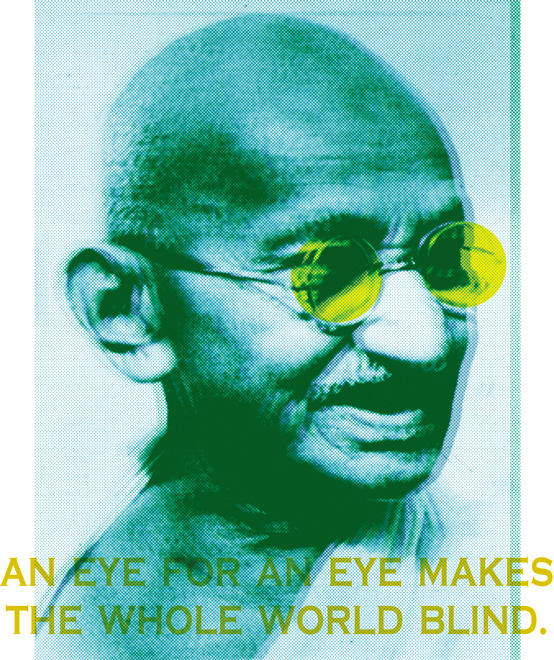 Forgiveness is at the heart of creation, destabilizing the balance of “eye for eye, tooth for tooth” – for, as some other wise man allegedly said: “An eye for an eye leaves the whole world blind”. Coming from outside the cycle of bad deeds or “bad karma“, the grace of forgiveness opens up the possibility of a new kind of imitation or mimesis. Instead of imitating each other in trying to assert ourselves over against one another – as theologian James Alison would say –, “turning the other cheek” is an invitation to begin an imitation of recognizing and accepting each other’s vulnerability. Recognizing that “no one is without sin”, in order to end “casting the first stone”. It’s an invitation to shy away from self-assertion over against one another – which would be called a movement of kenosis (“self-emptying”) in theological terms. The imitatio Christi would thus lead to the recovery of human beings, for “being human” means “being in relationships”, and the act of grace Christ invites us to take part in is precisely aimed at restoring those relationships. Therefore: Whoever loses his life for me will find it… (Matthew 16:25b).





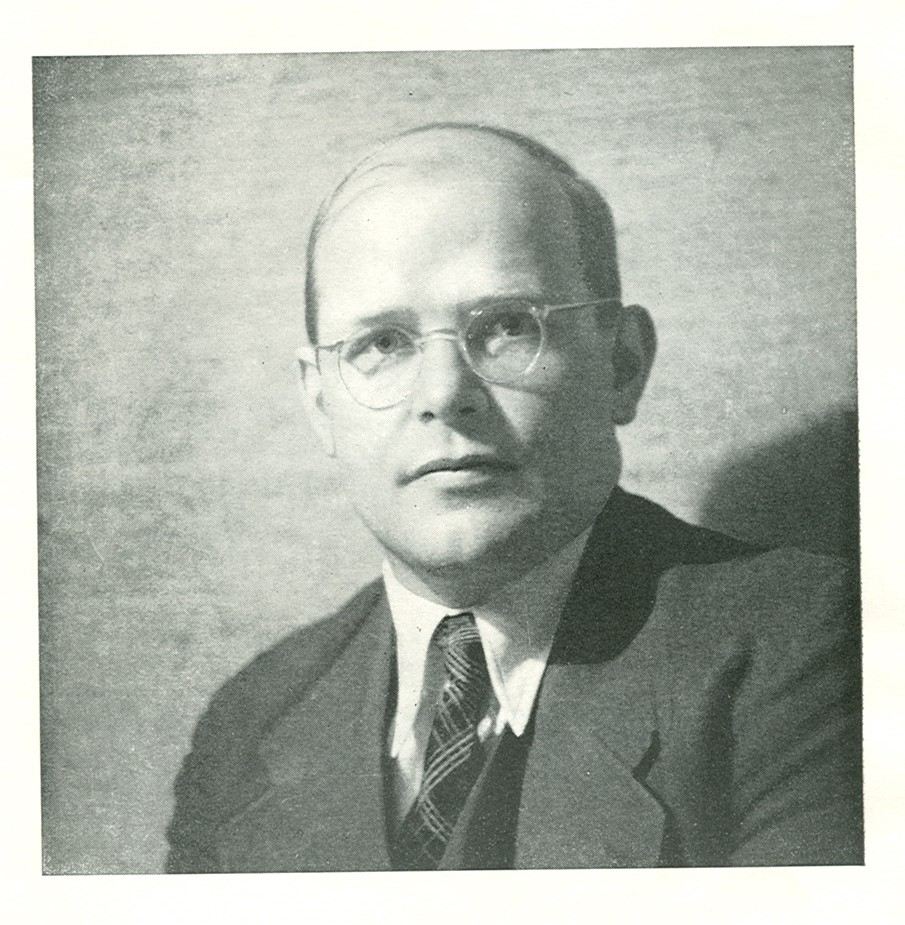



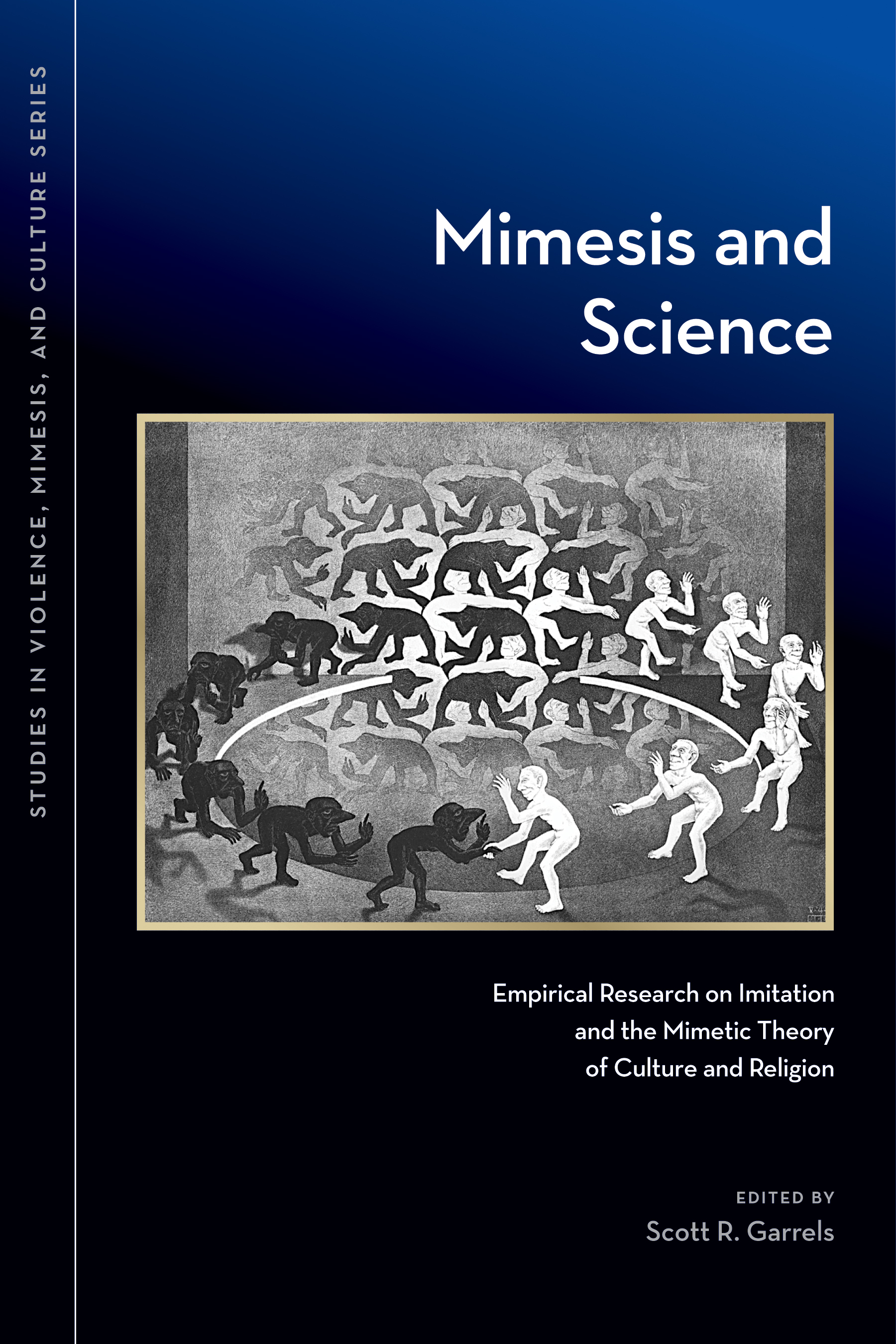
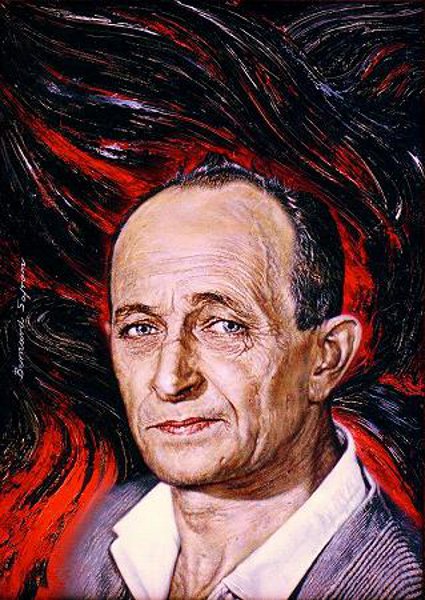





 SCAPEGOAT SHADOWS