De afgelopen dagen ben ik bezig geweest met de herformulering en herordening van een aantal ideeën uit mijn boek Vrouwen, Jezus en rock-‘n-roll – Met René Girard naar een dialoog tussen het christelijk verhaal en de populaire cultuur. Ik wou mij, in de aanloop naar Pasen, opnieuw bezinnen over het zogenaamde ‘verrijzenisgebeuren’. Uiteindelijk heb ik volgend artikel gebrouwen – wie geïnteresseerd is, kan het hier lezen:
Ik heb geen voetnoten toegevoegd, maar geoefende lezers zullen echo’s vinden van filosofen als Friedrich Nietzsche (1844-1900) en Max Scheler (1874-1928) – beiden voor wat betreft hun inzichten over het ‘ressentiment’ –, en van taalfilosofen als Ludwig Wittgenstein (1889-1951) – zijn ‘meaning is use’ – en Ian Ramsey (1915-1972) – meer bepaald zijn bevindingen over wat hij ‘disclosures’ noemt. Daarnaast is natuurlijk het denken van René Girard aanwezig, en vooral ook dat van James Alison – die de mimetische theorie, in navolging van iemand als de Zwitserse Jezuïet Raymund Schwager (1935-2004), in de theologische tradities van het christelijk verhaal heeft geïntegreerd.
Naar aanleiding van de zeer recente gebeurtenissen in verband met seksueel misbruik in de kerk, heb ik op het einde, ook als gelovige, vanuit een confrontatie met het leed van de slachtoffers en omdat ik, zoals velen, verontwaardigd en beschaamd ben door wat hen blijft overkomen, een ‘machteloze oproep’ willen doen naar de daders. Noch onze liefde voor de slachtoffers, noch onze morele verontwaardiging kan, blijkbaar, een dader van seksueel misbruik tot meer medemenselijkheid en liefde ‘dwingen’:
Het leven van Jezus wijst tegelijk op de machteloosheid en de macht van de Barmhartigheid – de Agapè. Deze Liefde is ten eerste machteloos. De mens die er uit probeert te leven heeft geen garanties dat de kwetsbare houding waarmee hij zich opstelt, zal geïmiteerd worden door zijn medemensen. Als je de geldingsdrang van een ander niet beantwoordt met geldingsdrang, als je ‘het geslagen worden op de wang’ niet met ‘slaan’ beantwoordt maar ‘de andere wang aanbiedt’, geef je inderdaad aan je belager de kans om jou niet nog eens te kwetsen, maar tegelijk loop je het risico dat je geen tedere barmhartigheid ondervindt en opnieuw gekwetst of ‘gekruisigd’ wordt – dat je een zoveelste ‘kaakslag’ krijgt te verduren. Ondanks alles blijft de Liefde waarvan Jezus getuigenis aflegt, wachten op de ‘bekering van de zondaar‘(in ieder van ons!). Jezus veroordeelt in zijn optreden radicaal de zonde (‘de daad’), maar geeft tegelijk zijn geloof in (de goedheid van) mensen niet op.
Hieruit blijkt ten tweede, en paradoxaal genoeg misschien, toch ook de macht van de Agapè. De Barmhartigheid is niet afhankelijk van de houding van een ‘misdadiger’ of ‘vervolger’. Zelfs als een dader geen berouw toont voor zijn misdrijven, kan een slachtoffer zijn zelfrespect bewaren. De houding van een dader hoeft niet per se de houding van het slachtoffer te bepalen. Slachtoffers kunnen vrij worden in een hernieuwde Liefde voor het ‘leven’ die voor koppige, hardleerse of zelfs ‘zieke’ en ‘verdorde’ daders verborgen blijft. In ieder geval ontsnapt de steun en de Liefde die de naasten van het slachtoffer aan het slachtoffer willen bieden totaal aan de greep van de dader. Hopelijk laten slachtoffers zich uiteindelijk door deze Liefde dragen, en krijgen zij die ‘slaan’, ‘vervolgen’ en ‘verkrachten’, niet het laatste, heerszuchtige woord over het leven van hun slachtoffers. Dat is de hoopvolle realiteit waarnaar de nieuwtestamentische Paasboodschap, ondanks alles, tracht te verwijzen.
In een wereld waarin daders van seksuele misdrijven in de kerk zich, op een jaloerse wijze, onheus behandeld voelen omdat daders ‘uit andere sectoren’ niet ‘even streng’ zouden worden aangepakt, klinken de woorden die de vaderfiguur uit Jezus’ ‘parabel van de verloren zoon’ spreekt tot zijn verongelijkte oudste zoon op een nieuwe wijze. Ze klinken namelijk als een blijvende oproep naar de daders om oog te hebben voor de genade die ze onverdiend al mochten genieten van de samenleving. En bovenal klinken ze als een oproep om het slachtoffer van hun misdrijven te erkennen. In navolging van het oudtestamentische verhaal waarop Jezus met zijn parabel alludeert – het verhaal over Kaïn die uit begeerte naar een bepaalde vorm van erkenning zijn broer Abel vermoordt –, kunnen we mét de Bijbelse God de ‘Kaïns’ van het seksueel misbruik toeroepen:
“Hoor, het bloed van uw broer roept uit de grond naar Mij!” (Gen.4,10b).
William Blake (1757 – 1827) is one of the most intriguing artists ever to have walked the face of this earth. An English poet and painter, he conceived his own mythology, rich in symbolism and meaning, based on a thorough knowledge of Classical Antiquity and the Biblical traditions.
I first became attracted to his work by reading Gil Bailie’s book Violence Unveiled – Humanity at the Crossroads. The cover showed The Body of Abel Found by Adam and Eve, one of William Blake’s later paintings.
Struck by this powerful image and the equally powerful writings of Bailie, I delved into some of Blake’s poems. I knew he took a critical stance toward organised religion, as well as toward an idealization or ‘idolization’ of Reason.
Reading his poems, I soon discovered a human soul who was concerned with and moved by ‘the core business of Christ’: the refusal of sacrifice in the name of some ‘Higher Entity’ (be it a God, an Institution, a State or an Idea). Of course, this refusal might paradoxically imply that one is sacrificed by those who don’t respond to the call of a Love which desires ‘mercy, not sacrifice’ (Matthew 9:13). The Everlasting Gospel seems especially challenging, with sentences like these: God wants not man to humble himself: That is the trick of the Ancient Elf. This is the race that Jesus ran: Humble to God, haughty to man…
Perhaps most remarkable, William Blake shows a profound understanding with regard to the origin of ‘resentment’ in this poem. We all have the tendency to look out for what is socially acceptable, be it consciously or unconsciously. Depending on the particular group we want to be part of, we imitate certain behaviors and clothing styles. Likewise, we even hang on to certain ideas, rules and norms, defining what is morally ‘good’ or ‘bad’ for our particular group. It’s, in a sense, ironic and even funny that one of the best propagated ideas in our western society today is the idea we should be independent and not easily manipulated individuals. So, it has become the social norm to say of oneself “I’m an autonomous, critical individual, not easily imitating others”. But, by presenting such images of our own ‘independency’, we precisely imitate everyone else desiring a similar autonomy and boasting of themselves in a similar way. René Girard has called the denial of the imitative or ‘mimetic’ nature of a certain, but basic, type of human desire a ‘romantic illusion’ (see Deceit, Desire and the Novel).
Anyway, if we frustrate ourselves by adhering an acceptable ‘image’ (and, for example, refuse to recognize our ‘relational, non-independent nature’ as human beings), we might get frustrated by others who don’t seem to follow that image. For frustrating certain desires in order to satisfy our need to obtain a social status only makes these desires grow stronger. So others, who do follow the desires we suppress for ourselves, become a ‘stumbling block’ we want to get rid of. Very often, we can’t stand the confrontation with the fulfillment of our deepest, frustrated desires by these others. We become jealous of them. We would like to imitate their way of behaving, but precisely because we fear to lose our socially acceptable image, we deny being jealous of them. In the end, we’ll even state we find their behavior morally repulsive. Of course, this is a self-deception to comfort oneself. This process is exactly what Friedrich Nietzsche (1844-1900) called ‘resentment’. In Girard’s terms this resentment is part of the ‘romantic lie’, as this feeling once again denounces the mimetic nature of desire – the resentful individual doesn’t recognize being jealous of the one whose behavior he resents. Unlike Nietzsche, Girard doesn’t consider Judeo-Christian tradition as the source of a morality based on resentment, but, on the contrary, as a tradition which precisely uncovers the mimetic tendencies underlying our hate towards others.
By expulsing or ‘sacrificing’ the others we consider ‘morally wrong’, we actually try to conjure our own, ‘secret’ desire to be ‘morally wrong’. We try to convince ourselves and the ones of our own ‘group’ that we in no way resemble the ‘others’ we’re expulsing. As a tragic consequence of our enslavement to a dishonest self-image, we will not only victimize others, but we will also develop ways to secretly fulfill our frustrated desires – as they do have become ‘unmanageable’ and ‘too big’ to handle. So our desire to be ‘morally just and socially acceptable’ (‘chaste’) ignites a hypocritical lifestyle. This can be prevented if we are honest about ourselves and acknowledge certain desires in healthy, non-destructive ways – in other words if we, like Mary Magdalen or the adulteress from John’s gospel (John 8:1-11), look at ourselves through the eyes of Grace, and no longer through the eyes of those who might ‘press charges’ against us and who want us to ‘humble’ ourselves ‘in dark pretence to chastity’. That Grace, embodied so eminently by Jesus who ‘loved the sinner but condemned the sin’, indeed ‘reshapes’ sinners and empowers them to ‘sin no more’.
Like René Girard, Max Scheler (1874-1928) and other Christian thinkers, William Blake once again points to the origin of ‘bad’ i.e. ‘envious’ desire (covet), resentment and sacrificial impulses – all part of the ‘original sin’ – in his magnificent poem:
Blake, as a Christian visionary, became very sensitive toward processes of victimization, as this is shown by yet another illustration of his to J. G. Stedman’s Narrative of a Five Years’ Expedition against the Revolted Negroes of Surinam (1796).
The Little Black Boy, a poem addressing a similar theme as this shocking, indeed ‘unveiling’ image, can be found by clicking here. In this poem, Blake first and foremost explores the dynamics of Divine Love and Grace, which call for ‘imitation’, once more…
Divine Love is different from Envy which Blake, time and again, considers the source of all evil (the original sin). A fragment from his poem Visions of the Daughters of Albion puts it this way:
Can that be Love, that drinks another as a sponge drinks water, That clouds with jealousy his nights, with weepings all the day, To spin a web of age around him, grey and hoary, dark; Till his eyes sicken at the fruit that hangs before his sight? Such is self-love that envies all, a creeping skeleton, With lamplike eyes watching around the frozen marriage bed!
Bruce Springsteen‘s take on the story of Christ’s Passion certainly reflects a profound spiritual awareness of what this event is actually about. In an episode for VH1 Storytellers, Springsteen meditates on his song Jesus was an only son, and brings out the universal and existential truths the story of the Passion reveals.
CLICK TO WATCH it right here:
Click here to read a full transcription of this video.
Springsteen’s interpretation of the song’s ending is especially moving. A transformation takes place. Whilst in the beginning of the song Jesus is comforted by his mother Mary, at the end it’s the son who comforts his mother. Mary is asked to respect the particular destiny of her child. Jesus chose the path of compassion and love. He was touched, so deeply, by the suffering of the outcasts that he couldn’t do anything else but reach out to them. By associating him with these scapegoats, he eventually became a victim himself. In refusing to take part in a social system that constructs itself by means of sacrifices, Jesus was eventually sacrificed himself.
Following Springsteen’s reasoning, Jesus cannot start some sort of ‘civil war’ to defend himself, because that would make him the imitator of his persecutors – Jesus would thus become a sacrificer himself, a ‘prince of this world’, a ‘Muammar Gaddafi’… Christ’s kingdom, on the other hand, is ‘not of this world’. Jesus follows, in the song’s words, ‘the soul of the universe’ which ‘willed a world and it appeared’. Indeed, by withdrawing from vengeance (i.e. the imitation of the persecutors), Jesus creates the possibility of a new world. Imitating the one who ‘offers the other cheek’, the one who forgives and approaches his persecutors and betrayers with compassion, allows us to accept our own and each other’s weaknesses and iniquities, without us being victimized or ‘crucified’ for doing so…
At the end of Springsteen’s song, Jesus seems confident that his ‘Heavenly Father’ would ultimately refuse the sacrifice of his son – and this confidence is reflected in the stories of Christ’s resurrection. Jesus fully imitates ‘the One who doesn’t want sacrifices or victims’ and therefore he is said to be the ultimate incarnation or ‘materialization’ of Love: “A bruised reed shall he not break, and smoking flax shall he not quench, till he send forth judgment unto victory.” (KJV, Matthew 12:20). Bruce Springsteen speaks of this mystery of the incarnation at the end of his ‘sermon’:
“Whatever divinity we can lay claim to is hidden in the core of our humanity… When we let our compassion go, we let go of what little claim we have to the divine.”
Love seeks to be concrete and ’embodied’. The very nature of Love is to throw off its spiritual garment, to ’empty’ itself from the ‘sacred’ realm in order to become ‘flesh’ – which is called ‘kenosis’. The story of Christ’s Passover can be considered a pinnacle in our clumsy attempts to express this reality. However, if these attempts produce songs like Bruce Springsteen’s Jesus was an only son, we should be grateful, as we are comforted by the fragile light of hope amidst our own ‘darkness on the edge of town’.
Faith, hope and love have always played a part in Bruce Springsteen’s songs, but this has become more explicit in recent years. Springsteen’s willingness to talk about these themes also is relatively new.
“The loss and search for faith and meaning have been at the core of my own work for most of my adult life. I’d like to think that perhaps that is what Dr. Percy heard and was what moved him to write me. Those issues are still what motivate me to sit down, pick up my guitar and write.”
René Girard’s mimetic theory is heir to a long and widespread Christian tradition of meditating on imitation, more specifically on the imitation of Christ. This tradition is such an essential part of the Christian ‘DNA’, that Christians throughout the ages have dwelled upon it. Not surprisingly then, the wisdom of a famous Medieval Catholic monk – Thomas à Kempis – coincides with the insights of a contemporary Christian rock star – Bono. I found it interesting to organize a meeting between the two. So, here you have it: some excerpts from De Imitatione Christi next to a video fragment of an interview with Bono.
Thomas à Kempis(c.1380-1471) is famous for his spiritual guide De Imitatione Christi – ‘(On) The Imitation of Christ’. These are its first words:
Qui sequitur me non ambulat in tenebris dicit Dominus. Hæc sunt verba Christi, quibus admonemur quatenus vitam eius et mores imitemur, si volumus veraciter illuminari, et ab omni cæcitate cordis liberari. Summum igitur studium nostrum, sit in vita Jesu meditari.
(De Imitatione Christi, Liber Primus Caput I, 1).
Translation:
“He who follows Me, walks not in darkness,” says the Lord. By these words of Christ we are advised to imitate His life and habits, if we wish to be truly enlightened and free from all blindness of heart. Let our chief effort, therefore, be to study the life of Jesus Christ.
Christ indeed asks us to imitate him, thereby reorienting our mimetic abilities. Bono, lead singer of rock band U2, tried to follow this call from an early age and always looked for authentic ways to develop his life as a Christian. He tried to follow in the early church’s footsteps:
In school I met some people who knew the Scriptures. It was quite a moment there when people got very interested in the early church and the possibilities of imitating the early church.
Because of certain mimetic tendencies, our ears often remain deaf to these possibilities. All too soon we imitate those who judge us, and we become judgmental ourselves. Answering Christ’s call to ‘follow’ him has to do with finding out the truth about our’selves’ and with the ability to love our neighbour. The evangelical paradox is this: in obeying Christ we don’t lose ourselves but instead we actually find who we are – we become free! Christ represents the realm of grace and forgiveness, where we don’t have to hide our weaknesses and iniquities. This realm is an antidote for the temptation to present ourselves in such a way that we don’t run the risk of being judged. We are often tempted to enslave ourselves to an admirable image (Latin: imago) or to imitate an illusory idol. Bono puts it this way:
The key that great art has in common with Christianity is: “Know the truth and the truth will set you free.” I’ve held on to that very tightly. That’s how I start my day as a writer. I (can) start on a lie… and a lie can be being the person that you’d like to be, rather than the person you are…
If we don’t experience ‘the space of grace’, we will indeed easily lie about our own shortcomings and place the blame on something or someone else – and thus create scapegoats. We are so used to being judged that we judge others in our defense, and so multiply the evil we are trying to avoid. To imitate Christ means to imitate the One who is merciful and by doing so, in turn, free others in becoming and accepting themselves. The dynamic thus created is a dynamic of love which eventually hopes to save the world from the ‘bad’ imitation of ‘an eye for an eye’ violence. Bono also talks about this interruption of ‘the laws of karma’ (i.e. the laws of harmony, balance as well as revenge) by the creative, unexpected and ‘unbalancing’ dynamic of grace and forgiveness:
I’m pretty sure that the Universe operates by the laws of Karma essentially. All physical laws do. What you put out comes back against you. Then enters the story of Grace, which really is the story of Christ, which turned this view of the Universe upside down. And it’s completely counter-intuitive. It’s very, very hard for human beings to grasp Grace. We can actually grasp atonement, revenge, fairness… all of this we can grasp. But we don’t grasp Grace very well. I’m much more interested in Grace because I’m really depending on it.
In order to become loving persons – which is the ultimate goal of the biblical enterprise – we first need to accept ourselves as we are. That’s why Thomas à Kempis advises us to temporarily withdraw from a world where we are tempted to keep up appearances by gossip and rumors. From time to time, we need to retreat from ‘the company of men’ in order to distinguish ‘the call of the One who creates us’
… so we might truly become ‘imitators of Christ’:
Quære aptum tempus vacandi tibi, de beneficiis Dei frequenter cogita. Relinque curiosa, tales potius perlege materias, quæ compunctionem magis præstent quam occupationem. Si te subtraxeris a superfluis locutionibus et curiosis circuitionibus nec non a novitatibus et remoribus audiendis, invenies tempus sufficiens et aptum bonis meditationibus insistendis. Maximi Sanctorum humana consortia ubi poterant vitabant et Deo in secreto vivere eligebant.
Dixit quidam: Quoties inter homines fui, minor homo redii. Hoc sæpius experimur, quando diu confabulamur. Facilius est enim tacere quam in verbo non excedere. Facilius est domi latere quam foris se posse sufficienter custodire. Qui igitur intendit ad interiora et spiritualia pervenire, oportet eum cum Jesu a turba declinare.
(De Imitatione Christi, Liber Primus Caput XX, 1-2a).
Translation:
Seek a suitable time for leisure and meditate often on the favors of God. Leave curiosities alone. Read such matters as bring sorrow to the heart rather than occupation to the mind. If you withdraw yourself from unnecessary talking and idle running about, from listening to gossip and rumors, you will find enough time that is suitable for holy meditation. Very many great saints avoided the company of men wherever possible and chose to serve God in retirement.
“As often as I have been among men,” said one writer, “I have returned less a man.” We often find this to be true when we take part in long conversations. It is easier to be silent altogether than not to speak too much. To stay at home is easier than to be sufficiently on guard while away. Anyone, then, who aims to live the inner and spiritual life must go apart, with Jesus, from the crowd.
The video fragment of an interview with Bono on ‘faith, hope and love’
– CLICK TO WATCH:
For more cross-references between U2 and mimetic theory I highly recommend a book, in German, by Austrian Brigitte Dorner: U2 ist ihre Religion, Bono ihr Gott. Zur theologischen Relevanz der Rock- und Popmusik am Beispiel von U2.For more information, click here.
In 1952, Scottish-born Canadian film director and animator Norman McLaren (1914-1987) released his hugely acclaimed short film Neighbours. It won both a Canadian Film Award and an Academy Award, and has been designated as a ‘masterwork’ by the Audio-Visual Preservation Trust of Canada. Moreover, in 2009, the film was added to UNESCO’s Memory of the World Programme. Neighbours is a revolutionary piece of art, both in content and in style. McLaren is a master in using the so-called pixilation, an animation technique which treats live actors as stop-motion objects. As for the content, Neighbours can be considered an anti-war statement.
Asked about the inspiration for his film, McLaren answered: “I was inspired to make Neighbours by a stay of almost a year in the People’s Republic of China. Although I only saw the beginnings of Mao’s revolution, my faith in human nature was reinvigorated by it. Then I came back to Quebec and the Korean War began. My sympathies were divided at that time. I felt myself to be as close to the Chinese people as I felt proud of my status as a Canadian. I decided to make a really strong film about anti-militarism and against war.”
The film clearly demonstrates the mimetic origin of rivalry and its escalation into violence. Two neighbours, living together peacefully and enjoying shared interests, become each other’s rivals once they both lay claim on a flower. The film plainly depicts they not only pay attention to this object, but also that they increasingly keep an eye on each other until, finally, the attention for the object completely disappears. As they imitate each other’s claims and try to manifest themselves over against one another, the object is even destroyed during the process.
CLICK TO WATCH:
Neighbours not only ironically reveals that one’s desire for prestige, pride and power is actually based on nothing (but an imitation of another’s desire), but it also shows the tragic and horrifying, shocking outcome of escalated mimetic rivalry. The former friends are tricked into becoming each other’s monstrous doubles. The Latin word praestigia means deception or illusion and it indeed points to the misleading nature of mimetic desire.
“PEACE CERTAIN IF NO WAR. WAR CERTAIN IF NO PEACE.” – so the mirror said…
The rock band Extreme made a video for their song Rest in Peace which all too overtly draws on Neighbours. A tribute, nonetheless. Watch it here:
“Art enables us to find ourselves and lose ourselves at the same time.” (Thomas Merton, 1915-1968; from No Man Is an Island).
This quote reminded me of a painting by Peter Howson, who converted to Christianity around the year 2000 after battling his alcohol and drug addictions. Christ in the Desert depicts Jesus as he struggles with anxieties and temptations during his ’40 days in the wilderness’. The painting reflects every man’s ‘darkest hours’, and certainly also some dark moments of the painter himself. Peter Howson talked about his ‘rage’ in an interview with TheSunday Times (July 27, 2008). Here are some excerpts:
“Because of my Asperger syndrome I could have ended up murdering someone. I’m capable of it, I know that. When I was drinking I went into very dark places. If you think life is meaningless you think, well, why not go down with a bang.”
“I used to be very badly bullied at school and when I was a bouncer in a nightclub for quite a few years I changed in a false sense then, and became a bully myself.”
In other words: Howson became the imitator of his persecutors… He followed the mimetic principle of vengeance. He became ‘the old man’, the biblical Cain. Luckily, through painting he gradually managed to move away from his ‘murderous rage’ and to ‘find himself’ in a new way. Yet he will always be watchful of the darkness lurking beneath his newly gained life:
“I can hold myself back now, but the anger will always be there.”
I guess we all have our ‘desert(ed)’ moments…
To watch an interesting interview with Peter Howson, click the following:
MIMETIC THEORY (RENÉ GIRARD) – FIVE-PART VIDEO SERIES (11 VIDEOS)
The following five-part video series provides a preliminary understanding of human culture from the perspective of mimetic theory, which was first developed by René Girard (1923-2015).
I made the first parts to give an overview of some basic cultural facts. The later parts of the video series deal with mimetic theory’s explanation of those facts, ending with the role of the Judeo-Christian heritage in making that type of explanation possible. The last part of the series (PART V) clarifies how the Judeo-Christian traditions result in either a radical atheism or a radically new understanding of God.
POST SCRIPTUM BIJ DE VIDEOSERIE OVER DE MIMETISCHE THEORIE (RENÉ GIRARD)
OVER HET VISIONAIRE KARAKTER EN DE ATHEÏSTISCHE KANT VAN HET WERK VAN GIRARD
Onder andere het werk van David Watts (primatoloog en antropoloog) en dat van professoren Vilayanur Ramachandran en Giacomo Rizzolatti (neurofysiologen) tonen aan hoe visionair de bevindingen zijn van de Frans-Amerikaanse professor en interdisciplinaire denker René Girard… Al die mensen genieten intussen terecht wereldfaam.
Professor David Watts, primatoloog en antropoloog aan Yale University, bestudeert met zijn team sinds 1993 de grootste in het wild levende groep chimpansees. Die bevindt zich in Ngogo, Oeganda. De groep bestaat op een bepaald moment uit meer dan 150 leden. Watts en zijn team wijzen erop dat hun vaststellingen kunnen bijdragen aan een beter inzicht in de evolutie van de mens:
“Chimpansees zijn fascinerende dieren om onszelf mee te vergelijken. Ze zijn meer zoals mensen dan om het even welk levend wezen op aarde. Wat vertelt dit ons over de menselijke evolutie? En wat betekent dit voor mensen?”
In Rise of the Warrior Apes, een documentaire uit 2017 over het onderzoek naar de chimpansees van Ngogo, deelt Watts een aantal observaties die verrassende overeenkomsten vertonen met de veronderstellingen van René Girard over prehistorische menselijke gemeenschappen. Het loont de moeite om ze naast elkaar te plaatsen. Het is een van de zovele aanwijzingen voor het visionaire karakter van het denkwerk van René Girard – die niet toevallig immortel is van de Académie française. De uitspraken van Girard komen uit een interview voor de Nederlandse televisie in 1985, naar aanleiding van zijn eredoctoraat aan de Vrije Universiteit Amsterdam. De uitspraken van Watts en zijn team komen uit de reeds vermelde documentaire.
René Girard: “Als mensen kwaad zijn en opgaan in hun rivaliteit, doden zij elkaar. … De dominantie die onder dieren iedere generatie wordt hernieuwd werkt niet onder mensen, omdat die tot het einde doorvechten en elkaar doden. Een gemeenschap van mensen is dus ondenkbaar als er geen ander mechanisme werkzaam zou zijn…”
David Watts en zijn team: “Mannelijke chimpansees lijken te leven, te ademen en te eten om dominantie te verwerven. Ze streven naar status. Het hoort bij het spel. … Er is nu een situatie waarbij er veel meer mannetjes concurreren om de toppositie. Welke gevolgen heeft dat?… We begonnen ons zorgen te maken: deze gemeenschap is zo groot dat ze niet bij elkaar zal kunnen blijven. Ze zal uiteenvallen nog voor we begrijpen wat er aan de hand is.”
David Watts en zijn team hebben geobserveerd hoe de hoog oplopende interne spanningen (een situatie van ‘allen tegen allen’) verdwijnt als de vijandigheid zich richt naar een tegenstander die geïsoleerd geraakt en die het slachtoffer wordt van een grotere groep (een situatie van ‘allen tegen één’). René Girard veronderstelt terecht dat zulke taferelen zich ook hebben afgespeeld in prehistorische mensengroepen, waarbij mimetische begeerte eerst soms zorgt voor verdeeldheid en geweld; vervolgens zorgt de mimetische vereniging tegen één tegenstander weer voor een tijdelijke eenheid en vrede.
René Girard: “Als er een mimetisch gevecht zonder einde is, dan zal de mimetische kracht zich uiteindelijk op een enkel slachtoffer richten. Anders gezegd: mensen kunnen een object niet delen als zij om dat object gevochten hebben. Om een object vechten verdeelt mensen. Op een gegeven punt zal iedereen met iedereen vechten en verschuift de mimetische kracht van vijand naar vijand. Als twee vijanden dan dezelfde tegenstander kiezen, dan zullen steeds meer mensen dat doen, en uiteindelijk iedereen. De paradox is: vechten om een object verdeelt mensen, maar als iedereen tegen dezelfde vecht, ontstaat er juist eenheid.”
David Watts en zijn team: “We arriveerden op de plaats waar iets gaande was. De chimpansees waren iemand van hun eigen groep aan het aanvallen. Brownface en Pincer…, de meest Ngogo chimpansees waren iemand aan het aanvallen. Al snel realiseerden we ons dat ze Grapelli aan het aanvallen waren. En dat hij in groot gevaar verkeerde. … Ze sloegen hem, schopten hem, beten hem! … Het is onmogelijk dat een dier dit overleeft. … Waarom is het gebeurd, waarom hebben ze hem gedood? Het gaat over een jong mannetje dat sociaal niet zo geïntegreerd is, maar hij lijkt vrij ambitieus. Sommigen zien hem wellicht als een rivaal. Hij is plots in de minderheid, ze kunnen hem echt schaden, en dus doen ze dat…”
David Watts en zijn team observeerden dat chimpansees regelmatig jacht maken op andere apen, of op chimpansees die niet tot de eigen groep behoren. Het is zeer opmerkelijk dat chimpansees blijkbaar niet jagen om voedsel te verkrijgen. Alles wijst erop dat ze jagen om hun sociale banden te versterken. Dat ligt alweer in de lijn met wat René Girard beweert over de oorsprong van jachtrituelen bij onze prehistorische voorouders.
David Watts en zijn team: “Waarom jagen chimpansees? Een oud idee is dat ze jagen wanneer ze honger hebben, als er weinig voedsel is. Maar eigenlijk blijkt het tegenovergestelde. … Vlees lijkt een belangrijke rol te spelen bij het onderhouden en vormen van sociale banden.”
De ‘jacht’ van de chimpansees op Grapelli is uitzonderlijk omdat het een lid van de eigen groep betreft. Tegelijk hoeft het geen verbazing te wekken dat zoiets gebeurt bij een groep van meer dan 150 leden. Onder andere Yuval Noah Harari verwijst in zijn bestseller Sapiens naar het feit dat mensengroepen van die omvang meer met roddelen bezig moeten zijn geweest –The Gossip Theory. Dat is een manier om sociale cohesie te bevorderen ten koste van een gemeenschappelijke tegenstander; zie Sapiens – A Brief History of Humankind (London, Vintage, 2015), p. 28-29:
“Our chimpanzee cousins usually live in small troops of several dozen individuals. They form close friendships, hunt together and fight shoulder to shoulder against baboons, cheetahs and enemy chimpanzees. Their social structure tends to be hierarchical. The dominant member, who is almost always male, is termed ‘alpha male’. Other males and females exhibit their submission to the alpha male by bowing before him while making grunting sounds, not unlike human subjects kowtowing before a king. The alpha male strives to maintain social harmony within his troop. When two individuals fight, he will intervene and stop the violence. Less benevolently, he might monopolise particularly coveted foods and prevent lower-ranking males from mating with the females.
When two males are contesting the alpha position, they usually do so by forming extensive coalitions of supporters, both male and female, from within the group. Ties between coalition members are based on intimate daily contact – hugging, touching, kissing, grooming and mutual favours. … The alpha male usually wins his position not because he is physically stronger, but because he leads a large and stable coalition. These coalitions play a central part not only during overt struggles for the alpha position, but in almost all day-to-day activities. Members of a coalition spend more time together, share food, and help one another in times of trouble.
There are clear limits to the size of groups that can be formed and maintained in such a way. In order to function, all members of a group must know each other intimately. Two chimpanzees who have never met, never fought, and never engaged in mutual grooming will not know whether they can trust one another, whether it would be worthwhile to help one another, and which of them ranks higher. Under natural conditions, a typical chimpanzee troop consists of about twenty to fifty individuals. As the number of chimpanzees in a troop increases, the social order destabilises, eventually leading to a rupture and the formation of a new troop by some of the animals. Only in a handful of cases have zoologists observed groups larger than a hundred. Separate groups seldom cooperate, and tend to compete for territory and food. Researchers have documented prolonged warfare between groups, and even one case of ‘genocidal’ activity in which one troop systematically slaughtered most members of a neighbouring band.
Similar patterns probably dominated the social lives of early humans, including archaic Homosapiens. Humans, like chimps, have social instincts that enabled our ancestors to form friendships and hierarchies, and to hunt or fight together. However, like the social instincts of chimps, those of humans were adapted only for small intimate groups. When the group grew too large, its social order destabilised and the band split. Even if a particularly fertile valley could feed 500 archaic Sapiens, there was no way that so many strangers could live together. How could they agree who should be leader, who should hunt where, or who should mate with whom?
In the wake of the Cognitive Revolution, gossip helped Homo sapiens to form larger and more stable bands. But even gossip has its limits. Sociological research has shown that the maximum ‘natural’ size of a group bonded by gossip is about 150 individuals. Most people can neither intimately know, nor gossip effectively about, more than 150 human beings.
Harari legt uit hoe taal en cognitieve vermogens bij de eerste mensen ontsprongen aan de nood om almaar complexere sociale banden te vormen die de kans op overleving bevorderden (in fysieke en/of ‘culturele’ termen); Sapiens – A Brief History of Humankind (London, Vintage, 2015), p. 25-26:
“Our language evolved as a way of gossiping. According this theory Homo sapiens is primarily a social animal. Social cooperation is our key for survival and reproduction. It is not enough for individual men and women to know the whereabouts of lions and bison. It’s much more important for them to know who in their band hates whom, who is sleeping with whom, who is honest, and who is a cheat.
[…]
The gossip theory might sound like a joke, but numerous studies support it. Even today the vast majority of human communication – whether in the form of emails, phone calls or newspaper columns – is gossip. It comes so naturally to us that it seems as if our language evolved for this very purpose. Do you think that history professors chat about the reasons for the First World War when they meet for lunch, or that nuclear physicists spend their coffee breaks at scientific conferences talking about quarks? Sometimes. But more often, they gossip about the professor who caught her husband cheating, or the quarrel between the head of the department and the dean, or the rumours that a colleague used his research funds to buy a Lexus.”
Kortom, zowel ons overlevingsinstinct als ons verlangen om sociale banden te onderhouden en een sociaal respectabele positie te verwerven (zelfs soms ten koste van ons overlevingsinstinct!) gaan vaak vooraf aan ons verlangen om dingen te verklaren. De vroegste culturele overtuigingen ontstonden niet vanuit een louter ‘contemplatieve’ of ‘intellectuele’ onderneming. Ze dienden fysieke noden en het verlangen om een culturele identiteit te bewaren.
Hoe groter chimpanseegroepen worden, hoe meer rivaliteit en interne spanningen er blijkbaar zijn. Bij prehistorische mensengroepen moet dat nog meer het geval zijn geweest. De mimetische neigingen bij mensen zijn immers sterker, waardoor de neiging om elkaars verlangen te imiteren (= mimetische begeerte) ook sterker zal zijn. Dat laatste kan voor conflicten zorgen als mensen het object van hun verlangen niet kunnen of willen delen.
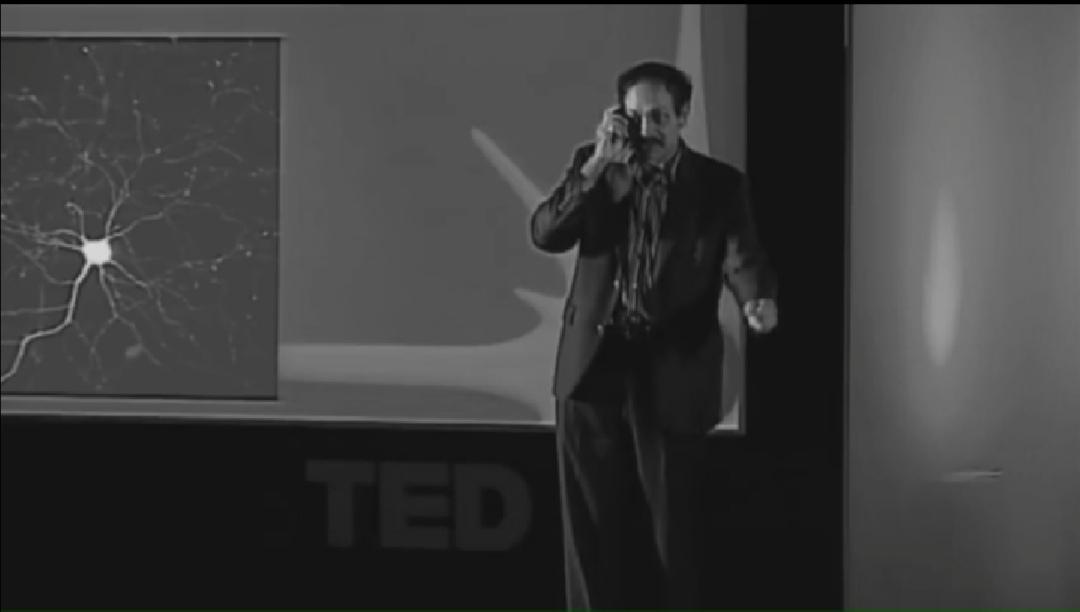
In 2009 geeft neurowetenschapper Vilayanur Ramachandran een TED-talk over spiegelneuronen (in 1996 ontdekt door Giacomo Rizzolatti en zijn team) waarin alweer opvallende overeenkomsten aan het licht komen met wat René Girard beweert over de mimetische begeerte. Als Girard daarover spreekt in het vermelde interview uit 1985 maakt hij zelfs dezelfde gebaren als Ramachandran! Het gaat over volgende uitspraken:
René Girard: “Als ik naar een bepaald voorwerp grijp, zult u geneigd zijn hetzelfde voorwerp te willen grijpen.”
Vilayanur Ramachandran: “Er zijn dus neuronen die actief zijn als ik naar iets grijp, maar die ook actief zijn als ik een ander naar iets zie grijpen.”
Op cellulair niveau is dus een ‘neiging’ meetbaar die we als dusdanig niet altijd ervaren. We leren geleidelijk aan om te gaan met onze ‘directe’ mimetische begeerte. Kleine kinderen kunnen dat vaak veel minder, waardoor ze sneller elkaars verlangen imiteren naar objecten en elkaars ‘obstakel’ worden bij de verwerving ervan. Geef twee kinderen bijvoorbeeld elk een blikje cola, en dan nog kan er een conflict ontstaan als ze die niet willen delen (zie de tweede foto hieronder; de eerste is afkomstig van een experiment in het Max Planck instituut voor Psycholinguïstiek, waarbij onderzoekers vaststelden dat chimpansees de grijpbeweging van hun trainer imiteerden om bij een bekertje uit te komen waaronder een balletje lag):
De keren dat rivaliteit bij prehistorische mensengroepen tijdelijk wordt opgeheven door een collectieve aanval op een lid van de eigen groep (en niet door jacht te maken op dieren of mensen die niet tot de eigen groep behoren), nemen toe. Daardoor zullen primitieve mensen gaandeweg associaties maken bij de slachtoffers van collectief geweld die niet door apen worden gemaakt.
Zoals de hond van Pavlov gaandeweg een geluidssignaal in verband brengt met een bepaald soort voedsel, ook al is dat voedsel niet in de buurt, brengen prehistorische mensen geweld in verband met bepaalde personen (de slachtoffers van collectief geweld!), ook al zijn die personen niet in de buurt. Zoals voor de kwijlende hond gaandeweg ‘onzichtbaar voedsel’ aanwezig lijkt te zijn bij het horen van een geconditioneerde geluidsstimulus, lijken voor de prehistorische gemeenschap gaandeweg ‘onzichtbare personen’ aanwezig te zijn bij het ervaren van geweld.
Geweld escaleert soms zodanig bij apen dat er slachtoffers vallen. Uit concrete observaties blijkt dat een groep apen dan plotseling ongewoon kalm wordt en zich verzamelt rond het slachtoffer. Ook de apen die verantwoordelijk zijn voor de neergang van het slachtoffer doen dat. Als zoiets inderdaad vaak is voorgevallen bij onze prehistorische voorouders, kan dat tot bepaalde associaties hebben geleid: zolang die persoon leeft, ervaart de groep geweld en tumult; als die persoon dood is, ervaart ze vrede en stabiliteit.
Met andere woorden, het slachtoffer krijgt gaandeweg onterecht de schuld voor het tumult waarvoor het niet – of slechts gedeeltelijk – verantwoordelijk is (in werkelijkheid gaat het over een escalatie van mimetisch aangevuurde spanningen). Het slachtoffer is met andere woorden een zondebok. Tegelijk leert de groep dat het tumult te bestrijden valt door iemand te doden. Naarmate de groep dat met opzet begint te doen, ontstaat het offerritueel. Vanuit het zondebokmechanisme ontspringt dus het valse geloof dat er onzichtbare personen bestaan (later ‘geesten’ en ‘goden’ genoemd) die verantwoordelijk zijn voor mogelijk geweld en rampspoed, en die met offers te manipuleren zijn. Zulke ideeën hebben zich als een lopend vuurtje verspreid over verschillende gemeenschappen en generaties, in telkens nieuwe gedaanten van duizenden religies.
De mimetische theorie van René Girard toont alvast aan dat zulke religies gebaseerd zijn op een leugenachtige vergissing in de prehistorie. De geesten en goden van die religies bestaan uiteraard niet.
I compiled the following, older documentary film On the Origin of Cultures, in three parts, introducing some major topics of mimetic theory and René Girard’s thinking. Transcription of the videos (in English & Dutch) is available below, beneath PART III.
PART I of the film explores the fundamental role of mimesis (imitation) in human development on several levels (biological, psychological, sociological, cultural). René Girard’s originality lies in his introduction of a connection between this old philosophical concept and human desire. He speaks of a certain mimetic desire and ascribes to it a vital role in our social interaction. It explains our often competitive and envious tendencies. More specifically, Girard considers mimetic desire as the source for a type of conflict that is foundational to the way human culture originates and develops. In his view the primal cultural institutions are religious. Following a sociologist like Émile Durkheim, Girard first considers religion as a means to organize our social fabric, and to manage violence within communities.
The more specific question the first part of this documentary tries to answer is the following: where do sacrifices, as rituals belonging to the first signs of human culture, originally come from? How can they be explained? Click to watch:
PART II starts off with a summary and then further insists on the fundamental role of the so-called scapegoat mechanism at the origin of religious and cultural phenomena.
PART III explores the world of mythology and human storytelling in the light of Girard’s theory on certain types of culture founding conflicts and scapegoat mechanisms. Girard comes to surprising conclusions regarding storytelling in Judeo-ChristianScripture.
In het boekVrouwen, Jezus en rock-‘n-roll – Met René Girard naar een dialoog tussen het christelijk verhaal en de populaire cultuur(cover – pdf) is de mimetische theorie van René Girard een dankbaar referentiekader om de relevantie van het christelijk verhaal voor de populaire cultuur te schetsen aan de hand van een aantal concrete voorbeelden (gaande van Stan, een wereldhit van rapper Eminem, over andere meer en minder bekende songs – bijvoorbeeld American Life van Madonna, The Unforgiven van Metallica en When you were young van The Killers -, tot films als American Beauty en Pleasantville).







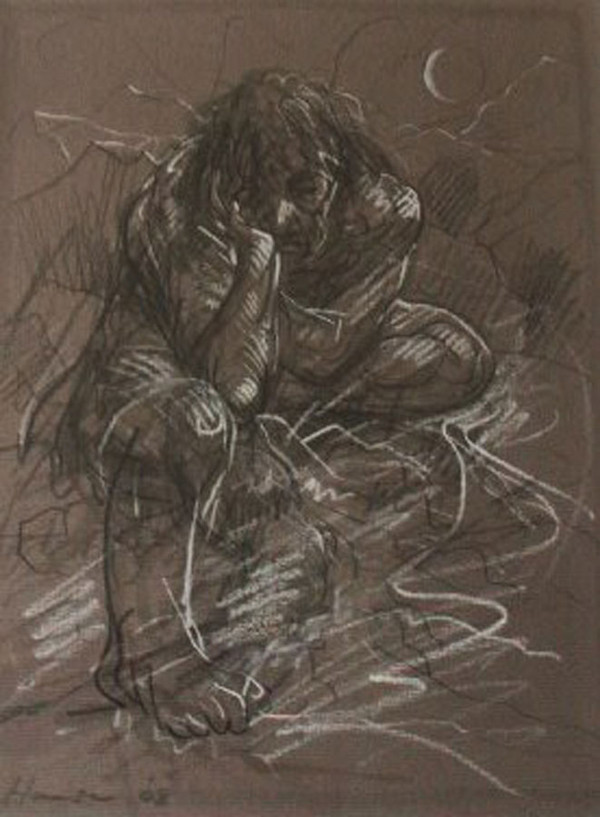








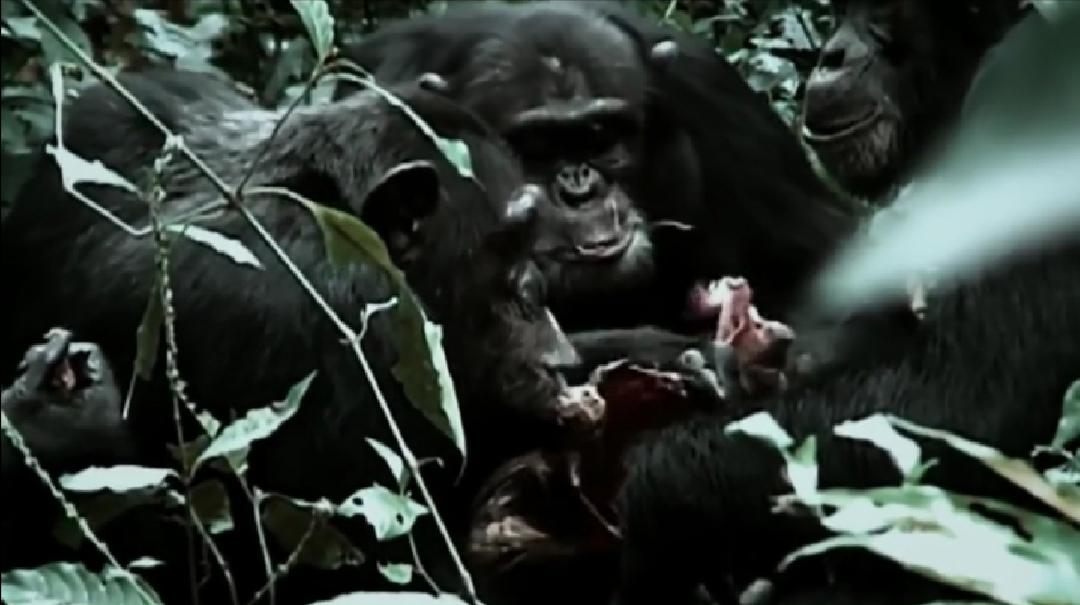
 Similar patterns probably dominated the social lives of early humans, including archaic Homo sapiens. Humans, like chimps, have social instincts that enabled our ancestors to form friendships and hierarchies, and to hunt or fight together. However, like the social instincts of chimps, those of humans were adapted only for small intimate groups. When the group grew too large, its social order destabilised and the band split. Even if a particularly fertile valley could feed 500 archaic Sapiens, there was no way that so many strangers could live together. How could they agree who should be leader, who should hunt where, or who should mate with whom?








 SCAPEGOAT SHADOWS