Well, here’s my attempt at creating a “Girardian” image. René Girard constantly demonstrates how enemies have the tendency to imitate each other, although rather unwittingly. The more they resemble each other, the more they strive to differentiate themselves from each other, which tragically ends up in an even more undifferentiated monstrous cycle of mutual aversion and violence – a cycle of revenge…
CLICK THE IMAGE TO ENLARGE:
Enemies become “mimetic doubles”. Today’s fight over so-called “True Islam” as a religion that supposedly justifies violence is but one example of a mimetic (i.e. imitative) interdependence between “defenders” and “attackers”. I highly recommend René Girard’s Battling to the Endin this regard (find an extensive review by clicking here).
“It’s because of his ADHD. It’s because of her ADD. It’s because of a difficult situation at home. It’s because he is highly intelligent: he is not challenged enough to study more thoroughly. It’s the teachers: they don’t explain things well enough, they’re boring. It’s because of the educators: they take aim at him and don’t give him any chances. It’s because of the break-up with her boyfriend. It’s because she hit puberty and goes through a difficult time. It’s because he is young and wants to experiment: that’s why he is not motivated to do school and that’s why he colors outside the lines sometimes. You have to understand. After all, it’s good that he’s somewhat a ‘rebel’ at school, isn’t it? It shows character and personality…”
We’re all victims, right? If not of our hormones, then of a certain affection, or of ‘circumstances’ and other people. Well, first of all, it’s a good thing that people are acknowledged as victims of whatever it is that makes their life difficult or hurtful. If you’re lucky, then mommy and daddy will find their way to the right institutions to help you. If you’re lucky, your parents can pay for psychologists, psychiatrists, tutors, medicines, and leave you in the hands of professional educators (perhaps at a boarding school) or provide you with a secure and satisfying future at the family firm. In short, if you’re lucky you’ll find your way to people who will help you to overcome an all too comfortable self-definition by what haunts or victimizes you.
If you’re not that lucky, you might fall into the hands of people who confirm and magnify your victimhood, allowing you to accuse whatever ‘scapegoat’ (see René Girard) you can find to deny personal freedom and responsibility. And let’s face it: today’s culture often is a victimhood culture, where everybody plays the ‘blame game’ in order to protect a narcissistic self-image.Indeed, a reasoning like the following is quite common: “If I’d work harder, I’d be able to graduate as a doctor – I do possess the intrinsic qualities -, but my ADD and the fact that teachers don’t pay attention to my particular problem, destroy my motivation and cause me to fail.” This kind of narcissism is supported sometimes by parents as well, for they often do not like to acknowledge that, maybe, their kid has other talents.
Every teacher or educator knows how difficult it can be to motivate certain students to work for school. Even in the best of circumstances, with every help possible, some students simply justify their negative attitude with every possible excuse. Rather than fully admit that their child acts as a ‘loon’ or a ‘brat’ in some cases, some parents even plead for a very soft treatment of their child’s misbehavior by pointing out that he or she is just ‘being young’ and ‘showing personality’. As if their child really is some kind of rebel hero. That’s why, in some classrooms, the brat can become a model that deserves imitation. Indeed, in some classrooms students feel ashamed, even guilty, of being a hardworking student. They would prefer making a laughing stock out of other hardworking students than admit being hardworking themselves. Self-denial and betraying (the relationship and affiliation with) others: the two sides of the coin that is the love for one’s self-image – a man-made, social ‘idol’, becoming the goal of one’s life.
Add to this cocktail of excuses the conviction that ‘society as a whole’ is ‘against you’, and you get the sort of victimhood mentality in places likeMolenbeek, a district of Brussels known as a breeding ground for radical, young Muslims. Would you still study, as an adolescent in today’s distracting society, if you can convince yourself that ‘it doesn’t make any difference’, that you’re discriminated anyway (even if this isn’t true!)?
I often wonder about some of the students I teach: what would happen to those who are allowed to cultivate an attitude of victimhood, or worse, of heroism in not working for school if this was not happening in the best possible circumstances? What if they wouldn’t be ‘corrected’ by psychologists, tutors or educators (paid by the very parents who plead to go easy on their child’s misbehavior)? What if they would end up in unemployment without a graduation certificate, as a young Muslim? I’m sure they would continue the all too human narcissistic inclination to blame ‘others’ for their detrimental situation. And I’m also pretty sure that they could find comfort in the stories and propaganda of ISIS recruiters. After all, this propaganda confirms their idea of being victims, while it also provides them with a counter-culture that makes them heroic martyrs for God. This counter-culture is appealing to non-Muslims as well and attracts converts, as there are many people who no longer feel ‘at ease’ in today’s consumer and performance based society. All in all, considering the circumstances some young people grow up in, it may be a miracle that not more of them become Jihadists. There’s hope.
In any case, there is no real difference between one loon and the next. It just so happens that one is characterized as an ‘adventurous youth’, making ‘youthful mistakes’ that are eventually rectified, while the other is perceived as someone who should blame himself for blowing his chances on a good education and social future. Only narcissist hypocrites will maintain that there is a difference between ‘my kid’ and ‘that kid’. The dress may be different (secular or religious), but we’re all human after all, experiencing similar challenges and temptations.
As hinted at earlier, the victimhood mentality often not only affects those young Muslims or ‘converts’ who are unemployed and indeed find it difficult to assert themselves in society, but it can also poison the minds of young Muslims or ‘converts’ with a rather prosperous life. Like the hardworking student who starts feeling ashamed of being a hardworking student in front of a ‘brat mentality’, the prosperous young Muslim might start feeling guilty or responsible for his supposedly discriminated friends or ‘Muslim brothers and sisters’. Sometimes this discrimination will be real, but in other cases it will be imagined.
ISIS propaganda will try to magnify the story of ‘oppressed Muslims’ and ‘the oppression of Islam’ in order to justify further terrorist acts and atrocities. So the worst we can do, here in the West, is to start discriminating Muslims in general and limit their freedom to practice their religion as fellow citizens (bound by the same laws and rights in a democratic nation, based on the separation between “church/religion/culture” and “state”). Discriminating Muslims would only add to the propaganda of ISIS and confirm its story that ‘Muslims are generally oppressed victims’. ISIS has already poisoned enough vulnerable minds with their propaganda. Why should we too believe that they are the only ‘true representatives of Islam’? Moreover, if we would make it difficult for Muslims to practice their religion publicly, and make it even harder for Muslims to enter into a social and political dialogue where Islam can be a point of debate as well as inspiration, violent versions of it will continue to flourish on the internet. You don’t take porn away nor perverted forms of sexuality on the internet if you make sex taboo. Also, you don’t create a breeding ground for rape and perverted forms of sexuality/(religion) when you enjoy and even “promote” healthy forms of cultivated sexuality/(religion). On the contrary.
Of course Islam lends itself to an interpretation that confirms people in their ideas of victimhood and heroism. Of course Islam lends itself to an interpretation that allows people to ‘heroically purify’ the world through mass killings. But it’s only one of the many possible ideologies to justify a contagious narcissism and self-denial on the one hand, and the sacrifice of others on the other. As history shows, people who feel victimized or threatened, or who long for a ‘heroic’ life, will always find a utopian, romantic story to justify their actions, whether that story be a secular political totalitarianism, a religious totalitarianism, or an individual totalitarianism like “I’m the rebel hero who challenges the educational system that oppresses me and my fellow students.”
Islam can equally be a source of true spirituality, i.e. a spirituality that is not ‘easily comforting’ and confirming a story of narcissistic victimhood and heroism, but a spirituality that allows people to look at themselves more honestly and truthfully. Ideologies, like friends, become dangerous and bad when they only confirm your self-image. Good friends are the ones who confront you with your drug addiction if you have one, with your anorexia if you’re developing this eating disorder, or with the cheap excuses you use to protect untruthful ideas about yourself. This might hurt at first, but eventually the truth can set you free. It might free you from all sorts of addictions, whether it be material goods, habits or illusions. And this is the condition to lovingly – which is not the same as ‘gently’ or ‘comfortingly’ – approach others as well.
Instead of feeling ashamed of not participating in a so-called ‘heroic’ struggle against the so-called external ‘enemies of Islam’, the inner spiritual struggle – ‘the greater Jihad’ – allows Muslims to debunk romantic ideas of victimhood and to destroy the man-made idols of ‘violent, heroic martyrdom’. And when there is no such God, no such man-made idol or ideology, left to blame (as a justification), violent suicides and murders can be seen for what they are: as purely human actions for which humans carry responsibility. Only then can there be truly liberating tears of a different kind of shame and remorse: the regret one experiences for having sinned against the Love that connects people to themselves as well as others, contrary to the love for one’s socially constructed self-image which alienates people from themselves and others.
The transformation of the human heart… That would be the true miracle…
To some who were confident of their own righteousness and looked down on everyone else, Jesus told this parable: “Two men went up to the temple to pray, one a Pharisee and the other a tax collector. The Pharisee stood by himself and prayed: ‘God, I thank you that I am not like other people—robbers, evildoers, adulterers—or even like this tax collector. I fast twice a week and give a tenth of all I get.’
But the tax collector stood at a distance. He would not even look up to heaven, but beat his breast and said, ‘God, have mercy on me, a sinner.’
I tell you that this man, rather than the other, went home justified before God. For all those who exalt themselves will be humbled, and those who humble themselves will be exalted.”
(Luke 18: 9-14).
The Pharisee in this parable of Jesus clearly claims the moral high ground. According to English dictionaries, “to claim the moral high ground” means “to say that you are morally better than someone else.”
There are several possible answers to the question why this Pharisee feels the need to expose his superior morality to a “God” while comparing himself to the morality of other people – of “sinners”, in particular of a tax collector. Maybe he is just an uncertain person who needs the comforting affirmation of an “imaginary friend” to feel good. Maybe he is a supreme narcissist who boosts his Ego (a collection of imaginary ideas of oneself) by convincing himself that he is favored by a “Supreme Being”. Maybe he is both – narcissistic feelings of superiority do tend to be a compensation for feelings of inferiority.
There is yet another, more complex possibility, and it is provided by the German philosopher and atheist Friedrich Nietzsche (1844-1900). Maybe the Pharisee compares himself to the tax collector in order to nurture the good yet imaginary ideas of himself because he is secretly jealous. Nietzsche claimed that the so-called weaker, dominated people in a society – the “slaves” as he calls them – have the tendency to compare themselves to the so-called stronger, dominant people – the “masters”. From this comparison the slaves develop the desire to achieve the same position and status as the masters, yet they fail. In order to cope with this failure, some of the slaves tell themselves that there is a God who is on their side, as opposed to the more common yet also more archaic religious idea that the opposite is true, namely that good health, strength, wealth, prosperity and a high social status are the signs of being favored by a “divine or sacred order of things” (see, for instance, the notion of “karma”). Convinced that an ultimate, “one true God” favors them over the masters and their “false gods”, the slaves start to resent what they initially desired until finally, they even develop a kind of paternalistic pity toward the masters. Hence the slaves praise themselves for not being like the masters who should be ashamed of their life, and they feel sorry for the masters. The victory of the slaves over the masters is complete, according to Nietzsche, when the masters start feeling ashamed and guilty about themselves. Thus the so-called “compassion” the slaves feel for “sinful” others has nothing to do with genuine care for these people, but everything with the love for an untruthful image of themselves. In other words, if achieving some kind of “prestige”, “image” or “status” is your ultimate goal in life, then you are not only unable to accept and love yourself, but you are also not able to truly love others.
Nietzsche was convinced that the resentment of the slaves forms the basis for the Judeo-Christian tradition. He was also convinced that this tradition is absolutely unique among the world-religions in that it provides these slaves with a powerful weapon to comfort and structure themselves and the rest of the world according to false hopes and fears. Therefore he despised the Judeo-Christian religion and he wanted to bring an end to the way it had – in his views – “poisoned” the mentality of the Western world.
Nietzsche especially resented – yes, he was no stranger to resentment himself, ironically – the figure of Jesus Christ. He believed that this so-called “prime representative of the God of the slaves” was the ultimate catalyst of the resentment of the slaves, turning it into perverse forms of pity, loathing, shame and guilt. However, when we read the above fragment of Luke, we get quite the opposite picture. It is clear that the Pharisee believes there is a God who favors him over the tax collector. A tax collector, mind you, usually is rather wealthy. The Pharisee, furthermore, praises himself for not being like the tax collector who should be ashamed of his life. Clearly the love of his self-image leads him to look down on other people. Because he does not really love himself (but an untruthful, narcissistic image of himself) the Pharisee is less capable of loving others. It is precisely the Pharisee’s narcissistic self-concept and his illusory ideas and expectations of a certain “God” that is criticized by Jesus, much in the same vein as Nietzsche criticizes those ideas! Well, who would have thought: Jesus as a kind of Nietzsche avant la lettre, who crushes the idols of narcissistic religious self-concepts.
The reason why Jesus wants people to be more realistic about themselves is because he wants to open the possibilities of love between people. And that’s different from Nietzsche’s ultimate concerns. Jesus wants to prevent people from offending, excluding or even sacrificing each other. Indeed, it is because of all too heroic, romantic or utopian ideas that we tend to create “hell”, not only for others, also for ourselves. In that sense Jesus is right to proclaim that “whoever exalts himself will be humbled” – it is the way of the world. The narcissist eventually destroys himself, utopias become dystopias. For instance, the student who takes pride in not working hard for school because he thinks it is “cool” reduces his chances of a really cool life. Of course this type of student is sometimes able to make hard working students feel ashamed of themselves, but in the long run “those who humble themselves” by not taking part in the competition of being the coolest “will be exalted”. Being honest about yourself, realizing that you are not that unique or special, prevents you from feeling ashamed of yourself, as it also prevents you from “pointing fingers” and loathing others. The hard working student who made himself believe by his surroundings that hard work is not cool, will often hide his real character by mocking, offending and excluding others who did come out of the closet as diligent students. In order to prevent this kind of exclusion, Jesus reminds us of who we really are: not at all that different from the people we look down on. That’s why he says, “let him who is without sin cast the first stone.”
Jesus wants to replace the love for our untruthful self-image and the adherence to our “reputation” with the love for ourselves and others. We can be like the hard working student who feels ashamed of himself, even guilty of studying hard, and indeed develop the tendency to publicly and hypocritically loath or exclude other hard working students. On the other hand, if we no longer feel ashamed of ourselves, we can start feeling ashamed of the hurt we brought to others because we were too preoccupied with our social profile. That is what happens to Peter: after denying Jesus when the latter is imprisoned, feeling ashamed of who he is because he fears being excluded or sacrificed himself, Peter eventually feels ashamed because of the hurt he brought to his friend.
That’s why a true conversion to Christianity is never easily “comforting”. It is, first of all, a conversion to “who we truly are”, and that truth is sometimes hard to swallow. So, no: belief in Christ is not equal to a comforting support of naïve, unrealistic, romantic or even utopian ideas of ourselves and the world. Nevertheless, at the same time, this conversion to ourselves in the realm of Christ’s love is also liberating since we are not destroyed for being “not perfect”. On the contrary, we are forgiven. To be able to acknowledge who we truly are in this realm of grace and mercy, enables us to refrain from “casting stones” to others who are more “like us” than we would previously acknowledge. It prevents us from approaching others for the sake of untruthful ideas of ourselves. For instance, the alcoholic who finds the realm of grace where he can acknowledge that he indeed is an alcoholic among other people with similar problems (be it at an AA-meeting or somewhere else), makes the first but very important step on a journey that might reconnect him with the people he hurt because of his addiction. The experience of this kind of grace, forgiveness and remorse, which enables people to love themselves and others anew, is totally contrary to the perversion of forgiveness: the “cleansing” of one’s sins in order to feel “perfect” again (which is the restoration of a narcissistic, untruthful Ego that eventually leads to hurting others).
Whether we call ourselves Jews, Christians, Muslims, Buddhists, Hindus or atheists, we all suffer from the same temptations. That’s because, believe it or not, we are all humans and we are more alike and less “unique” than we sometimes imagine.
Hence, Christ’s criticism of the pious believer is also applicable to the zealous atheist – contrary to the latter’s illusion that the figure of Christ has nothing to say to him; contrary to the latter’s illusion that he is “totally unlike the theist”. So yes, it comes as no surprise that some atheists claim the moral high ground. The well-known Penn Jillette, for instance:
“It’s about time we grabbed the moral high ground. I can make the argument – and I have – that the only ones with true morality are us, the atheists. We are doing good because it is good and we are doing right because it is right and not for reward or punishment. We have love for each other, we have community, we have charity…”
It is clear that this atheist feels the need to expose his superior morality to an “Audience” while comparing himself to the morality of other people – of “theists”. From this conviction of moral superiority follows an aversion towards religious people, as they are perceived as being corrupted by their faith. This is perhaps best expressed by the late Christopher Hitchens, another well-known atheist:
“We keep on being told that religion, whatever its imperfections, at least instills morality. On every side, there is conclusive evidence that the contrary is the case and that faith causes people to be more mean, more selfish, and perhaps above all, more stupid.”
Paraphrased in terms of the above mentioned parable of Jesus in Luke 18: 9-14, all of this looks like:
The atheist stood by himself and proclaimed on YouTube: ‘Man [since an atheist does not address God], I’m so happy that I am not like those believers, who are more mean, more selfish and more stupid than I am…’
Error
This video doesn’t exist
This type of narcissism might seem rather harmless, but it does contain the seeds of a utopian desire to save us from so-called “corrupted” elements in order to establish a more perfect world. Christopher Hitchens again:
“If religious instruction were not allowed until the child had attained the age of reason, we would be living in a quite different world.”
Sam Harris, yet another leading voice of the so-called “new atheism”, goes one step further in expressing his hope for the future:
“Some beliefs are so dangerous that it may be ethical to kill people for believing them.”
And so, once again, we are in the territory where, with the best of intentions, utopian dreams of “a better world without belief in God” might turn into ugly dystopias. It always starts with an idea… Of course, it is unlikely that it might come to this since there are respectful, non-paternalistic dialogues going on between many atheists and believers.
However, as is the case in some “pious” religious circles, also a kind of narcissism in some atheist quarters creates the impression that one should not feel ashamed or the least embarrassed if other people are offended or hurt by one’s words. Apparently, there is a kind of self-righteousness that seems to give people “the right” and “entitlement” to be indifferent towards the feelings of others. It dates to biblical times and beyond, and we can’t get rid of it, it seems… Stephen Fry, for instance, as yet another atheist:
“It’s now very common to hear people say, ‘I’m rather offended by that’ – as if it gives them certain rights. It’s no more than a whine. ‘I find that offensive.’ It has no meaning, it has no purpose, it has no reason to be respected as a phrase. ‘I’m offended by that.’ Well, so fucking what?”
Well, yeah, of course zealous atheists like Stephen Fry and Christopher Hitchens have the legal right to call believers generally “more mean, more selfish and more stupid” because of their faith than atheists. Well, yeah, of course some of the people who consider themselves to be pious believers have the legal right to call atheists immoral sinners who will burn in hell… I guess this type of “mimetic doubling” (René Girard) is a sign of tolerance, respect and love in a beautiful, unbroken human world?
“In the end, she’s just a mere mortal, just like all the rest of us, just like me…” It’s something we hear quite often, explicitly or implicitly, when people talk about “the rich, the famous and/or the geniuses” of this world. Why is it that we often like to read what tabloid newspapers write about these people? Why is it that we often like to gossip about our local or global heroes or celebrities? What kind of desire is satisfied that we enjoy this kind of thing?
Well, for one thing, we’re living in a world of internal mediation (René Girard). Modern democracy got rid of a social hierarchy – in principle that is – and now everyone can take everyone else as a model or mediator for personal ambitions. Premodern societies would not allow “the lower ranks” to compare themselves to the higher-ups, thus trying to keep an internal order and stability. Today, however, everyone can rival the position of everyone else, based on the premise of equal rights and chances for all. Thomas Hobbes (1588-1679) sharply characterizes this situation and its potential destructive consequences in his work Leviathan, at the dawn of modernity:
“From this equality of ability ariseth equality of hope in the attaining of our ends. And therefore, if any two men desire the same thing which nevertheless they cannot both enjoy, they become enemies; and, in the way to their end, which is principally their own conservation and sometimes their delectation only, endeavour to destroy or subdue one another.” – Thomas Hobbes, Leviathan (XIII).
“Competition of riches, honour, command, or other power, inclineth to contention, enmity, and war; because the way of one competitor, to the attaining of his desire, is to kill, subdue, supplant, or repel the other. Particularly, competition of praise inclineth to a reverence of antiquity. For men contend with the living, not with the dead, to these ascribing more than due, that they may obscure the glory of the other.” – Thomas Hobbes, Leviathan (XI).
We constantly receive the message that “everything is possible with hard work and perseverance”. On the other hand we also experience that some people seem “ahead of others”. These so-called “winners” are often admired, but in other circumstances they’re envied (also by some of their admirers!) as they seem to frustrate the ambitions they awaken in other people. One way to deal with the frustrations arising out of the comparison with “the people ahead of others” is to downplay their status or success by convincing ourselves that “they are just like us” – mere mortals, with flaws, everyday struggles and problems. Or by convincing ourselves that “they are even less like us, we’re superior to them” – in moral terms, for instance, by portraying them as “decadent” or “corrupt”. One could say that the sociological function of the tabloid newspaper or of gossip in general is precisely that. It helps us deal with the fact that we are not part of the world of “the rich, the famous and/or the geniuses” by comforting ourselves with the thought that those people are, at least, “just like us”.
By downplaying the status of “stars” we try to elevate our own position, we try to reach the status we desire. We try to surpass the status we initially (sometimes subconsciously) admired and idolized, then came to envy and eventually resented. In yet other words, the position of others we sometimes initially idolized is replaced by a feeling of superiority of ourselves. Instead of idolizing the image of others, we idolize a certain self-image. That’s why we quite easily distance ourselves from those others who are perceived as “marginal people” – be it criminals, poor people, crazy people, certain sick people, refugees, drug addicts, or “sinners”. Contrary to our often initial reaction to “the stars” in the tabloids, our first response to a confrontation with “the marginal people” is often the feeling that “they are not like us”.
In both instances our sense of identity and self-idolatry arise from our spontaneous tendency to compare ourselves to others (made possible by our mimetic – i.e. imitative – abilities). One of the main reasons why people are scandalized by Jesus of Nazareth is that he constantly challenges these narcissistic self-concepts. See, for instance, Luke 18:9-14:
To some who were confident of their own righteousness and looked down on everyone else, Jesus told this parable:“Two men went up to the temple to pray, one a Pharisee and the other a tax collector.The Pharisee stood by himself and prayed: ‘God, I thank you that I am not like other people—robbers, evildoers, adulterers—or even like this tax collector.I fast twice a week and give a tenth of all I get.’
But the tax collector stood at a distance. He would not even look up to heaven, but beat his breast and said, ‘God, have mercy on me, a sinner.’
I tell you that this man, rather than the other, went home justified before God. For all those who exalt themselves will be humbled, and those who humble themselves will be exalted.”
In short, the narcissist – like the Pharisee in the parable of Jesus – distances himself from “the bad guys” (they’re not like me) while he downplays the geniuses around him (they’re like me), in order to idolize his self-image.Our ideologies and all sorts of so-called “spirituality” or “meditation” are often at the service of the untruthful, non-realistic ideas of ourselves. They make us “feel good” and “happy”, like some antidepressant pills we take, and they alienate us from ourselves and others. The ideology of a terrorist group like ISIS is but one extreme example of a false spirituality. “Snobbery” and the “bourgeois mentality” another.On the other hand, every true spirituality has to do with some kind of permanent crisis of the narcissistic self-concept or “Ego”. It shatters our self-righteousness and complacency, and makes us realize that we are never perfect, never complete, never finished.
While all of this might seem devastating at first, it is also liberating, especially when experienced in the realm of forgiveness. Once you realize that you are not that unique, that you are more like “the sinners” (the majority of mankind) than you would acknowledge previously, and that you are less like “the righteous” than you thought you were, you become less ashamed of yourself. If there is shame in this realization, then it is the shame of the hurt you brought to others while you were practicing the idolatry of a certain (self-)image. “To kill the idol of self-complacent narcissism” thus might be the beginning of a restoration of the love in and between ourselves and others.
René Girard explains how this realization in forgiveness (that people are more like “sinners” than they would acknowledge) is at the core of the conversion experience of Peter, Paul and the other disciples of Jesus. What enables Peter, Paul and others to become “saints” thus precisely and paradoxically is their realization that they are not “saints” (i.e. that they are far from ever being “perfect”). This truly spiritual experience, which enables people to face reality, is also the experience that guided René Girard himself throughout his life. René Girard gets to the essence of what a conversion to Christ should be all about in his explanation of the denial of Peter (click to watch):
An anecdote of C.S. Lewis (who converted from atheism to Christianity, as is well-known) also illustrates quite nicely how the acknowledgement that we are more like the so-called “bad people who bring misery upon themselves” restores neighborly love – thus is the inspiration of Christ:
One day, Lewis and a friend were walking down the road and came upon a street person who reached out to them for help. While his friend kept walking, Lewis stopped and proceeded to empty his wallet. When they resumed their journey, his friend asked, “What are you doing giving him your money like that? Don’t you know he’s just going to squander all that on ale (beer)?” Lewis paused and replied, “That’s all I was going to do with it.”
“To kill the idol of self-complacent narcissism” also opens up the possibility of further personal growth (contrary to the situation of the self-complacent person who thinks he “has arrived”) and a more truthful connection to reality as a whole. Indeed, our mimetic ability might stir some frustrations as we compare ourselves to others and find that we cannot achieve what they achieved, but it also allows us to discover the other as “other” than ourselves. Instead of reducing the other to a mere idol or puppet at the service of non-realistic ideas of ourselves (be it ideas of unworthiness or superiority, or both), we then also might discover the other as a source of inspiration. Once we find ourselves loved for who we are, we can enjoy the talents of others without feeling threatened, or without the tendency to downplay the unique gift they bring to the table. Instead of bowing to the false (because untruthful) transcendence of narcissistic self-concepts, we can then be inspired by the other who is not like us – and in that sense truly transcends us. The paradox is that this kind of relationship allows the other and ourselves to be uniquely “our own”. To put it simply: I don’t have to be the next Lionel Messi in soccer to be inspired by the dedication he brings to his craft. I can imitate his kind of dedication in my own “field” without becoming him, or rivaling him. On the contrary, loyal to my own unique “vocation” I can take his genius as a model, becoming more “who I am” than before. In short, next to all the variants of idolatry and detestation in our relationship to others, there is the attitude of inspiration and being inspired. The first find their source in love for one’s self-image, the second in love for oneself and others.
So yes, Mahatma Gandhi, Martin Luther King, Dietrich Bonhoeffer, Albert Einstein, Charles Darwin, Blaise Pascal, Wolfgang Amadeus Mozart, Johann Sebastian Bach, Francis of Assisi, Jesus of Nazareth and the Buddha are geniuses. They are “not like us”, they are “not like me”. And yes, they are “mortals” one way or the other, but they also gave something to the world from a realm “that lasts”. To be inspired by them is to be inspired to a life of an often demanding and difficult, but also enduring and eventually fulfilling love. A love that allows us “to find our own voice and genius” and enables us “to add something that lasts, even if it’s not directly visible or measurable”.
René Girard (December 25, 1923 – November 4, 2015), his person and his work, testified to Love in unique and humble ways. He will be among the sources of inspiration, together with “all God’s children” – the meek and lowly in heart.
In the Gospel of John, the devil is a personification of the scapegoat mechanism (which means that an innocent individual or group is wrongfully accused). Jesus knows that the leaders of the Jewish people, the Pharisees and the chief priests, want him dead and that they try to justify his death with certain lies. They obey “the devil” – indeed the mechanism that justifies the elimination of people based on lies. [Note that Jesus does not believe that God wants him dead. If Jesus paradoxically sacrifices himself eventually, it is a consequence of his obedience to a Love that “desires mercy, not sacrifice”. He does not want to live at the expense of others, not even his “enemies”…]
John 8: 39-44
“If you, Pharisees, were Abraham’s children,” said Jesus, “then you would do what Abraham did. As it is, you are looking for a way to kill me, a man who has told you the truth that I heard from God. Abraham did not do such things. You are doing the works of your own father.” “We are not illegitimate children,” they protested. “The only Father we have is God himself.” Jesus said to them, “If God were your Father, you would love me, for I have come here from God. I have not come on my own; God sent me. Why is my language not clear to you? Because you are unable to hear what I say. You belong to your father, the devil, and you want to carry out your father’s desires. He was a murderer from the beginning, not holding to the truth, for there is no truth in him. When he lies, he speaks his native language, for he is a liar and the father of lies.“
The Pharisees and chief priests are afraid that the growing popularity of Jesus might become a threat to their power. That’s why they try to present him as a rebel leader who could lead an uprising against the Roman occupier of Judea. A war with the Romans would mean the end of the Jewish nation and culture. Therefore the Jewish leaders see no other solution than to get rid of Jesus. It’s their way of justifying his elimination.
John 11: 45-50
Many of the Jews who had seen what Jesus did, believed in him. But some of them went to the Pharisees and told them what Jesus had done. Then the chief priests and the Pharisees called a meeting of the Sanhedrin. “What are we accomplishing?” they asked. “Here is this man performing many signs. If we let him go on like this, everyone will believe in him, and then the Romans will come and take away both our temple and our nation.” Then one of them, named Caiaphas, who was high priest that year, spoke up, “You know nothing at all! You do not realize that it is better for you that one man die for the people than that the whole nation perish.”
Some voices in Europe and the USA try to present the current Muslim refugees, coming from war zones like Syria and Iraq, as a cover-up, a “Trojan Horse” for Islamist terrorists who aim for world domination. The refugees are seen as a threat to the survival of “western nations” and “western culture”. In other words, they experience similar allegations as Jesus.
In the case of Jesus, the Gospel of John leaves no doubt that these allegations are false. The Evangelist lets Pontius Pilate, the Roman prefect, unwittingly declare “the truth” about the arrested Jesus, namely that Jesus is innocent. Jesus does not wish to establish a “kingdom” or “peace” in competition with “the kings of this world” (whose kingdoms are based on sacrifices and the expulsion of certain people – like the “Pax Romana”). In other words, the Gospel of John reveals the plot against Jesus by the Pharisees and the chief priests as a scapegoat mechanism: Jesus is wrongfully accused. He refuses to start a civil war that would mean the end of the Jewish nation and culture.
John 18: 33-38
Pilate summoned Jesus and asked him, “Are you the king of the Jews?” “Is that your own idea,” Jesus asked, “or did others talk to you about me?” “Am I a Jew?” Pilate replied. “Your own people and chief priests handed you over to me. What is it you have done?” Jesus said, “My kingdom is not of this world. If it were, my servants would fight to prevent my arrest by the Jewish leaders. But now my kingdom is from another place.” “You are a king, then!” said Pilate. Jesus answered, “You say that I am a king. In fact, the reasonI was born and came into the world is to testify to the truth. Everyone on the side of truth listens to me.” “What is truth?” retorted Pilate. With this he went out again to the Jews gathered there and said, “I find no basis for a charge against him.”
The equivalent question, from this perspective, is whether we have “a basis for a charge” against the Muslim refugees coming from war zones. Are they really part of a plot for Muslim world domination? Are they really a threat to the survival of western culture? Well, this is the truth, and this sacrifice (this Sacrifice) is unjustifiable:
Bob doesn’t care about what other people might say or think of him. He knows that he can sing, even when the different juries of The Voice, Idol, X Factor and America’s Got Talent claim that his qualities lie elsewhere. Bob’s stubborn belief in himself would be admirable if it wasn’t so tragicomic. It is clear to the television audience as well that he sings totally out of tune. Apparently, however, he cannot accept this reality because his sense of self-worth fully depends on illusory self-concepts. After yet one more negative judgment by a jury he storms out of the audition room, even more proud than before. It is clear that Bob is a prime example of a narcissist. He is not capable of loving himself and of accepting his limitations. He rather drowns in his megalomania, convinced that the judgment of “the others” and their perception of his “faults” are based on ignorance. Of course, the reason why the narcissist becomes angry precisely is due to the fact that he does indeed desire the approval by others. So, paradoxically, when the narcissist cries “I don’t need your affirmation” he actually no longer fully hides that he secretly and desperately needs the affirmation. In order to be able to deal with his own situation, however, he must convince himself that he doesn’t need the others who don’t affirm his self-image.
Two thousand years ago, there’s a man walking around in Palestine, a certain Jesus of Nazareth, who also doesn’t seem to care too much about the judgment of his fellow men – in his case his co-national Jews, most of the time. A “jury” of Jewish notables (including scribes and chief priests) repudiates him when he shares a meal with “tax collectors and sinners” (see for example Luke 15:1-2). Or whenever he involves himself with the sick or with “the pagans”, those who are said to be cursed by God. Eventually his opponents utter a critique that is echoed centuries later by German philosopher Friedrich Nietzsche (1844-1900): Jesus is the ultimate seducer of people with low self-esteem. It is all too easy to make yourself popular among people who feel humiliated, marginalized or insecure by telling them that they are loved by God.
If Jesus isn’t acknowledged by the rulers of his time, then this is compensated largely by the approval he receives from the common people. It’s something Bob can only dream of. He has to get through with the comforting approval of merely a handful of friends. Maybe there’s even a manipulator among them who makes Bob emotionally dependent on the positive attention he grants Bob. In any case, Jesus seems to be a bigger and much more refined attention whore than Bob will ever be. The social elite even considers Jesus’ growing popularity as a threat to the survival of the Jewish nation. Driven by a mad lust for power, Jesus indeed could launch an already lost revolution against the Roman occupiers. That’s why the Jewish leaders are convinced that Jesus has to disappear.
This reasoning, that tries to justify the execution of Jesus, is not bought by everyone. The Gospels claim that envy is the true motivation of Jesus’ adversaries (Mark 15:10, Matthew 27:18): jealous of the popularity of Jesus, and themselves driven by a vain desire for prestige, they want to get rid of Jesus. Even when the Gospels would be right about this, Jesus perhaps still remains the “Über-narcissist”. Many times worse than poor Bob. Indeed, the moment Jesus is judged and abandoned by nearly everyone, he is yet able to convince himself that he is loved by an imaginary friend – his divine “daddy”, his “Abba”. And what is the love of men compared to the love of a God? It seems Jesus is prepared to endure the worst of sufferings in order to gain a sacred hero position. In short, from this perspective Jesus appears as a totally nuts, narcissistic masochist who would rather die for an imaginary sadist than accept that he is worth nothing. He has no choice but to leave this world as a “disregarded genius” and to choose a so-called “divine dimension” as his true home. Only one time Jesus seems to doubt his megalomaniac construction. Just before his tortured, crucified body gives in, he screams (Matthew 27:46): “Eli, Eli, lema sabachthani?” that is, “My God, my God, why have you forsaken me?” Nevertheless, even then he calls out to a divine daddy who should grant him love and attention.
The thus depicted Jesus – the archetypal narcissist – knows many variants in real individuals throughout history. Besides, Jesus would not be an archetype if not every person suffers from narcissistic tendencies. Of course there are some distinct cases. Bob, for instance. But also the ISIS warrior who turns his back on the world he feels disrespected by and goes to live in a so-called environment “on God’s side”. Or the very insecure girl who locks herself up in the glorification of a shrewd, manipulating guru who satisfies her yearning for acknowledgment. Or someone like Adolf Hitler, who prefers to die instead of facing his defeat.
And yet… When you read the Gospels, you cannot escape the impression that there’s something quite different going on in the case of Jesus of Nazareth compared to the situation of Bob, the ISIS warrior and the insecure girl. Or when you compare Jesus to the shrewd guru and Adolf Hitler. C.S. Lewis (1898-1963) formulates the dilemma quite well in Mere Christianity: “I am trying here to prevent anyone saying the really foolish thing that people often say about Jesus: I’m ready to accept Jesus as a great moral teacher, but I don’t accept his claim to be God. That is the one thing we must not say. A man who was merely a man and said the sort of things Jesus said would not be a great moral teacher. He would either be a lunatic — on the level with the man who says he is a poached egg — or else he would be the Devil of Hell. You must make your choice. Either this man was, and is, the Son of God, or else a madman or something worse. You can shut him up for a fool, you can spit at him and kill him as a demon or you can fall at his feet and call him Lord and God, but let us not come with any patronizing nonsense about his being a great human teacher. He has not left that open to us. He did not intend to.”
In short this dilemma reads as follows (in the light of everything that went before): or Jesus was the ultimate narcissist, or he was the ultimate realist in a human world that time and again threatens to destroy itself because of snobbish vanities, idealistic utopias, sectarian tendencies and “the idolatry of social success”. As the ultimate realist in a human world that is tormented by narcissistic illusions Jesus would indeed be “not of this world”.
2. WHY JESUS OF NAZARETH IS NOT A NARCISSIST
There are reasons to believe that Jesus is not the narcissist he is blamed for.
First of all, Jesus is often precisely the one who confronts people with their own narcissistic tendencies. For instance, when he is surrounded by people who are about to stone a woman caught in the act of adultery (John 8:1-11), Jesus awakens a sense of reality in each individual. He asks people to consider whether they themselves are “without sin”. After which he decides that “whoever is without sin may cast the first stone”. At first sight this is merely a clever trick that allows Jesus to take control of the situation. Indeed, no Jew would claim to be perfect. That would mean that he claims to be like God, and then he would trespass the first of the ten commandments. So no one can cast the first stone, because that would be one of the greatest sins in the light of Jesus’ saying. At a deeper level, it is precisely Jesus’ constant “iconoclasm” of false self-concepts that, apart from the social position Jesus himself receives for doing so, opens up possibilities for new relationships between people.
A second set of arguments against the depiction of Jesus as a narcissist arises. The so-called iconoclasm of Jesus has two aspects, and they immediately clarify how much Jesus differs from gurus who need the manipulated adoration of weak, troubled minds.
On the one hand, concerning the group people are part of and that often manifests itself at the expense of a common enemy (that adulteress, for instance), Jesus sows discord. It is no coincidence that he claims (Matthew 10:34-36): “Do not think that I have come to bring peace to the earth. I have not come to bring peace, but a sword. For I have come to set a man against his father, and a daughter against her mother, and a daughter-in-law against her mother-in-law. And a person’s enemies will be those of his own household.” This intention of Jesus, to create conflict where there is a certain order, is actually and paradoxically a plea against violence. Family members who slavishly obey a pater familias, tribe members who harmoniously feel superior to other groups, criminal gangs who blindly pledge allegiance to the mob boss, cult members and fundamentalist believers who are prepared to fight for their leader till death, anxious employees who sell their soul to keep their job in a sick working environment, (youthful) cliques who strengthen their internal cohesion by bullying someone, whole nations who bow to the demands of a populist dictator and execute so-called “traitors” – Jesus doesn’t like it one bit.
Opposed to the small and big forms of “peace” based on oppression and violence, of which the Pax Romana in the time of Jesus is an obvious case of course, Jesus challenges people to build peace differently. Family members who belong to a “home” where they can have debates with each other, members of enemy tribes who end age old feuds by questioning their own perception of “the other tribe”, former criminals who start to behave like “moles” to clear their violent Mafia gang, fundamentalists who – realizing what they do to those who supposedly don’t belong to “the chosen ones” – liberate themselves from religious indoctrinations, employees who address a reign of terror at their workplace, individuals who criticize the bullying of their own clique, pacifists who dare to dissent with the violent rule of a dictatorship and unveil its enemy images as grotesque caricatures – Jesus likes it. “Love your enemies”, Jesus says (Matthew 5:44). Everyone who no longer condemns the external enemy of his own particular group because of a stirred up feeling of superiority, generates internal discord: “A person’s enemies will be those of his own household.”It’s only logical.
In short, Jesus argues in favor of non-violent conflict in order to end violent peace. That’s why he can say, eventually (John 14:27): “Peace I leave with you; my peace I give to you. Not as the world gives do I give to you.” Thereby he does not hesitate to re-evaluate and transform existing structures, rather than simply destroy them. This is, moreover, as a result of the first aspect of Jesus’ iconoclasm, a second reason why Jesus should not be characterized as a power-crazed, jealous narcissist. Jesus does not replace the existing, worldly order by imposing his own laws in competition with that order. If that were the case, he would be nothing more than yet another evil and paranoid mastermind conjuring up megalomaniac plots for world domination. The mythological story of Jesus’ temptation by the devil in the desert metaphorically clarifies that Jesus was historically experienced as someone who does not imitate the envious lust for power of his social environment (Matthew 4:8-10):
The devil took Jesus to a very high mountain and showed him all the kingdoms of the world and their glory. And he said to him, “All these I will give you, if you will fall down and worship me.” Then Jesus said to him, “Be gone, Satan! For it is written, ‘You shall worship the Lord your God and him only shall you serve.'”
Blake – Kingdoms
Jesus is very clear about what he means by “serving God” in a conversation with a lawyer (Matthew 22:35-40):
A lawyer asked Jesus a question to test him. “Teacher, which is the great commandment in the Law?” And Jesus said to him, “You shall love the Lord your God with all your heart and with all your soul and with all your mind. This is the great and first commandment. And a second is like it: You shall love your neighbor as yourself. On these two commandments depend all the Law and the Prophets.”
In other words, from a Christian perspective God reveals himself – at least at a human level – in the not directly measurable, invisible reality of love of one’s neighbor. Jesus is convinced that the source from which he lives “desires mercy, and not sacrifice” (Matthew 9:13). The consequences of this conviction are paradoxical. It implies, as already mentioned, that Jesus refuses to merely sacrifice the existing worldly structures in order to establish his own rule. Hence he says (Matthew 5:17):
“Do not think that I have come to abolish the Law or the Prophets; I have not come to abolish them but to fulfill them.”
The priority of neighborly love implies that existing laws, structures and rituals should be tested against the extent to which they help to avoid making victims and to which they allow for authentic human lives. Man should not live according to rules, as if preserving a social system and its rules would be an end in itself, but rules should be means at the service of individual human beings and society as a whole. When Jesus and his disciples are criticized for doing things that are, strictly speaking, forbidden on the rest day – the Sabbath – Jesus answers (Mark 2:27):
“The Sabbath was made for man, not man for the Sabbath.”
Actually, throughout the Gospels Jesus constantly asks whether people act because of love of oneself and others (what Christian tradition identifies as “acting according to God”), or because of a certain social status that should bring approval (what Christian tradition identifies as “acting for the sake of an idol”).Jesus criticizes the way people behave when their behavior is caused by a desire for approval (Matthew 6:1-6):
“Beware of practicing your righteousness before other people in order to be seen by them, for then you will have no reward from your Father who is in heaven. Thus, when you give to the needy, sound no trumpet before you, as the hypocrites do in the synagogues and in the streets, that they may be praised by others. Truly, I say to you, they have received their reward. But when you give to the needy, do not let your left hand know what your right hand is doing, so that your giving may be in secret. And your Father who sees in secret will reward you. And when you pray, you must not be like the hypocrites. For they love to stand and pray in the synagogues and at the street corners, that they may be seen by others. Truly, I say to you, they have received their reward. But when you pray, go into your room and shut the door and pray to your Father who is in secret. And your Father who sees in secret will reward you.”
At first sight this text can be interpreted as a validation of Jesus’ mad and desperate narcissism: everyone who runs the risk of not being recognized by other people – including Jesus himself – can always count on the approval from an imaginary divine “Dad”. However, the “Father who ís in secret” is love itself that realizes itself independently from the question whether or not it results in “success”. From a Christian point of view the love that allows people to accept themselves and others – and thus “refuses sacrifice” – is not something that produces the approval from God, but it is itself a manifestation of God “at a human level”. The first letter of John very clearly formulates this conviction (1 John 4:7-8):
Beloved, let us love one another, for love is from God, and whoever loves has been born of God and knows God. Anyone who does not love does not know God, because God is love.
An atheist who still brags about how he “does not need a heavenly reward” in order to “do good” still “sounds the trumpet” about his own “goodness”. The love the Gospels speak of is, by contrast, not always directly visible, and does not depend on visibility. Does a student throw his waste in a dustbin out of respect for his fellow students? Or because he desires the approval of his teachers and, at the same time, because he wants to avoid being punished? Indeed it is not directly visible whether or not a student respects certain rules because of love of one’s neighbor or because of love of one’s image. In the latter case the student will also fear losing his status. In the words of John’s first letter again (1 John 4:18), expressing the difference between the former and latter type of love:
There is no fear in love, but perfect love casts out fear. For fear has to do with punishment, and whoever fears has not been perfected in love.
An anxious person shows the tendency to act according to the supposed expectations of “meaningful” others in order to gain approval from them. This dynamic is tragic, and Jesus formulates this very succinctly in the Gospels (Matthew 16:25a-26a):
“For whoever would save his life will lose it. For what will it profit a man if he gains the whole world and forfeits his soul?”
Jamaican reggae star Bob Marley (1945 – 1981). (Photo by Keystone/Getty Images)
People who, because of anxious insecurity or romantic megalomania, dream of a utopian paradise of happiness (“the perfect partner” or “the perfect job” or even “the perfect society”), very often show masochistic tendencies. People indeed would literally sell their body and soul if you can convince them that they could gain “the whole world” by doing so. If you suffer from low self-esteem or, at the other end of the spectrum, from a superiority complex, then you’re no longer interested in yourself and others. You’re only interested in others to the extent to which they satisfy your craving for approval. Moreover, they no longer maintain a relationship with you, but with the image you present of yourself. In short, a person who models himself after an image that should produce approval is, eventually, not recognized for who he is. Hence: “For whoever would save his life will lose it.”
Moreover, it’s not just that people sacrifice themselves to the concerns of a socially acceptable image. Sooner or later others will also be sacrificed in order to protect reputations and narcissistic self-concepts. That’s precisely why Jesus reacts against the concern for socially acceptable images.
Everyone who acts according to the desire for approval and loses himself is, actually, “dead”. In terms of the New Testament such a person “does not have eternal life abiding in him”. Indeed, he has to constantly adjust his identity to ever changing and thus transient images in order to socially remain at the top of the game. If you want to win the competition for social success, then you will have difficulty accepting that someone else is equally successful and you might become jealous. And when you can only see the other as a rival for your own position, you will want to see him disappear. Sometimes literally. That’s what the famous myth of Cain and Abel, from the book of Genesis, is all about. Both brothers offer a gift. But Cain cannot stand that the gift of his younger brother is more appreciated. This shows that Cain did not offer a gift because of love, to make someone happy – otherwise he would be glad that his brother’s gift results in happiness –, but because of his desire for approval. Biblically speaking, acts because of “love of an image that should produce (social) approval” are sinful, and they get in the way of “good” acts born out of “love of oneself and the other”. This doesn’t mean, however, that gaining approval or recognition is a bad thing as such. When you receive recognition and feel proud as a consequence of your actions, there shouldn’t be any problem. The murderous envy the archetypal Cain is suffering from can only arise because he lives in order to gain approval, because “being proud” is his goal.Because Cain is obsessively preoccupied with the things he misses, he remains blind to the attention he does receive. The New Testament radically resumes these motives, and Johns first letter thus formulates (1 John 3:11-15):
For this is the message that you have heard from the beginning, that we should love one another. We should not be like Cain, who was of the evil one and murdered his brother. And why did he murder him? Because his own deeds were evil and his brother’s righteous. Do not be surprised, brothers, that the world hates you. We know that we have passed out of death into life, because we love the brothers. Whoever does not love abides in death.Everyone who hates his brother is a murderer, and you know that no murderer has eternal life abiding in him.
The New Testament authors are convinced that the possibility to abandon the narcissistic competition for “the highest social status” has to do with a love that is embodied exceptionally in Jesus of Nazareth. They try to clarify that Jesus of Nazareth time and again allows people to “resurrect” – following the just mentioned words from John’s first letter: Jesus allows people “to pass out of death (i.e. a life for the sake of socially acceptable images) into life (an authentic life in love)”. Of course this entails many risks. If you no longer live in accordance with a world dominated by the struggle for prestige, because you want to take sides with the victims of that struggle, then you should “not be surprised that the world hates you”. Nevertheless, instead of asking himself what he should do in order to “fit in”, Jesus asks himself how he can accomplish “that those who do not fit in may fit in again”. A prayer ascribed to Francis of Assisi (1181/1182-1226) is but one example from the Christian tradition that is a testimony to this dynamic: “Grant that I may not so much seek to be loved as to love…” This is the second aspect of Jesus’ aforementioned iconoclasm. It’s also, at the same time, a third argument against his depiction as a narcissist. When Jesus takes sides with the common enemy or easy victim of a united group, he does not have the ambition to alienate that person from his social environment.Gurus who desire recognition from easily manipulated victims do just that. Jesus, on the contrary, time and again challenges communities to truly respect the individuals they marginalized before. For instance, when he cures the Gerasene demoniac (Mark 5:1-20) he forbids this former “village idiot” to follow him. Instead, Jesus sends him back home. It’s but one case that shows how Jesus’ aim is not to make himself popular among a number of followers, although popularity often is an unintentional consequence of his actions. The Gospel stories show how Jesus, apart from himself, wants to create the possibility of loving relationships between people, relationships which are no longer based on sacrifices as a consequence of the love of socially acceptable images. In short, the paradoxical dynamic of love Jesus tries to obey alienates people from their own narcissistic identities (collective or individual), and opens up the road to more authentic relationships which refuse the sacrifice of a former “enemy”.
As mentioned earlier, the behavior of Jesus is not without risks. When you constantly take sides with “the socially crucified” chances are that you will be crucified yourself too. This is exactly what happens. To make things clear, though: Jesus doesn’t secretly hope that he will be crucified to enter into history as a “hero”. When he takes sides with the adulteress he doesn’t want the mob to stone her as well as him. At least that’s what the Gospels strongly suggest. They also show, at different times, that Jesus flees whenever he notices that people want to kill him. Eventually, however, he can no longer escape the murderous web of his adversaries. As is Martin Luther King (1929-1968) in later times, Jesus is well aware of certain death threats, and he warns his apostles that there will be a point of no return. At first Peter doesn’t want to accept this, whereon Jesus reproaches him (Matthew 16:22-26):
Peter took Jesus aside and began to rebuke him. “Never, Lord!” he said. “This shall never happen to you!” Jesus turned and said to Peter, “Get behind me, Satan! You are a stumbling block to me; you do not have in mind the concerns of God, but merely human concerns.” Then Jesus said to his disciples, “Whoever wants to be my disciple must deny themselves and take up their cross and follow me. For whoever wants to save their life will lose it, but whoever loses their life for me will find it. What good will it be for someone to gain the whole world, yet forfeit their soul? Or what can anyone give in exchange for their soul?”
Jesus knows that Peter tries to seduce him to establish himself as a mighty king. Apparently Peter does not see what kind of leadership Jesus actually envisions, although he called Jesus “the Messiah” a little earlier. Once again Jesus rejects the temptation to sell his soul to a competition with “the kings of this world”. Indeed he knows how such a struggle demands sacrifices, that people lose themselves and others in such a struggle. He does not want that. Instead he wants to generate another dynamic. Jesus claims that “whoever loses their life for him will find it”. Again this is only logical. When you take sides with the marginalized fellow man, you no longer lose yourself to the idolatry of socially acceptable images, and thus you “find” yourself. Jesus eventually takes the position of all those who are rejected. When his good friend Peter would take sides with him after Jesus is arrested, Peter indeed would no longer lose himself to a deceiving social profile.
Despite all Peter’s promises – which Jesus once again debunks as narcissistic illusions – Jesus eventually finds himself alone. As announced, Jesus refuses the mimetic rivalry (words of René Girard) with “the rulers of this world” who establish their power on the basis of sacrifices. Paradoxically this means that Jesus, if he continues to take sides with whoever is about to become a victim, might no longer experience mercy at some point, and that he should be prepared to die himself. In other words, this means that Jesus might have to “sacrifice himself against sacrifice”. Again, because Jesus refuses to “sacrifice himself” in favor of an all-controlling position of power, and because he takes sides with “the crucified”, he runs the risk of being crucified himself. When you take sides with the bullied, you run the risk of being bullied yourself. So when Jesus prays to his “Father” to, if possible, take “the cup of suffering and death” from him, and then says that “not his will but the will of his Father be done” (Matthew 26:39), it makes no sense to interpret this sentence as though Jesus all of a sudden believes that God “desires sacrifice”. Throughout the Gospel Jesus indeed is convinced that his Father “desires mercy, not sacrifice” (Matthew 9:13), and he acts accordingly: whenever people are about to be sacrificed, Jesus intervenes. However, if Jesus refuses to enter into a rivalry with those who establish their rule on the basis of sacrifices, there is no other option than to consider the possibility of his own death. Obeying the love that desires mercy, Jesus cannot launch a civil war to the detriment of society. That’s why he says, when questioned by Pilate after being arrested (John 18:36): “My kingdom is not of this world. If it were, my servants would fight to prevent my arrest. But now my kingdom is from another place.”
This quote follows earlier claims by Jesus. For instance when Pharisees try to test him once more. Strangely enough, they start with the observation that Jesus doesn’t care about what other people might think of him, and at the same time they suggest that this “arrogant man of Nazareth” (at least from their perspective) apparently just needs the approval from God. If Jesus would answer (see below) their question by saying that the Jews should pay the imperial tax, he would lose his popularity among the common people – he would indeed be perceived as a “collaborator” of the Roman occupier. If, on the other hand, he would say that Jews should not pay the tax, then the envious Jewish authorities could sell him as a dangerous revolutionary to the Roman government, and they thus could get rid of the man they consider a rival to their own position. However, Jesus is not driven by a desire for this or that approval or power. He does not compete with the kings and rulers of this world to become “the most powerful ruler”. His answer reveals the projected narcissism of the Pharisees in a magnificent way, and it also makes clear that the God of Christ – love – is no surrogate for a possible lack of social approval (Matthew 22:15-21):
The Pharisees went out and laid plans to trap Jesus in his words. They sent their disciples to him along with the Herodians. “Teacher,” they said, “we know that you are a man of integrity and that you teach the way of God in accordance with the truth. You aren’t swayed by others, because you pay no attention to who they are. Tell us then, what is your opinion? Is it right to pay the imperial tax to Caesar or not?” But Jesus, knowing their evil intent, said, “You hypocrites, why are you trying to trap me? Show me the coin used for paying the tax.” They brought him a denarius, and he asked them, “Whose image is this? And whose inscription?” “Caesar’s,” they replied. Then he said to them, “So give back to Caesar what is Caesar’s, and to God what is God’s.”
Jesus also reproaches his disciples when he finds them in an envious quarrel concerning the question who would be “the greatest” among them. The leadership of Jesus is not based on an acquisition of power in the sense of “control”, or on the exclusion of possible rivals. Vulnerable love is creative and grants, from her abundance, others the grace and power “to be” (Luke 22:24-27):
A dispute arose among the disciples of Jesus as to which of them was considered to be greatest. Jesus said to them, “The kings of the Gentiles lord it over them; and those who exercise authority over them call themselves Benefactors. But you are not to be like that. Instead, the greatest among you should be like the youngest, and the one who rules like the one who serves. For who is greater, the one who is at the table or the one who serves? Is it not the one who is at the table? But I am among you as one who serves.
Because of the love he lives by, Jesus indeed is able to – in the mocking words of his adversaries – “save others, but not himself” (Matthew 27:42). When Jesus takes sides with the social outcasts, he becomes dependent on the reactions of others: will they show mercy, or will they demand sacrifices? Believing in “a God almighty” in a Christian sense thus has nothing to do with believing in a God as “the master of puppets” (contrary, for instance, to Etienne Vermeersch’ depiction of the Christian understanding of God). It means believing in a love that, independent of its eventual result and only “almighty” and “creative” in this sense, gives itself time and again (even after being crucified…). See for example the comments the influential Catholic theologian Hans Urs von Balthasar (1905-1988) made about the Nicene Creed (“Credo”), when he explains the sentence “I believe in one God, the Father Almighty, maker of heaven and earth…” (from Credo – Overwegingen bij de Apostolische Geloofsbelijdenis, Schrift en Liturgie 17, Abdij Bethlehem Bonheiden, 1991, p.34-35; vertaling: Benedictinessen van Bonheiden; English translation: E. Buys): “It is… essential, first of all, to see the immeasurable power of the Father as the power to give oneself, this means as the power of his love, and not as an arbitrary power of being able to do this or that. And it is equally essential to understand the almighty power of the love of the Father not as something fierce that is rather suspicious, not as something that goes against logic, because the “giving of himself” is at the same time a reflection of himself, an expression of himself (Hebrews 1:3). […] The power by which the Father expresses himself is not forced, but is also source of all freedom, once again not in the sense of arbitrary power, but in the sense of the love that abandons itself in a state of majestic self-determination.”
In the light of a human world that is obsessed by a desire for power in the sense of control this vulnerable, yet nevertheless independent love, is foolish. Hence the apostle Paul writes (1 Corinthians 1:23): “We preach Christ crucified: a stumbling block to Jews and foolishness to Gentiles.” Christians believe that the love of Christ has the power not to imitate the one who “strikes” but, on the contrary, “offers the other cheek” (Luke 6:29 – thus this love does not depend on what has been done and creates new possibilities for relationships “ex nihilo”). And this infinitely, “seventy times seven” (Matthew 18:27). Indeed, if you are a realist, then relationships between people in our never perfect human world are only possible when people realize that “nobody is perfect”. So mutual forgiveness is a must… The dimension of forgiveness creates the free space wherein people may come to accept themselves and bear responsibility for their mistakes without being “crushed” under guilt (of course, again, this cannot be guaranteed). People who learn to love themselves no longer have to hide behind narcissistic types of self-righteousness (on the other hand, the perversion of forgiveness does maintain narcissistic self-concepts). They no longer have the need to “scapegoat” others, to pass their guilt or shame on to others… Instead they are able to take responsibility for their own actions.A man who loves himself no longer approaches others according to his need for approval, but from his abundance – from what he has to offer –, and is thus able to truly love others (others he no longer needs to fill his own “voids”).Christians believe that the salvation of the world lies in the imitation of the dynamic of the love that is revealed in an exceptional (though not exclusive) way in the life of Jesus of Nazareth – who is therefore called “the Christ”.
A final argument, at least for now, against the depiction of Jesus as the ultimate narcissist is the observation that Jesus hasn’t written anything himself. Everything that he says, apart from the debatable ipsissima verba, is put into his mouth by others who want to clarify how Jesus was experienced. In this sense he does not “brag” about himself.
3. NARCISSISTIC ATHEISM
The sustained logic in the Gospels and the further developed Christian tradition points in the direction of “Jesus as ultimate, sometimes painfully consistent realist in a world of narcissists”.Certain people, despite all rational arguments, remain blind to this logic. However, this has nothing to do with a supposed “vagueness” of the Christian resources, but once again with a stubborn narcissism.
Fundamentalist Christians, for instance, quite often believe in a God almighty in an actually non-Christian sense (see higher). They have difficulty abandoning a view of God that is not compatible with the understanding of God that can be derived from the Christ figure in the Gospels. Their ultimate defense of unsustainable reasoning often sounds like, “God works in mysterious ways”. That’s their way of ending any type of dialogue, discussion or self-criticism. But some atheists as well rather stick to their ideas of the Christian story (and theology or even religion in general) than question them. Narcissistic, intellectual complacency can be found in every corner. Especially when a rather hostile opinion about the Christian story is identity enhancing. Comments by some atheists, whose perception is often guided by negative emotions, on this post are thus predictable: “This is a particular type of interpretation, and it is all relative eventually. What is there to know? Theology allows everything!” Once again the lazy and cowardly “argument” of “mysterious ways” comes to the fore. Well, if you believe in rational arguments, sustained by scientific research (from literary criticism to history and anthropology), you will find that one interpretation is better and more plausible than the other. Everything is not that “mysterious” or “vague” or “incoherent” as it seems.
The questions “What claims does the Christian story make and what is the essence of the Christian faith?” do have answers which are, from a rational and scientific point of view, more plausible than others. Whatever narcissists may claim. Theists as well as atheists may set up an inquiry to settle those matters.
A debate (on October 17, 2013), organized by Het Denkgelag about “The Limits of Science” – a conversation between Daniel Dennett, Lawrence Krauss, Massimo Pigliucci, and Maarten Boudry (moderator) – illustrated quite comically some of the unquestioned narcissistic prejudices guiding the discussion on religion in so-called “new atheist” quarters.
This tea party of atheists only sporadically rose above the level of musings from a bar, but maybe this was done deliberately to reach a big audience. Anyway, you would think this conversation was “for laughs” if they wouldn’t take themselves so seriously. For instance, it was quite embarrassing how biologist and philosopher Massimo Pigliucci and philosopher Daniel Dennett had to explain to physicist Lawrence Krauss that the criteria to judge whether or not a human action is moral cannot be defined by science. Once the criteria are established – perhaps after long rational considerations – science might help, of course, to produce information concerning the question how to realize a certain type of morality. If you believe, for instance, that the moral character of a deed is determined by the level of happiness it produces, you may scientifically gather knowledge concerning the degree to which a certain deed results in happiness. After you’ve defined what “happiness” actually entails, that is. Which once again implies that a philosophical, rational discussion on the nature of happiness precedes every possible scientific research. It is very unusual that these basic insights have to be dealt with in such a lengthy fashion (almost twenty minutes explicitly) on an evening that pretends to be a high mass of rationality. The initial “discord” between Pigliucci and Krauss thus had no intellectual power whatsoever. It was due to ignorance from the part of Krauss. Pigliucci eventually summarizes the course of philosophy for freshmen (between minutes 42:40 and 44:00 of the conversation):
“Nobody in his right mind, no philosopher in his right mind, I think, is saying that empirical facts, or even some scientific facts – as should be clear by now, I take a more restrictive definition of science or concept of science than Lawrence does – but even if we want to talk about empirical facts, broadly speaking, nobody is denying […] that empirical facts are relevant to ethical decisions. That’s not the question. The question is […] that the empirical facts, most of the times, if not all the times, in ethical decision making, are going to underdetermine those decisions, those value judgements that we make. So the way I think of ethics is of essentially ‘applied rationality’. You start with certain general ideas. Are you adopting a utilitarian framework? Are you adopting a deontological framework, a virtue ethics framework or whatever it is? And then that essentially plays the equivalent role of, sort of, general axioms, if you will, in mathematics or general assumptions in logic. And from there you incorporate knowledge, empirical knowledge, about, among other things, what kind of beings humans are. Ethics, let’s not forget, is about human beings.”
Moreover, Pigliucci was right to point out that Sam Harris makes a similar mistake as Krauss in his book The Moral Landscape. Of course Harris made a lot of money from the sales of his book, but looked at more closely it is an intellectual misleading of the people that is low on substance. No wonder Pigliucci has to say the following on Harris’ book (48:22-48:44):
“Sam Harris, who you [Maarten Boudry] introduced as a philosopher, I would characterize mostly as a neuroscience based person. I think he would do it that way. When I read his book, ‘The Moral Landscape’ which promised a scientific way of handling ethical questions. I got through the entire book and I didn’t learn anything at all, zero, new about ethics, right?”
Apart from that, Pigliucci is irritated by a number of claims done by some scientists, who speak of philosophy (of science) without having a clue what they are talking about. He once again reacts against certain statements by Krauss (1:12:57-1:13:28):
“First of all, most philosophy of science is not at all about helping scientists answer questions. So it is no surprise that it doesn’t. So when people like your colleague Stephen Hawking – to name names – starts out a book and says that philosophy is dead because it hasn’t contributed anything to science, he literally does not know what he is talking about. That is not the point of philosophy of science, most of the time.”
In short, the discord that threatened to arise between Pigliucci and Dennett on the one hand, and Krauss on the other, was resolved time and again by giving Krauss some “extra classes”. Pigliucci had the courtesy to do this somewhat indirectly, but it is clear that his comments on Stephen Hawking were a way of reproaching Krauss for his “red herring” (the repeated remark of Krauss that philosophy (of science) does not contribute anything directly to science is irrelevant because it is not the aim of philosophy). Pigliucci ended this discussion with an analogy (1:13:59 – 1:14:12):
“So, yes, philosophy of science doesn’t contribute to science, just like science does not contribute to, you know, English literature. Or literary criticism, whatever you want to put it. But so what, no one is blaming the physicists for not coming up with something new about Jane Austen.”
You would expect that Pigliucci is consistent about this analogy when he tries to define different areas of research, but when it came down to theology he too took on the unreflective attitude of Krauss. Boudry and Dennett harmoniously joined their two friends. Apparently the atheists had found a “dead” common enemy, theology, that united them (1:13:46 – 1:13:48):
Lawrence Krauss: “Well, theology, you could say is a dead field…”
Massimo Pigliucci: “Yes, you can say that. Right!”
Already at the beginning of the evening the gentlemen were sure about this issue:
20:11 – 20:21 Maarten Boudry: “Do you think that science, no matter how you define it, or maybe it depends, has disproven or refuted god’s existence?”
21:10 – 21:30
Lawrence Krauss: “What we can say, and what I think is really important, is that science is inconsistent with every religion in the world. That every organized religion based on scripture and doctrine is inconsistent with science. So they’re all garbage and nonsense. That you can say with definitive authority.”
21:50 – 22:42
Massimo Pigliucci: “I get nervous whenever I hear people talking about ‘the god hypothesis’. Because I think that’s conceding too much. Well, it seems to me, in order to talk about a hypothesis, you really have to have something fairly well articulated, coherent, that makes predictions that are actually falsifiable. All that sort of stuff. […] All these [god-] concepts are incoherent, badly put together, if put together at all. […] There is nothing to defeat there. It’s an incoherent, badly articulated concept.”
The previous chapter, about the question whether or not the Jesus character of the New Testament is a narcissist, is a first falsification of the claims made by Krauss and Pigliucci. Organized religion, based on so-called revelation, scripture and dogma, is not by definition inconsistent with science. Moreover, the New Testament view of God is not at all incoherent. A short summary of the previous chapter may clarify this.
The people who are behind the traditions which eventually produce the New Testament writings believe that God is revealed – at least at a human level – in a love that enables human beings to accept themselves and others in an authentic way. This not directly visible love has the potential to emancipate people from a life lived for the sake of (social) approval or, in other words, from a life lived for the sake of an untruthful image that should produce some sort of appreciation by others. The New Testament authors thus define “salvation” as follows: people who realize that they are loved for who they are (with their flaws and limitations) are saved, more and more, from the tendency to sacrifice themselves and others to “the idolatry of social prestige”. At the same time the New Testament authors are convinced that this love, that refuses those sacrifices, is exceptionally (though not exclusively) embodied in Jesus of Nazareth, who is therefore called “the Christ” and is depicted as the example par excellence that demands imitation.
By applying literary criticism, among other things, the atheist gentlemen may discover whether or not this characterization of the New Testament claims contains the essence of the Christian faith. Maybe they should do that before they surrender themselves to the narcissistic arrogance of being able to judge “all theology”.It is strange that Pigliucci is irritated by the mistakes some scientists make concerning “philosophy” while he makes a similar mistake concerning “theology”. Theology today has to do with interdisciplinary scientific research into the concept of God held by certain religious traditions, and its possible implications. This has nothing to do with the question whether or not someone believes in God. To use an analogy: eventually you don’t have to agree with Shakespeare’s view of human nature in order to pursue an investigation into the anthropology that can be derived from his plays. In short, the questions theologians concern themselves with are from a fundamentally different nature than the questions scientists concern themselves with, so there shouldn’t be any fundamental conflicts between these two areas of research. In the aforementioned analogy of Pigliucci: “No one is blaming the physicists for not coming up with something new about Jane Austen.”
“Should a priest reject relativity because it contains no authoritative exposition on the doctrine of the Trinity? Once you realize that the Bible does not purport to be a textbook of science, the old controversy between religion and science vanishes . . . The doctrine of the Trinity is much more abstruse than anything in relativity or quantum mechanics; but, being necessary for salvation, the doctrine is stated in the Bible. If the theory of relativity had also been necessary for salvation, it would have been revealed to Saint Paul or to Moses . . . As a matter of fact neither Saint Paul nor Moses had the slightest idea of relativity.”
“The Christian researcher has to master and apply with sagacity the technique appropriate to his problem. His investigative means are the same as those of his non-believer colleague . . . In a sense, the researcher makes an abstraction of his faith in his researches. He does this not because his faith could involve him in difficulties, but because it has directly nothing in common with his scientific activity.After all, a Christian does not act differently from any non-believer as far as walking, or running, or swimming is concerned.”
“The writers of the Bible were illuminated more or less — some more than others — on the question of salvation. On other questions they were as wise or ignorant as their generation.Hence it is utterly unimportant that errors in historic and scientific fact should be found in the Bible, especially if the errors related to events that were not directly observed by those who wrote about them . . . The idea that because they were right in their doctrine of immortality and salvation they must also be right on all other subjects, is simply the fallacy of people who have an incomplete understanding of why the Bible was given to us at all.”
The question about the meaning of “salvation” in the light of the New Testament indeed is different from, for instance, the question how and why objects fall down. That’s how plain and simple an insight can be in order to stop battling windmills like some heroic but mad and narcissistic Don Quixote. But anyway, a man shouldn’t foster any illusions: Maarten Boudry, Lawrence Krauss and other similar atheists rarely, if ever, rise to the challenge to question their belief regarding the nature of theology in a scientific way. But maybe this is just the narcissism of a theologian speaking now 🙂 ?
Nonetheless, Boudry claims that he holds science in high regard. His question for the audience at the beginning of the evening already suggests this (16:58-17:30): “Do you think that science is the sole source of knowing?” A lot of people answered affirmatively. But what does that mean when you meet another person? Does that mean that you don’t ever know that person when you have not analyzed and described him or her scientifically? And, on the other hand: does that mean that you can know a person merely by detailed scientific descriptions, without ever meeting him or her? A bit odd, to say the least. Somehow you would expect that you know the person who reveals himself to you, every day, honestly and faithfully, better than the person you know from scientific descriptions but have never met.Or would it be true that the “real” and “complete” identity of a person (his “soul”, to use an age old word) can be reduced to what science may say about him? Again, a bit odd to “lock up” someone’s personality in scientific descriptions…
Anyway, of course Maarten Boudry, Massimo Pigliucci, Lawrence Krauss and Daniel Dennett are more than just intellectual narcissists. It just so happens that they don’t really show any sign of self-criticism regarding theology. And that’s a pity, really, because scientifically enhanced theological research (based on the historical-critical method) could prevent some of the excesses of fundamentalism. Sure, Boudry et al. are delivering the goods in their own fields of research. However, nothing human is alien to humans… Every once in a while, everyone is a narcissist, no? There might be one exception, though…
Bob ligt niet wakker van wat andere mensen over hem zeggen of denken. Hij weet dat hij kan zingen, ook al beweren de jury’s van The Voice, Idool, X Factor en Belgium’s Got Talent dat zijn kwaliteiten elders liggen. Het hardnekkige geloof van Bob in zichzelf zou bewonderenswaardig zijn als het niet zo tragikomisch was, want ook voor de televisiekijkers is het duidelijk: Bob zingt kattenvals. Blijkbaar kan hij deze werkelijkheid evenwel niet aanvaarden omdat zijn gevoel van eigenwaarde volledig afhankelijk is van een illusoir zelfbeeld. Na het zoveelste negatieve oordeel van een jury stormt hij dan ook met veel misbaar de auditieruimte uit, in zijn verontwaardiging nog trotser dan voorheen. Het is duidelijk dat Bob een narcist is van de eerste orde. Hij is niet in staat om van zichzelf te houden en zijn beperkingen te aanvaarden. Liever leeft hij in de (grootheids)waan dat het oordeel van “de anderen” en hun perceptie van zijn eventuele “fouten” op onkunde is gebaseerd. Uit Bobs woede blijkt natuurlijk wel dat hij eigenlijk de bevestiging van de jury verlangt. Hoe harder hij schreeuwt dat hij hun “bevestiging niet nodig” heeft, hoe meer hij eigenlijk toegeeft dat hij die bevestiging heimelijk en wanhopig verlangt. Maar om zich te verzoenen met zijn eigen situatie moet hij zichzelf wijsmaken dat hij zich wel degelijk niets aantrekt van wat anderen over hem zeggen of denken…
Tweeduizend jaar geleden loopt er in Palestina ook een man rond, een zekere Jezus uit Nazaret, die zich schijnbaar weinig gelegen laat aan het oordeel van zijn medemensen – in zijn geval meestal zijn joodse volksgenoten. De hem omringende “jury” van joodse notabelen (onder wie hogepriesters en schriftgeleerden) laakt hem als hij de maaltijd deelt met “tollenaars en zondaars” (zie bijvoorbeeld Lucas 15, 1-2). Of als hij zich inlaat met zieken en “heidenen”, de zogezegd door God vervloekten. Uiteindelijk gewagen zijn tegenstanders zelfs van een kritiek die eeuwen later een echo vindt in het werk van de Duitse filosoof Friedrich Nietzsche (1844-1900): Jezus is de ultieme verleider van door minderwaardigheidscomplexen geteisterde zielen. Het is gemakkelijk om je geliefd te maken bij de mensen die zich vernederd, uitgerangeerd of onzeker voelen door te vertellen dat ze bemind worden door God.
Als Jezus geen erkenning vindt bij de heersers van zijn tijd wordt dat ruimschoots gecompenseerd door de erkenning die hij geniet van het gewone volk. Bob kan hier alleen maar van dromen. Hij moet het doen met de troostende bevestiging van een handvol “vrienden”. Misschien zit daar ook wel een manipulator bij die Bob emotioneel afhankelijk maakt van de positieve aandacht die hij Bob schenkt. Hoe het ook zij, Jezus schijnt een veel grotere en geraffineerdere aandachtshoer dan Bob. De maatschappelijke elite beschouwt Jezus’ groeiende populariteit zelfs als een bedreiging voor het voortbestaan van de joodse natie. Gedreven door een waanzinnige machtswellust zou Jezus immers een bij voorbaat verloren opstand kunnen ontketenen tegen de Romeinse bezetters. Vandaar de mening van de joodse leiders dat Jezus moet verdwijnen.
Deze redenering, die de terechtstelling van Jezus tracht te rechtvaardigen, krijgt de maatschappelijke elite echter niet aan iedereen verkocht. De evangeliën beweren dat afgunst de werkelijke motivatie vormt van Jezus’ tegenstanders (zie bijvoorbeeld Marcus 15, 10 & Matteüs 27, 18): jaloers op diens populariteit, en zelf bewogen door een ijdel verlangen naar prestige, willen ze Jezus uit de weg ruimen. Zelfs als de evangeliën hieromtrent gelijk zouden hebben, blijft Jezus misschien toch de Übernarcist. Vele malen erger dan de arme Bob. Immers, op het moment dat hij quasi door alles en iedereen veroordeeld of in de steek gelaten wordt, kan Jezus er zichzelf nog van overtuigen dat hij bemind wordt door een imaginair vriendje – zijn goddelijke “papa”, zijn “Abba”. En wat is de liefde van mensen in vergelijking met de liefde van een God? Het lijkt wel alsof Jezus bereid is om het ergste lijden te doorstaan in ruil voor de goddelijke heldenstatus die hem zal toebedeeld worden. Kortom, Jezus verschijnt in dit opzicht als een compleet getikte, narcistische masochist die liever sterft voor een zelf in het leven geroepen imaginaire sadist dan te aanvaarden dat hij niets te betekenen heeft. Er rest hem niets anders dan deze wereld als een “miskend genie” te verlaten en te kiezen voor de zogezegd “goddelijke dimensie” waar hij thuishoort. Slechts één enkele keer schijnt Jezus aan zijn megalomane constructie te twijfelen. Net voor zijn gefolterde, aan het kruis gespijkerde lijf het begeeft, schreeuwt hij (Mt 27, 46): “Eloi, Eloi, lema sabachtani?” Dat betekent: “Mijn God, mijn God, waarom hebt U Mij in de steek gelaten?” Niettemin, zelfs dan spreekt hij nog tot een goddelijke papa die hem liefde zou moeten betuigen.
De aldus geportretteerde Jezus – het archetype van de narcist – vindt vele varianten in concrete personen doorheen de geschiedenis. Hij zou overigens geen archetype zijn als niet ieder mens narcistische neigingen kent. Maar natuurlijk zijn er uitgesproken gevallen. Bob bijvoorbeeld. Maar ook de IS-strijder die zich afkeert van de wereld waarin hij zich miskend voelt en in de plaats daarvan kiest voor een omgeving waarin hij zogezegd “aan de zijde van God” vertoeft. Of het onzekere meisje dat zich opsluit in de verheerlijking van een gehaaide, manipulerende goeroe die haar hunker naar bevestiging uitbuit. Of iemand als Adolf Hitler, die liever uit het leven stapt dan zijn nederlaag onder ogen te zien.
En toch… Wie de evangeliën leest, kan zich moeilijk van de indruk ontdoen dat er iets anders aan de hand is bij die Jezus van Nazaret dan bij Bob, de IS-strijder en het onzekere meisje. Of dan bij de gehaaide goeroe en Adolf Hitler. C.S. Lewis (1898-1963) verwoordt het heel scherp in zijn boek Onversneden Christendom: “Ik probeer te voorkomen dat iemand de werkelijk dwaze uitspraak doet die mensen vaak over Jezus doen: ‘Ik ben bereid om Jezus te accepteren als een groots moreel leraar, maar ik accepteer niet de claim dat Hij God is.’ Dat is de éne uitspraak die we niet kunnen doen. Een man die niets meer was dan een gewone mens maar die het soort dingen zei die Jezus zei zou geen groots moreel leraar zijn. Hij zou of een gek zijn – op het niveau van de man die beweert een gepocheerd ei te zijn – of zelfs de Duivel van de Hel. Je moet een keuze maken. Of deze man was, en is, de Zoon van God; of hij was een gek of iets ergers. Je kan Hem opsluiten als een idioot, je kan Hem bespuwen en Hem als een demon vermoorden; of je kan aan zijn voeten neervallen en Hem Heer en God noemen. Maar laten we niet beginnen met die paternalistische nonsens over wat een groots menselijk leermeester Hij was. Hij heeft ons die optie niet gelaten. Dat was ook niet zijn bedoeling.”
Korter geformuleerd luidt het dilemma van Lewis (in de lijn van al het voorgaande): ofwel was Jezus denarcistbij uitstek, ofwel was hij de ultieme realistin een mensenwereld die keer op keer ten onder dreigt te gaan aan allerlei snobistische ijdelheden, idealistische utopieën, sektarische tendensen en “de afgodendienst van het sociale prestige”. Als ultieme realist in een door narcistische illusies gekwelde mensenwereld zou hij dan inderdaad “van een andere wereld” zijn.
2. WAAROM JEZUS VAN NAZARET GEEN NARCIST IS
Er zijn redenen om althans ten minste al aan te nemen dat Jezus niet de narcist is waarvoor hij zojuist is versleten.
Een eerste vaststellingis dat precies hij vaak degene is die mensen confronteert met hun eigen narcistische trekken. In het bijzijn van, bijvoorbeeld, een groep mensen die op het punt staat om een overspelige vrouw te stenigen (Joh 8, 1-11), brengt Jezus ieder individu enige realiteitszin bij. Hij vraagt aan de mensen om te overwegen in welke mate ze zelf “zonder zonde” zijn. Waarna hij besluit dat wie zonder zonde is een eerste steen mag werpen. Op het eerste gezicht is dit louter een slim trucje waarmee Jezus controle verwerft over de situatie. Geen enkele jood zou immers van zichzelf beweren volmaakt te zijn. Dat zou betekenen dat die van zichzelf beweert als God te zijn, en dan zou het eerste van de tien geboden overtreden worden. Niemand kan dus een steen werpen, want dat zou zelf een van de grootste zonden zijn. Op een dieper niveau is het precies Jezus’ volgehouden “beeldenstorm” van valse zelfconcepten die, los van de eventuele maatschappelijke positie die Jezus zelf daardoor bereikt, nieuwe relaties tussen mensen mogelijk maakt.
Een tweede reeks vaststellingen contra de portrettering van Jezus als narcist dringt zich op. Jezus’ zogenaamde beeldenstorm kent twee aspecten en ze verduidelijken al meteen hoe grondig Jezus verschilt van goeroes die de gemanipuleerde adoratie nodig hebben van verzwakte geesten.
Aan de ene kant, in de groep waartoe iemand behoort en die zich vaak manifesteert ten koste van een gemeenschappelijke vijand (bijvoorbeeld die overspelige vrouw), zaait Jezus tweedracht. Niet toevallig beweert hij (Mt 10, 34-36): “Ik ben geen vrede komen brengen, maar een zwaard. Want Ik ben gekomen om een wig te drijven tussen zoon en vader, tussen dochter en moeder, tussen schoondochter en schoonmoeder; ja, huisgenoten worden vijanden.” Deze intentie van Jezus, om conflict te brengen waar een bepaalde orde heerst, vormt paradoxaal genoeg een pleidooi tegen geweld. Familieleden die slaafs gehoorzamen aan een pater familias, stamgenoten die zich eensgezind superieur wanen aan andere groepen, criminele bendes die een blinde trouw zweren aan de maffiabaas, sekteleden en fundamentalistische gelovigen die bereid zijn om voor hun leider te strijden tot de dood, angstige werknemers die in een verziekte werkomgeving hun ziel verkopen om hun job te behouden, al dan niet jeugdige kliekjes die de interne samenhorigheid versterken door zich over te geven aan pestgedrag, hele naties die dansen naar de pijpen van een populistische dictator en zogenaamde “volksverraders” executeren – Jezus moet er niet van weten.
Tegenover de kleine en grote “vredes” die gebaseerd zijn op onderdrukking en geweld, waarvan de Pax Romana in Jezus’ tijd natuurlijk een duidelijk geval is, plaatst Jezus de uitdaging om op een andere manier “vrede” te bewerken. Familieleden die tot een “thuis” behoren waar ze met elkaar kunnen discussiëren, leden van twee vijandige stammen die eeuwenoude vetes beslechten door de eigen beeldvorming van “de andere stam” in vraag te stellen, criminelen die als “mollen” beginnen te functioneren en hun gewelddadige maffiabende helpen op te rollen, fundamentalisten die – beseffend wat ze de zogezegd “niet-uitverkorenen” soms aandoen – zichzelf bevrijden van religieuze indoctrinaties, werknemers die een schrikbewind op de werkvloer aanklagen, individuen die de rechtvaardigingen voor het pestgedrag van hun eigen kliekje bekritiseren, pacifisten die het conflict durven aan te gaan met het gewelddadige bewind van een dictatuur en die haar “vijandbeelden” als groteske karikaturen ontmaskeren – Jezus moet er van weten. “Bemin uw vijand”, zegt Jezus (Mt 5, 44). Wie de externe vijand van zijn eigen groep niet langer veroordeelt op basis van een opgeklopt superioriteitsgevoel, creëert intern verdeeldheid: “Huisgenoten worden vijanden.” Dat is de logica zelve.
Kortom, Jezus pleit voor niet-gewelddadig conflict om een einde te stellen aan gewelddadige vrede. Vandaar dat hij uiteindelijk kan zeggen (Joh 14, 27): “Vrede laat Ik jullie na, mijn eigen vrede geef Ik jullie, een andere dan de wereld te bieden heeft.” Daarbij laat hij niet na om bestaande structuren te herijken en te transformeren, eerder dan ze simpelweg te vernietigen. Dit is, als het uiteindelijke resultaat van het eerste aspect van Jezus’ beeldenstorm, overigens een tweede reden om Jezus niet als een machtswellustige, na-ijverige narcist te karakteriseren. Jezus vervangt de bestaande, wereldse orde niet door, in concurrentie daarmee, zijn eigen wetten te stellen. Indien dat wel het geval zou zijn, dan zou hij niets anders zijn dan het zoveelste boosaardige en paranoïde meesterbrein dat megalomane complotten beraamt voor wereldheerschappij. Dat Jezus historisch ervaren wordt als iemand die de afgunstige machtsdrang van zijn omgeving niet imiteert, verduidelijkt onder andere de evangelist Matteüs door het mythologische verhaal te vertellen van Jezus’ beproeving door de duivel in de woestijn (Mt 4, 8-10):
De duivel nam Jezus mee naar een zeer hoge berg. Hij liet Hem alle koninkrijken van de wereld zien met al hun pracht, en zei: ‘Dit alles zal ik U geven, als U voor mij in aanbidding neervalt.’ Toen zei Jezus hem: ‘Ga weg, satan. Want er staat geschreven: De Heer uw God zult u aanbidden en Hem alleen dienen.’
Wat “God dienen” inhoudt, verwoordt Jezus ondubbelzinnig in een gesprek met een wetgeleerde (Mt 22, 35-40):
Een wetgeleerde vroeg Jezus, om Jezus op de proef te stellen: ‘Meester, wat is het grootste gebod in de wet?’ Jezus zei hem: ‘U zult de Heer uw God liefhebben met heel uw hart en met heel uw ziel en met heel uw verstand. Dat is het grootste en eerste gebod. Het tweede is daaraan gelijk: U zult uw naaste liefhebben als uzelf. Aan deze twee geboden hangen heel de Wet en de Profeten.’
Met andere woorden, christelijk gezien openbaart God zich – althans op het niveau van de mens – in de niet direct meetbare, onzichtbare realiteit van de naastenliefde (ook wel barmhartigheid genoemd). Jezus is er letterlijk van doordrongen dat de bron van waaruit hij leeft “barmhartigheid wil, geen offer” (Mt 9, 13). Deze overtuiging heeft paradoxale consequenties. Ze houdt, zoals reeds vermeld, ten eerste al in dat Jezus, gehoorzamend aan de dynamiek van die liefde, niet aanstuurt op het offer van de bestaande wereldse structuren om een eigen heerschappij te vestigen. Hij zegt dan ook (Mt 5, 17):
“Denk niet dat Ik gekomen ben om de Wet of de Profeten op te heffen. Ik ben niet gekomen om ze op te heffen, maar om ze te vervullen.”
Het primaat van de naastenliefde houdt in dat bestaande wetten, structuren en rituelen afgetoetst worden aan de mate waarin ze al dan niet tegemoet komen aan het vermijden van slachtoffers en het in stand houden van een authentiek mensenleven. De mens moet niet leven in functie van regels, als zou het onderhouden van een maatschappelijk systeem en zijn regels een doel op zich zijn, maar regels moeten middelen zijn ten dienste van mens en samenleving. Als Jezus en zijn leerlingen commentaar krijgen op het feit dat ze strikt genomen, volgens de joodse wet, zaken doen die op de rustdag – de sabbat – verboden zijn, antwoordt Jezus dan ook (Mc 2, 27):
“De sabbat is er voor de mens, en niet de mens voor de sabbat.”
Eigenlijk stelt Jezus doorheen de evangeliën voortdurend de vraag of mensen handelen vanuit liefde voor zichzelf en anderen (wat de christelijke traditie identificeert met “handelen vanuit God”), of vanuit de liefde voor een of andere sociale status die erkenning moet opleveren (wat de christelijke traditie identificeert met “handelen omwille van een afgod”). Jezus bekritiseert de handelingswijze van bepaalde mensen als die zich voordoet in functie van het verlangen naar erkenning (Mt 6, 1-6):
“Pas op dat jullie je gerechtigheid niet doen voor het oog van de mensen, om door hen gezien te worden. Anders wacht je geen loon bij jullie Vader in de hemel. Dus wanneer je barmhartig bent, loop er dan niet mee te koop, zoals de schijnheiligen dat doen in de synagogen en op straat, om door de mensen geprezen te worden. Ik verzeker jullie, ze hebben hun loon al. Maar als jij barmhartig bent, laat dan je linkerhand niet weten wat je rechter doet, opdat je barmhartigheid in het verborgene gebeurt; en je Vader, die in het verborgene ziet, zal het je lonen. En wanneer je bidt, wees dan niet als de schijnheiligen; zij staan graag in de synagogen en op de hoeken van de straten te bidden, om op te vallen bij de mensen. Ik verzeker jullie, ze hebben hun loon al. Maar als je bidt, ga dan je binnenkamer in, doe de deur dicht, bid tot je Vader, die in het verborgene is; en je Vader, die in het verborgene ziet, zal het je lonen.”
Deze tekst kan op het eerste gezicht gelezen worden als een bevestiging voor een waanzinnig en wanhopig narcisme van Jezus: wie het risico loopt om niet erkend te worden door andere mensen – zoals Jezus zelf –, kan altijd rekenen op de erkenning van een imaginaire goddelijke “papa”. Alleen is de “Vader, die in het verborgene ís” de liefde zélf die zich realiseert onafhankelijk van de vraag of ze al dan niet “succes” oplevert. Christelijk gezien is de liefde die mensen in staat stelt om zichzelf en hun medemensen te aanvaarden – en die dus “offers weigert” – niet iets dat de erkenning van God oplevert, maar een manifestatie van God zélf “op mensenmaat”. De eerste brief van Johannes verwoordt deze overtuiging haarfijn (1 Joh 4, 7-8):
Geliefden, laten wij elkaar liefhebben, want de liefde komt van God. Iedereen die liefheeft is uit God geboren, en kent God. De mens zonder liefde kent God niet, want God is liefde.
De atheïst die er prat op gaat dat hij “geen goddelijke beloning” nodig heeft “om goed te doen”, loopt nog altijd te koop met zijn eigen “goedheid”. De liefde waarover de evangeliën spreken is bij uitstek niet altijd onmiddellijk zichtbaar, en ook niet afhankelijk van zichtbaarheid. Werpt bijvoorbeeld een leerling op de speelplaats afval in de vuilnisbak uit respect voor zijn medeleerlingen? Of omdat hij de goedkeuring verlangt van zijn leerkrachten en, tegelijk, omdat hij wil vermijden dat hij zou gestraft worden? Het is inderdaad niet onmiddellijk zichtbaar of een leerling zich aan bepaalde regels houdt en meewerkt aan een bepaalde orde uit naastenliefde of uit liefde voor zijn imago. In het laatste geval wordt hij altijd ook gedreven door de angst om niet aan dat imago te voldoen. Alweer slaat de eerste brief van Johannes de nagel op de kop (1 Joh 4, 18):
De liefde laat geen ruimte voor angst; volmaakte liefde sluit angst uit, want angst veronderstelt straf. In iemand die angst kent, is de liefde geen werkelijkheid geworden.
Wie angstig is, heeft de neiging om zich te richten naar veronderstelde verwachtingen van “betekenisvolle” anderen om er erkenning van te krijgen. Deze dynamiek is evenwel tragisch, en Jezus verwoordt dit zeer scherp in de evangeliën (Mt 16, 25a-26a):
“Wie zijn leven wil redden, zal het verliezen. Wat zal het een mens baten als hij de hele wereld wint, maar zichzelf schade toebrengt?”
Wie, vanuit angstige onzekerheid of romantische megalomanie, droomt van een utopisch geluksparadijs (“de perfecte partner” of “de perfecte job” of zelfs “de perfecte samenleving”), vertoont nogal eens masochistische trekken. Mensen zouden inderdaad letterlijk hun ziel, lijf en leden verkopen als je ze kan wijsmaken dat ze daarmee een “hele wereld” verwerven. De mens die aldus een al te laag of een al te hoog zelfbeeld ontwikkelt, is uiteindelijk niet meer geïnteresseerd in zichzelf, en is eigenlijk ook niet geïnteresseerd in anderen. Hij is slechts geïnteresseerd in anderen in de mate dat die het verlangen naar erkenning bevredigen. Daarnaast gaan die anderen ook geen relatie aan met de naar erkenning hunkerende persoon zélf, maar met een imago. Kortom, de persoon die zichzelf modelleert naar een imago dat erkenning moet opleveren, wordt dus uiteindelijk niet erkend om wie hij is. Vandaar: “Wie zijn leven wil redden, zal het verliezen.”
Bovendien offeren mensen niet alleen zichzelf op aan de bekommernis om een sociaal aanvaardbaar imago. Om hun imago of narcistisch zelfconcept te beschermen, moeten vroeg of laat ook andere mensen eraan geloven. En precies daartegen reageert Jezus.
Wie handelt vanuit het verlangen naar erkenning en zichzelf verliest, is eigenlijk “dood”. In termen van het Nieuwe Testament heeft zo iemand “het eeuwig leven niet blijvend in zich”. Hij moet zijn identiteit immers voortdurend aanpassen aan steeds wisselende en dus immer vergankelijke imago’s om sociaal te “scoren”. Wie het spel om sociaal succes wil winnen, zal moeilijk kunnen verkroppen dat iemand anders ook erkenning krijgt en jaloers worden. Als je de ander alleen kan beschouwen als een hatelijke concurrent voor je eigen positie, zie je hem liever verdwijnen. In extremis ook letterlijk. Daarop wijst de bekende mythe uit Genesis over Kaïn en Abel. Beide broers geven een geschenk. Kaïn kan evenwel niet verdragen dat het geschenk van zijn jongere broer Abel meer geapprecieerd wordt. Daaruit blijkt dat Kaïn geen geschenk geeft uit liefde, om iemand gelukkig te maken – anders zou hij blij zijn dat de geadresseerde welbehagen schept in het geschenk van zijn broer -, maar wel vanuit zijn verlangen naar erkenning. Bijbels gezien zijn handelingen vanuit “de liefde voor een imago dat erkenning moet opleveren” zondig en staan ze de zogenaamd “goede” handelingen vanuit “liefde voor zichzelf en de ander” in de weg. Wat natuurlijk niet betekent dat erkenning verwerven op zich slecht is. Als de erkenning die iemand ten deel valt, en de trots die hij daarbij ondervindt, het onbedoelde gevolg zijn van zijn handelingen, is er geen probleem. De moordzuchtige jaloezie bij de archetypische Kaïn kan alleen ontstaan omdat hij leeft in functie van zijn verlangen naar erkenning, omdat het “trots kunnen zijn” zijn doel is. Omdat Kaïn obsessief bezig is met wat hij zogezegd mist, blijft hij daarenboven blind voor de aandacht die hem wel degelijk geschonken wordt. In het Nieuwe Testament worden zulke motieven uit de joodse Bijbel op een radicale wijze hernomen, en de eerste brief van Johannes formuleert alweer niet toevallig (1 Joh 3, 11-15):
Dit is de boodschap die u vanaf het begin gehoord hebt: dat wij elkaar moeten liefhebben. Wij mogen niet zijn zoals Kaïn, die een kind van de boze was en zijn broer vermoordde. En waarom vermoordde hij hem? Omdat zijn eigen daden slecht waren en die van zijn broer goed. Broeders en zusters, wees niet verwonderd als de wereld u haat. Wij zijn overgegaan van de dood naar het leven; wij weten het, omdat wij onze broeders liefhebben. De mens zonder liefde is nog in het gebied van de dood. Ieder die zijn broeder haat, is een moordenaar, en u weet dat een moordenaar het eeuwig leven niet blijvend in zich heeft.
De auteurs van het Nieuwe Testament voeren de mogelijkheid om de narcistische competitie voor “de meest verheven sociale status” te staken terug op een liefde die in Jezus van Nazaret een uitzonderlijke belichaming krijgt. Zij proberen te verduidelijken dat Jezus van Nazaret keer op keer aan mensen de mogelijkheid schenkt om te verrijzen – naar de zopas vermelde woorden uit de eerste brief van Johannes: Jezus schenkt aan mensen de mogelijkheid om “over te gaan van de dood (een leven in functie van sociaal aanvaardbare imago’s) naar het leven (een waarachtig leven in liefde)”. Natuurlijk houdt dat risico’s in. Wie niet langer leeft in functie van een wereld gedomineerd door de hang naar prestige, omdat hij het wil opnemen voor de slachtoffers van de strijd om dat prestige, “moet niet verwonderd zijn dat de wereld hem haat”. Niettemin, in plaats van zich af te vragen waaraan hij moet voldoen “om erbij te horen”, vraagt Jezus zich af hoe hij ervoor kan zorgen “dat zij die er niet bij horen er weer bij kunnen horen”. Een gebed dat toegeschreven wordt aan Franciscus van Assisi (1181/1182-1226) vraagt dan ook om zich in deze dynamiek in te schrijven: “Maak dat ik er niet naar streef om bemind te worden, maar om te beminnen…” Dit is het tweede aspect van Jezus’ hoger vermelde beeldenstorm. Het is onmiddellijk ook een derde argument tegen diens portrettering als narcist. Als Jezus het opneemt voor de gemeenschappelijke vijand of het gemakkelijke slachtoffer van een eensgezinde groep, dan heeft hij niet de ambitie om die persoon van de groep – zijn sociale omgeving – te vervreemden. Goeroes die uit zijn op de erkenning van gemakkelijk te manipuleren slachtoffers, halen de mensen die ze zogezegd “redden” doelbewust weg uit hun omgeving om ze aan zich te binden. Jezus plaatst telkens weer gemeenschappen voor de uitdaging om de individuen die ze marginaliseerden op een of andere manier toch een plaats te geven. Als hij bijvoorbeeld een bezetene uit Gerasa geneest (Mc 5, 1-20), verbiedt hij deze voormalige “dorpsgek” om hem te volgen. In de plaats daarvan stuurt Jezus hem terug naar zijn thuis. Onder andere hieruit blijkt dat het niet Jezus zijn doel is om zich populair te maken bij een aantal volgelingen, hoewel dat natuurlijk vaak een onbedoeld gevolg is. Uit alle verhalen blijkt dat Jezus, los van zichzelf, relaties van liefde tussen mensen wil mogelijk maken, relaties die niet gebaseerd zijn op offers als gevolg van de liefde voor sociaal aanvaardbare imago’s. Samengevat: de paradoxale liefdesdynamiek waaraan Jezus tracht te gehoorzamen vervreemdt mensen van hun eigen narcistische identiteitsopvattingen (collectief of individueel), en opent de weg voor waarachtiger relaties die het offer van een voormalige “vijand” weigeren.
Zoals reeds vermeld, is het optreden van Jezus niet zonder gevaren. Wie het voortdurend opneemt voor “de sociaal gekruisigden”, loopt het gevaar om zelf ook gekruisigd te worden. Aldus geschiedt. Voor alle duidelijkheid: Jezus hoopt niet heimelijk dat hij zal gekruisigd worden om als “held” de geschiedenis in te gaan. Als hij het opneemt voor de overspelige vrouw hoopt hij dat de menigte haar barmhartigheid zal betonen. Hij hoopt niet stiekem dat de menigte haar én hem zal stenigen. Dat is althans de indruk die de evangeliën wekken. Ze vertellen ook verschillende keren hoe Jezus vlucht als hij merkt dat mensen hem willen doden. Uiteindelijk zal echter het moorddadige net dat zijn tegenstanders spannen zich rondom Jezus sluiten. Zoals later ook iemand als Martin Luther King (1929-1968), is Jezus zich welbewust van bepaalde doodsbedreigingen, en hij waarschuwt zijn apostelen dat er een moment zal komen waarop er geen weg meer terug is. Petrus wil dit aanvankelijk niet aanvaarden, waarop Jezus hem terechtwijst (Mt 16, 22-26a):
Petrus nam Jezus apart en begon Hem de les te lezen: ‘God beware U, Heer! Dat mag U niet overkomen.’ Maar Hij van zijn kant zei tegen Petrus: ‘Weg daar, achter Mij, satan. Je bent een struikelblok voor Mij, want jouw gedachten zijn niet Gods gedachten, maar die van mensen.’ Toen zei Jezus tegen zijn leerlingen: ‘Als iemand achter Mij aan wil komen, laat hij dan met zichzelf breken, zijn kruis opnemen en Mij volgen. Want wie zijn leven wil redden, zal het verliezen. Wie zijn leven verliest vanwege Mij, zal het vinden. Want wat zal het een mens baten als hij de hele wereld wint, maar zichzelf schade toebrengt?’
Jezus weet dat Petrus hem tracht te verleiden om zich als een machtige koning te manifesteren. Blijkbaar heeft Petrus niet door wat voor soort leiderschap Jezus eigenlijk beoogt, hoewel hij Jezus even tevoren wel “Messias” heeft genoemd. Opnieuw wijst Jezus de bekoring af om zijn ziel te verkopen in een concurrentiestrijd met “de koningen van deze wereld”. Hij weet immers dat de strijd om de hoogst mogelijke maatschappelijke status offers vraagt, dat mensen zowel zichzelf als anderen verliezen aan die strijd. En dat wil hij niet. In de plaats daarvan wil hij een andere dynamiek op gang brengen. Jezus beweert dat “wie zijn leven verliest vanwege Hem het zal vinden”. En ook dit is alweer de logica zelve. Wie kiest voor de sociaal gemarginaliseerde medemens, verliest zichzelf niet aan de afgodendienst van een sociaal aanvaardbaar imago, en “vindt” dus zichzelf. Jezus staat uiteindelijk op de positie van al wie wordt uitgestoten. Als zijn goede vriend Petrus het na zijn arrestatie voor hem zou opnemen in plaats van hem te verloochenen, dan zou Petrus zich inderdaad niet verliezen aan een leugenachtig sociaal profiel.
Ondanks alle mooie beloftes van Petrus – die Jezus opnieuw als narcistische illusies zal ontmaskeren – staat Jezus er ten slotte alleen voor. Zoals hij al heeft aangekondigd, weigert Jezus de – in de woorden van René Girard – mimetischerivaliteit met “de heersers van deze wereld” die hun macht vestigen op basis van offers. Paradoxaal genoeg betekent dit dat Jezus, als hij het blijft opnemen voor wie slachtoffer dreigt te worden, op een bepaald moment inderdaad misschien geen barmhartigheid meer zal ondervinden en bereid zal moeten zijn om zelf te sterven – zich met andere woorden “te offeren tegen het offer”. Nogmaals: omdat Jezus weigert “zichzelf te kruisigen” ten voordele van een verheven, alles controlerende machtspositie en omdat hij het opneemt voor wie gekruisigd wordt, loopt hij het risico om gekruisigd te worden. Wie het opneemt voor de gepeste, loopt het gevaar om zelf gepest te worden. Als Jezus dan bidt tot zijn “Vader” om, indien mogelijk, “de kelk van lijden en dood” aan hem te laten voorbijgaan, en er vervolgens bij zegt dat “niet zijn wil, maar de wil van zijn Vader geschiedde” (Mt 26, 39), is het niet echt plausibel om deze zin te interpreteren als zou Jezus plotseling wél geloven in een God die “offers wil”. Heel het evangelie door is Jezus er immers van overtuigd dat zijn Vader “barmhartigheid wil, en geen offer” (Mt 9, 13), en hij handelt ook consequent vanuit die dynamiek: waar mensen geofferd dreigen te worden, grijpt hij in. Maar als Jezus weigert om de rivaliteit aan te gaan met wie zijn heerschappij en positie vestigt op basis van offers, rest hem geen andere uitkomst dan in te calculeren dat hij kan sterven. Gehoorzamend aan de barmhartigheid die geen offers wil, kan Jezus geen chaotische burgeroorlog ontketenen die de samenleving in het verderf stort. Tijdens zijn ondervraging door Pilatus zegt de gearresteerde Jezus dan ook (Joh 18, 36): “Mijn koningschap is niet van deze wereld. Als mijn koningschap van deze wereld was, zouden mijn dienaars er wel voor gevochten hebben dat ik niet werd overgeleverd. Mijn koningschap is echter niet van deze wereld.”
Deze uitspraak ligt in de lijn van eerdere beweringen van Jezus. Bijvoorbeeld op het moment dat farizeeën hem voor de zoveelste keer op de proef komen stellen. Eigenaardig genoeg beginnen die met de vaststelling dat Jezus niet wakker ligt van wat andere mensen over hem denken, en tegelijk suggereren ze dat de in hun ogen “arrogante man uit Nazaret” blijkbaar genoeg heeft aan de erkenning van God. Als Jezus op hun vraag (zie verder) zou antwoorden dat de joden belasting moeten betalen aan de keizer, dan zou hij de populariteit bij het gewone volk verliezen – hij zou immers als een “collaborateur” van de bezetter beschouwd worden. Als hij daarentegen zou zeggen dat de joden geen belasting mogen betalen, dan zouden de jaloerse joodse autoriteiten hem als een staatsgevaarlijk opstandeling kunnen afschilderen bij de Romeinse overheid, en zich op die manier ontdoen van de man die ze als een concurrent voor hun eigen machtspositie beschouwen. Jezus wordt echter niet gedreven door een verlangen naar deze of gene erkenning of machtspositie. Hij concurreert niet met de koningen en heersers van deze wereld om “de machtigste despoot” te worden. Zijn antwoord ontmaskert op een magistrale wijze het projectieve narcisme van de farizeeën, en maakt ook opnieuw duidelijk dat de God van Christus – de liefde – geen surrogaat of rivaal is voor een eventueel gemiste sociale erkenning (Mt 22, 15-21):
De farizeeën gingen weg en maakten plannen om Jezus in zijn redenering te verstrikken. Ze stuurden hun leerlingen op Hem af, samen met de herodianen. Die zeiden: ‘Meester, we weten dat U een waarheidslievend man bent en naar waarheid onderricht geeft over de weg van God, en U door niemand laat beïnvloeden, want U ziet geen mens naar de ogen. Zeg ons dan wat U hiervan vindt: mag men belasting betalen aan de keizer of niet?’ Maar Jezus, die hun kwalijke opzet doorzag, zei: ‘Waarom stelt u Me op de proef, huichelaars? Laat Mij eens een belastingmunt zien.’ Ze gaven Hem een denarie. Hij zei hun: ‘Van wie is die afbeelding en het opschrift?’ Ze zeiden hem: ‘Van de keizer.’ Daarop zei Hij tegen hen: ‘Geef dan aan de keizer wat van de keizer is en aan God wat van God is.’ Toen ze dat hoorden, stonden ze verbaasd; ze lieten Hem met rust en gingen weg.
Ook zijn eigen leerlingen wijst Jezus terecht als hij bij hen een afgunstige concurrentiestrijd vaststelt om “de grootste” te zijn. Het leiderschap van Jezus is niet gebaseerd op het verwerven van zoveel mogelijk macht in de zin van controle, of op het uitschakelen van mogelijke rivalen. Dienstbare, kwetsbare liefde is scheppend en gunt, vanuit haar overvloed, juist aan anderen de genade en de macht om te “zijn” (Lc 22, 24-27):
Er ontstond onder de leerlingen van Jezus onenigheid over de vraag wie van hen wel het belangrijkst was. Hij zei hun echter: ‘Bij de heidenen spelen koningen de baas, bij hen laten machthebbers zich weldoener noemen. Bij jullie mag dat niet zo zijn. De grootste van jullie moet de minste worden, en de leider de dienaar. Want wie is het belangrijkst? Die aan tafel ligt, of die bedient? Die aan tafel ligt toch zeker! Maar Ik ben in jullie midden de dienaar.’
Met de liefde die Jezus beleeft, kan hij – in de spottende woorden van zijn belagers – inderdaad “anderen redden, maar zichzelf niet” (Mt 27, 42). Het geloof in “een almachtige God” in christelijke zin is dan ook niet het geloof in een God die alle touwtjes in handen heeft (contra bijvoorbeeld Etienne Vermeersch’ onhoudbare opvatting van het christelijke godsbeeld). Het is het geloof in een liefde die zich, onafhankelijk van het uiteindelijke resultaat van haar werking en slechts in deze zin “almachtig” en “scheppend”, telkens opnieuw geeft. Zie bijvoorbeeld het commentaar van de belangrijke katholieke theoloog Hans Urs von Balthasar (1905-1988) bij het Credo, als hij de zin “Ik geloof in God, de almachtige Vader, Schepper van hemel en aarde” uitlegt (uit Credo – Overwegingen bij de Apostolische Geloofsbelijdenis, Schrift en Liturgie 17, Abdij Bethlehem Bonheiden, 1991, p.34-35; vertaling: Benedictinessen van Bonheiden): “Het is… essentieel, in eerste instantie de onvoorstelbare macht van de Vader in de kracht van de overgave van zichzelf te zien, dit betekent in de kracht van zijn liefde, en bijvoorbeeld niet in de willekeur van dit of dat te kunnen. En het is even essentieel de almacht van de liefde van de Vader niet als iets heftigs te verstaan dat ons eerder verdacht lijkt, als iets eruptiefs dat indruist tegen de logica, omdat zijn zelfgave zich tegelijk voordoet als een zichzelf denken, een zichzelf uitzeggen, een zichzelf uitdrukken (vgl. Heb 1,3). […] De al-macht waarmee de Vader zichzelf tot uitdrukking brengt, is evenmin gedwongen, maar tevens oorsprong van alle vrijheid, ook ditmaal niet in de zin van willekeur, maar van de liefde die zichzelf in een verheven zelfbeschikking overgeeft.”
Vanuit het perspectief van een mensenwereld die beheerst wordt door het verlangen naar macht in de zin van controle is deze kwetsbare, maar niettemin onafhankelijke liefde, dwaas. Paulus schrijft dan ook (1 Kor 1, 23): “Wij verkondigen een gekruisigde Christus, voor joden een aanstoot en voor heidenen een dwaasheid.” Christenen geloven dat ook na de zoveelste “slag in het gezicht” de liefde van Christus de kracht vertoont om het slaan niet te imiteren en de genade van “de andere wang aan te bieden” (Lc 6, 29 – aldus is de liefde niet afhankelijk van wat haar is aangedaan en schept ze “ex nihilo” nieuwe mogelijkheden), “tot zeven maal zeventig maal” (Mt 18, 27; metafoor voor “oneindig veel”). Realistisch gesproken zijn relaties in onze nimmer volmaakte mensenwereld inderdaad alleen mogelijk als mensen zich er rekenschap van geven dat niemand perfect is, en dat er dus vele malen wederzijds vergiffenis geschonken moet worden… De dimensie van de vergeving schept de vrijheid waarin mensen tot zichzelf kunnen komen en verantwoordelijkheid kunnen opnemen voor hun fouten (natuurlijk, opnieuw, zonder dat daar evenwel garanties voor zijn). Mensen die zichzelf leren te beminnen, moeten zich niet langer angstvallig verbergen achter een narcistische zelfrechtvaardiging (de pervertering van de vergeving daarentegen houdt narcistische zelfconcepten in stand). De mens die zichzelf bemint is in staat om anderen niet langer te benaderen vanuit een behoefte aan erkenning, maar kan vanuit zijn overvloed – vanuit wat hij weg te schenken heeft – waarachtig anderen beminnen (die hij dan niet langer nodig heeft om eigen “leegtes” op te vullen). Christenen geloven dat de redding van de wereld ligt in de navolging van deze liefdesdynamiek die zich op een uitzonderlijke wijze geopenbaard heeft in het leven van Jezus van Nazaret – die precies hierom “Christus” wordt genoemd.
Een voorlopig laatste argument tegen het portret van Jezus als ultieme narcist is de vaststelling dat Jezus zelf niets heeft geschreven. Alles wat hem wordt toegeschreven of in de mond wordt gelegd komt grotendeels van anderen die willen verduidelijken hoe ze hem ervaren hebben – in dit opzicht “stoeft” hij niet op zichzelf. Het is overigens plausibel om aan te nemen dat Jezus zelf niets heeft geschreven: als de “secundaire” bronnen al met zoveel zorg zijn doorgegeven, zouden de dan zogezegd “primaire” bronnen van Jezus zelf zeker overleefd hebben (of er zou op zijn minst in de secundaire bronnen naar verwezen zijn).
3. DENKGELACHERIG ATHEÏSTISCH NARCISME
De volgehouden logica in de evangeliën en de verder ontwikkelde christelijke traditie, wijst in de richting van “Jezus als ultieme, soms pijnlijk consequente realist in een wereld van narcisten”. [Voor enkele gelijkaardige bedenkingen, in het Engels: klik hier]. Dat bepaalde mensen, ondanks alle rationele argumenten, blind blijven voor die logica, heeft niet te maken met een veronderstelde “vaagheid” van de christelijke bronnen, maar alweer met een koppig narcisme.
Fundamentalistische christenen, bijvoorbeeld, hangen nogal eens vast aan het geloof in een almachtige God in een eigenlijk niet-christelijke zin (vanuit al het voorgaande). De ervaring leert dat zij moeilijk afstappen van een godsbeeld dat incompatibel is met het godsbeeld dat kan afgeleid worden uit de Christusfiguur van de evangeliën. Als ultieme verdediging van kromme redeneringen trekken zij vaak de kaart van het adagium “Gods wegen zijn ondoorgrondelijk”. Daarmee beëindigen ze iedere vorm van dialoog, discussie en kritische (zelf)reflectie. Maar ook sommige atheïsten houden liever vast aan hun ideeën over het christelijke verhaal (en theologie of zelfs godsdienst in het algemeen) dan dat ze die in vraag zouden stellen. Narcistische, intellectuele zelfgenoegzaamheid is niemand vreemd. Vooral niet als een eerder vijandige opvatting tegenover het christelijke verhaal identiteitsbepalend is. De commentaar van sommige atheïsten, wier blik veelal door negatieve emoties wordt bepaald, op heel het bovenstaande betoog is dan ook voorspelbaar: “Dit is een particuliere, misschien zelfs hoogst individuele interpretatie, en uiteindelijk is het allemaal relatief. Wat kunnen we uiteindelijk weten? Met ‘theologie’ kun je alle kanten op!” Alweer duikt het gemakzuchtige en laffe “argument” van “ondoorgrondelijke wegen” op. Tja, voor wie gelooft in rationele argumenten, ondersteund door wetenschappelijke inzichten (van literatuurwetenschap en geschiedenis tot antropologie) zal de ene interpretatie beter en plausibeler zijn dan de andere. Het is allemaal niet zo “ondoorgrondelijk” of “vaag” of “incoherent”.
Op de vragen “Welke beweringen doet het christelijke verhaal en wat is de essentie van het christelijke geloof?” bestaan wel degelijk antwoorden die, vanuit rationeel en wetenschappelijk verantwoord onderzoek, plausibeler zijn dan andere. Wat narcisten ook mogen beweren. Zowel gelovigen als ongelovigen kunnen een onderzoek instellen naar het antwoord op die vragen.
Wat het intellectuele narcisme van sommige atheïsten betreft, is een “debat” dat georganiseerd werd door Het Denkgelag een mooi voorbeeld. Op 17 oktober 2013 hielden Daniel Dennett, Lawrence Krauss en Massimo Pigliucci onder de modererende leiding van filosoof Maarten Boudry een panelgesprek over “de grenzen van de wetenschap”.
Dit theekransje van atheïsten oversteeg zelden het niveau van filosofische cafépraat, maar misschien was dat wel de bedoeling – om de drempel laag te houden. In ieder geval, je zou denken dat het “om te lachen” was als ze zichzelf niet zo ernstig namen. Genant was onder andere hoe bioloog en filosoof Massimo Pigliucci en filosoof Daniel Dennett aan fysicus Lawrence Krauss moesten uitleggen dat de criteria om te oordelen over het morele of immorele karakter van menselijke daden niet door de wetenschap kunnen bepaald worden. Eens die criteria bepaald zijn – eventueel door langdurig na te denken, dus door “rationaliteit” -, kan wetenschap natuurlijk informatie opleveren aangaande de vraag hoe die morele opvattingen het best in de praktijk worden omgezet. Als je bijvoorbeeld gelooft dat het morele gehalte van een daad bepaald wordt door het geluksniveau dat het oplevert, kun je wetenschappelijk kennis vergaren over de mate waarin een daad in “geluk” resulteert. Op voorwaarde natuurlijk dat je eerst gedefinieerd hebt wat “geluk” dan inhoudt. Wat alweer impliceert dat een filosofische, rationele discussie over “geluk” voorafgaat aan ieder mogelijk wetenschappelijk onderzoek. Het is bijzonder eigenaardig dat dergelijke basisinzichten in het lang en het breed (expliciet een twintigtal minuten) moeten uitgesmeerd worden op een avond die pretendeert een hoogmis voor de rationaliteit te zijn. De aanvankelijke “onenigheid” tussen Pigliucci en Krauss had dan ook geen enkele intellectuele spankracht. Ze was gewoon te wijten aan een gebrekkig inzicht bij Krauss. Pigliucci vat de les wijsbegeerte voor eerstejaarsstudenten uiteindelijk samen (tussen minuut 42:40 en 44:00 van het gesprek):
“Nobody in his right mind, no philosopher in his right mind, I think, is saying that empirical facts, or even some scientific facts – as should be clear by now, I take a more restrictive definition of science or concept of science than Lawrence does – but even if we want to talk about empirical facts, broadly speaking, nobody is denying […] that empirical facts are relevant to ethical decisions. That’s not the question. The question is […] that the empirical facts, most of the times, if not all the times, in ethical decision making, are going to underdetermine those decisions, those value judgements that we make. So the way I think of ethics is of essentially ‘applied rationality’. You start with certain general ideas. Are you adopting a utilitarian framework? Are you adopting a deontological framework, a virtue ethics framework or whatever it is? And then that essentially plays the equivalent role of, sort of, general axioms, if you will, in mathematics or general assumptions in logic. And from there you incorporate knowledge, empirical knowledge, about, among other things, what kind of beings humans are. Ethics, let’s not forget, is about human beings.”
Terecht wees Pigliucci er trouwens op dat Sam Harris in zijn boek The Moral Landscape eigenlijk een gelijkaardige denkfout maakt als Krauss. Harris zal wel veel verdiend hebben aan de verkoop van zijn boek, maar bij nader inzien is het intellectuele volksverlakkerij die weinig om het lijf heeft. Niet verwonderlijk dat Pigliucci er het volgende over zegt (48:22 – 48:44):
“Sam Harris, who you [Maarten Boudry] introduced as a philosopher, I would characterize mostly as a neuroscience based person. I think he would do it that way. When I read his book, ‘The Moral Landscape’ which promised a scientific way of handling ethical questions. I got through the entire book and I didn’t learn anything at all, zero, new about ethics, right?”
Daarnaast ergert Pigliucci zich, opnieuw reagerend op een aantal beweringen van Krauss, aan wetenschappers die generaliserende uitspraken doen over filosofie zonder eigenlijk enig idee te hebben waarover ze spreken (1:12:57 – 1:13:28):
“First of all, most philosophy of science is not at all about helping scientists answer questions. So it is no surprise that it doesn’t. So when people like your colleague Stephen Hawking – to name names – starts out a book and says that philosophy is dead because it hasn’t contributed anything to science, he literally does not know what he is talking about. That is not the point of philosophy of science, most of the time.”
Kortom, de onenigheid die soms dreigde te ontstaan tussen Pigliucci en Dennett aan de ene kant en Krauss aan de andere werd telkens opgelost door Krauss een aantal “bijlessen” te geven. Pigliucci was dan nog zo vriendelijk om dat vaak ietwat onrechtstreeks te doen, maar het is duidelijk dat zijn zojuist vermelde commentaar op Stephen Hawking een manier was om Krauss terecht te wijzen over zijn “red herring” (de herhaalde opmerking van Krauss dat (wetenschaps)filosofie geen bijdragen levert aan wetenschap is irrelevant omdat ze dat ook niet beoogt). Pigliucci besloot deze discussie met een analogie (1:13:59 – 1:14:12):
“So, yes, philosophy of science doesn’t contribute to science, just like science does not contribute to, you know, English literature. Or literary criticism, whatever you want to put it. But so what, no one is blaming the physicists for not coming up with something new about Jane Austen.”
Je zou verwachten dat Pigliucci dergelijke analogie consequent toepast als het gaat om de afbakening van verschillende onderzoeksvelden, maar toen het over theologie ging nam hij plotseling ook de weinig doordachte houding van Krauss aan. Boudry en Dennett sloten zich trouwens eensgezind bij hun gesprekspartners aan. Blijkbaar hadden de atheïsten een doodverklaarde “vijand” gevonden – de theologie – die hen verenigde (1:13:46 – 1:13:48):
Lawrence Krauss: “Well, theology, you could say is a dead field…”
Massimo Pigliucci: “Yes, you can say that. Right!”
Aan het begin van de avond bleek al dat de heren op dit vlak zeker van hun stuk waren:
20:11 – 20:21
Maarten Boudry: “Do you think that science, no matter how you define it, or maybe it depends, has disproven or refuted god’s existence?”
21:10 – 21:30
Lawrence Krauss: “What we can say, and what I think is really important, is that science is inconsistent with every religion in the world. That every organized religion based on scripture and doctrine is inconsistent with science. So they’re all garbage and nonsense. That you can say with definitive authority.”
21:50 – 22:42
Massimo Pigliucci: “I get nervous whenever I hear people talking about ‘the god hypothesis’. Because I think that’s conceding too much. Well, it seems to me, in order to talk about a hypothesis, you really have to have something fairly well articulated, coherent, that makes predictions that are actually falsifiable. All that sort of stuff. […] All these [god-] concepts are incoherent, badly put together, if put together at all. […] There is nothing to defeat there. It’s an incoherent, badly articulated concept.”
De hierboven uitgewerkte paragraaf over de al dan niet narcistische Jezusfiguur van het Nieuwe Testament is een eerste falsificatie van de beweringen van Krauss en Pigliucci. Georganiseerde religie, gebaseerd op zogenoemde openbaringsgeschriften en dogma’s, is niet per definitie inconsistent met wetenschap. Het nieuwtestamentishe godsbeeld is bovendien allesbehalve incoherent. Een korte samenvatting van de vorige paragraaf mag dit verduidelijken.
De mensen die ten grondslag liggen aan de tradities die uiteindelijk resulteren in de geschriften van het Nieuwe Testament geloven dat God zich op het niveau van de mensheid openbaart als een liefde die mensen in staat stelt om op een waarachtige wijze zichzelf en anderen te aanvaarden. Zulke, niet directzichtbare liefde bevat het potentieel om mensen te bevrijden van een leven in functie van het verlangen naar erkenning of, anders gezegd, van een leven uit liefde voor een onwaarachtig imago dat waardering moet opleveren. De auteurs van het Nieuwe Testament definiëren op die manier wat “redding” (Engels: “salvation”) is: wie zich bemind weet, wordt meer en meer bevrijd van de neiging om zichzelf en anderen op te offeren aan “de afgodendienst van het sociale prestige”. Tegelijk geloven de nieuwtestamentische schrijvers dat de liefde die dergelijke offers weigert op een uitzonderlijke wijze belichaamd wordt in Jezus van Nazaret, die precies hierom “Christus” wordt genoemd en als dusdanig wordt geportretteerd ter navolging.
Via onder andere literatuurwetenschappelijk onderzoek kunnen de heren atheïsten voor zichzelf nagaan in welke mate deze karakterisering van de nieuwtestamentische beweringen de kern van het christelijke geloof bevat. Misschien moeten ze dat eens doen vooraleer ze zich overgeven aan de narcistische pretentie om gezaghebbende uitspraken te doen over “alle theologie”. Het blijft vreemd dat Pigliucci zich ergert aan een fout die sommige natuurwetenschappers soms maken met betrekking tot “filosofie”, terwijl hij zelf die fout maakt met betrekking tot “theologie”. Vandaag houdt theologie zich bezig met het interdisciplinair wetenschappelijk onderzoek naar het godsbeeld van een bepaalde religieuze traditie, en met de eventuele implicaties daarvan. Dit heeft overigens niets te maken met geloven of niet geloven in God. Om een analogie te gebruiken: je moet het uiteindelijk niet eens zijn met het mensbeeld van Shakespeare om een onderzoek in te stellen naar de mensvisie die in zijn werken tot uiting komt. Kortom, de vragen waarmee theologen zich bezighouden zijn van een fundamenteel andere aard dan de vragen waarmee natuurwetenschappers zich bezighouden, en er moeten op een fundamenteel niveau dus ook geen conflicten verwacht worden tussen beide onderzoeksvelden. In de woorden van Pigliucci’s eerder geciteerde analogie om het onderscheid tussen natuurwetenschap en filosofie in de verf te zetten: “No one is blaming the physicists for not coming up with something new about Jane Austen.”
Misschien moeten Pigliucci en co maar een voorbeeld nemen aan Georges Lemaître, Belgisch katholiek priester en vermaard fysicus (onder andere grondlegger van de “Big Bang” hypothese). Lemaître maakt een duidelijk onderscheid tussen de vragen waarmee moderne natuurwetenschappers zich bezighouden en de vragen waarmee de auteurs van het Nieuwe Testament bezig zijn. Sterker nog, volgens Lemaître hebben natuurwetenschappelijke vraagstukken niets met theologie te maken, en vice versa. De gelovige natuurwetenschapper kan zijn geloof dan ook geen enkele rol laten spelen in het strikt natuurwetenschappelijke onderzoek. Enkele citaten van Lemaître uit een artikel (klik hier om het te lezen) van Joseph R. Laracy verduidelijken zijn positie aangaande de verhouding tussen de theologie en de moderne natuurwetenschap:
“Should a priest reject relativity because it contains no authoritative exposition on the doctrine of the Trinity? Once you realize that the Bible does not purport to be a textbook of science, the old controversy between religion and science vanishes . . .The doctrine of the Trinity is much more abstruse than anything in relativity or quantum mechanics; but, being necessary for salvation, the doctrine is stated in the Bible. If the theory of relativity had also been necessary for salvation, it would have been revealed to Saint Paul or to Moses . . . As a matter of fact neither Saint Paul nor Moses had the slightest idea of relativity.”
“The Christian researcher has to master and apply with sagacity the technique appropriate to his problem. His investigative means are the same as those of his non-believer colleague . . . In a sense, the researcher makes an abstraction of his faith in his researches. He does this not because his faith could involve him in difficulties, but because it has directly nothing in common with his scientific activity. After all, a Christian does not act differently from any non-believer as far as walking, or running, or swimming is concerned.”
“The writers of the Bible were illuminated more or less — some more than others — on the question of salvation. On other questions they were as wise or ignorant as their generation. Hence it is utterly unimportant that errors in historic and scientific fact should be found in the Bible, especially if the errors related to events that were not directly observed by those who wrote about them . . . The idea that because they were right in their doctrine of immortality and salvation they must also be right on all other subjects, is simply the fallacy of people who have an incomplete understanding of why the Bible was given to us at all.”
De vraag naar wat “redding” of “heil” betekent in nieuwtestamentische zin is inderdaad anders dan bijvoorbeeld de vraag waarom en hoe objecten vallen. Zo eenvoudig kan een inzicht zijn om niet langer als een heroïsche maar narcistische Don Quichot “windmolens” te moeten bevechten. Maar een mens moet zich natuurlijk geen illusies maken: de Maarten Boudry’s van deze wereld gaan zelden of nooit de uitdaging aan om hun geloof aangaande de aard van theologie en religie op een wetenschappelijk verantwoorde manier in vraag te stellen. Maar misschien spreekt nu het narcisme van een theoloog 🙂 ?
Nochtans draagt Boudry wetenschap hoog in het vaandel. Zijn vraag aan het publiek aan het begin van de avond luidde dan ook (16:58 – 17:30): “Do you think that science is the sole source of knowing?” Er waren veel mensen die bevestigend antwoordden op deze vraag. Dit impliceert dan dat je een persoon die je nog nooit ontmoet hebt beter kent dan een persoon die je iedere dag ziet als je maar accurate en gedetailleerde wetenschappelijke beschrijvingen hebt van de persoon die je nooit bent tegengekomen (en geen wetenschappelijke beschrijvingen van de persoon die je iedere dag ziet). Een beetje een vreemde vaststelling. Ergens zou je toch geneigd zijn om te denken dat je een persoon die zich iedere dag, oprecht en in vertrouwen, aan jou openbaart beter kent dan de wetenschappelijk beschreven persoon die je nooit hebt ontmoet…Of zou de “echte” en “volledige” identiteit van een persoon (zijn “ziel”, om met een oud woord te spreken) te herleiden zijn tot wat er wetenschappelijk kan over gezegd worden? Opnieuw een beetje vreemd dat je de persoonlijkheid van iemand zou “opsluiten” in wetenschappelijke analyses…
Wat er ook van zij, natuurlijk zijn Maarten Boudry, Massimo Pigliucci, Lawrence Krauss en Daniel Dennett niet louter narcisten. Het is niet omdat ze aangaande theologie weinig zelfkritische ideeën etaleren dat ze op hun eigen onderzoeksdomeinen geen uitstekend werk verrichten. Maar niets menselijks is de mens vreemd. Iedereen is bij tijd en wijle wel eens een narcist. Scholen kunnen een bijdrage leveren om mensen vrijer te maken van hun eigen narcistische impulsen door hen te oefenen in het onderscheiden van hun eigen motivaties: handelen mensen vanuit een narcistisch verlangen naar erkenning, of is de eventuele erkenning die mensen verwerven een gevolg van een liefde die ze ontwikkeld hebben voor mens, natuur en samenleving?In een vierde paragraaf wil ik deze oefening eens maken voor mijn directe werkomgeving, het Sint-Jozefscollege in Aalst – waar precies, als jezuïetenschool in de traditie van Ignatius van Loyola, de “onderscheiding van de geesten” centraal staat.
4. EEN SCHOOL IN NAVOLGING VAN CHRISTUS
De hoger uiteengezette principes van waaruit Jezus van Nazaret leeft, en die ten minste op een school die zich christelijk noemt navolging verdienen, maken concrete observaties en reflecties mogelijk. Ik wil voornamelijk enkele voorbeelden geven voor wat leerlingen, leerkrachten, directie en ouders betreft.
Ten eerste, in het licht van het Nieuwe Testament moet de mens niet leven in functie van regels, als zou het onderhouden van een maatschappelijk systeem en zijn regels een doel op zich zijn, maar regels moeten middelen zijn ten dienste van mens en samenleving. Als Jezus en zijn leerlingen commentaar krijgen op het feit dat ze strikt genomen, volgens de joodse wet, zaken doen die op de rustdag – de sabbat – verboden zijn, antwoordt Jezus dan ook (Mc 2, 27): “De sabbat is er voor de mens en niet de mens voor de sabbat.”
Jezus pleit voor een juiste verhouding tegenover regels, niet zozeer voor het afschaffen ervan – wat wij, als culturele erfgenamen van de evangeliën, “handelen naar de geest van de wet in plaats van naar de letter” zijn gaan noemen (Mt 5, 17): “Denk niet dat Ik gekomen ben om de Wet of de Profeten op te heffen. Ik ben niet gekomen om ze op te heffen, maar om ze te vervullen.” Jezus verkondigt het primaat van de naastenliefde (Mt 22, 37-40): “U zult de Heer uw God liefhebben met heel uw hart en met heel uw ziel en met heel uw verstand. Dat is het grootste en eerste gebod. Het tweede is daaraan gelijk: U zult uw naaste liefhebben als uzelf. Aan deze twee geboden hangen heel de Wet en de Profeten.” Dit houdt in dat bestaande wetten, structuren en rituelen afgetoetst worden aan de mate waarin ze al dan niet tegemoet komen aan het vermijden van slachtoffers en het in stand houden van een authentiek mensenleven.
Het Sint-Jozefscollege in Aalst is dan ook christelijk in de mate dat:
Leerlingen studeren om zichzelf te ontplooien en iets bij te leren, en niet studeren in functie van “goede punten op het rapport”. Rapporten zouden geen doelen mogen zijn maar wel middelen die informatie verschaffen over de mate waarin leerstof verwerkt is.
Leerlingen enigszins bevrijd worden van hun spontane of aangeleerde behoeftes om oog te krijgen voor zaken en mensen die ze “niet onmiddellijk nodig” hebben. Interesse en liefde ontwikkelen is een leerproces dat vaak enige inspanning vergt en nogal eens ingaat tegen “de eigen goesting”. In zekere zin zijn we allemaal als de drugsverslaafde die de werkelijkheid benadert vanuit “leegtes” die moeten bevredigd worden. Daardoor zijn we geneigd om ons te richten op wat we “nodig” hebben of “nuttig” achten. Maar de waarde van iets, en zeker van onze naaste, is niet te herleiden tot de mate waarin aan onze behoeftes tegemoet gekomen wordt. Onder andere in de verplichte sociale stage wordt aan leerlingen, inderdaad al eens “tegen hun goesting”, de kans geboden om een ruimere blik te ontwikkelen en vrij te worden voor werelden en mensen die ze niet of minder goed kennen. Of ze altijd het initiatief nemen om die kans te grijpen is natuurlijk een andere zaak. Niettemin, de vraag “Hoe kan dit mij van dienst zijn bij de verovering van mijn plaats in de wereld?” kan in zulke contexten evolueren naar de vraag “Hoe kan ik de wereld en mijn medemensen van dienst zijn?” De werkelijkheid die vanuit eigen leegtes benaderd werd, wordt dan een terrein waarin leerlingen beginnen te leven vanuit hun eigen “overvloed”, vanuit wat ze zelf, met de ontwikkeling van eigen talenten, “weg te schenken” hebben.
Leerlingen een ordelijk verloop van de lessen en een nette schoolomgeving in stand houden uit respect en liefde voor de andere “schoolbewoners” en niet louter angstvallig “om straffen te vermijden” of “om beloningen te ontvangen” (bijvoorbeeld de waardering van hun leerkrachten). Leerlingen worden alleszins uitgedaagd om zoveel mogelijk te groeien in naastenliefde, en deze liefde te verkiezen boven de angst om gestraft te worden of boven de liefde voor een profiel dat sociaal prestige moet opleveren – zie 1 Joh 4, 18: De liefde laat geen ruimte voor angst; volmaakte liefde sluit angst uit, want angst veronderstelt straf. In iemand die angst kent, is de liefde geen werkelijkheid geworden.
Kortom, als leerlingen het verwerven van erkenning, rijkdom of een prestigieuze sociale status niet tot doel van hun leven maken, maar eventueel wel ervaren als gevolg van een fundamentele en dienstbare levenskeuze voor hun eigen, ontdekte talenten, dan is een christelijke school al een heel eind geslaagd in haar pedagogische project. Het is immers waar wat Jezus zegt (Mt 16, 25a-26a): “Wie zijn leven wil redden, zal het verliezen. Wat zal het een mens baten als hij de hele wereld wint, maar zichzelf schade toebrengt?” De leerling die koste wat het kost, vanuit een perfectionistische obsessie, wil voldoen aan een studie die eigenlijk niet voor hem is weggelegd – omdat hij daarmee de status en het “geluk” van mensen naar wie hij opkijkt denkt te bereiken –, kwijnt niet zelden weg onder faalangst. Of onder goedkope excuses om zichzelf maar het (narcistische, onrealistische) idee te geven “dat hij het eigenlijk wel kan”. Vaak wordt de schuld voor het eigen falen dan bij anderen (met name leerkrachten) gelegd. Ook ouders houden soms het onrealistische, narcistische zelfbeeld van hun kinderen in stand (voor meer: klik hier om fragmenten uit Hoe narcistisch bent u? te lezen, een artikel uit Knack).
Zeker ook op lange termijn is het psychisch en emotioneel schadelijk om in constante vervreemding van jezelf te leven. Wat rest is dan misschien de permanente roes van antidepressiva om maar niet ten volle met de realiteit van het eigen leven geconfronteerd te worden. Of de even waan-zinnige roes van een snobistisch narcisme dat “pronkt met bezit” om een inhoudelijk leeg en arm, gedesinteresseerd en “uitgeput” leven te compenseren.
Omgekeerd is het ook waar wat Jezus stelt (Mt 16, 25b): “Wie zijn leven verliest omwille van Mij, zal het redden.” Jezus neemt de positie in van de sociaal gemarginaliseerde medemens. Wie liefde ontwikkelt voor de naaste die op een of andere manier “uit de boot” valt en “scheef bekeken” wordt, verliest zich inderdaad minder aan de drang om te voldoen aan “sociaal prestige”, en kan gemakkelijker zichzelf ontdekken en “naar waarheid” leven. De mens die zichzelf beter kan inschatten, kan ook meer bereiken op een manier die duurzaam vreugde biedt, in trouw aan zichzelf. Bill Gates, bijvoorbeeld, werd misschien aanvankelijk door sommigen als een “weirdo” beschouwd, maar het gevolg van de trouw aan zijn roeping is welbekend. Een voetballer als Lionel Messi kan al enkele levens rentenieren, en toch stopt hij niet met voetballen – zijn faam en rijkdom zijn, wederom, maar een gevolg van de spelvreugde van waaruit hij bereid is om nog iedere dag hard te trainen. Of neem de Nobelprijswinnaars: ook voor hen is de sociale erkenning nooit datgene wat hen dreef (soms zelfs integendeel), maar is ze opnieuw een onbedoeld gevolg van een diepe trouw aan een levenslang ontwikkelde passie.
Een school die, geïnspireerd door de zopas gegeven voorbeelden, leerlingen in staat wil stellen om zichzelf te ontdekken en te aanvaarden, zal soms het wensbeeld dat ouders van hun kinderen hebben moeten bijstellen. Niemand, zeker de leerling zelf niet, is er bij gebaat dat frustraties leerlingen ertoe aanzetten om zichzelf te troosten met “narcistische compensaties”. Dat kan alleen vermeden worden als ouders erop vertrouwen dat schoolse evaluaties en eventuele heroriënteringen gebeuren in het belang van hun kind. Het zou op een school niet mogen gaan om een strijd om “erdoor” te zijn – daar leer je immers niets mee. Wel om een project waarin een kind gaandeweg kan ontdekken waar het ten volle tot zijn recht komt – en dat is precies de weg naar waarachtig succes met een duurzame voldoening. Er zijn al genoeg snobistische sukkelaars – imitatoren van de echt grote geesten – in de wereld. Kortom, een school die christelijk wil zijn, zal moeten werken aan een sfeer van vertrouwen, waarin leerlingen, ouders en collega’s zich in kwetsbaarheid aan elkaar kunnen geven.
Het Sint-Jozefscollege in Aalst is verder dan ook christelijk in de mate dat:
Het leerlingvolgsysteem ingevuld wordt vanuit de bekommernis voor de leerling, en niet vanuit de angst voor mogelijke betwistingen bij deliberaties.
Buitenschoolse projecten en activiteiten ontwikkeld worden in functie van mens en samenleving, en niet omwille van prestige en reputatie.
Nieuwe collega’s niet gebukt moeten gaan onder het schrikbewind van oudere collega’s die beweren dat ze de beslissing van de directie over een eventuele aanwerving in positieve of negatieve zin kunnen beïnvloeden. Voor de dynamiek van zulke narcisten, die kicken op macht en aanzien, en die als (valse) messias kwetsbare medemensen “verlossen” van een zelf geïnstalleerde angst in ruil voor bepaalde “diensten”, zou er in een christelijk geïnspireerd opvoedingsproject geen plaats mogen zijn. Mentoren, directie en pedagogische begeleiders staan nieuwe onderwijskrachten dan ook bij om zich verder te bekwamen, niet om hen te bespioneren of zodanig te controleren dat ze van zenuwachtigheid “fouten” beginnen te maken.
Het schooltoneel op het SJC Aalst van 2014-2015 liet op een ironische manier zien wat de school absoluut niet beoogt. Het stuk, getiteld U weet er niets van!, werd, na een jaar van brainstormsessies met leerlingen, geschreven en geregisseerd door collega en classicus Tom Bruynooghe. Bij wijze van besluit contrasteer ik graag een fragment uit dit “geestige” en inspirerende stuk met enkele fragmenten uit het Nieuwe Testament.
Uit U weet er niets van! – een directrice die reclame maakt voor haar school:
“Het Sint-Fortunatuscollege is een nieuwe school met maar één doel: onze leerlingen klaarstomen voor een leven waarin winst centraal staat. Na een opleiding bij ons zijn zij in staat lucht te verkopen als ware het hun kostbaarste bezit, zijn zij in staat de grootste fraudeurs vrij te pleiten als waren het de heiligste maagden en bespelen zij de beurs met een zelfde gemak als waarmee een goochelaar een publiek van blinden bespeelt.
Wij van het Sint-Fortunatuscollege houden van discipline en efficiëntie, want efficiëntie verkort de leertijd en tijd is geld. Door het afschaffen van pauzes en vakanties slagen leerlingen bij ons er reeds op vier jaar in zich volledig klaar te stomen voor de wereld van het geld.
Onze leerlingen worden op allerlei mogelijke manieren opgeleid om zich te integreren in de wereld van de elite. Tijdens onze jaarlijkse stage in Knokke – Le Zoute leren we hen om binnen de vijf minuten de exclusiefste boetiekjes te vinden, op onze excursie in de Champagnestreek leren we hen minachtend te spreken over schuimwijn en voor ons jaarlijks diner in de foyer van de opera zorgen we ervoor dat ze kunnen doen alsof ze ook over kunst en cultuur kunnen meepraten. Kortom, na een opleiding bij ons zijn ze klaar om Wall Street, de wetstraat en het golfterrein te veroveren.
Ook u kan snel rijk worden, dus aarzel niet en schrijf uw zoon of dochter snel in!”
Uit de eerste brief van Johannes (1 Joh 2, 15-17):
Verlies uw hart niet aan de wereld of aan de dingen in de wereld! Als iemand de wereld liefheeft, woont de liefde van de Vader niet in hem. Want al wat in de wereld is, de hebzucht, de afgunst en het pronken met bezit, dat alles komt niet van de Vader maar van de wereld. En die wereld gaat voorbij met heel haar begeerlijkheid, maar wie de wil doet van God blijft in eeuwigheid.
Graag herhaal ik de uitleg hierbij uit een voorgaande paragraaf. Wie handelt vanuit het verlangen naar erkenning en zichzelf verliest, is eigenlijk “dood”. In termen van het Nieuwe Testament heeft zo iemand “het eeuwig leven niet blijvend in zich”. Hij moet zijn identiteit immers voortdurend aanpassen aan steeds wisselende en dus immer vergankelijke imago’s om sociaal te “scoren”. Wie het spel om sociaal succes wil winnen, zal ook moeilijk kunnen verkroppen dat iemand anders ook erkenning krijgt en jaloers worden. Als je de aanvankelijk bewonderde ander uiteindelijk alleen maar kan beschouwen als een hatelijke concurrent voor je eigen positie, zie je hem liever verdwijnen. In extremis ook letterlijk. Daarop wijst de bekende mythe uit Genesis over Kaïn en Abel. Beide broers geven een geschenk. Kaïn kan evenwel niet verdragen dat het geschenk van zijn jongere broer Abel meer geapprecieerd wordt. Daaruit blijkt dat Kaïn geen geschenk geeft uit liefde, om iemand gelukkig te maken – anders zou hij blij zijn dat de geadresseerde welbehagen schept in het geschenk van zijn broer -, maar wel vanuit zijn verlangen naar erkenning. Zoals reeds eerder vermeld, herneemt de eerste brief van Johannes (1 Joh 3, 11-15) dit oudtestamentische thema om een oproep te doen aan ieder van ons – stellen we daden uit liefde voor onszelf en anderen, of uit liefde voor het prestige dat we bevestigd willen zien (en waaraan we dan zowel onszelf als anderen opofferen)? In de woorden van de brief is de vraag of wij kunnen “overgaan van de dood (leven in functie van de liefde voor prestige) naar het leven (leven vanuit liefde voor onszelf en anderen)”, of wij kunnen “verrijzen”:
Dit is de boodschap die u vanaf het begin gehoord hebt: dat wij elkaar moeten liefhebben. Wij mogen niet zijn zoals Kaïn, die een kind van de boze was en zijn broer vermoordde. En waarom vermoordde hij hem? Omdat zijn eigen daden slecht waren en die van zijn broer goed. Broeders en zusters, wees niet verwonderd als de wereld u haat. Wij zijn overgegaan van de dood naar het leven; wij weten het, omdat wij onze broeders liefhebben. De mens zonder liefde is nog in het gebied van de dood. Ieder die zijn broeder haat, is een moordenaar, en u weet dat een moordenaar het eeuwig leven niet blijvend in zich heeft.
Pleasantville (Gary Ross, 1998) is a movie about the twins David and Jennifer who miraculously end up in David’s favorite TV-show, Pleasantville, and become Bud and Mary Sue Parker. At first everything is, also literally, very black and white in their new world. Life is very predictable, every citizen has a clearly defined role, even the roads are like the daily routine: they go in a circle. There’s nothing outside the enclosed 1950’s world order of small town Pleasantville.
Bit by bit, however, things start to change with the arrival of David/Bud and Jennifer/Mary Sue. Some people divert from their normal activities and turn from black, grey and white into technicolor. Bill Johnson, for instance, Bud’s boss at the soda shop where he is working, discovers his creativity and artistic freedom as a painter. Other citizens become avid readers, studying books and using their minds to gain wisdom and imagine things “outside of Pleasantville”. In the end, the road doesn’t go in a circle anymore but “keeps going”. This means that life is no longer predictable, the future is open-ended, and individuals get more chances, as well as responsibilities, to work out their own project in life. In other words, the people in Pleasantville abandon the cyclical worldview that was aimed at preserving an order installed by “higher powers”. In yet other words, they move from the ancient mythical view of time as circular to a Jewish and Christian “linear” view of time: instead of leading a life according to the so-called scenario of “the powers that be”, people are liberated to write their own history.
Thomas Cahill wrote a very interesting book on this shift, The Gifts of the Jews – How a Tribe of Desert Nomads Changed the Way Everyone Thinks and Feels. From the cover: “The Gifts of the Jews reveals the critical change that made western civilization possible. Within the matrix of ancient religions and philosophies, life was seen as part of an endless cycle of birth and death; time was like a wheel, spinning ceaselessly. Yet somehow, the ancient Jews began to see time differently. For them, time had a beginning and an end; it was a narrative, whose triumphant conclusion would come in the future. From this insight came a new conception of men and women as individuals with unique destinies—a conception that would inform the Declaration of Independence—and our hopeful belief in progress and the sense that tomorrow can be better than today.”
On the other hand, a sense of stability and certainty seems forever lost with the arrival of the linear view of history. No wonder, then, that the anxious community in Pleasantville at first tries to suppress the newly found creativity and individual liberties: books are burned, rock ‘n’ roll music is forbidden, painters are not allowed to use colors besides black, white and grey, “(techni)colored” people are separated from the others and sexuality, in particular female sexuality, is considered inappropriate.
Indeed, the women especially begin to question the status quo of the patriarchal society in Pleasantville. Following the example of Mary Sue (a powerful “mimetic model”), girls invite their boyfriends into the garden of Lover’s Lane to explore their sexuality. Bud also imitates his sister, as he takes Margaret on a date to Lover’s Lane…
There, Bud is offered an apple by his girlfriend. Afterwards he is reproached for eating it by the deus ex machina of the movie, a mysterious TV repairman, who yells at him that he doesn’t deserve “to live in this paradise”. This all too obvious reference to the Biblical story of the Garden of Eden in the book of Genesis raises questions about whether or not Judeo-Christian tradition supports oppressive patriarchal social structures. The story of the Fall from Eden eventually blames the woman, Eve, for being the first to succumb to an inappropriate desire, causing her man Adam to sin and resulting in them both being banned from the Garden. The obvious message of the story concerning women seems clear: like her Greek counterpart Pandora, Eve and her female boldness means trouble (for more on this, click here). So far for the Jewish critique of archetypal mythic structures, so it seems…
René Girard helps us understand why women are depicted as troublemakers and how they, more specifically (sexually) emancipated women, become scapegoats, unjustly held responsible for all kinds of evil in the world. The sexist reasoning often goes something like this. Emancipated women are no longer dependent on their husbands. This means that they can more easily divorce them. Divorces potentially trouble the mind of children and youngsters, who might lose the security of a “home”. Hence juvenile delinquency could increase as young people get together in gangs to create a sense of self-worth and identity. Thus the stability of society as a whole is threatened by women who refuse to remain faithful to the man they’re married off to. Moreover, sexually independent women can stir rivalry and violence between men, which once again destabilizes the internal cohesion of a community. Indeed, sex (eros) might lead to death (thanatos).
To avoid these potential troubles patriarchal societies have the tendency to suppress the freedom of women. This means women have to pay for the potential rivalry between men and the potential lack of responsibility of other members of the society. Instead of taking responsibility for their rivalrous and even violent desires and instead of taking control of them, patriarchal men blame women for their own behavior. And instead of taking more responsibility as a parent, patriarchal men also blame women if their offspring ends up on the wrong track… Peace and order in society, according to the patriarchal system, can only be obtained by keeping women in check. In other words, women and their freedom are violently sacrificed in order to establish “peace and quiet”.
As said, the Genesis story of the Garden and the Fall (the third chapter of the book) seems to support this view and seems to legitimize the sacrificial structure of the patriarchal society. More specifically, the story seems to consider (female) sexuality taboo. Eve invites Adam “to eat from the fruits” of the “Tree of Knowledge” in a “Garden Paradise”. In ancient Middle Eastern Cultures gardens are symbolical of sexuality and female sexuality in particular. The Song of Songs for instance, one of the smallest books of the Bible, gives voice to a young woman in a dialogue with her beloved man. At some point she invites her lover to “come into her garden and taste its choice fruits”. Talk of sending a clear message… Moreover, “knowing” often has a sexual meaning or erotic tone in Hebrew. “To know someone” has to do with “intimate wisdom”, with “gaining insight” by “penetrating into” something. So eating from the “Tree of Knowledge” and discovering, afterwards, that you are “naked” adds to the interpretation of the story as containing a taboo on sexuality and the female lust for “knowledge”. No wonder then, again, that the citizens of Pleasantville fear women who “go to the library”, “think” and take the initiative to go to Lover’s Lane… Women shouldn’t become too smart, as “shrewd” women are hard to control, and the third chapter of Genesis seems yet one other sexist story that gets this message across.
A strange thing happens, however, when Genesis chapter three is compared to the already mentioned Song of Songs. At a certain moment, the young woman of the Song complains about the patriarchal society and its taboos. She went looking for her lover but the “watchmen of the city” violently punished her for having an intimate relationship with a man outside her family or outside the ritualized context of marriage. Thereon she eventually sighs (Song of Songs 8:1): “If only you were to me like a brother,who was nursed at my mother’s breasts! Then, if I found you outside,I would kiss you,and no one would despise me.” So the Song of Songs lets the victim of patriarchal violence speak out and act against the regular patriarchal order. A comparison between Eve in Genesis and the young woman in the Song of Songs might shed new light on how to interpret the emancipation of women in the story of Pleasantville from a Biblical point of view. Here it is (CLICK THE PAGES TO ENLARGE OR CLICK HERE FOR PDF):
The question from this comparison is whether the God of the Genesis story is on the side of the watchmen who are supporting the patriarchal society and who harass (sexually) emancipated women. At first glance, it seems that this is the case. However, the Song of Songs does allow the victim of patriarchal violence to speak out against this kind of discrimination.
In order to get a fuller understanding of what is actually condemned by the Genesis story, the broader context of the book of Genesis is needed. Read in the broader context of Genesis and the story that immediately follows (Cain and Abel), Eve is not condemned because she is a woman, but because she cannot respect the difference between herself and someone else (“the Lord God”) – just like Cain cannot respect the difference between himself and someone else (“Abel”). Both stories condemn an anxious type of envy and even resentment! In the case of the confrontation between the young woman and her harassers in the Song of Songs, it is clear that the harassers are led by envy, resentment and fear. From the particular Biblical point of view, developed from the broader context in Genesis, they’re the ones whose acts are to be condemned. They fear the emancipation of women because this might mean that women no longer automatically obey the men they’re married off to – which is very frightening for patriarchal men’s status and sense of self-worth. Most probably their wives too resent the emancipated woman, as they secretly envy the life she leads but dare not abandon their own situation for fear of being punished.
The Gospels show how Jesus of Nazareth also takes sides with the woman as a potential victim of patriarchal violence. More specifically in John 8:1-11, when he is confronted with a woman caught in adultery. It might be good to take a fresh look at this well-known text:
Jesus went to the Mount of Olives. But early in the morning he arrived again in the temple area, and all the people started coming to him, and he sat down and taught them. Then the scribes and the Pharisees brought a woman who had been caught in adultery and made her stand in the middle. They said to him, “Teacher, this woman was caught in the very act of committing adultery. Now in the law, Moses commanded us to stone such women. So what do you say?” They said this to test him, so that they could have some charge to bring against him. Jesus bent down and began to write on the ground with his finger. But when they continued asking him, he straightened up and said to them, “Let the one among you who is without sin be the first to throw a stone at her.” Again he bent down and wrote on the ground. And in response, they went away one by one, beginning with the elders. So he was left alone with the woman before him. Then Jesus straightened up and said to her, “Woman, where are they? Has no one condemned you?” She replied, “No one, sir.” Then Jesus said, “Neither do I condemn you. Go, and from now on do not sin any more.”
Jesus prevents the establishment of an order based on sacrifice by making people reflect on their own desires and trespasses, as they might be similar to those of the adulterous woman. Jesus believes God desires “mercy, not sacrifice” (Matthew 9:13).
It is telling that Jesus approaches the woman, who already committed adultery, mildly while he firmly condemns men who merely think of adultery (Matthew 5:27-30):
“You have heard that it was said, ‘You shall not commit adultery.’ But I tell you that anyone who looks at a woman lustfully has already committed adultery with her in his heart.If your right eye causes you to stumble, gouge it out and throw it away. It is better for you to lose one part of your body than for your whole body to be thrown into hell.And if your right hand causes you to stumble, cut it off and throw it away. It is better for you to lose one part of your body than for your whole body to go into hell.”
It’s his hyperbolic verbal way of compensating for the double standard in patriarchal societies, where adulterous men are often all too easily justified as “victims” of “evil, seductive women” (who are all too easily condemned by the patriarchal system). Apart from this, there are other “feminist” traits in the behavior of Jesus. The situation between Jesus, the crowd and the adulterous woman as it is told in the Gospel of John contains a subtle clue for a subversive, anti-patriarchal reading of the third chapter in Genesis (John 8:3): “The scribes and the Pharisees brought a woman who had been caught in adultery and made her stand in the middle.” Indeed, the woman is said to stand “in the middle”. Compare this to Genesis 3:3, as Eve responds to the snake: “God told us, ‘You must not eat fruit from the tree that is in the middle of the garden. You must not even touch it, or you will die.‘” In other words, Jesus wants to prevent the crowd from “touching” what “stands in the middle” just like the God figure in the Genesis story wants to prevent Adam and Eve from eating from the tree “in the middle of the garden”. In both situations, the acts of “touching what’s in the middle” imply that people are led by envy, resentment and lust for prestige, that they are unable to respect “the other”, and that they want to erase the differences between themselves and the other (by killing themselves or the other – for more on this: click here).
In consonance with Genesis, Jesus calls out for love of one’s neighbor and a refusal of the sacrifice of the other to establish a “peace”. That’s why he says (Matthew 10:34-36): “Do not suppose that I have come to bring peace to the earth. I did not come to bring peace, but a sword.For I have come to turn a man against his father,a daughter against her mother, a daughter-in-law against her mother-in-law— a man’s enemies will be the members of his own household.” The “sword” Jesus talks about is not the sword of “violence” (indeed, in Matthew 26:52 Jesus, upon being arrested, clearly warns against violence, when he demands one of his companions who tries to defend him: “Put your sword back in its place, for all who draw the sword will die by the sword.”). It is reminiscent of the sword at the end of the Genesis story about the Fall: The Lord God placed on the east side of the Garden of Eden cherubim and the flaming sword flashing back and forth to guard the way to the tree of life. This sword is a symbol of a Love that creates and preserves differences between people – differences of “color” and personality that is, not of “hierarchy”.
Jesus time and again questions a peace, order and unity based on the expulsion of a common enemy (a “scapegoat”) and on dictatorial, oppressive leadership (often of a “patriarch”). He tells people, “Love your enemies” (Matthew 5:44), which causes conflicts within the groups people belong to but once again prevents people from establishing a community at the expense of certain “enemy victims”. That’s why he can say that his kingdom – his way of organizing society – is, most of the time, “not of this world” (John 18:36). And that’s why he can also say: “Peace I leave with you; my peace I give you. I do not give to you as the world gives. Do not let your hearts be troubled and do not be afraid.”
In short, Jesus as a Jew, in consonance with the Scriptures of the Jewish people, wants to establish a peace that allows for non-violent conflicts between people (as people dare to show their “true colors” and thus might clash with each other), while he refuses to establish a violent “easy” peace based on sacrifice (the “Pax Romana”).
In Pleasantville, Bud prevents the community of condemning his mother Betty. She committed adultery, leaving her husband George for Bill Johnson, the owner of the soda shop. Bill painted a portrait of a naked Betty on the front window of his shop, after which an agitated and scandalized crowd “stoned” it. Like Jesus confronted with a crowd and a woman caught in adultery, Bud prevents further violence. He enables people to discover that they’re not so different from Betty and other “coloreds” – which, paradoxically, allows them to respect Betty’s and the others’ own “color” and choices in life.
Of course, life doesn’t become much easier if we’re trying to respect one another, protesting against “easy sacrifices” of vulnerable victims. Society does become more complex, the future more open and uncertain, but also more interesting, fertile and creative. It certainly is a challenge to follow in the footsteps of Jesus, to allow for relationships that are based on a Love born from freedom, and not based on a fear for punishment or a desire to be rewarded and compensated. But hey, it’s better to have an emancipated woman love her man than to have a bitter, scared “slave” stick to her husband, isn’t it? In the words of 1 John 4:18:
“There is no fear in love. But perfect love drives out fear, because fear has to do with punishment. The one who fears is not made perfect in love.”
‘Guess we all still have some growing to do, but on a personal note: deep down inside, I do prefer the peace of Christ’s “critical” and flexible Love to the peace of the sacrificial powers in our world. A lot of growing to do, though, but happy to…
René Girard devotes six chapters to A Midsummer Night’s Dream in A Theater of Envy, his book on William Shakespeare (for references I use the edition of St. Augustine’s Press, South Bend, Indiana, 2004 – originally this title was edited by Oxford University Press, 1991). I’ve tried to rework some of Girard’s insights by using the diagrams I’ve developed (for more information, click here for “Types of the Scapegoat Mechanism”). But first things first: a plot summary.
1. PLOT OF A MIDSUMMER NIGHT’S DREAM
A Midsummer Night’s Dream, one of Shakespeare’s most beloved comedies, portrays some strange events surrounding the wedding of Theseus, Duke of Athens, and Hippolyta, queen of the Amazons. The play consists of three plots, interconnected by the noble marriage.
First there is the story of four young Athenian lovers who are invited to the celebration. Fair Hermia is in love with Lysander and refuses to submit to her father Egeus’ demand that she wed Demetrius. Meanwhile, her childhood friend Helena desperately falls for Demetrius. Hermia and Lysander escape to an enchanted forest outside Athens. Informed by the still desperate Helena, Demetrius follows them in hopes of killing Lysander. Helena chases Demetrius, promising to love him more than Hermia, but he rejects her offer with cruel insults.
Oberon, king of the fairies and at that time in an envious quarrel over a changeling with his wife and queen Titania, observes the cruelty of Demetrius. This second plot about the fairies intervenes with the first one when Oberon asks his servant, Robin “Puck” Goodfellow, to apply a magical juice to the eyelids of the sleeping Demetrius. The juice is derived from a flower called “love-in-idleness” and causes awakening persons to fall in love with the first creature they see. Oberon hopes to let Demetrius fall in love with Helena. However, Puck mistakes Lysander for Demetrius and Lysander falls in love with Helena. Oberon is able to correct Puck’s mistake and uses the magic to let Demetrius fall in love with Helena as well. Rivaling Lysander and Demetrius then end up seeking a place to duel each other, leaving Hermia enraged and desperate as she accuses Helena of stealing Lysander away from her. Puck, following Oberon’s orders, prevents the duel from happening and removes the charm from Lysander. Lysander returns to loving Hermia, while Demetrius now loves Helena.
The four young lovers return to Athens to witness the celebration of Theseus’ wedding. A group of six amateur actors performs “Pyramus and Thisbe”. These six craftsmen (among them a guy named Bottom who is eager to play nearly every role) prepared themselves in the enchanted forest and went through some upheaval as well. Like the tale of the four lovers, this third plot again is connected to the world of the fairies by Puck’s magical love potion. Oberon lets his wife fall in love with Bottom so he can blackmail her and claim her changeling. He succeeds and after removing the spell from his wife he goes to Athens with her to bless the house of Theseus. All’s well that ends well, so it seems…
2. MIMETIC INTERPLAYS IN THE TALE OF THE FOUR LOVERS
I will focus on the subplot of the four young Athenian lovers. René Girard, in the aforementioned book A Theater of Envy, interprets the love shenanigans during the fairy night as consequences of the mimetic nature of the young lovers’ desires. Surprise, surprise. Each individual competes with another one for the recognition or love of a third party. Girard argues that this kind of competition is eventually based on mimetic (i.e. imitative) interplays, and he demonstrates how Shakespeare, throughout his works, developed fundamental insights in this essential human interaction. The lovers in A Midsummer Night’s Dream don’t compete with each other because they accidentally desire the same person, but they desire the same person because they imitate one another. They are led by mimetic desire. Ever more rapidly during the play they all take another person as model or mediator for their desire. This results in self-loathing (a form of auto-aggression) and divinization of their model on the one hand, or in self-aggrandizement and loathing (a form of hetero-aggression) of their model on the other. In the words of Hermia, which summarize the guiding mimetic principles of the play (in Act I, Scene 1):
O hell! to choose love by another’s eyes.
Of course, no one is eager to admit that his or her desire is not his or her own. Although the play at first glance lends itself to a romantic interpretation of the ties between the four lovers, Shakespeare comically undermines the belief in “true love” and “true love’s desire” (understood as “unmediated desire”). In the words of René Girard (A Theater of Envy, p.34-35 & p.36-37):
The history of the night continues its prehistory with different characters in the various mimetic roles. Before the midsummer night began, in other words, it had already begun. First Demetrius was unfaithful to Helena, then Hermia was unfaithful to Demetrius, then Lysander to Hermia, and finally Demetrius to Hermia. The four infidelities are arranged in such a way that the minimum number of incidents illustrates the maximum amount of mimetic theory.
It is important to observe that the love juice cannot be invoked as an excuse for the infidelities that occur before the midsummer night. Everything can and must be explained mimetically, that is, rationally. If we had only the infidelities that occur before our eyes, the examples would be too few to lead us unquestionably to the mimetic law, but the addition of the prehistory and the history is sufficient to the purpose. So instead of a single triangular conflict that remains unchanged until the conclusion, A Midsummer Night’s Dream suggests a kaleidoscope, a number of combinations that generate one another at an accelerating pace. Shakespeare gives several objects in succession to the same mimetic rivals for a comic demonstration of the mediator’s predominance in the triangle of mimetic desire.
[…]
Shakespeare satirizes a society of would-be individualists completely enslaved to one another. He is mocking a desire that always seeks to differentiate and distinguish itself through the imitation of someone else but always achieves the opposite result: A Midsummer Night’s Dream is an early triumph of unisex and uni-everything else. It involves a process of increasing symmetry among all characters, yet not so obviously perfect a one that the demonstration becomes heavy-handed.
Unlike the skeptical Puck, who mocks the lovers because he understands everything, Oberon is full of reverence for “true love,” but his language plays occasional tricks upon him and suggests the very reverse of what he intends to say. After Puck has picked the wrong man for his dispensations of love juice, Oberon sounds indignant, as if the difference between “true” and “false” love were so huge that Puck’s mistaking the two were unforgivable. His actual words suggest the very reverse [from Act III, Scene 2]:
What hast thou done? thou hast mistaken quite And laid the love-juice on some true-love’s sight: Of thy misprision must perforce ensue Some true love turn’d and not a false turn’d true.
Who will tell the difference between some “true love turned” and “a false turned true”? It all sounds the same, and the distinction upon which the pious Oberon insists is humorously undermined. The supposed discrepancy between “true love” and its mimetic counterfeit echoes the inferiority of the copy versus the original in traditional aesthetics. The problem is that no original is available: everything is imitation.
The cacophonic circularity of “true love turned” and “false turned true” ironically suggests the paradoxical contribution of differential and individualistic ideologies to the growing mimetic uniformity; differentialism is the ideology of the mimetic urge at its most comically self-defeating. All this amazingly resembles our own contemporary world.
THE AUTO-AGGRESSION OF HELENA
The first mimetic triangle we encounter in the play structures itself from Helena’s perspective. Helena compares herself to Hermia and this reinforces her desire to obtain (the recognition of) Demetrius – the object of her desire [the left side of the diagram]. All this eventually results in Helena’s self-loathing (a form of auto-aggression) and the divinization of her “model”, Hermia – Helena wants to erase (the confrontation with) the difference between herself and Hermia, she wants to be Hermia [the right side of the diagram]. The desire for Hermia’s being – the mediator – turns out to be more important than the desire for Demetrius.
Again, in the words of Girard himself (ibid., p.43-44):
Being is what mimetic desire is really after, and Helena says so explicitly.
Helena wants to be “translated” to Hermia.
[…]
Helena is desperately in love with Demetrius, but he is hardly mentioned; gigantic in the absence of Hermia, his stature shrinks to almost nothing in her presence. Thus the real priorities of mimetic desire are revealed: however desirable the object may be, it pales in comparison with the model who gives it its value.
A remarkable aspect of our text is its sensuousness. Helena wants to catch Hermia’s “favour” as she would a disease, contagiously, through physical contact. She wants every part of her body to match Hermia’s corresponding part. She wants the whole body of Hermia. The homosexual connotations of this text are not “unconscious” but deliberate, and it is difficult to see what kind of help psychoanalysis could provide. Shakespeare portrays the tendency of unsuccessful desire to focus more and more on the cause of its failure and to turn the mediator into a second erotic object – necessarily homosexual, if the original desire is heterosexual; the erotic rival is an individual of the same sex as the subject. The homosexual connotations are inseparable from the growing emphasis on the mediator.
Helena will show a little later that she has not forgotten Demetrius; her behavior with him is more “masochistically” erotic during the night than that of any other character.
[…]
What Helena is going through is part of her “midsummer night.” Many adolescents experience an intense fascination for successful school friends, and it may or it may not affect them permanently.
Girard explores the love/hate – dynamics generated by the mimetic interactions between the four lovers more extensively further on (ibid., p.50-51):
We must examine a striking feature in the amorous language of A Midsummer Night’s Dream: the proliferation of animal images. In order to express her self-abasement, Helena compares herself to various beasts. In opposition to these metaphors of lowliness, images of sublimity and divinity express the transcendence of the inaccessible object, Demetrius, and of the triumphant mediator, Hermia.
[…]
In all intensely mimetic relations, the subject tries to combat the self-contempt that necessarily accompanies the overvaluation of the mediator. Helena reveres her mediator but also hates her as a rival, and vainly tries to regain the upper hand in a relationship that has become completely unbalanced. The more divine Hermia and Demetrius seem to Helena, the more beastly she herself feels. The animal images are a privileged means of expressing the self-abasement that mimetic desire generates. Instead of rising to the near-divinity that they perceive in their models, the subjects of desire sink to the level of animality.
It’s time to put Girard’s analysis to the test and to take a look at how The Bard himself portrays Helena’s self-loathing in relation to Hermia and Demetrius.
From Act I, Scene I
HERMIA
God speed fair Helena! whither away?
HELENA
Call you me fair? that fair again unsay.
Demetrius loves your fair: O happy fair!
Your eyes are lode-stars; and your tongue’s sweet air
More tuneable than lark to shepherd’s ear,
When wheat is green, when hawthorn buds appear. Sickness is catching: O, were favour so, Yours would I catch, fair Hermia, ere I go; My ear should catch your voice, my eye your eye, My tongue should catch your tongue’s sweet melody. Were the world mine, Demetrius being bated, The rest I’d give to be to you translated. O, teach me how you look, and with what art You sway the motion of Demetrius’ heart.
HERMIA
I frown upon him, yet he loves me still.
HELENA
O that your frowns would teach my smiles such skill!
HERMIA
I give him curses, yet he gives me love.
HELENA
O that my prayers could such affection move!
HERMIA
The more I hate, the more he follows me.
HELENA
The more I love, the more he hateth me.
HERMIA
His folly, Helena, is no fault of mine.
HELENA
None, but your beauty: would that fault were mine!
HERMIA
Take comfort: he no more shall see my face;
Lysander and myself will fly this place.
Before the time I did Lysander see,
Seem’d Athens as a paradise to me:
O, then, what graces in my love do dwell,
That he hath turn’d a heaven unto a hell!
From Act II, Scene I
DEMETRIUS
I love thee not, therefore pursue me not.
Where is Lysander and fair Hermia?
The one I’ll slay, the other slayeth me.
Thou told’st me they were stolen unto this wood;
And here am I, and wode within this wood,
Because I cannot meet my Hermia.
Hence, get thee gone, and follow me no more.
HELENA
You draw me, you hard-hearted adamant;
But yet you draw not iron, for my heart
Is true as steel: leave you your power to draw,
And I shall have no power to follow you.
DEMETRIUS
Do I entice you? do I speak you fair?
Or, rather, do I not in plainest truth
Tell you, I do not, nor I cannot love you?
HELENA
And even for that do I love you the more. I am your spaniel; and, Demetrius, The more you beat me, I will fawn on you: Use me but as your spaniel, spurn me, strike me, Neglect me, lose me; only give me leave, Unworthy as I am, to follow you. What worser place can I beg in your love,– And yet a place of high respect with me,– Than to be used as you use your dog?
One of the strongest arguments for the kind of interpretation of the play we’ve been exploring, i.e. in terms of mimetic interactions, is Girard’s reference to what happened before the play begins. The prehistory of the midsummer night is summarized in the very first scene of the play. Girard (ibid., p.33-34):
In the beginning Helena was in love with Demetrius and Demetrius with her. This happy state of affairs did not last. The gentle Helena explains in a soliloquy that her love affair was destroyed by Hermia:
For ere Demetrius look’d on Hermia’s eyne,
He hail’d down oaths that he was only mine;
And when this hail some heat from Hermia felt,
So he dissolved, and showers of oaths did melt.
Why should Hermia attempt to seduce Demetrius away from her best friend? Since Hermia now wants to marry the other boy, Lysander, she could not be motivated by genuine “true love.” What else could it be? Do we have to ask? The mimetic nature of the enterprise is suggested by the close similarity […] with The Two Gentlemen of Verona. Hermia and Helena are the same type of friends as Valentine and Proteus: they have lived together since infancy; they have been educated together; they always act, think, feel, and desire alike.
In our prehistory we have a first mimetic triangle. […]
Demetrius is still very much in love with Hermia because she is the one who jilted him, just as Demetrius himself had jilted Helena a little before. The enterprising Hermia first stole the lover of her best friend and then lost interest in him, thus making two people hysterically unhappy instead of one. If Hermia lived in our time, she would probably claim that a bright, modern, independent young woman like herself needs “more challenging friends” than Demetrius and Helena. Demetrius and Helena seem insufficiently challenging to Hermia because she found it too easy to dominate them. First, she roundly defeated Helena in the battle for Demetrius, which destroyed the prestige of this friend as a mediator. Being no longer transfigured by the power of mimetic rivalry, Demetrius too lost his prestige and did not seem desirable any longer. Whenever an imitator successfully appropriates the object designated by his or her model, the transfiguration machine ceases to function. With no threatening rival in sight, Hermia found Demetrius uninspiring and turned to the more exotic Lysander.
This explanation is also valid for Demetrius, our first example of infidelity. He yielded to Hermia’s blandishments because Helena was too gentle and loving; she did not make things difficult enough for her lover. When mimetic desire is thwarted, it intensifies and, when it succeeds, it withers away. A Midsummer Night’s Dream is the play in which these two aspects are discreetly but systematically exploited. The two together make up the dynamics of the midsummer night.
THE HETERO- (AND AUTO-) AGGRESSION OF HERMIA
Indeed, from the observations about the prehistory of the midsummer night it is plausible to consider the alternative love triangle at the climax of the midsummer night as a consequence of (Shakespeare’s insight into) mimetic logic. Puck’s love potion hardly conceals Shakespeare’s deconstruction of the “true love” illusion. The reality of mimetic desire brings any stable “forever and ever” romanticism to an end. Once again, René Girard (ibid., p.51):
As the end approaches, the metaphysical absolute shifts from character to character and the mimetic relation loses all stability. When the two boys abandon Hermia and turn to Helena, the entire configuration is reorganized on the basis of the same polarities but with a new distribution of roles. A formerly despised member of the group has become its idol, and a former idol has lost all prestige; in the language of our metaphoric polarity, it really means that a beast has turned into a god and, reciprocally, a god has turned into a beast. Up is down and down is up. When Lysander and Demetrius fall in love with Helena, it is Hermia’s turn to feel like a dog.
The diagram from the perspective of Hermia thus looks like this:
Helena cannot believe that the two boys now rival each other to obtain her (all the while, of course, mimetically reinforcing each other’s desire). Of course Hermia is not happy with this turn of events. At the same time as she “masochistically” loathes her own “dwarfish stature”, she loathes Helena. Hermia, comparing herself with Helena, is even prepared to fight her friend. The Bard:
From Act III, Scene II
HELENA
O spite! O hell! I see you all are bent
To set against me for your merriment:
If you were civil and knew courtesy,
You would not do me thus much injury.
Can you not hate me, as I know you do,
But you must join in souls to mock me too?
If you were men, as men you are in show,
You would not use a gentle lady so;
To vow, and swear, and superpraise my parts,
When I am sure you hate me with your hearts. You both are rivals, and love Hermia; And now both rivals, to mock Helena:
A trim exploit, a manly enterprise,
To conjure tears up in a poor maid’s eyes
With your derision! none of noble sort
Would so offend a virgin, and extort
A poor soul’s patience, all to make you sport.
[…]
HERMIA
What, can you do me greater harm than hate?
Hate me! wherefore? O me! what news, my love!
Am not I Hermia? are not you Lysander?
I am as fair now as I was erewhile.
Since night you loved me; yet since night you left me:
Why, then you left me–O, the gods forbid!–
In earnest, shall I say?
LYSANDER
Ay, by my life;
And never did desire to see thee more.
Therefore be out of hope, of question, of doubt;
Be certain, nothing truer; ’tis no jest
That I do hate thee and love Helena.
HERMIA
O me! you juggler! you canker-blossom! You thief of love! what, have you come by night And stolen my love’s heart from him?
HELENA
Fine, i’faith!
Have you no modesty, no maiden shame,
No touch of bashfulness? What, will you tear
Impatient answers from my gentle tongue?
Fie, fie! you counterfeit, you puppet, you!
HERMIA
Puppet? why so? ay, that way goes the game. Now I perceive that she hath made compare Between our statures; she hath urged her height; And with her personage, her tall personage, Her height, forsooth, she hath prevail’d with him. And are you grown so high in his esteem; Because I am so dwarfish and so low? How low am I, thou painted maypole? speak; How low am I? I am not yet so low But that my nails can reach unto thine eyes.
THE HETERO-AGGRESSION OF DEMETRIUS
Finally, the mimetic logic is also at work in the behavior of the two boys. René Girard (ibid., p.32-33):
The first thing to observe is that, even though the two boys are never in love with any girl for very long, both of them at any given time are always in love with the same girl. We can also observe great similarities in their two discourses, which remain unchanged when both of them shift from one girl to the other, except, of course, for the minor adjustments required by the fact that Helena is a tall blonde, whereas Hermia is short and dark-haired.
[…]
[Demetrius] imitates Lysander because Lysander took Hermia away from him, and like all defeated rivals, he is horribly mediated by his victorious opponent. His desire for Hermia remains intense as long as Lysander provides it with a model; as soon as Lysander shifts to Helena, Demetrius also shifts. This perfect parrot is a more comic version of Proteus [from The Two Gentlemen of Verona]. Imitation is so compulsive with him that, were there a third girl in the group, he would certainly fall in love with her, but not before Lysander did.
In short, Demetrius compares himself to Lysander, and this reinforces his desire for Hermia [the left side of the diagram]. All this results in Demetrius’ desire to erase (the confrontation with the difference between him and) Lysander [the right side of the diagram]. Hence the full diagram:
In the words of The Bard:
From Act II, Scene I
DEMETRIUS
I love thee not, therefore pursue me not. Where is Lysander and fair Hermia? The one I’ll slay, the other slayeth me.
Thou told’st me they were stolen unto this wood;
And here am I, and wode within this wood,
Because I cannot meet my Hermia.
Hence, get thee gone, and follow me no more.
HELENA
You draw me, you hard-hearted adamant;
But yet you draw not iron, for my heart
Is true as steel: leave you your power to draw,
And I shall have no power to follow you.
THE HETERO-AGGRESSION OF LYSANDER
Lysander at first seems more independent than Demetrius, but we should not be fooled. René Girard (ibid., p.33-34):
What about Lysander himself? When he shifts to Helena, he has no possible model, since no one is in love with the poor girl. Does that mean that his desire is truly spontaneous?
[…]
In The Two Gentlemen of Verona, Shakespeare emphasized the strength and stability of unfulfilled desire. In A Midsummer Night’s Dream this emphasis remains, but it is supplemented by an equal emphasis on the instability of fulfilled desire. We can now understand why Lysander abandons Hermia, for all desertions are rooted in the disenchantment of peaceful possession. Lysander has triumphed over his mimetic rival Demetrius. Hermia truly belongs to him, so he lacks the indispensable stimulus of mimetic rivalry. Helena must seem attractive at this point because she has given no indication of being interested in Lysander; besides, there is no one else to turn to.
In other words, Lysander compares himself to Demetrius and reinforces his desire for (the recognition of) Helena, to the point where he wants to get rid of Demetrius. Hence the diagram:
From Act II, Scene II
HELENA
O, I am out of breath in this fond chase!
The more my prayer, the lesser is my grace.
Happy is Hermia, wheresoe’er she lies;
For she hath blessed and attractive eyes.
How came her eyes so bright? Not with salt tears:
If so, my eyes are oftener wash’d than hers.
No, no, I am as ugly as a bear;
For beasts that meet me run away for fear:
Therefore no marvel though Demetrius
Do, as a monster fly my presence thus.
What wicked and dissembling glass of mine
Made me compare with Hermia’s sphery eyne?
But who is here? Lysander! on the ground!
Dead? or asleep? I see no blood, no wound.
Lysander if you live, good sir, awake.
LYSANDER
[Awaking] And run through fire I will for thy sweet sake.
Transparent Helena! Nature shows art,
That through thy bosom makes me see thy heart. Where is Demetrius? O, how fit a word Is that vile name to perish on my sword!
HELENA
Do not say so, Lysander; say not so
What though he love your Hermia? Lord, what though?
Yet Hermia still loves you: then be content.
LYSANDER
Content with Hermia! No; I do repent
The tedious minutes I with her have spent.
Not Hermia but Helena I love:
Who will not change a raven for a dove?
The will of man is by his reason sway’d;
And reason says you are the worthier maid.
Things growing are not ripe until their season
So I, being young, till now ripe not to reason;
And touching now the point of human skill,
Reason becomes the marshal to my will
And leads me to your eyes, where I o’erlook
Love’s stories written in love’s richest book.
3. MIMESIS AND EROS
Without further ado, René Girard’s main conclusion on A Midsummer Night’s Dream (ibid., p.64):
The symmetry of the two human subplots suggests that aesthetic imitation and the mimetic Eros are two modalities of the same principle. Bottom’s desire for mimesis spreads as contagiously among the craftsmen as erotic desire among the lovers and has the same disruptive effects upon the two groups; it produces the same mythology [the midsummer night’s dream].
In his theatrical subplot, Shakespeare reinjects the ingredient that the aestheticians always leave out – competitive desire. In the lovers’ subplot he reinjects the ingredient that the students of desire never take into account – imitation. This double restitution turns the two subplots into faithful mirrors of each other, the two complementary halves of a single challenge against the Western philosophical and anthropological tradition.
[…]
The enormous force of Shakespeare comes from his ability to rid himself of two bad abstractions simultaneously: solipsistic desire and the bland, disembodied imitation of the aestheticians. The love of mimesis that sustains the aesthetic enterprise is one and the same with mimetic desire. This is the real message of A Midsummer Night’s Dream.
The Western philosophical and scientific tradition is based on the opposite principle. Mimesis and Eros are seen as separate. The myth of their mutual independence goes back to Plato, who never associates the two concepts, even though his frantic fear of mimetic contagion and his distrust of art, more particularly of the theater, points to the unity that his formal system repudiates.
[…]
Shakespeare’s spectacular marriage of mimesis and desire is the unity of the three subplots and the unity of A Midsummer Night’s Dream.
The play ends with Puck addressing the audience. It seems he tries to reassure us that “true love” can only be disturbed by a magical dream. As if a certain configuration of relationships is true and “real” and an alternative one can only be false and “dreamlike appearance”. We don’t like to admit that our desires are subject to mimetic antics. We would like to escape the realization that our desires are guided by emotions like envy and jealousy, or pride. And yet, Puck ironically reveals that there indeed is a “serpent’s tongue” (i.e. the principle of mimetic comparing, as the serpent refers to the creature that seduces Adam and Eve to compare themselves to God in the Genesis story of the Garden of Eden). Thus Puck is the liar (“merely a character in a play”) who tells the truth. And so he gets the last laugh…
From Act V, Scene I
PUCK
If we shadows have offended,
Think but this, and all is mended,
That you have but slumber’d here
While these visions did appear.
And this weak and idle theme,
No more yielding but a dream,
Gentles, do not reprehend:
if you pardon, we will mend:
And, as I am an honest Puck,
If we have unearned luck Now to ‘scape the serpent’s tongue, We will make amends ere long;
Else the Puck a liar call;
So, good night unto you all.
Give me your hands, if we be friends,
And Robin shall restore amends.
“Niemand wordt homoseksueel geboren. Homoseksualiteit is een pervertering van de menselijke natuur. Vandaag zijn er al genoeg problemen op het vlak van relatievorming en seksualiteit die onze samenleving ontwrichten. We moeten onze jeugd behoeden voor nog meer seksueel geweld. Wordt het daarom geen tijd dat wij de homoseksuele leraren uit onze scholen ranselen? Zij mogen onze jeugd niet langer corrumperen. Zeg hen: blijf met uw fikken van de ziel van mijn kind!”
Die redenering is wel eens te horen in veelal eerder rechtse kringen, al dan niet met een religieus sausje. In de nasleep van 9/11 zijn er in de Verenigde Staten zelfs fundamentalistische christenen die terroristische aanslagen beschouwen als “een straf van God” omdat de Amerikaanse samenleving te tolerant zou zijn tegenover “feministen, homo’s en lesbiennes” (dixit bijvoorbeeld Jerry Falwell, op 13 september 2001, in The 700 Club).
Wat mij betreft, wordt die manier van denken terecht bekritiseerd, en zeker ook als ze komt uit hoeken die zelf niet altijd een toonbeeld van seksuele ethiek blijken. Natuurlijk zullen er homoseksuelen zijn die zich, zoals ook sommige heteroseksuelen, bezondigen aan verkrachtingen en andere vormen van seksueel geweld, maar dat betekent niet dat homoseksualiteit op zich een perversie is. Terecht moeten we homoseksuelen in bescherming nemen tegen discriminerende maatregelen. Het homofobe uitgangspunt is bovendien sterk betwijfelbaar. In tegenstelling tot wat homofobe stemmen vaak beweren, is er hoogst waarschijnlijk wél een genetische aanleg voor homoseksualiteit. Dat homoseksuele neigingen genetisch zouden zijn, lijkt mij evenwel geen goed argument om te bepalen of homoseksualiteit geoorloofd is. Een gelijkaardige redenering gaat misschien op voor pedofilie, en dan zouden we, ondanks een eventueel biologische oorsprong, nog altijd besluiten dat deze vorm van seksualiteit moreel verwerpelijk is. In ieder geval zijn er voldoende andere morele en wettelijke criteria dan het biologische argument om de rechten van homoseksuelen te verdedigen. Er is dus hoop.
De vraag is of ook andere groepen in onze samenleving dezelfde hoop kunnen blijven koesteren. Recentelijk steekt volgende redenering meer en meer de kop op:
“Niemand wordt religieus geboren. Religie is een pervertering van de menselijke natuur. Vandaag zijn er al genoeg problemen op het vlak van religieus gemotiveerd geweld en fanatisme die onze samenleving ontwrichten. We moeten onze jeugd behoeden voor nog meer religieus geweld. Wordt het daarom geen tijd dat wij de levensbeschouwelijke kooplieden uit onze scholen ranselen? (Joël De Ceulaer op de website van Knack, 13 januari 2015). Zij mogen onze jeugd niet langer corrumperen. Zeg hen: blijf met uw fikken van de ziel van mijn kind! (De Ceulaer, ibid.).”
Journalist Joël De Ceulaer en de zijnen stellen al enkele jaren expliciet de vraag om de levensbeschouwelijke vakken in onze scholen te vervangen door “één neutraal vak levensbeschouwing” (het fameuze LEF – “Levensbeschouwingen, Ethiek, Filosofie”), liefst gegeven door “neutrale leraren”. De lijken van de slachtoffers waren amper koud of De Ceulaer lanceerde die oproep opnieuw naar aanleiding van de aanslag op Charlie Hebdo. Daarmee gaat hij nog een stap verder dan de islamofobie waartoe Filip Dewinter (Vlaams Belang) onlangs weer wou aanzetten in de Kamer. Dewinter zwaaide met een Koran en noemde het boek “de reden van heel wat onheil”. Door zijn oproep voor een vak LEF in de context van islamistische terreurdreigingen te plaatsen, verbreedt De Ceulaer de islamofobie van Dewinter de facto tot een algemene religiefobie.
Zelf ben ik een van de “levensbeschouwelijke kooplieden” die De Ceulaer uit onze scholen wil “ranselen”. Ik zou hem en zijn ideologische bondgenoten graag een aantal bedenkingen voorleggen. Het is ten eerste betwijfelbaar of “religieuze neigingen” niet behoren tot onze natuur. Met name sommige atheïsten gewagen zelfs graag van een “God-gen” dat aan de oorsprong van religieuze gevoeligheden zou liggen. (Eigenaardig wel dat de veronderstelde genetische oorsprong van homoseksualiteit vaak als een argument pro gebruikt wordt, terwijl die in het geval van religie vaak als een argument contra geldt.) Natuurlijk wordt niemand geboren met een particuliere religie of levensbeschouwing, zoals er ook geen homoseksueel geboren wordt met een particuliere partner, maar de mogelijkheid om een religieuze of seksuele gevoeligheid in een specifieke zin te cultiveren is van bij het begin – al dan niet genetisch – aan de mens gegeven (die gevoeligheden komen in ieder geval niet van Mars). Het contact, van kindsbeen af, met mensen die op een gezonde manier getuigen van hun levensbeschouwelijke verbintenissen kan een inspiratie vormen voor een eigen levensbeschouwelijke zoektocht. Zoals de getuigenis van liefde bij (al dan niet homoseksuele) koppels de eigen kijk op relaties van kinderen en jongeren vormt. Je wacht toch ook niet met het spreken van een bepaalde taal omdat je kind, zoals alle mensen, met talige mogelijkheden geboren wordt maar niet met “één specifieke taal”? Het is precies het intense, niet zelf gekozen contact met één taal dat je kind de vrijheid schenkt om ook andere talen te leren en eigen ideeën te ontwikkelen. Je moet je kind natuurlijk niet wijsmaken dat er geen andere talen zijn. Dat zou de feiten geweld aandoen.
Een levensbeschouwelijke cultuur is in wezen als een taal: geen doel op zich, maar een vertrekpunt dat mensen toelaat om in relatie te treden met een wereld die gekleurd wordt door een veelheid aan talen en culturen. Nu zou je kunnen argumenteren dat een taal nuttiger en daarom fundamenteler is dan een levensbeschouwelijke overtuiging, en op basis daarvan een intenser contact met één levensbeschouwelijk perspectief uit het onderwijs weren. Dat is een levensbeschouwelijke optie. Het belang of de waarde van iets laten afhangen van een vraag naar nut, is natuurlijk niet neutraal. Afgezien daarvan is er een steeds groter levensbeschouwelijk analfabetisme in onze samenleving dat eigen problemen met zich mee brengt. Als er dan toch een “nut” moet zijn voor een levensbeschouwelijk vak, ligt het misschien daar. Uit vele verhalen van islamistische “bekeerlingen” blijkt dat het vaak gaat om jongeren die nauwelijks een expliciet islamitische opvoeding kregen. Sommigen hebben zelfs helemaal geen contact met religie tot voor hun plotse bekering. Hun beleving van de Islam is dan ook eerder te begrijpen als het gevolg van bepaalde frustraties en gewelddadige neigingen dan dat ze er de oorzaak van zou zijn.
Tien jaar na 9/11 schreef de militante atheïst Sam Harris op zijn blog: “Vanuit onze onwetendheid, angst en hunker naar orde schiepen we de goden. En onwetendheid, angst en hunker houden ze bij ons.” Het wereldbeeld van religieuze fundamentalisten teert inderdaad op een mix van die menselijke eigenschappen. Het wereldbeeld van antireligieuze fanatici echter evenzeer. Beide groepen beantwoorden de utopische hunker naar orde door hun perspectief op de werkelijkheid te verabsoluteren en eigenlijk te vergeten dat het een perspectief is. De enen noemen hun standpunt “goddelijk”, de anderen “neutraal”, en dat is tweemaal gelogen. Je kan objectiviteit nastreven in levensbeschouwelijk onderwijs, maar geen neutraliteit. Je kan bijvoorbeeld van atheïstische, boeddhistische, christelijke of islamitische leraren verwachten dat ze een gelijkaardig verhaal vertellen als ze het christelijk geloof voorstellen vanuit het werk van Karl Rahner, George Coyne of James Alison – alle drie katholieke theologen. Of vanuit het denken van Ignatius van Loyola, Franciscus van Assisi of Benedictus van Nursia. Vervolgens kun je de dialoog aangaan met andere levensbeschouwelijke perspectieven, met het fundamentalisme van Jerry Falwell bijvoorbeeld. Je kunt ook de vraag stellen hoe je leerlingen zich, vanuit hun eigen culturele achtergrond, verhouden tot die levensbeschouwelijke perspectieven. Maarmet een zogezegd “goddelijk” of “neutraal” perspectief valt niet te dialogeren.Dat is gewoon aan te nemen, zonder discussie, en is een vorm van indoctrinatie. Ten slotte cultiveren zowel religieuze fundamentalisten als antireligieuze fanatici ook een cultuur van angst. De zogenaamd verlichte rationaliteit van Harris zelf wordt gevoed door religiefobie. Hij zegt bijvoorbeeld: “Ik denk dat religie de gevaarlijkste ideologie is die we ooit hebben voortgebracht, de voornaamste bron van verdeeldheid.” Bij wie zich angstvallig ingraaft in een ideologische cocon is de onwetendheid groot. Ook bij Harris uit zich dat in zogezegd “nuchtere” stereotyperingen.
Je kan alle overtollige culturele en literaire elementen uit een taal weren en kinderen opvoeden in een overzichtelijk, eenduidig en efficiënt idioom (een Orwelliaanse Newspeak). Daarmee ontzeg je hen echter de toegang tot een groot deel van de menselijke werkelijkheidsbeleving en wie wereldvreemd is, reageert doorgaans angstig op wat niet tot de eigen, verkleinde wereld behoort. En zo is de cirkel rond. Taalarmoede en levensbeschouwelijk analfabetisme houden de spoken van het totalitarisme en fascisme bij ons, of die nu van religieuze of antireligieuze demagogen komen. Angstig moeten we evenwel niet zijn. Het zijn maar spoken van irrealistische maatschappelijke dromen. En spoken bestaan niet. Dat maken de (zowel gelovige als atheïstische) spirituele geesten in ons midden ons vroeg of laat wel weer duidelijk.
* Een verduidelijking bij het gebruik van de term “fascisme”:
Fascisme is niet hetzelfde als nazisme. Tegenwoordig wordt “fascisme” vaak gebruikt als een aanduiding van anti-democratische, anti-liberale stromingen en denkwijzen. Dat is in feite een enigszins afgeleid, oneigenlijk historisch gebruik van de term, maar De Ceulaer en Loobuyck weten natuurlijk wel hoe ze het gebruik van het woord in de hoger geschetste context moeten interpreteren. Kortom, in die context staat fascisme voor een totalitaire tendens in het denken. In het antwoord op de tweet van Loobuyck stelt De Ceulaer wel verkeerdelijk dat ik hem een fascist noem; ik noem niet hem fascistisch, wel zijn denkwijze.









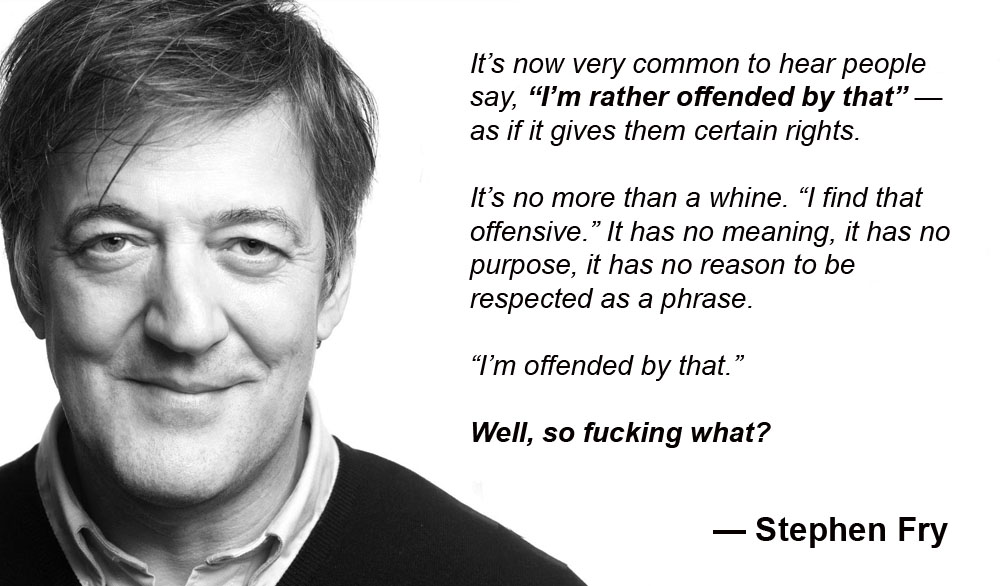





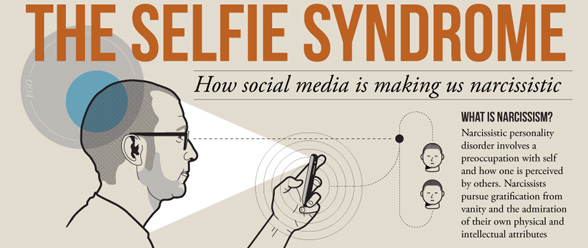



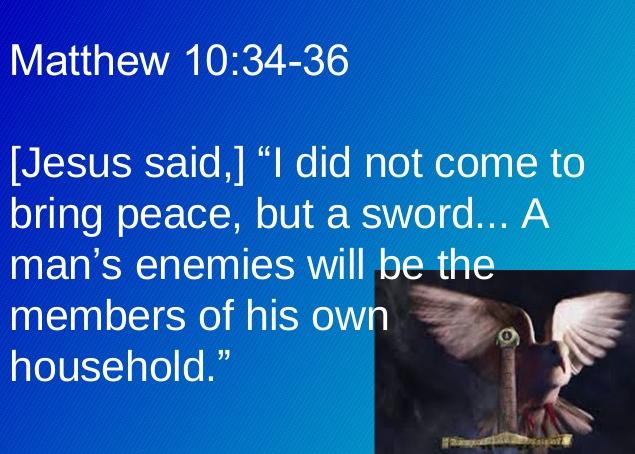
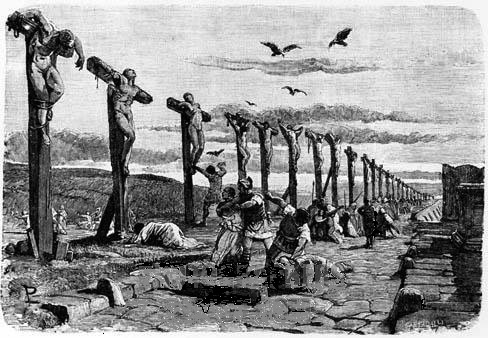



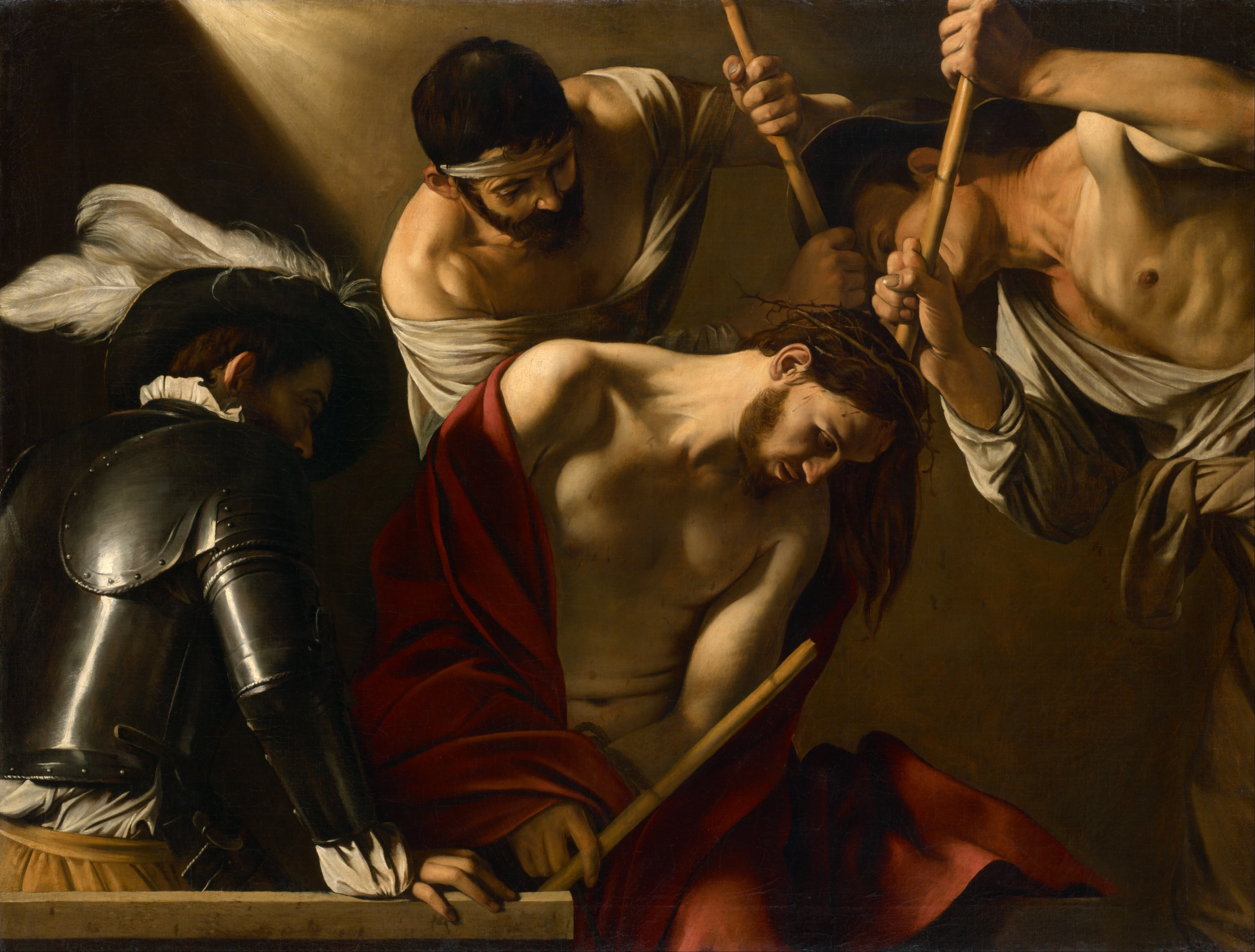
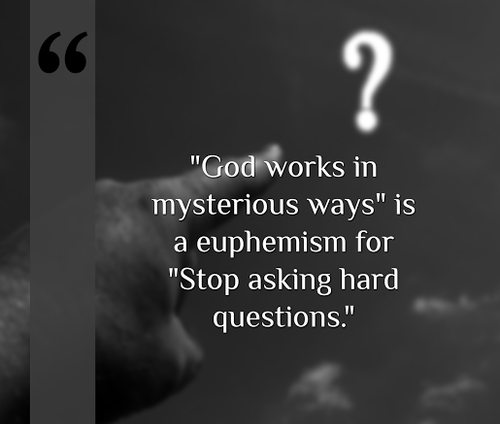








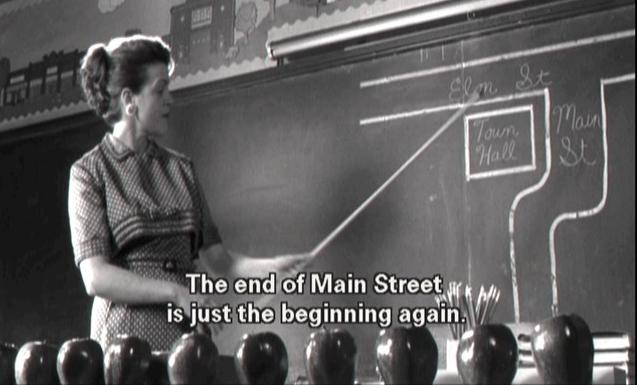





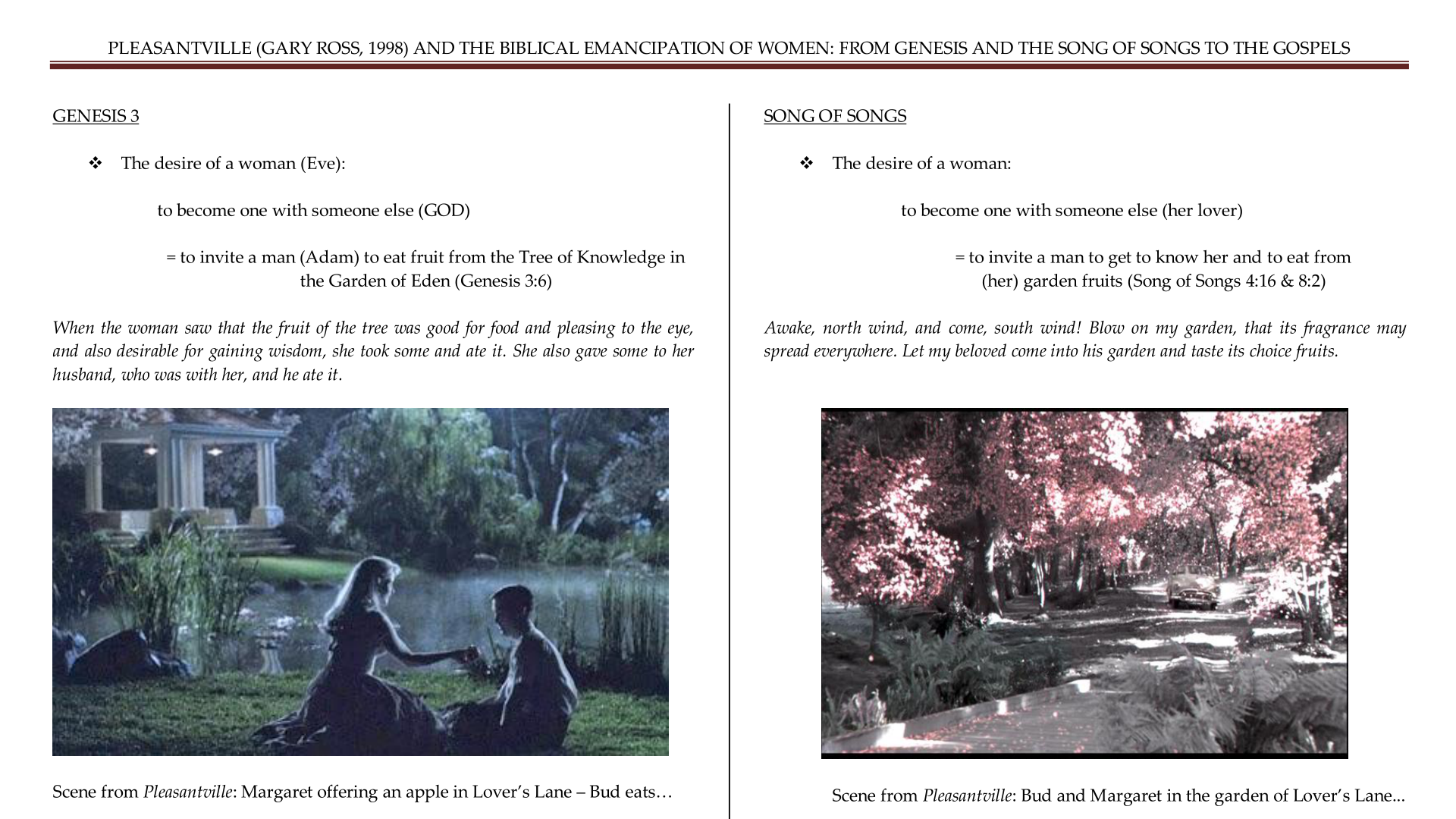

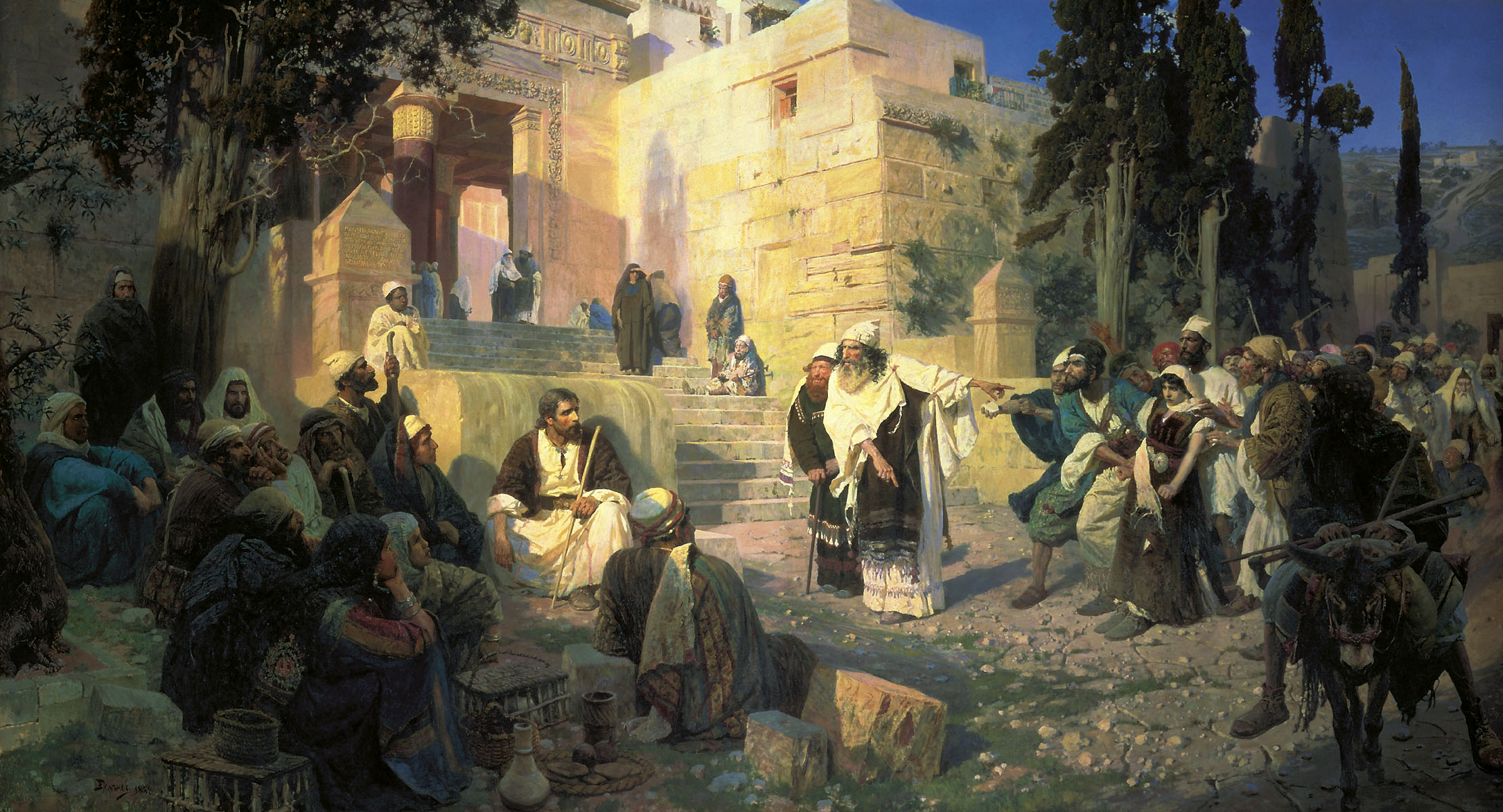





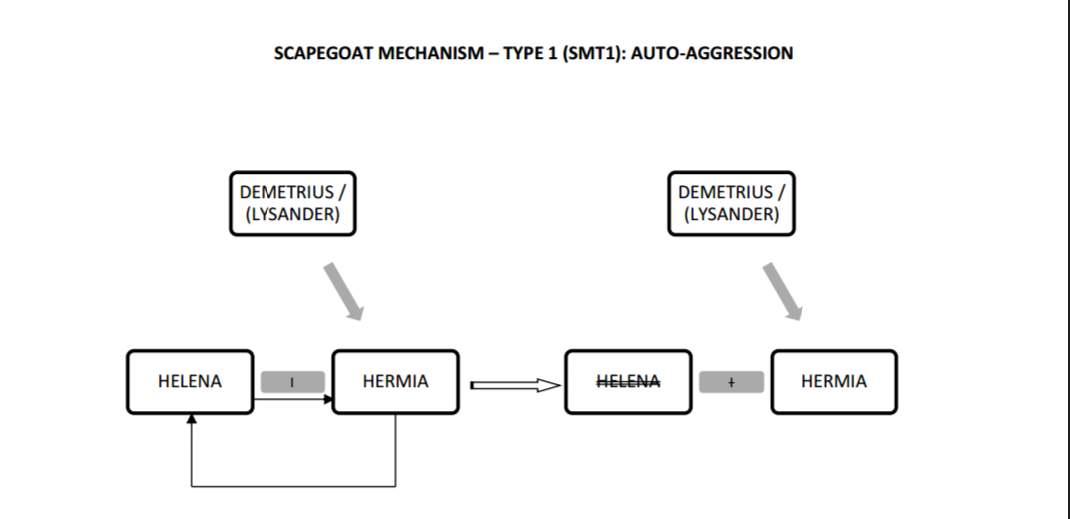




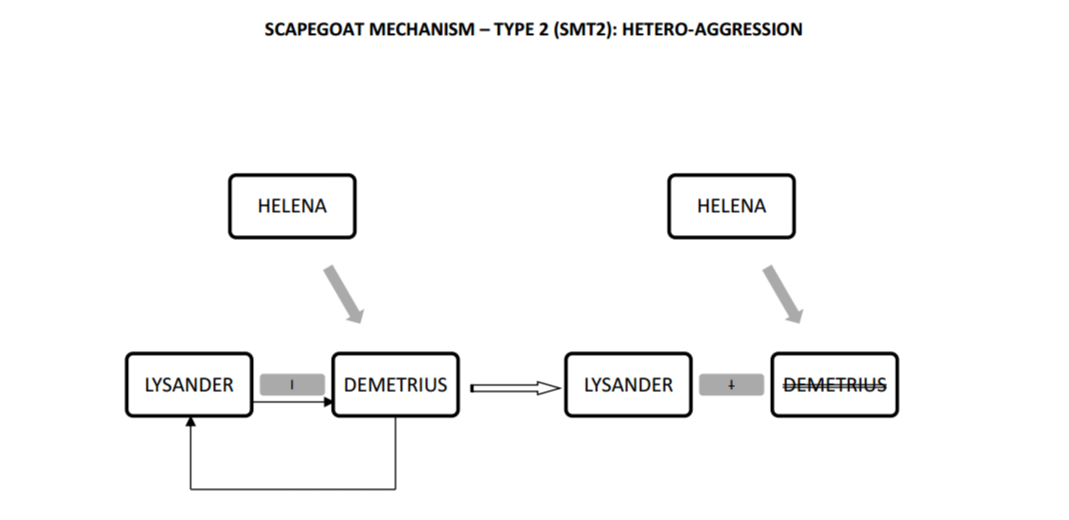
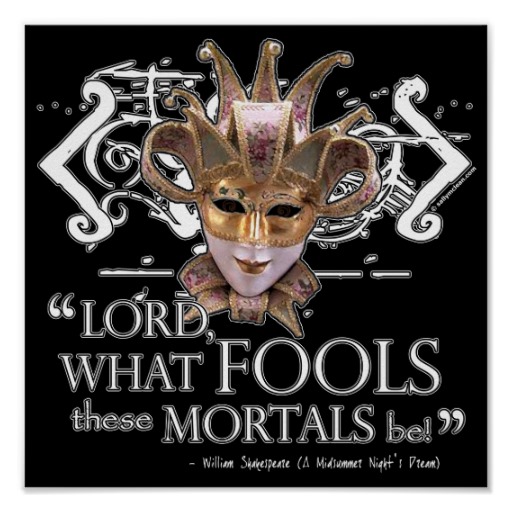


 SCAPEGOAT SHADOWS