My summer holiday started with a blast. Some of my friends are real opera connoisseurs and they invited me and my wife to experience Otello, a true operatic masterpiece of the Romantic era, composed by the great Italian composer Giuseppe Verdi (1813-1901). The libretto was provided by poet and musician Arrigo Boito (1842-1918), the play itself of course being one of William Shakespeare’s tragedies (in English written as Othello, Italian Otello).

René Girard wrote a very interesting book on Shakespeare’s oeuvre, A Theater of Envy. Chapter 31 of this book deals with Othello, entitled Shall we desire to raze the sanctuary? Desire and Death in Othello and other plays. The main characters of Othello are indeed driven by jealousy, by envy – a ‘force’ biblically and traditionally identified with ‘Satan’ or ‘the Devil’. Girard describes envy as the negative side of ‘mimetic’ or ‘imitative’ desire. When a desire is mimetic, it means this desire is based on the imitation of someone else’s desire. We often desire what others desire or possess, not because we intrinsically want to obtain a certain object or goal, but because we more or less unwittingly imitate each other’s desires. An imitated ‘other’ becomes a ‘model’ – someone who is admired – and an ‘obstacle’ at the same time – someone who is envied because of what he owns or is supposed to own; someone who ‘stands in the way’ between the mimetically created subject and object of desire.

Othello is an uncertain and tragic hero. As a dark-skinned Moorish general in the Venetian army, he’s not at ease in the aristocratic circles of Venice. Yet he finds himself married to Desdemona, daughter of a Venetian senator. Throughout the play Othello more and more becomes the puppet of his own uncertainties, as well as of others who ‘pull the strings’ of his worst fears. He first seeks refuge with Cassio, whom he highly admires and therefore will also start to distrust as a potential rival in his love for Desdemona. Othello’s relationship with Cassio (his ‘model-obstacle’), originating from his uncertainties, is at the heart of Othello’s eventual tragic downfall. René Girard in A Theater of Envy (in the edition of St. Augustine’s Press, South Bend, Indiana, 2004 – originally this title was edited by Oxford University Press, 1991) writes the following on the subject (p.290):

“At the thought of entering for the first time the exalted world of Venetian nobility, Othello is struck with panic and he… resorts to a go-between, his own lieutenant, Cassio. […] Cassio is everything that Othello is not: white, young, handsome, elegant, and above all a true Venetian aristocrat, a real man of the world, always at ease among the likes of Desdemona. Othello appreciates Cassio so much that he selects him rather than Iago as his lieutenant.”

Iago becomes the demonic machinator of the play, driven by envy himself. Jealous of Othello’s choice for Cassio, Iago sets up a trap by which he convinces Othello to lower Cassio’s rank. He then gains both Othello’s and Cassio’s trust: he advises Cassio to ask Desdemona to plead for him with her husband, while at the same time he suggests to Othello that Cassio is after his wife. So, every time Desdemona puts in a good word for Cassio, Othello’s suspicion as well as his desire to possess Desdemona ‘completely’ is reinforced (as he ‘imitates’ the supposed desire of Cassio). In order to fulfill his desire Othello eventually murders his wife – so she can no longer belong to Cassio or someone else. Girard is right to emphasize the close relationship between Eros (desire) and Thanatos (death) – p.294-295:

“Death… often has a sexual meaning in Shakespeare… Like everything else in Shakespeare, the kinship of death and desire can be read in either a comic or a tragic vein. Whether or not it ‘really occurs,’ and whether or not it is turned into a pun, the violent conclusion alludes to the overwhelming presence of death at the climax of the mimetic process. As desire becomes increasingly obsessed with the obstacles that it keeps generating, it moves inexorably toward self-and-other annihilation, just as erotic courtship moves toward its sexual fulfillment.”

In Verdi’s rendition of the play, the dramatic pinnacle lies in the second to last act of the opera, Act III. I chose fragments of this act from a 1995 performance, with Placido Domingo as Otello and Renée Fleming as Desdemona, at the famous Metropolitan Opera House (the Met) in New York. My friends and I were lucky enough to hear Renée Fleming as Desdemona once more at the Opéra de la Bastille in Paris, last Friday, July 1. The setting was different, but she was just as great…

CLICK TO WATCH the first part of Act III:

What strikes me the most in Act III, from a dramatic point of view, is Otello’s refusal to listen to his wife. He considers listening to her as taking advice from the devil. At this point in the libretto, Arrigo Boito refers to the Medieval Catholic formula for exorcisms, “Vade Retro, Satana” (recorded in a 1415 manuscript found in the Benedictine Metten Abbey of Bavaria). Otello sings “Indietro!” (“Aback!”), an important word that is not translated in the fragments shown. The aforementioned formula as well as this word are similar to Jesus saying to Peter “Get behind me, Satan” in Mark 8:33 or Matthew 16:23. There, Jesus refuses to listen to Peter because Peter tries to seduce him to compete with ‘the rulers of this world’. In other words, Peter takes the role of ‘Satan’, meaning that he tries to trick Jesus into ‘mimetic rivalry’. Peter tries to trick Jesus into enviously comparing himself to others ‘to protect himself’. With this in mind the tragic irony in Act III of Verdi’s Otello becomes obvious. Otello’s paranoia has become so powerful that he is no longer capable of hearing the truth. The truth is Desdemona is innocent, but she becomes the victim, the ‘scapegoat’ of Otello’s anxieties and frustrations. Otello believes he’s denouncing ‘Satan’, but in fact he actually takes advice from Iago’s hints and is consumed by envy.

Click to continue the important duet between Otello and Desdemona and keep enjoying two of the greatest singers of all time

– CLICK TO WATCH:

There’s a remarkable analogy between political, dictatorial regimes that uphold themselves by using violence against dissident voices, and economic behavior that is based on the idea of scarcity. Both social phenomena are tragic in the sense that they accomplish exactly what they are trying to avoid.

Paul Dumouchel and Jean-Pierre Dupuy offered an analysis of modern economics from the point of view of René Girard’s mimetic theory, among others in a book entitled L’enfer des choses. Similar analyses are made by people like Hans Achterhuis (Het Rijk van de Schaarste) and André Lascaris. I’ve tried to summarize what I’ve learned from these efforts so far, as it sheds some interesting light on contemporary international social and political issues – the elimination of Osama Bin Laden being one of them.

To read my essay, click: Tribal tradition or scarcity?

“The rich man glories in his riches, because he feels that they naturally draw upon him the attention of the world, and that mankind are disposed to go along with him in all those agreeable emotions which the advantages of his situation so readily inspire him … In a great assembly he is the person upon whom all direct their eyes; it is upon him that their passions seem all to wait with expectation, in order to receive that movement and direction which he shall impress upon them.”

Adam Smith, in The Theory of Moral Sentiments (London, 1959 (Ed. Oxford, 1976) 1, iii, 2).

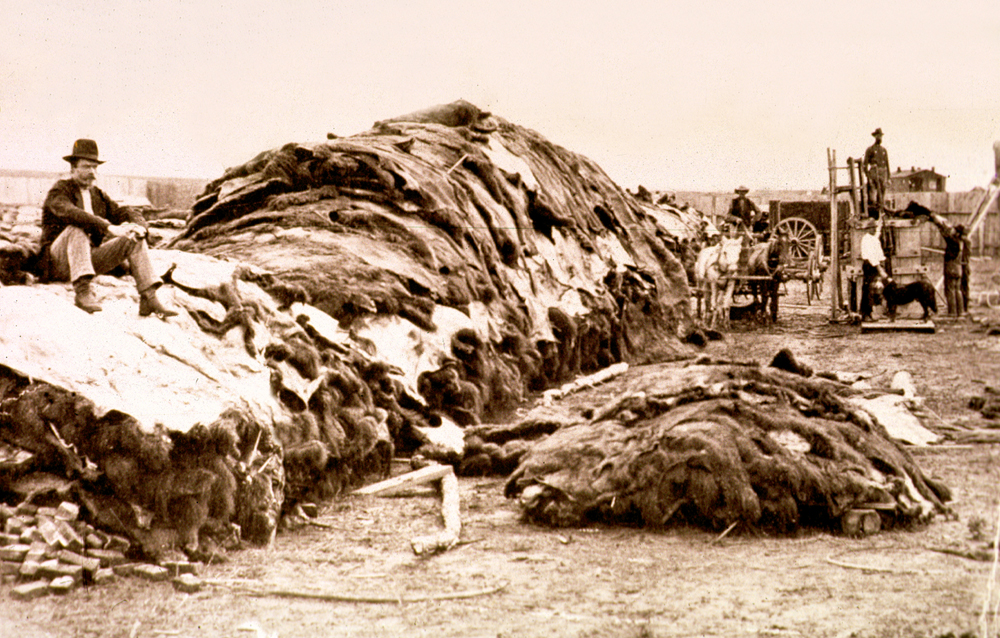
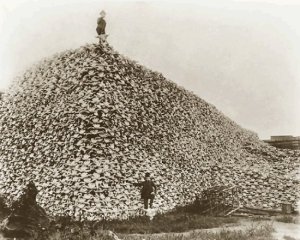
The direction which, according to Adam Smith (1723-1790), the rich man impresses upon other individuals often has had some shattering consequences for tribal societies and the natural environment. The difference in the way tribal communities deal with the gifts of nature and the way individual capitalists handle with them perhaps never became any clearer during the years of massive buffalo hunting on the great American plains. For centuries the native American indians hunted no more buffalo than they needed and shared what they had caught among the members of their respective tribes. Individual community members didn’t enrich themselves too much, because that would have led to envious quarrels. As is sufficiently known, the business men who originally came from Europe displayed a reverse attitude (imitating ‘the rich man’), which nearly eradicated the mighty animals of the great plains – literally creating ‘scarcity’ of the buffalo. My essay tries to point to the origin of this turn to individualism in Europe. Some of the negative consequences of this shift are shown in these pictures – more than words can say…

Above: Buffalo Hides at Dodge City (Kansas, 1874).

Below: Pile of Buffalo Skulls (1870’s).


This we know: the earth does not belong to man, man belongs to the earth. All things are connected like the blood that unites us all. Man did not weave the web of life, he is merely a strand in it. Whatever he does to the web, he does to himself.

(Words ascribed to Chief Seattle – to read more, click here).

What no man can own, no man can take…

(Bono, singer in rock band U2, from their song Yahweh).


Just recently I stumbled upon quite a fun BBC documentary about monkeys. Fragments can be watched below.

Of particular interest to anyone who’s concerned with mimetic theory are the following observations, eminently shown in the documentary:

Besides getting smarter, monkeys living in larger groups also become more competitive, even aggressive and violent. From the point of view of mimetic theory this comes as no surprise, since an increased learning capacity is based on the same principle as an increased tendency for a certain type of rivalry: imitation or ‘mimesis’. Monkeys learn through imitation, but they can also become rivals through imitation. The latter happens when they imitate each other’s desire for a certain object – be it a female, a piece of food or some favorable territory. It is from this mimetic interplay that a craving for ‘status’ and ‘power’ emerges, as well as a certain ‘greed’.

Individual rivaling monkeys tend to gather allies to compete with each other. Again, the engine behind these forms of empathetic bonding seems to be mimesis by which monkeys are able to ‘project’ themselves in other members of the group. They might even ‘imagine’ what others are up to and make plans for themselves. The so-called mirror neurons in the brain play a tremendous role in this regard.

Normally, rivaling groups balance each other and keep their violent tendencies in check. However, sometimes an individual monkey becomes the victim of a whole group. The documentary shows what happens when this victim dies. His former attackers – actually the ones who murdered him! – gather around the dead body, unusually calm. [WATCH THE DOCUMENTARY FROM 4:23!]

René Girard considers this type of event foundational to the way human culture eventually originated and to the way it developed sacrificial rites. Already the BBC documentary states that more monkeys are victim to other monkeys than to predators. Girard claims that the intra-violence of mob lynching must have occurred even more in primitive ape-man societies, since rivalries must have been more intense there due to an ever stronger mimetic ability. Gradually, our primitive ancestors might have made associations during their experience of killing a common ‘enemy’ that account for the emergence of sacrifice. Aggression, rivalry and turmoil within the group seem to persist for as long as the common enemy lives. From the moment he is dead, contention ceases. ‘Chaos’ no longer reigns. ‘Order’ is restored.

The sacrificial rites of our ancestors suggest that they indeed gave meaning to victims of ‘mob lynching’. According to René Girard, the significance these victims and the mob lynching eventually received, creates the dividing line between animals and humans, and has two aspects:

1. Chaotic situations or crises within a community can be controlled by killing someone – hence the rise of what is eventually called ‘sacrifice’.

2. Chaotic situations are associated with the resurgence of a victim that is held responsible for previous chaotic situations. Indeed chaos reigned for as long as some victim was alive. That victim, therefore, is perceived as ‘being’ chaos – what seems to be beyond the control of the community, as a ‘transcendent’ or ‘sacred’ force. This violent force – i.e. the now divinized and ‘invisible’ victim – can be stopped, as experience seems to show our ancestors, by killing a new victim. So together with sacrifice the potentially violent gods originate who demand that sacrifice.

Very important to understand Girard’s mimetic theory is the observation that the victims of this type of collective violence are scapegoats, meaning: held responsible for something they’re not really responsible for (even when they are, in fact, considered ‘bad’ individuals). The real source for certain types of rivalry, tensions, conflicts and chaotic situations within communities are all sorts of ‘mimetic’ interactions. This is something the first human communities don’t realize, and that’s why, according to Girard, religion and human culture as a whole developed in all kinds of directions from sacrificial origins. Some of these origins can still be observed in groups of our actual ‘family members’, the monkeys and the apes, who, more than ever, seem to mirror fundamental aspects of ourselves.

‘Know thyself’ the Temple of Apollo at Delphi read. Start this quest by watching the fragments from the documentary Clever Monkeys

– CLICK TO WATCH:

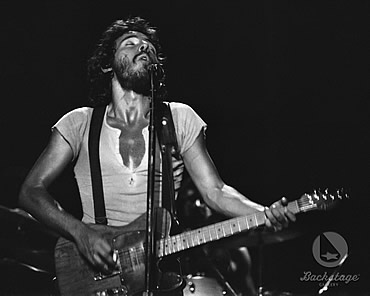
Bruce Springsteen‘s take on the story of Christ’s Passion certainly reflects a profound spiritual awareness of what this event is actually about. In an episode for VH1 Storytellers, Springsteen meditates on his song Jesus was an only son, and brings out the universal and existential truths the story of the Passion reveals.

CLICK TO WATCH it right here:

Click here to read a full transcription of this video.

Springsteen’s interpretation of the song’s ending is especially moving. A transformation takes place. Whilst in the beginning of the song Jesus is comforted by his mother Mary, at the end it’s the son who comforts his mother. Mary is asked to respect the particular destiny of her child. Jesus chose the path of compassion and love. He was touched, so deeply, by the suffering of the outcasts that he couldn’t do anything else but reach out to them. By associating him with these scapegoats, he eventually became a victim himself. In refusing to take part in a social system that constructs itself by means of sacrifices, Jesus was eventually sacrificed himself.

Following Springsteen’s reasoning, Jesus cannot start some sort of ‘civil war’ to defend himself, because that would make him the imitator of his persecutors – Jesus would thus become a sacrificer himself, a ‘prince of this world’, a ‘Muammar Gaddafi’… Christ’s kingdom, on the other hand, is ‘not of this world’. Jesus follows, in the song’s words, ‘the soul of the universe’ which ‘willed a world and it appeared’. Indeed, by withdrawing from vengeance (i.e. the imitation of the persecutors), Jesus creates the possibility of a new world. Imitating the one who ‘offers the other cheek’, the one who forgives and approaches his persecutors and betrayers with compassion, allows us to accept our own and each other’s weaknesses and iniquities, without us being victimized or ‘crucified’ for doing so…

At the end of Springsteen’s song, Jesus seems confident that his ‘Heavenly Father’ would ultimately refuse the sacrifice of his son – and this confidence is reflected in the stories of Christ’s resurrection. Jesus fully imitates ‘the One who doesn’t want sacrifices or victims’ and therefore he is said to be the ultimate incarnation or ‘materialization’ of Love: A bruised reed shall he not break, and smoking flax shall he not quench, till he send forth judgment unto victory.” (KJV, Matthew 12:20). Bruce Springsteen speaks of this mystery of the incarnation at the end of his ‘sermon’:

“Whatever divinity we can lay claim to is hidden in the core of our humanity… When we let our compassion go, we let go of what little claim we have to the divine.”

Love seeks to be concrete and ’embodied’. The very nature of Love is to throw off its spiritual garment, to ’empty’ itself from the ‘sacred’ realm in order to become ‘flesh’ – which is called ‘kenosis’. The story of Christ’s Passover can be considered a pinnacle in our clumsy attempts to express this reality. However, if these attempts produce songs like Bruce Springsteen’s Jesus was an only son, we should be grateful, as we are comforted by the fragile light of hope amidst our own ‘darkness on the edge of town’.

The sports-minded Jesuit Patrick Kelly wrote the following on Bruce Springsteen’s faith and his Roman Catholic background in a column for America Magazine (The National Catholic Weekly) – February 10, 2003 (click here to read):

Faith, hope and love have always played a part in Bruce Springsteen’s songs, but this has become more explicit in recent years. Springsteen’s willingness to talk about these themes also is relatively new.

The Rev. Andrew Greeley’s article, “The Catholic Imagination of Bruce Springsteen” (click to read Am., 2/6/88), seems to have been a catalyst in this regard. The Catholic novelist Walker Percy read the article and wrote to Springsteen in early 1989, particularly interested in the fact that Greeley described him as a Catholic. “If this is true, and I am too,” his letter read, “it would appear the two of us are rarities in our professions: you as a post-modern musician, I as a writer, a novelist and a philosopher. That and your admiration of Flannery O’Connor. She was a dear friend of mine, though she was a much more heroic Catholic than I.” Walker Percy died before Springsteen responded to his letter, but the musician wrote in a four-page letter to Percy’s widow:

“The loss and search for faith and meaning have been at the core of my own work for most of my adult life. I’d like to think that perhaps that is what Dr. Percy heard and was what moved him to write me. Those issues are still what motivate me to sit down, pick up my guitar and write.”

Percy’s nephew, Will Percy, subsequently interviewed Springsteen about the formative influences on his song-writing for the Harvard psychiatrist Robert Coles’s magazine Doubletake in 1998 (click here to read).

I assembled some excerpts from this interview. Click here if you’re interested.

Carnival as a ‘scapegoat ritual’? This feast has the features, for sure…

I chose music of Camille Saint-Saëns (1835-1921) – from Le Carnaval des Animaux -, and Krzysztof Penderecki (°1933) – from Passio Et Mors Domini Nostri Jesu ChristiSecundum Lucam – to accompany the images. Watch the video: