DENKGELACHERIG ATHEÏSTISCH NARCISME
[SEE BELOW FOR ENGLISH TRANSLATION]
De volgehouden logica in de evangeliën en de verder ontwikkelde christelijke traditie, wijst in de richting van “Jezus als ultieme, soms pijnlijk consequente realist in een wereld van narcisten”. [Voor meer hierover: klik hier]. Dat bepaalde mensen, ondanks alle rationele argumenten, blind blijven voor die logica, heeft niet te maken met een veronderstelde “vaagheid” van de christelijke bronnen, maar met een koppig narcisme.
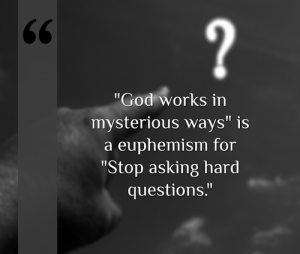 Fundamentalistische christenen, bijvoorbeeld, hangen nogal eens vast aan het geloof in een almachtige God in een eigenlijk niet-christelijke zin [Voor meer hierover: klik hier]. De ervaring leert dat zij moeilijk afstappen van een godsbeeld dat incompatibel is met het godsbeeld dat kan afgeleid worden uit de Christusfiguur van de evangeliën. Als ultieme verdediging van kromme redeneringen trekken zij vaak de kaart van het adagium “Gods wegen zijn ondoorgrondelijk”. Daarmee beëindigen ze iedere vorm van dialoog, discussie en kritische (zelf)reflectie. Maar ook sommige atheïsten houden liever vast aan hun ideeën over het christelijke verhaal (en theologie of zelfs godsdienst in het algemeen) dan dat ze die in vraag zouden stellen. Narcistische, intellectuele zelfgenoegzaamheid is niemand vreemd. Vooral niet als een eerder vijandige opvatting tegenover het christelijke verhaal identiteitsbepalend is. De commentaar van sommige atheïsten, wier blik veelal door negatieve emoties wordt bepaald, op het betoog uit een vorige post [Voor meer hierover: klik hier] is dan ook voorspelbaar: “Dit is een particuliere, misschien zelfs hoogst individuele interpretatie, en uiteindelijk is het allemaal relatief. Wat kunnen we uiteindelijk weten? Met ‘theologie’ kun je alle kanten op!” Alweer duikt het gemakzuchtige en laffe “argument” van “ondoorgrondelijke wegen” op. Tja, voor wie gelooft in rationele argumenten, ondersteund door wetenschappelijke inzichten (van literatuurwetenschap en geschiedenis tot antropologie) zal de ene interpretatie beter en plausibeler zijn dan de andere. Het is allemaal niet zo “ondoorgrondelijk” of “vaag” of “incoherent”.
Op de vragen “Welke beweringen doet het christelijke verhaal en wat is de essentie van het christelijke geloof?” bestaan wel degelijk antwoorden die, vanuit rationeel en wetenschappelijk verantwoord onderzoek, plausibeler zijn dan andere. Wat narcisten ook mogen beweren. Zowel gelovigen als ongelovigen kunnen een onderzoek instellen naar het antwoord op die vragen.
Wat het intellectuele narcisme van sommige atheïsten betreft, is een “debat” dat georganiseerd werd door Het Denkgelag een mooi voorbeeld. Op 17 oktober 2013 hielden Daniel Dennett, Lawrence Krauss en Massimo Pigliucci onder de modererende leiding van filosoof Maarten Boudry een panelgesprek over “de grenzen van de wetenschap”.
Dit theekransje van atheïsten oversteeg zelden het niveau van filosofische cafépraat, maar misschien was dat wel de bedoeling – om de drempel laag te houden. Gelukkig zat Massimo Piglicucci in het panel. In ieder geval, je zou denken dat het “om te lachen” was als ze zichzelf niet zo ernstig namen. Genant was onder andere hoe bioloog en filosoof Massimo Pigliucci en filosoof Daniel Dennett aan fysicus Lawrence Krauss moesten uitleggen dat de criteria om te oordelen over het morele of immorele karakter van menselijke daden niet door de wetenschap kunnen bepaald worden. Eens die criteria bepaald zijn – eventueel door langdurig na te denken, dus door “rationaliteit” -, kan wetenschap natuurlijk informatie opleveren aangaande de vraag hoe die morele opvattingen het best in de praktijk worden omgezet. Als je bijvoorbeeld gelooft dat het morele gehalte van een daad bepaald wordt door het geluksniveau dat het oplevert, kun je wetenschappelijk kennis vergaren over de mate waarin een daad in “geluk” resulteert. Op voorwaarde natuurlijk dat je eerst gedefinieerd hebt wat “geluk” dan inhoudt. Wat alweer impliceert dat een filosofische, rationele discussie over “geluk” voorafgaat aan ieder mogelijk wetenschappelijk onderzoek. Het is bijzonder eigenaardig dat dergelijke basisinzichten in het lang en het breed (expliciet een twintigtal minuten) moeten uitgesmeerd worden op een avond die pretendeert een hoogmis voor de rationaliteit te zijn. De aanvankelijke “onenigheid” tussen Pigliucci en Krauss had dan ook geen enkele intellectuele spankracht. Ze was gewoon te wijten aan een gebrekkig inzicht bij Krauss. Pigliucci vat de les wijsbegeerte voor eerstejaarsstudenten uiteindelijk samen (tussen minuut 42:40 en 44:00 van het gesprek):
“Nobody in his right mind, no philosopher in his right mind, I think, is saying that empirical facts, or even some scientific facts – as should be clear by now, I take a more restrictive definition of science or concept of science than Lawrence does – but even if we want to talk about empirical facts, broadly speaking, nobody is denying […] that empirical facts are relevant to ethical decisions. That’s not the question. The question is […] that the empirical facts, most of the times, if not all the times, in ethical decision making, are going to underdetermine those decisions, those value judgements that we make. So the way I think of ethics is of essentially ‘applied rationality’. You start with certain general ideas. Are you adopting a utilitarian framework? Are you adopting a deontological framework, a virtue ethics framework or whatever it is? And then that essentially plays the equivalent role of, sort of, general axioms, if you will, in mathematics or general assumptions in logic. And from there you incorporate knowledge, empirical knowledge, about, among other things, what kind of beings humans are. Ethics, let’s not forget, is about human beings.”
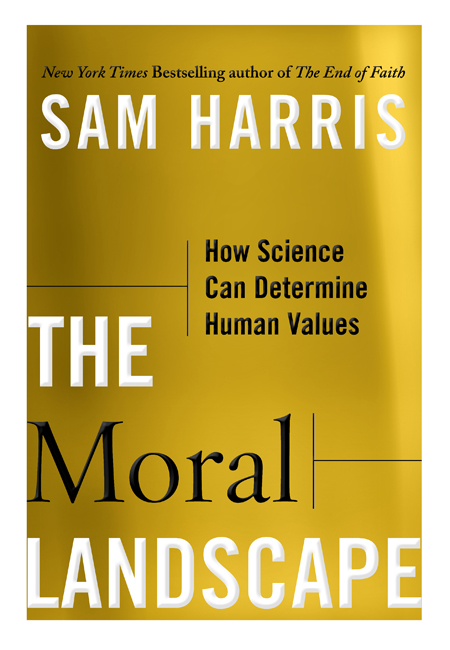
Terecht wees Pigliucci er trouwens op dat Sam Harris in zijn boek The Moral Landscape eigenlijk een gelijkaardige denkfout maakt als Krauss. Harris zal wel veel verdiend hebben aan de verkoop van zijn boek, maar bij nader inzien is het intellectuele volksverlakkerij die weinig om het lijf heeft. Niet verwonderlijk dat Pigliucci er het volgende over zegt (48:22 – 48:44):
 “Sam Harris, who you [Maarten Boudry] introduced as a philosopher, I would characterize mostly as a neuroscience based person. I think he would do it that way. When I read his book, ‘The Moral Landscape’ which promised a scientific way of handling ethical questions. I got through the entire book and I didn’t learn anything at all, zero, new about ethics, right?”
Daarnaast ergert Pigliucci zich, opnieuw reagerend op een aantal beweringen van Krauss, aan wetenschappers die generaliserende uitspraken doen over filosofie zonder eigenlijk enig idee te hebben waarover ze spreken (1:12:57 – 1:13:28):
“First of all, most philosophy of science is not at all about helping scientists answer questions. So it is no surprise that it doesn’t. So when people like your colleague Stephen Hawking – to name names – starts out a book and says that philosophy is dead because it hasn’t contributed anything to science, he literally does not know what he is talking about. That is not the point of philosophy of science, most of the time.”
Kortom, de onenigheid die soms dreigde te ontstaan tussen Pigliucci en Dennett aan de ene kant en Krauss aan de andere werd telkens opgelost door Krauss een aantal “bijlessen” te geven. Pigliucci was dan nog zo vriendelijk om dat vaak ietwat onrechtstreeks te doen, maar het is duidelijk dat zijn zojuist vermelde commentaar op Stephen Hawking een manier was om Krauss terecht te wijzen over zijn “red herring” (de herhaalde opmerking van Krauss dat (wetenschaps)filosofie vandaag geen bijdragen levert aan wetenschap is irrelevant omdat ze dat ook niet beoogt). Pigliucci besloot deze discussie met een analogie (1:13:59 – 1:14:12):
“So, yes, philosophy of science doesn’t contribute to science, just like science does not contribute to, you know, English literature. Or literary criticism, whatever you want to put it. But so what, no one is blaming the physicists for not coming up with something new about Jane Austen.”
Je zou verwachten dat Pigliucci dergelijke analogie consequent toepast als het gaat om de afbakening van verschillende onderzoeksvelden, maar toen het over theologie ging nam hij plotseling ook de weinig doordachte houding van Krauss aan. Boudry en Dennett sloten zich trouwens eensgezind bij hun gesprekspartners aan. Blijkbaar hadden deze atheïsten een doodverklaarde “vijand” gevonden – de theologie – die hen verenigde (1:13:46 – 1:13:48):
Lawrence Krauss: “Well, theology, you could say is a dead field…”
Massimo Pigliucci: “Yes, you can say that. Right!”
Aan het begin van de avond bleek al dat de heren op dit vlak zeker van hun stuk waren:
20:11 – 20:21
Maarten Boudry: “Do you think that science, no matter how you define it, or maybe it depends, has disproven or refuted god’s existence?”
21:10 – 21:30
Lawrence Krauss: “What we can say, and what I think is really important, is that science is inconsistent with every religion in the world. That every organized religion based on scripture and doctrine is inconsistent with science. So they’re all garbage and nonsense. That you can say with definitive authority.”
21:50 – 22:42
Massimo Pigliucci: “I get nervous whenever I hear people talking about ‘the god hypothesis’. Because I think that’s conceding too much. Well, it seems to me, in order to talk about a hypothesis, you really have to have something fairly well articulated, coherent, that makes predictions that are actually falsifiable. All that sort of stuff. […] All these [god-] concepts are incoherent, badly put together, if put together at all. […] There is nothing to defeat there. It’s an incoherent, badly articulated concept.”
De eerder uitgewerkte post over de al dan niet narcistische Jezusfiguur van het Nieuwe Testament is een eerste falsificatie van de beweringen van Krauss en Pigliucci. Georganiseerde religie, gebaseerd op zogenoemde openbaringsgeschriften en dogma’s, is niet per definitie inconsistent met wetenschap. Het nieuwtestamentishe godsbeeld is bovendien allesbehalve incoherent. Een korte samenvatting van de desbetreffende vorige post mag dit verduidelijken [Voor meer hierover: klik hier].
De vertegenwoordigers van de tradities die uiteindelijk resulteren in de geschriften van het Nieuwe Testament geloven dat God zich op het niveau van de mensheid openbaart als een liefde die mensen in staat stelt om op een waarachtige wijze zichzelf en anderen te aanvaarden. Zulke, niet direct zichtbare liefde bevat het potentieel om mensen te bevrijden van een leven in functie van het verlangen naar erkenning of, anders gezegd, van een leven uit liefde voor een onwaarachtig imago dat waardering moet opleveren. De auteurs van het Nieuwe Testament definiëren op die manier wat “redding” (Engels: “salvation”) is: wie zich bemind weet, wordt meer en meer bevrijd van de neiging om zichzelf en anderen op te offeren aan “de afgodendienst van het sociale prestige”. Tegelijk geloven de nieuwtestamentische schrijvers dat de liefde die dergelijke offers weigert op een uitzonderlijke wijze belichaamd wordt in Jezus van Nazaret, die precies hierom “Christus” wordt genoemd en als dusdanig wordt geportretteerd ter navolging.
Via onder andere literatuurwetenschappelijk onderzoek kunnen deze heren atheïsten voor zichzelf nagaan in welke mate deze karakterisering van de nieuwtestamentische beweringen de kern van het christelijke geloof bevat. Misschien moeten ze dat eens doen vooraleer ze zich overgeven aan de narcistische pretentie om gezaghebbende uitspraken te doen over “alle theologie”. Het blijft vreemd dat Pigliucci zich ergert aan een fout die sommige natuurwetenschappers wel eens maken met betrekking tot “filosofie”, terwijl hij zelf die fout maakt met betrekking tot “theologie”. Vandaag houdt theologie zich bezig met het interdisciplinair wetenschappelijk onderzoek naar het godsbeeld van een bepaalde religieuze traditie, en met de eventuele implicaties daarvan. Dit heeft overigens niets te maken met geloven of niet geloven in God. Om een analogie te gebruiken: je moet het uiteindelijk niet eens zijn met het mensbeeld van Shakespeare om een onderzoek in te stellen naar de mensvisie die in zijn werken tot uiting komt. Kortom, de vragen waarmee theologen zich bezighouden zijn van een fundamenteel andere aard dan de vragen waarmee natuurwetenschappers zich bezighouden, en er moeten op een fundamenteel niveau dus ook geen conflicten verwacht worden tussen beide onderzoeksvelden. In de woorden van Pigliucci’s eerder geciteerde analogie om het onderscheid tussen natuurwetenschap en filosofie in de verf te zetten: “No one is blaming the physicists for not coming up with something new about Jane Austen.”
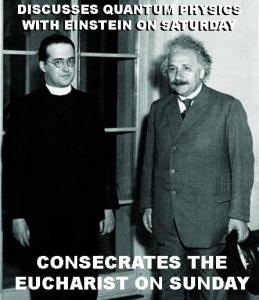 Misschien moeten Pigliucci en co maar een voorbeeld nemen aan Georges Lemaître, Belgisch katholiek priester en vermaard fysicus (onder andere grondlegger van de “Big Bang” hypothese). Lemaître maakt een duidelijk onderscheid tussen de vragen waarmee moderne natuurwetenschappers zich bezighouden en de vragen waarmee de auteurs van het Nieuwe Testament bezig zijn. Sterker nog, volgens Lemaître hebben natuurwetenschappelijke vraagstukken niets met theologie te maken, en vice versa. De gelovige natuurwetenschapper kan zijn geloof dan ook geen enkele rol laten spelen in het strikt natuurwetenschappelijke onderzoek. Enkele citaten van Lemaître uit een artikel (klik hier om het te lezen) van Joseph R. Laracy verduidelijken zijn positie aangaande de verhouding tussen de theologie en de moderne natuurwetenschap:
“Should a priest reject relativity because it contains no authoritative exposition on the doctrine of the Trinity? Once you realize that the Bible does not purport to be a textbook of science, the old controversy between religion and science vanishes . . . The doctrine of the Trinity is much more abstruse than anything in relativity or quantum mechanics; but, being necessary for salvation, the doctrine is stated in the Bible. If the theory of relativity had also been necessary for salvation, it would have been revealed to Saint Paul or to Moses . . . As a matter of fact neither Saint Paul nor Moses had the slightest idea of relativity.”
“The Christian researcher has to master and apply with sagacity the technique appropriate to his problem. His investigative means are the same as those of his non-believer colleague . . . In a sense, the researcher makes an abstraction of his faith in his researches. He does this not because his faith could involve him in difficulties, but because it has directly nothing in common with his scientific activity. After all, a Christian does not act differently from any non-believer as far as walking, or running, or swimming is concerned.”
“The writers of the Bible were illuminated more or less — some more than others — on the question of salvation. On other questions they were as wise or ignorant as their generation. Hence it is utterly unimportant that errors in historic and scientific fact should be found in the Bible, especially if the errors related to events that were not directly observed by those who wrote about them . . . The idea that because they were right in their doctrine of immortality and salvation they must also be right on all other subjects, is simply the fallacy of people who have an incomplete understanding of why the Bible was given to us at all.”
De vraag naar wat “redding” of “heil” betekent in nieuwtestamentische zin is inderdaad anders dan bijvoorbeeld de vraag waarom en hoe objecten vallen. Zo eenvoudig kan een inzicht zijn om niet langer als een heroïsche maar narcistische Don Quichot “windmolens” te moeten bevechten. Maar een mens moet zich natuurlijk geen illusies maken: de Maarten Boudry’s van deze wereld gaan zelden of nooit de uitdaging aan om hun geloof aangaande de aard van theologie en religie op een wetenschappelijk verantwoorde manier in vraag te stellen. Maar misschien spreekt nu het narcisme van een theoloog 🙂 ?

Nochtans draagt Boudry wetenschap hoog in het vaandel. Zijn vraag aan het publiek aan het begin van de avond luidde dan ook (16:58 – 17:30): “Do you think that science is the sole source of knowing?” Er waren veel mensen die bevestigend antwoordden op deze vraag. Dit impliceert dan dat je een persoon die je nog nooit ontmoet hebt beter kent dan een persoon die je iedere dag ziet als je maar accurate en gedetailleerde wetenschappelijke beschrijvingen hebt van de persoon die je nooit bent tegengekomen (en geen wetenschappelijke beschrijvingen van de persoon die je iedere dag ziet). Een beetje een vreemde vaststelling. Ergens zou je toch geneigd zijn om te denken dat je een persoon die zich iedere dag, oprecht en in vertrouwen, aan jou openbaart beter kent dan de wetenschappelijk beschreven persoon die je nooit hebt ontmoet… Of zou de “echte” en “volledige” identiteit van een persoon (zijn “ziel”, om met een oud woord te spreken) te herleiden zijn tot wat er wetenschappelijk kan over gezegd worden? Opnieuw een beetje vreemd dat je de persoonlijkheid van iemand zou “opsluiten” in wetenschappelijke analyses…
Wat er ook van zij, natuurlijk zijn Maarten Boudry, Massimo Pigliucci, Lawrence Krauss en Daniel Dennett niet louter narcisten. Het is niet omdat ze aangaande theologie weinig zelfkritische ideeën etaleren dat ze op hun eigen onderzoeksdomeinen geen uitstekend werk verrichten. Maar niets menselijks is de mens vreemd. Iedereen is bij tijd en wijle wel eens een narcist. Scholen kunnen een bijdrage leveren om mensen vrijer te maken van hun eigen narcistische impulsen door hen te oefenen in het onderscheiden van hun eigen motivaties: handelen mensen vanuit een narcistisch verlangen naar erkenning, of is de eventuele erkenning die mensen verwerven een gevolg van een liefde die ze ontwikkeld hebben voor mens, natuur en samenleving?
[English translation:]
NARCISSISTIC ATHEISM
The sustained logic in the Gospels and the further developed Christian tradition points in the direction of “Jesus as ultimate, sometimes painfully consistent realist in a world of narcissists”. Certain people, despite all rational arguments, remain blind to this logic. However, this has nothing to do with a supposed “vagueness” of the Christian resources, but once again with a stubborn narcissism.
Fundamentalist Christians, for instance, quite often believe in a God almighty in an actually non-Christian sense (see higher). They have difficulty abandoning a view of God that is not compatible with the understanding of God that can be derived from the Christ figure in the Gospels. Their ultimate defense of unsustainable reasoning often sounds like, “God works in mysterious ways”. That’s their way of ending any type of dialogue, discussion or self-criticism. But some atheists as well rather stick to their ideas of the Christian story (and theology or even religion in general) than question them. Narcissistic, intellectual complacency can be found in every corner. Especially when a rather hostile opinion about the Christian story is identity enhancing. Comments by some atheists, whose perception is often guided by negative emotions, on this post are thus predictable: “This is a particular type of interpretation, and it is all relative eventually. What is there to know? Theology allows everything!” Once again the lazy and cowardly “argument” of “mysterious ways” comes to the fore. Well, if you believe in rational arguments, sustained by scientific research (from literary criticism to history and anthropology), you will find that one interpretation is better and more plausible than the other. Everything is not that “mysterious” or “vague” or “incoherent” as it seems.
The questions “What claims does the Christian story make and what is the essence of the Christian faith?” do have answers which are, from a rational and scientific point of view, more plausible than others. Whatever narcissists may claim. Theists as well as atheists may set up an inquiry to settle those matters.
A debate (on October 17, 2013), organized by Het Denkgelag about “The Limits of Science” – a conversation between Daniel Dennett, Lawrence Krauss, Massimo Pigliucci, and Maarten Boudry (moderator) – illustrated quite comically some of the unquestioned narcissistic prejudices guiding the discussion on religion in so-called “new atheist” quarters.
This tea party of atheists only sporadically rose above the level of musings from a bar, but maybe this was done deliberately to reach a big audience. Anyway, you would think this conversation was “for laughs” if they wouldn’t take themselves so seriously. For instance, it was quite embarrassing how biologist and philosopher Massimo Pigliucci and philosopher Daniel Dennett had to explain to physicist Lawrence Krauss that the criteria to judge whether or not a human action is moral cannot be defined by science. Once the criteria are established – perhaps after long rational considerations – science might help, of course, to produce information concerning the question how to realize a certain type of morality. If you believe, for instance, that the moral character of a deed is determined by the level of happiness it produces, you may scientifically gather knowledge concerning the degree to which a certain deed results in happiness. After you’ve defined what “happiness” actually entails, that is. Which once again implies that a philosophical, rational discussion on the nature of happiness proceeds every possible scientific research. It is very unusual that these basic insights have to be dealt with in such a lengthy fashion (almost twenty minutes explicitly) on an evening that pretends to be a high mass of rationality. The initial “discord” between Pigliucci and Krauss thus had no intellectual power whatsoever. It was due to ignorance from the part of Krauss. Pigliucci eventually summarizes the course of philosophy for freshmen (between minutes 42:40 and 44:00 of the conversation):
“Nobody in his right mind, no philosopher in his right mind, I think, is saying that empirical facts, or even some scientific facts – as should be clear by now, I take a more restrictive definition of science or concept of science than Lawrence does – but even if we want to talk about empirical facts, broadly speaking, nobody is denying […] that empirical facts are relevant to ethical decisions. That’s not the question. The question is […] that the empirical facts, most of the times, if not all the times, in ethical decision making, are going to underdetermine those decisions, those value judgements that we make. So the way I think of ethics is of essentially ‘applied rationality’. You start with certain general ideas. Are you adopting a utilitarian framework? Are you adopting a deontological framework, a virtue ethics framework or whatever it is? And then that essentially plays the equivalent role of, sort of, general axioms, if you will, in mathematics or general assumptions in logic. And from there you incorporate knowledge, empirical knowledge, about, among other things, what kind of beings humans are. Ethics, let’s not forget, is about human beings.”
Moreover, Pigliucci was right to point out that Sam Harris makes a similar mistake as Krauss in his book The Moral Landscape. Of course Harris made a lot of money from the sales of his book, but looked at more closely it is an intellectual misleading of the people that is low on substance. No wonder Pigliucci has to say the following on Harris’ book (48:22-48:44):
“Sam Harris, who you [Maarten Boudry] introduced as a philosopher, I would characterize mostly as a neuroscience based person. I think he would do it that way. When I read his book, ‘The Moral Landscape’ which promised a scientific way of handling ethical questions. I got through the entire book and I didn’t learn anything at all, zero, new about ethics, right?”
Apart from that, Pigliucci is irritated by a number of claims done by some scientists, who speak of philosophy (of science) without having a clue what they are talking about. He once again reacts against certain statements by Krauss (1:12:57-1:13:28):
“First of all, most philosophy of science is not at all about helping scientists answer questions. So it is no surprise that it doesn’t. So when people like your colleague Stephen Hawking – to name names – starts out a book and says that philosophy is dead because it hasn’t contributed anything to science, he literally does not know what he is talking about. That is not the point of philosophy of science, most of the time.”
In short, the discord that threatened to arise between Pigliucci and Dennett on the one hand, and Krauss on the other, was resolved time and again by giving Krauss some “extra classes”. Pigliucci had the courtesy to do this somewhat indirectly, but it is clear that his comments on Stephen Hawking were a way of reproaching Krauss for his “red herring” (the repeated remark of Krauss that philosophy (of science) does not contribute anything directly to science is irrelevant because it is not the aim of philosophy). Pigliucci ended this discussion with an analogy (1:13:59 – 1:14:12):
“So, yes, philosophy of science doesn’t contribute to science, just like science does not contribute to, you know, English literature. Or literary criticism, whatever you want to put it. But so what, no one is blaming the physicists for not coming up with something new about Jane Austen.”
You would expect that Pigliucci is consistent about this analogy when he tries to define different areas of research, but when it came down to theology he too took on the unreflective attitude of Krauss. Boudry and Dennett harmoniously joined their two friends. Apparently the atheists had found a “dead” common enemy, theology, that united them (1:13:46 – 1:13:48):
Lawrence Krauss: “Well, theology, you could say is a dead field…”
Massimo Pigliucci: “Yes, you can say that. Right!”
Already at the beginning of the evening the gentlemen were sure about this issue:
20:11 – 20:21 Maarten Boudry: “Do you think that science, no matter how you define it, or maybe it depends, has disproven or refuted god’s existence?”
21:10 – 21:30
Lawrence Krauss: “What we can say, and what I think is really important, is that science is inconsistent with every religion in the world. That every organized religion based on scripture and doctrine is inconsistent with science. So they’re all garbage and nonsense. That you can say with definitive authority.”
21:50 – 22:42
Massimo Pigliucci: “I get nervous whenever I hear people talking about ‘the god hypothesis’. Because I think that’s conceding too much. Well, it seems to me, in order to talk about a hypothesis, you really have to have something fairly well articulated, coherent, that makes predictions that are actually falsifiable. All that sort of stuff. […] All these [god-] concepts are incoherent, badly put together, if put together at all. […] There is nothing to defeat there. It’s an incoherent, badly articulated concept.”
A previous post, about the question whether or not the Jesus character of the New Testament is a narcissist, is a first falsification of the claims made by Krauss and Pigliucci. Organized religion, based on so-called revelation, scripture and dogma, is not by definition inconsistent with science. Moreover, the New Testament view of God is not at all incoherent. A short summary of the previous post (Jesus Christ, Narcissist?) may clarify this.
The people who are behind the traditions which eventually produce the New Testament writings believe that God is revealed – at least at a human level – in a love that enables human beings to accept themselves and others in an authentic way. This not directly visible love has the potential to emancipate people from a life lived for the sake of (social) recognition or, in other words, from a life lived for the sake of an untruthful image that should produce some sort of appreciation by others. The New Testament authors thus define “salvation” as follows: people who realize that they are loved for who they are (with their flaws and limitations) are saved, more and more, from the tendency to sacrifice themselves and others to “the idolatry of social prestige”. At the same time the New Testament authors are convinced that this love, that refuses those sacrifices, is exceptionally (though not exclusively) embodied in Jesus of Nazareth, who is therefore called “the Christ” and is depicted as the example par excellence that demands imitation.
By applying literary criticism, among other things, the atheist gentlemen may discover whether or not this characterization of the New Testament claims contains the essence of the Christian faith. Maybe they should do that before they surrender themselves to the narcissistic arrogance of being able to judge “all theology”. It is strange that Pigliucci is irritated by the mistakes some scientists make concerning “philosophy” while he makes a similar mistake concerning “theology”. Theology today has to do with interdisciplinary scientific research into the concept of God held by certain religious traditions, and its possible implications. This has nothing to do with the question whether or not someone believes in God. To use an analogy: eventually you don’t have to agree with Shakespeare’s view of human nature in order to pursue an investigation into the anthropology that can be derived from his plays. In short, the questions theologians concern themselves with are from a fundamentally different nature than the questions scientists concern themselves with, so there shouldn’t be any fundamental conflicts between these two areas of research. In the aforementioned analogy of Pigliucci: “No one is blaming the physicists for not coming up with something new about Jane Austen.”
Maybe Pigliucci and co. should take Georges Lemaître as an example. This Belgian Catholic priest and famous physicist (founder of the “Big Bang” hypothesis among others) clearly distinguishes the questions of modern science from the questions the New Testament authors deal with. In fact, according to Lemaître, questions of modern science have nothing to do with theology, and vice versa. The Christian scientist thus cannot let his faith be of any importance for his scientific work. Some quotes from Lemaître, taken from an article by Joseph R. Laracy (click to read) clarify his position regarding the relationship between theology and modern science:
“Should a priest reject relativity because it contains no authoritative exposition on the doctrine of the Trinity? Once you realize that the Bible does not purport to be a textbook of science, the old controversy between religion and science vanishes . . . The doctrine of the Trinity is much more abstruse than anything in relativity or quantum mechanics; but, being necessary for salvation, the doctrine is stated in the Bible. If the theory of relativity had also been necessary for salvation, it would have been revealed to Saint Paul or to Moses . . . As a matter of fact neither Saint Paul nor Moses had the slightest idea of relativity.”
“The Christian researcher has to master and apply with sagacity the technique appropriate to his problem. His investigative means are the same as those of his non-believer colleague . . . In a sense, the researcher makes an abstraction of his faith in his researches. He does this not because his faith could involve him in difficulties, but because it has directly nothing in common with his scientific activity. After all, a Christian does not act differently from any non-believer as far as walking, or running, or swimming is concerned.”
“The writers of the Bible were illuminated more or less — some more than others — on the question of salvation. On other questions they were as wise or ignorant as their generation. Hence it is utterly unimportant that errors in historic and scientific fact should be found in the Bible, especially if the errors related to events that were not directly observed by those who wrote about them . . . The idea that because they were right in their doctrine of immortality and salvation they must also be right on all other subjects, is simply the fallacy of people who have an incomplete understanding of why the Bible was given to us at all.”
The question about the meaning of “salvation” in the light of the New Testament indeed is different from, for instance, the question how and why objects fall down. That’s how plain and simple an insight can be in order to stop battling windmills like some heroic but mad and narcissistic Don Quixote. But anyway, a man shouldn’t foster any illusions: Maarten Boudry, Lawrence Krauss and other similar atheists rarely, if ever, rise to the challenge to question their belief regarding the nature of theology in a scientific way. But maybe this is just the narcissism of a theologian speaking now ?
?
Nonetheless, Boudry claims that he holds science in high regard. His question for the audience at the beginning of the evening already suggests this (16:58-17:30): “Do you think that science is the sole source of knowing?” A lot of people answered affirmatively. But what does that mean when you meet another person? Does that mean that you don’t ever know that person when you have not analyzed and described him or her scientifically? And, on the other hand: does that mean that you can know a person merely by detailed scientific descriptions, without ever meeting him or her? A bit odd, to say the least. Somehow you would expect that you know the person who reveals himself to you, every day, honestly and faithfully, better than the person you know from scientific descriptions but have never met. Or would it be true that the “real” and “complete” identity of a person (his “soul”, to use an age old word) can be reduced to what science may say about him? Again, a bit odd to “lock up” someone’s personality in scientific descriptions…
Anyway, of course Maarten Boudry, Massimo Pigliucci, Lawrence Krauss and Daniel Dennett are more than just intellectual narcissists. It just so happens that they don’t really show any sign of self-criticism regarding theology. And that’s a pity, really, because scientifically enhanced theological research (based on the historical-critical method) could prevent some of the excesses of fundamentalism. Sure, Boudry et al. are delivering the goods in their own fields of research. However, nothing human is alien to humans… Every once in a while, everyone is a narcissist, no? There might be one exception, though…
 In 1973, cultural anthropologist Ernest Becker (1924-1974) published his seminal book The Denial of Death. Because of this publication, a year later and two months after his death, Becker was granted the Pulitzer Prize for general non-fiction.
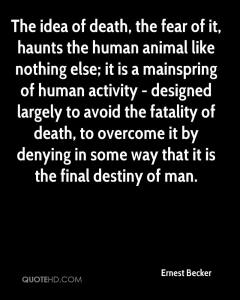 The question is whether we can be saved from our sacrificial tendencies. Since we are relational beings [or since our being is essentially relational], we can only be saved from these tendencies if we receive an identity from a being that is not at all interested in “being loved” (a being that comes from outside the human game of mutually established social expectations). This can only be a being that is not mortal, since it is mortality that leads human beings to the desire “to be loved”. If we experience the love of such a being, we can distance ourselves more and more from the desire to adjust ourselves to a self-image that seeks the approval of others. Moreover, since we diminish our auto-aggressive tendencies we will also diminish our hetero-aggressive tendencies. We will no longer defend a so-called socially acceptable self-image at the expense of others. Paradoxically, the acknowledgment of ourselves and our mortality might allow us to surrender to that Love that is “not defined by death”. Our newly found ability “to love” will enable others to love themselves as well, and save them as well from their auto-aggressive tendencies, thus enabling them to love others, etcetera. Until the whole world is “saved” by this Love.


 As modern psychology shows, humans get access to their particular cultural environments through mimetic processes (i.e. processes of imitation). Perhaps the importance of imitation as the heart of the human (psycho)social identity formation becomes paradoxically visible with the observation of children who lack the example of other human beings while growing up. Feral children often imitate animals instead, with all due consequences.
 The great spiritual figures and mystics of the Christian traditions have always believed that we come to ourselves by imitating Christ (see De Imitatione Christi by Thomas à Kempis – 1380-1471). This does not mean literally imitating some kind of idol (that is a perversion of spirituality) but imitating the life and love present in the figure of Christ. So what this actually means is: stepping into the realm of a love that allows us to be honest about and true to ourselves so that we become capable of lovingly accepting others as well.
 The conversion experience of Saint Ignatius Loyola
  Dirk Draulans, biologist and science journalist for Belgian Knack magazine, wrote an interesting article on the question of violence in human life (Violence is deeply rooted in us – The biology of terror;
  In this context Draulans refers to a thought experiment conducted by scientists who specialize in the emergence of culture. More specifically, he refers to an article in
  Quite a few scientists who participated in the thought experiment assumed that there soon would be tensions within the group, especially when food is scarce. Indeed, biologically speaking, violence is deeply rooted in us. Chimpanzees, who are models for the ape-men who were our ancestors, are ‘naturally’ violent. The world of chimpanzees is organized around the members of their own group, and neighboring groups are by definition enemies to be fought. Last year,
 Scientists are struggling with the difficult balance between our propensity to violence on the one hand and our ability to cooperate on the other. This is shown by two books published last year. In
 In a video compilation I made (on the origin of cultures) as
  of Bolivia descendants of the Inca stage a festival called Tinku to receive a good harvest from ‘the mountain spirits’ (this is also shown in the video compilation, on the origin of cultures –
  Wealth inequality and wealth visibility can both potentially affect levels of cooperation in a society and overall levels of economic success. Akihiro Nishi et al. use an online game to test how the two factors interact. Surprisingly, wealth inequality by itself did not damage cooperation or overall wealth as long as players do not know about the wealth of others. But when players’ wealth was visible to others, inequality had a detrimental effect.
 I guess ‘reason’ alone doesn’t make us human. There are ‘matters of the heart’ too, guiding us to use our brains not to build weapons of mass destruction but to build ‘bridges of solidarity’…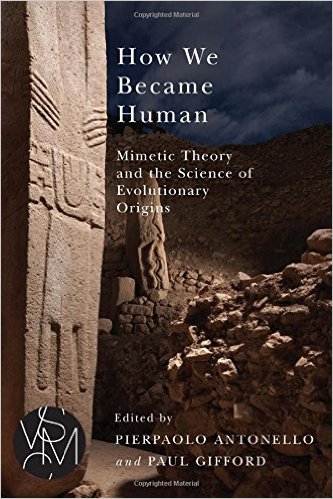
 platonische liefde van een half uur en enkele minuten
 gehaikud
 uitgesproken


 ik wil bloeden
 It would be very interesting to create an intensified dialogue between
  Among other things, biology and psychology professor Paul Rozin conducted a research with children from 16 months to five years of age. This resulted in a paper first published in Appetite (7: 141-151; June 1986),
  “A major feature of the development of food selection is learning what not to eat.” In other words, disgust is not just a biological thing, a matter of nature. It is a cultural thing too, a matter of nurture. In yet other words, a huge part of our development concerning likes and dislikes of food lies in the imitation of others. If disgust is a matter of nurture it is also a matter of mimesis. Powerful social models have the potential to increase or decrease the disgust for certain foods. For instance, the disgust for organ meat is decreasing since it is increasingly perceived as food served to the beau monde in fancy restaurants. Organ meat thus becomes an object of mimetic desire, while at the beginning of the nineteenth century, it used to be something undesirable for the rich as it was “meat for the poor”.
 The problem, of course, is that competing groups imitate this reasoning for their own particular group and thus reinforce the rivalry between each other (read René Girard’s Battling to the End in this regard, on mimetic rivalry on a planetary scale – highly recommended!).
 Not surprisingly, in light of mimetic theory, disobedience is more likely to occur:
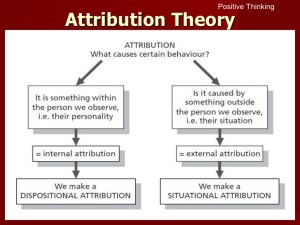 People are motivated to explain their own and others’ behavior by attributing its causes to situation or disposition. Again, not surprisingly in light of mimetic theory, people show the tendency to overestimate personality factors in explaining the behavior of others, while they underestimate situational influence. On the other hand, the concept of self-serving bias points to the fact that people often do the opposite when explaining their own behavior: people try to justify themselves.
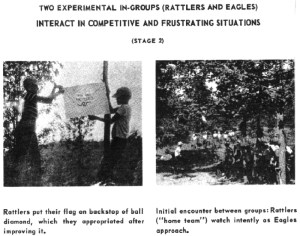 “us vs. them” social identities that are strengthened when groups compete (in-group vs. out-group;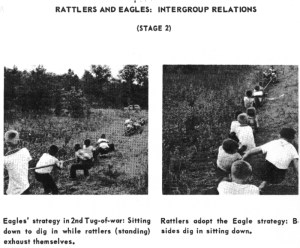

 The mimetic building blocks of our psycho-social fabric are at once responsible for the preservation and disintegration of that very same fabric. One of the well-tried means to restore a social order that is in crisis because of escalating mimetic rivalry, is the so-called scapegoat mechanism. This restoration again rests on mimetic processes. Let’s turn to the example of the soccer team once more. When a team loses time and again, that’s normally no favorable factor for the group atmosphere. Teammates start blaming each other for bad results, maybe even sabotaging each other. There also might be ill-will towards the coach by players who feel they’re not given enough opportunities to play matches. And when the coach becomes part of the rivalry and frustrations within the team, that’s usually the end of his career there. As more players imitate the ill-will of some teammates towards their coach, the latter becomes the one held responsible for all the major problems within the team, and he’ll be fired by the board in the end. Instead of recognizing the mimetic origins of social disorder, people tend to blame one outsider or a group of outsiders. This scenario is well-known.
 SCAPEGOAT SHADOWS