Pieta (Michelangelo)Last year I took part in a conference organized by the Flemish Emmaüsforum. This forum is based in my hometown Aalst and I’m happy to be one of its members. The conference theme revolved around the way our identities and human self-understanding are shaped by “stories”. Hence the title of the conference, De Mens is zijn Verhaal – Man is His Story.

The aim of this meeting was to explore how human experiences receive meaning from age-old images, metaphors and story cycles, especially from the Christian tradition. We started from the observation that science cannot express the essence of an experience like grief, for instance. A merely scientific explanation of the origins of grief and the way it operates do not give you the experience itself. The age-old stories of mankind are a living rejection of scientism, allowing us to communicate, transmit and share the depths of the human condition.

We invited Nic Balthazar, a Belgian director whose movie Tot Altijd (Until Always) made use of several Christian themes to tell the story of Mario Verstraete. Mario Verstraete was suffering from MS and fought for a legislation of euthanasia in Belgium. In 2002, he was the first to make use of the new law on euthanasia.

Other speakers for the conference included Sylvain De Bleeckere (philosopher), Jens De Vleminck (philosopher) and Nikolaas Sintobin SJ.

I was reminded of some of the discussions during that meeting when I heard of a new proposal regarding the law on euthanasia in Belgium. The Guardian reported the news like this:

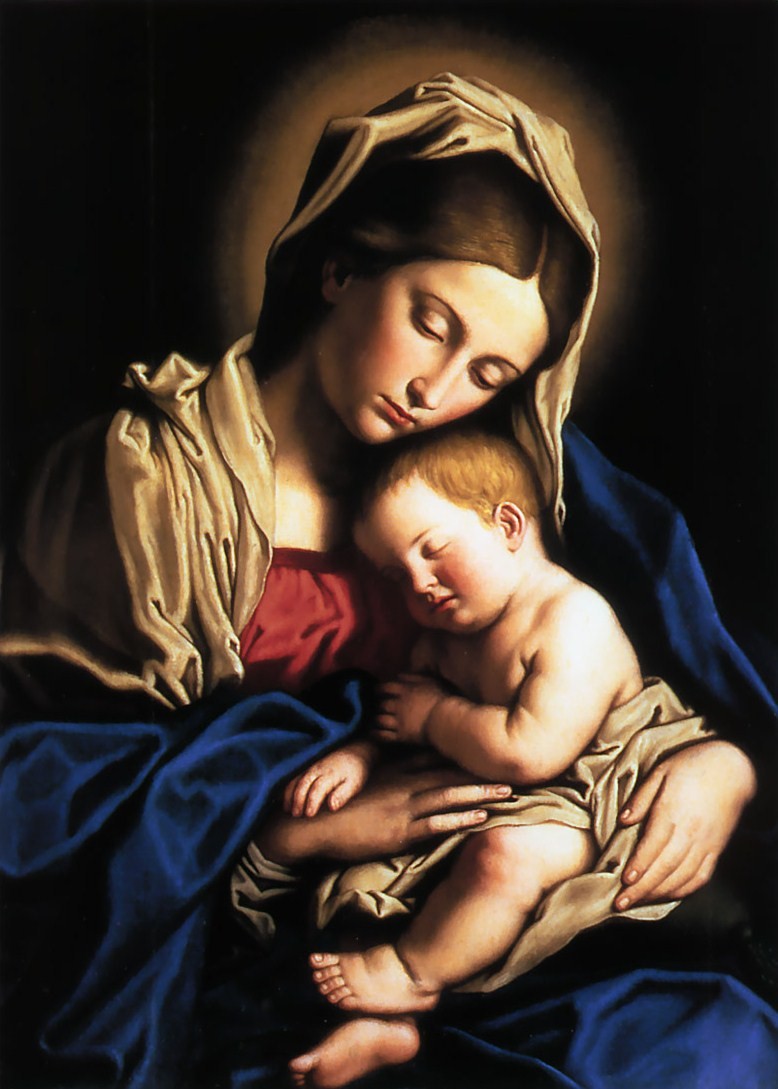
Baby Jesus and Mother MaryBelgium came a step closer to introducing the right to grant euthanasia for terminally ill children, breaking what is an almost universal taboo, when a parliamentary committee voted it through by a large majority.

The law, which still has to go to a vote of the full parliament that analysts say is likely to pass, would make Belgium the first country in the world to remove the age limit for the procedure.

Safeguards would exist, which include insisting parents approve their child’s decision to die. […] The Belgian law requires a psychologist to evaluate children’s ability to choose to die. Opponents have said it is impossible to determine whether a child is able to take such a decision. […] Belgium is already one of the world’s most liberal countries when it comes to euthanasia, making it available to adults who are not terminally ill.

I have to say that I believe this to be a very scary development in my country. I don’t want to judge. I just want to raise the question on whatever happened to our will to bear each other’s suffering. Adults who are not terminally ill, suffering – also merely psychologically – “in an unbearable way” can ask for euthanasia in Belgium. Can’t we, as a society and as individuals, do anything to prevent this desire for death? (Read more on this by clicking here).

Pieta (Jan Fabre)Pieta, the image of Christ held by his mother, is a powerful reminder of a motherly Love that desires life, even when everything seems lost and broken. Jan Fabre (born 1958) reinterpreted the famous Pieta sculpture by Michelangelo (1475-1564), calling his sculpture Merciful Dream. Maybe these images can help us to reimagine the tension between life and death, taking into account the horror of suffering as well as the miracle of love against all the odds. Maybe they can even inspire us to accept and be comforted by the caring hands of others when we feel lost… and broken.

To introduce the topic of the conference De Mens is zijn Verhaal I made a video with different interpretations of the Pieta, showing some fragments of the film Tot Altijd as well. Music is by Leonard Cohen, Come Healing (click the title for song lyrics). The image of the Mother and Child hopefully shows that we are not alone, and that others have walked similar paths before us…

CLICK TO WATCH:

Shane Koyczan is a spiritual man. A man of poetry and gentle madness. A man of stories, a man of truth. A man of beauty. His poem To This Day would be a great way to end a first part of a journey with mimetic theory in high school, especially regarding what I’ve written so far on the film American Beauty. It could follow these posts:

  1. Mimetic Theory in High School (click to read)
  2. Types of the Scapegoat Mechanism (click to read)
  3. Scapegoating in American Beauty (click to read)
  4. Philosophy in American Beauty (click to read)
  5. Real Life Cases of Ressentiment (click to read)

quote A weed is but an unloved flower Ella Wheeler WilcoxTo This Day and Shane’s TED-talk contain many themes I’ve written about before, for instance in a post entitled Atheism: a lack of unbelief?:

A person’s worth cannot be determined solely by human perception and judgment. Man is not simply the child of a “social other”, i.e. the product of a man-made social environment in which he gains or loses a sense of (self-) worth. He’s also, following the thoughts of people like James Alison and Emmanuel Levinas, a child of “the other Other”, and we should postpone any final judgment on other people and ourselves.

It also reminded me of this famous quote: “Every finite spirit believes either in a God or in an idol” (Max Scheler, 1874-1928). I wrote about this in several posts before, for instance in a post entitled That is (not) the question, about rap star Diam’s conversion to Islam – it talks about how we have the tendency to sacrifice ourselves and others to the demands of a so-called admirable (self-)image that seeks confirmation and recognition:

quote Shane Koyczan Be the weedDiam’s discovered how she tried to live up to the expectations of her fans, and how this enslaved her. She was kneeling to an image of herself as the admirable idol her fans wanted her to be. Kneeling to Allah, on the other hand, apparently meant that Diam’s no longer bowed to the demands of the music and entertainment industry. It was a turning point in her life. It enabled her to free herself, and to criticize the priorities in her life. From now on, she would seek and explore another source of motivations for her life.

Finally, Shane Koyczan’s story is reminiscent of Peter Howson’s story in a post entitled Desert Moments with Peter Howson:

“I used to be very badly bullied at school and when I was a bouncer in a nightclub for quite a few years I changed in a false sense then, and became a bully myself.” In other words: Howson became the imitator of his persecutors… He followed the mimetic principle of vengeance.

CLICK TO WATCH the video To This Day (click here to read the lyrics in pdf):

I’d like to give some quotes from his TED-talk as well, because they illustrate some key insights from René Girard’s mimetic theory and they reminded me of those previous posts:

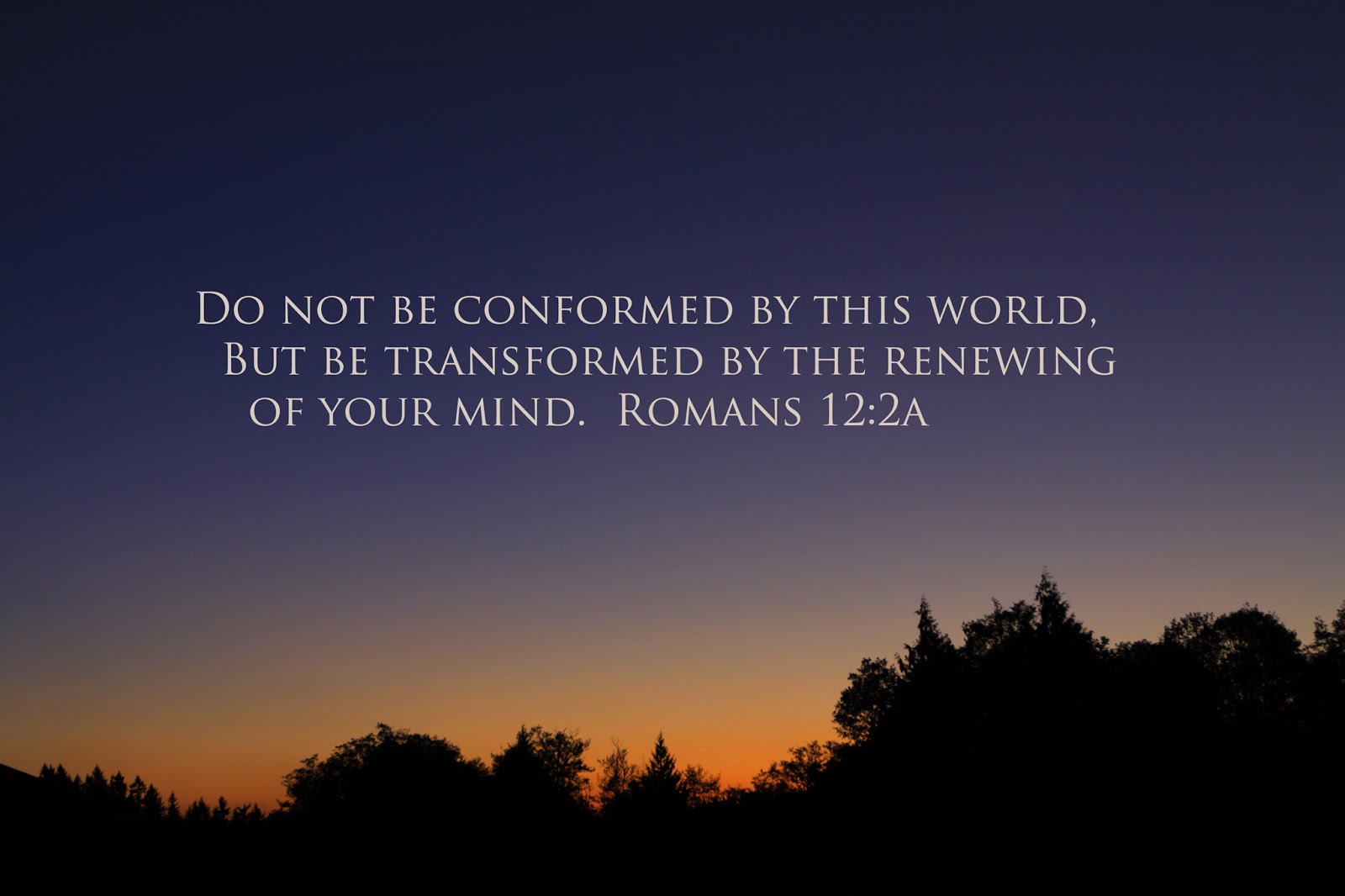
quote do not be conformed by this world RomansWe were expected to define ourselves at such an early age, and if we didn’t do it, others did it for us. Geek. Fatty. Slut. Fag. And at the same time we were being told what we were, we were being asked, “What do you want to be when you grow up?” I always thought that was an unfair question. It presupposes that we can’t be what we already are.

See, they asked me what I wanted to be, then told me what not to be. And I wasn’t the only one. We were being told that we somehow must become what we are not, sacrificing what we are to inherit the masquerade of what we will be. I was being told to accept the identity that others will give me.

quote be this guyOne of the first lines of poetry I can remember writing was in response to a world that demanded I hate myself. From age 15 to 18, I hated myself for becoming the thing that I loathed: a bully. When I was 19, I wrote, “I will love myself despite the ease with which I lean toward the opposite.

CLICK TO WATCH Shane’s TED-talk:

too cool for schoolBefore I continue posting material and suggestions for a high school curriculum on mimetic theory, I just have to report something way cool that happened at school today. Jozefien Meersschaut, one of my students who is new to our school this year, came up to me before class and simply said, “You know, sir, my aunt worked with professor René Girard at Stanford University for a PhD; he was her mentor.” I was like, “You must be kidding me…” She continued, “Well, her name is easy to remember, it’s Josephine like my name, Josephine Gross.” She also told me that her aunt’s brother, her uncle, knew the work of Girard quite well.

Well, I’ll be damned! Indeed, it’s a small world after all.

Of course you come across Girard while reading novelists and essayists like J.M. Coetzee and Milan Kundera. Kundera even claimed in his Testaments Betrayed that Mensonge romantique et vérité romanesque, Girard’s first major work, was the best book he ever read on the novelHe is but one of many in praise of this book. Well-known atheist philosopher Alain de Botton rates it five stars out of five on goodreads (click here to read more on Alain de Botton and Girard).

Further on in the intellectual world, other contemporary well-known philosophers, atheists like Gianni Vattimo or Slavoj Zizek, a socially oriented philosopher like Hans Achterhuis or the “Christian thinker of Modernity” Charles Taylor… were all heavily inspired by Girard. Vattimo wrote a book together with Girard. Hans Achterhuis constantly refers to Girard in most of his major works. Charles Taylor attended an important conference on Girard’s work at the University of Antwerp in 2001… Slavoj Zizek, as an atheist, agrees with Girard’s basic assessment on the nature of Christianity’s historical impact. Zizek writes (in a collection of essays, namely God in Pain: Inversions of Apocalypse):

slavoj zizek“[Quoting Jean-Pierre Dupuy] ‘Concerning Christianity, it is not a morality but an epistemology: it says the truth about the sacred, and thereby deprives it of its creative power, for better or for worse.’ [Zizek himself] Therein resides the world-historical rupture introduced by Christianity: now we know, and can no longer pretend that we don’t. And, as we have already seen, the impact of this knowledge is not only liberating, but deeply ambiguous: it also deprives society of the stabilizing role of scapegoating and thus opens up the space for violence not contained by any mythic limit.” (Quote from Zizek in Slavoj Zizek & Boris Gunjevic, God in Pain: Inversions of Apocalypse – [Essay] Christianity Against the Sacred, Seven Stories Press, New York, 2012, p. 64).

De Geruchten (Hugo Claus)And then we have not yet talked about renowned psychologists like Andrew Meltzoff or Vittorio Gallese, who set up a dialogue between their own work and René Girard’s mimetic theory. I could go on for hours I guess, talking about how Girard keeps on popping up in the humanities, even in the world of economy and finance (see for instance Peter Thiel, an entrepreneur who cofounded PayPal and set up Imitatio to promote Girard’s work; he’s also one of Girard’s former students). I could talk about Girard’s influence in many other fields and contexts, for instance about De Geruchten, a novel by Hugo Claus written with Girard’s work in mind…

Ah, well, none of that is as cool as Jozefien coming up to me saying, “My aunt worked on a PhD with professor René Girard…,” now is it?

I guess mimetic theory is right by claiming that our approach to reality is highly mediated by our social environment. That is true for our assessment of philosophical and scientific theories as well, hence also for mimetic theory. So I secretely hope that Jozefien likes her aunt and uncle. It will make access to what’s actually being said a lot easier :).

Perhaps we are often too much interested in an author’s identity to appreciate what is actually being written. To some people it is enough to know that René Girard is a Christian to dismiss his work (although they will often encounter similar content, albeit in different terms, in other contexts and appreciate it!). A shame, really, but all too human.

J.K. Rowling Robert Galbraith quoteThink, for instance, about the book J.K. Rowling wrote under the pseudonym Robert Galbraith. Before the general public knew that the crime novel The Cuckoo’s Calling was actually written by Rowling, who became famous for her Harry Potter books, the book only caught the favorable eyes of some critics. Just moments after the news of the author’s true identity broke, Harry Potter fan site The Leaky Cauldron reported that the book had only sold 1,500 copies up to that point, and that a second Galbraith book was to be published a year later. A few hours later, New Statesman reported that the book’s Amazon sales had gone up more than 150,000 %. Of course no one doubts Rowling’s talent for writing, but this story shows that not all gifted authors sell as much as their equally gifted colleagues. Still, “Robert Galbraith” wrote the exact same book as “J.K. Rowling”. People’s desire to buy The Cuckoo’s Calling was (mimetically) awakened by the name of Rowling, not just by the content itself or by the critics – who proved to be weak models for mediating the desire of potential readers…

American Beauty RoseOn the other hand, not everything that is hyped is worth the hype. It is not because a majority of people claim that “the emperor’s new clothes are beautiful” that there is actually anything to see at all. Our tendency to judge reality by looking at others (because of our mimetic tendencies) sometimes fools us. It may blind us for what’s truly worthwhile and beautiful. And so we’re back at one of the major themes of American Beauty, the film I wrote about in some previous posts :). Thinking of the roses in that movie, I’m reminded of that famous line in Shakespeare’s Romeo and Juliet:

What’s in a name? That which we call a rose by any other name would smell as sweet…”

In short, it’s been a really cool and inspiring day in this “small world” ;).

a rose by any other name would smell as sweet

I just had to share this amazing story! It is told by Adam Ericksen at the Raven Foundation website. Here it is, republished with kind permission:

The Internet can be a very mean place. But it can also lead us to grace.

BalpreetThe dichotomy of meanness and grace was recently displayed on the website reddit.com. The backstory goes like this: A man was waiting in line at airport security. He spotted Balpreet Kaur, a young woman who is a baptized Sikh and a student at Ohio State University. The man surreptitiously took out his phone, positioned the camera, and while Balpreet looked away, he took her picture. Then he posted it to Reddit’s humor section, called r/funny, with the caption, “i’m not sure what to conclude from this.” The picture quickly went viral and people made demeaning comments about Balpreet’s appearance.

What was “humorous” about Balpreet’s appearance? She has facial hair.

It’s a classic example of Internet scapegoating. The original poster, whose reddit username was “european_douchebag,” (Seriously! You couldn’t make that up!) wanted to invite his Reddit community to join him in demeaning Balpreet’s appearance, and his community was happy to join. Balpreet became their scapegoat. As the picture went viral, people began posting degrading comments about her. They accused her of being ugly, and in that accusation they began to feel a sense of their own beauty.

Are You Imitating or IdolizingBut scapegoating always provides a false sense of beauty. Scapegoating boils down to this: We know that we are “beautiful” by comparing ourselves with someone else that we consider “ugly.” Unfortunately, scapegoating in this way can be seen throughout human cultures. Every culture has arbitrary standards of beauty that lead to scapegoating. When our sense of beauty is based on these arbitrary standards, it leads us into the trap of scapegoating. This is the trap that “european_douchebag” and his community fell into, and it is a trap that we all fall into. Until someone has the sense to pull us out.

And that’s exactly what Balpreet did. A Facebook friend informed her about the picture on Reddit. After she found the image and read through some of the comments, she posted her own response to her image and the demeaning comments:

Hey, guys. This is Balpreet Kaur, the girl from the picture. I actually didn’t know about this until one of my friends told on facebook. If the OP [original poster] wanted a picture, they could have just asked and I could have smiled :) However, I’m not embarrassed or even humiliated by the attention [negative and positive] that this picture is getting because, it’s who I am. Yes, I’m a baptized Sikh woman with facial hair. Yes, I realize that my gender is often confused and I look different than most women. However, baptized Sikhs believe in the sacredness of this body – it is a gift that has been given to us by the Divine Being [which is genderless, actually] and, must keep it intact as a submission to the divine will. Just as a child doesn’t reject the gift of his/her parents, Sikhs do not reject the body that has been given to us. By crying ‘mine, mine’ and changing this body-tool, we are essentially living in ego and creating a separateness between ourselves and the divinity within us. By transcending societal views of beauty, I believe that I can focus more on my actions. My attitude and thoughts and actions have more value in them than my body because I recognize that this body is just going to become ash in the end, so why fuss about it? When I die, no one is going to remember what I looked like, heck, my kids will forget my voice, and slowly, all physical memory will fade away. However, my impact and legacy will remain: and, by not focusing on the physical beauty, I have time to cultivate those inner virtues and hopefully, focus my life on creating change and progress for this world in any way I can. So, to me, my face isn’t important but the smile and the happiness that lie behind the face are. :-) So, if anyone sees me at OSU, please come up and say hello. I appreciate all of the comments here, both positive and less positive because I’ve gotten a better understanding of myself and others from this. Also, the yoga pants are quite comfortable and the Better Together t-shirt is actually from Interfaith Youth Core, an organization that focuses on storytelling and engagement between different faiths. :) I hope this explains everything a bit more, and I apologize for causing such confusion and uttering anything that hurt anyone.

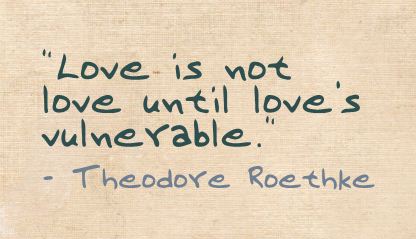
Love is not love until love is vulnerable (Theodore Roethke)Balpreet’s response was so powerful. It nearly brought me to tears for two reasons. First, Balpreet has a strong sense of her own beauty. She knows her beauty is not dependent upon arbitrary cultural standards. Rather, her beauty is dependent upon something else: The “Divine Being” that has made her body beautifully sacred – and has made everyone’s body beautifully sacred.

The second reason that my 33 year old eyes nearly teared up was that because Balpreet believes in the sacredness of all human bodies, she broke the cycle of scapegoating. Now, I could easily understand if she responded to “european_douchebag” with her own resentful meanness by saying, “your username is appropriate, you freakin’ jerk!” But if she did, she would simply be imitating “european_douchebag” in defining her own goodness against his meanness. Fortunately, Balpreet didn’t imitate him. Instead, she imitated the “Divine Being” who doesn’t reject any body, but rather makes all bodies beautifully sacred. Even the body of a man with the username “european_douchebag.”

Here’s where the story gets even better – her gracious response softened his heart. He actually imitated her response by responding with a gracious apology on his Reddit account:

I know that this post ISN’T a funny post but I felt the need to apologize to the Sikhs, Balpreet, and anyone else I offended when I posted that picture. Put simply it was stupid. Making fun of people is funny to some but incredibly degrading to the people you’re making fun of. It was an incredibly rude, judgmental, and ignorant thing to post.

The Imitation of Christ (Thomas à Kempis)When we imitate someone else’s meanness by responding with our own meanness, it only hardens both our hearts and makes us all mean. Fortunately for us, Balpreet is focusing her “life on creating change and progress for this world.” That change and progress is the courage to end the cycle of scapegoating. We learn from her that when we respond to scapegoating with the spirit of grace and forgiveness, believing in our own sacredness and the sacredness of the other, then our hearts can soften and we have the chance for a better imitation – the imitation of grace.

– by Adam Ericksen

I explored this dynamic of “the imitation of grace” also, in an earlier post. Click here for “Turn the other cheek.”

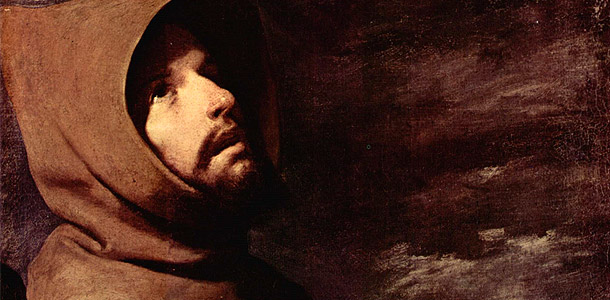
Saint Francis of AssisiBefore I got to know the Christian faith I always thought the three religious vows were an abomination. Why would anyone deliberately choose the masochistic way of a life in “poverty, chastity and obedience”? Only after I saw a documentary on the Franciscan Friars of the Renewal in New York and only after I delved into the Gospels more carefully I discovered that these vows were not ends in themselves, but should actually be understood as means to seeming antitheses of those very vows. It turns out that the three religious vows are anything but masochistic. They should be based on the paradox of the Gospel:

For whoever wants to save their life will lose it… What good is it for someone to gain the whole world, and yet lose or forfeit their very self?” (Luke 9:24a-25).

agape loveIn other words: there is a certain way of life we should get rid of to gain or regain ourselves. Again, to lose your old life is not an end in itself, but a means to gain a truer or more authentic new life. To gain social recognition often means that you’re accepted not for who you are, but for the image you’re presenting of yourself. Indeed, you’re losing your life while trying to “gain the whole world”. This process might also imply that you’re sacrificing others to protect that socially acceptable image. The apostle Peter denies knowing Jesus when the latter is arrested. Fearing that his association with Jesus will make him socially unacceptable as well, Peter presents an untruthful image of himself. From this angle Jesus rightfully says: “But whoever loses their life for me will save it…” (Luke 9:24b). If you lose your socially acceptable image to defend the one who is socially deprived, you will gain a truer identity as an unexpected and surprising consequence. To (re)establish relationships with the excluded is to take part in the dynamic of agape (love for one’s neighbor). It is making the “Body of Christ” – which is a body of Love – transparent.

Faces of Christ (Body of Christ)

The three religious vows can be helpful in actually settling the paradox of the Gospel:

  • THE VOW OF POVERTY LEADS TO RICHES
  • THE VOW OF CHASTITY LEADS TO INTIMACY
  • THE VOW OF OBEDIENCE LEADS TO FREEDOM

I’ll try to explain this by means of examples.

1. THE VOW OF POVERTY.

For whoever wants to save their life will lose it… translates to For whoever wants to become rich will become poor… Indeed. Ever met those people who “wanted it all” – perhaps in the mirror? Those who want to enjoy as much parties as possible? If you want all the clothes in the world and go out shopping all the time you won’t ever fully enjoy any of your clothes. If you want to attend ten parties in just one night you will not have enjoyed any of them, because you will constantly worry about the next party you might be missing. If you want to love all the women in the world, you won’t have loved any of them in the end.

The challenge is to choose life where it’s present. As a present. To quote John Lennon: “Life is what happens to you while you’re busy making other plans.” The challenge is to live in the here and the now. To choose quality instead of worrying about quantity. Intensity. NON MULTA SED MULTUM. Epicurus (BC 341-270) already warns against discomposing desires: “Do not spoil what you have by desiring what you have not; remember that what you now have was once among the things you only hoped for.” If you stop trying to possess what others have (which is the same as no longer surrendering to mimetic desire), you will become aware of the things you do have and discover that there’s a world of plenty in one single moment, at one place. Jesus expresses this quite beautifully (Matthew 6:25-34):

Saint Francis of Assisi (Regina Ammerman)“Therefore I tell you, do not worry about your life, what you will eat or drink; or about your body, what you will wear. Is not life more than food, and the body more than clothes? Look at the birds of the air; they do not sow or reap or store away in barns, and yet your heavenly Father feeds them. Are you not much more valuable than they? Can any one of you by worrying add a single hour to your life? “And why do you worry about clothes? See how the flowers of the field grow. They do not labor or spin. Yet I tell you that not even Solomon in all his splendor was dressed like one of these. If that is how God clothes the grass of the field, which is here today and tomorrow is thrown into the fire, will he not much more clothe you—you of little faith? So do not worry, saying, ‘What shall we eat?’ or ‘What shall we drink?’ or ‘What shall we wear?’ For the pagans run after all these things, and your heavenly Father knows that you need them. But seek first his kingdom and his righteousness, and all these things will be given to you as well. Therefore do not worry about tomorrow, for tomorrow will worry about itself. Each day has enough trouble of its own.”

Imagine what this attitude of “having enough” could mean for the natural environment! It’s no surprise Saint Francis of Assisi (1181-1226) deeply respected and enjoyed the riches of nature… If only we could follow his example a little better.

But whoever loses their life for me will save it… True, as explained earlier. It’s like imitating the good Samaritan. He is prepared to stop worrying about his plans and to free himself for the uninvited neighbor – right here, right now.

2. THE VOW OF CHASTITY.

Saint Francis and the SultanFor whoever wants to save their life will lose it… translates to For whoever wants to love everyone will not be able to love anyone… If you are a heterosexual bachelor who tries to develop a friendly relationship with a woman, you might soon find out that the woman herself or others fear you’re friendly because you want “something more”. This fear might prevent the possibility of more intimate relationships. On the other hand, when people know you’re married or that you took another vow of chastity, they will not have to fear you’re “after something more than friendship”. This opens up the possibility of more authentic and intimate relationships. It opens up the possibility of meeting the other as “other”, of true personal care – CURA PERSONALIS. Of course, we all know that in human relationships there is no black and white. There’s lots of colors in between the limits of a “grey zone”.

3. THE VOW OF OBEDIENCE.

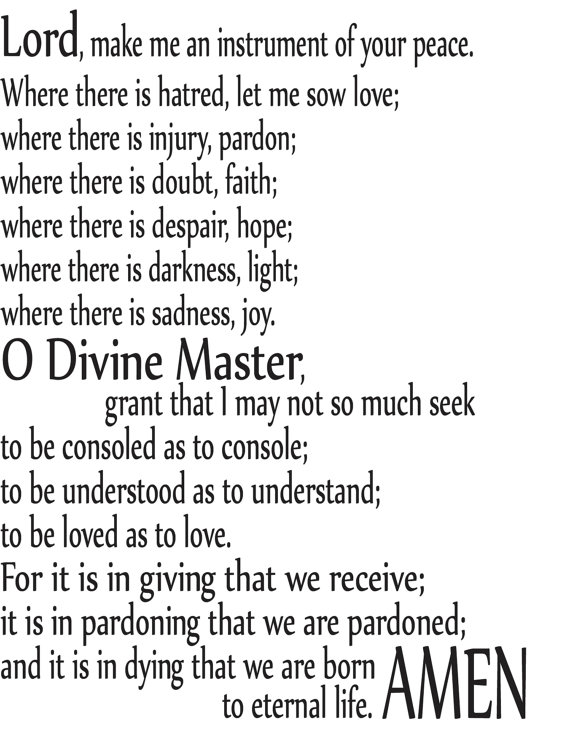
Prayer attributed to Saint Francis of AssisiFor whoever wants to save their life will lose it… translates to For whoever wants to be free will be imprisoned… Oh yes, we tend to listen to the ones who are promising us a great future, a beautiful career, happiness etc. – in one word: “paradise”. But if a workaholic keeps on listening to his boss, he will remain a puppet of a degrading work ethic. If a drug addict keeps on believing the drug dealer who tells him that he doesn’t really have any problem, he will remain an enslaved human being for the rest of his life… In contrast, the vow of obedience means that you will try to obey to the Voice of a Love that wants what’s best for you. It means listening to a Voice that liberates you and enables you to be who you are… Only if you’re capable of accepting and loving yourself, you will be capable of loving others as well. The drug addict is so in need of drugs that he will approach others out of this need. He will use others to satisfy his needs and he won’t be able to approach them as ends in themselves. But if he frees himself from these needs and takes responsibility for himself he will be able to take responsibility for others as well. FREEDOM AND RESPONSIBILITY are twin brothers, or sisters…

Poverty leads to riches, chastity to intimacy, obedience to freedom. All three outcomes are surprising consequences of the transformative power of the Gospel paradox. The imitation of Christ changes yourself, here and now, and by that you change the world.

I could only write this post after seeing an inspiring documentary on the life of the Franciscan Friars of the Renewal. It’s really worthwhile to catch a glimpse of their life and vocation. Here’s how they explain the three religious vows.

CLICK TO WATCH:

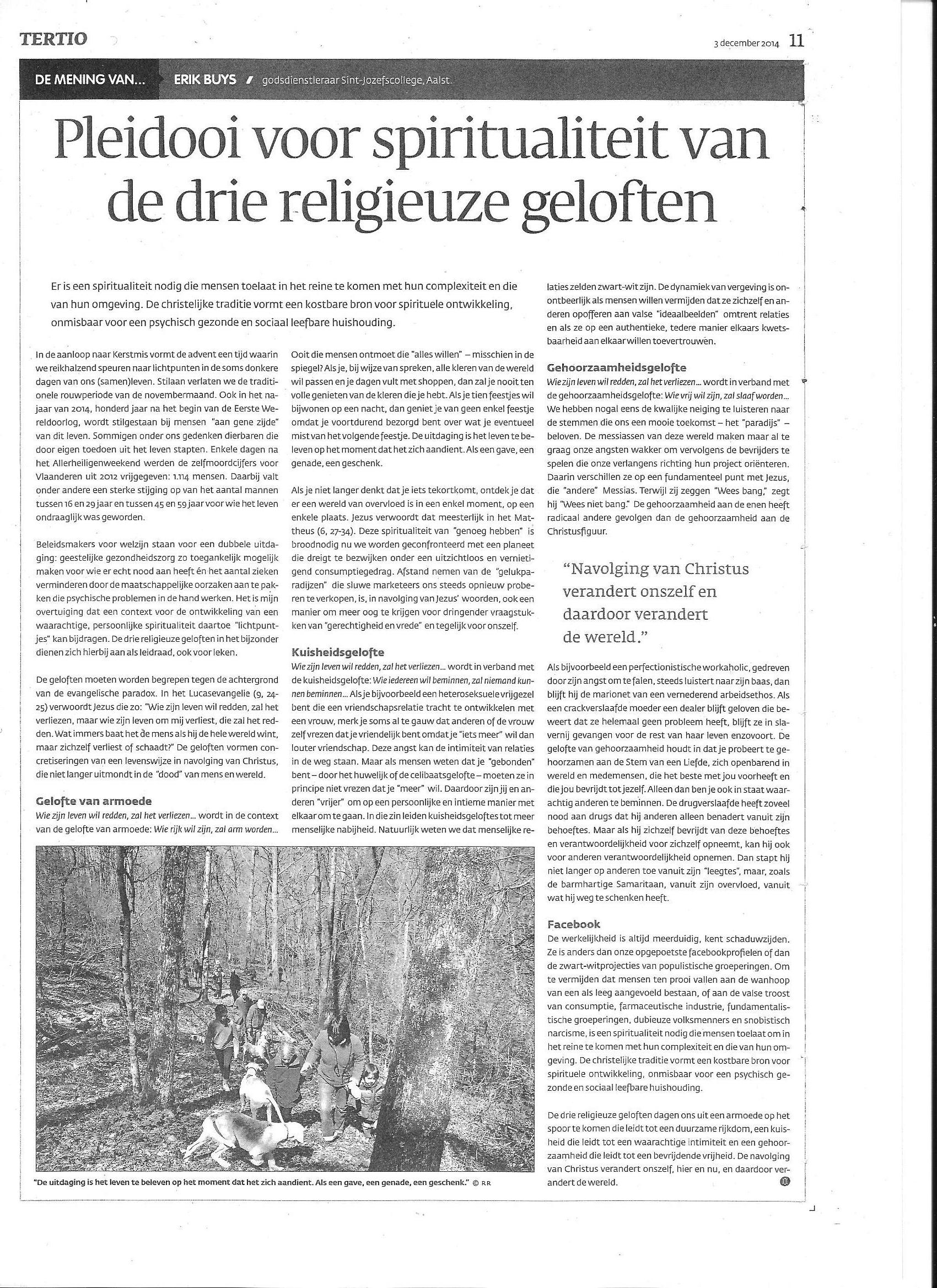
Een Nederlandstalige versie hiervan verscheen in de vorm van een artikel in het weekblad Tertio  – klik op de afbeelding om ze te vergroten:

Tertio 3 december 2014

THE QUESTION IS NOT JUST: TO BE OR NOT TO BE?

THE QUESTION IS: WHO/HOW DO YOU WANT TO BE?

French rap star Diam’s (born Mélanie Georgiades) shed some light on her conversion to Islam, after a few years of silence. Only 32 years old, she recently published a revealing autobiography, explaining the matter. While some people regard her decision as proof for an ongoing “Islamization of Europe” (from the right wing), or as proof for the fact that “she lost her mind”, or that “she gave in to the false consolations of irrational religious beliefs” (from the left field), other observations are possible.

This line struck me in an interview she gave for French radio (click here for more information):

Commenting on her decision to wear a veil or hijab, she said: Pour certains, une femme qui porte le voile le fait forcément sous la contrainte. Mais non! Ca peut être par amour aussi, pour Dieu… (translation: To some, a woman who wears a veil does this because she is forced. On the contrary! It can equally be done out of love, for God…).

What some people fail to realize in Europe’s secularized society is the nature of traditional spiritual experiences, which also explains why they don’t understand decisions like Diam’s to wear a hijab. “Spirituality” today is often reduced to relaxation techniques or management tricks, helping people with busy schedules to cope with the demands of a performance oriented social life. But that’s not what spirituality in the traditional sense is about. A spiritual experience befalls us, and inspires us to question ourselves and our way of life. It literally inspires us to critique systems of oppression we help to sustain. This kind of self-critique is truly liberating, and cannot be reduced to the world we were functioning in until then, precisely because it looks at that world from another perspective. This is exactly the kind of experience which drew Diam’s to Islam.

Talking about her life before her conversion to Islam, Diam’s said in an interview: “I was very famous and I had what every famous person looks for, but I was always crying bitterly alone at home, and this is what none of my fans had felt.”

She added: “I was heavily addicted to drugs and went to a mental asylum to recover, but this was in vain until I heard one of my Muslim friends say ‘I am going to pray for a while and will come back.’ I told her that I wanted to pray as well.”

Recalling that moment, Diam’s continued: “It was the first time that I touched the floor with my head, and I had a strong feeling that I had never experienced before, and I believe now that kneeling in prayer shouldn’t be done to anyone but Allah.”

So, the first question any convert seems to ask (whether it is a Christian like Ignatius of Loyola or a Muslim like Diam’s), is:

WHAT HAS BEEN THE SOURCE OF MY EXPERIENCES OF JOY AND OF SORROW,

UP UNTIL NOW?

Diam’s, like Ignatius of Loyola, had been leading a life of ambition, pride, competition, and she was led by a desire for recognition, fame and power. And like Ignatius, she discovered how this kind of life gave her joy when ambitions seemed to be fulfilled, but it also made her sad when some things didn’t work out the way she planned. Moreover, new ambitions kept coming up. In short, she was suffering from a hunger that was never satisfied. She discovered how she tried to live up to the expectations of her fans, and how this enslaved her. She was kneeling to an image of herself as the admirable idol her fans wanted her to be.

Kneeling to Allah, on the other hand, apparently meant that Diam’s no longer bowed to the demands of the music and entertainment industry. It was a turning point in her life. It enabled her to free herself, and to criticize the priorities in her life. From now on, she would seek and explore another source of motivations for her life. It was a source that had always been there, but that she had forgotten about: LOVE. Not love for one’s admirable self-image or some other idol, but self-transcending love for others.

A spoiled brat cries because he is frustrated in his ambitions. A caring child cries because he suffers from the suffering of others. Diam’s turned from spoiled brat to compassionate child in a truly spiritual moment.

It’s good to know that spirituality does not liberate us from pain and suffering,

LOVE DOESN’T MAKE YOU HAPPY JUST LIKE THAT,

but spiritual reflection enables us to distinguish between two possible sources of happiness or grief:

IS IT MERE AMBITION

OR IS IT LOVE FOR MYSELF AND OTHERS WHICH MAKES ME HAPPY OR SAD?

Diam’s discovered how obeying to the demands of love – “divine” because of its unexpected awakening from outside the perspective of her life until then – liberated her to experience a different kind of sadness, and a different kind of joy. She consciously made a choice to place a higher value to the source of these latter types of feelings. Or, put differently, she discovered this truth:

“Every finite spirit believes either in a God or in an idol” (Max Scheler, 1874-1928).

Make no mistake, secularized readers. Converts like Diam’s don’t ask themselves first whether or not God exists to become “believers”. THAT IS NOT THE QUESTION! Converts like Diam’s get a clear vision on the reality of their lives and inner motives, and question these after experiencing the reality of love in a profound and often unexpected way. They are also aware of the historical and situated character of this experience. Regarding this, another line struck me in the interview I mentioned at the beginning of this post. Commenting on her discovery of the Holy Qur’an, Diam’s said: J’ai ouvert ce livre, comme j’aurais pu ouvrir autre chose… (translation: I have opened this book, like I could have opened something else…).

So, God is always higher. The Holy Qur’an is not itself God. The Bible is not itself God. These books are ways and means to another end, and should not be idolized as ends in themselves. Some people are Muslim. Others are Christian. Others atheists. And so on. But each and every one of us has the potential to experience the liberating reality of love and compassion. Knowing that you could have defined yourself as a Muslim if you would have been born in another part of the world doesn’t mean that you should stop being a Christian, or an atheist for that matter. It’s like you shouldn’t stop loving your wife knowing that you would have met someone else if you would have been born in another part of the world. We are historical creatures, and the way we discover the liberating reality of love depends on some arbitrary circumstances. Some experience Islam as a source of oppression, which forces people (especially women) to act and behave in a certain way. Others, like Diam’s, experience the opposite: Islam as a liberating force in a world ruled and consumed by neverending ambitions. The same goes for other religious as well as atheist convictions.

Once again, according to traditional spiritual reflection, the question should not be whether one believes in God or not, but it should be whether one is guided by ambition, love for power, fortune and fame on the one hand, or by the transcending dynamic of love for oneself and others on the other… Or, to put it differently once more: whether one is guided by idols or by a reality that can never be fully “captured”, “controlled” or “imagined”?

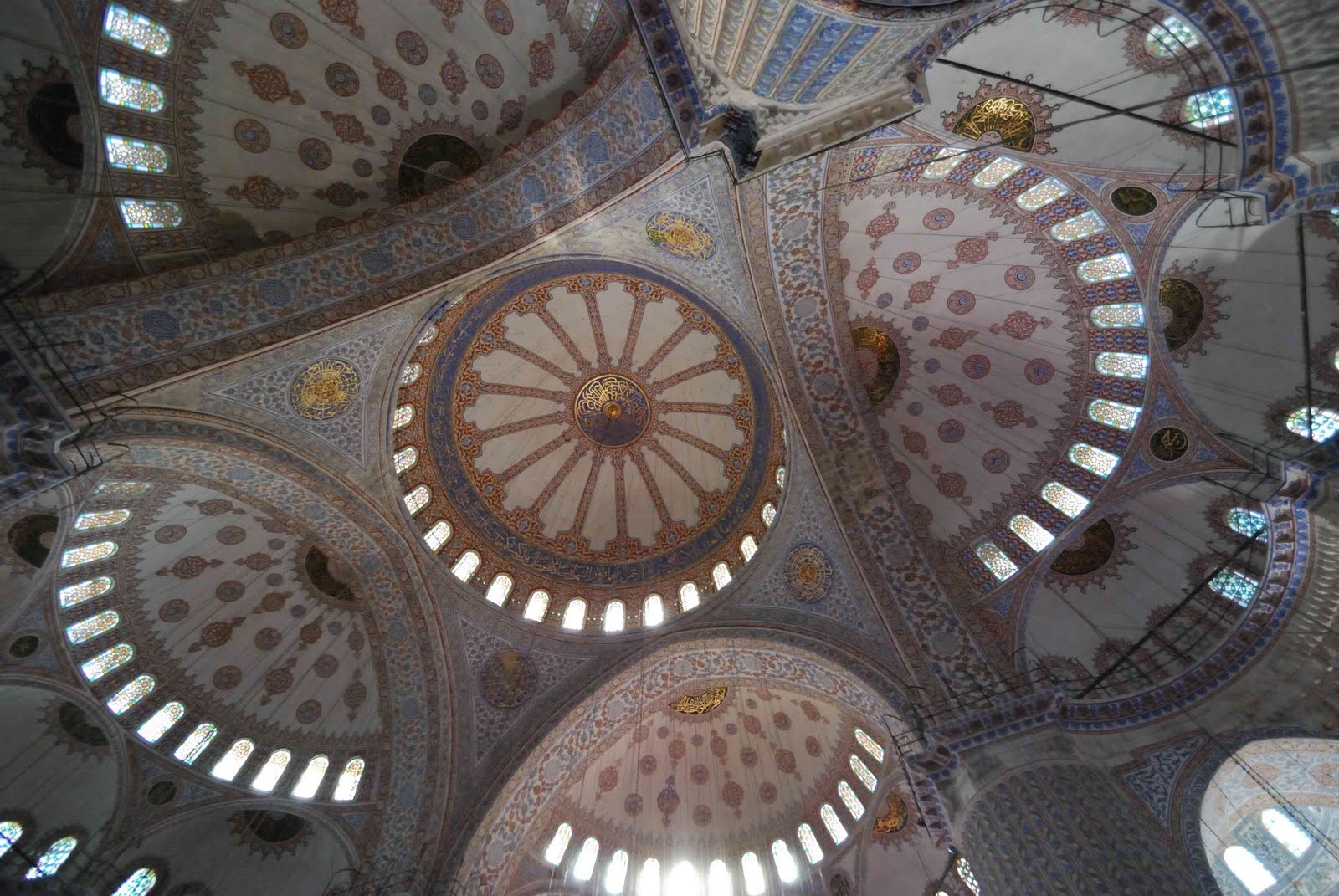
Anyway, Diam’s testimony on dealing with a religious tradition deserves to be imitated, doesn’t it? Being in Istanbul, earlier this year, and visiting some beautiful mosques, I can imagine some aspects of Diam’s experience with kneeling to Allah. It is indeed astonishing to realize that you aren’t perfect as a human being, and that you will never be able to completely perfect yourself. It is liberating to realize the vanity of ambitions that can never be fully satisfied, the vanity of a hunger that just keeps coming… and to give up on this hunger. It is liberating to drink from that other source… imitating, like so many others at different times and places, the one who said:

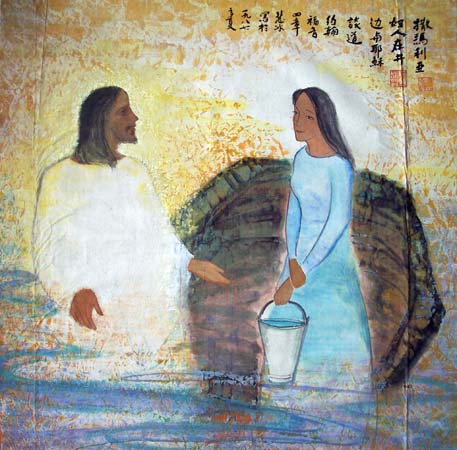
Those who drink the water I give will never be thirsty again. It becomes a fresh, bubbling spring within them, giving them eternal life. 

(John 4:14).

A day off from school for our pupils…

And we, teachers at a Jesuit high school (Sint-Jozefscollege, Aalst, Belgium), took time off to reflect on today’s challenges in education. Not surprisingly in our case, the legacy of St. Ignatius of Loyola (1491-1556) continues to provide the guiding principles to make this reflection possible.

The core of Ignatian spirituality, as well as the source of Jesuit pedagogy, consists of the Discernment of Spirits. Sometimes we’re guided by bad motivations, which ultimately lead us towards an inability to love ourselves, others, the world and God. Good motivations, on the other hand, facilitate our ability to love. Ignatius of Loyola, founder of the Jesuit order, became a master in discerning good from bad inner movements. A good introduction to the Discernment of Spirits can be found by clicking here.

Our school tried to summarize different aspects of this Ignatian spirituality of discernment in four pillars:

1. CURA PERSONALIS

2. NON MULTA SED MULTUM

3. FREEDOM AND RESPONSIBILITY

4. MAGIS

I made the following video clip to show a glimpse of the potentially emancipatory power of these four pillars, especially in the face of some of today’s challenges and conventional “mindframes”. It was initially meant to ignite reflection on our behavior in school, but it could inspire other contexts as well. After all, we’re all each other’s teachers, we’re all each other’s “example”…

CLICK TO WATCH:

[on two types of “rewards” – goals or consequences of one’s actions? – and the implications for human interactions]

“If there is no God, everything is permitted…”

This is basically the challenging idea of Ivan Karamazov, one of the main characters in The Brothers Karamazov, the famous novel by Fyodor Dostoevsky (1821-1881). Could this be true in any way?

At the beginning of a new year, I always ask my students the following questions:

Suppose there is no principal’s office, suppose you could never be punished for any of your actions – would you still respect your fellow students and your teacher?

Suppose there are no grades to win, and you didn’t receive any reward for studying your courses and reading your books – would you still listen to your teachers and study?

What would you do if you are not watched, if you live outside “the empire of the watchmen”?

Consider Matthew 6:1-2 & 6:5: Be careful not to practice your righteousness in front of others to be seen by them. […] So when you give to the needy, do not announce it with trumpets, as the hypocrites do in the synagogues and on the streets, to be honored by others. Truly I tell you, they have received their reward in full. […] And when you pray, do not be like the hypocrites, for they love to pray standing in the synagogues and on the street corners to be seen by others. Truly I tell you, they have received their reward in full.

To put things slightly differently:

Suppose there is no hell, no punishment in any way, would you still respect your fellow man?

Suppose there is no heaven, no reward in any way, would you still respect your fellow man?

Actually, this is the kind of challenge Christianity puts us to. Christ teaches us that there isn’t something like a heaven as an established “world” for which we should bring all kinds of sacrifices in order to obtain it. As if heaven would be the ultimate goal and justification of our existence. That’s exactly like the reasoning of a student who is prepared to work hard at his courses and to obey his teachers, not because he’s intrinsically interested in his courses or respectful of his teachers, but because he considers getting good grades as his ticket to success, power and happiness – “paradise”.

Christ subverts this sacrificial logic. Rather than being an ultimate goal that justifies, explains and gives meaning to our life, “heaven” is the potential consequence of our actions. By taking up responsibility for ourselves and one another, by loving our neighbor (which is “the righteousness of God’s Kingdom”), we co-create “heaven”. To use the student-analogy again: the student who learns to be genuinely interested in his courses will get good grades as a logical consequence of his love for studying. And he will have learned something!

Consider Matthew 6:25-34: Therefore I tell you, do not be anxious about your life, what you will eat or what you will drink, nor about your body, what you will put on. Is not life more than food, and the body more than clothing? Look at the birds of the air: they neither sow nor reap nor gather into barns, and yet your heavenly Father feeds them. Are you not of more value than they? And which of you by being anxious can add a single hour to his span of life? And why are you anxious about clothing? Consider the lilies of the field, how they grow: they neither toil nor spin, yet I tell you, even Solomon in all his glory was not arrayed like one of these. But if God so clothes the grass of the field, which today is alive and tomorrow is thrown into the oven, will he not much more clothe you, O you of little faith? Therefore do not be anxious, saying, ‘What shall we eat?’ or ‘What shall we drink?’ or ‘What shall we wear?’ For the Gentiles seek after all these things, and your heavenly Father knows that you need them all. But seek first the kingdom of God and his righteousness, and all these things will be added to you.

Therefore do not be anxious about tomorrow, for tomorrow will be anxious for itself. Sufficient for the day is its own trouble.

On the other hand, those students who are focused only on getting good grades and who fear failure will tend to forget what they have learned from the moment they have their grades and no longer “need” the information from their courses. Or they will stop being friendly to their former teachers once they have graduated.

In short, Christ doesn’t want us to respect our neighbor because we fear hellish punishment or long for some heavenly reward. He wants us to respect our neighbor because of our neighbor. He liberates us from a system of fear and anxiety based on punishments and rewards, creates the possibility of responsibility (because only a free man can be responsible) and genuine love – without ulterior motives -, and transforms the nature of sacrifice. In Christ’s view, sacrifice is not a gift to receive something from someone you need, nor is it a necessary obligation to protect some kind of “honor gone mad” (see the tragedy of Japanese kamikaze pilots during the Second World War),  but it is a gift from people who are thankful for what they already received by living up to the possibilities of their freedom.

Consider Matthew 5:23-24: So if you are offering your gift at the altar and there remember that your brother has something against you, leave your gift there before the altar and go. First be reconciled to your brother, and then come and offer your gift.

Of course, there’s a dark side as well to this liberation. Let’s go to the classroom once more. If a teacher tells his students that he will not punish them or, on the other hand, reward them with good grades, there are two possibilities: there will either be an atmosphere of cooperation guided by a genuine motivation to study, or… total mayhem – “hell”!

In Battling to the End, a book in which René Girard reconsiders the treatise On War by Carl von Clausewitz (1780-1831), the apocalyptic dimensions of Christ’s teachings are related to Christ’s deconstruction of “the god(s) of sacrifice” and of sacrificial systems in general. Girard makes clear that the biblical revelation indeed has two possible outcomes: either a world of ever more rivalry and violence, or a world of ever more Love.

Reading Battling to the End a while ago, I couldn’t stop thinking about two stories in the shadow of a potential apocalypse: Empire of the Sun and Watchmen. In both these stories further mayhem and violence is avoided – at least for the time being – by the restoration of a sacrificial system of fear. Empire of the Sun reminds us how the Second World War came to an end in Japan: by sacrificing tens of thousands of innocent people, victims of the atomic bombings in Hiroshima and Nagasaki. Watchmen also displays this kind of sacrificial logic. In the fictional story of this graphic novel, the tensions between the US and the USSR during the Cold War are released after an alleged nuclear attack from outer space. Once again the death of millions of civilians provides a “peaceful world”, some sort of “paradise” – however precarious.

In Empire of the Sun, the way the Second World War unfolds in the Far East creates the setting for a boy’s coming of age story. Empire of the Sun actually is an autobiographical novel by J.G. Ballard, and tells the story of an aristocratic British boy, James (“Jim”) Graham. In 1987, Steven Spielberg made a film based on Ballard’s novel, with a young and astonishing Christian Bale taking the lead role. In the film, Jim’s privileged life is upturned by the Japanese invasion of Shanghai, December 8, 1941. Separated from his parents, he is eventually captured, and taken to Soo Chow confinement camp, next to a former Chinese airfield. Amidst the sickness and food shortages in the camp, Jim manages to survive and becomes a token of spirit and dignity to those around him, all the while hoping to get back “home” again. Jim eventually finds comfort in the arms of his mother, after losing his Japanese kamikaze-friend among many others… The scene of Jim reunited with his mother sheds a little light of hope in a world which seems condemned to the sacrificial peace of the atomic bomb – and a seemingly never ending story of fear and worries, with no peace of mind…

I made a compilation using scenes from both Empire of the Sun and Zack Snyder’s 2009 movie adaptation of the graphic novel Watchmen. The two stories raise powerful questions regarding humanity’s possibility to cope with freedom and responsibility. I think they’re opening up a lot of issues that are also discussed at the COV&R Conference in Tokyo, Japan (July 5-8, 2012). As Jim learns towards the end of the film: there are no clear-cut, magical solutions to overcome the devastations of a world at war… But to follow Christ’s footsteps, one step at a time, might take us to unexpected and new dimensions. Watch out!

TO READ MORE ABOUT WATCHMEN AND MIMETIC THEORY, CLICK HERE TO READ – PDF

(this essay already appeared at The Raven Foundation and the Dutch Girard Society)

CLICK HERE TO RECEIVE INFORMATION ON MUSIC AND LYRICS USED IN THE COMPILATION – PDF

CLICK TO WATCH:

Leonard Cohen’s song Show Me The Place, a meditation on Christ’s willingness to surrender to Compassion and to suffer because of that surrender (and NOT because of a so-called necessity of suffering itself), inspired me to make a new Via Crucis – I also made one last year, click here to watch it.

Whatever some people might think of Mother Teresa’s choice to live amidst the sick and the poor, I believe she was genuinely touched by their humanity. I think she recognized the people she lived with in Calcutta as human beings, first and foremost, and that she did not want to reduce them to their sickness, their poverty and their suffering. She wanted to be a human being among other human beings. Her life is an inspiring example, following Christ’s footsteps, and that’s why my meditation starts off with her.

The Life of Christ testifies to a Love which “doesn’t want sacrifice nor suffering”. Sometimes we try to justify evil by saying it belongs to some “higher, even divine plan” which would in some ways be “rewarding”. Sometimes we make bad choices and identify them as “necessary evil” to achieve some ultimate goal – like studying something we really don’t like because of a so-called magical diploma which we believe will function as a key to open doors to a “happy, fulfilled life”. Opiate for the masses?

Christ’s God of Love reveals how suffering is not necessary, that it indeed is “evil” and not something we should easily justify. We should instead try to oppose it! Human beings are worth more than whatever plan we might come up with. They should not be means to another end, but ends in themselves. The story of the resurrection indeed reveals how Christ’s God of Love refuses the sacrifice of his Son, and that Christ gave his life because of Love – to let others come alive…

Christ’s Love is a Love which desires LIFE, liberating us to do everything we can to make life worth living, opposing the easy cynicism that “there are far worse things than never being born”.

Can we listen to the Voice of Love and experience (from within our natural, bodily conditions) that the suffering of fellow human beings is unjust? Or do we surrender to the silence of the stars, which, although they brightly shine, don’t give a damn about our trials and tribulations – even if we look for “reasons” and “necessities of fate” in our horoscope? Can we believe that Compassion is our deepest human faculty? Bruce Springsteen says it well (click to watch my post Bruce Springsteen’s Passion): “When we let our compassion go, we let go of what little claim we have to the divine…”

Besides music by Leonard Cohen, I used music by Linkin Park (an alternative version of their hit song Crawling) and Thomas Newman (Any Other Name, from the movie American Beauty). Images of the Way of the Cross are primarily by Jon Reischl and Nigel Groom. The final image is a painting by Fritz von Uhde (1848-1911), Das Tischgebet (Komm, Herr Jesu, sei unser Gast).

CLICK TO WATCH, LISTEN AND MEDITATE:

The Tree of Life. A film by Terrence Malick. A masterpiece.

A poetic meditation on Grace.

I compiled some scenes from the film to accompany a song by Dan Reed Network, Color this hour (only available as a live version).

It’s my Christmas meditation this year. Celebrating Christmas, we really welcome the miracle of Love incarnate.

Drops of water shed on a newborn baby’s head symbolically remind us of the transformational power of Love’s glory – a gentle, vulnerable yet free and creative dynamic amidst the grand forces of nature.

Enjoy. Click to watch and to listen:

“Well, I know Love sits in a corner,

patiently waiting for the bell to ring

Let it ring…

it’ll come out swingin’ when it feels ready

make it easy for the silent to sing…

Color the sky, baby, color this hour,

shed some rain on this broken flower…

Color the sky, color this hour,

shed some light with your infinite power…

then color this hour…”

(from Color this hour, by Dan Reed Network)