1. NARCISSIST OR REALIST?

selfie-syndromeBob doesn’t care about what other people might say or think of him. He knows that he can sing, even when the different juries of The Voice, Idol, X Factor and America’s Got Talent claim that his qualities lie elsewhere. Bob’s stubborn belief in himself would be admirable if it wasn’t so tragicomic. It is clear to the television audience as well that he sings totally out of tune. Apparently, however, he cannot accept this reality because his sense of self-worth fully depends on illusory self-concepts. After yet one more negative judgment by a jury he storms out of the audition room, even more proud than before. It is clear that Bob is a prime example of a narcissist. He is not capable of loving himself and of accepting his limitations. He rather drowns in his megalomania, convinced that the judgment of “the others” and their perception of his “faults” are based on ignorance. Of course, the reason why the narcissist becomes angry precisely is due to the fact that he does indeed desire the approval by others. So, paradoxically, when the narcissist cries “I don’t need your affirmation” he actually no longer fully hides that he secretly and desperately needs the affirmation. In order to be able to deal with his own situation, however, he must convince himself that he doesn’t need the others who don’t affirm his self-image.

my faults are all your fault

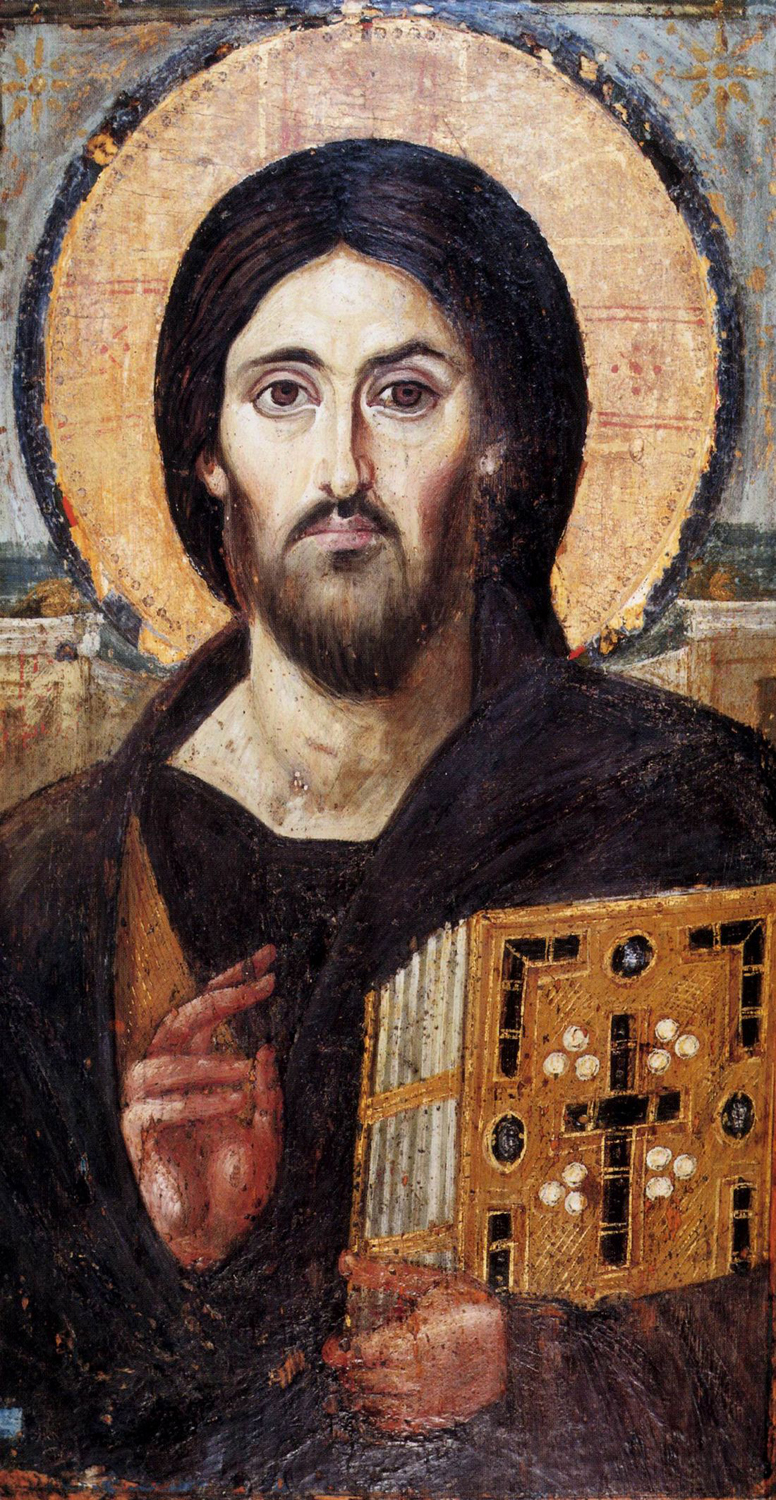
Two thousand years ago, there’s a man walking around in Palestine, a certain Jesus of Nazareth, who also doesn’t seem to care too much about the judgment of his fellow men – in his case his co-national Jews, most of the time. A “jury” of Jewish notables (including scribes and chief priests) repudiates him when he shares a meal with “tax collectors and sinners” (see for example Luke 15:1-2). Or whenever he involves himself with the sick or with “the pagans”, those who are said to be cursed by God. Eventually his opponents utter a critique that is echoed centuries later by German philosopher Friedrich Nietzsche (1844-1900): Jesus is the ultimate seducer of people with low self-esteem. It is all too easy to make yourself popular among people who feel humiliated, marginalized or insecure by telling them that they are loved by God.

If Jesus isn’t acknowledged by the rulers of his time, then this is compensated largely by the approval he receives from the common people. It’s something Bob can only dream of. He has to get through with the comforting approval of merely a handful of friends. Maybe there’s even a manipulator among them who makes Bob emotionally dependent on the positive attention he grants Bob. In any case, Jesus seems to be a bigger and much more refined attention whore than Bob will ever be. The social elite even considers Jesus’ growing popularity as a threat to the survival of the Jewish nation. Driven by a mad lust for power, Jesus indeed could launch an already lost revolution against the Roman occupiers. That’s why the Jewish leaders are convinced that Jesus has to disappear.

This reasoning, that tries to justify the execution of Jesus, is not bought by everyone. The Gospels claim that envy is the true motivation of Jesus’ adversaries (Mark 15:10, Matthew 27:18): jealous of the popularity of Jesus, and themselves driven by a vain desire for prestige, they want to get rid of Jesus. Even when the Gospels would be right about this, Jesus perhaps still remains the “Über-narcissist”. Many times worse than poor Bob. Indeed, the moment Jesus is judged and abandoned by nearly everyone, he is yet able to convince himself that he is loved by an imaginary friend – his divine “daddy”, his “Abba”. And what is the love of men compared to the love of a God? It seems Jesus is prepared to endure the worst of sufferings in order to gain a sacred hero position. In short, from this perspective Jesus appears as a totally nuts, narcissistic masochist who would rather die for an imaginary sadist than accept that he is worth nothing. He has no choice but to leave this world as a “disregarded genius” and to choose a so-called “divine dimension” as his true home. Only one time Jesus seems to doubt his megalomaniac construction. Just before his tortured, crucified body gives in, he screams (Matthew 27:46): “Eli, Eli, lema sabachthani?” that is, “My God, my God, why have you forsaken me?” Nevertheless, even then he calls out to a divine daddy who should grant him love and attention.

selfie pics healingThe thus depicted Jesus – the archetypal narcissist – knows many variants in real individuals throughout history. Besides, Jesus would not be an archetype if not every person suffers from narcissistic tendencies. Of course there are some distinct cases. Bob, for instance. But also the ISIS warrior who turns his back on the world he feels disrespected by and goes to live in a so-called environment “on God’s side”. Or the very insecure girl who locks herself up in the glorification of a shrewd, manipulating guru who satisfies her yearning for acknowledgment. Or someone like Adolf Hitler, who prefers to die instead of facing his defeat.

scientists-have-announced-a-new-unit-to-accurately-measure-narcissism-the-selfie-per-hourAnd yet… When you read the Gospels, you cannot escape the impression that there’s something quite different going on in the case of Jesus of Nazareth compared to the situation of Bob, the ISIS warrior and the insecure girl. Or when you compare Jesus to the shrewd guru and Adolf Hitler. C.S. Lewis (1898-1963) formulates the dilemma quite well in Mere Christianity: “I am trying here to prevent anyone saying the really foolish thing that people often say about Jesus: I’m ready to accept Jesus as a great moral teacher, but I don’t accept his claim to be God. That is the one thing we must not say. A man who was merely a man and said the sort of things Jesus said would not be a great moral teacher. He would either be a lunatic — on the level with the man who says he is a poached egg — or else he would be the Devil of Hell. You must make your choice. Either this man was, and is, the Son of God, or else a madman or something worse. You can shut him up for a fool, you can spit at him and kill him as a demon or you can fall at his feet and call him Lord and God, but let us not come with any patronizing nonsense about his being a great human teacher. He has not left that open to us. He did not intend to.”

In short this dilemma reads as follows (in the light of everything that went before): or Jesus was the ultimate narcissist, or he was the ultimate realist in a human world that time and again threatens to destroy itself because of snobbish vanities, idealistic utopias, sectarian tendencies and “the idolatry of social success”. As the ultimate realist in a human world that is tormented by narcissistic illusions Jesus would indeed be “not of this world”.

2. WHY JESUS OF NAZARETH IS NOT A NARCISSIST

There are reasons to believe that Jesus is not the narcissist he is blamed for.

First of all, Jesus is often precisely the one who confronts people with their own narcissistic tendencies. For instance, when he is surrounded by people who are about to stone a woman caught in the act of adultery (John 8:1-11), Jesus awakens a sense of reality in each individual. He asks people to consider whether they themselves are “without sin”. After which he decides that “whoever is without sin may cast the first stone”. At first sight this is merely a clever trick that allows Jesus to take control of the situation. Indeed, no Jew would claim to be perfect. That would mean that he claims to be like God, and then he would trespass the first of the ten commandments. So no one can cast the first stone, because that would be one of the greatest sins in the light of Jesus’ saying. At a deeper level, it is precisely Jesus’ constant “iconoclasm” of false self-concepts that, apart from the social position Jesus himself receives for doing so, opens up possibilities for new relationships between people.

A second set of arguments against the depiction of Jesus as a narcissist arises. The so-called iconoclasm of Jesus has two aspects, and they immediately clarify how much Jesus differs from gurus who need the manipulated adoration of weak, troubled minds.
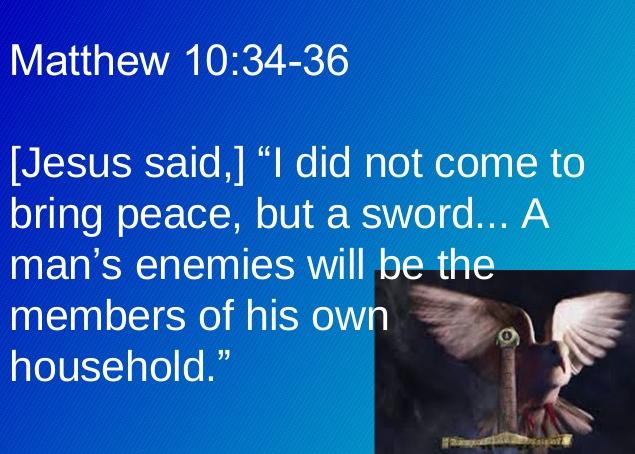
not peace but a swordOn the one hand, concerning the group people are part of and that often manifests itself at the expense of a common enemy (that adulteress, for instance), Jesus sows discord. It is no coincidence that he claims (Matthew 10:34-36): “Do not think that I have come to bring peace to the earth. I have not come to bring peace, but a sword. For I have come to set a man against his father, and a daughter against her mother, and a daughter-in-law against her mother-in-law. And a person’s enemies will be those of his own household.” This intention of Jesus, to create conflict where there is a certain order, is actually and paradoxically a plea against violence. Family members who slavishly obey a pater familias, tribe members who harmoniously feel superior to other groups, criminal gangs who blindly pledge allegiance to the mob boss, cult members and fundamentalist believers who are prepared to fight for their leader till death, anxious employees who sell their soul to keep their job in a sick working environment, (youthful) cliques who strengthen their internal cohesion by bullying someone, whole nations who bow to the demands of a populist dictator and execute so-called “traitors” – Jesus doesn’t like it one bit.
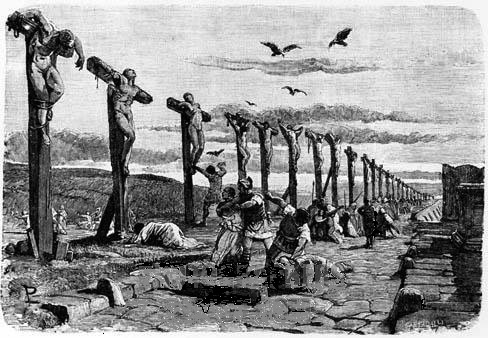
Pax Romana Crucifixion Via AppiaOpposed to the small and big forms of “peace” based on oppression and violence, of which the Pax Romana in the time of Jesus is an obvious case of course, Jesus challenges people to build peace differently. Family members who belong to a “home” where they can have debates with each other, members of enemy tribes who end age old feuds by questioning their own perception of “the other tribe”, former criminals who start to behave like “moles” to clear their violent Mafia gang, fundamentalists who – realizing what they do to those who supposedly don’t belong to “the chosen ones” – liberate themselves from religious indoctrinations, employees who address a reign of terror at their workplace, individuals who criticize the bullying of their own clique, pacifists who dare to dissent with the violent rule of a dictatorship and unveil its enemy images as grotesque caricatures – Jesus likes it. “Love your enemies”, Jesus says (Matthew 5:44). Everyone who no longer condemns the external enemy of his own particular group because of a stirred up feeling of superiority, generates internal discord: “A person’s enemies will be those of his own household.” It’s only logical.

Peace I leave with youIn short, Jesus argues in favor of non-violent conflict in order to end violent peace. That’s why he can say, eventually (John 14:27): “Peace I leave with you; my peace I give to you. Not as the world gives do I give to you.” Thereby he does not hesitate to re-evaluate and transform existing structures, rather than simply destroy them. This is, moreover, as a result of the first aspect of Jesus’ iconoclasm, a second reason why Jesus should not be characterized as a power-crazed, jealous narcissist. Jesus does not replace the existing, worldly order by imposing his own laws in competition with that order. If that were the case, he would be nothing more than yet another evil and paranoid mastermind conjuring up megalomaniac plots for world domination. The mythological story of Jesus’ temptation by the devil in the desert metaphorically clarifies that Jesus was historically experienced as someone who does not imitate the envious lust for power of his social environment (Matthew 4:8-10):

The devil took Jesus to a very high mountain and showed him all the kingdoms of the world and their glory. And he said to him, “All these I will give you, if you will fall down and worship me.” Then Jesus said to him, “Be gone, Satan! For it is written, ‘You shall worship the Lord your God and him only shall you serve.'”

Blake - Kingdoms
Blake – Kingdoms

Jesus is very clear about what he means by “serving God” in a conversation with a lawyer (Matthew 22:35-40):

A lawyer asked Jesus a question to test him. “Teacher, which is the great commandment in the Law?” And Jesus said to him, “You shall love the Lord your God with all your heart and with all your soul and with all your mind. This is the great and first commandment. And a second is like it: You shall love your neighbor as yourself. On these two commandments depend all the Law and the Prophets.”

In other words, from a Christian perspective God reveals himself – at least at a human level – in the not directly measurable, invisible reality of love of one’s neighbor. Jesus is convinced that the source from which he lives “desires mercy, and not sacrifice” (Matthew 9:13). The consequences of this conviction are paradoxical. It implies, as already mentioned, that Jesus refuses to merely sacrifice the existing worldly structures in order to establish his own rule. Hence he says (Matthew 5:17):

“Do not think that I have come to abolish the Law or the Prophets; I have not come to abolish them but to fulfill them.”

The priority of neighborly love implies that existing laws, structures and rituals should be tested against the extent to which they help to avoid making victims and to which they allow for authentic human lives. Man should not live according to rules, as if preserving a social system and its rules would be an end in itself, but rules should be means at the service of individual human beings and society as a whole. When Jesus and his disciples are criticized for doing things that are, strictly speaking, forbidden on the rest day – the Sabbath – Jesus answers (Mark 2:27):

“The Sabbath was made for man, not man for the Sabbath.”

Actually, throughout the Gospels Jesus constantly asks whether people act because of love of oneself and others (what Christian tradition identifies as “acting according to God”), or because of a certain social status that should bring approval (what Christian tradition identifies as “acting for the sake of an idol”). Jesus criticizes the way people behave when their behavior is caused by a desire for approval (Matthew 6:1-6):

“Beware of practicing your righteousness before other people in order to be seen by them, for then you will have no reward from your Father who is in heaven. Thus, when you give to the needy, sound no trumpet before you, as the hypocrites do in the synagogues and in the streets, that they may be praised by others. Truly, I say to you, they have received their reward. But when you give to the needy, do not let your left hand know what your right hand is doing, so that your giving may be in secret. And your Father who sees in secret will reward you. And when you pray, you must not be like the hypocrites. For they love to stand and pray in the synagogues and at the street corners, that they may be seen by others. Truly, I say to you, they have received their reward. But when you pray, go into your room and shut the door and pray to your Father who is in secret. And your Father who sees in secret will reward you.”

At first sight this text can be interpreted as a validation of Jesus’ mad and desperate narcissism: everyone who runs the risk of not being recognized by other people – including Jesus himself – can always count on the approval from an imaginary divine “Dad”. However, the “Father who ís in secret” is love itself that realizes itself independently from the question whether or not it results in “success”. From a Christian point of view the love that allows people to accept themselves and others – and thus “refuses sacrifice” – is not something that produces the approval from God, but it is itself a manifestation of God “at a human level”. The first letter of John very clearly formulates this conviction (1 John 4:7-8):

God is LoveBeloved, let us love one another, for love is from God, and whoever loves has been born of God and knows God. Anyone who does not love does not know God, because God is love.

An atheist who still brags about how he “does not need a heavenly reward” in order to “do good” still “sounds the trumpet” about his own “goodness”. The love the Gospels speak of is, by contrast, not always directly visible, and does not depend on visibility. Does a student throw his waste in a dustbin out of respect for his fellow students? Or because he desires the approval of his teachers and, at the same time, because he wants to avoid being punished? Indeed it is not directly visible whether or not a student respects certain rules because of love of one’s neighbor or because of love of one’s image. In the latter case the student will also fear losing his status. In the words of John’s first letter again (1 John 4:18), expressing the difference between the former and latter type of love:

There is no fear in love, but perfect love casts out fear. For fear has to do with punishment, and whoever fears has not been perfected in love.

An anxious person shows the tendency to act according to the supposed expectations of “meaningful” others in order to gain approval from them. This dynamic is tragic, and Jesus formulates this very succinctly in the Gospels (Matthew 16:25a-26a):

“For whoever would save his life will lose it. For what will it profit a man if he gains the whole world and forfeits his soul?”

Jamaican reggae star Bob Marley (1945 - 1981).   (Photo by Keystone/Getty Images)
Jamaican reggae star Bob Marley (1945 – 1981). (Photo by Keystone/Getty Images)

People who, because of anxious insecurity or romantic megalomania, dream of a utopian paradise of happiness (“the perfect partner” or “the perfect job” or even “the perfect society”), very often show masochistic tendencies. People indeed would literally sell their body and soul if you can convince them that they could gain “the whole world” by doing so. If you suffer from low self-esteem or, at the other end of the spectrum, from a superiority complex, then you’re no longer interested in yourself and others. You’re only interested in others to the extent to which they satisfy your craving for approval. Moreover, they no longer maintain a relationship with you, but with the image you present of yourself. In short, a person who models himself after an image that should produce approval is, eventually, not recognized for who he is. Hence: “For whoever would save his life will lose it.”

Moreover, it’s not just that people sacrifice themselves to the concerns of a socially acceptable image. Sooner or later others will also be sacrificed in order to protect reputations and narcissistic self-concepts. That’s precisely why Jesus reacts against the concern for socially acceptable images.

Bob Marley money is numbersEveryone who acts according to the desire for approval and loses himself is, actually, “dead”. In terms of the New Testament such a person “does not have eternal life abiding in him”. Indeed, he has to constantly adjust his identity to ever changing and thus transient images in order to socially remain at the top of the game. If you want to win the competition for social success, then you will have difficulty accepting that someone else is equally successful and you might become jealous. And when you can only see the other as a rival for your own position, you will want to see him disappear. Sometimes literally. That’s what the famous myth of Cain and Abel, from the book of Genesis, is all about. Both brothers offer a gift. But Cain cannot stand that the gift of his younger brother is more appreciated. This shows that Cain did not offer a gift because of love, to make someone happy – otherwise he would be glad that his brother’s gift results in happiness –, but because of his desire for approval. Biblically speaking, acts because of “love of an image that should produce (social) approval” are sinful, and they get in the way of “good” acts born out of “love of oneself and the other”. This doesn’t mean, however, that gaining approval or recognition is a bad thing as such. When you receive recognition and feel proud as a consequence of your actions, there shouldn’t be any problem. The murderous envy the archetypal Cain is suffering from can only arise because he lives in order to gain approval, because “being proud” is his goal. Because Cain is obsessively preoccupied with the things he misses, he remains blind to the attention he does receive. The New Testament radically resumes these motives, and Johns first letter thus formulates (1 John 3:11-15):
from death to lifeFor this is the message that you have heard from the beginning, that we should love one another. We should not be like Cain, who was of the evil one and murdered his brother. And why did he murder him? Because his own deeds were evil and his brother’s righteous. Do not be surprised, brothers, that the world hates you. We know that we have passed out of death into life, because we love the brothers. Whoever does not love abides in death. Everyone who hates his brother is a murderer, and you know that no murderer has eternal life abiding in him.

The New Testament authors are convinced that the possibility to abandon the narcissistic competition for “the highest social status” has to do with a love that is embodied exceptionally in Jesus of Nazareth. They try to clarify that Jesus of Nazareth time and again allows people to “resurrect” – following the just mentioned words from John’s first letter: Jesus allows people “to pass out of death (i.e. a life for the sake of socially acceptable images) into life (an authentic life in love)”. Of course this entails many risks. If you no longer live in accordance with a world dominated by the struggle for prestige, because you want to take sides with the victims of that struggle, then you should “not be surprised that the world hates you”. Nevertheless, instead of asking himself what he should do in order to “fit in”, Jesus asks himself how he can accomplish “that those who do not fit in may fit in again”. A prayer ascribed to Francis of Assisi (1181/1182-1226) is but one example from the Christian tradition that is a testimony to this dynamic: “Grant that I may not so much seek to be loved as to love…” This is the second aspect of Jesus’ aforementioned iconoclasm. It’s also, at the same time, a third argument against his depiction as a narcissist. When Jesus takes sides with the common enemy or easy victim of a united group, he does not have the ambition to alienate that person from his social environment. Gurus who desire recognition from easily manipulated victims do just that. Jesus, on the contrary, time and again challenges communities to truly respect the individuals they marginalized before. For instance, when he cures the Gerasene demoniac (Mark 5:1-20) he forbids this former “village idiot” to follow him. Instead, Jesus sends him back home. It’s but one case that shows how Jesus’ aim is not to make himself popular among a number of followers, although popularity often is an unintentional consequence of his actions. The Gospel stories show how Jesus, apart from himself, wants to create the possibility of loving relationships between people, relationships which are no longer based on sacrifices as a consequence of the love of socially acceptable images. In short, the paradoxical dynamic of love Jesus tries to obey alienates people from their own narcissistic identities (collective or individual), and opens up the road to more authentic relationships which refuse the sacrifice of a former “enemy”.

Martin-Luther-King-Jr-Responsible-Quotes

As mentioned earlier, the behavior of Jesus is not without risks. When you constantly take sides with “the socially crucified” chances are that you will be crucified yourself too. This is exactly what happens. To make things clear, though: Jesus doesn’t secretly hope that he will be crucified to enter into history as a “hero”. When he takes sides with the adulteress he doesn’t want the mob to stone her as well as him. At least that’s what the Gospels strongly suggest. They also show, at different times, that Jesus flees whenever he notices that people want to kill him. Eventually, however, he can no longer escape the murderous web of his adversaries. As is Martin Luther King (1929-1968) in later times, Jesus is well aware of certain death threats, and he warns his apostles that there will be a point of no return. At first Peter doesn’t want to accept this, whereon Jesus reproaches him (Matthew 16:22-26):

Peter took Jesus aside and began to rebuke him. “Never, Lord!” he said. “This shall never happen to you!” Jesus turned and said to Peter, “Get behind me, Satan! You are a stumbling block to me; you do not have in mind the concerns of God, but merely human concerns.” Then Jesus said to his disciples, “Whoever wants to be my disciple must deny themselves and take up their cross and follow me. For whoever wants to save their life will lose it, but whoever loses their life for me will find it. What good will it be for someone to gain the whole world, yet forfeit their soul? Or what can anyone give in exchange for their soul?”

Jesus knows that Peter tries to seduce him to establish himself as a mighty king. Apparently Peter does not see what kind of leadership Jesus actually envisions, although he called Jesus “the Messiah” a little earlier. Once again Jesus rejects the temptation to sell his soul to a competition with “the kings of this world”. Indeed he knows how such a struggle demands sacrifices, that people lose themselves and others in such a struggle. He does not want that. Instead he wants to generate another dynamic. Jesus claims that “whoever loses their life for him will find it”. Again this is only logical. When you take sides with the marginalized fellow man, you no longer lose yourself to the idolatry of socially acceptable images, and thus you “find” yourself. Jesus eventually takes the position of all those who are rejected. When his good friend Peter would take sides with him after Jesus is arrested, Peter indeed would no longer lose himself to a deceiving social profile.
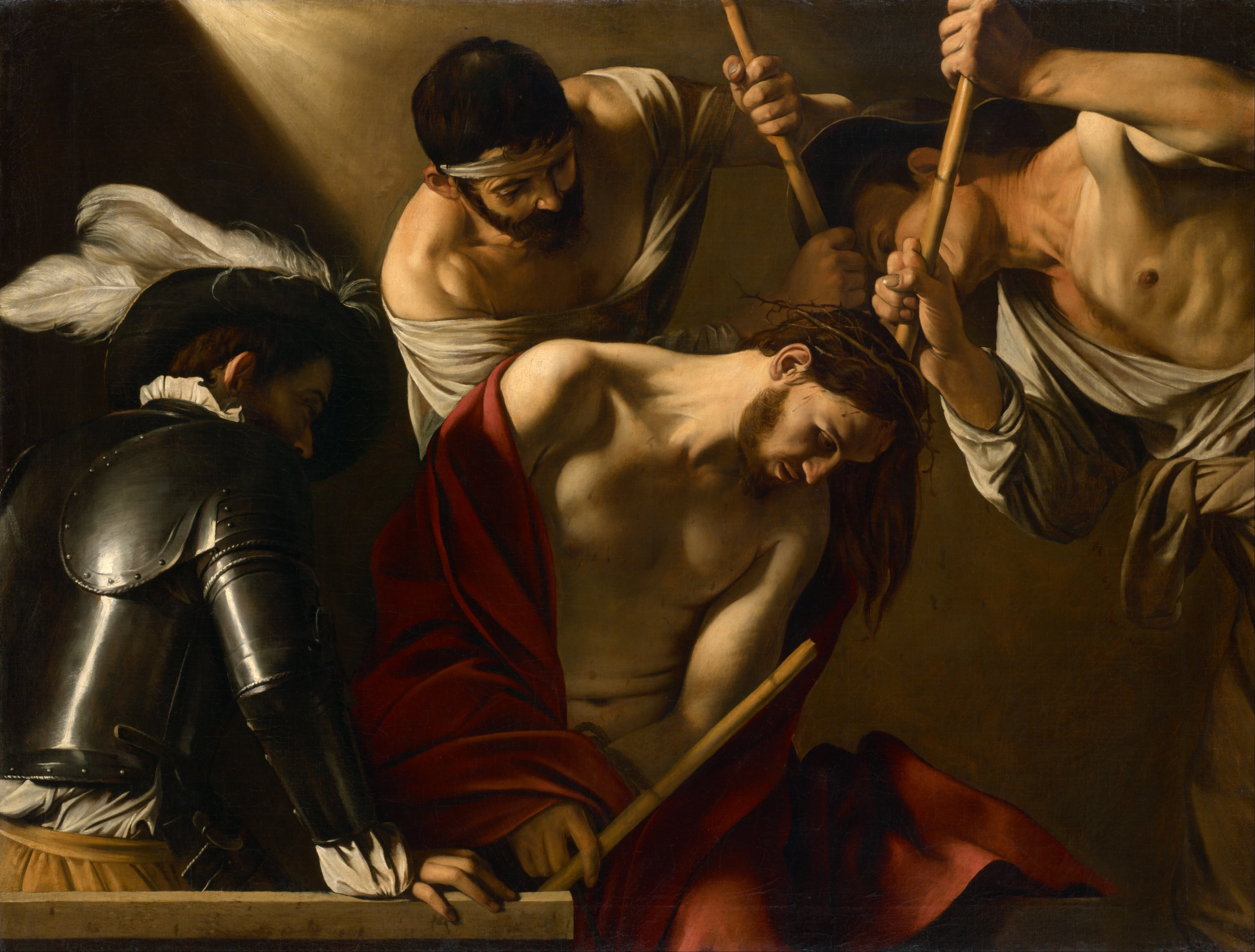
Crowning of Thorns CaravaggioDespite all Peter’s promises – which Jesus once again debunks as narcissistic illusions – Jesus eventually finds himself alone. As announced, Jesus refuses the mimetic rivalry (words of René Girard) with “the rulers of this world” who establish their power on the basis of sacrifices. Paradoxically this means that Jesus, if he continues to take sides with whoever is about to become a victim, might no longer experience mercy at some point, and that he should be prepared to die himself. In other words, this means that Jesus might have to “sacrifice himself against sacrifice”. Again, because Jesus refuses to “sacrifice himself” in favor of an all-controlling position of power, and because he takes sides with “the crucified”, he runs the risk of being crucified himself. When you take sides with the bullied, you run the risk of being bullied yourself. So when Jesus prays to his “Father” to, if possible, take “the cup of suffering and death” from him, and then says that “not his will but the will of his Father be done” (Matthew 26:39), it makes no sense to interpret this sentence as though Jesus all of a sudden believes that God “desires sacrifice”. Throughout the Gospel Jesus indeed is convinced that his Father “desires mercy, not sacrifice” (Matthew 9:13), and he acts accordingly: whenever people are about to be sacrificed, Jesus intervenes. However, if Jesus refuses to enter into a rivalry with those who establish their rule on the basis of sacrifices, there is no other option than to consider the possibility of his own death. Obeying the love that desires mercy, Jesus cannot launch a civil war to the detriment of society. That’s why he says, when questioned by Pilate after being arrested (John 18:36): “My kingdom is not of this world. If it were, my servants would fight to prevent my arrest. But now my kingdom is from another place.”

This quote follows earlier claims by Jesus. For instance when Pharisees try to test him once more. Strangely enough, they start with the observation that Jesus doesn’t care about what other people might think of him, and at the same time they suggest that this “arrogant man of Nazareth” (at least from their perspective) apparently just needs the approval from God. If Jesus would answer (see below) their question by saying that the Jews should pay the imperial tax, he would lose his popularity among the common people – he would indeed be perceived as a “collaborator” of the Roman occupier. If, on the other hand, he would say that Jews should not pay the tax, then the envious Jewish authorities could sell him as a dangerous revolutionary to the Roman government, and they thus could get rid of the man they consider a rival to their own position. However, Jesus is not driven by a desire for this or that approval or power. He does not compete with the kings and rulers of this world to become “the most powerful ruler”. His answer reveals the projected narcissism of the Pharisees in a magnificent way, and it also makes clear that the God of Christ – love – is no surrogate for a possible lack of social approval (Matthew 22:15-21):

The Pharisees went out and laid plans to trap Jesus in his words. They sent their disciples to him along with the Herodians. “Teacher,” they said, “we know that you are a man of integrity and that you teach the way of God in accordance with the truth. You aren’t swayed by others, because you pay no attention to who they are. Tell us then, what is your opinion? Is it right to pay the imperial tax to Caesar or not?” But Jesus, knowing their evil intent, said, “You hypocrites, why are you trying to trap me? Show me the coin used for paying the tax.” They brought him a denarius, and he asked them, “Whose image is this? And whose inscription?” “Caesar’s,” they replied. Then he said to them, “So give back to Caesar what is Caesar’s, and to God what is God’s.”

Jesus also reproaches his disciples when he finds them in an envious quarrel concerning the question who would be “the greatest” among them. The leadership of Jesus is not based on an acquisition of power in the sense of “control”, or on the exclusion of possible rivals. Vulnerable love is creative and grants, from her abundance, others the grace and power “to be” (Luke 22:24-27):

A dispute arose among the disciples of Jesus as to which of them was considered to be greatest. Jesus said to them, “The kings of the Gentiles lord it over them; and those who exercise authority over them call themselves Benefactors. But you are not to be like that. Instead, the greatest among you should be like the youngest, and the one who rules like the one who serves. For who is greater, the one who is at the table or the one who serves? Is it not the one who is at the table? But I am among you as one who serves.

Because of the love he lives by, Jesus indeed is able to – in the mocking words of his adversaries – “save others, but not himself” (Matthew 27:42). When Jesus takes sides with the social outcasts, he becomes dependent on the reactions of others: will they show mercy, or will they demand sacrifices? Believing in “a God almighty” in a Christian sense thus has nothing to do with believing in a God as “the master of puppets” (contrary, for instance, to Etienne Vermeersch’ depiction of the Christian understanding of God). It means believing in a love that, independent of its eventual result and only “almighty” and “creative” in this sense, gives itself time and again (even after being crucified…). See for example the comments the influential Catholic theologian Hans Urs von Balthasar (1905-1988) made about the Nicene Creed (“Credo”), when he explains the sentence “I believe in one God, the Father Almighty, maker of heaven and earth…” (from Credo – Overwegingen bij de Apostolische Geloofsbelijdenis, Schrift en Liturgie 17, Abdij Bethlehem Bonheiden, 1991, p.34-35; vertaling: Benedictinessen van Bonheiden; English translation: E. Buys): “It is… essential, first of all, to see the immeasurable power of the Father as the power to give oneself, this means as the power of his love, and not as an arbitrary power of being able to do this or that. And it is equally essential to understand the almighty power of the love of the Father not as something fierce that is rather suspicious, not as something that goes against logic, because the “giving of himself” is at the same time a reflection of himself, an expression of himself (Hebrews 1:3). […] The power by which the Father expresses himself is not forced, but is also source of all freedom, once again not in the sense of arbitrary power, but in the sense of the love that abandons itself in a state of majestic self-determination.”

In the light of a human world that is obsessed by a desire for power in the sense of control this vulnerable, yet nevertheless independent love, is foolish. Hence the apostle Paul writes (1 Corinthians 1:23): “We preach Christ crucified: a stumbling block to Jews and foolishness to Gentiles.” Christians believe that the love of Christ has the power not to imitate the one who “strikes” but, on the contrary, “offers the other cheek” (Luke 6:29 – thus this love does not depend on what has been done and creates new possibilities for relationships “ex nihilo”). And this infinitely, “seventy times seven” (Matthew 18:27). Indeed, if you are a realist, then relationships between people in our never perfect human world are only possible when people realize that “nobody is perfect”. So mutual forgiveness is a must… The dimension of forgiveness creates the free space wherein people may come to accept themselves and bear responsibility for their mistakes without being “crushed” under guilt (of course, again, this cannot be guaranteed). People who learn to love themselves no longer have to hide behind narcissistic types of self-righteousness (on the other hand, the perversion of forgiveness does maintain narcissistic self-concepts). They no longer have the need to “scapegoat” others, to pass their guilt or shame on to others… Instead they are able to take responsibility for their own actions. A man who loves himself no longer approaches others according to his need for approval, but from his abundance – from what he has to offer –, and is thus able to truly love others (others he no longer needs to fill his own “voids”). Christians believe that the salvation of the world lies in the imitation of the dynamic of the love that is revealed in an exceptional (though not exclusive) way in the life of Jesus of Nazareth – who is therefore called “the Christ”.

A final argument, at least for now, against the depiction of Jesus as the ultimate narcissist is the observation that Jesus hasn’t written anything himself. Everything that he says, apart from the debatable ipsissima verba, is put into his mouth by others who want to clarify how Jesus was experienced. In this sense he does not “brag” about himself.

3. NARCISSISTIC ATHEISM

The sustained logic in the Gospels and the further developed Christian tradition points in the direction of “Jesus as ultimate, sometimes painfully consistent realist in a world of narcissists”. Certain people, despite all rational arguments, remain blind to this logic. However, this has nothing to do with a supposed “vagueness” of the Christian resources, but once again with a stubborn narcissism.
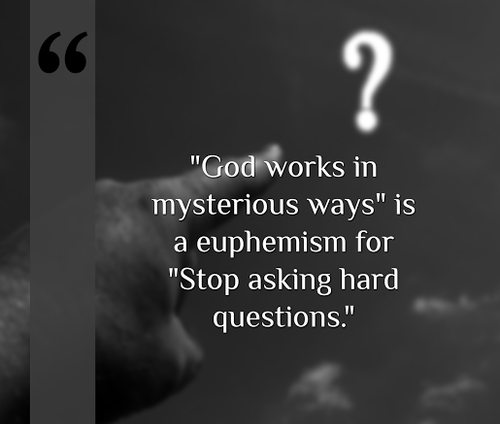
God works in mysterious waysFundamentalist Christians, for instance, quite often believe in a God almighty in an actually non-Christian sense (see higher). They have difficulty abandoning a view of God that is not compatible with the understanding of God that can be derived from the Christ figure in the Gospels. Their ultimate defense of unsustainable reasoning often sounds like, “God works in mysterious ways”. That’s their way of ending any type of dialogue, discussion or self-criticism. But some atheists as well rather stick to their ideas of the Christian story (and theology or even religion in general) than question them. Narcissistic, intellectual complacency can be found in every corner. Especially when a rather hostile opinion about the Christian story is identity enhancing. Comments by some atheists, whose perception is often guided by negative emotions, on this post are thus predictable: “This is a particular type of interpretation, and it is all relative eventually. What is there to know? Theology allows everything!” Once again the lazy and cowardly “argument” of “mysterious ways” comes to the fore. Well, if you believe in rational arguments, sustained by scientific research (from literary criticism to history and anthropology), you will find that one interpretation is better and more plausible than the other. Everything is not that “mysterious” or “vague” or “incoherent” as it seems.

The questions “What claims does the Christian story make and what is the essence of the Christian faith?” do have answers which are, from a rational and scientific point of view, more plausible than others. Whatever narcissists may claim. Theists as well as atheists may set up an inquiry to settle those matters.

A debate (on October 17, 2013), organized by Het Denkgelag about “The Limits of Science” – a conversation between Daniel Dennett, Lawrence Krauss, Massimo Pigliucci, and Maarten Boudry (moderator) – illustrated quite comically some of the unquestioned narcissistic prejudices guiding the discussion on religion in so-called “new atheist” quarters.

This tea party of atheists only sporadically rose above the level of musings from a bar, but maybe this was done deliberately to reach a big audience. Anyway, you would think this conversation was “for laughs” if they wouldn’t take themselves so seriously. For instance, it was quite embarrassing how biologist and philosopher Massimo Pigliucci and philosopher Daniel Dennett had to explain to physicist Lawrence Krauss that the criteria to judge whether or not a human action is moral cannot be defined by science. Once the criteria are established – perhaps after long rational considerations – science might help, of course, to produce information concerning the question how to realize a certain type of morality. If you believe, for instance, that the moral character of a deed is determined by the level of happiness it produces, you may scientifically gather knowledge concerning the degree to which a certain deed results in happiness. After you’ve defined what “happiness” actually entails, that is. Which once again implies that a philosophical, rational discussion on the nature of happiness precedes every possible scientific research. It is very unusual that these basic insights have to be dealt with in such a lengthy fashion (almost twenty minutes explicitly) on an evening that pretends to be a high mass of rationality. The initial “discord” between Pigliucci and Krauss thus had no intellectual power whatsoever. It was due to ignorance from the part of Krauss. Pigliucci eventually summarizes the course of philosophy for freshmen (between minutes 42:40 and 44:00 of the conversation):

“Nobody in his right mind, no philosopher in his right mind, I think, is saying that empirical facts, or even some scientific facts – as should be clear by now, I take a more restrictive definition of science or concept of science than Lawrence does – but even if we want to talk about empirical facts, broadly speaking, nobody is denying […] that empirical facts are relevant to ethical decisions. That’s not the question. The question is […] that the empirical facts, most of the times, if not all the times, in ethical decision making, are going to underdetermine those decisions, those value judgements that we make. So the way I think of ethics is of essentially ‘applied rationality’. You start with certain general ideas. Are you adopting a utilitarian framework? Are you adopting a deontological framework, a virtue ethics framework or whatever it is? And then that essentially plays the equivalent role of, sort of, general axioms, if you will, in mathematics or general assumptions in logic. And from there you incorporate knowledge, empirical knowledge, about, among other things, what kind of beings humans are. Ethics, let’s not forget, is about human beings.”

Moreover, Pigliucci was right to point out that Sam Harris makes a similar mistake as Krauss in his book The Moral Landscape. Of course Harris made a lot of money from the sales of his book, but looked at more closely it is an intellectual misleading of the people that is low on substance. No wonder Pigliucci has to say the following on Harris’ book (48:22-48:44):

the moral landscape“Sam Harris, who you [Maarten Boudry] introduced as a philosopher, I would characterize mostly as a neuroscience based person. I think he would do it that way. When I read his book, ‘The Moral Landscape’ which promised a scientific way of handling ethical questions. I got through the entire book and I didn’t learn anything at all, zero, new about ethics, right?”

Apart from that, Pigliucci is irritated by a number of claims done by some scientists, who speak of philosophy (of science) without having a clue what they are talking about. He once again reacts against certain statements by Krauss (1:12:57-1:13:28):

“First of all, most philosophy of science is not at all about helping scientists answer questions. So it is no surprise that it doesn’t. So when people like your colleague Stephen Hawking – to name names – starts out a book and says that philosophy is dead because it hasn’t contributed anything to science, he literally does not know what he is talking about. That is not the point of philosophy of science, most of the time.”

In short, the discord that threatened to arise between Pigliucci and Dennett on the one hand, and Krauss on the other, was resolved time and again by giving Krauss some “extra classes”. Pigliucci had the courtesy to do this somewhat indirectly, but it is clear that his comments on Stephen Hawking were a way of reproaching Krauss for his “red herring” (the repeated remark of Krauss that philosophy (of science) does not contribute anything directly to science is irrelevant because it is not the aim of philosophy). Pigliucci ended this discussion with an analogy (1:13:59 – 1:14:12):

“So, yes, philosophy of science doesn’t contribute to science, just like science does not contribute to, you know, English literature. Or literary criticism, whatever you want to put it. But so what, no one is blaming the physicists for not coming up with something new about Jane Austen.”

You would expect that Pigliucci is consistent about this analogy when he tries to define different areas of research, but when it came down to theology he too took on the unreflective attitude of Krauss. Boudry and Dennett harmoniously joined their two friends. Apparently the atheists had found a “dead” common enemy, theology, that united them (1:13:46 – 1:13:48):

Lawrence Krauss: “Well, theology, you could say is a dead field…”
Massimo Pigliucci: “Yes, you can say that. Right!”

Already at the beginning of the evening the gentlemen were sure about this issue:

20:11 – 20:21 Maarten Boudry: “Do you think that science, no matter how you define it, or maybe it depends, has disproven or refuted god’s existence?”

21:10 – 21:30
Lawrence Krauss: “What we can say, and what I think is really important, is that science is inconsistent with every religion in the world. That every organized religion based on scripture and doctrine is inconsistent with science. So they’re all garbage and nonsense. That you can say with definitive authority.”

21:50 – 22:42
Massimo Pigliucci: “I get nervous whenever I hear people talking about ‘the god hypothesis’. Because I think that’s conceding too much. Well, it seems to me, in order to talk about a hypothesis, you really have to have something fairly well articulated, coherent, that makes predictions that are actually falsifiable. All that sort of stuff. […] All these [god-] concepts are incoherent, badly put together, if put together at all. […] There is nothing to defeat there. It’s an incoherent, badly articulated concept.”

The previous chapter, about the question whether or not the Jesus character of the New Testament is a narcissist, is a first falsification of the claims made by Krauss and Pigliucci. Organized religion, based on so-called revelation, scripture and dogma, is not by definition inconsistent with science. Moreover, the New Testament view of God is not at all incoherent. A short summary of the previous chapter may clarify this.

The people who are behind the traditions which eventually produce the New Testament writings believe that God is revealed – at least at a human level – in a love that enables human beings to accept themselves and others in an authentic way. This not directly visible love has the potential to emancipate people from a life lived for the sake of (social) approval or, in other words, from a life lived for the sake of an untruthful image that should produce some sort of appreciation by others. The New Testament authors thus define “salvation” as follows: people who realize that they are loved for who they are (with their flaws and limitations) are saved, more and more, from the tendency to sacrifice themselves and others to “the idolatry of social prestige”. At the same time the New Testament authors are convinced that this love, that refuses those sacrifices, is exceptionally (though not exclusively) embodied in Jesus of Nazareth, who is therefore called “the Christ” and is depicted as the example par excellence that demands imitation.

By applying literary criticism, among other things, the atheist gentlemen may discover whether or not this characterization of the New Testament claims contains the essence of the Christian faith. Maybe they should do that before they surrender themselves to the narcissistic arrogance of being able to judge “all theology”. It is strange that Pigliucci is irritated by the mistakes some scientists make concerning “philosophy” while he makes a similar mistake concerning “theology”. Theology today has to do with interdisciplinary scientific research into the concept of God held by certain religious traditions, and its possible implications. This has nothing to do with the question whether or not someone believes in God. To use an analogy: eventually you don’t have to agree with Shakespeare’s view of human nature in order to pursue an investigation into the anthropology that can be derived from his plays. In short, the questions theologians concern themselves with are from a fundamentally different nature than the questions scientists concern themselves with, so there shouldn’t be any fundamental conflicts between these two areas of research. In the aforementioned analogy of Pigliucci: “No one is blaming the physicists for not coming up with something new about Jane Austen.”

Georges Lemaître and Albert EinsteinMaybe Pigliucci and co. should take Georges Lemaître as an example. This Belgian Catholic priest and famous physicist (founder of the “Big Bang” hypothesis among others) clearly distinguishes the questions of modern science from the questions the New Testament authors deal with. In fact, according to Lemaître, questions of modern science have nothing to do with theology, and vice versa. The Christian scientist thus cannot let his faith be of any importance for his scientific work. Some quotes from Lemaître, taken from an article by Joseph R. Laracy (click to read) clarify his position regarding the relationship between theology and modern science:

“Should a priest reject relativity because it contains no authoritative exposition on the doctrine of the Trinity? Once you realize that the Bible does not purport to be a textbook of science, the old controversy between religion and science vanishes . . . The doctrine of the Trinity is much more abstruse than anything in relativity or quantum mechanics; but, being necessary for salvation, the doctrine is stated in the Bible. If the theory of relativity had also been necessary for salvation, it would have been revealed to Saint Paul or to Moses . . . As a matter of fact neither Saint Paul nor Moses had the slightest idea of relativity.”

“The Christian researcher has to master and apply with sagacity the technique appropriate to his problem. His investigative means are the same as those of his non-believer colleague . . . In a sense, the researcher makes an abstraction of his faith in his researches. He does this not because his faith could involve him in difficulties, but because it has directly nothing in common with his scientific activity. After all, a Christian does not act differently from any non-believer as far as walking, or running, or swimming is concerned.”

The writers of the Bible were illuminated more or less — some more than others — on the question of salvation. On other questions they were as wise or ignorant as their generation. Hence it is utterly unimportant that errors in historic and scientific fact should be found in the Bible, especially if the errors related to events that were not directly observed by those who wrote about them . . . The idea that because they were right in their doctrine of immortality and salvation they must also be right on all other subjects, is simply the fallacy of people who have an incomplete understanding of why the Bible was given to us at all.”

The question about the meaning of “salvation” in the light of the New Testament indeed is different from, for instance, the question how and why objects fall down. That’s how plain and simple an insight can be in order to stop battling windmills like some heroic but mad and narcissistic Don Quixote. But anyway, a man shouldn’t foster any illusions: Maarten Boudry, Lawrence Krauss and other similar atheists rarely, if ever, rise to the challenge to question their belief regarding the nature of theology in a scientific way. But maybe this is just the narcissism of a theologian speaking now 🙂 ?

atheists and fundamentalists

Nonetheless, Boudry claims that he holds science in high regard. His question for the audience at the beginning of the evening already suggests this (16:58-17:30): “Do you think that science is the sole source of knowing?” A lot of people answered affirmatively. But what does that mean when you meet another person? Does that mean that you don’t ever know that person when you have not analyzed and described him or her scientifically? And, on the other hand: does that mean that you can know a person merely by detailed scientific descriptions, without ever meeting him or her? A bit odd, to say the least. Somehow you would expect that you know the person who reveals himself to you, every day, honestly and faithfully, better than the person you know from scientific descriptions but have never met. Or would it be true that the “real” and “complete” identity of a person (his “soul”, to use an age old word) can be reduced to what science may say about him? Again, a bit odd to “lock up” someone’s personality in scientific descriptions…

Anyway, of course Maarten Boudry, Massimo Pigliucci, Lawrence Krauss and Daniel Dennett are more than just intellectual narcissists. It just so happens that they don’t really show any sign of self-criticism regarding theology. And that’s a pity, really, because scientifically enhanced theological research (based on the historical-critical method) could prevent some of the excesses of fundamentalism. Sure, Boudry et al. are delivering the goods in their own fields of research. However, nothing human is alien to humans… Every once in a while, everyone is a narcissist, no? There might be one exception, though…


 

C S LewisC.S. Lewis (1898-1963), a former atheist who converted to Christianity, became well-known for his series of seven fantasy novels The Chronicles of Narnia, but the fame of this series sometimes overshadows other work by this fascinating author. And that’s a shame because, up to this day, Lewis remains a surprisingly fresh Christian thinker.

In Mere Christianity Lewis identifies “the great sin” of humanity as Pride. From his account it is clear that pride rests on what René Girard has called mimetic desire – i.e. a desire based on the imitation of what others desire. Mimetic desire can easily become competitive and lead to mimetic rivalry if people cannot or do not want to share the objects of their mutually enforced desire. The “proud man” derives his pride from the supposition that other people desire what he possesses. In a sense he needs competition (competitive desire) to affirm his prestigious aura, all the while of course not suspecting that his own desire is also based on the imitation of the desires of others… Of course, following the nuances of Lewis himself about pride, there’s nothing wrong with being proud of some achievement. To be proud of some recognition we receive from others might be a consequence of something that we have done. The proud man, on the other hand, is guided by his pride as the ultimate goal of his existence.

But enough introductory talk. Here’s what Lewis has to say on Pride – people acquainted with René Girard’s further developed mimetic theory will surely recognize some familiar themes 😉 [For more on this, click here].

I now come to that part of Christian morals where they differ most sharply from all other morals. There is one vice of which no man in the world is free; which every one in the world loathes when he sees it in someone else; and of which hardly any people, except Christians, ever imagine that they are guilty themselves. I have heard people admit that they are bad-tempered, or that they cannot keep their heads about girls or drink, or even that they are cowards. I do not think I have ever heard anyone who was not a Christian accuse himself of this vice. And at the same time I have very seldom met anyone, who was not a Christian, who showed the slightest mercy to it in others. There is no fault which makes a man more unpopular, and no fault which we are more unconscious of in ourselves. And the more we have it ourselves, the more we dislike it in others.

The vice I am talking of is Pride or Self-Conceit: and the virtue opposite to it, in Christian morals, is called Humility. You may remember, when I was talking about sexual morality, I warned you that the centre of Christian morals did not lie there. Well, now, we have come to the centre. According to Christian teachers, the essential vice, the utmost evil, is Pride. Unchastity, anger, greed, drunkenness, and all that, are mere fleabites in comparison: it was through Pride that the devil became the devil: Pride leads to every other vice: it is the complete anti-God state of mind.

C.S. Lewis quote on Pride gets no pleasure out ofDoes this seem to you exaggerated? If so, think it over. I pointed out a moment ago that the more pride one had, the more one disliked pride in others. In fact, if you want to find out how proud you are the easiest way is to ask yourself, ‘How much do I dislike it when other people snub me, or refuse to take any notice of me, or shove their oar in, or patronise me, or show off?’ The point is that each person’s pride is in competition with every one else’s pride. It is because I wanted to be the big noise at the party that I am so annoyed at someone else being the big noise. Two of a trade never agree. Now what you want to get clear is that Pride is essentially competitive – is competitive by its very nature – while the other vices are competitive only, so to speak, by accident. Pride gets no pleasure out of having something, only out of having more of it than the next man. We say that people are proud of being rich, or clever, or good-looking, but they are not. They are proud of being richer, or cleverer, or better-looking than others. If everyone else became equally rich, or clever, or good-looking there would be nothing to be proud about. It is the comparison that makes you proud: the pleasure of being above the rest. Once the element of competition has gone, pride has gone. That is why I say that Pride is essentially competitive in a way the other vices are not. The sexual impulse may drive two men into competition if they both want the same girl. But that is only by accident; they might just as likely have wanted two different girls. But a proud man will take your girl from you, not because he wants her, but just to prove to himself that he is a better man than you. Greed may drive men into competition if there is not enough to go round; but the proud man, even when he has got more than he can possibly want, will try to get still more just to assert his power. Nearly all those evils in the world which people put down to greed or selfishness are really far more the result of Pride.

Take it with money. Greed will certainly make a man want money, for the sake of a better house, better holidays, better things to eat and drink. But only up to a point. What is it that makes a man with £ 10,000 a year anxious to get £ 20,000 a year? It is not the greed for more pleasure. £ 10,000 will give all the luxuries that any man can really enjoy. It is Pride – the wish to be richer than some other rich man, and (still more) the wish for power. For, of course, power is what Pride really enjoys: there is nothing makes a man feel so superior to others as being able to move them about like toy soldiers. What makes a pretty girl spread misery wherever she goes by collecting admirers? Certainly not her sexual instinct: that kind of girl is quite often sexually frigid. It is Pride. What is it that makes a political leader or a whole nation go on and on, demanding more and more? Pride again. Pride is competitive by its very nature: that is why it goes on and on. If I am a proud man, then, as long as there is one man in the whole world more powerful, or richer, or cleverer than I, he is my rival and my enemy.

C.S. Lewis quote on pride The Christians are rightThe Christians are right: it is Pride which has been the chief cause of misery in every nation and every family since the world began. Other vices may sometimes bring people together: you may find good fellowship and jokes and friendliness among drunken people or unchaste people. But pride always means enmity – it is enmity. And not only enmity between man and man, but enmity to God.

In God you come up against something which is in every respect immeasurably superior to yourself. Unless you know God as that – and, therefore, know yourself as nothing in comparison – you do not know God at all. As long as you are proud you cannot know God. A proud man is always looking down on things and people: and, of course, as long as you are looking down, you cannot see something that is above you.

That raises a terrible question. How is it that people who are quite obviously eaten up with Pride can say they believe in God and appear to themselves very religious? I am afraid it means they are worshipping an imaginary God. They theoretically admit themselves to be nothing in the presence of this phantom God, but are really all the time imagining how He approves of them and thinks them far better than ordinary people: that is, they pay a pennyworth of imaginary humility to Him and get out of it a pound’s worth of Pride towards their fellow-men. I suppose it was of those people Christ was thinking when He said that some would preach about Him and cast out devils in His name, only to be told at the end of the world that He had never known them. And any of us may at any moment be in this death-trap. Luckily, we have a test. Whenever we find that our religious life is making us feel that we are good – above all, that we are better than someone else – I think we may be sure that we are being acted on, not by God, but by the devil. The real test of being in the presence of God is, that you either forget about yourself altogether or see yourself as a small, dirty object. It is better to forget about yourself altogether.

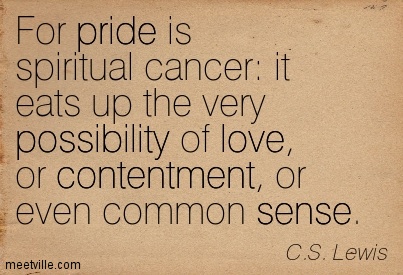
C.S. Lewis quote on Pride is spiritual cancerIt is a terrible thing that the worst of all the vices can smuggle itself into the very centre of our religious life. But you can see why. The other, and less bad, vices come from the devil working on us through our animal nature. But this does not come through our animal nature at all. It comes direct from Hell. It is purely spiritual: consequently it is far more subtle and deadly. For the same reason, Pride can often be used to beat down the simpler vices. Teachers, in fact, often appeal to a boy’s Pride, or, as they call it, his self-respect, to make him behave decently: many a man has overcome cowardice, or lust, or ill-temper, by learning to think that they are beneath his dignity – that is, by Pride. The devil laughs. He is perfectly content to see you becoming chaste and brave and self-controlled provided, all the time, he is setting up in you the Dictatorship of Pride – just as he would be quite content to see your chilblains cured if he was allowed, in return, to give you cancer. For Pride is spiritual cancer: it eats up the very possibility of love, or contentment, or even common sense.

Before leaving this subject I must guard against some possible misunderstandings:

(1) Pleasure in being praised is not Pride. The child who is patted on the back for doing a lesson well, the woman whose beauty is praised by her lover, the saved soul to whom Christ says ‘Well done,’ are pleased and ought to be. For here the pleasure lies not in what you are but in the fact that you have pleased someone you wanted (and rightly wanted) to please. The trouble begins when you pass from thinking, ‘I have pleased him; all is well,’ to thinking, ‘What a fine person I must be to have done it.’ The more you delight in yourself and the less you delight in the praise, the worse you are becoming. When you delight wholly in yourself and do not care about the praise at all, you have reached the bottom. That is why vanity, though it is the sort of Pride which shows most on the surface, is really the least bad and most pardonable sort. The vain person wants praise, applause, admiration, too much and is always angling for it. It is a fault, but a child-like and even (in an odd way) a humble fault. It shows that you are not yet completely contented with your own admiration. You value other people enough to want them to look at you. You are, in fact, still human. The real black, diabolical Pride, comes when you look down on others so much that you do not care what they think of you. Of course, it is very right, and often our duty, not to care what people think of us, if we do so for the right reason; namely, because we care so incomparably more what God thinks. But the Proud man has a different reason for not caring. He says ‘Why should I care for the applause of that rabble as if their opinion were worth anything? And even if their opinions were of value, am I the sort of man to blush with pleasure at a compliment like some chit of a girl at her first dance? No, I am an integrated, adult personality. All I have done has been done to satisfy my own ideals – or my artistic conscience – or the traditions of my family – or, in a word, because I’m That Kind of Chap. If the mob like it, let them. They’re nothing to me.’ In this way real thorough-going pride may act as a check on vanity; for, as I said a moment ago, the devil loves ‘curing’ a small fault by giving you a great one. We must try not to be vain, but we must never call in our Pride to cure our vanity.

(2) We say in English that a man is ‘proud’ of his son, or his father, or his school, or regiment, and it may be asked whether ‘pride’ in this sense is a sin. I think it depends on what, exactly, we mean by ‘proud of’. Very often, in such sentences, the phrase ‘is proud of’ means ‘has a warm-hearted admiration for’. Such an admiration is, of course, very far from being a sin. But it might, perhaps, mean that the person in question gives himself airs on the ground of his distinguished father, or because he belongs to a famous regiment. This would, clearly, be a fault; but even then, it would be better than being proud simply of himself. To love and admire anything outside yourself is to take one step a way from utter spiritual ruin; though we shall not be well so long as we love and admire anything more than we love and admire God.

(3) We must not think Pride is something God forbids because He is offended at it, or that Humility is something He demands as due to His own dignity – as if God Himself was proud. He is not in the least worried about His dignity. The point is, He wants you to know Him: wants to give you Himself. And He and you are two things of such a kind that if you really get into any kind of touch with Him you will, in fact, be humble – delightedly humble, feeling the infinite relief of having for once got rid of all the silly nonsense about your own dignity which has made you restless and unhappy all your life. He is trying to make you humble in order to make this moment possible: trying to take off a lot of silly, ugly, fancy-dress in which we have all got ourselves up and are strutting about like the little idiots we are. I wish I had got a bit further with humility myself: if I had, I could probably tell you more about the relief, the comfort, of taking the fancy-dress off – getting rid of the false self, with all its ‘Look at me’ and ‘Aren’t I a good boy?’ and all its posing and posturing. To get even near it, even for a moment, is like a drink of cold water to a man in a desert.

C.S. Lewis Mere Christianity(4) Do not imagine that if you meet a really humble man he will be what most people call ‘humble’ nowadays: he will not be a sort of greasy, smarmy person, who is always telling you that, of course, he is nobody. Probably all you will think about him is that he seemed a cheerful, intelligent chap who took a real interest in what you said to him. If you do dislike him it will be because you feel a little envious of anyone who seems to enjoy life so easily. He will not be thinking about humility: he will not be thinking about himself at all. If anyone would like to acquire humility, I can, I think, tell him the first step. The first step is to realise that one is proud. And a biggish step, too. At least, nothing whatever can be done before it. If you think you are not conceited, it means you are very conceited indeed.

Taken from Mere Christianity by C.S. Lewis (Collins, C.S. Lewis Signature Classics Edition 2012; p.121-128).

C.S. Lewis Stained Glass Window St George Episcopal Church Dayton Ohio

OUR WORLD, A WORLD OF CHILD NEGLECT?

Basically, there are three types of child neglect:

  1. Indifference (rarely if ever paying attention to a child)
  2. Denigration (paying attention in an all too negative way)
  3. Adoration (paying attention in an all too positive way)

A child who grew up in an indifferent environment is prone to seek attention from people just for the sake of getting attention. Needless to say, they can easily fall into the hands of malicious manipulators (from gurus to pedophiles) who meet the child’s need “to feel special” and “to be saved and taken care of”.

forgetting children

A child who is denigrated time and again if he does not live up to the expectations of his educators will develop a sense of unworthiness. He will feel ashamed of himself or will even learn to hate himself. Later on in life, he will do anything in his power not to fail in the eyes of others. He might even develop a perverted sense of pride, hiding his sense of unworthiness behind a supposedly socially acceptable self-image. Fear of failure (atychiphobia) then reveals itself as a built-in desire for perfection.

A child who is constantly adored will develop a false sense of superiority. If he fails, he will sometimes feel ashamed of himself or hate himself, but most of the time he will blame others for his failure. In other words, he will create scapegoats because he is not able to take responsibility for his own mistakes. His educators made him believe that he is perfect, and of course he tries to satisfy this built-in desire for perfection.

Indifference, denigration and/or adoration: in all three cases the difference between the wishes of the child’s environment and the child himself are eradicated. The child is forced to adapt to the unrealistic wishes of his environment and therefore is not able to accept himself as he actually is. In other words, because the child has learned to be guided by his desire for recognition, he is not able to love himself (he subjects himself to an unrealistic but supposedly socially acceptable self-image) and he is not able to love others (he only approaches others to satisfy his need for recognition, and not as ends in themselves). The child will fear saying “sorry” because he has learned that the world does not allow for failure…

Ever met those parents who said to their child “You can be a doctor” or “You can be a sports champion” when in fact their child had other talents? Ever met those parents who convinced themselves, their child and part of their environment that “The teacher” or “The coach” was to blame for whatever went wrong when the child did not live up to the parents’ expectations?

OUR ATHEIST WORLD, A WORLD OF GODS AND FAIRY TALES?

Pinocchio seducedYep, it seems the more atheist we become, the more we lose touch with reality, beginning with the reality of ourselves. We bow to the idols we have made from ourselves, the false “monstrous” or “divine” images about ourselves we have learned to love, instead of accepting ourselves and our limits as human beings. If religion is defined as “opium of the masses” (Karl Marx, 1818-1883), then our atheist world is full of it. We have replaced a perverted version of Christianity, one that made us believe we could enter “paradise” if we were willing to make sacrifices, with “secular” dreams of paradise and perfection.

However, the so-called “Christian” attitude to merely confess our sins to God and pay for them by denigrating ourselves (physically and/or mentally) as a “sacrifice to God” in order to become “perfect” and to get God’s recognition, is really a betrayal of the Gospel and of Christianity. Jesus makes it clear: “No one is good – except God alone.” (Mark 10:18). In other words, we should not want to be someone we are not. Indeed, we are not perfect. Jesus also makes clear that prayers and sacrifices should not be used to escape moral responsibilities. If you go to confession and use God’s forgiveness to recreate a so-called acceptable self-image, without actually doing something about the evil you’ve committed, you’re perverting the nature of confession. Confession should serve love for one’s neighbor, and not one’s need for recognition. That’s why Jesus says (Matthew 5:23-24): “If you are offering your gift at the altar and there remember that your brother or sister has something against you, leave your gift there in front of the altar. First go and be reconciled to them; then come and offer your gift.” In other words, sacrifice not as a “do ut des” or “quid pro quo”, but as a free gift of gratitude for what’s already established. Jesus transforms laws and legislations, bringing them back to their true goal against possible perversions (That’s why he says, “Do not think that I have come to abolish the Law or the Prophets; I have not come to abolish them but to fulfill them.” – Matthew 5:17). The law should serve man and enable love for one’s neighbor, it should not be used against man and love (see Matthew 22:34-40 and Matthew 12:1-14).

JESUS CHRIST, BACK TO LIFE, BACK TO REALITY?

????????????????????????The realization that you’re not perfect (and that you don’t have to be) will help you to deal with the imperfections of others as well. That’s why Jesus constantly asks people to realize their own shortcomings. “He that is without sin among you, let him first cast a stone at her”, he says to the crowd that wants to stone a woman accused of adultery (John 8:7). And in the Lord’s prayer he asks us to think of our own trespasses, in order to be able to forgive others (Matthew 6:12): “Forgive us our trespasses, as we forgive those who trespass against us.” The sooner you are able to admit some minor mistakes, the better you will avoid scapegoat mechanisms. On the other hand, if you want to protect an unrealistic yet so-called admirable self-image, you will use one lie after the other and blame others for what’s bad and for what goes wrong, instead of taking responsibility yourself.

forgiveness saves from harmPeople hurt each other. We’re not perfect in our love. We even hurt those we love the most. Every week we say stuff we probably mean less offensive because we’re too easily irritated by each other. Jesus thus is more realist than ever when Peter asks him a question about forgiveness (Matthew 18:21-22): “Lord, how many times shall I forgive my brother or sister who sins against me? Up to seven times?” Jesus answered, “I tell you, not seven times, but seventy times seven.”

Of course, truth hurts. So more often than not, we flee from the truth about ourselves. We rather think about ourselves in a heroic fashion. We identify with “good” characters in Hollywood movies. The apostle Peter also thinks of himself as a hero during the last supper before Jesus is arrested, while Jesus – that hyper-realistic “Christ” man – tries to bring him down to earth (Matthew 26:33-35): Peter said, “Even if all fall away on account of you, I never will.” “Truly I tell you,” Jesus answered, “this very night, before the rooster crows, you will disown me three times.” But Peter declared, “Even if I have to die with you, I will never disown you.” And all the other disciples said the same.

The Denial of St Peter by Gerrit Van Honthorst 1622-1624The Gospel eventually shows man as he is, and not as he romantically dreams himself to be. It is easy to be morally indignant about reports of child abuse in the newspaper. It turns out to be much more difficult to handle such delicate matters when we’re directly confronted with them. Maybe then we’re not as heroic as we thought we’d be. The apostle Peter discovers the not so heroic truth about himself after Jesus is arrested (Matthew 26:69-75): Now Peter was sitting out in the courtyard, and a servant girl came to him. “You also were with Jesus of Galilee,” she said. But he denied it before them all. “I don’t know what you’re talking about,” he said. Then he went out to the gateway, where another servant girl saw him and said to the people there, “This fellow was with Jesus of Nazareth.”He denied it again, with an oath: “I don’t know the man!”After a little while, those standing there went up to Peter and said, “Surely you are one of them; your accent gives you away.” Then he began to call down curses, and he swore to them, “I don’t know the man!” Immediately a rooster crowed. Then Peter remembered the word Jesus had spoken: “Before the rooster crows, you will disown me three times.” And he went outside and wept bitterly.

Ah, the things we do for our reputation, for power, for survival… Jesus warns us not to enslave ourselves to so-called socially acceptable self-images (“idols”) in order to gain recognition. When you force yourself to be someone you are not because certain people made you believe that this is your “ticket to paradise”, your life will become a living hell of frustration, jealousy and hypocrisy. Indeed Jesus is right when he says, “whoever wants to save their life will lose it” (Matthew 16:25). And when he says (Matthew 6:1-2): “Be careful not to practice your righteousness in front of others to be seen by them. If you do, you will have no reward from your Father in heaven. So when you give to the needy, do not announce it with trumpets, as the hypocrites do in the synagogues and on the streets, to be honored by others. Truly I tell you, they have received their reward in full.”

If you want success because of success itself, you will never find love and joy for what you’re doing. If a student wants good grades and academic recognition more than an understanding of his courses, he will never find joy in what he’s actually studying (for more on this, click here or click here). The scientist whose goal it is to win the Nobel Prize won’t get it. It’s the scientist who has learned to be passionate [yep, we have to learn to love – because love is relating to what’s other than ourselves, and therefore goes beyond our needs] about his topic who might eventually get the Nobel Prize as a consequence of his actions – and not as an ultimate goal. So we should not force ourselves to be someone we are not in order to get into heaven. We shouldn’t be like the workaholic who becomes a slave of a “high society lifestyle”. We shouldn’t be like the drug addict who believes that he should flee from himself in a frenzy to be in paradise. We shouldn’t believe that “doing what we please” is the highest form of freedom – the drug dealer wants nothing more than to become the false messiah who satisfies the supposedly very own needs he has inflicted upon his clients.

We should try to find ourselves. We should try to respect ourselves and accept our limitations in this atheist world full of unrealistic idols. We should try to discover our calling. Jesus teaches that we find ourselves if we dare associate ourselves with the social outcasts. Indeed, if Peter would have defended Jesus after the latter’s arrest, Peter wouldn’t have lost himself to a so-called socially acceptable image. Jesus rightly says, “whoever loses their life for me [meaning the Victim of people who look for social recognition and who tend to blame others for their own failures] will find it” (Matthew 16:25). If Peter would have imitated Jesus (who constantly took sides with social outcasts and scapegoats), he wouldn’t have participated in the death of Jesus. Then Peter would have discovered that he’s not merely a child of his social environment and a slave to a socially acceptable self-image (or idol), but also a child of God.

for whoever wants to save their life

As intrinsically relational beings, our identities are given to us in relationships to others. Since no human being is able to love us completely for who we are, only a creature that is “also other than human” is able to truly give us to ourselves. If we believe that this man-made world is the only possible world, we will do everything to gain recognition in this world, force ourselves to be who we are not, and be dead before we have lived – unable to truly love the social outcast. To discover God is to discover Love (see 1 John 4: “God is Love”). It is to discover ourselves as well as our neighbors. 1 John 3,14: “We know that we have passed from death to life, because we love each other. Anyone who does not love remains in death.” The choice is ours: whether we believe we’re merely children of man-made idols, guided by our desire for recognition, or we believe we’re also children of Love… Max Scheler (1874-1928), once again:

Man believes either in a God or in an idol…

If we learn to love ourselves and be genuinely interested in the things we do, we will be rewarded eventually – the joy of doing those things will be a reward in itself. Success or “heaven” will be the consequence of love for ourselves and others and not an end in itself. In the words of Jesus, we should find God’s kingdom and righteousness first, and everything else will come…

“So do not worry, saying, ‘What shall we eat?’ or ‘What shall we drink?’ or ‘What shall we wear?’ For the pagans run after all these things, and your heavenly Father knows that you need them. But seek first his kingdom and his righteousness, and all these things will be given to you as well. Therefore do not worry about tomorrow, for tomorrow will worry about itself. Each day has enough trouble of its own.” (Matthew 6:31-34)

The common view in Antiquity on people who fell victim to sickness, suffering and “bad fortune” was that “they had it coming” because of certain transgressions they (or their ancestors) committed against the sacred order of things. In other words, because of sin. It is clear, for instance, that Job’s friends and relatives follow this logic in the Old Testament book of Job. They keep on suggesting that Job somehow deserves the suffering he has to endure. Jesus radically challenges this way of thinking. A prime example of this can be found in John 9:1-12, the story of Jesus healing a young man who had been blind from birth. Given the common understanding of sickness in their pre-modern society, it comes as no surprise that the disciples of Jesus pose the following question:

His disciples asked him, “Rabbi, who sinned, this man or his parents, that he was born blind?” (John 9:2)

The answer of Jesus must have come as a complete and shocking surprise:

“Neither this man nor his parents sinned,” said Jesus, “but this happened so that the works of God might be displayed in him.” (John 9:3)

This story reveals some important aspects of Jesus’ understanding of God and man. Apparently, according to Jesus, God blesses those who are sick, those who suffer – in short: the victims. Not because they are victims per se, but because they are in fact fellow human beings and their suffering is regarded as unjust. This belief in a God who regards victims as human beings who suffer unjustly is exemplified by the healing activity of Jesus, which consists in opening up the possibility for these victims to become part of the (human) community again. Since Jesus reverses the idea that victims are condemned (or “chosen”) by some divine command to suffer, but insists that God actually blesses and “chooses” them as human beings, he takes away the reasons for their marginalization, or persecution and expulsion. Moreover, he takes away, at the same time, the traditional means by which communities structure themselves, and challenges them to include those they experience as a threat, a disgrace or even as an enemy.

As the story turns out, the blind man saw something that the people of his community and Jesus’ disciples remained blind to. Jesus paradoxically accomplishes that the actual sinfulness is no longer located in the blind man, but rather in what had been the (rather unwitting) complicity of the individual members of an entire community to take part in mechanisms of expulsion.

Ever since the traditions of the Gospel spread in western culture, being a victim was gradually no longer experienced as an inevitable and sacred “state of affairs”, nor as a disgrace or something to be ashamed of. Western civilizations developed a growing active and moral concern for victims in the course of their history. Sadly, however, the search for victims all too often became a perversion of Christ’s healing activity. Sometimes we use the claim of being a victim to victimize others and to perpetuate mechanisms of exclusion. Not surprisingly, René Girard and Gil Bailie have some very insightful thoughts on the matter.

René Girard in Evolution and Conversion – Dialogues on the Origins of Culture, Continuum, London, New York, 2007, p. 236:

“We have experienced various forms of totalitarianism that openly denied Christian principles. There has been the totalitarianism of the Left, which tried to outflank Christianity; and there has been totalitarianism of the Right, like Nazism, which found Christianity too soft on victims. This kind of totalitarianism is not only alive but it also has a great future. There will probably be some thinkers in the future who will reformulate this principle in a politically correct fashion, in more virulent forms, which will be more anti-Christian, albeit in an ultra-Christian caricature. When I say more Christian and more anti-Christian, I imply the figure of the Anti-Christ. The Anti-Christ is nothing but that: it is the ideology that attempts to outchristianize Christianity, that imitates Christianity in a spirit of rivalry.

[…]

You can foresee the shape of what the Anti-Christ is going to be in the future: a super-victimary machine that will keep on sacrificing in the name of the victim.”

Gil Bailie in Violence Unveiled – Humanity at the Crossroads, The Crossroad Publishing Company, New York, 1995, p. 20:

“There’s plenty of truth in the revised picture of Western history that the young are now routinely taught, the picture of the West’s swashbuckling appetite for power, wealth, and dominion. What’s to be noted is that it is we, and not our cultural adversaries, who are teaching it to them. It is we, the spiritual beneficiaries of that less than always edifying history, who automatically empathize more with our ancestors’ victims than with our ancestors themselves. If we are tempted to think that this amazing shift is the product of our own moral achievement, all we have to do is look around at how shamelessly we exploit it for a little power, wealth, and dominion of our own.

The fact is that the concern for victims has gradually become the principal gyroscope in the Western world. Even the most vicious campaigns of victimization – including, astonishingly, even Hitler’s – have found it necessary to base their assertion of moral legitimacy on the claim that their goal was the protection or vindication of victims. However savagely we behave, and however wickedly and selectively we wield this moral gavel, protecting or rescuing innocent victims has become the cultural imperative everywhere the biblical influence has been felt.”

Just a few days ago I came across an example of this dynamic, i.e. the dynamic of proclaiming oneself as a victim and of having certain rights to persecute “evil others” because of it. Extreme right wing and nationalist parties, among others, often use the tactic of presenting themselves and their followers as victims to make certain political and social claims. In Belgium and in the Netherlands this is called the “Calimero-complex”. The cartoon character Calimero is a hapless chick, fresh out of the egg, whose famous line is: “This is not  fair; they are big and I am small.” Hence the “Calimero-complex” is used to denote persons who think the world is against them, and who revel in an underdog role.

So, what happened? Well, a few days ago I visited some friends in Antwerp, one of the big cities in Belgium, in Flanders. That’s where I saw this poster of the extreme right wing and Flemish nationalist party “Vlaams Belang” (“Flemish Interest”). It portrayed a caricature of “Lamb of God”, the beautiful 15th century painting by the Van Eyck brothers (conserved at Saint Bavo Cathedral, Ghent). The lamb was depicted in a black color, instead of white, thereby reinforcing the stereotypical connotation that “blacks are bad”. The poster was accompanied with slogans to warn certain people to “stay away from our country”, namely “impostors [abusing the system to seek asylum], illegal immigrants, Islamists, criminal foreigners”. The poster suggests that the people mentioned defile our cultural identity and heritage, and that they are no innocent lambs or wrongfully accused scapegoats.

Filip Dewinter, leading figure of Vlaams Belang, claims that the posters were in no way issued by his party and is filing a complaint. According to him, the unknowns who did issue the poster are trying to blackguard his party, presenting illegal immigrants and others as people who are targeted as “black sheep” by Vlaams Belang. Filip Dewinter suggests that his party falls victim to a campaign that reverses what is actually happening. According to him, Vlaams Belang indeed has every right, even a duty, to defend the country against illegal immigrants and the like, and these people shouldn’t be depicted as “black sheep” or victims.

I guess the real victims of these quarrels stay out of sight. The ones who have to flee their home-country, who have no real options, but are labeled as “illegal immigrants” all the same. Just the beginning of this month, Parwais Sangari, a young promising Afghan and in no way a criminal, had to leave our country to return to Kabul – you know, the place where you wouldn’t send your children on a holiday these days… Twenty year old Sangari had foster parents here. Nevertheless he was sent away to walk around aimlessly, without any real home, in the Afghan capital – after four years in Belgium.

Still there’s hope. As it turns out, we’re not completely blinded by “the atmosphere of fear” we’re creating in our politics. Some people have started campaigns in favor of people like Sangari, demanding to reconsider our general asylum and migration policies.

How blinded are we? Are we capable of noticing the Victim? Can we stand the light that shines in our darkness? Can we allow ourselves to be blinded by its splendor, to see with new eyes and new hearts?

Once there was this girl, having the time of her life in a happy relationship. Until her boyfriend cheated on her. After that, she couldn’t go on with him. So they broke up.

A year later, she met this other guy. Love at first sight. They started dating. A few months down the road of this new romantic affair, a little fear started creeping into her mind: “What if I’ll be cheated on, again?” The fear grew bigger, as did her desire to safeguard her relationship. So she started controlling her new boyfriend, pressing him to inform her about his whereabouts. He didn’t do anything wrong, but he nevertheless had to suffer from her anxieties. Until he couldn’t stand it any longer, and her worst fear came true: he broke up with her. Tragic. Ironic. All she had done to avoid the destruction of the relationship brought about the relationship’s downfall. For whoever wants to save his life will lose it… (Matthew 16:25a).

What happened? Well, the girl was hurt, and she had been sad and angry because of it. Instead of letting go of her sadness and frustration, she started focusing on these emotions again while being in a new relationship. And she started hurting a guy who hadn’t done anything to cause her pain, insinuating he was not trustworthy and accusing him of being a liar and a cheater. In other words, she imitated the blows inflicted on her persona by inflicting similar blows on someone else. It was her way of taking revenge. Her new boyfriend turned out to be her scapegoat: someone who had to answer for her anger, although he was innocent. There is indeed, as René Girard and so many other Christian thinkers rightly point out, a nearly inextricable connection between the mimetic principle of vengeance and the scapegoating impulse.

In order to break the vicious cycle of hurt inflicting hurt – the cycle of original sin -, Christ invites us to take part in an act of creation. This is a creatio ex nihilo (creation out of nothing), meaning that our actions are no longer defined by the lesser and greater evil we endured in the past. To return to the situation of the girl: Christ invites her to “turn the other cheek” as she begins a new relationship. To turn the other cheek indeed means that you refuse to let your relationships and yourself be defined by the hurtful mechanisms that eventually destroy relationships. Christ invites the girl to trust being vulnerable again. He invites her to keep faith over fear – for “fear leads to anger, to hate, to suffering” as some famous wise man summarized Christ’s advice…

Forgiveness is at the heart of creation, destabilizing the balance of “eye for eye, tooth for tooth” – for, as some other wise man allegedly said: “An eye for an eye leaves the whole world blind”. Coming from outside the cycle of bad deeds or “bad karma“, the grace of forgiveness opens up the possibility of a new kind of imitation or mimesis. Instead of imitating each other in trying to assert ourselves over against one another – as theologian James Alison would say –, “turning the other cheek” is an invitation to begin an imitation of recognizing and accepting each other’s vulnerability. Recognizing that “no one is without sin”, in order to end “casting the first stone”. It’s an invitation to shy away from self-assertion over against one another – which would be called a movement of kenosis (“self-emptying”) in theological terms. The imitatio Christi would thus lead to the recovery of human beings, for “being human” means “being in relationships”, and the act of grace Christ invites us to take part in is precisely aimed at restoring those relationships. Therefore: Whoever loses his life for me will find it… (Matthew 16:25b).

So Matthew 5:38-39 is not an invitation to be masochistic. It’s quite the opposite. It’s a radical refusal to surrender to the evil that we experience from time to time. It’s an invitation to obey the creative call of Love (click here to read more) – which is, paradoxically, truly liberating:

“You have heard that it was said, ‘Eye for eye, and tooth for tooth.’But I tell you, Do not resist an evil person. If someone strikes you on the right cheek, turn to him the other also…”

[on two types of “rewards” – goals or consequences of one’s actions? – and the implications for human interactions]

“If there is no God, everything is permitted…”

This is basically the challenging idea of Ivan Karamazov, one of the main characters in The Brothers Karamazov, the famous novel by Fyodor Dostoevsky (1821-1881). Could this be true in any way?

At the beginning of a new year, I always ask my students the following questions:

Suppose there is no principal’s office, suppose you could never be punished for any of your actions – would you still respect your fellow students and your teacher?

Suppose there are no grades to win, and you didn’t receive any reward for studying your courses and reading your books – would you still listen to your teachers and study?

What would you do if you are not watched, if you live outside “the empire of the watchmen”?

Consider Matthew 6:1-2 & 6:5: Be careful not to practice your righteousness in front of others to be seen by them. […] So when you give to the needy, do not announce it with trumpets, as the hypocrites do in the synagogues and on the streets, to be honored by others. Truly I tell you, they have received their reward in full. […] And when you pray, do not be like the hypocrites, for they love to pray standing in the synagogues and on the street corners to be seen by others. Truly I tell you, they have received their reward in full.

To put things slightly differently:

Suppose there is no hell, no punishment in any way, would you still respect your fellow man?

Suppose there is no heaven, no reward in any way, would you still respect your fellow man?

Actually, this is the kind of challenge Christianity puts us to. Christ teaches us that there isn’t something like a heaven as an established “world” for which we should bring all kinds of sacrifices in order to obtain it. As if heaven would be the ultimate goal and justification of our existence. That’s exactly like the reasoning of a student who is prepared to work hard at his courses and to obey his teachers, not because he’s intrinsically interested in his courses or respectful of his teachers, but because he considers getting good grades as his ticket to success, power and happiness – “paradise”.

Christ subverts this sacrificial logic. Rather than being an ultimate goal that justifies, explains and gives meaning to our life, “heaven” is the potential consequence of our actions. By taking up responsibility for ourselves and one another, by loving our neighbor (which is “the righteousness of God’s Kingdom”), we co-create “heaven”. To use the student-analogy again: the student who learns to be genuinely interested in his courses will get good grades as a logical consequence of his love for studying. And he will have learned something!

Consider Matthew 6:25-34: Therefore I tell you, do not be anxious about your life, what you will eat or what you will drink, nor about your body, what you will put on. Is not life more than food, and the body more than clothing? Look at the birds of the air: they neither sow nor reap nor gather into barns, and yet your heavenly Father feeds them. Are you not of more value than they? And which of you by being anxious can add a single hour to his span of life? And why are you anxious about clothing? Consider the lilies of the field, how they grow: they neither toil nor spin, yet I tell you, even Solomon in all his glory was not arrayed like one of these. But if God so clothes the grass of the field, which today is alive and tomorrow is thrown into the oven, will he not much more clothe you, O you of little faith? Therefore do not be anxious, saying, ‘What shall we eat?’ or ‘What shall we drink?’ or ‘What shall we wear?’ For the Gentiles seek after all these things, and your heavenly Father knows that you need them all. But seek first the kingdom of God and his righteousness, and all these things will be added to you.

Therefore do not be anxious about tomorrow, for tomorrow will be anxious for itself. Sufficient for the day is its own trouble.

On the other hand, those students who are focused only on getting good grades and who fear failure will tend to forget what they have learned from the moment they have their grades and no longer “need” the information from their courses. Or they will stop being friendly to their former teachers once they have graduated.

In short, Christ doesn’t want us to respect our neighbor because we fear hellish punishment or long for some heavenly reward. He wants us to respect our neighbor because of our neighbor. He liberates us from a system of fear and anxiety based on punishments and rewards, creates the possibility of responsibility (because only a free man can be responsible) and genuine love – without ulterior motives -, and transforms the nature of sacrifice. In Christ’s view, sacrifice is not a gift to receive something from someone you need, nor is it a necessary obligation to protect some kind of “honor gone mad” (see the tragedy of Japanese kamikaze pilots during the Second World War),  but it is a gift from people who are thankful for what they already received by living up to the possibilities of their freedom.

Consider Matthew 5:23-24: So if you are offering your gift at the altar and there remember that your brother has something against you, leave your gift there before the altar and go. First be reconciled to your brother, and then come and offer your gift.

Of course, there’s a dark side as well to this liberation. Let’s go to the classroom once more. If a teacher tells his students that he will not punish them or, on the other hand, reward them with good grades, there are two possibilities: there will either be an atmosphere of cooperation guided by a genuine motivation to study, or… total mayhem – “hell”!

In Battling to the End, a book in which René Girard reconsiders the treatise On War by Carl von Clausewitz (1780-1831), the apocalyptic dimensions of Christ’s teachings are related to Christ’s deconstruction of “the god(s) of sacrifice” and of sacrificial systems in general. Girard makes clear that the biblical revelation indeed has two possible outcomes: either a world of ever more rivalry and violence, or a world of ever more Love.

Reading Battling to the End a while ago, I couldn’t stop thinking about two stories in the shadow of a potential apocalypse: Empire of the Sun and Watchmen. In both these stories further mayhem and violence is avoided – at least for the time being – by the restoration of a sacrificial system of fear. Empire of the Sun reminds us how the Second World War came to an end in Japan: by sacrificing tens of thousands of innocent people, victims of the atomic bombings in Hiroshima and Nagasaki. Watchmen also displays this kind of sacrificial logic. In the fictional story of this graphic novel, the tensions between the US and the USSR during the Cold War are released after an alleged nuclear attack from outer space. Once again the death of millions of civilians provides a “peaceful world”, some sort of “paradise” – however precarious.

In Empire of the Sun, the way the Second World War unfolds in the Far East creates the setting for a boy’s coming of age story. Empire of the Sun actually is an autobiographical novel by J.G. Ballard, and tells the story of an aristocratic British boy, James (“Jim”) Graham. In 1987, Steven Spielberg made a film based on Ballard’s novel, with a young and astonishing Christian Bale taking the lead role. In the film, Jim’s privileged life is upturned by the Japanese invasion of Shanghai, December 8, 1941. Separated from his parents, he is eventually captured, and taken to Soo Chow confinement camp, next to a former Chinese airfield. Amidst the sickness and food shortages in the camp, Jim manages to survive and becomes a token of spirit and dignity to those around him, all the while hoping to get back “home” again. Jim eventually finds comfort in the arms of his mother, after losing his Japanese kamikaze-friend among many others… The scene of Jim reunited with his mother sheds a little light of hope in a world which seems condemned to the sacrificial peace of the atomic bomb – and a seemingly never ending story of fear and worries, with no peace of mind…

I made a compilation using scenes from both Empire of the Sun and Zack Snyder’s 2009 movie adaptation of the graphic novel Watchmen. The two stories raise powerful questions regarding humanity’s possibility to cope with freedom and responsibility. I think they’re opening up a lot of issues that are also discussed at the COV&R Conference in Tokyo, Japan (July 5-8, 2012). As Jim learns towards the end of the film: there are no clear-cut, magical solutions to overcome the devastations of a world at war… But to follow Christ’s footsteps, one step at a time, might take us to unexpected and new dimensions. Watch out!

TO READ MORE ABOUT WATCHMEN AND MIMETIC THEORY, CLICK HERE TO READ – PDF

(this essay already appeared at The Raven Foundation and the Dutch Girard Society)

CLICK HERE TO RECEIVE INFORMATION ON MUSIC AND LYRICS USED IN THE COMPILATION – PDF

CLICK TO WATCH:

Some thoughts inspired by C.S. Lewis’s Mere Christianity and mimetic theory

Who is this man who forgives sins? Is he entitled to forgive a woman accused of adultery? Shouldn’t this be up to the husband of this woman?

Who has been hurt by the adultery? The husband, sure, but also Love itself… This man, Jesus of Nazareth, the one who is called the Christ, forgives sins and mistakes committed between human beings… He either is a complete lunatic, or he is who he claims to be – namely: the incarnation of Love himself, violated time and again by our great sin, which is pride…

These thoughts on Jesus of Nazareth are inspired by C.S. Lewis (1898-1963), a former atheist who converted to Christianity because it made more reasonable sense to him than his atheism. Of course Lewis became well-known for his series of seven fantasy novels The Chronicles of Narnia, but the fame of this series sometimes overshadows other work by this fascinating author. And that’s a shame because, up to this day, Lewis remains a surprisingly fresh Christian thinker.

In Mere Christianity, Lewis tries to explain, as a lay-man, what Christianity is essentially about. I’ve tried to summarize some of his main insights on “the fall of the human race” and “the need for salvation” in three sections (paradise – the fall – salvation). References to familiar biblical stories should be clear. Relevant inspirational fragments of Mere Christianity can be read in enclosed pdf. Those familiar with mimetic theory will certainly recognize major themes of Girard’s approximation of Christianity in my summary – reading of The Great Sin (fragment 2 of Mere Christianity in pdf, see below) is highly recommended. Enjoy!

 CLICK HERE TO READ FRAGMENT 1 – THE SHOCKING ALTERNATIVE – OF MERE CHRISTIANITY (PDF)

PARADISE

We are social animals.

We are naturally interested in each other.

Experiencing that someone is interested in you as you are, is the fulfillment of a deep human desire. It’s paradise.

THE FALL – A PARASITE IN PARADISE

Because we are interested in each other, we may also get interested in our neighbor’s peculiar activities and possessions. There’s nothing wrong with that.

But in comes this surreptitious fear, whispering in our ear: “The difference between yourself and the other is not something to be joyful or inspired about. It means that you are less important than the other, that you are less…” And you indeed start asking yourself why you shouldn’t have, for example, a fruit tree of your own like your neighbor. You start wondering why your neighbor should hold more proprietary rights to cultivate a particular kind of fruit, and why you should be less entitled to enjoy that fruit.

Soon after this kind of competitive comparison we become interested in our neighbor because of what he or she seems to represent – an importance because of certain activities and possessions –, and no longer because of him- or herself. Moreover, instead of questioning ourselves on our deepest desires, we get focused on the idea that the other finds pride in “being more important” than ourselves. Like a child who thinks his parents are trying to boss him around, and that responds to this impression in trying to become the boss himself. Of course, in imitating the supposed pride of someone else, we’ll never notice the reality of the situation, namely that the other might as well give us advice because he really cares about us – and not because he’s trying to protect his own interests or prestige…

All too often a supposed pride is imitated: we develop pride ourselves, deceiving ourselves by thinking “we are better than the one who displays pride” – which is of course an utterance of pride itself! That’s why we often desire recognition, not for ourselves, but for the prestige we have constructed in jealously comparing ourselves – not to others, but to what we imagine about others. Blinding ourselves for the attention we do receive (as someone is indeed asking us: “What is bothering you, why are you so angry?”), we find it all the more difficult to live close to a neighbor who seems to receive all the recognition in the world. A destructive, self-fulfilling prophecy…

CLICK HERE TO READ FRAGMENT 2 – THE GREAT SIN – OF MERE CHRISTIANITY (PDF)

It’s pride – a mimetic, mutually reinforcing desire for recognition of one another’s prestige –  which poisons human relationships. Because of this poison, we are no longer interested in each other, hell, we’re not even interested in ourselves anymore. The devilish dynamic of pride takes its toll: unable to exist by itself, it parasitizes on our initial interest in each other to pervert this interest. In the end, because of pride, we are no longer capable of respecting ourselves and others, as we are obsessed with the vanity of some prestige

Hell is the twisted opposite of the original heavenly situation between human beings: while we are initially attentive to certain objects, activities and goals because of a natural and basic interest in others, we gradually become interested in others only because of the allegedly weighty importance of certain objects, activities and goals. Others become means to achieve this alleged importance ourselves. They no longer are the alpha and omega (source and destination, origin and goal) of our interest. In other words, we are no longer capable of fulfilling our neighbor’s deepest desire: being interested in our neighbor for his or her own sake. Moreover, we are equally no longer capable of receiving the interest of others in ourselves, because we mainly focus on others who seem to be interested in (and seem to confirm) our prestige.

SALVATION

Christianity is convinced that human beings can only exist fully “in relationships”. It is also convinced that pride always, time and again, threatens to poison human relationships, and alienates men from themselves and each other. Therefore it keeps on visiting this “doctor” (apart from other doctors within and outside the world of religion) who is believed to have revealed the human sickness – the epidemic of pride and jealousy (the original sin) – in all its hidden depths, and who is also believed to have offered an ultimate cure for this. This doctor is known as Jesus of Nazareth, the one who is called the Christ.

 CLICK HERE TO READ FRAGMENT 3 – WE HAVE CAUSE TO BE UNEASY – OF MERE CHRISTIANITY (PDF)

Christ is believed to infect humankind – as no other before or after him – with the restoring epidemic of creative Love (understood as genuine interest in others, without ulterior motives).

CHRISTIANS AND NON-CHRISTIANS

So Christianity, although aimed at all, is – at the explicit level – not for people:

who don’t believe there’s anything ALIENATING or WRONG with human relationships based on a (jealous) competition for prestige (pride), and based on a fear of others who are mistrusted as potential rivals (“who could take my life and safety away – things I’m entitled to have…”).

who don’t believe there’s a PERFECT VERSION of something like genuine interest in others; who don’t believe in the existence of a kind OF LOVE WITHOUT ULTERIOR MOTIVES, which creates an exemplary, inspiring and redeeming dynamic whenever we “get lost” in the temptations of pride and jealousy.

who don’t believe that SALVATION lies in the cultivation and (otherworldly) fulfillment of the dynamic of “genuine love for or interest in others”.

who don’t believe, in short, that there’s any SICKNESS they themselves and humankind as a whole needs to be CURED or SAVED from.

who don’t believe, even if they agree on the question of our typical “sickness” as human beings, that salvation has been offered to us in Jesus Christ.

On the other hand, Christianity is for people:

who believe we tend to attach importance to prestige and other “things of this world” because we are possessed by a deep and largely hidden FEAR OF DEATH – which makes our life seem of “no importance”, hence we try to give it some “weight” (the weight of vanity that is, of things that will pass just the same).

who believe it is ultimately fear of death which keeps us from developing full and perfect love for one another. Our desire to love one another is crossed by the dynamic of pride and jealousy – THE LOVE AND AMBITION FOR IMAGE, STATUS, PRESTIGE, REPUTATION, CONTROLLING POWER and for recognition because of that… Because we fear death, we tend to look for things which promise “immortal fame” – the PARADOX being that some of us are willing to literally SACRIFICE their own life TO ACHIEVE this kind of IMMORTALITY (examples of this kind of masochistic sacrifice are suicidal terrorist attacks, or suicide because one feels like a loser if one doesn’t achieve what is supposed to be “a worthwhile life by the standards of this world”).

who believe that a being, capable of perfect love, can only be a being that is NOT DEFINED BY DEATH.

who believe that a being, capable of perfect love, is Love in itself, and is “essentially relational” – this idea is expressed symbolically in the idea of the Trinity (“God” or “(Perfect) Love” as the relationship between “Father, Son and Holy Ghost”).

CLICK HERE TO READ FRAGMENT 4 – GOOD INFECTION – OF MERE CHRISTIANITY (PDF)

who believe that God, as an immortal being, is other than us humans (who are mortal), but is genuinely concerned with those who are other – because Love is “being interested in the other for the sake of the other”, because Love is “wanting the other to exist and to live in happiness”. Of course the condition for real and full happiness is freedom…

who believe God, this being of Love, offers salvation to the whole of humankind in eventually becoming the incarnated victim of the Pride of the whole of humankind. Expelled as “the common enemy” or forsaken “by all” (including his so-called friends), this victim – Christ – offers “the other cheek” (which is the mystery of the resurrection), challenging and freeing us to include the ones who, time and again, become the victim of our worst fears, of our pride, envy and frustration… To be forgiven by a victim who has every right to “take revenge” because of his total innocence, is an experience of FORGIVENESS and GRACE in its most outspoken form.

who believe that Christ desires to LIBERATE us from the fear of death, so that we can start loving each other more fully and perfectly, creating another basis to build human relationships – the basis or PARADISE we naturally start from (our genuine interest in others) which is all too soon corrupted by our fears and frustrations.

who believe that IMMORTALITY should not be the goal of (or “reward” for) one’s actions, but IS A MEANS to start developing actions of a perfecting love for one’s neighbor…

who believe that Christ shows that a God of Love is not “almighty” in the sense of being “all-controlling”; God is almighty seen from the perspective of a Christ who is not deceived by the temptation of pride and “this-worldly ambition”. By resisting the temptation for some kind of “prestige” (in other words by RESISTING MASOCHISM) Christ is able “to become the Servant of all” and to keep on loving others for the sake of those others… Because Christ is true to the “Spirit” of his “Father”, because Christ remains “the incarnation of Love”, he can resist sacrificing others (in other words RESIST SADISM) for the sake of some pride.

CLICK HERE TO READ FRAGMENT 5 – THE NEW MEN – OF MERE CHRISTIANITY (PDF)

who believe suffering is not the ultimate definition and goal of life, but who are WILLING TO SUFFER BECAUSE OF LOVE FOR ONE’S NEIGHBOR.

who believe they still have A LONG WAY TO GO, but that there’s Someone giving them life, time and again, to GET BACK UP (leaving the ‘dead way of pride’ and choosing the ‘living path of love’), even if they don’t immediately see it or experience it…

who don’t wish to take pride in being CHRISTIANS, knowing that some of the people who call themselves NON-BELIEVERS or NON-CHRISTIANS are much closer to the reality incarnated by Christ than they are themselves…

THE MESSAGE

1 John 3:11-14:

For this is the message you heard from the beginning: We should love one another. Do not be like Cain, who belonged to the evil one and murdered his brother. And why did he murder him? Because his own actions were evil and his brother’s were righteous. Do not be surprised, my brothers and sisters, if the world hates you. We know that we have passed from death to life, because we love each other. Anyone who does not love remains in death.

Matthew 23:29-39:

Jesus said: “Woe to you, teachers of the law and Pharisees, you hypocrites! You build tombs for the prophets and decorate the graves of the righteous. And you say, ‘If we had lived in the days of our ancestors, we would not have taken part with them in shedding the blood of the prophets.’ So you testify against yourselves that you are the descendants of those who murdered the prophets. Go ahead, then, and complete what your ancestors started!”

“You snakes! You brood of vipers! How will you escape being condemned to hell? Therefore I am sending you prophets and sages and teachers. Some of them you will kill and crucify; others you will flog in your synagogues and pursue from town to town. And so upon you will come all the righteous blood that has been shed on earth, from the blood of righteous Abel to the blood of Zechariah son of Berekiah, whom you murdered between the temple and the altar. Truly I tell you, all this will come on this generation.”

“Jerusalem, Jerusalem, you who kill the prophets and stone those sent to you, how often I have longed to gather your children together, as a hen gathers her chicks under her wings, and you were not willing. Look, your house is left to you desolate. For I tell you, you will not see me again until you say, ‘Blessed is he who comes in the name of the Lord.'”

INTRODUCTION

Three years ago, in 2008, I lost a very dear friend who was also my mentor: Rev. Michaël Ghijs, a priest and conductor of Schola Cantorum Cantate Domino, the choir I have been a member of for nearly 20 years. I remember going through all kinds of different emotions while preparing and rehearsing songs for the funeral. One state of mind prevailed, however, one of great gratitude.

This was enhanced by a particular experience which, in hindsight, contained the seeds of a new and unexpected discovery. The weeks after the funeral I became acquainted with the spiritual power of hip-hop, rap and r&b music – by spiritual I mean the power this music sometimes has to address the paradoxes and complexities of ‘reality’. You might ask how that came about. Well, the days before the funeral I was also involved in a creative project at the Jesuit high school where I’m teaching religion. Together with one of our music teachers and a disparate ‘bunch’ of younger pupils I don’t actually teach, I had prepared an acoustic arrangement of Heaven, a hit love song by Canadian rocker Bryan Adams. The night of the ‘concert’ (actually a ‘happening’ with all sorts of dramatic acts) I went from rehearsing for the funeral to the stage at our school and back. I didn’t even bother my bike got stolen during the process.

Everything I experienced during those days was of an immense intensity. My senses were sharpened. That particular night was a high point in that respect. We performed the song Heaven at our beautiful little Baroque church. Laura accompanied on the piano, introducing first singer Sandra – a ‘black beauty’ who sounds like pop diva Alicia Keys. At the same time I kind of improvised a second voice – falsetto during the verses and then a ‘bass line’ each time the chorus kicked in. Tim took over for the second verse, while Soufiane led the ‘backing vocals’ together with Mieke, my colleague. The so-called ‘bridge’ was sung by Angela and Charlotte, two Philippine girls testifying that they indeed belonged to a ‘singing nation’.

It was a wonderful moment, and one of great comfort to me. I’ll always be very grateful for what that ‘bunch’ of young people gave me that evening. The way Rev. Michaël Ghijs always tried to make young people discover their own gifts and talents was present right there. In allowing me and the audience to hear their voices, the eleven, twelve and thirteen year olds brought a message of hope to this world. It was a moment of sheer beauty. They sang, not to ‘gain’ anything, not because it was ‘useful’ in any way, but because they received the opportunity to ‘be’, to ‘shine’ and to ‘enjoy’. In the weeks that followed I more and more discovered how Rev. Michaël Ghijs had been a model for me, and how much I imitated him in dealing with youngsters. Both some of my qualities and flaws can be attributed to him, and I’m willing to accept these flaws because I know they come from someone I love. So it’s definitely true I learned a lot from my mentor, but I also learned, and keep on learning, a lot from my pupils – and maybe this willingness to learn from youngsters can also be traced back to how Rev. Michaël Ghijs related to his choristers.

Working together with Laura and Sandra, for example, opened me up to the fascinating world of hip-hop and r&b. They both performed a song by Alicia Keys. Surprisingly perhaps, I discovered traces of Christian mysticism in this music.


So, in this post, I’ll try to point out some ‘mystical elements’ in the world of hip-hop and r&b. I’m guided by two articles on hip-hop and a course by Thomas Merton (1915-1968) on Christian mysticism:

– Alison Burke, A Deeper Rap – Examining the Relationship between Hip-Hop, Rap and Adolescent Spirituality (New Zealand Journal of Counselling 2008; Volume 28/2; p.25-40).

– Christina Zanfagna, Under the Blasphemous W(RAP): Locating the “Spirit” in Hip-Hop (Pacific Review of Ethnomusicology, Vol.12 – Fall 2006).

– Thomas Merton, An Introduction to Christian Mysticism – Initiation into the Monastic Tradition 3, Cistercian Publications, Kalamazoo, Michigan, 2008 (Monastic Wisdom Series: Number Thirteen; edited with an introduction by Patrick F. O’Connell; preface by Lawrence S. Cunningham).

1.      MYSTICAL UNION AS A TRANSFORMATION OF LIFE

THROUGH BAPTISMAL VOCATION AND MARTYRDOM

Thomas Merton starts off with a definition of The Oxford Dictionary to describe the mystic person. – Merton, p.29: What is a “mystic”? {The} Oxford Dictionary says: “An exponent of mystical theology; also, one who maintains the importance of this – one who seeks by contemplation and self-surrender to obtain union with or absorption in the deity, or who believes in the spiritual apprehension of truths inaccessible to the understanding.”

It is important to stress how this self-surrender should be understood. It does not imply masochism or the glorification of suffering (‘dolorism’) in any way. Merton refers to the martyrdom of Polycarp to make clear martyrdom is not something we should ‘seek deliberately’. As far as contemporary Christian thinkers are concerned, next to Thomas Merton also René Girard is right for having pointed out possible misunderstandings of Christian sacrifice and martyrdom.  – Merton, p.45: Martyrdom is a gift of God – it must not be sought deliberately by our own will (see Martyrdom of Polycarp, c.4; Fathers of {the} Church, Apostolic Fathers, p.153 – [Footnote here: This chapter mentions one who “had forced himself and some others to come forward voluntarily” and then apostasized; it concludes, “For this reason, therefore, brethren, we do not approve those who give themselves up, because the Gospel does not teach us this.”]). But it should be accepted with humility and joy when God offers it as a great gift.

In the introduction to Merton’s course on Christian Mysticism, Patrick F. O’Connell elaborates on this issue and makes clear how Christian sacrifice and self-surrender should be understood as a change in the way people lead their lives (and not in a simple ‘replacement’ by one life through the destruction of another). – Merton, Introduction, p.xxiv-xxv: […] It is only through dying to the alienated, sinful self and rising to new life with and in the resurrected Christ that one shares in the divine life of Trinitarian love. Asceticism is initially identified, based on Mark 8:34, with taking up one’s cross (19) through self-denial and following Christ, and is linked to martyrdom as a participation in Christ’s death and resurrection that in Ignatius of Antioch becomes an early articulation of mystical union (43). But the paschal journey is not restricted to the literal surrender of life in physical martyrdom: this pattern must be reproduced in any authentic Christian spiritual life. As Merton summarizes, what the martyr undergoes physically every Christian must undergo spiritually.

The pattern of the ‘paschal journey’ as a ‘change of life’ is sacramentally sealed and established by baptism. – Merton, p.46: Martyrdom is a second baptism. It is the perfect fulfillment of our baptismal vocation. In baptism we die to the world and rise in Christ sacramentally. In martyrdom we do so in all truth. To baptize is to symbolically communicate that every human being has a vocation to live a life that is not guided by envy, jealousy and self-assertion (which are the building blocks of what the Gospel calls the life of ‘this world’).

In short, the mystical experience as an experience of union with God through Christ is a liberating experience, not in the sense that our ‘earthly’ and ‘bodily’ conditions are destroyed, but in the sense that these conditions are transformed by being directed at their ultimate goal. Because we are conditioned by the limits of a bodily, mortal life we didn’t choose for ourselves, we are able to experience ourselves and the whole of reality as a gift handed over to us (‘beyond our will’). So before we can ask how something or someone can be useful to us, we are confronted with the fact that everything and everyone simply ‘is’ – even if we don’t ‘need’ the things and neighbors we are confronted with. The ultimate goal therefore, from a mystical ‘point of view’, is precisely to creatively preserve everything handed over to us. In this sense mysticism has to do with a non-utilitarian attitude towards nature and respect for the ecosystem. It also implies valorizing others because of who they are, not because of their eventual ‘usefulness’.

Theologically speaking, this means discovering these others as ‘imitations’ or ‘images’ of Christ – Him being understood as One revealing our true nature as belonging to and shaped by others and, ultimately ‘the’ Other (likewise: ‘Christ belongs to his Father’ and is an ‘imitation’ of his ‘Father’). – Merton, p.128: The logos of a man is therefore something hidden in him, spiritual, simple, profound, unitive, loving, selfless, self-forgetting, oriented to love and to unity with God and other men in Christ. It is not an abstract essence, “rationality plus animality.” It is however the divine image in him. More deeply it is Christ in him, either actually or potentially. To love Christ in our brother we must be able to see Him in our brother, and this demands really the gift of theoria physike [p.127: Theoria is contemplation of the splendor of divine wisdom in Christ with nature [Elias] on one side and law [Moses] on the other, both looking to Him as to their fulfillment. In the full development of theoria they both disappear and we see Christ alone.] Christ in us must be liberated, by purification, so that the “image” in us, clothed anew with light of the divine likeness, is able connaturally to recognize the same likeness in another, the same tendency to love, to simplicity, to unity. Without love this is completely impossible.

In other words, to become imitators of Christ means to become loving human beings, and love seeks to be ‘materialized’, ‘incarnated’. It means to valorize our body and our material, natural world to its full potential. True Christian mysticism therefore is not manicheistic, it doesn’t separate the ‘soul’ from the ‘body’ or ‘earth’ and ‘heaven’ in a Cartesian, dualistic split.

Merton, p.128: […] the vision given by theoria physike shows us that all creatures are good and pure. This is the first thing, the complement of the active detachment in apatheia. Evagrius declares, following the desert tradition (especially St. Anthony) that “nothing created by God is evil”, and St. Maximus adds, “nothing created is impure.”

Merton, p.127: Von Balthasar says: “The meaning of each natural thing and the meaning of every law and commandment is to be an Incarnation of the divine Word; to realize fully its proper nature or its proper law is to cooperate fully in the total realization of the Word in the world”.

2.      THE MYSTICAL MEANING OF THE LANGUAGE OF THE SENSES:

SPIRITUALITY AT THE ‘CROSSROADS’

Pseudo-Denys the Areopagite (5th, 6th century AD) was the first to use the term Theologia Mystica (Merton, p.136). The adjective ‘mystical’ was first used by Clement (c.150-c.215) and Origen (185-254), and their understanding of the word already makes clear the close connection between mysticism and theology. – Merton, p.67-68:  The Greek classical term, mystikos, refers to the hidden rites of the mystery religions – not to a hidden experience, but to the mystery which is revealed only to the initiates and through which they pass. […] Christian use of the term mystic (mystikos): Clement and Origen take over the pagan term and use it in reference to the spiritual (mystical or typological) sense of Scripture. For them the mystical sense is the real sense. To discover the mystical sense is to penetrate to the real meaning of revelation and hence to penetrate into the hidden things of God, the mystery of Christ. This mystery, the mysterion of the Cross, is the central reality of all cosmic life: the salvation of the world, the recapitulation of all in Christ. Hence […] the “gnostic” is the man who has entered into the “mystical” understanding of Scripture. Originally, the mystical sense of Scripture is: (a) that which points to Christ; (b) that which deals with invisible realities of faith; (c) that which is spiritual and not carnal, i.e. not involved in {the} “letter” of the Law and of Scripture. It cannot be too often repeated that this “mystical sense” of Scripture is not a hidden idea about God or a mere complex of difficult or secret truths. It is a reality experienced and lived. One might say that for the Fathers the letter tended to be doctrine and law, the spirit tended to be reality and life. Their theology was therefore not simply constructed with the literal elements of revelation, or of God revealed in the mystery of Christ. Hence it is clear that already to enter into the mystical sense or real sense of Scripture, which is interior and spiritual, one must “die to” the letter, to the exterior and apparent meaning; one must “go beyond”, one must “stand outside” (ekstasis) the apparent meaning. This does not necessarily imply a strict opposition between the letter and the spirit, but simply a fulfillment of the letter in the spirit.

In other words, the ultimate goal of studying the Scripture is to be able to experience life ‘in Christ’. Merton seems very much in line with the earliest traditions of Christian mysticism when he warns against a separation of ‘mystical experience’ and ‘theological inquiry’:

Merton, p.65: [The treatment of divinization by the Fathers in the Anti-Arian controversy] makes very clear the close relationship between mysticism and theology. In a certain sense it shows them to be one and the same thing. By “mysticism” we can mean the personal experience of what is revealed to all and realized in all in the mystery of Christ. And by “theology” we mean the common revelation of the mystery which is to be lived by all. The two belong together. There is no theology without mysticism (for it would have no relation to the real life of God in us) and there is no mysticism without theology (because it would be at the mercy of individual and subjective fantasy).

Theological study forces us to reorient our focus towards ‘revelation’. It draws our attention to something we didn’t create ourselves. We didn’t write the Bible and we didn’t create the Christian tradition. Therefore theological study is a preparation, a spiritual exercise to guide our attention towards ‘the Other’ – and therefore also towards our neighbors, approached, not as ‘objects’ of our practical concerns (by which we are only interested in others insofar as they respond to the needs we create for ourselves) but as ‘irreducible beings’. The more you get to ‘know’ someone else in the sense that you lovingly experience his or her ‘being’, the more you might want to develop a language to express, share and communicate that experience. The ongoing theological articulation of Christianity not only tries to do this, but it also establishes the fact that the experience of the God of Christ, of Love itself, is ultimately not communicable. However, to realize the irreducible character of God we should – paradoxically – continue to develop our language! So-called ‘spiritual’ or ‘mystical’ experiences that are used to dismiss responsibility for the development of theological dialogue and that are used to disguise actual intellectual laziness should be questioned at any time. Patrick F. O’Connell explains Merton’s view on the connection between the experience of love (mystical union) and the desire to study and ‘know’ the Christian theological traditions:

Merton, Introduction, p.xxvi: Merton much preferred the idea maintained in his own Cistercian tradition, that love was itself a way of knowing (“Amor ipse notitia est” [84]) to any sharp dichotomizing of knowledge and love. Though he made no pretensions to being a systematic theologian himself, Merton makes clear in these lectures that he considers solid systematic theology neither a threat nor a distraction to contemplation, but its vitally necessary foundation.

So, no dualistic ‘Cartesian split’ between ‘body’ and ‘soul’, ‘earth’ and ‘heaven’, ‘theology’ and ‘mysticism’. This desire to transcend manicheistic tendencies once again becomes very clear in the way mystics make use of the language of the senses to convey a glimpse of their deeply felt spiritual experience. – Merton, p.82: […] the experience of God by the spiritual senses is in fact more direct and more immediate than the perception of a sensible object by the bodily senses. The mystic has to appeal to ordinary sense experience in order to attempt to express an experience which is ineffable because even more immediate than an experience by the exterior senses. We must understand when the mystic says he is “touched” by God it means that he experiences not only something analogous to a bodily touch but far more, in a spiritual order, which cannot be expressed directly.

Already in the Bible ‘spiritual bliss’ is expressed in ‘earthly’ realities. – Merton, p.83: […] It is quite true that when the Bible wishes to express the experience of God it is always in the language of the senses. But at the same time we must realize that there must be a distinction between genuinely spiritual experience which is eo ipso not sensible, and an interior spiritual experience in which the senses (of the body or at least the interior senses) have a part. [See Ps. 33 (34):9.]

Merton sees no dichotomization between the ‘bodily’ and ‘spiritual’ senses. – Merton, p.91: Mystical experience is spiritual, and it reaches the senses in a spiritual way through and in the spirit. The “spiritual senses” are thus the senses themselves, but spiritualized and under the sway of the spirit, rather than new spiritual faculties. Also interesting in this regard is Merton’s reference to Gregory Palamas (1296-1359): Merton, p.91-92: {See} Gregory Palamas, The Defense of the Holy Hesychasts (tr. In French by Meyendorff): “That which takes place in the body coming from the soul filled with spiritual joy, is a spiritual reality even though it is active in the body” (Meyendorff I:334-5). “The spiritual joy that comes from the spirit into the body is not at all corrupted by communion with the body, but transforms the body and makes it spiritual” (id.). Such spiritual activities do not carnalize the spirit but “deify the body” (id. 342-43).

On the other hand, Merton also warns against an ‘unordered’ use of the senses. – Merton, p.135-136: […] when sense attains to the material object, the spirit attains to the spiritual logos of that object and the sense pleasure is forgotten. There may indeed be a coincidence of contemplation in the spirit and suffering in sense. Let us be careful not to be misled by legitimate protests against “dolorism” into asserting that the senses have {a} right to more than is naturally due to them—that is to say, to emphasize sense satisfaction as a natural flowering of the spirit, when such satisfaction has to be disciplined and brought into subordination by suffering and sacrifice. Again this ‘sacrifice’ should not be understood in a masochistic way – as something which is desired because of painfulness itself. It should be understood as a state of wakefulness, really as a ‘freedom’ of the illusory concerns of this world (caused by self-assertion or envy – René Girard would call this ‘mimetic desire’) to really direct oneself towards ‘the Other’. – Merton, p.304: It is one of the characteristic doctrines of St. John of the Cross [1542-1591] that unless one is passively purified of all imperfections by the divine action, one cannot attain perfectly to union with Him; also, that our cooperation, which is absolutely necessary, consists more in disposing ourselves to accept God’s action, without placing obstacles in His way, rather than in any positive action of our own (on the higher levels—in the lower levels of the spiritual life the initiative belongs to us, and this must not be neglected; if one is not generous in sacrifice in the beginning, one cannot go on to the more difficult and mysterious work of cooperating with the mystical purifications sent by God).

3.      HIP-HOP, R&B AND MYSTICISM

Thomas Merton and, this time to a lesser extent, René Girard guided me to get a basic understanding of the way the mystical traditions of Catholic Christianity look at human beings and (their place in) the world. In this final, third ‘chapter’ I’d like to raise the question if and to what extent modern-day hip-hoppers and r&b artists are continuers of this tradition. Of course most of them never received a proper theological training, but they nevertheless experienced moments in their life they clearly refer to in biblical and Christian terms, indeed experiences we could call ‘mystical’. They also seem able, although not always but many times, to convey their experiences of ‘unity with God’ – in other words, of moments in their life almost completely in line with the demands of agape, of Love – in accordance with a ‘Catholic’ theological framework as described by Thomas Merton. Maybe this is more true for hip-hop than for r&b, although there is a very close connection between these two predominantly African American music genres with respect to their origin. – Burke, p.27: The origins of hip-hop can be traced to black “rhythm and blues” music; to the early days of black slavery in America and its gospel songs; to reggae and Rastafarian culture, and to West Africa where, centuries ago, ancient traditions and folklore were passed down through generations by a select group of revered members of communities who were known as griots. These storytellers orally recited both tribal history and real-time events, to the rhythmic accompaniment of the beat of drums. Today’s rap and hip-hop artists, having resurrected these verbal skills, are considered by many to be modern-day prophets, “the new griots… the wellsprings of true knowledge… tell[ing] the real story of the ghetto” (Imani & Vera, 1996, p.170).

3.1 STORIES OF IDOLS IN POPULAR CULTURE – 2PAC AS A ‘HERO’

First of all, hip-hop is an important cultural phenomenon for many adolescents in this world, especially for those who have a difficult time growing up (like most of us?). Like other popular music genres, the world of hip-hop contains a host of ‘heroes’ and ‘idols’ functioning as ‘role models’. René Girard is right to have stressed the importance and tremendous impact of mimetic processes (i.e. processes of imitation) in human life. The impact of certain hip-hoppers, presenting themselves as ‘models for imitation’, should not be underestimated:

Burke, p.28: In their journey of self-discovery, adolescents push boundaries, test new ground, experiment with different personae, and find a sense of security by identifying with a larger group. While originally created as music by and for the black community, today’s hip-hop is a genre that appeals across all cultures and ethnicities internationally. In the words of Dimitriadis (2001), hip-hop, “[i]f nothing else… speaks to the urgency with which youth from all across the economic, ethnic, and racial spectrum are trying to define and redefine themselves in the face of massive and ever-present uncertainties about identity” (p.xii). In this postmodern age, more than ever before, young people are experiencing and struggling with the impact of such issues as poverty, high unemployment, broken families, lack of parental support, and uncertain futures. See also p.29: It is well recognized that adolescents adopt the mannerisms of their heroes through the process of modeling. With respect to hip-hop, this is visible in adolescents’ adoption of the same dress code, values, language, and symbols as the artists use: they walk the walk and talk the talk.

Empathizing and identifying with someone else is but a first step in a spiritual enterprise. When hip-hop artists are experienced as mere idols by their fans there’s a good chance both artists and fans alike will fall victim to self-referential mechanisms of masochism and sadism. Then any type of ‘otherness’ disappears. Identification indeed can degenerate into an unhealthy desire to take the place of someone else by attempts to take over his or her very ‘being’. Some fans sacrifice their own identity to become another person – to become a flat imitation, a copy of their divinized idol. True spirituality, on the other hand, has to do with the desire to ‘love’ and ‘know’ the other. We can only know others if we don’t ‘destroy’ them by completely ‘absorbing’ their personality. Imitation in a Christian sense therefore has nothing to do with becoming mere copies of Christ and his life (for example, Christ doesn’t want us to literally get crucified), but with taking the life of Christ as an inspiration for our own life, in our own historically defined time and place. Eventually, that’s also how the more talented hip-hop and r&b artists experience their art. Imitating the artists they look up to themselves means to be as creative as these predecessors. It also means recognizing that ‘no man is an island’. Watch for example the induction of legendary pop artist Prince into the Rock and Roll Hall of Fame by Alicia Keys, and how grateful she is for his legacy

– CLICK TO WATCH:

In any case contemporary artists, in turn, ‘give’ themselves to be an inspiration for other people, especially younger people so they can find their own ‘place’ and ‘vocation’ in life.

Burke, p.33-34: Rap lyrics narrate the life experiences of the artists, and it is through stories that individuals come to understand themselves, their place in society and their relationship to others. In a study of adolescents’ constructions of self, history, and identity, Dimitriadis (2001) found that the most influential narratives are provided by popular culture. Most of hip-hop’s raps are centered on a small number of what Dimitriadis (2001) refers to as powerful psychologised figures whose stories – their characters, plots, messages, and powerful symbols – are extremely important in respect to adolescent identity. One such example is the life story of Tupac Shakur, an American hip-hop artist who was killed when in his early twenties. When alive, Tupac drew on myths for his lyrics, and myths have since been created around his life and death.

Much of what Tupac spoke of in his raps centered on a violent and criminal lifestyle. He portrayed himself as invulnerable, living a life of crime whereby all problems were settled with violence, promoting himself as being invincible to any form of retribution. He would verbally attack other rappers, show defiance toward any form of law and authority, but at the same time expressed respect and tenderness towards women, in particular his mother. Since his death he has been “resurrected” and become something of an icon to young people, for through his songs he was an inspiration to many who identified with his stories in their everyday lives. Despite his death, it has been suggested that Tupac has come to represent the modern-day archetype of invulnerability, and indeed, because some believe he knew of it in advance, the events surrounding his death have been likened to the crucifixion, and Tupac as a willing participant in his own sacrifice (Dimitriadis, 2001).

In the telling of these specific narratives, hip-hop artists express themselves creatively through a unique form of language that Shute (2005) believes is an artform in itself, one that has strong links to poetry. He draws attention to the artists’ concentration on delivering lyrics against a minimal musical backing, although the rhythmic qualities are built around the rhyme structure of the lines. Each song track has a beat, a base line, and a single melody line, with the lyrics remaining of fundamental importance at its core. In this way, hip-hop links to the history of poetry which exists somewhere between the spoken and singing voice. Shute (2005) points to poetic techniques that hip-hop artists have adopted, such as the use of alliteration, assonance, metaphors, and similes. In addition, words are deliberately misspelled so as to emphasize the language’s individuality, and to suggest new meanings.

Yet beyond this take on hip-hop storytelling as a means for mere self-assertion, Alison Burke once again points to the spiritual underpinning of this particular art-form. The ultimate goal of hip-hop is to create a sphere for connections between human beings:

Burke, p.36-37: Hip-hop is more than just music. It is a culture, a way of life that provides not only a unique form of language and dress code but also a value system that raises self-esteem and instills pride in indigenous ethnicity as its rappers call their listeners to unite as a people, take pride in their race, and learn their language. In describing how individuals’ spirituality and soulfulness work together to form the foundations of human life, Moore (1992) has said that the “goal of the soul path [is] to feel existence… to know life first hand, to exist fully in context. [That] spiritual practice is sometimes described as walking in the footsteps of another… [and accordingly] [t]he soul becomes greater and deeper through the living out of the messes and the gaps” (p.260). Hip-hop and rap fulfill this spiritual practice and goal of the soul path as their artists speak of the realities of life in the raw as they are experienced. The artists tell the truth; they “tell it like it is.” They form a creative and powerful voice that calls to the masses globally, and to individual souls at a deep experiential and emotional level, and in so doing they speak into the soulfulness of adolescent spirituality.

3.2 A ‘CHRISTIAN’ UNDERSTANDING OF SACRIFICE IN HIP-HOP – 2PAC AS A ‘MARTYR’?

From what Alison Burke wrote on 2Pac and on hip-hop storytelling in general so far, it would be tempting to conclude the world of hip-hop shows nothing but a misunderstanding regarding the person of Christ and his life. Instead of writing a story about an invulnerable, invincible hero, the Gospels display Christ as being prepared to take a vulnerable position. Instead of describing a person who was prepared to sacrifice himself in order to gain a ‘higher’ status for himself, the Gospels display Christ as someone who is prepared to suffer only because he doesn’t want others to sacrifice their lives for him. Jesus believed God, whom he calls his Father, demanded ‘compassion, not sacrifice’ (Matthew 9:13). That’s why he always took sides with those who didn’t receive compassion, with those who were on the brink of being sacrificed. Hence he always ran the risk of being sacrificed himself. Indeed if, for example, he took sides with an adulterous woman against a crowd that wanted to stone her (John 8:1-11), he could have been stoned himself, but of course he hoped the crowd would turn to compassion. Christ certainly was not on a ‘suicide mission’. The Gospels tell he fled his attackers several times, until finally, there was no escaping them anymore. He didn’t want others to fight for him, because that would maybe imply their death. So Christ died ‘so that others could live’. His love for others was stronger than his fear of his own suffering and death. Finally, the stories of Christ’s resurrection show his followers could also believe the God of Jesus (the Compassion and Love – ‘Agape’ – he lived by) doesn’t want sacrifice (the resurrection can be described as ‘the Father’s refusal of the death of the Son’).

Rapper DMX clearly understands the nature of Christ’s sacrifice when he prays (in one of his famous Prayers): ‘If it takes for me to suffer, for my brother to see the light, give me pain till I die, but Lord treat him right.’ Listen to an excerpt from this prayer

– CLICK TO WATCH:

Many other hip-hop artists seem to experience this kind of sacrifice, this martyrdom, as a true locus for meeting with God (in other words, for ‘union with Love’). Indeed, ‘to die for your brother to live’ is to transform your life to a creative Love which ultimate goal it is to let others come alive and to give them the opportunity to ‘live fully’. That’s why a lot of rappers embrace the potential martyrdom as a result of their life ‘on the streets’ as a ‘baptism’, as a transformation of their life by God. The terminology rappers use to express their ‘mystical’ experiences shows a remarkable resemblance with the earliest traditions of Christian mysticism. Many a rapper seems to lead a ‘liminal’ life, a life ‘on the edge’, ‘on the crossroads’, discovering the unexpected, creative power of Love and finding light in the darkest of places. Christina Zanfagna sums up the contradictions of life on the streets and the spiritual power gained from these in her very interesting essay:

Performers and listeners of hip-hop claim to undergo ecstatic experiences – proof that spirituality resides in so-called profane expressions as well. Without the luxury of having religion and spirit exist outside of daily life, Michael Eric Dyson appropriately labels hip-hop’s unique brand of spirit-seeking “ghetto spirituality, street religion, urban piety” and “thug theology” (2003:280). The inherent contradiction in these terms reflects the explosive hybridity and “trickster” nature of hip-hop culture, often embodied in African American folklore and literature as the divine trickster, Esu Elegba. Hip-hop’s spirituality – its mystical allusions, contradictory images, and profaned exterior – can be “tricky” and elusive to the average outsider not borne of or “baptized” in the streets. Prodigy of rap duo Mobb Deep talks about the comforting presence of God in what seems to be an “evil” situation on the track “Shook Ones Part Two”:

            If I die I couldn’t choose a better location

            When the slugs penetrate you feel a burning sensation

            Getting closer to God in a tight situation

Similarly, Brooklyn MC, the Notorious B.I.G., who has had an inconsistent relationship to organized religion, hints at the spiritual purification that comes with the blow of his 9mm, in the song, “Long Kiss Goodnight”:

            My nine flies, baptize, rap guys

            With the Holy Ghost, I put holes in most

Both of these excerpts resonate with Cheryl Keyes’s interpretation of the “crossroads” – one of rap music’s most potent Africanisms – which she describes as “recalling the imaginary location where life ends and death begins” or “the place where all spiritual forces or creations are activated” (2002:219, 1996:235). But these spiritual forces are often secreted in the thorny arenas of sexuality, suffering and materialism. Furthermore, the difficulty of revealing the sacred underbelly of rap music is due to its allusive character. Conjuring up the African nexus again, Keyes explains that rap’s poetic speech is a continuation of the linguistic practices developed by enslaved Africans in the New World, who “devised ways by which to encode messages about their condition” (1996:22).

Alison Burke comes to similar conclusions as Zanfagna when she refers to hip-hop as a ‘spiritual practice’:

Burke, p.35-36: Describing hip-hop as a spiritual practice, Taylor (2003) refers to it as being liminal, liberatory, and integrative. The nature of hip-hop discourse is such that it creates, within its audience, agency of protest, action, social comment, and therefore of liberation. Taylor (2003) views the hip-hop artists’ narratives – in relating their criticisms of society and the challenges and indictments they make against hypocrisy and inequality – as being “a struggle for liberatory experience amid entrapment” (p.119). He suggests such actions form spiritual practices that are also liminal, as the discourse is placed “on a threshold… between entrapment and liberation” (p.122). Perkinson (2003) likens the impact of hip-hop and rap to that of shamanism, as he views adolescents as living on a threshold between the death of childhood and the life of adulthood which they are not entitled to join until their late twenties. In this respect, because much of hip-hop focuses on death and “echo[es] with transcendent and tragic power” (p.143), it is liminal, sitting on the threshold between one world and the next.

In an interview with digital magazine Vibe 2Pac describes the experience of liberation exactly in these terms. He refuses a dualistic view, meaning that he doesn’t consider liberation as a destruction of one ‘bad’ world (‘earth’) in favor of another and second ‘good’ world (‘heaven’). Though it would be tempting to flee the problems of this world in an imaginary ‘paradise’, especially in the case of 2Pac and other rappers who are sometimes confronted with extremely violent situations, 2Pac doesn’t agree with this dynamic. He clearly understands words as ‘heaven’ and ‘hell’ in a ‘spiritual’ sense, thereby avoiding his faith would become an easy ‘opiate for the masses’ – he even warns against (organized) religion because in his view it often operates in this way. Here are some words from 2Pac from the interview with Vibe:

‘[…] I believe God blesses us, I believe God blesses those that hustle. Those that use their minds and those that overall are righteous. I believe that everything you do bad comes back to you. So everything that I do that’s bad, I’m going to suffer for it. But in my heart, I believe what I’m doing in my heart is right. So I feel like I’m going to heaven. I think heaven is just when you sleep, you sleep with a good conscience – you don’t have nightmares. Hell is when you sleep, the last thing you see is all the fucked up things you did in your life and you just see it over and over again… Because you don’t burn. […] There’s people that got burned in fires, does that mean they went to hell already? All that [heaven and hell] is here. What do you got there that we ain’t seen here? What, we’re gonna walk around aimlessly like zombies? That’s here! You ain’t been on the streets lately? Heaven [is here] now, look [referring to his plush apartment]. We’re sitting up here in the living room – big screen TV – this is heaven, for the moment. Hell is jail. I’ve seen that one. Trust me, this is what’s real. And all that other shit is to control you.’

2Pac understands the material world in the same way the earliest mystics of Christianity understood it: as a ‘given’ – something we didn’t create ourselves –, as a ‘creation’ handed over to us. The right attitude towards this material world therefore is to consider and treat it as exactly that: as something we ‘received’, something which does not belong to ourselves and which we should respect out of respect for the One who gave it to us. So, from this ‘mystical’ point of view, we should never try to get rid of our ‘bodily’ and ‘material’ conditions, but we should continuously allow our attitude towards ‘the natural world’ to be transformed. This means, essentially (and as 2Pac testifies it), to realize that ‘we don’t belong to ourselves’ but ‘to others’. It means our ‘blessings’ are not our own merit, but the result of opportunities given to us by these others and by the One who ‘created all’. 2Pac is very much in line with the Scriptures when he considers ‘salvation’ as a transformation of this world we live in (and not as a destruction of this world). In line with Judaism, he understands God’s blessings in very ‘materialistic’ terms. Again, some of his words from the interview with Vibe:

‘I’m not saying I’m Jesus but I’m saying we go through that type of thing [the confrontation with violent and dangerous situations] everyday. We don’t part the Red Sea but we walk through the hood without getting shot. We don’t turn water to wine but we turn dope fiends and dope heads into productive citizens of society. We turn words into money. What greater gift can there be? So I believe God blesses us, I believe God blesses those that hustle.’

Watch 2Pac saying the words you just read

– CLICK TO WATCH:

Maybe 2Pac depicts the transformational power of God’s creativity best in his beautiful short poem The Rose that grew from Concrete:

Did you hear about the rose that grew from a crack in the concrete?

Proving nature’s law is wrong it learned to walk without having feet.

Funny it seems, but by keeping its dreams, it learned to breathe fresh air.

Long live the rose that grew from concrete when no one else even cared.

Listen to the poem

– CLICK TO WATCH:

3.3  THE ART OF ‘BLACK MUSIC’ AS ‘LIBERATION THEOLOGY’

Soul artist and r&b singer songwriter Alicia Keys begins her album The Element of Freedom with a reference to a quote by Anaïs Nin (1903-1979): ‘And the day came when the risk it took to remain tightly closed in a bud was more painful than the risk it took to bloom. This is the element of freedom.’ This metaphor of a flower opening up is closely related to the poem of that other black artist discussed in the previous paragraph, rapper 2Pac. Alicia Keys links freedom to ‘taking risks’. Her ancestors, the Afro-American slaves, would have understood this very well. They always expressed their longing to become free by singing Psalms and by referring to the Old Testament book of Exodus. Reggae legend Bob Marley (1945-1981) even had a hit song by the same name, wherein he compares the black struggle for freedom to the journey of Israel out of Egyptian slavery. The black struggle for freedom of course entailed many risks. Sometimes it seems indeed safer to remain imprisoned than to strife for liberty. In the story of Exodus the Israelites long for their time as captives of Egypt several times, because their flight through the desert is a time of great incertitude. However, as the late and great Rev. Martin Luther King Jr. (1929-1968) has shown in really imitating Christ, sometimes the fear of being ‘unsafe’ is overwhelmed by the desire to save the oppressed. King was convinced the biblical God wants the oppressed to become free. To consider yourself as an ‘image’ of that God means then that you desire to become a liberator of the oppressed yourself. This means peaceful opposition against systems of oppression, because in experiencing yourself as a liberator of the oppressed you indeed refuse to become an oppressor overall, including not wanting to become an oppressor of your ‘enemies’. Martin Luther King Jr. certainly became an embodiment of peaceful resistance against the forces which eventually demanded his sacrifice.

2Pac already referred to dualistic systems which try to install different kinds of oppressions: oppression of the ‘body’ by the ‘mind’, of a ‘natural’ world by a ‘supernatural’ one, of so-called ‘decadent black’ communities by a so-called ‘righteous’ and ‘white’ ‘civilization’. By looking more closely to the world of black music today, I discovered that black hip-hop and r&b artists are heir to the protest songs of their ancestors. I discovered that their songs sometimes convey deeply spiritual, even mystical experiences. This little investigation also convinced me that, maybe now more than ever, we need artists ‘outside the box’ to inspire us to enjoy ourselves, each other and the world as a whole ‘without ulterior motives’. So that we give ‘what we didn’t create ourselves’ the liberty ‘to bloom’. I sincerely hope every one of you might meet a person in his life like I met in Rev. Michaël Ghijs, our late choir master.

The final words of my longest post so far (and perhaps forever) are from Zanfagna and Thomas Merton – just to make you think a little ;-). Zanfagna’s depiction of hip-hop’s erotic language and symbolism resembles the mystic’s use of ‘the language of the senses’ to express the mystical experience.

Zanfagna: Is it possible that the seemingly blasphemous pairing of sexual and religious symbols in rap videos, where men don diamond encrusted crosses in Jacuzzis full of eager and thonged women, clinking flutes of champagne, actually speaks to a deep spiritual awareness? As theologian Tom Beaudoin has argued, “offensive images or practices may indicate a familiarity with deep religious truths” (1998:123). One must understand the authority of “official” sacraments to forcefully de-valorize them. Likewise, it takes a true believer in the power of worship to turn curses into praise, the word “nigga” into a nomination of the highest respect. Pieties may be permanent qualities in human life, but the shape they take changes through the years. My point here is not to defend the use of degrading terms, but to acknowledge that such rhetorical devices are making a serious philosophical attempt at grasping a practice of inequality that is very real. Marcyliena Morgan’s application of “semantic inversion” in hip-hop language ideology (2001) and Lucius Outlaw’s concept of “symbolic reversal” – a reversing of symbolic meanings – exemplify the move by hip-hoppers to perform such inversions (1974:403). Just as the blues attempted to dissolve the puritan ethos instilled by white slave masters, hip-hop delivers ironic protest as it turns traditional Christian imagery on its head. Such protest involves a process of reflection and projection that transforms symbols of oppression into symbols of critique and empowerment.

Listen to some excerpts of contemporary ‘black’ music and catch a glimpse of its spirituality

– CLICK TO WATCH:

Zanfagna: To understand the spiritual tradition within black music, one must be familiar with the African American approach to tapping spiritual energies through media, images and vernaculars that European-American culture tends to regard automatically as profane (Royster 1991:60). Returning to the hot tub scene, it is possible to interpret this context as metaphor of a person in the waters of a spiritual struggle, simultaneously wrestling with and delighting in bodily pleasures and religious beliefs, ultimately resisting the destructive legacy of the Cartesian split. By pushing the limits of excess and hedonism, hip-hoppers hint at the other dimension of their being: their stripped down and naked souls. This scene may also speak to the ubiquitous presence of the sacred in popular culture and places regarded as unholy. For many hip-hoppers, their faith in a higher power is not divorced from their sexuality or the material wealth; they are all “in bed” with each other – in the all-inclusive gumbo of life. Rap music also serves as a public outlet for confession and admission. Outkast raps, “We missed a lot of church so the music is our confessional” (1998). They treat music as the sacred wooden stall where one confesses their weaknesses and wrongs, and also where one professes their faith, loyalties and love. And what makes the sin a “sin”, the wrong a “wrong”? Outkast continues:

            Sin all depends on what you believing in

            Faith is what you make it, that’s the hardest shit since MC Ren

In other words, morality is fluid, contextual, and self-prescribed. Hip-hop artists apply a sense of playfulness to serious subject matter to reach their own spiritual Truth.

Well, reading on how black artists also profess their faith with their art, I couldn’t resist to add some words by Alicia Keys once more. This time she’s talking about her faith and God

– CLICK TO WATCH:

Merton, p.132: Maximus sums it up: “The whole world is a game of God. As one amuses children with flowers and bright colored clothes and then gets them later used to more serious games, literary studies, so God raises us up first of all by the great game of nature, then by the Scriptures [with their poetic symbols]. Beyond the symbols of Scripture is the Word…” […] By the logoi of things the Divine Creator draws men who are attuned to logoi, the logical men, logikoi, to communion with the Logos. When a man has been purified and humbled, when his eye is single, and he is his own real self, then the logoi of things jump out at him spontaneously. He is then a logikos. […] here we can see the importance of theoria physike for sacred art. The sacred artist of all people should be a logikos. Hence it is not true that he does not need to be purified. He must in some sense be one who has attained to the summit of apatheia—not of course in the conventional way in which the average pious Catholic might conceive it. He does not necessarily have to be fully respectable in a conventional sense. A kind of unconventionality may be in him a form of humility and folly for Christ, and part of his apatheia. We must not forbid the artist a necessary element of paradox in his life. Conformism will perhaps blind him and enslave his talent.

Merton, p.62: In the De Incarnatione, Athanasius tells us to consider the works of Christ and recognize that they are divine, to realize that by His death (Athanasius by no means ignores the redemptive death of Christ) He has given us immortality, and that He has become the choregos in the great work of divine providence. (Note {the} implicit comparison of the economy of redemption to a dance.)

THE END (FOR NOW)

A new version of my article on the graphic novel Watchmen appeared at the site of the Dutch Girard Society (Girard Studiekring), this time with notes and yes, even images (see ‘online teksten’). TO READ, CLICK HERE. Enjoy!

De afgelopen dagen ben ik bezig geweest met de herformulering en herordening van een aantal ideeën uit mijn boek Vrouwen, Jezus en rock-‘n-roll – Met René Girard naar een dialoog tussen het christelijk verhaal en de populaire cultuur. Ik wou mij, in de aanloop naar Pasen, opnieuw bezinnen over het zogenaamde ‘verrijzenisgebeuren’. Uiteindelijk heb ik volgend artikel gebrouwen – wie geïnteresseerd is, kan het hier lezen:

KLIK OM TE LEZEN: HET VERRIJZENISGEBEUREN, VANUIT DE MIMETISCHE THEORIE (PDF)

Ik heb geen voetnoten toegevoegd, maar geoefende lezers zullen echo’s vinden van filosofen als Friedrich Nietzsche (1844-1900) en Max Scheler (1874-1928) – beiden voor wat betreft hun inzichten over het ‘ressentiment’ –, en van taalfilosofen als Ludwig Wittgenstein (1889-1951) – zijn ‘meaning is use’ – en Ian Ramsey (1915-1972) – meer bepaald zijn bevindingen over wat hij ‘disclosures’ noemt. Daarnaast is natuurlijk het denken van René Girard aanwezig, en vooral ook dat van James Alison – die de mimetische theorie, in navolging van iemand als de Zwitserse Jezuïet Raymund Schwager (1935-2004), in de theologische tradities van het christelijk verhaal heeft geïntegreerd.

Naar aanleiding van de zeer recente gebeurtenissen in verband met seksueel misbruik in de kerk, heb ik op het einde, ook als gelovige, vanuit een confrontatie met het leed van de slachtoffers en omdat ik, zoals velen, verontwaardigd en beschaamd ben door wat hen blijft overkomen, een ‘machteloze oproep’ willen doen naar de daders. Noch onze liefde voor de slachtoffers, noch onze morele verontwaardiging kan, blijkbaar, een dader van seksueel misbruik tot meer medemenselijkheid en liefde ‘dwingen’:

Het leven van Jezus wijst tegelijk op de machteloosheid en de macht van de Barmhartigheid – de Agapè. Deze Liefde is ten eerste machteloos. De mens die er uit probeert te leven heeft geen garanties dat de kwetsbare houding waarmee hij zich opstelt, zal geïmiteerd worden door zijn medemensen. Als je de geldingsdrang van een ander niet beantwoordt met geldingsdrang, als je ‘het geslagen worden op de wang’ niet met ‘slaan’ beantwoordt maar ‘de andere wang aanbiedt’, geef je inderdaad aan je belager de kans om jou niet nog eens te kwetsen, maar tegelijk loop je het risico dat je geen tedere barmhartigheid ondervindt en opnieuw gekwetst of ‘gekruisigd’ wordt – dat je een zoveelste ‘kaakslag’ krijgt te verduren. Ondanks alles blijft de Liefde waarvan Jezus getuigenis aflegt, wachten op de ‘bekering van de zondaar (in ieder van ons!). Jezus veroordeelt in zijn optreden radicaal de zonde (‘de daad’), maar geeft tegelijk zijn geloof in (de goedheid van) mensen niet op.

Hieruit blijkt ten tweede, en paradoxaal genoeg misschien, toch ook de macht van de Agapè. De Barmhartigheid is niet afhankelijk van de houding van een ‘misdadiger’ of ‘vervolger’. Zelfs als een dader geen berouw toont voor zijn misdrijven, kan een slachtoffer zijn zelfrespect bewaren. De houding van een dader hoeft niet per se de houding van het slachtoffer te bepalen. Slachtoffers kunnen vrij worden in een hernieuwde Liefde voor het ‘leven’ die voor koppige, hardleerse of zelfs ‘zieke’ en ‘verdorde’ daders verborgen blijft. In ieder geval ontsnapt de steun en de Liefde die de naasten van het slachtoffer aan het slachtoffer willen bieden totaal aan de greep van de dader. Hopelijk laten slachtoffers zich uiteindelijk door deze Liefde dragen, en krijgen zij die ‘slaan’, ‘vervolgen’ en ‘verkrachten’, niet het laatste, heerszuchtige woord over het leven van hun slachtoffers. Dat is de hoopvolle realiteit waarnaar de nieuwtestamentische Paasboodschap, ondanks alles, tracht te verwijzen.

In een wereld waarin daders van seksuele misdrijven in de kerk zich, op een jaloerse wijze, onheus behandeld voelen omdat daders ‘uit andere sectoren’ niet ‘even streng’ zouden worden aangepakt, klinken de woorden die de vaderfiguur uit Jezus’ ‘parabel van de verloren zoon’ spreekt tot zijn verongelijkte oudste zoon op een nieuwe wijze. Ze klinken namelijk als een blijvende oproep naar de daders om oog te hebben voor de genade die ze onverdiend al mochten genieten van de samenleving. En bovenal klinken ze als een oproep om het slachtoffer van hun misdrijven te erkennen. In navolging van het oudtestamentische verhaal waarop Jezus met zijn parabel alludeert – het verhaal over Kaïn die uit begeerte naar een bepaalde vorm van erkenning zijn broer Abel vermoordt –, kunnen we mét de Bijbelse God de ‘Kaïns’ van het seksueel misbruik toeroepen:

“Hoor, het bloed van uw broer roept uit de grond naar Mij!” (Gen.4,10b).