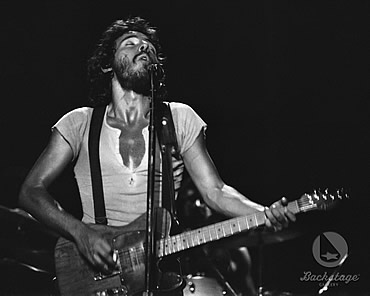
Bruce Springsteen‘s take on the story of Christ’s Passion certainly reflects a profound spiritual awareness of what this event is actually about. In an episode for VH1 Storytellers, Springsteen meditates on his song Jesus was an only son, and brings out the universal and existential truths the story of the Passion reveals.

CLICK TO WATCH it right here:

Click here to read a full transcription of this video.

Springsteen’s interpretation of the song’s ending is especially moving. A transformation takes place. Whilst in the beginning of the song Jesus is comforted by his mother Mary, at the end it’s the son who comforts his mother. Mary is asked to respect the particular destiny of her child. Jesus chose the path of compassion and love. He was touched, so deeply, by the suffering of the outcasts that he couldn’t do anything else but reach out to them. By associating him with these scapegoats, he eventually became a victim himself. In refusing to take part in a social system that constructs itself by means of sacrifices, Jesus was eventually sacrificed himself.

Following Springsteen’s reasoning, Jesus cannot start some sort of ‘civil war’ to defend himself, because that would make him the imitator of his persecutors – Jesus would thus become a sacrificer himself, a ‘prince of this world’, a ‘Muammar Gaddafi’… Christ’s kingdom, on the other hand, is ‘not of this world’. Jesus follows, in the song’s words, ‘the soul of the universe’ which ‘willed a world and it appeared’. Indeed, by withdrawing from vengeance (i.e. the imitation of the persecutors), Jesus creates the possibility of a new world. Imitating the one who ‘offers the other cheek’, the one who forgives and approaches his persecutors and betrayers with compassion, allows us to accept our own and each other’s weaknesses and iniquities, without us being victimized or ‘crucified’ for doing so…

At the end of Springsteen’s song, Jesus seems confident that his ‘Heavenly Father’ would ultimately refuse the sacrifice of his son – and this confidence is reflected in the stories of Christ’s resurrection. Jesus fully imitates ‘the One who doesn’t want sacrifices or victims’ and therefore he is said to be the ultimate incarnation or ‘materialization’ of Love: A bruised reed shall he not break, and smoking flax shall he not quench, till he send forth judgment unto victory.” (KJV, Matthew 12:20). Bruce Springsteen speaks of this mystery of the incarnation at the end of his ‘sermon’:

“Whatever divinity we can lay claim to is hidden in the core of our humanity… When we let our compassion go, we let go of what little claim we have to the divine.”

Love seeks to be concrete and ’embodied’. The very nature of Love is to throw off its spiritual garment, to ’empty’ itself from the ‘sacred’ realm in order to become ‘flesh’ – which is called ‘kenosis’. The story of Christ’s Passover can be considered a pinnacle in our clumsy attempts to express this reality. However, if these attempts produce songs like Bruce Springsteen’s Jesus was an only son, we should be grateful, as we are comforted by the fragile light of hope amidst our own ‘darkness on the edge of town’.

The sports-minded Jesuit Patrick Kelly wrote the following on Bruce Springsteen’s faith and his Roman Catholic background in a column for America Magazine (The National Catholic Weekly) – February 10, 2003 (click here to read):

Faith, hope and love have always played a part in Bruce Springsteen’s songs, but this has become more explicit in recent years. Springsteen’s willingness to talk about these themes also is relatively new.
The Rev. Andrew Greeley’s article, “The Catholic Imagination of Bruce Springsteen” (click to read Am., 2/6/88), seems to have been a catalyst in this regard. The Catholic novelist Walker Percy read the article and wrote to Springsteen in early 1989, particularly interested in the fact that Greeley described him as a Catholic. “If this is true, and I am too,” his letter read, “it would appear the two of us are rarities in our professions: you as a post-modern musician, I as a writer, a novelist and a philosopher. That and your admiration of Flannery O’Connor. She was a dear friend of mine, though she was a much more heroic Catholic than I.” Walker Percy died before Springsteen responded to his letter, but the musician wrote in a four-page letter to Percy’s widow:

“The loss and search for faith and meaning have been at the core of my own work for most of my adult life. I’d like to think that perhaps that is what Dr. Percy heard and was what moved him to write me. Those issues are still what motivate me to sit down, pick up my guitar and write.”

Percy’s nephew, Will Percy, subsequently interviewed Springsteen about the formative influences on his song-writing for the Harvard psychiatrist Robert Coles’s magazine Doubletake in 1998 (click here to read).

I assembled some excerpts from this interview. Click here if you’re interested.
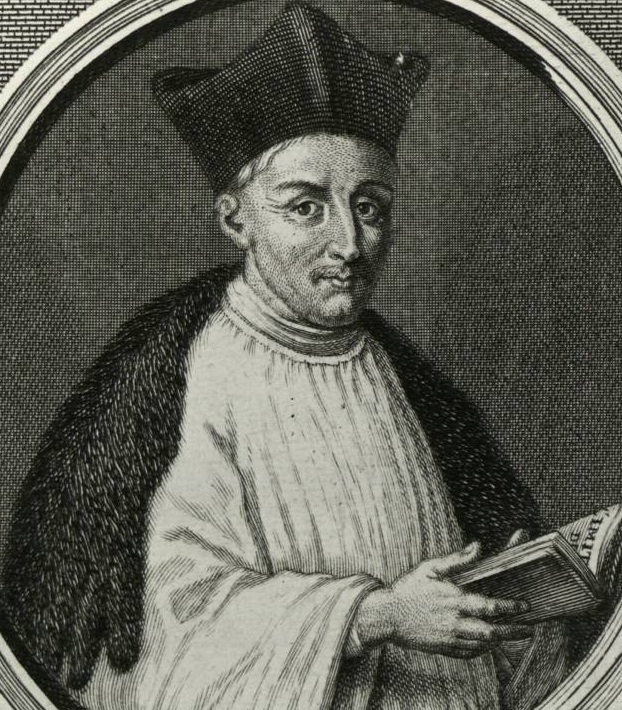
René Girard’s mimetic theory is heir to a long and widespread Christian tradition of meditating on imitation, more specifically on the imitation of Christ. This tradition is such an essential part of the Christian ‘DNA’, that Christians throughout the ages have dwelled upon it. Not surprisingly then, the wisdom of a famous Medieval Catholic monk – Thomas à Kempis – coincides with the insights of a contemporary Christian rock star – Bono. I found it interesting to organize a meeting between the two. So, here you have it: some excerpts from De Imitatione Christi next to a video fragment of an interview with Bono.

Thomas à Kempis (c.1380-1471) is famous for his spiritual guide De Imitatione Christi – ‘(On) The Imitation of Christ’. These are its first words:

Qui sequitur me non ambulat in tenebris dicit Dominus. Hæc sunt verba Christi, quibus admonemur quatenus vitam eius et mores imitemur, si volumus veraciter illuminari, et ab omni cæcitate cordis liberari. Summum igitur studium nostrum, sit in vita Jesu meditari.

(De Imitatione Christi, Liber Primus Caput I, 1).

Translation:

“He who follows Me, walks not in darkness,” says the Lord. By these words of Christ we are advised to imitate His life and habits, if we wish to be truly enlightened and free from all blindness of heart. Let our chief effort, therefore, be to study the life of Jesus Christ.

Christ indeed asks us to imitate him, thereby reorienting our mimetic abilities. Bono, lead singer of rock band U2, tried to follow this call from an early age and always looked for authentic ways to develop his life as a Christian. He tried to follow in the early church’s footsteps:

In school I met some people who knew the Scriptures. It was quite a moment there when people got very interested in the early church and the possibilities of imitating the early church.

Because of certain mimetic tendencies, our ears often remain deaf to these possibilities. All too soon we imitate those who judge us, and we become judgmental ourselves. Answering Christ’s call to ‘follow’ him has to do with finding out the truth about our’selves’ and with the ability to love our neighbour. The evangelical paradox is this: in obeying Christ we don’t lose ourselves but instead we actually find who we are – we become free! Christ represents the realm of grace and forgiveness, where we don’t have to hide our weaknesses and iniquities. This realm is an antidote for the temptation to present ourselves in such a way that we don’t run the risk of being judged. We are often tempted to enslave ourselves to an admirable image (Latin: imago) or to imitate an illusory idol. Bono puts it this way:

The key that great art has in common with Christianity is: “Know the truth and the truth will set you free.” I’ve held on to that very tightly. That’s how I start my day as a writer. I (can) start on a lie… and a lie can be being the person that you’d like to be, rather than the person you are…

If we don’t experience ‘the space of grace’, we will indeed easily lie about our own shortcomings and place the blame on something or someone else – and thus create scapegoats. We are so used to being judged that we judge others in our defense, and so multiply the evil we are trying to avoid. To imitate Christ means to imitate the One who is merciful and by doing so, in turn, free others in becoming and accepting themselves. The dynamic thus created is a dynamic of love which eventually hopes to save the world from the ‘bad’ imitation of ‘an eye for an eye’ violence. Bono also talks about this interruption of ‘the laws of karma’ (i.e. the laws of harmony, balance as well as revenge) by the creative, unexpected and ‘unbalancing’ dynamic of grace and forgiveness:

I’m pretty sure that the Universe operates by the laws of Karma essentially. All physical laws do. What you put out comes back against you. Then enters the story of Grace, which really is the story of Christ, which turned this view of the Universe upside down. And it’s completely counter-intuitive. It’s very, very hard for human beings to grasp Grace. We can actually grasp atonement, revenge, fairness… all of this we can grasp. But we don’t grasp Grace very well. I’m much more interested in Grace because I’m really depending on it.

In order to become loving persons – which is the ultimate goal of the biblical enterprise – we first need to accept ourselves as we are. That’s why Thomas à Kempis advises us to temporarily withdraw from a world where we are tempted to keep up appearances by gossip and rumors. From time to time, we need to retreat from ‘the company of men’ in order to distinguish ‘the call of the One who creates us’

… so we might truly become ‘imitators of Christ’:

Quære aptum tempus vacandi tibi, de beneficiis Dei frequenter cogita. Relinque curiosa, tales potius perlege materias, quæ compunctionem magis præstent quam occupationem. Si te subtraxeris a superfluis locutionibus et curiosis circuitionibus nec non a novitatibus et remoribus audiendis, invenies tempus sufficiens et aptum bonis meditationibus insistendis. Maximi Sanctorum humana consortia ubi poterant vitabant et Deo in secreto vivere eligebant.

Dixit quidam: Quoties inter homines fui, minor homo redii. Hoc sæpius experimur, quando diu confabulamur. Facilius est enim tacere quam in verbo non excedere. Facilius est domi latere quam foris se posse sufficienter custodire. Qui igitur intendit ad interiora et spiritualia pervenire, oportet eum cum Jesu a turba declinare.

(De Imitatione Christi, Liber Primus Caput XX, 1-2a).

Translation:

Seek a suitable time for leisure and meditate often on the favors of God. Leave curiosities alone. Read such matters as bring sorrow to the heart rather than occupation to the mind. If you withdraw yourself from unnecessary talking and idle running about, from listening to gossip and rumors, you will find enough time that is suitable for holy meditation. Very many great saints avoided the company of men wherever possible and chose to serve God in retirement. 

“As often as I have been among men,” said one writer, “I have returned less a man.” We often find this to be true when we take part in long conversations. It is easier to be silent altogether than not to speak too much. To stay at home is easier than to be sufficiently on guard while away. Anyone, then, who aims to live the inner and spiritual life must go apart, with Jesus, from the crowd.

The video fragment of an interview with Bono on ‘faith, hope and love’

– CLICK TO WATCH:

For more cross-references between U2 and mimetic theory I highly recommend a book, in German, by Austrian Brigitte Dorner: U2 ist ihre Religion, Bono ihr Gott. Zur theologischen Relevanz der Rock- und Popmusik am Beispiel von U2. For more information, click here.

Doubting Thomas (in Dutch: ‘Ongelovige Thomas’), a painting by Mark Tansey, captures the experience of doubt we are all part of, once in a while.

This experience is shared in a magnificent way in the well-known story of the apostle Thomas (John 20), who could only have faith in the risen Jesus after seeing him and touching his wounds…

Maybe our perspective on reality is often blurred by what we are expected to see, because we are all heavily conditioned by (mimetically ignited) snobbery and arrogance. To see beyond this arrogance and notice what and who is ‘really there’ – the victim along our way -, that’s the ultimate challenge…