gabriel-garridoSaturday, February 23, 2008. Gabriel Garrido, a renowned conductor of Latin American baroque music, is about to begin an evening concert at Cité de la Musique, Paris. His equally famous Ensemble Elyma is ready, together with eleven members of the Belgian boy and men choir Schola Cantorum Cantate Domino. All of a sudden, maestro Garrido turns around and addresses the audience:

“We are saddened to inform you that two days ago, on Thursday, Reverend Michaël Ghijs, the widely acclaimed conductor of the Schola Cantorum Cantate Domino from Aalst, Belgium, passed away. We would like to dedicate this concert to his memory.”

Then he turns again and looks us straight in the eyes. We, the members of the Cantate Domino choir, all have a lump in the throat. We all try to hold back our tears. Finally, maestro Garrido raises his hands and off we go to sing Cantate Domino’s first concert after the death of its founder. We all know things will never be the same again (footage from the concert):

Only 5 months before, on October 8, 2007, on his 74th birthday, Reverend Michaël Ghijs got diagnosed with pancreatic cancer. I still remember it vividly, because we used to celebrate our birthdays together (mine is on October 6).

Michaël Ghijs conducts his choir one last time during Mass on Sunday, February 3, 2008, in the Cathedral of St. Michael and St. Gudula in Brussels. He is literally deathly sick at the time, no longer able to accompany his boys during the entrance procession, but still he manages to direct them for the remainder of the Mass. It is but one example of his tremendous willpower and passion. Of course, these personality traits make him stubborn at times. For instance, during a concert tour in Asia he asks me wether or not to include Beethoven’s Choral Fantasy for an afternoon programme. My answer is not to include it, because I have the impression that the young trebles don’t seem sure about themselves. From his reaction I immediately know I shouldn’t have said that. He starts rehearsal with the Choral Fantasy, saying that the sopranos will show everyone who doubts them what they are capable of. Eventually, he shows me wrong. He is, as always, proud of the achievements of his singers. It is no coincidence that many former members of Cantate Domino have a career in music.

philippe-herrewegheMichaël Ghijs is proud of and grateful for the hard work and successes of the people he works with, yet he is not driven by pride. Although he can be stubborn, he can also say that he is sorry and admit to making mistakes. It is characteristic of the way he leads the choir. Conflicts are possible, meaning that Michaël Ghijs is not just a commander-in-chief who expects blind obedience. On the other hand, great discipline is needed and established because he wants to perform the often difficult music the best he can. Not because he wants to make a career or because he chases some kind of success, but simply because he loves the (mostly religious) music and the message it contains. His love of music itself and his artistic motivations became clear, for instance, when he compared different recordings of the same work. I remember very vividly, during my first year in the choir, that he really disliked a recording of Mendelssohn’s St. Paul oratorio by Rafael Frühbeck de Burgos. It’s the recording some of my friends and I had bought. He thought the overall interpretation didn’t serve the music nor the message. Also, after concerts, he could be very dissatisfied with our performance even when the crowd had given us a standing ovation.

I guess this is difficult to understand for people who are primarily driven by a desire to make a career and/or to become rich. True, eventually the Schola Cantorum Cantate Domino works with famous conductors like Colin Davis, Laszlo Heltay, Ronald Zollman, Philippe Herreweghe, Michael Tilson Thomas, Pierre Cao, Claudio Abbado, Alexander Rahbari, Johan Duijck, Rudolf Werthen and Dirk Brossé; with musicians like Vladimir Ashkenazy, José van Dam and even Toots Thielemans; with ensembles like Capilla Flamenca and the above mentioned Ensemble Elyma – listen to an excerpt from the collaboration on the CD Corpus Christi à Cusco (K617, 2006):

The choir even participates in the movies Daens and In BrugesNothing of the choir’s impressive resume, however, has ever been a goal. It’s just been a consequence of passion and hard work (the trebles alone practice up to 15 hours a week!). Moreover, Cantate Domino has never been a merely artistic project.

jose-van-damtoots-thielemans

in-bruges

Michaël Ghijs has a hard time refusing boys who can’t really sing. Those who persevere find a way of making themselves helpful in the practical organisation of the choir. They are welcome to join the choir on its concert tours. Regarding these tours, Michaël Ghijs also has a hard time refusing members who don’t really deserve to come along because of longer periods of absence. Sometimes the yearly concert tours are undertaken by a group of around eighty individuals, making them a financially challenging operation. Yet Reverend Ghijs often pays the entire trip out of his own pocket for members whose financial situation doesn’t otherwise allow them to travel. The choir indeed is open to people of all sorts of cultural and social backgrounds. Reverend Ghijs also makes it a point to look after members and former members when they experience difficulties in their lives. For instance, he provides shelter for a young man who came out of the closet as a homosexual and whose parents threw him out because of that. Or he gives daily calls to a former member of the choir who is in the hospital for a treatment of meningitis. There are so many situations to mention… Perhaps it is in these social aspects that the priestly vocation of Ghijs is most apparent. The choir never is a money making machine. Singing at funerals and marriages, or performing in care homes, prisons, whatever: the choir often just receives enough to pay the bill of the bus (sometimes to the chagrin of the older members who are in charge of the finances).

diapason-cover-june-2005In any case, what Michaël Ghijs achieves with his choir, with boys who often don’t have any proper education in music, is nothing short of a miracle. One of his best qualities is his firm belief in the abilities of young people before they even believe in themselves. When some of us think we will never be able to properly perform Amen by Henryk Mikolaj Górecki, Michaël Ghijs pulls us through. He even wants us to sing it at the Belgian provincial choir tournaments, next to, among other music, Bach’s motet Singet dem Herrn ein neues Lied. In the end he is right. Our perfomance places us, once again, in the highest division. In the same period an album is recorded by Capilla Flamenca together with some trebles of Schola Cantorum Cantate Domino. Ten years later, this CD is listed among “the 25 most beautiful recordings of boy choirs” by renowned French magazine Diapason (June, 2005):

diapason-review-of-cantate-domino-aalst

Listen to an excerpt from the CD Missa Alleluia (Eufoda, 1996):

If anything, these things prove that Michaël Ghijs above all educated young people to enable them to shine and to share their talents with the world. Of course, there will always be cynical minds who regard the work of a priest with young boys and men with suspicion. I know Reverend Ghijs got called names sometimes by so-called rebellious teenagers when he crossed the street with his boy sopranos. The words are not worth repeating. Reverend Ghijs, unlike me, ignored them and always continued his work with the same energy, passion, eagerness to learn and genuine concern for what happened in the lives of his singers.

I’ve had the privilege to have known this man, a true friend and mentor, for almost twenty years. Like everyone else, he was a complex human being with flaws and weaknesses, with doubts and frustrations. He dared to be vulnerable. He kept reading and studying, knowing that he never knew enough. He questioned the personal assumptions of his Christian faith and developed his theology in a different direction over the years (in no small part because he discovered the work of James Alison). He loved the good life and could enjoy delicious food and drinks in good company.

Michaël Ghijs is missed by friends all over the world, from the Americas over Spain, Italy, Bulgaria and a range of other European countries to South Africa, Israel, Japan, South Korea, the Philippines and many other places. In the course of his lifetime, Reverend Michaël Ghijs discovered his own limits and cultural boundaries, not as ends in themselves to separate himself from others, but, on the contrary, as means to encounter others. His legacy is a spirituality to be imitated and a work to be continued, in whatever context, in true friendship and in gratitude.

May God bless him.

My trip down memory lane, compiled from different tv performances, pictures and records – life in Schola Cantorum Cantate Domino:

On Thursday, April 21, 2016 legendary pop artist Prince was found dead in his studio.

Love him or hate him, without a doubt he was a true musical genius who inspired and will inspire countless musicians, artists, performers and fans. His was a genuine celebration of Life.

Sometimes it snows in April…

A tribute:

Wim Delvoye made an intriguing Via Crucis, using X-ray images of rats to depict the different Stations of the Cross. I used it together with the song Lazarus by the late David Bowie to make a meditation. Apart from some scenes of the graphic novel Maus by Art Spiegelman, other images included are:

  • Ash Jesus (Zhang Huan, 2011)
  • Still Life or Pieta (Sam Jinks, 2007)
  • Black Christ (Vanessa Beecroft, 2006)
  • Tote BlaurackeDead Bluebird (Albrecht Dürer, 1512)

Click to watch:

What makes a saint a saint?

Christian spirituality, and the Catholic spirituality in particular, very much focuses on the power of examples.

feral children amala-and-kamalaAs modern psychology shows, humans get access to their particular cultural environments through mimetic processes (i.e. processes of imitation). Perhaps the importance of imitation as the heart of the human (psycho)social identity formation becomes paradoxically visible with the observation of children who lack the example of other human beings while growing up. Feral children often imitate animals instead, with all due consequences.

It is no coincidence that an authentic spirituality, in line with what makes humans “human”, is based on the question “Who am I?” understood as “Whom should I follow / imitate?” Indeed, we receive our identity from others who either free us to ourselves or enslave us to an alienating social status we learn to uphold. We never build our identity “from scratch”. We are relational beings, our being is essentially relational, and all kinds of relationships are prior to our sense of self or “I”.

Thomas à KempisThe great spiritual figures and mystics of the Christian traditions have always believed that we come to ourselves by imitating Christ (see De Imitatione Christi by Thomas à Kempis – 1380-1471). This does not mean literally imitating some kind of idol (that is a perversion of spirituality) but imitating the life and love present in the figure of Christ. So what this actually means is: stepping into the realm of a love that allows us to be honest about and true to ourselves so that we become capable of lovingly accepting others as well.

Thus saints in the Catholic tradition are not saints because they are unrealistic examples of so-called ideal, perfect people. That would make them idols, crushing all too pious minds under guilt, shame and resentment. On the contrary, saints are saints because they found the audacity to be “painfully honest” about themselves and no longer hid their imperfections, flaws and “sins” from themselves and others.

“Hello, I’m Ignatius, alcoholic”

Saints are people who follow the advice of Jesus in the Gospel of John (8:32), “Know the truth and the truth will set you free…” Free to love. An alcoholic, for instance, who enters the loving realm of an AA meeting and is finally enabled to admit to himself that he is an alcoholic, indeed enters the first step on a journey that will enable him to find himself again. This in turn will enable him to approach others from what he has to give rather than approach others from his particular “needs”.

6219.inddThe conversion experience of Saint Ignatius Loyola (click for more) can be understood in these terms. He converted to “God”, which was a conversion to “himself” at the same time. This does not mean that Ignatius became “God”, but that he found the realm of a love that allowed him to accept himself. Ignatius turned away from the prideful social status he wanted to uphold. The love for a chivalric image and his romantic dreams had prevented him, like some mad “Don Quixote”, from loving others, whom he merely used as “means” to confirm his self-image (either as “enemies” or as “friends”). But at some point in his life, at a moment of a deep identity crisis, Ignatius started to discern between the forces that alienated him from himself and others on the one hand, and the love that allowed him to connect to himself and others on the other. He started to give up the game of “auto- and hetero-aggression” and found true self-respect and respect for others.

The spiritual exercise of Greg, former Porn Star

Greg, the most decorated male porn star of all time, follows in the footsteps of saints like Ignatius who entered the realm of “the life and love present in the Christ figure (among others)”. First of all, Greg became aware of the status he wanted to uphold, as a rich and famous adult film actor, and how this was destroying him. He ended up in an endless vicious circle:

“I had to go to work, to do the porn, so that I could buy the drugs, to bury the pain of doing the porn. So I’d go to work, and do the porn, so I could buy the drugs, to bury the pain. And around and around it went.”

Second, Greg realized what harm this kind of auto-aggression was doing to his ability to love other people:

“What porn did to me, is it changed the way I thought, and felt about women. I began to look at them even more so as a sexual object. I lost the ability to have a loving and caring relationship. I thought I was still able. I was fooled.”

Finally, however, Greg was able to turn away, to convert (Latin: “convertere”), and he transformed his life into a testimony and an example to inspire others:

“I left the set [of a shoot], drove a couple blocks, pulled over, and started crying. Since that day, I’ve never gone back. I changed my life, I began my life. You see, if I can change my heart, anybody can.”

[READ A PDF-VERSION OF THIS ARTICLE HERE]

Even before the terrorist shootings at Charlie Hebdo and later this year at other sites in Paris, quality labeled Belgian magazines and newspapers reported on the socially precarious situation in certain areas of Brussels, especially in Molenbeek. I’ve translated parts of an article that appeared in Knack magazine concerning the issue. Next to this article I’ve translated parts of other articles as well (from Knack magazine and De Standaard newspaper). These appeared in the aftermath of the Charlie Hebdo shootings. I will use some findings of these articles to answer a few questions on the nature of the conflict we’re dealing with when we’re talking about “homegrown terrorism”.

  • FIRST QUESTION: IS IT A “CLASH OF CIVILIZATIONS”?

FROM AN ARTICLE BY HAN RENARD:

Rachid Zegzaoui is a blogger of Moroccan descent living in Sint-Joost-ten-Node [another municipality of Brussels]. Rachid notices how many youngsters turn their back on the society they grew up in. “Second and third generation migrants no longer believe that a life of study, career and retirement is fit for them and consider their parents losers. They accuse their parents of being slaves to the West and the infidels. So it is a generational conflict as well, a revolt against their family. Parents are dead worried but no longer understand their offspring. They don’t know what their children are doing on the internet. In many Muslim families there is a complete sense of disunity. Young people reject the society in which they grew up. Religion guides their life, it is the meaning of their existence. But Islam as they understand it is not practiced here in Belgium.” […]

Call of Duty ISISZeguendi Khalil, editor in chief of Le Maroxellois, a magazine aimed at the Moroccan community, joins in. During one month and a half, Khalil listened to sermons with regard to the war in Syria in about twenty Mosques in Brussels. He concludes that imams warn their young audience against Jihad ideology and that imams sharply condemn ISIS terrorism. “However”, he says, “from our inquiry we know that members for Jihad are recruited through the internet nowadays, while this used to happen on the streets or in the near of Mosques.” Imported imams from Morocco or Turkey in Brussels don’t understand the young, Khalil explains. They don’t speak their language, nor know their culture and don’t have any clue whatsoever about Facebook or WhatsApp. “Imams fail. And so young Muslims, looking for meaning, construct their own version of Islam aided by Jihadist websites.”

We need positive role models, according to Khalil. Young Muslims who made it one way or the other should be put forward.

Young Islamologist Jessika Soors works as an official against radicalization in Vilvoorde. […] Although Jihadists justify their departure with the ideal of a holy war, many of them hardly knew anything about Islam and the Quran just before their sudden radicalization. “They’re religiously illiterate in many cases”, Soors says. […] ISIS appeals to vulnerable young people who are looking for a sense of self-worth and an all-encompassing identity.” […]

Young people who are bored here or who feel rejected, become members of ISIS in a quest for adventure. […] ISIS propaganda promises superstardom to those who feel lost in the West – all in the name of Allah.

MORE IN Knack, September 24, 2015, Voor Allah én het avontuur (p. 28-32), by Han Renard.

ISIS Hipster BeardPERSONAL COMMENTS

ANSWER TO THE FIRST QUESTION: NO. It is a clash within civilizations and cultures, not between them. Radicalized young Muslims seem to reject western society (although things like ISIS propaganda films borrow their look from western action movies and video games), but they also turn their back on the culture of their family and the imported imams from Morocco and Turkey. They create a new counter-culture which thrives on the internet. Their religion is mainly a consequence, not a cause of their violent tendencies. And the terror boys grow beards like hipsters (or was it the other way around?).

  • SECOND QUESTION: IS IT A “CLASH BETWEEN THE SEXES”?

FROM AN ARTICLE BY HAN RENARD:

Ahmed El Khanouss (CDH) is a jurat in Molenbeek, an impoverished municipality of Brussels and home to many migrants. Most of them are of Moroccan descent. […]

Khanouss notices how radicalization of youngsters expresses itself in two ways. “Some of them totally change their attitude. All of a sudden they become very demanding towards the women in their family, particularly with regard to their clothing, and they rebel against their parents. Others show no sign of radicalization until the day they leave. They wear brands and behave themselves like any western kid.” […]

MORE IN Knack, September 24, 2015, Voor Allah én het avontuur (p. 28-32), by Han Renard.

FROM AN ARTICLE BY TINNEKE BEECKMAN:

“Porn-watching losers”. That’s how London mayor Boris Johnson described the Jihadists psychological profile. He claims paraphrasing a confidential report from intelligence service MI5. Jihadists don’t know how to approach women and feel rejected. To compensate for their lack of self-esteem they go to war. They could have equally become members of a youth gang. Johnson’s subtle analysis doesn’t get you very far in understanding a phenomenon like extremism, but he does point to another current topic: the fact that a sense of identity goes hand in hand with sexuality. And also the fact that many people feel lost when temptations and romantic feelings are the ultimate measure.

Radicalized young people are not capable of dealing with that kind of freedom. They look for a social framework with clearly established roles for men and women. They long for stable patterns. They loathe LGBT’s and women’s rights because they consider these to be disrupting. They want to go back to a clear definition of the masculine and the feminine. But the West has dismantled such definitions. It’s because of this context that any kind of extremism becomes attractive: it offers a simple solution, a clarity which leaves no room for doubt.

Loneliness and sexuality are also major themes in Michel Houellebecq’s “Soumission” (Submission), a novel displaying the advantages of a patriarchal society. The author considers the hypothesis that leftist parties in France form a coalition with an Islamic party led by Mohammed Ben Abbes. Ben Abbes thus becomes president of France in 2022. The paradox is that in the final round only rightwing conservative parties remain: Marine Le Pen (FN) is the opponent of Ben Abbes.Soumission Michel Houellebecq

Houellebecq’s talent consists in capturing the spirit of the age like some contemporary Balzac or de Maupassant. His novel is about the difficult heritage of a free, libertarian consumerist society brought by May 1968. Islam plays an important part in resisting this new society. It fills an ideological void. France so eagerly destroyed part of its own tradition that neither Catholicism nor the proud Republican morality offer an alternative. Ben Abbes and his moderate Islam thus embody the possibility of a political conservatism, with more stable family relationships, law and order in the outskirts of the city and less unemployment: women stay at home. No more disruptions, no more failing romantic love affairs. Religion even answers the riddles of the universe.

Houellebecq suggests that many men would be prepared to get rid of feminism. Many of them don’t care about a postmodernist ideology that leaves every individual the possibility to define its own (sexual) identity. […]

MORE IN De Standaard, February 2, 2015, Over radicale jongeren en seks (Column Tinneke Beeckman).

male dominated cultures cartoon

PERSONAL COMMENTS

ANSWER TO THE SECOND QUESTION: MAYBE. At least it seems part of it. Western society seems liberating for women but it has its own forms of sexism. The question whether or not a certain image of women is oppressive depends on the motivations that guide women to uphold that image. If women conduct themselves in a certain way to gain social recognition or because of a fear of social rejection, they actually don’t accept themselves and they will tend to look down on women who make other choices (forms of auto-aggression lead to forms of hetero-aggression).

More generally, from a patriarchal viewpoint, socially and sexually emancipated women (who make their own choices, in whatever direction – “chaste” or “not so chaste”) are often experienced as a threat. René Girard helps us understand why women are depicted as troublemakers and how they, more specifically (sexually) emancipated women, become scapegoats, unjustly held responsible for all kinds of evil in the world. The sexist reasoning often goes something like this. Emancipated women are no longer dependent on their husbands. This means that they can more easily divorce them. Divorces potentially trouble the mind of children and youngsters, who might lose the security of a “home”. Hence juvenile delinquency could increase as young people get together in gangs to create a sense of self-worth and identity. Thus the stability of society as a whole is threatened by women who refuse to remain faithful to the man they’re married off to. Moreover, sexually independent women can stir rivalry and violence between men, which once again destabilizes the internal cohesion of a community. Indeed, sex (eros) might lead to death (thanatos).

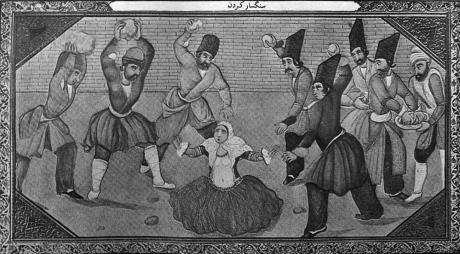
Stoning a Woman for Adultery (Qajar Era)To avoid these potential troubles patriarchal societies have the tendency to suppress the freedom of women. This means women have to pay for the potential rivalry between men and the potential lack of responsibility of other members of the society. Instead of taking responsibility for their rivalrous and even violent desires and instead of taking control of them, patriarchal men blame women for their own behavior. And instead of taking more responsibility as a parent, patriarchal men also blame women if their offspring ends up on the wrong track… Peace and order in society, according to the patriarchal system, can only be obtained by keeping women in check. In other words, women and their freedom are violently sacrificed in order to establish “peace and quiet”.

It is no surprise that emancipated women are targeted as “symbols” of a “decadent western society”. Radicalized young Muslims who grew up with the “great expectations” sold by the West’s consumerist society but who started resenting that very same society once they felt rejected, come to the same conclusions as some old white conservative fundamentalist Christians. Jerry Falwell and Pat Robertson blamed “the gays and the lesbians and the feminists” for 9/11 (click here for more on this).

Apart from pointing to the West’s hypocritical stance towards the suffering of Muslims in the world, young radicalized Muslims justify their terrorist actions by pointing to the so-called decadence of western society’s tolerance for “the gays and the lesbians and the feminists”. Some fundamentalist Christians claim the West has to blame itself for the terrorist attacks it experiences, as some radicalized Muslims claim the West has to blame itself for the terrorist attacks it experiences. Once again, it is not “the Christian West” against “the Islamic East”, it is NOT A CLASH BETWEEN CIVILIZATIONS, but a clash within a globalizing consumerist world. Indeed, economic interests are often the key factors in international policymaking decisions, more than a concern for human rights – although the West always claims it defends “modern democracy”. This doesn’t mean that terrorists are justified in using this hypocrisy to violate human rights themselves, but the fact remains they do justify their actions in this way. Terrorists often don’t belong to “the poorest of the poor”, but also to relatively “wealthy” people who feel western society creates “injustices”. Of course a so-called “individualist” society is good for the economy (instead of selling one car to a family you sell three as a car dealer since Mum, Dad and Son or Daughter are all busy developing their very own “project” in life), but it also destabilizes “traditional” family relationships (Mum, Dad and Son or Daughter are doing “their own thing”). And more consumption might lead to more environmental issues. Hell, from the viewpoint of some twisted patriarchal minds, the emancipation of women and other individuals might even cause a catastrophic apocalyptic climate change!

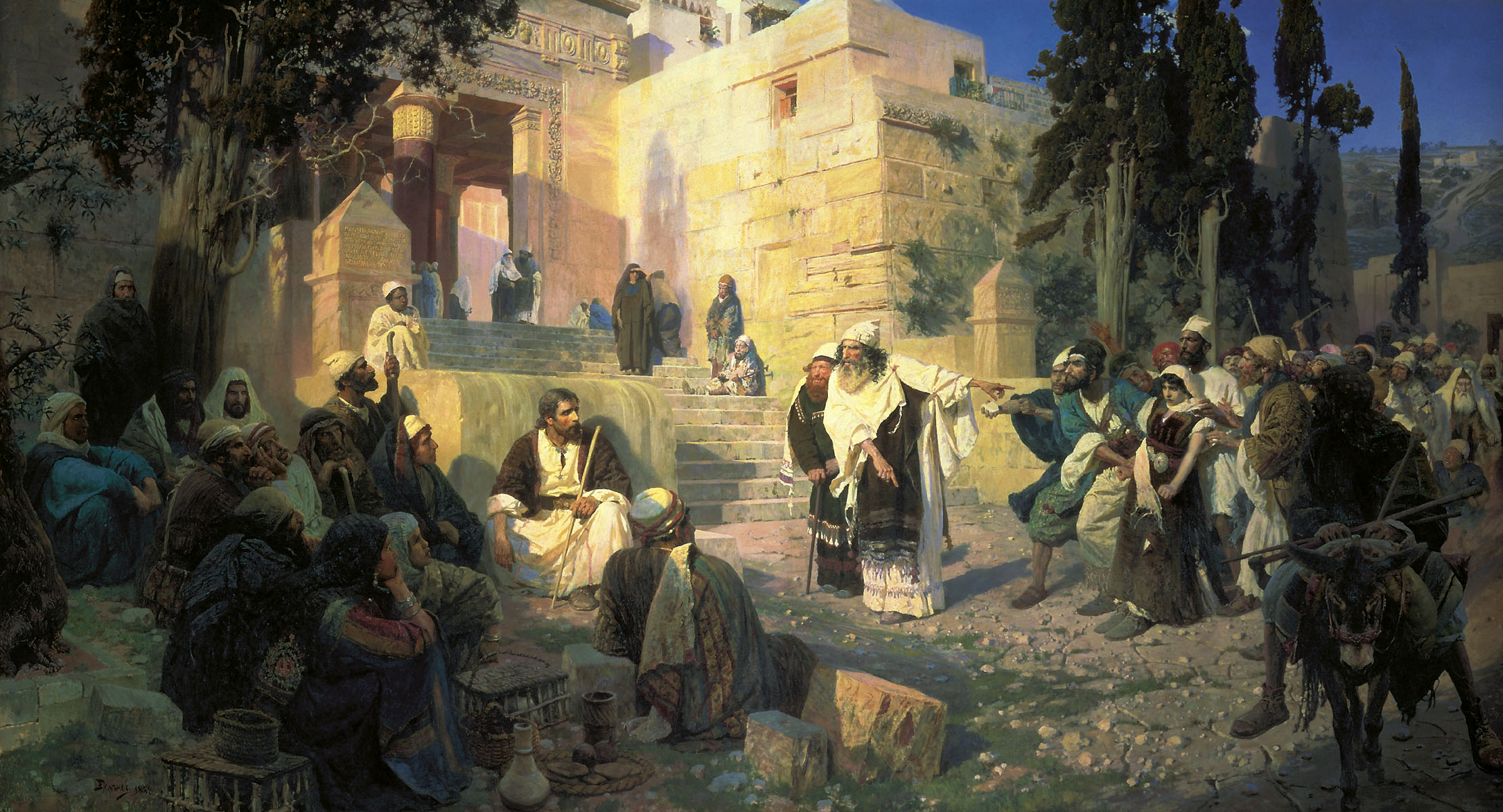
A Depiction of Jesus and the Woman taken in Adultery (Vasily Polenov)As for the Jesus Christ of the Gospels: he is a “destabilizer”. How about that, Pat Robertson? Throughout the Gospels it becomes clear that Jesus criticizes the universal tendency of human communities to structure themselves according to the identification of a common enemy or a common victim (be it an individual or a group). So on the one hand, concerning the group people are part of and that often manifests itself at the expense of a common enemy (for instance an adulteress who is about to be stoned – see John 8:1-11), it is no surprise that Jesus sows discord. It is no coincidence that he claims (Matthew 10:34-36): “Do not think that I have come to bring peace to the earth. I have not come to bring peace, but a sword. For I have come to set a man against his father, and a daughter against her mother, and a daughter-in-law against her mother-in-law. And a person’s enemies will be those of his own household.” This intention of Jesus, to create conflict where there is a certain order, is actually and paradoxically a plea against violence. Family members who slavishly obey a pater familias, tribe members who harmoniously feel superior to other groups, criminal gangs who blindly pledge allegiance to the mob boss, cult members and fundamentalist believers who are prepared to fight for their leader and their God till death, anxious employees who sell their soul to keep their job in a sick working environment, (youthful) cliques who strengthen their internal cohesion by bullying someone, whole nations who bow to the demands of a populist dictator and execute so-called “traitors” – Jesus doesn’t like it one bit.

Peace I leave with youOpposed to the small and big forms of “peace” based on oppression and violence, of which the Pax Romana in the time of Jesus is an obvious case of course, Jesus challenges people to build peace differently. Family members who belong to a “home” where they can have debates with each other, members of enemy tribes who end age old feuds by questioning their own perception of “the other tribe”, former criminals who start to behave like “moles” to clear their violent Mafia gang, fundamentalists who – realizing what they do to those who supposedly don’t belong to “the chosen ones” – liberate themselves from religious indoctrination, employees who address a reign of terror at their workplace, individuals who criticize the bullying of their own clique, pacifists who dare to dissent with the violent rule of a dictatorship and unveil its enemy images as grotesque caricatures – Jesus likes it. “Love your enemies”, Jesus says. Everyone who no longer condemns the external enemy of his own particular group because of a stirred up feeling of superiority, generates internal discord: “A person’s enemies will be those of his own household.” It’s only logical.

In short, Jesus argues in favor of non-violent conflict in order to end violent peace. That’s why he can say on the other hand, eventually (John 14:27): “Peace I leave with you; my peace I give to you. Not as the world gives do I give to you.”

  • THIRD QUESTION: IS IT A “SPIRITUAL CLASH” WITHIN HUMAN NATURE?

FROM AN ARTICLE BY CHRIS DESTOOP:

Ernst Kat, a convert, is active as an “Islamic psychologist” who treats lots of radicalized youngsters. […] “Part of the Jihadists have serious mental issues”, he says. “Many of them suffer from paranoia. They distrust others and they heavily engage in conspiracy theories. They feel rejected by society and have developed hypersensitivity. […] Their problems can also cause an enormous depression. They remain motionless, feel banned and are at a dead end. When recruiters approach these psychologically vulnerable young people and offer them an orderly model like Jihad this can be very attractive. It can cause a rapid radicalization. But most of them are not violent towards others. They become auto-aggressive.”

MORE IN Knack, January 14, 2015, Het monster zit vanbinnen (p. 36-37), by Chris Destoop.

FROM AN ARTICLE IN DE STANDAARD:

Since a couple of years Marion Van San has been conducting a research into families of young people who went to war in Syria, implying that she is closely connected to about ninety such families. […]

Van San defends the idea that “the more young people are integrated, the more they are susceptible to radicalization”. Children and grandchildren of immigrants are born and raised here, and they want to be accepted. “The consequence is that their social expectations are higher than those of others and that they are often more sensitive about (supposed and real) discrimination”, Van San writes.

MORE IN De Standaard, February 2, 2015, Radicalisering dreigt vooral bij geïntegreerde jongeren (Politiek, p. 5).

PERSONAL COMMENTS

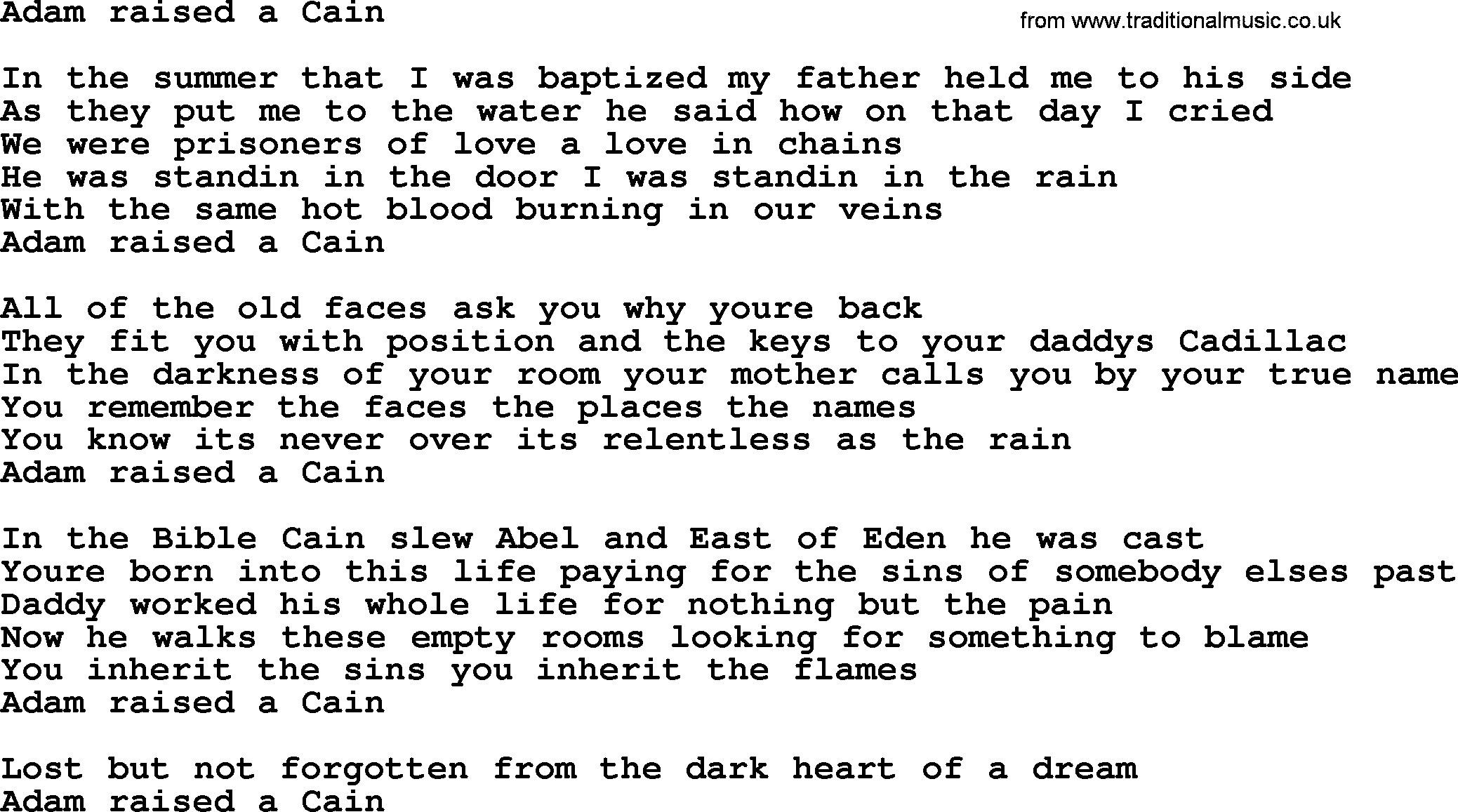
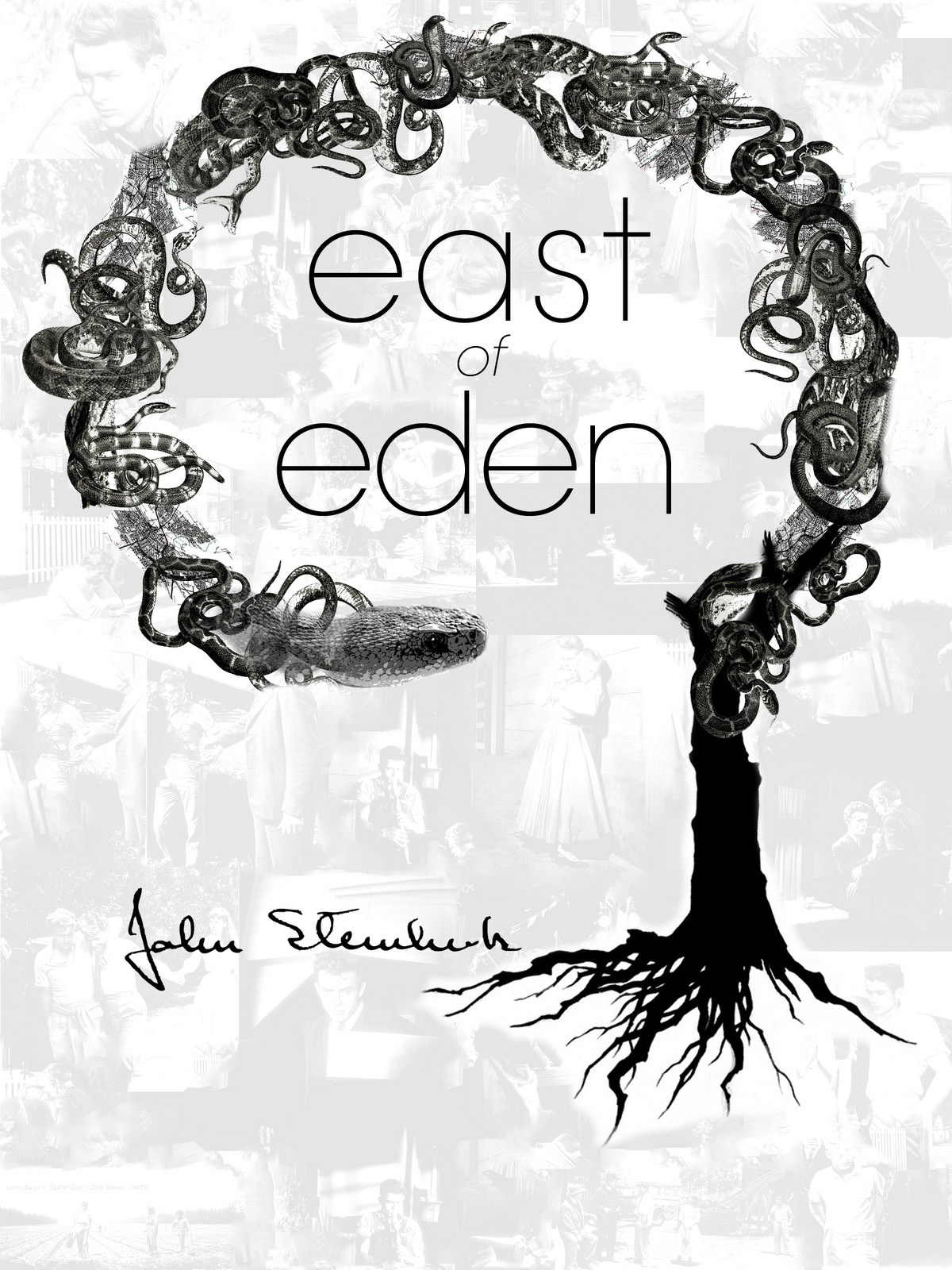
ANSWER TO THE THIRD QUESTION: YES. It is a clash within and between human beings who feel rejected by and reject each other. Instead of discovering a Love that allows them to accept themselves even if they are rejected (or feel rejected) by their social environment, they develop forms of auto- and hetero-aggression to create a sense of “pride” and “social status”. To put things Biblically (and in the words of Bruce Springsteen), “Adam raised a Cain” (click to watch). John Steinbeck magnificently summarizes the universal meaning of the Cain and Abel story in his novel East of Eden.

Adam raised a Cain (Bruce Springsteen)

All of us are like Cain, one way or the other, but young radicalized ISIS terrorists commit the sin of murder and show the lack of neighborly love in the most gruesome way. As the Chinese butler Lee explains in Steinbeck’s novel in his comments on the meaning of the Cain and Abel story, the individual biography of many a young ISIS terrorist and the history of the world would have looked quite different without the feeling of rejection and with the acceptance of Love:
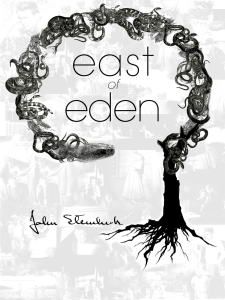
East of Eden John Steinbeck Cover“I think this is the best-known story in the world because it is everybody’s story. I think it is the symbol story of the human soul. I’m feeling my way now – don’t jump on me if I’m not clear. The greatest terror a child can have is that he is not loved, and rejection is the hell he fears. I think everyone in the world to a large or small extent has felt rejection. And with rejection comes anger, and with anger some kind of crime in revenge for the rejection, and with the crime guilt – and there is the story of mankind. I think that if rejection could be amputated, the human would not be what he is. Maybe there would be fewer crazy people. I am sure in myself there would not be many jails. It is all there – the start, the beginning. One child, refused the love he craves, kicks the cat and hides the secret guilt; and another steals so that money will make him loved; and a third conquers the world – and always the guilt and revenge and more guilt. The human is the only guilty animal. Now wait! Therefore I think this old and terrible story is important because it is a chart of the soul – the secret, rejected, guilty soul.”
“It’s because of his ADHD. It’s because of her ADD. It’s because of a difficult situation at home. It’s because he is highly intelligent: he is not challenged enough to study more thoroughly. It’s the teachers: they don’t explain things well enough, they’re boring. It’s because of the educators: they take aim at him and don’t give him any chances. It’s because of the break-up with her boyfriend. It’s because she hit puberty and goes through a difficult time. It’s because he is young and wants to experiment: that’s why he is not motivated to do school and that’s why he colors outside the lines sometimes. You have to understand. After all, it’s good that he’s somewhat a ‘rebel’ at school, isn’t it? It shows character and personality…”

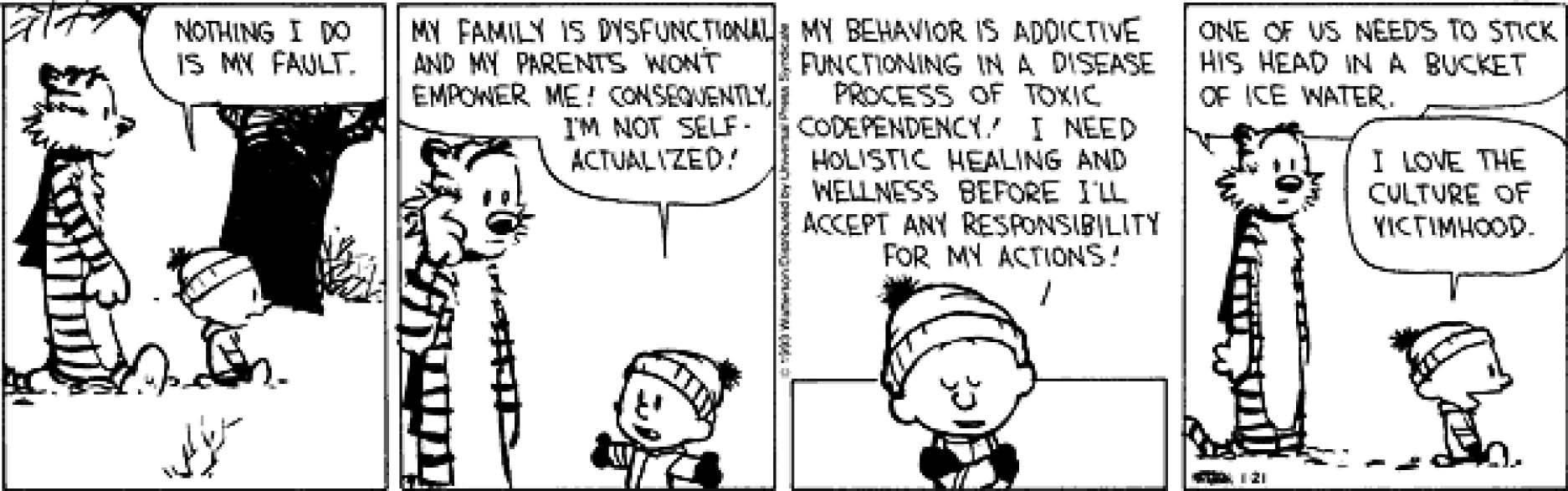
culture of victimhood calvinWe’re all victims, right? If not of our hormones, then of a certain affection, or of ‘circumstances’ and other people. Well, first of all, it’s a good thing that people are acknowledged as victims of whatever it is that makes their life difficult or hurtful. If you’re lucky, then mommy and daddy will find their way to the right institutions to help you. If you’re lucky, your parents can pay for psychologists, psychiatrists, tutors, medicines, and leave you in the hands of professional educators (perhaps at a boarding school) or provide you with a secure and satisfying future at the family firm. In short, if you’re lucky you’ll find your way to people who will help you to overcome an all too comfortable self-definition by what haunts or victimizes you.

If you’re not that lucky, you might fall into the hands of people who confirm and magnify your victimhood, allowing you to accuse whatever ‘scapegoat’ (see René Girard) you can find to deny personal freedom and responsibility. And let’s face it: today’s culture often is a victimhood culture, where everybody plays the ‘blame game’ in order to protect a narcissistic self-image. Indeed, a reasoning like the following is quite common: “If I’d work harder, I’d be able to graduate as a doctor – I do possess the intrinsic qualities -, but my ADD and the fact that teachers don’t pay attention to my particular problem, destroy my motivation and cause me to fail.” This kind of narcissism is supported sometimes by parents as well, for they often do not like to acknowledge that, maybe, their kid has other talents.

Calvin and Hobbes

Every teacher or educator knows how difficult it can be to motivate certain students to work for school. Even in the best of circumstances, with every help possible, some students simply justify their negative attitude with every possible excuse. Rather than fully admit that their child acts as a ‘loon’ or a ‘brat’ in some cases, some parents even plead for a very soft treatment of their child’s misbehavior by pointing out that he or she is just ‘being young’ and ‘showing personality’. As if their child really is some kind of rebel hero. That’s why, in some classrooms, the brat can become a model that deserves imitation. Indeed, in some classrooms students feel ashamed, even guilty, of being a hardworking student. They would prefer making a laughing stock out of other hardworking students than admit being hardworking themselves. Self-denial and betraying (the relationship and affiliation with) others: the two sides of the coin that is the love for one’s self-image – a man-made, social ‘idol’, becoming the goal of one’s life.

Add to this cocktail of excuses the conviction that ‘society as a whole’ is ‘against you’, and you get the sort of victimhood mentality in places like Molenbeek, a district of Brussels known as a breeding ground for radical, young Muslims. Would you still study, as an adolescent in today’s distracting society, if you can convince yourself that ‘it doesn’t make any difference’, that you’re discriminated anyway (even if this isn’t true!)?

I often wonder about some of the students I teach: what would happen to those who are allowed to cultivate an attitude of victimhood, or worse, of heroism in not working for school if this was not happening in the best possible circumstances? What if they wouldn’t be ‘corrected’ by psychologists, tutors or educators (paid by the very parents who plead to go easy on their child’s misbehavior)? What if they would end up in unemployment without a graduation certificate, as a young Muslim? I’m sure they would continue the all too human narcissistic inclination to blame ‘others’ for their detrimental situation. And I’m also pretty sure that they could find comfort in the stories and propaganda of ISIS recruiters. After all, this propaganda confirms their idea of being victims, while it also provides them with a counter-culture that makes them heroic martyrs for God. This counter-culture is appealing to non-Muslims as well and attracts converts, as there are many people who no longer feel ‘at ease’ in today’s consumer and performance based society. All in all, considering the circumstances some young people grow up in, it may be a miracle that not more of them become Jihadists. There’s hope.

Young Muslim women stand hand-in-hand in front of the Oslo Synagogue during the "Ring of Peace" vigil, February 21, 2015. The vigil was organized by Muslim youth in solidarity with Norway's Jewish community following anti-Jewish attacks in Denmark and other parts of Europe.

In any case, there is no real difference between one loon and the next. It just so happens that one is characterized as an ‘adventurous youth’, making ‘youthful mistakes’ that are eventually rectified, while the other is perceived as someone who should blame himself for blowing his chances on a good education and social future. Only narcissist hypocrites will maintain that there is a difference between ‘my kid’ and ‘that kid’. The dress may be different (secular or religious), but we’re all human after all, experiencing similar challenges and temptations.

As hinted at earlier, the victimhood mentality often not only affects those young Muslims or ‘converts’ who are unemployed and indeed find it difficult to assert themselves in society, but it can also poison the minds of young Muslims or ‘converts’ with a rather prosperous life. Like the hardworking student who starts feeling ashamed of being a hardworking student in front of a ‘brat mentality’, the prosperous young Muslim might start feeling guilty or responsible for his supposedly discriminated friends or ‘Muslim brothers and sisters’. Sometimes this discrimination will be real, but in other cases it will be imagined.

ISIS propaganda will try to magnify the story of ‘oppressed Muslims’ and ‘the oppression of Islam’ in order to justify further terrorist acts and atrocities. So the worst we can do, here in the West, is to start discriminating Muslims in general and limit their freedom to practice their religion as fellow citizens (bound by the same laws and rights in a democratic nation, based on the separation between “church/religion/culture” and “state”). Discriminating Muslims would only add to the propaganda of ISIS and confirm its story that ‘Muslims are generally oppressed victims’. ISIS has already poisoned enough vulnerable minds with their propaganda. Why should we too believe that they are the only ‘true representatives of Islam’? Moreover, if we would make it difficult for Muslims to practice their religion publicly, and make it even harder for Muslims to enter into a social and political dialogue where Islam can be a point of debate as well as inspiration, violent versions of it will continue to flourish on the internet. You don’t take porn away nor perverted forms of sexuality on the internet if you make sex taboo. Also, you don’t create a breeding ground for rape and perverted forms of sexuality/(religion) when you enjoy and even “promote” healthy forms of cultivated sexuality/(religion). On the contrary.

Of course Islam lends itself to an interpretation that confirms people in their ideas of victimhood and heroism. Of course Islam lends itself to an interpretation that allows people to ‘heroically purify’ the world through mass killings. But it’s only one of the many possible ideologies to justify a contagious narcissism and self-denial on the one hand, and the sacrifice of others on the other. As history shows, people who feel victimized or threatened, or who long for a ‘heroic’ life, will always find a utopian, romantic story to justify their actions, whether that story be a secular political totalitarianism, a religious totalitarianism, or an individual totalitarianism like “I’m the rebel hero who challenges the educational system that oppresses me and my fellow students.”

Islam can equally be a source of true spirituality, i.e. a spirituality that is not ‘easily comforting’ and confirming a story of narcissistic victimhood and heroism, but a spirituality that allows people to look at themselves more honestly and truthfully. Ideologies, like friends, become dangerous and bad when they only confirm your self-image. Good friends are the ones who confront you with your drug addiction if you have one, with your anorexia if you’re developing this eating disorder, or with the cheap excuses you use to protect untruthful ideas about yourself. This might hurt at first, but eventually the truth can set you free. It might free you from all sorts of addictions, whether it be material goods, habits or illusions. And this is the condition to lovingly – which is not the same as ‘gently’ or ‘comfortingly’ – approach others as well.

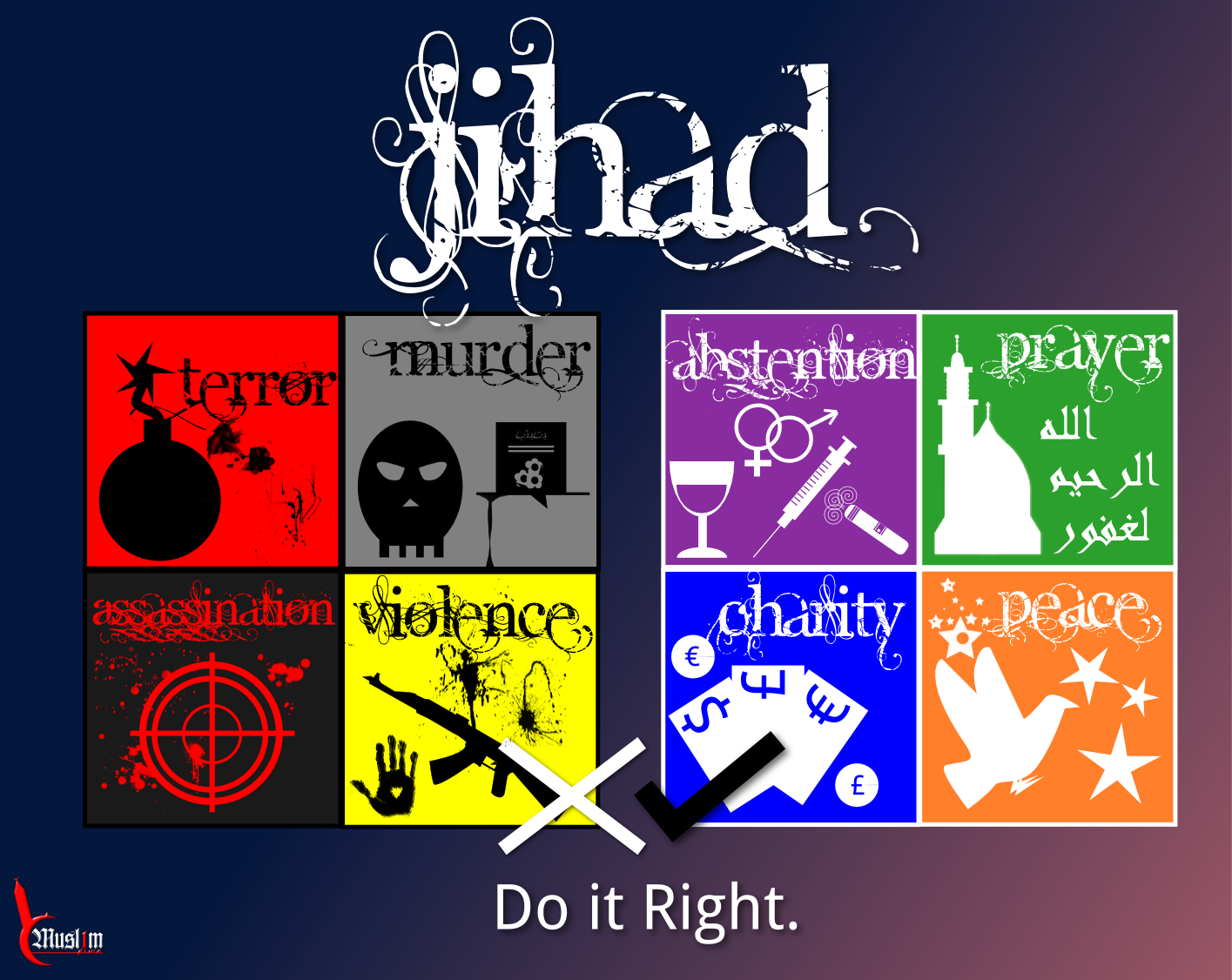
The Greater Jihad - Do it Right

Instead of feeling ashamed of not participating in a so-called ‘heroic’ struggle against the so-called external ‘enemies of Islam’, the inner spiritual struggle – ‘the greater Jihad’ – allows Muslims to debunk romantic ideas of victimhood and to destroy the man-made idols of ‘violent, heroic martyrdom’. And when there is no such God, no such man-made idol or ideology, left to blame (as a justification), violent suicides and murders can be seen for what they are: as purely human actions for which humans carry responsibility. Only then can there be truly liberating tears of a different kind of shame and remorse: the regret one experiences for having sinned against the Love that connects people to themselves as well as others, contrary to the love for one’s socially constructed self-image which alienates people from themselves and others.

The transformation of the human heart… That would be the true miracle…

“In the end, she’s just a mere mortal, just like all the rest of us, just like me…” It’s something we hear quite often, explicitly or implicitly, when people talk about “the rich, the famous and/or the geniuses” of this world. Why is it that we often like to read what tabloid newspapers write about these people? Why is it that we often like to gossip about our local or global heroes or celebrities? What kind of desire is satisfied that we enjoy this kind of thing?

Well, for one thing, we’re living in a world of internal mediation (René Girard). Modern democracy got rid of a social hierarchy – in principle that is – and now everyone can take everyone else as a model or mediator for personal ambitions. Premodern societies would not allow “the lower ranks” to compare themselves to the higher-ups, thus trying to keep an internal order and stability. Today, however, everyone can rival the position of everyone else, based on the premise of equal rights and chances for all. Thomas Hobbes (1588-1679) sharply characterizes this situation and its potential destructive consequences in his work Leviathan, at the dawn of modernity:

“From this equality of ability ariseth equality of hope in the attaining of our ends. And therefore, if any two men desire the same thing which nevertheless they cannot both enjoy, they become enemies; and, in the way to their end, which is principally their own conservation and sometimes their delectation only, endeavour to destroy or subdue one another.” – Thomas Hobbes, Leviathan (XIII).

“Competition of riches, honour, command, or other power, inclineth to contention, enmity, and war; because the way of one competitor, to the attaining of his desire, is to kill, subdue, supplant, or repel the other. Particularly, competition of praise inclineth to a reverence of antiquity. For men contend with the living, not with the dead, to these ascribing more than due, that they may obscure the glory of the other.” – Thomas Hobbes, Leviathan (XI).

StarsWe constantly receive the message that “everything is possible with hard work and perseverance”. On the other hand we also experience that some people seem “ahead of others”. These so-called “winners” are often admired, but in other circumstances they’re envied (also by some of their admirers!) as they seem to frustrate the ambitions they awaken in other people. One way to deal with the frustrations arising out of the comparison with “the people ahead of others” is to downplay their status or success by convincing ourselves that “they are just like us” – mere mortals, with flaws, everyday struggles and problems. Or by convincing ourselves that “they are even less like us, we’re superior to them” – in moral terms, for instance, by portraying them as “decadent” or “corrupt”. One could say that the sociological function of the tabloid newspaper or of gossip in general is precisely that. It helps us deal with the fact that we are not part of the world of “the rich, the famous and/or the geniuses” by comforting ourselves with the thought that those people are, at least, “just like us”.

they're not like usBy downplaying the status of “stars” we try to elevate our own position, we try to reach the status we desire. We try to surpass the status we initially (sometimes subconsciously) admired and idolized, then came to envy and eventually resented. In yet other words, the position of others we sometimes initially idolized is replaced by a feeling of superiority of ourselves. Instead of idolizing the image of others, we idolize a certain self-image. That’s why we quite easily distance ourselves from those others who are perceived as “marginal people” – be it criminals, poor people, crazy people, certain sick people, refugees, drug addicts, or “sinners”. Contrary to our often initial reaction to “the stars” in the tabloids, our first response to a confrontation with “the marginal people” is often the feeling that “they are not like us”.

In both instances our sense of identity and self-idolatry arise from our spontaneous tendency to compare ourselves to others (made possible by our mimetic – i.e. imitative – abilities). One of the main reasons why people are scandalized by Jesus of Nazareth is that he constantly challenges these narcissistic self-concepts. See, for instance, Luke 18:9-14:

To some who were confident of their own righteousness and looked down on everyone else, Jesus told this parable: “Two men went up to the temple to pray, one a Pharisee and the other a tax collector. The Pharisee stood by himself and prayed: ‘God, I thank you that I am not like other people—robbers, evildoers, adulterers—or even like this tax collector. I fast twice a week and give a tenth of all I get.’

But the tax collector stood at a distance. He would not even look up to heaven, but beat his breast and said, ‘God, have mercy on me, a sinner.’

I tell you that this man, rather than the other, went home justified before God. For all those who exalt themselves will be humbled, and those who humble themselves will be exalted.”

In short, the narcissist – like the Pharisee in the parable of Jesus – distances himself from “the bad guys” (they’re not like me) while he downplays the geniuses around him (they’re like me), in order to idolize his self-image. Our ideologies and all sorts of so-called “spirituality” or “meditation” are often at the service of the untruthful, non-realistic ideas of ourselves. They make us “feel good” and “happy”, like some antidepressant pills we take, and they alienate us from ourselves and others. The ideology of a terrorist group like ISIS is but one extreme example of a false spirituality. “Snobbery” and the “bourgeois mentality” another. On the other hand, every true spirituality has to do with some kind of permanent crisis of the narcissistic self-concept or “Ego”. It shatters our self-righteousness and complacency, and makes us realize that we are never perfect, never complete, never finished.

While all of this might seem devastating at first, it is also liberating, especially when experienced in the realm of forgiveness. Once you realize that you are not that unique, that you are more like “the sinners” (the majority of mankind) than you would acknowledge previously, and that you are less like “the righteous” than you thought you were, you become less ashamed of yourself. If there is shame in this realization, then it is the shame of the hurt you brought to others while you were practicing the idolatry of a certain (self-)image. “To kill the idol of self-complacent narcissism” thus might be the beginning of a restoration of the love in and between ourselves and others.

René Girard explains how this realization in forgiveness  (that people are more like “sinners” than they would acknowledge) is at the core of the conversion experience of Peter, Paul and the other disciples of Jesus. What enables Peter, Paul and others to become “saints” thus precisely and paradoxically is their realization that they are not “saints” (i.e. that they are far from ever being “perfect”). This truly spiritual experience, which enables people to face reality, is also the experience that guided René Girard himself throughout his life. René Girard gets to the essence of what a conversion to Christ should be all about in his explanation of the denial of Peter (click to watch):

An anecdote of C.S. Lewis (who converted from atheism to Christianity, as is well-known) also illustrates quite nicely how the acknowledgement that we are more like the so-called “bad people who bring misery upon themselves” restores neighborly love – thus is the inspiration of Christ:

C S LewisOne day, Lewis and a friend were walking down the road and came upon a street person who reached out to them for help. While his friend kept walking, Lewis stopped and proceeded to empty his wallet. When they resumed their journey, his friend asked, “What are you doing giving him your money like that? Don’t you know he’s just going to squander all that on ale (beer)?” Lewis paused and replied, “That’s all I was going to do with it.”

“To kill the idol of self-complacent narcissism” also opens up the possibility of further personal growth (contrary to the situation of the self-complacent person who thinks he “has arrived”) and a more truthful connection to reality as a whole. Indeed, our mimetic ability might stir some frustrations as we compare ourselves to others and find that we cannot achieve what they achieved, but it also allows us to discover the other as “other” than ourselves. Instead of reducing the other to a mere idol or puppet at the service of non-realistic ideas of ourselves (be it ideas of unworthiness or superiority, or both), we then also might discover the other as a source of inspiration. Once we find ourselves loved for who we are, we can enjoy the talents of others without feeling threatened, or without the tendency to downplay the unique gift they bring to the table. Instead of bowing to the false (because untruthful) transcendence of narcissistic self-concepts, we can then be inspired by the other who is not like us – and in that sense truly transcends us. The paradox is that this kind of relationship allows the other and ourselves to be uniquely “our own”. To put it simply: I don’t have to be the next Lionel Messi in soccer to be inspired by the dedication he brings to his craft. I can imitate his kind of dedication in my own “field” without becoming him, or rivaling him. On the contrary, loyal to my own unique “vocation” I can take his genius as a model, becoming more “who I am” than before. In short, next to all the variants of idolatry and detestation in our relationship to others, there is the attitude of inspiration and being inspired. The first find their source in love for one’s self-image, the second in love for oneself and others.

So yes, Mahatma Gandhi, Martin Luther King, Dietrich Bonhoeffer, Albert Einstein, Charles Darwin, Blaise Pascal, Wolfgang Amadeus Mozart, Johann Sebastian Bach, Francis of Assisi, Jesus of Nazareth and the Buddha are geniuses. They are “not like us”, they are “not like me”. And yes, they are “mortals” one way or the other, but they also gave something to the world from a realm “that lasts”. To be inspired by them is to be inspired to a life of an often demanding and difficult, but also enduring and eventually fulfilling love. A love that allows us “to find our own voice and genius” and enables us “to add something that lasts, even if it’s not directly visible or measurable”.

René Girard (December 25, 1923 – November 4, 2015), his person and his work, testified to Love in unique and humble ways. He will be among the sources of inspiration, together with “all God’s children” – the meek and lowly in heart.

On December 14, 2014, Incensum, the vocal ensemble I am part of, performed a concert (in Aalst, Kerk OLV van Bijstand) for the occasion of Advent and Christmas, together with a choir from South Africa – Bergrivierkoor.

We’ve recorded this concert and you can hear Incensum sing its parts by clicking the film below [or open download file]. It is not a professional recording but I do think you get a pretty good idea of our sound. There are six of us:

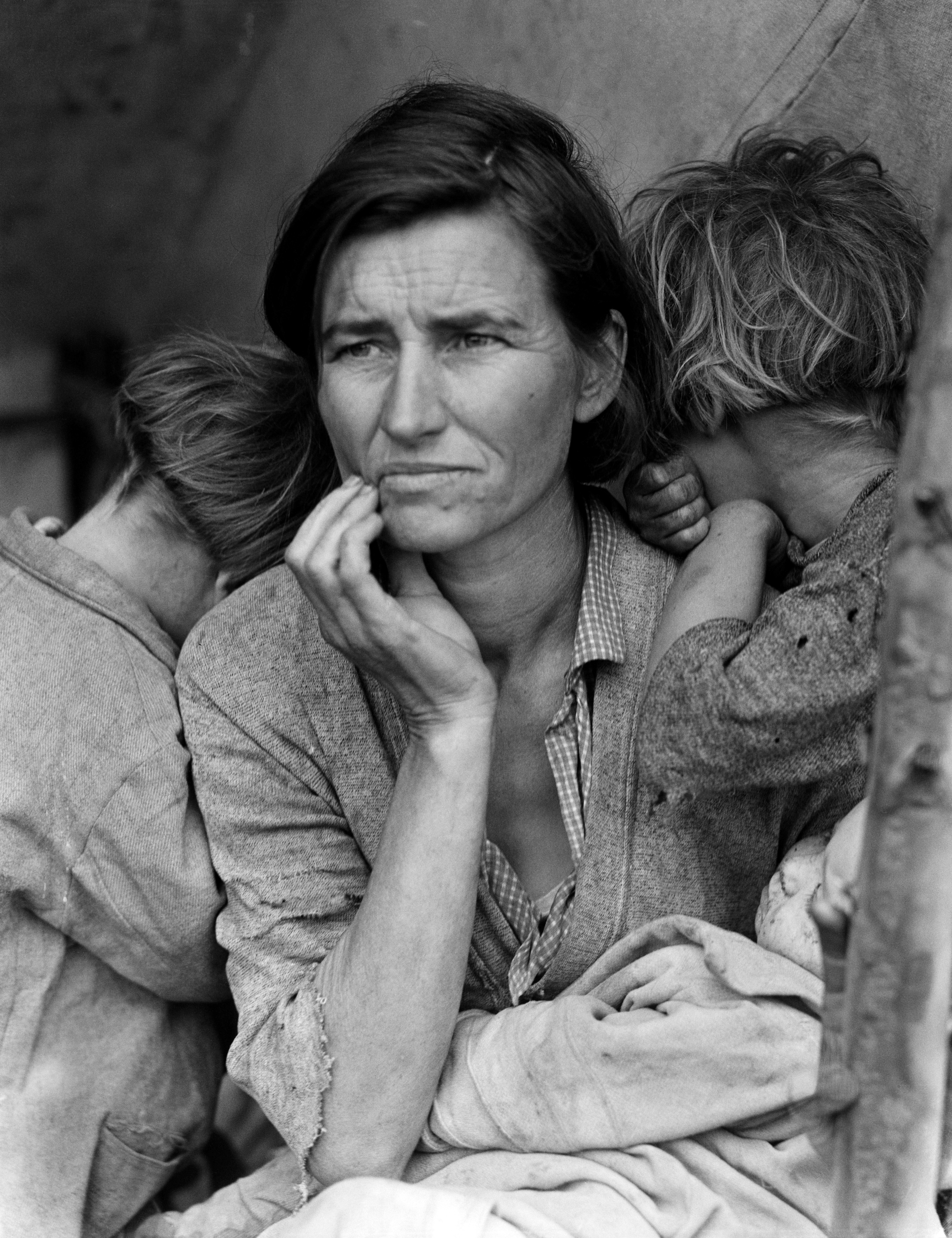
Migrant Mother (by Dorothea Lange 1936)Colin De Pelsmaker: first alto, countertenor
Erik Buys: second alto, countertenor
Luc Claessens: tenor
Miguel Van de Velde: tenor
Simon Bomon: bass
Piet De Laender: bass

For more information on the songs we sang (lyrics and translation), click here (pdf).

Sint-Theresiakapel Middelkerke Geert BourgeoisA while ago (May 2, 2014) Incensum, a vocal ensemble I am part of, sang some songs for the occasion of a newly restored chapel – the Sint-Theresiakapel in Middelkerke. The reopening of this art deco building was done by Flemish Minister Geert Bourgeois and Jozef De Kesel, Bishop of Bruges. It was first built in 1933, after a design by architect Albert Victor Fobert.

We mostly sang Renaissance songs, but we also included Ukuthula, a traditional South African Zulu song that we hold very dearly because of special ties between our ensemble and our South African friends. It is no coincidence that we sang at a memorial for Nelson Mandela in Brussels (click here for more on this – it’s about a “mimesis of peaceful behavior” by taking Mandela as a model).

I’ve selected two songs from that day in Middelkerke, for your listening pleasure. The aforementioned Ukuthula and If ye love me (Gospel of John 14:15-16) by Thomas Tallis (1505-1585). These two prayers are well worth discovering (find the texts below).

One note, however, on the text of Ukuthula: “Peace in this world of sin the blood of Jesus brings, Halleluja.” It is tempting to understand the death of Jesus as a classic sacrifice, as though the Christian God “needs” sacrifices to be benevolent towards this world, as though the Christian God, like the traditional gods of archaic religion, needs sacrifices to bring about peace and order in the universe. Jesus, however, is very clear about how he imagines the desires of his “Abba of Love” (Matthew 9:13): I desire mercy, not sacrifice.

Peace I leave with youThe Gospels show that it’s the world, our human world, which desires sacrifice, while – again according to the Gospels – God desires mercy. In the Gospel of John it is Caiaphas who says what the leaders of our human world desire, time and again (John 11:50): You do not realize that it is better for you that one man die for the people than that the whole nation perish.” As René Girard, Raymund Schwager, James Alison and others have demonstrated, the tales of the resurrection of Jesus open up a new way of imagining peace. No longer a peace built on sacrifice (like the peace in totalitarian regimes – the “Pax Romana”), but a peace coming from the restored presence of our former or potential Victim(s). So that we no longer are – like Cain – “persecutors”, but that we experience ourselves as “forgiven persecutors” who gracefully receive a radically other opportunity to build human relationships.

In the resurrection event as tentatively told by the Gospels, God gives himself back as the forgiving Victim of what human beings understood as “divine wrath” but that is actually “all too human wrath”. In the event of the resurrection our worldly order which desires sacrifice is revealed as a sinful order, actually going against God. The resurrection makes clear that God does not want the death of Jesus, it is we – human beings – who wanted his death.

So how to pray with the text of Ukuthula considering these theological perspectives? Well, on the one hand the text of the song actually mourns the fact that our world is indeed a world of sin that desires the blood of a Victim to bring about peace and order. On the other hand, since our world is recognized as a world of sin, the song also implicitly refers to “a world liberated from sin” that would no longer demand sacrifices. The kingdom of Christ’s God indeed is “not of this world.” Jesus did not ask his followers to fight for him or to start a civil war (John 18:36, Jesus said, “My kingdom is not of this world. If it were, my servants would fight to prevent my arrest by the Jewish leaders. But now my kingdom is from another place.”). One can say, in a paradoxical sense, that Jesus sacrifices the desire to build a world on sacrifices and that “his blood” thus opens up the “eschatological imagination” (James Alison) for “a new kind of peace in this world of sin.”

An interesting short, introductory piece by Tony Jones on all this appeared at Patheos, (click the title) A Better Atonement: The Last Scapegoat.

(Videos by Maaike Depuydt).

Ukuthula kulo mhlaba wezono (Aleluya) igazi likaJesu linyeneyz’
Peace in this world of sin the blood of Jesus brings, Halleluja

Usindiso kulo mhlaba wezono (Aleluya) igazi likaJesu linyeneyz’
Peace Human HandsRedemption in this world of sin the blood of Jesus brings, Halleluja

Ukubonga kulo mhlaba wezono (Aleluya) igazi likaJesu linyeneyz’
Praise in this world of sin the blood of Jesus brings, Halleluja

Ukukholwa kulo mhlaba wezono (Aleluya) igazi likaJesu linyeneyz’
Faith in this world of sin the blood of Jesus brings, Halleluja

Ukunqoba kulo mhlaba wezono (Aleluya) igazi likaJesu linyeneyz’
Victory in this world of sin the blood of Jesus brings, Halleluja

Induduzo kulo mhlaba wezono (Aleluya) igazi likaJesu linyeneyz’
Comfort in this world of sin the blood of Jesus brings, Halleluja

If ye love me, keep my commandments. And I will pray the Father, and he shall give you another Comforter, that he may bide with you for ever. (John 14:15-16).

Incensum, a vocal ensemble I am part of, was very honored and grateful to sing at a memorial service for Nelson Rolihlahla Mandela (18 July 1918 – 5 December 2013), organized by the Embassy of South Africa in Belgium, on 12 December 2013. The service was held at the Cathedral of Saint Michael and Saint Gudula in Brussels. For more information and some tributes:

Saint Michaels Cathedral Brussels interior choirCLICK HERE TO READ THE PROGRAM (PDF)

CLICK HERE TO WATCH A REPORT ON THE EVENT (hear us sing at the end)

Click here to read a welcome by Ambassador Mxolisi Nkosi (PDF)

Click here to read a tribute by Mr P. Ustubs of the EEAS (PDF)

Click here to read a tribute by Sec. General Dirk Achten (PDF)

It is clear from testimonies all over the world that Mandela is an inspiring example of forgiveness. The man himself made a spiritual journey from the prison of bitterness to the liberation of pardon. His life took part in a dynamic of Love that is also characteristic of Christ’s life. To imitate these examples is not merely to copy them but to challenge ourselves to continue the creativity of Love in our own circumstances. It is trying to turn the other cheek (Matthew 5:39 – click here to read more) without losing our self-respect. A mimesis (i.e. imitation) of Nelson Mandela can become an example of what René Girard would call “good mimesis”. It seems that African culture itself has its own resources for this type of imitation. African American writer Zora Neale Hurston (1891-1960):

Zora Neale HurstonThe Negro, the world over, is famous as a mimic. But this in no way damages his standing as an original. Mimicry is an art in itself [and] he does it as the mocking-bird does it, for the love of it, and not because he wishes to be like the one imitated.

In other words, to imitate Nelson Mandela or the Christ figure is the exact opposite of an idolization of those figures. Soren Kierkegaard (1813-1855) warned for this (read more by clicking here):

Christ comes to the world as the example, constantly enjoining: Imitate me. We humans prefer to adore him instead.

Joachim Duyndam, Socrates Professor of Philosophy and also a member of the Dutch Girard Society, discusses “good mimesis” and how we learn from inspiring examples in this interview fragment. He also mentions Mandela – CLICK TO WATCH:

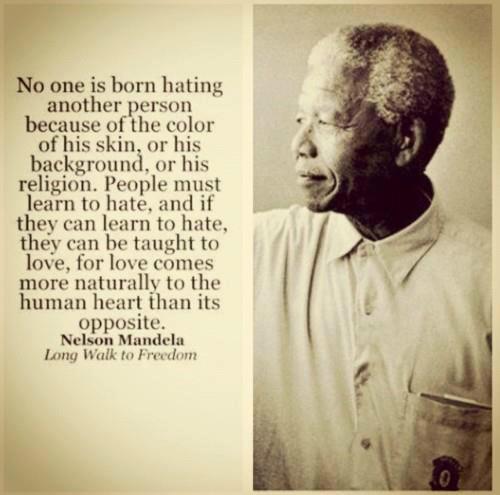
Of course, the road that Nelson Mandela traveled is perhaps best described by Madiba himself. These quotes, also from the Gospel, should be self-explanatory:Mandela Quote No one is born hating another personBe Imitators of GodMandela Quote As I walked out the door

Ephesians quote Be kind and compassionate