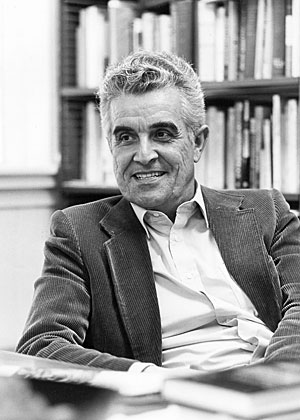
Dear guest, It all started with… dinosaurs. From an early age I was fascinated by those strange creatures that walked the earth millions of years ago. Not surprisingly, as a young boy I wanted to become a paleontologist. This initial plan concerning my future took a slight turn from the moment I met Michaël Ghijs (1933-2008), a Catholic priest and teacher at the high school I was attending. He was also the founding conductor of the boys’ and men’s choir Schola Cantorum Cantate Domino. He enabled his singers, me being one of them, to broaden their horizon on many levels: on the geographical and cultural level by literally travelling the world with us, but also spiritually by living out the message of the Gospel. Inspired by his example and my experiences within his choir, I decided to commit myself to a further exploration of The Christian Story. I hold a master’s degree in Religious Studies at the Catholic University of Leuven (Belgium). It was in Leuven I first encountered the work of René Girard (1923-2015), one of the great intellectuals of our time and immortel of the Académie française. A little book by a great theologian, Knowing Jesus by James Alison, set me on track to discover Girard’s further developed Mimetic Theory. For me, this became an anthropological and interdisciplinary starting point to challenge the richness of the Christian tradition. It affected me in a very profound way, and I’m convinced that the thought provoking power of Mimetic Theory can support our multi-layered human society on the road to ‘post-sacrificial’ peace. Eventually, I published several books and articles on René Girard, Mimetic Theory, culture and religion. I also became a member of the Dutch Girard Society and of COV&R (the Colloquium on Violence & Religion). In 2019, I became an elected member of the board of COV&R for several years. In 2011, I started Mimetic Margins, a blog to explore the work of René Girard (and many others) further. Scapegoat Shadows, this website, is a reboot of my first online activity in that regard. It contains the Mimetic Margins Archives (with lots of instructive debates under certain posts), as well as new material. I’m currently teaching at a Jesuit High School, Sint-Jozefscollege, in Aalst (Belgium). I am also a journalist and editor-at-large for Tertio, a weekly magazine. In my spare time I keep on singing, as an alto or countertenor, trained at Schola Cantorum Cantate Domino as I mentioned (I was a member from 1991-2010). I took part in several recordings, both as a choir member and as a soloist.

OVER DE ACTUELE RELEVANTIE VAN DE MIMETISCHE THEORIE

[NOTE: SOME REFERENCES ARE IN ENGLISH]

Vorige week dinsdag, 17 januari 2012, las ik in de Vlaamse krant De Standaard een artikel over de escalerende rivaliteit tussen twee motorbendes – de beruchte Hells Angels, en hun geduchte tegenhangers, de Outlaws. Wie vertrouwd is met de mimetische theorie herkent daarin onmiddellijk zogenaamde dubbels: twee twistende partijen van wie de rivaliteit gebaseerd is op de wederzijdse imitatie van elkaars begeertes en ambities. Plato wist al: “Volgens een universele en onfeilbare wet geldt, dat hoe meer twee dingen op elkaar lijken, des te vervulder zij geraken van nijd, wedijver en haat.”

Een mimetisch (d.i. imitatief) proces dat zich afspeelt in de context van de begeerte geeft echter niet alleen aanleiding tot rivaliteit, het is ook tragisch: wederzijdse imitatie zorgt ervoor dat twee rivalen een steeds sterkere begeerte zullen ontwikkelen om zich van elkaar te onderscheiden, maar precies door elkaar in dat verlangen te imiteren, zullen ze steeds meer op elkaar gelijken – en bereiken ze hun doel niet. Precies de pogingen om hun doel te bereiken, liggen aan de basis van het gegeven dat ze daarin mislukken, wat hun onderneming inderdaad een tragisch karakter verleent (zie wat dit betreft bijvoorbeeld Sophocles’ tragedie Koning Oedipus: hoe meer Oedipus het noodlot probeert af te wenden, hoe meer hij in de netten van het noodlot verstrikt raakt). Wie niet rechtstreeks betrokken is in het spel van de dubbels, ziet over het algemeen gemakkelijk hoezeer aartsvijanden eigenlijk elkaars evenknie zijn. Maar zeg aan een Hells Angel niet dat hij eruitziet als een Outlaw – dat zou slecht kunnen aflopen. Je zou hierbij terecht kunnen opmerken: hoe meer twee partijen op elkaar lijken, hoe belangrijker het symbolische verschil van oppervlakteverschijnselen wordt – van status(symbolen), waarvan de waarde bepaald wordt door quasi louter mimetische processen (iets is belangrijk omdat iedereen van de groep er belang aan hecht).

LEES HIER: Als de omerta verbroken wordt (Mark Eeckhaut) – pdf 

Nadat ik zulke overwegingen had gemaakt bij dit eerste artikel, besloot ik de rest van dezelfde krant te lezen vanuit de vraag welke artikels expliciet thema’s belichtten die ook behoren tot de stokpaardjes van de mimetische theorie – en die bovendien getuigen van dezelfde oriëntaties. Uiteindelijk selecteerde ik er nog vier.

Dat mimetische vermogens niet alleen rivaliteit opwekken, is evident. Ook empathie berust op imitatieve processen. Zulke processen stellen je in staat om je in de plaats van iemand anders te stellen. Daarover gaat het volgende artikeltje, dat een deel van het onderzoek van Andrew Gallup voorstelt. Kennelijk vertonen grasparkieten de neiging om het geeuwen van soortgenoten te imiteren; aanstekelijk geeuwen bij mensen zou vooral gebeuren ‘onder vrienden of lotgenoten’, en zou wijzen op empathische banden (zie bijgevoegde link met meer achtergrondinformatie).

LEES HIER: Niet alleen wij vinden geeuwen aanstekelijk – pdf

Klik hier voor meer achtergrondinformatie (site National Geographic, in ENGLISH)

Een derde artikel gaat over de rol van mimetische processen in de economische sector. Fons Van Dyck recenseert het nieuwste boek van Martin Lindstrom, een bijzonder invloedrijke marketeer die zich onder andere baseert op het onderzoek naar de werking van spiegelneuronen. In ieder geval schijnt het nieuwe boek Brandwashed een aanrader. Lindstrom zelf gebruikt bij mijn weten niet de term mimetische begeerte, maar hij beschrijft wel voortdurend hoe de realiteit waarnaar die term verwijst aan het werk is in ons consumptiegedrag. Het artikel van Lindstrom zelf (bij de achtergrondinformatie) is in dit opzicht bijzonder interessant, en de titel spreekt boekdelen.

LEES HIER: Opstand van een marketeer (Fons Van Dyck) – pdf

Klik hier voor meer achtergrondinformatie (site Martin Lindstrom, in ENGLISH – see: Fast Company: Thou Shalt Covet What Thy Neighbor Covets) – Klik hier voor een snelle pdf-versie

Artikel nummer vier gaat over de Arabische Lente in Egypte. Opvallend hoe een artikel van de antropoloog Mark Anspach, dat al enkele maanden geleden verscheen en expliciet geschreven werd vanuit het referentiekader van de mimetische theorie, een visionair karakter verwerft in het licht van een krantenartikel dat de actuele politieke situatie belicht. Boeiend om ze naast elkaar te leggen met de vraag wat er zal gebeuren nu de oude soeverein van de troon is gestoten…

LEES HIER: De gebroken beloftes van het Egyptische leger (Chams Eddine Zaougui) – pdf

Klik hier voor het artikel van Mark Anspach (site Imitatio, in ENGLISH – see: The Arab Rulers’ New Clothes)

Het laatste artikel dat ik selecteerde uit De Standaard van 17 januari 2012 is van de hand van Bart De Wever, over de lotgevallen van de Pool Piotr Koscik in Vlaanderen. Zoals de Egyptische, ‘koninklijke’ soeverein Moebarak de gemeenschappelijke vijand wordt van het volk dat hem eerst op handen droeg, is ook het verhaal van Piotr een klassiek ‘zondebokverhaal’. De zondebok is ‘de slechterik’ of ‘de marginaal’ met wie een meerderheid van mensen geen enkele affiniteit meer kan voelen. Iemand die gepercipieerd wordt als ‘radicaal verschillend’ in de negatieve zin (en daarom ook identiteitsbevestigend is). Bij de door mimetische processen gedreven media en ‘publieke opinie’ slaat sympathie gemakkelijk om in antipathie. Snel als een windhaan. En dat heeft Piotr ondervonden: aanvankelijke steunbetuigingen smolten als sneeuw voor de zon onder invloed van bijkomende, kwalijke informatie omtrent zijn verleden. “Nog voor de (wind)haan kraaide…” En nagenoeg niemand bleek nog in staat om zich in te beelden wat het was om iemand als Piotr te zijn: de outcast bleef… outcast. Kunnen wij onszelf als ‘farizeeërs’ ontmaskeren – of zien wij alleen anderen als hypocrieten, en blijven we zo participeren aan het zondebokmechanisme, doof voor het koningschap dat “niet van deze wereld” is?

In ieder geval lijkt er doorgaans in ons leven “Niets nieuws onder de zon”, om met het Bijbelse boek Prediker te spreken. Lees bijvoorbeeld: “Beter een arme jonge man die wijs is dan een oude koning die dwaas is en geen enkele raad meer aanneemt. Ik denk aan iemand die na zijn gevangenschap koning werd, en nog wel van het land waar hij arm was geboren. Ik zag hele menigten, de levenden onder de zon, partij kiezen voor die jonge man die de plaats van de oude koning innam. Het volk was niet te tellen, iedereen liep achter hem aan. Maar later waren ze ook over hem niet meer tevreden. Ook dat is ijdel en grijpen naar de wind.” (Prediker, 4,13-16).

Dat is het verhaal dat Hans Christian Andersen (1805-1875) vertelt in het sprookje De nieuwe kleren van de keizer, een ‘eeuwige waarheid’ die opnieuw oplichtte tijdens de Arabische Lente (zoals Mark Anspach laat zien in zijn artikel – zie hoger). Het is ook het verhaal van Piotr – en Bart De Wever laat zien hoe weinig fictief zogenaamde ‘verhaaltjes voor het slapengaan’ eigenlijk zijn. Of: hoe de dromen die ons worden ingefluisterd ons wakker schudden en alert maken voor bepaalde aspecten van de realiteit.

LEES HIER: Na een warme kerst de koude douche (Bart De Wever) – pdf

Of het nu rechtspraak, psychologie, evolutiebiologie, economie, politiek, communicatiemedia of antropologie betreft (om maar enkele wetenschappelijke disciplines te noemen) – een mimetisch theoreticus hoeft zich nooit af te vragen waarmee hij zich moet bezighouden ;).

Spelen mimetische (d.i. imitatieve) processen tussen mensen wel de fundamentele rol die René Girard en anderen ze toedichten? Het is een vraag waarmee ik regelmatig word geconfronteerd. Wetenschappelijk onderzoek, onder andere naar de in 1996 ontdekte spiegelneuronen, geeft steeds meer bevestigende antwoorden. In wat volgt, probeer ik aan te geven hoe de mimetische theorie een uitvalsbasis kan vormen om een aantal actuele situaties te belichten, meer specifiek aan de hand van een fenomeen als de doodstraf. Aanleiding vormt een nieuwe documentaire van Werner Herzog.

DE PARADOXALE, MIMETISCHE BINDING MET ALTER EGO’S

Medemensen verschijnen, ook voor kinderen, als alter ego’s. En het is precies het paradoxale mimetische vermogen dat gradaties van afstand (met de nadruk op alteriteit) en/of nabijheid (met de nadruk op overeenkomstigheid) met medemensen schept. Je kunnen voorstellen dat je een ander bent, je inlevingsvermogen, berust op je vermogen om de ander te imiteren. Anderzijds zouden mislukte pogingen om een ander te imiteren mede aan de basis liggen van een besef dat er een onderscheid bestaat tussen jezelf en anderen. Het mimetische vermogen is dus ook belangrijk voor de ontwikkeling van een individueel zelfverstaan.

Wie al teveel nadruk legt op het onderscheid tussen zichzelf en anderen, en fier is op zijn zogenaamde autonomie, zal misschien niet gemakkelijk erkennen dat ook hij afhankelijk is van mimetische processen. Op dat vlak zijn wij, geïndividualiseerde westerlingen, doorgaans in hetzelfde bedje ziek. We herkennen de mimetische processen gemakkelijk bij anderen, maar hebben het veel moeilijker om ze ook bij onszelf te doorgronden. Dat zou op zich niet erg zijn, ware het niet dat de mate waarin we minder in staat zijn om mimetische processen bij onszelf te erkennen, ook de kans vergroot dat we zondebokken creëren.

EGO TEGENOVER ALTER – HET ZONDEBOKMECHANISME

Een zondebok is iemand met wie we geen band meer voelen. En daardoor zien we ook niet in dat we die persoon gebruiken als ‘zondebok’, als iemand van wie we voor een stuk afhankelijk zijn om een bepaald identiteitsgevoel te verwerven. De zondebok wordt gezien als de ‘slechterik’, schuldig aan feiten waar ‘wij’ niets mee te maken hebben – en als we ons al zouden bezondigen aan ogenschijnlijk gelijkaardige feiten, dan hebben ‘wij’ daar altijd goede redenen voor. Het verschil schijnt immens, de zondebok gevaarlijk en bedreigend. Wat opnieuw paradoxaal is: in de al dan niet vermeende bedreiging van onze eigen identiteit, in het mogelijke verdwijnen ervan, worden we ons des te meer bewust van wie we zelf (willen) zijn. Met andere woorden, de zondebok, als iemand met wie we ons niet langer en op geen enkele wijze kunnen of willen vereenzelvigen, wekt in ons het verlangen om een verschil met hem of haar te creëren – precies omdat hij of zij ons vaak een spiegel voorhoudt van waartoe we als mens in staat zijn. We erkennen niet graag dat er misschien ergens ook in ons een monster, een Mr. Hyde schuilt achter een welopgevoede Dr. Jekyll.

Als we ons niet langer kunnen of willen vereenzelvigen met een zondebok, betekent dit niet dat onze mimetische vermogens plotseling verdwenen zouden zijn, maar integendeel, dat we ons zo sterk identificeren met een bepaalde groep dat we het altijd óók arbitraire, op mimese berustende karakter van die identificatie uit het oog dreigen te verliezen. Met andere woorden, recht evenredig met de miskenning van de toevallige aspecten van ons bestaan (die mede afhankelijk zijn van mimetische processen), groeit ook de miskenning dat we ook maar iets gemeen zouden hebben met de ander die we als zondebok gebruiken. De eerste vraag die we ons stellen als we geconfronteerd worden met criminele feiten, bijvoorbeeld, is meestal niet: “Zou ik zelf in staat zijn tot het plegen van dergelijke feiten, en onder welke omstandigheden?” Wel: “Welke straf zal de misdadiger krijgen?” Het verschil tussen “wij die de misdaad niet pleegden” en “de misdadiger” lijkt evident. Zeker als het om zware criminele feiten gaat. Daarover worden niet alleen juridische, maar ook morele oordelen geveld.

INTO THE ABYSS: A TALE OF DEATH, A TALE OF LIFE

– WERNER HERZOG OVER DE DOODSTRAF

We zien onszelf natuurlijk graag in het kamp van de oordelers, moreel superieur en op veilige afstand van de veroordeelde. Maar, hoe meer we hameren op het verschil tussen onszelf en de veroordeelde, hoe meer overeenkomsten we vaak zullen creëren. De meeste mensen zijn het er bijvoorbeeld over eens dat een moordenaar een onvergeeflijke misdaad begaat – hij berooft iemand van het leven. De morele verontwaardiging daarover kan evenwel zo groot worden dat de moordenaar zelf terechtgesteld wordt. De doodstraf wordt geen moord genoemd. Ons taalgebruik moet de illusie in stand houden dat er een verschil is tussen de moordenaar die iemand van het leven berooft, en een juridisch apparaat dat iemand van het leven berooft – een apparaat dat de samenleving (een bepaald ‘wij’) vertegenwoordigt. Feitelijk gebeurt natuurlijk hetzelfde, alleen beschouwen we de redenen van de moordenaar als slechte en de ‘onze’ dan als goede redenen. Het is omdat we zo overtuigd kunnen zijn van het verschil tussen onszelf en de moordenaar, dat we ongevoelig blijven voor het mimetische proces waaraan we deelnemen: niettemin is de terechtstelling van de moordenaar, als wraak, een imitatie van de moord die hij eerder pleegde.

De ongevoeligheid voor het mimetische proces en de verblinding door het zondebokmechanisme werken elkaar in de hand. Hoe meer een verontwaardigd ‘wij’ zich wil distantiëren van een schandelijke ‘vijand’, hoe groter de kans wordt dat het ‘wij’ op de vijand gaat gelijken. Het mimetische proces – in het zojuist genoemde geval: de herhaling van een eerdere moord door de terechtstelling van de moordenaar – doet het verlangen toenemen om een onderscheid aan te brengen. En dat verlangen mislukt feitelijk, precies omdat het berust op imitatie.

In 2011 verscheen de documentaire Into the Abyss: a Tale of Death, a Tale of Life, van de Duitse filmmaker Werner Herzog (°1942). De film gaat over twee Amerikaanse jongeren die een gruwelijke drievoudige moord op hun geweten hebben,  blijkbaar simpelweg omdat ze een auto wilden stelen. Eén van de twee is ter dood veroordeeld, en wordt een week voor zijn executie geïnterviewd. Aanvankelijk schijnt de film de vraag of de doodstraf in sommige gevallen gerechtvaardigd is, bevestigend te beantwoorden. De kijker kan niet anders dan meevoelen met het onnoemelijke leed dat de slachtoffers en hun nabestaanden is aangedaan. Je voelt als kijker woede, verdriet, wraakzucht. Doodnormaal.

De tweede helft van de film toont evenwel de situatie waarin de twee tieners opgroeiden: in verpauperde buurten, omringd door drugs en geweld, opgevoed door zieke of afwezige ouders – de vader van één van hen zit zelf in de gevangenis, veroordeeld voor doodslag, na een leven getekend door alcoholmisbruik. Dan kan de vraag opkomen: Wie zou ik zelf zijn geweest als ik in dergelijke omstandigheden was opgegroeid? Die omstandigheden praten natuurlijk niets goed. Maar wat Werner Herzog in beeld brengt, doet ons de zaak vanuit een ander perspectief bekijken, en doet een beroep op onze verantwoordelijkheidszin: hoe kunnen we, als samenleving, zoveel mogelijk zulke omstandigheden vermijden?

De doodstraf biedt geen oplossing. Wie vermoord is, blijft dood, en de terechtstelling van de moordenaar zal andere, gedrogeerde geweldenaars er niet van weerhouden om aan het moorden te slaan. In een wereld als de onze, waarin mimetische rivaliteit omtrent statussymbolen (zoals luxueuze sportauto’s) voortdurend wordt aangewakkerd, kan de frustratie bij ‘mislukte achterblijvers’ – die geen andere waarden meer kennen dan de zogenaamde waarde van de financiële rijkdom waaraan ze geen deelhebben – inderdaad gevaarlijke vormen aannemen. De prioriteiten liggen in dit opzicht bij preventieve maatregelen: kansen creëren voor de achterblijvers om verantwoordelijkheid op te nemen in de samenleving, en ons tegelijk bewust worden van de waarden die we overal afficheren. Misschien is het wel zo eenvoudig dat we meer in de verf moeten zetten dat liefde voor de naaste nog altijd belangrijker is dan liefde voor het geld? Een christen beschouwt het eerste als “dienst aan God”, het tweede als “dienst aan de mammon”.

Het besluit van een bewaker uit de dodencel die jarenlang ter dood veroordeelden begeleidde tijdens hun laatste uren, en hen ook vastbond op het bed waar ze een dodelijke injectie kregen, is in ieder geval tekenend: “Vroeger was ik voorstander van de doodstraf, maar nu niet meer. Niemand heeft het recht een medemens van het leven te beroven.” Niet toevallig “gingen zijn ogen open” toen hij bij één van de veroordeelden, een vrouw, niet langer in staat bleek de medemenselijkheid op een of andere manier te miskennen. Daarenboven blijven vergissingen altijd mogelijk – zuster Helen Prejean, bekend geworden na de verfilming van Dead Man Walking, waarschuwt daarvoor in het boek The Death of Innocents – An Eyewitness Account of Wrongful Executions.

Bekijk de trailer van de documentaire – klik:

Eind november 2011 werd in Amsterdam een boek voorgesteld naar aanleiding van het dertigjarig bestaan van de Nederlandse Girard Studiekring, waarvoor ik een bijdrage mocht leveren. Het boek kreeg als titel Rond de Crisis – Reflecties vanuit de Girard Studiekring, en werd geredigeerd door Michael Elias en André Lascaris (Uitgeverij Parthenon, Almere, 2011). Een inleiding van André Lascaris op de mimetische theorie, uitgesproken bij de voorstelling van het boek, kan hier (klik voor pdf) gevonden worden.

Een recensie uit het tijdschrift Streven lees je door hier te klikken.

Het boek bevat 18 artikels die een opvallende variëteit aan onderwerpen bestrijken, maar alle het denken van René Girard en de mimetische theorie als uitgangspunt nemen. De artikels zijn verdeeld onder zes categorieën: “algemene bijdragen”, “sociaal-economische bijdragen”, “over conflicten”, “het christendom”, “literatuur en communicatie”, en ten slotte “over instituties, school, huwelijk en rechtspraak”.

Ondertussen heb ik tijd gevonden om het boek een eerste keer te lezen. Ik geef enkele citaten die mij in het oog sprongen, en die misschien enige nieuwsgierigheid en interesse wekken:

ALGEMENE BIJDRAGEN

Bij de eerste bijeenkomst van de Girard Studiekring in 1981 werd nog niet gesproken van ‘mimetische theorie’. In Nederland en België waren weliswaar enkele korte beschouwingen verschenen die ingingen op de boeken die Girard in de jaren zeventig had gepubliceerd, maar anders dan in de Engelstalige wereld was er nog niets van hem vertaald. In Frankrijk was La violence et le sacré (1972) door sommigen enthousiast ontvangen, vooral na een recensie in Le Monde, waarin werd gesproken van een très grand livre, “de eerste echte atheïstische theorie van het religieuze en het heilige.” Maar die waardering sloeg daar om toen in 1978 Girards hoofdwerk Des choses cachées depuis la fondation du monde uitkwam, later in het Nederlands vertaald als ‘Wat vanaf het begin der tijden verborgen was’. In gesprek met twee psychiaters ontvouwde hij daarin aan de hand van de problematiek van het begeren een oorsprongstheorie van menselijke cultuur en religie, die hij fundeerde op een ‘niet-sacrificiële’ lezing van de Hebreeuwse bijbel en het Nieuwe Testament. In de eenentwintigste eeuw moge de belangstelling voor het verschijnsel religie in het publieke debat sterk zijn toegenomen, eind jaren zeventig stond Girards benadering haaks op de heersende opvattingen omtrent het belang daarvan. – Uit het VOORWOORD van Michael Elias en André Lascaris.

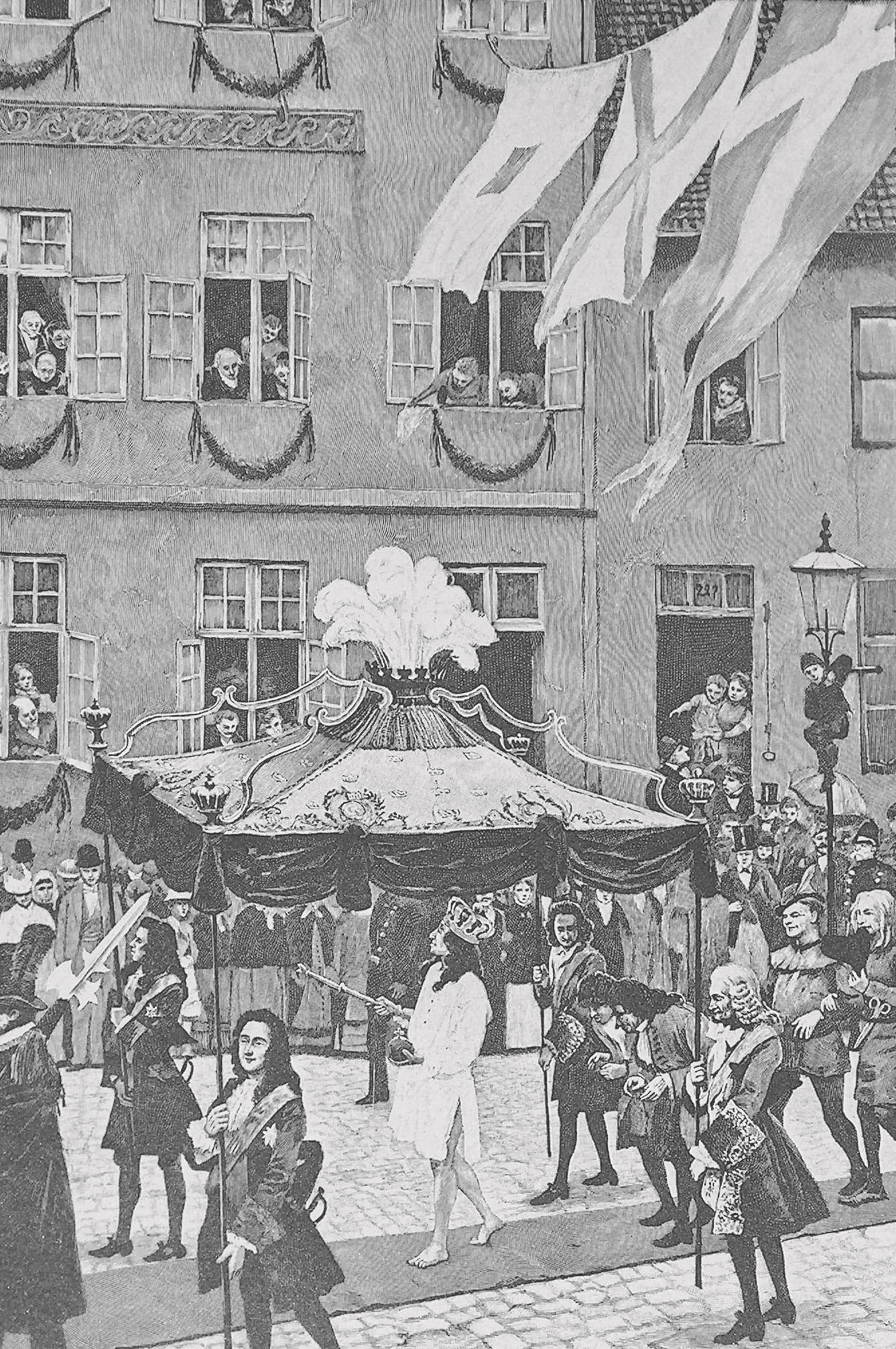
Het sacraal koningschap is één van Girards bekendste voorbeelden van een ritueel complex dat het zondebokmechanisme ensceneert. Op grond van etnografisch materiaal – met name uit Bantoe Afrika – toont hij aan hoe allerlei op het eerste gezicht bizarre gebruiken – het met geweld vangen en vernederen van de koning bij de troonsbestijging, het ritueel doden van de vorst, het aan hem toeschrijven van macht over de natuurlijke bestaansvoorwaarden (regen, vruchtbaarheid van mens, vee en grond), een plausibele duiding krijgen als ze tegen het licht van het zondebokmechanisme gehouden worden. Graag breng ik in dit verband een paar observaties uit eigen onderzoek over het sacraal koningschap onder volken aan de bovenloop van de Nijl ter sprake. Vergeleken met het Bantoe koningschap dat Girard tot materiaal diende, gaat het er bij deze Nijlvolken ruiger aan toe. De noodzaak om het geweld van de oeruitdrijving zoveel mogelijk te benaderen, lijkt hier serieuzer genomen te worden. Als zich een crisis voordoet – als gevolg van oorlog, twisten of droogte – dan is het uiteindelijk de koning zelf die gelyncht wordt. – Uit HET BEGRIP CRISIS IN HET WERK VAN RENÉ GIRARD van Simon Simonse, cultureel antropoloog.

Ik zou willen verdedigen dat mimetische relaties, waaronder de mimetische begeerte, juist door hun narratieve karakter besmettelijk zijn. Het model bij Girard is aantrekkelijk omdat en voor zover hij of zij een verhaal vertelt, belichaamt, verbeeldt of toont dat wij niet alleen herkennen maar waarin we zelf ook willen meespelen. Anders dan de begeerte zonder meer, behelst mimetische begeerte niet alleen het actuele optreden van iemand die een bepaald object begeert of reeds bezit, maar evenzeer mijn potentiële begeren en bezitten van dat object – en het potentiële begeren en bezitten van dat object door in principe iedereen. Het is het narratief van de actuele begeerte dat die begeerte potentieel maakt voor anderen. – Uit DE SLEUTEL TOT VRIJHEID. HET HERMENEUTISCH KARAKTER VAN DE MIMETISCHE THEORIE van Joachim Duyndam, filosoof.

Dankzij de spiegelneuronen handelen en voelen we niet alleen, maar begeren we ook wat anderen voelen of begeren. Evenals Girard meent Gallese dat deze imitatie een automatisch, non-verbaal communicatief proces is. We begeren reeds een ander voordat we hierover hoeven na te denken. Hoewel we denken autonoom te verlangen, is de realiteit dat onze hersenen dat al hebben gedaan! In verband met de mimetische theorie maakt Gallese verschillende opmerkingen. De metafysische begeerte beschouwt hij niet als een soort eindstadium van het begeren dat ontstaat nadat het object van de begeerte uit beeld is verdwenen. Fylogenetisch gezien begint volgens Gallese iedere begeerte als een begeerte om de ander te zijn. Om dit te onderstrepen grijpt hij terug op de studies van Meltzoff bij pasgeborenen. Volgens deze onderzoeker is vóór iedere mimetische driehoeksrelatie het affectieve gedrag van de moeder primordiaal. Alles begint met de realisatie van een op empirie gebaseerde intersubjectieve ruimte, een wij-ruimte, wij-centrum, gevormd niet alleen door onze hersenen maar door ons gehele lichaam, onze fysische omgeving, onze culturele habitat, opgevuld met prelinguïstische ervaringen. Door deze ‘intercorporeïteit’ ziet een kind reeds vanaf de geboorte een individu uit zijn onmiddellijke omgeving zoals zijn moeder als het zelf, een alter ego, die dezelfde objecten en gelijkaardige doelen nastreeft. Pas later gaat het kind zich verzelfstandigen door zichzelf los te maken van dit wij-centrum waarin het oorspronkelijk was ondergedompeld. Naast het oorspronkelijke neuraal niveau ontwikkelt zich een hoger, persoonlijk niveau waar we ons verschillend voelen van de anderen. Gallese verklaart dit door het feit dat wat men op neuraal niveau observeert niet exact hetzelfde is als wat men uitvoert. De spiegelneuronen simuleren wel, maar dupliceren niet de hersenprocessen van anderen. We ervaren wel dat anderen gelijkaardige ervaringen hebben als wijzelf, terwijl de specifieke inhoud van zo’n ervaring verschillend kan zijn. We blijven echter wel deel uitmaken van dezelfde gemeenschappelijke ruimte met dezelfde fundamentele verlangens, emoties, kwetsbaarheid, enz. (the shared manifold). Deze opvatting wordt door Girard o.a. beschreven als conversie, het doorbreken van het inzicht dat het zelf en de ander niet essentieel verschillend zijn. De romanschrijver ontdekt meestal op het eind van zijn verhaal dat de held of het model is zoals hijzelf is. – Uit SPIEGELNEURONEN. DE ROL VAN DE BIOLOGIE BIJ HET FENOMEEN MIMESIS van Guido Heidendal, nucleair geneeskundige.

SOCIAAL-ECONOMISCHE BIJDRAGEN

Gedurende een luchtbel of financiële crash veranderen de prijzen dramatisch en laten zo de macht zien van de mimesis, de wederzijdse imitatie, die rijkdom schept of vernietigt. Zowel luchtbellen als crashes zijn tegengesteld aan de toestand van gematigde schaarste die volgens economen de basis legt voor de normale economische orde. Luchtbellen komen overeen met een situatie van overvloed, wanneer voortdurend rijkdom wordt geschapen, wanneer er altijd meer geld te bezitten is. Dan gaat men denken dat arme mensen in staat zijn een huis te kopen dat meer waard is dan wat ze tijdens hun leven zullen verdienen, omdat de voortdurende toename in waarde kennelijk iedereen beschermt tegen mislukking en gebrek. Crashes komen overeen met een situatie van uitzonderlijke schaarste, wanneer het feit dat er niet genoeg is voor allen, niet distributief begrepen kan worden maar slechts collectief. Niet alleen is de rijkdom onvoldoende om ieders behoeften te bevredigen, maar de poging van elk individu om te beschermen wat hij bezit, leidt tot de verwoesting van rijkdom voor allen. Op dat punt gekomen begint het onderscheid tussen de ‘echte’ waarde van eigendom en zijn juiste of onjuiste waardering door de markt te verdwijnen, want niet alleen de prijzen veranderen, maar rijkdom wordt vernietigd. – Uit SCHAARSTE EN DE FINANCIËLE CRISIS van Paul Dumouchel, filosoof.

De vraag is wat wij geleerd hebben van de economische crisis. Als het gaat om onze eigen verantwoordelijkheid is het goed om ons meer bewust te zijn van onze mimetische begeerte. De apostel Paulus geeft in 1Kor 7, 30-31 aan zijn lezers het advies “zij die met het aardse omgaan moeten er niet in opgaan, want de wereld die wij zien gaat voorbij” en “zij die kopen moeten doen alsof zij geen eigenaar werden.” Wanneer we ons realiseren dat de omstandigheden telkens veranderen, is het inderdaad aan te raden eigen bezit te relativeren en is zelfbeperking (omgaan met, maar niet opgaan in) beter dan proberen het onderste uit de kan te halen. Daar staat dan tegenover dat we wellicht meer aandacht overhouden voor de ander. Het is goed daarbij te beseffen dat de omgang met onze mimetische begeerte meer is dan een persoonlijke zaak, want in een Complex Mimetisch Systeem (CMS) zijn we allen met elkaar verbonden. In een recente roman van Dieter Wellershoff wordt dit prachtig onder woorden gebracht in een gesprek tussen twee pastors: Du bist kein Sonderfall, sondern ein Beispiel für viele. Und das verpflichtet dich. Kernachtiger kan een kritiek van onze cultuur niet zijn. – Uit HET EINDE VAN DE VETTE JAREN van Hans Weigand, informaticus.

In organisaties komt geweld tot uiting in gedrag en taalgebruik. Roddelen, ‘vliegen afvangen’ en strategisch pesten kan in de escalerende fase hoogtij vieren, zodat het samenwerkingsverband niet langer functioneert. Iedere organisatie kent personen, die met trucs hun rivaliteit in persoonlijk gewin omzetten. Maar zoals iedere mimetische crisis kent ook het ritueel van het reorganisatieproces haar samenbindende factor in het richten van dit geweld op een zondebok. – Uit DE REORGANISATIE ALS OFFERRITUEEL van Frits Bakker, interim manager.

In volle markten is het belangrijk om onderscheidend vermogen aan te brengen aan je merk. […] Jan Rijkenberg is schrijver en oprichter van BSUR (Be As You Are), een internationaal bureau voor de ontwikkeling van merk- en communicatieconcepten. Merken bouwen gaat volgens hem om de vraag hoe het individu denkt, voelt en handelt in de groep. Rijkenberg introduceerde het beginsel van concepting. Deze benadering gaat niet uit van omlijnde markten en doelgroepen op basis van producteigenschappen. Concepting gaat over het op de markt brengen van merken die een gedachtegoed vertegenwoordigen: een visie, betekenis of een gedachte die voor de consument een verrijking beloven. […] Het Britse ‘Virgin’ is een pregnant voorbeeld van een conceptmerk. De oprichter en eigenaar Richard Branson draagt met verve het gedachtegoed uit dat een tegendraadse en eigenzinnige manier van leven je identiteit versterkt en verrijkt. Overigens, het verlangen om authentiek en tegendraads te willen zijn werd door Girard al in 1961 ontmaskerd. In De romantische leugen en de romaneske waarheid legde hij uit dat de diepste waarheid is dat ik niet begeer wat ik zelf ten diepste wil hebben, maar dat ik telkens weer verlang naar wat een ander wil. Tegendraads gedrag is in onze cultuur dan ook niet als uniek te beschouwen, maar eerder als kuddegedrag. Of het nu gaat om vliegreizen, platen, koffers of cola, in alle gevallen gaat bij Virgin het gedachtegoed vooruit op het product. – Uit WORDEN WE ALLEMAAL ‘PUUR EN EERLIJK’? van Huub ter Haar, communicatiestrateeg.

OVER CONFLICTEN

Een van de belangrijkste kenmerken van het Belgisch conflict [tussen Vlamingen en Franstaligen] is het passeren van het grondwettelijk hof en de grondwet door de politieke instellingen, meerdere malen op korte tijd. […] Dergelijke feiten wijzen niet alleen op het verzwakken van de grondwet maar ook van de scheidsrechterlijke functie van de staat als kader binnen dewelke conflicten begrensd worden. Conflicten gaan dan hun eigen weg, buiten de oevers van de staat. Als een eindeloze wisselwerking tussen verzwakte structuren die conflicten aanwakkeren, waardoor de structuren nog meer verzwakken, wat de conflicten nog meer aanwakkert. – Uit BELGIË: DUBBELS, UITERSTEN OF TOCH ÉÉN? van Philippe De Keukelaere, jurist.

Ontdaan van hun wolvenkleding staan ze te kijk als offerlammeren. Op een spandoek op het Tahrirplein was op 18 maart [2011] een afbeelding te zien van Moebarak, Ben Ali, Kadaffi en Saleh van Jemen als schapen in de wei. Waarom schapen? Onder in de rechterhoek zie je een vrouw met een mobieltje, die het spandoek fotografeert. Ze maakt gebruik van de digitale technologie die zo’n grote rol heeft gespeeld in de Arabische opstanden. Precies achter het mobieltje echter zie je een terugvallen op een veel oudere technologie: een slagersmes. Het mes maakt de betekenis van het spandoek duidelijk: de eens zo machtige dictators zijn offerlammeren die wachten om geslacht te worden. – Uit DE NIEUWE KLEREN VAN DE ARABISCHE LEIDERS van Mark Anspach, antropoloog.

De crisis in het heilige land blijkt een succesrijk exportproduct van de strijdende partijen tezamen. Want hoe intenser de mimetische crisis, hoe meer conflicten, en hoe meer deze zich uitbreiden. Er is geen enkel land ter wereld waar zoveel aandacht naar uitgaat. Net als in Israël is er ook in India een security fence, in het omstreden gebied Kashmir. Als daar mensen worden doodgeschoten die de grens over willen, hebben de internationale media er nauwelijks aandacht voor. Hebben we er in onze globaliserende samenleving behoefte aan om al onze rivaliteiten en schandalen te kanaliseren naar één regio? Waar de geestelijke wortels van onze cultuur liggen? Ook in ons land worden de antagonisten rond het heilige land geïmiteerd. Rivaliteit is besmettelijk en op talloze forums zijn beschuldigen, beschimpen, aanklagen, aanvallen, kleineren, vernederen, overdrijven, verwijten, blameren, weeklagen, liegen en verdacht maken courante taalhandelingen. Veel mensen die vroeger als vanzelfsprekend Israël steunden, zijn nu uitsluitend de Palestijnse zaak toegedaan, maar het stramien is gebleven: wij staan aan de goede kant. Een “romantische leugen.” Burg schreef dat de Palestijnse zaak velen in Europa de gelegenheid heeft gegeven om zich te verlossen van de last van boetedoening voor de zes miljoen vermoorde joden. Anderzijds mag de sjoa voor Israël, zo zegt hij, ook geen blanco cheque zijn voor schending van mensenrechten. Wat de rivaliteit in slachtofferschap betreft: het heeft geen zin om bij elk incident de vraag te stellen: wie is hier het echte slachtoffer? Want de slachtoffers van de slachtoffers maken nieuwe slachtoffers en de keten is eindeloos.” – Uit TAALGEBRUIK EN MIMETISCHE CRISIS. ISRAËL EN DE PALESTIJNEN van Michael Elias, taalkundige.

HET CHRISTENDOM

Er wordt nog steeds volop gedemoniseerd, maar het punt is dat deze pogingen tot demonisering niet meer werken, geen consensus opleveren, geen echte demonen meer zichtbaar maken. De volgende passage komt uit een ingezonden brief van Ivo Mijland in dagblad Trouw met de titel: “Hoe vaak is Tristan al buitengesloten?” [Tristan van der Vlis uit het Nederlandse Alphen aan den Rijn schoot op 9 april 2011 zes mensen dood alvorens zichzelf van het leven te beroven, in een winkelcentrum]: “Op internet stonden destijds al reacties die misschien de sleutel vormen tot het motief. Letterlijk: ‘Wat een lelijke puistenkop! Met zo’n hoofd moet je wel zelfmoord plegen…, maar dat betekent niet dat je zomaar onschuldige mensen moet meesleuren in je eigen ellende. LOSER! Ik pis op je graf.’ Op hetzelfde internetforum viel vele maal de populistische term ‘weggejorist’. Een woord dat veelvuldig te lezen valt op de website van Geen-Stijl en een eufemisme is voor heftige minachting. Is minachting het antwoord op de duizenden vragen over de schietpartij? […] Ja, op die zaterdag gedroeg hij zich als een monster. Maar in dat monster school een mens, in ernstige geestelijke nood.” […] De poging deze menselijkheid te bewaren vinden we ook in de woorden van IKON-medewerker Bram Grandia, die tot twee keer toe de discussie over de zevende kaars heeft aangezwengeld: “De rijen sluiten tegenover de terreur ligt voor de hand. Zeggen dat we er sterker en veiliger uitkomen is een bezweringsformule. Het is een ontkenning van onze risicosamenleving. Hoe om te gaan met de werkelijkheid dat de dader binnen de eigen gemeenschap is opgegroeid? Wat is er in het hoofd van Tristan gebeurd? Roept zijn daad niet zoveel vragen op waarvoor je je niet mag afsluiten? Ik vind het onmogelijk om de dader dood te zwijgen. Het licht van Christus sluit geen mens uit. De brenger van dat licht is vermoord. De moordenaars konden het licht niet doven. Dat wordt vandaag in alle kerken verkondigd. Op al die plaatsen brandt de Paaskaars. Ook voor de ouders van Tristan en ook voor Tristan zelf.” […] In zijn één na laatste hoofdstuk in Ik zie Satan vallen als een bliksem, getiteld “Slachtofferzorg”, signaleert Girard dat slachtoffers dienst kunnen doen om beschuldigen te versterken: “Het ideaal van een geweldloze samenleving gaat zichtbaar terug op de prediking van Jezus, op de aankondiging van Gods koninkrijk. Naarmate het christendom zich verbreidt, neemt zijn intensiteit toe in plaats van af. Die paradox laat zich gemakkelijk ophelderen. De zorg voor de slachtoffers is een paradoxale inzet geworden van de mimetische rivaliteiten, van de wedijverende impulsen. Je hebt slachtoffers in het algemeen maar de interessantste zijn altijd degenen die ons onze medemensen laten veroordelen. En zij doen op hun beurt hetzelfde met ons. Ze denken vooral aan de slachtoffers voor wie zij zich verantwoordelijk houden.” – Uit DE ZEVENDE KAARS van Berry Vorstenbosch, professioneel IT’er.

Vergeven is niet ontkennen dat de dader schuld heeft, is evenmin vergeten – je weet nooit of de dader vanuit de achtergrond toch weer op de voorgrond komt te staan – of de dader ‘begrijpen’. Vergeven is niet zich moreel verheven voelen boven de dader, en is evenmin liefdevolle relaties aangaan met de dader. In vele gevallen zal de gedupeerde ontmoetingen met de dader willen vermijden en gescheiden wegen gaan zoals in het Bijbelse verhaal van Esau en Jacob (Gn 32-33). Er bestaan verschillende vormen van vergeving. Vergeving is geen emotie, maar een daad, waarbij de benadeelde wiens recht op bestaan door de dader is ontkend, laat zien dat hij/zij het recht op leven en toekomst van de dader ondanks alles erkent. Het slachtoffer kan wel degelijk vergeving aanbieden terwijl het schadevergoeding en compensatie eist. […] Vanuit de geschiedenis is het te begrijpen dat velen nu het christendom tot zondebok maken en daarmee dat doen waartegen de christelijke openbaring zich verzet. De mimetische theorie van René Girard geeft een nieuw zicht op het christendom en schept mede de mogelijkheid dat christendom herboren te laten worden. Eigenlijk moet het christendom als een geweldloze levensbeschouwing nog beginnen. Men hoeft daarbij niet in te stemmen met het conservatisme van Girard wat betreft zijn persoonlijke beleving van het christendom. In de huidige context zijn de joodse traditie, de islam en talrijke wijsgerige en levensbeschouwelijke stromingen de gesprekspartners van de christenen. – Uit SLACHTOFFERS STAAN OP van André Lascaris, theoloog.

LITERATUUR EN COMMUNICATIE

Sartre toont in Met gesloten deuren zijn preoccupatie met geweld en de ontaarding van menselijk gedrag binnen een kleine afgezonderde groep. In wezen verbeeldt hij uitzichtloos mimetisch geweld leidend tot de betekenisloosheid van een bestaan waarin zelfs een verlossing uit het persoonlijk lijden door een catharsis of de dood zich niet meer kan voltrekken. Geen van zijn personages vormt een goed model ter navolging voor anderen maar juist een kwaadaardig model. Sartre houdt het publiek een genadeloze spiegel voor aangaande ieders mogelijke of echte gedrag voortkomend uit begeerte, afgunst en onmacht tot verandering. – Uit DE HEL, DAT ZIJN DE ANDEREN. VERSTOTING EN NAVOLGING IN JEAN-PAUL SARTRE’S MET GESLOTEN DEUREN van Sonja Pos, doctor geesteswetenschappen.

In de jaren negentig werd bij de VARA een televisieprogramma bedacht om iemand die collectief tot zwart schaap was verklaard, de kans te geven zijn of haar plaats in het collectief te herstellen. Om de situatie te schetsen begon de intro van Het Zwarte Schaap elke keer met een silhouet van degene die ‘tegen de stroom inging’ plus korte statements van ‘witte schapen’. Deze omstanders, direct betrokkenen en representanten van de maatschappij, werden vervolgens als een jury bij elkaar gezet achter een hek. De scheiding tussen ‘het zwarte schaap’ en de omstanders werd dus visueel gemaakt. Een theatrale setting (gebruik van de ruimte, dialoog, spanning en ontknoping) stelde het zondebokverschijnsel als zodanig – de focus telkens op één persoon en één onderwerp – ter discussie. – Uit PERSONA NON GRATA. HANS JANMAAT IN DE MEDIA van Els Launspach, theaterwetenschapper.

In onze hedendaagse samenleving worden beroemde figuren, vooral uit de media, vereerd als postmoderne goden. De verspreiding van reality televisie laat zien dat veel gewone mensen bijna alles willen doen (inclusief zichzelf en hun gezinnen laten vernederen) om beroemd te worden – wat de postmoderne vervanging van onsterfelijkheid is. […] De film The Social Network gaat zowel over het opzetten van het internetbedrijf Facebook als over de essentie van rivaliteit. Maar de rivaliserende manier waarop het bedrijf werd opgezet, weerspiegelt voor een goed deel de donkere kant van het beest zelf. Hoewel Facebook is bedoeld om mensen met elkaar in contact te brengen, doet het veelal het tegenovergestelde. […] Zoals een commentator opmerkte: Facebook doet een appel op iemands behoefte aan snobisme, dat zoals we boven zeiden, eveneens aanwezig is bij de makers van de site: “Facebook doet een beroep op een soort ijdelheid en geloof in eigen belangrijkheid. […] Facebook zet ook aan tot een verontrustende concurrentie rond vriendschap: tegenwoordig schijnt met vrienden kwaliteit niet meer te tellen en is kwantiteit koning. Hoe meer vrienden je hebt, hoe waardevoller je bent.” – Uit YOUR FIFTEEN MINUTES OF FAME. FACEBOOK EN MIMETISCHE BESMETTING van Melanie J. Van Oort-Hall, politicologe.

OVER INSTITUTIES, SCHOOL, HUWELIJK EN RECHTSPRAAK

Leerkrachten kunnen alleen een bevrijdende rol spelen als ze, eventueel geïnspireerd door een imitatio Christi, gestalte geven aan ‘de crisis van het creatieve verschil’. Het creatieve verschil is niet de uitkomst van een mimetische rivaliteit. Het slaat niet op het verschil tussen een winnaar en een verliezer, tussen individuen die zich met elkaar gemeten hebben. Het creatieve verschil slaat evenmin op het onoverbrugbare hiërarchische onderscheid tussen een machthebber en zijn onderdanen, noch op de splitsing die een groep aanbrengt tussen zichzelf en een ‘zondebok’. Tussen de onverschilligheid tegenover een onaantastbare machthebber en de ongedifferentieerde aandacht voor een zondebok, ligt het creatieve verschil als het resultaat van een interactie tussen mensen die zich, in vertrouwen, bemind weten. Alleen vanuit dit vertrouwen kunnen leerkrachten zich kwetsbaar opstellen en beminnen wie zich onvoldoende bemind weet. Alleen vanuit dit vertrouwen durven leerkrachten het risico aan, om zelf zondebok te worden, terwijl ze zich overleveren aan hun roeping om voor leerlingen ‘richtingaanwijzers’ te zijn. Om van leerlingen vrije mensen te maken die uiteindelijk geen zondebokken nodig hebben. – Uit MODEL, OBSTAKEL, ZONDEBOK, BEVRIJDER. DE VELE GEZICHTEN VAN DE LERAAR van Erik Buys, godsdienstwetenschapper.

Als we ons herinneren hoe Jezus het eten in het Avondmaal en het hemels Bruiloftsmaal omduidde tot ‘zichzelf te eten geven’ is het Afrikaanse spreken over de geslachtelijke paring in termen die verwijzen naar eten, van diepe betekenis. Zij die ooit als zondebokken elkaar naar het leven stonden – elkaars bloed konden drinken – keren die rivaliteit om tot wederzijds geven en vergeven. Het woord vergeven, dat ook naar gift verwijst, herinnert ons eraan hoe Girard het dubbele in het vergeven benadrukt: zoals medicijn, pharmakos, is het genezend, maar blijft bitter. De ander vergeven is een ‘giftig’ proces dat tegelijk helend en ziekmakend is, omdat het mijn narcistisch Ik ontregelt. Geen zondebok willen zijn is daarom geen optie. Met René ‘herboren’ worden aan elkaar sluit aldus aan bij een lange lijn van bijbelse ‘godstaal’. – Uit UIT ZWANENLIEF EN ZONDEBOK HERBOREN. OVER MIMESIS EN GODSTAAL van Wiel Eggen, antropoloog.

Een gevaar schuilt in de mogelijkheid dat het primitieve zondebokmechanisme de strafrechtspleging frustreert. De strafrechter dient de schuld van de voor hem geleide verdachte rationeel te verifiëren. Daarbij moet hij soms oproeien tegen een bij de bevolking reeds algemeen bestaande overtuiging dat de verdachte inderdaad de schuldige is. Als het goed is, vaart de rechter zijn eigen koers zonder zich van populaire vooroordelen iets aan te trekken. Die kunnen echter zo algemeen en zo sterk zijn dat hij zich er maar met moeite aan kan onttrekken. Soms gaat het dan mis; men denke aan Jezus voor Pontius Pilatus. Een recenter voorbeeld is het geval van Lucia de Berk, de verpleegster die werd verdacht van moord op enkele volwassenen en een groot aantal kinderen. Reeds die enkele verdenking riep een zo algemene en krachtige verontwaardiging op dat, naar het schijnt, zelfs de rechters daardoor beïnvloed zijn geraakt. Haar aanvankelijke veroordeling bleek eerst na jaren, bij nader onderzoek, op te wankele bewijsmiddelen te zijn gestoeld. Het in de strafrechtspleging geïnstitutionaliseerde zondebokmechanisme had niet ordentelijk gefunctioneerd. – Uit DE RECHTER ALS MIKPUNT van Nico Keijzer, jurist.

It’s all there in this classic piece of British humour – all the basic elements of René Girard’s mimetic theory: mimetic desire, mimetic competition or rivalry and the haunting nightmare of the mimetic double. Rowan Atkinson’s Mr Bean really is the master of ceremonies here.

Enjoy this clever excerpt from Mr Bean in Room 426 (first broadcast 17th Feb 1993) – click to watch:

The Tree of Life. A film by Terrence Malick. A masterpiece.

A poetic meditation on Grace.

I compiled some scenes from the film to accompany a song by Dan Reed Network, Color this hour (only available as a live version).

It’s my Christmas meditation this year. Celebrating Christmas, we really welcome the miracle of Love incarnate.

Drops of water shed on a newborn baby’s head symbolically remind us of the transformational power of Love’s glory – a gentle, vulnerable yet free and creative dynamic amidst the grand forces of nature.

Enjoy. Click to watch and to listen:

“Well, I know Love sits in a corner,

patiently waiting for the bell to ring

Let it ring…

it’ll come out swingin’ when it feels ready

make it easy for the silent to sing…

Color the sky, baby, color this hour,

shed some rain on this broken flower…

Color the sky, color this hour,

shed some light with your infinite power…

then color this hour…”

(from Color this hour, by Dan Reed Network)

“It seems profoundly damaging to the dignity of the human being, and for this reason morally illicit, to support a prevention of AIDS that is based on a recourse to means and remedies that violate an authentically human sense of sexuality, and which are a palliative to the deeper suffering which involve the responsibility of individuals and of society.” (John Paul II, November 15, 1989 – addressing the 4th International Conference of the Pontifical Council for the Pastoral Care of Health Care Workers).

1. WORLD AIDS DAY

The United Nations’ (UN) World AIDS Day is held on December 1 each year to honor the victims of the AIDS pandemic and focus attention on the prevention and treatment of HIV and AIDS related conditions. The Catholic Church is often depicted as an obstacle in the struggle against this terrifying disease. In reality, however, the Church’s assessment of the pandemic makes more sense than we might expect. The Christian season of Advent seems a suitable time to reflect on these issues a little more, especially one week after World Aids Day. Those familiar with mimetic theory will once again notice how the insights of René Girard shine through, and how MT once again proves to be a poignant framework for analysing our ongoing ‘human affairs’.

2. MORE COMPLEX SOCIAL TRUTHS COVERED UP BY MEDIATIZED SCAPEGOAT MECHANISMS

Edward C. Green (senior research scientist at the Harvard School of Public Health) and Michael Cook (editor of BioEdge and MercatorNet) both wrote interesting articles on the massive problem of HIV and AIDS in Africa, questioning the assumption of some media that the Catholic Church and John Paul II in particular are responsible for millions of African AIDS victims. Cook’s article is aptly entitled In search of a scapegoat. He asks whether John Paul II was indeed the greatest mass murderer of the 20th century. To answer this question, he presents some data which ought to make us westerners reflect on the way we usually construct our perception of different African problems.

Recent empirical evidence seems to support the Church’s claim that the problem of AIDS in Africa won’t be solved by a one-sided promotion of condom-use. Edward C. Green’s contribution in the Washington Post (March 29, 2009), Condoms, HIV-AIDS and Africa – The Pope Was Right, points to a very paternalistic, even patronizing tendency in the way we present solutions to the HIV/AIDS epidemic in Africa. We all too often seem to project the social context wherein we make use of condoms, onto radically different African situations. In the words of Green: “The condom has become a symbol of freedom and – along with contraception – female emancipation, so those who question condom orthodoxy are accused of being against these causes.” The reality, of course, is that the use of condoms in Africa – and the Third World in general – is often promoted to protect more or less suppressed young women and sex workers against imprudent and excessive sexual demands. This reality itself often remains ‘untouched’ by the promotion of condom-use. Green again, from the same article: “… liberals and conservatives agree that condoms cannot address challenges that remain critical in Africa such as cross-generational sex, gender inequality and an end to domestic violence, rape and sexual coercion.”

So, instead of becoming a symbol of emancipation and freedom, the condom in the Third World seems well on its way to transform into a fig leaf behind which systems of social inequality are hidden. In some instances, the success of condom-use suggests a relapse in the urgency to fundamentally tackle social issues. The promotion of condom-use to fight the HIV/AIDS epidemic did work in some Asian countries. However, perhaps not surprisingly, this happened in the context of an exploitative sex-industry, which is supported in large by western sex tourists and (therefore?) remains insufficiently criticized. Green, once more: “Let me quickly add that condom promotion has worked in countries such as Thailand and Cambodia, where most HIV is transmitted through commercial sex and where it has been possible to enforce a 100 percent condom use policy in brothels (but not outside of them).”

Should this kind of ‘success’ become the example of how to fight the spread of HIV/AIDS in Africa? Apart from revealing some sort of perverse cynicism towards the abilities of developing countries to really take matters into their own hands and change the ways of their ‘corrupted worlds’ (and the West’s share in that corruption), this idea of ‘choosing the lesser evil’ is doomed to fail in African countries, as is shown by recent history. Edward C. Green points out two important reasons for this failure: “One reason is ‘risk compensation.’ That is, when people think they’re made safe by using condoms at least some of the time, they actually engage in riskier sex. Another factor is that people seldom use condoms in steady relationships because doing so would imply a lack of trust. (And if condom use rates go up, it’s possible we are seeing an increase of casual or commercial sex.) However, it’s those ongoing relationships that drive Africa’s worst epidemics. In these, most HIV infections are found in general populations, not in high-risk groups such as sex workers, gay men or persons who inject drugs. And in significant proportions of African populations, people have two or more regular sex partners who overlap in time. In Botswana, which has one of the world’s highest HIV rates, 43 percent of men and 17 percent of women surveyed had two or more regular sex partners in the previous year. These ongoing multiple concurrent sex partnerships resemble a giant, invisible web of relationships through which HIV/AIDS spreads. A study in Malawi showed that even though the average number of sexual partners was only slightly over two, fully two-thirds of this population was interconnected through such networks of overlapping, ongoing relationships.”

To put it more bluntly, in developing countries condoms seem consistently used by professional (often exploited) sex workers, but fail to have any lasting impact on people’s promiscuous behavior outside the context of commercial sex. It is noteworthy that in both instances the use of condoms doesn’t affect the way in which people, especially women, are treated. Michael Cook remains ‘grounded’ as he refers to the seemingly far more fundamental social causes of the HIV/AIDS epidemic in Africa: “The… assumption is that condoms are essential for preventing AIDS in Africa. In the words of researchers at the London School of Hygiene and Tropical Medicine, ‘The condom is a life-saving device: it is highly effective in preventing HIV transmission if used correctly and consistently, and is the best current method of HIV prevention for those who are sexually active and at risk’. However, notice that this dogma is limited by two significant qualifications: ‘if used correctly and consistently’. How often can we expect this to happen in southern Africa? If the experts haven’t been able to end AIDS in San Francisco and Sydney by promoting condoms, what makes them think that they will succeed in Africa? […] In the chaotic social environment of many African countries, where poverty is endemic, women are regularly abused and polygamy is widespread, men are unlikely to use condoms consistently. As President Museveni of Uganda has observed, ‘In countries like ours, where a mother often has to walk 20 miles to get an aspirin for her sick child or five miles to get any water at all, the question of getting a constant supply of condoms may never be resolved’. A recent study of condom use in the developing world in the journal Studies in Family Planning summed up the situation with these damning words: ‘no clear examples have emerged yet of a country that has turned back a generalised epidemic primarily by means of condom promotion’. This is most clearly seen in southern Africa. High HIV transmission rates have continued despite high rates of condom use. In Botswana, says Professor Norman Hearst, of the University of California at San Francisco, condom sales rose from one million in 1993 to 3 million in 2001 while HIV prevalence amongst urban pregnant women rose from 27 per cent to 45 percent. In Cameroon condom sales rose from 6 million to 15 million while HIV prevalence rose from 3 per cent to 9 per cent.”

3. THE POPE WAS/IS RIGHT?

The Church, and John Paul II in particular, has always – consistently and stubbornly – focused on the social realities behind the problem of HIV/AIDS in Africa. That’s why, besides also sometimes distributing condoms as a ‘last resort’, Catholic field workers keep on engaging in educational programs to empower women and to humanize sexual relationships. Michael Cook: “About 27 per cent of health care for HIV/AIDS victims is provided by Church organisations and Catholic NGOs… They form a vast network of clinics which reach the poorest, most remote and most neglected people in Africa.” More and more, and contrary to popular opinion in the so-called First World, the assumptions and strategies of these Church organizations are – though somewhat stealthily – adopted by experts, especially following some recent studies concerning the effectiveness of condom-use promotion. Edward C. Green: “In 2003, Norman Hearst and Sanny Chen of the University of California conducted a condom effectiveness study for the United Nations’ AIDS program and found no evidence of condoms working as a primary HIV-prevention measure in Africa. UNAIDS quietly disowned the study. (The authors eventually managed to publish their findings in the quarterly Studies in Family Planning.) Since then, major articles in other peer-reviewed journals such as the Lancet, Science and BMJ have confirmed that condoms have not worked as a primary intervention in the population-wide epidemics of Africa. In a 2008 article in Science called ‘Reassessing HIV Prevention’ 10 AIDS experts concluded that ‘consistent condom use has not reached a sufficiently high level, even after many years of widespread and often aggressive promotion, to produce a measurable slowing of new infections in the generalized epidemics of Sub-Saharan Africa.'”

We should carefully pay attention to what’s actually being said here. Condom-use is not condemned, it’s just presented – in accordance to ‘the facts on the ground’ – as not being the real and morally desirable solution to the problem of HIV/AIDS in Africa. At the end of his article, Green once again stresses what experts nowadays perceive as ‘the first priority’ to assess the epidemic – and indeed seems to show that ‘The Pope Was Right’: “Don’t misunderstand me; I am not anti-condom. All people should have full access to condoms, and condoms should always be a backup strategy for those who will not or cannot remain in a mutually faithful relationship. This was a key point in a 2004 ‘consensus statement’ published and endorsed by some 150 global AIDS experts, including representatives of the United Nations, World Health Organization and World Bank. These experts also affirmed that for sexually active adults, the first priority should be to promote mutual fidelity.”

In a 2010 interview with German journalist Peter Seewald, pope Benedict XVI responded to the statement that “It is madness to forbid a high-risk population to use condoms” by the following reflection (which is very much in line with the recent conclusions of experts in the field): “There may be a basis in the case of some individuals, as perhaps when a male prostitute uses a condom, where this can be a first step in the direction of a moralization, a first assumption of responsibility, on the way toward recovering an awareness that not everything is allowed and that one cannot do whatever one wants. But it is not really the way to deal with the evil of HIV infection. That can really lie only in a humanization of sexuality. [The Church] of course does not regard [the use of condoms] as a real or moral solution, but, in this or that case, there can be nonetheless, in the intention of reducing the risk of infection, a first step in a movement toward a different way, a more human way, of living sexuality.”

The promotion of relationships based on mutual respect and, if possible, mutual fidelity, indeed has proven to be more effective than a one-sided promotion of condoms without addressing social issues. This is shown by the example of Uganda. Edward C. Green: “So what has worked in Africa? Strategies that break up… multiple and concurrent sexual networks – or, in plain language, faithful mutual monogamy or at least reduction in numbers of partners, especially concurrent ones. ‘Closed’ or faithful polygamy can work as well. In Uganda’s early, largely home-grown AIDS program, which began in 1986, the focus was on ‘Sticking to One Partner’ or ‘Zero Grazing’ (which meant remaining faithful within a polygamous marriage) and ‘Loving Faithfully.’ These simple messages worked. More recently, the two countries with the highest HIV infection rates, Swaziland and Botswana, have both launched campaigns that discourage people from having multiple and concurrent sexual partners.” Michael Cook, on the same example of Uganda, which deserves to be imitated and improved upon: “In fact, the history of AIDS in Uganda supports the Church’s belief that abstinence and fidelity within marriage are actually the best ways to fight AIDS. In 1991, the infection rate in Uganda was 21 per cent. Now, after years of a simple, low-cost program called ABC, it has dropped to about 6 per cent. ABC stands for Abstain, Be faithful, or use Condoms if A and B are not practiced. Ugandan President Yoweri Museveni preaches the ABC of AIDS with the fervour of an evangelist. ‘I am not in favour of condoms in primary and even secondary schools… Let condoms be a last resort,’ he said recently at an international AIDS conference in his capital, Kampala. ‘I have grown-up children and my policy was to frighten them out of undisciplined sex. I started talking to them from the age of 13, telling them to concentrate on their studies, that the time would come for sex’. Ms Toynbee contended in [a] diatribe in the Guardian that ‘abstinence and celibacy are not the human condition’. But Museveni – no innocent about the human condition – thinks that they are. ‘We made it our highest priority to convince our people to return to their traditional values of chastity and faithfulness or, failing that, to use condoms,’ he told American pharmaceutical executives a couple of years ago. ‘The alternative was decimation’.”

4. MASS MEDIA: THE HOWLING CROWD

Considering all these facts, I cannot escape the impression that the outrage of our western mass media over the millions of AIDS victims in Africa, is often but a pretext to scorn the Catholic Church. It has become one more outlet for the hollow and howling crowds of ‘Pharisees’ in the West who vainly try to boast of some moral superiority. In other words, some media exploit the way in which the Church addresses the HIV/AIDS epidemic (especially in Africa) to serve their own ends, adding absolutely nothing to the solution of this scourge (as John Paul II called it). Moreover, these media actually keep on perceiving African people in a patronizing way. Africans are – at least implicitly – said to be incapable of educating themselves and to be highly dependent of our western ways of life as models we present them to live by. In a sense, popular opinion in the West concerning Africa only mimics a spirit of earlier ‘Catholic’ colonialism it desperately seeks to differ itself from.

We often fail to raise the question whether our ways of life are actually worth imitating, and at the same time we exaggerate our (and, for that matter, the pope’s) influence on the minds and the behavior of ‘the African people’. Michael Cook reveals the underlying paternalism, simplistic reasoning and contradictions in the way some of our media abuse the spread of HIV/AIDS in Africa to demonize the late John Paul II and the Catholic Church in general: “… there is something absurdly medieval about making the Pope a scapegoat, as if the clouds would break and the sun shine if we thrust enough pins through a JP2 voodoo doll. Pinning the blame for the tragedy of African AIDS on one man is one of those ideas that are, in the words of George Orwell, ‘so stupid that only intellectuals could believe them.’ Two such ideas run through all these criticisms. The first is basically this: African Catholics are so devout that if they have sex outside of marriage, dally with prostitutes or take a third wife, they will piously refrain from using condoms because the Great White Father told them not to. Ms Toynbee [in an already mentioned article in the Guardian] darkly invokes ‘the Vatican’s deeper power… its personal authority over 1.3 billion worshippers, which is strongest over the poorest, most helpless devotees.’ But she can’t have it both ways: these benighted dark-skinned Catholics can’t be both too goody-two-shoes to use condoms and too wicked to resist temptation. Journalist Brendan O’Neill – who describes himself as an ex-Catholic who has jettisoned Catholic teaching on sexual morality – sums up this patronising argument in the on-line journal Spiked: ‘The only reason you could believe the fantastically simplistic idea that Vatican edict = AIDS in Africa is if you consider Africans to be little more than automatons… who do as they are told’. Superimposing maps of prevalence of AIDS on prevalence of Catholicism is enough to sink the link between the Catholic Church and AIDS. In the hospice which is Swaziland nowadays, only about 5 per cent of the population is Catholic. In Botswana, where 37 per cent of the adult population is HIV infected, only 4 per cent of the population is Catholic. In South Africa, 22 per cent of the population is HIV infected, and only 6 per cent is Catholic. But in Uganda, with 43 per cent of the population Catholic, the proportion of HIV infected adults is 4 per cent.”

5. FOR UNTO US A CHILD IS BORN…

We should learn from what happens in Uganda. We should be aware of the precarious and fragile situation countries like these find themselves in. But we should also be aware of the living hope in the hearts of their inhabitants. What message are we directing to the world if we convince ourselves that we ‘should be realistic’, and that the promotion of condom-use is often but the only thing we can do to ‘educate’ the ‘socially deprived’? Are we, once again, promoting our own ‘freedom’ at the cost of impoverished sex workers – victims we can exploit to answer the demands for a despicable kind of ‘tourism’? Who are we to impose our (self-)destructive ways?

What message are we directing to the world if we convince ourselves – looking at the misery of millions around the globe from our cosy and luxurious homes – that ‘there are lots of worse things than never being born’? Are we actually implying that we ‘need’ the suffering of the world to make death a hero?! A world wherein death is welcomed as a ‘hero’ is a morally perverse world. Throughout history human beings have found the strength to transform the struggle for survival into a token of life and dignity, refusing to slavishly undergo the whims of fate. The Hebrew Bible is one of those testimonies of hope against despair, of dignity in the midst of suffering, of life against death, written by a people of ‘losers’ or ‘victims’. Maybe its message will never be fully understood by the so-called influential and powerful – they might abuse it to suppress others even more – , while it is being lived by the so-called fragile and powerless people…

The ‘First World’ is experiencing a deep crisis, hiding its spiritual wasteland behind an unavoidable economic depression of a materialist, empty and self-consuming culture of death. It’s in this world, our world, that the AIDS orphan is born. This child seems to have ‘no home’, but his coming is the real, often uninvited and unaccepted ‘Advent’ and Promise of Life, despite everything. For God’s sake, who could not notice his splendor, glory and might? His birth is a reminder that our world can be healed, as he blesses our sick cynicism before we even realize we threaten to contaminate the physically sick and dying with our messages of desperation. For, unto us a Child is born… and maybe, in order to receive Him properly, we should alter ‘the world we created…’

Enkele weken geleden hoor ik het heuglijke nieuws dat een nieuw boek verschijnt van Anton de Wit: Van klokken en klepels. Een katholiek antwoord op kerkelijke controverses (Lannoo, Tielt, 2011). Nieuwsgierig en op zoek naar meer informatie google ik de naam van Anton. Louter toevallig stoot ik daardoor op een artikel uit 2009, getiteld Want Anton de Wit gelooft het, op de Nederlandse website van god.voor.dommen. Ik kan het niet laten op het artikel te reageren, en bevind mij binnen de kortste keren in een bijwijlen scherpe discussie met atheïsten. Wat volgt, is een poging om eens op een rijtje te zetten welke antwoorden en bedenkingen ik geformuleerd heb, enigszins verbeterd en uitgebreid, op de vragen en opmerkingen die mij toen zijn voorgeschoteld. Ik ben in ieder geval dankbaar voor de wijze waarop ik aan het denken ben gezet.

Lees het resultaat van mijn reflectie en klik hier:

BEDENKINGEN NAAR AANLEIDING VAN EEN CONVERSATIE OP GOD.VOOR.DOMMEN (pdf)

Wie meer informatie wenst over het onderzoek naar de historische Jezus, verwijs ik graag naar een artikel van Peter Schmidt dat verscheen op de website van skepp.

Lees het artikel van Schmidt hier: Jezus van Nazaret – Kunnen we er wel iets over weten?

Mijn opmerkingen bij het atheïsme van Etienne Vermeersch zijn te lezen bij mijn bedenkingen naar aanleiding van de conversatie op god.voor.dommen.

Wie een kritische kijk wenst op het atheïsme van iemand als Richard Dawkins, verwijs ik naar een recensie van zijn boek God als misvatting op de site van skepsis, de Nederlandse tegenhanger van het Vlaamse skepp. Recensent en scepticus Jan Willem Nienhuys bekritiseert Dawkins’ opvattingen onder andere vanuit het denken van René Girard.

Lees het artikel van Nienhuys en klik op: God als misvatting (Richard Dawkins).

Novembermaand… de context van Allerzielen en het feest van de wapenstilstand op 11 november, is misschien ideaal om stil te staan bij de ‘onmachtige’ kracht van de goddelijke agapè. Want de werkelijkheid die zich openbaart in het schijnbaar ‘nutteloze’ en ‘tot niets’ dienende gedenken van onze dierbare overledenen, is misschien een glimp van die liefde, die zichzelf manifesteert ondanks het lijden dat ermee gepaard gaat…

September 11, 2002. The Schola Cantorum Cantate Domino boys’ and men’s choir (from Sint-Maarteninstituut, Aalst, Belgium) and its conductor Rev. Michaël Ghijs participate in an event called The Rolling Requiem, a worldwide choral commemoration of all those lost and all those who helped others on September 11th, 2001. The event means that Mozart’s Requiem is performed throughout the world, in every time zone, beginning one year after the first terrorist attack on the World Trade Center in New York. Since then, The Rolling Requiem has become an institution on its own, supporting the victims of catastrophes throughout the world.

Yesterday, September 11, 2011, Cantate Domino once again performed Mozart’s Requiem, commemorating the victims of 9/11 ten years later. This time the commemoration was organized by U.S. Ambassador Howard Gutman, and took the shape of a Celebration for Peace. Once again the event was held in the Cathedral of St. Michael and St. Gudula, in Brussels. New conductor David De Geest asked me if I would want to join ‘the troops’ one more time, and I was grateful to be able to accept the invitation. So, yesterday I found myself among the other choristers, singing one of the most beautiful and moving Requiems ever written, on an equally moving occasion…

The music was alternated with reflections and prayers by representatives of the different Abrahamic religions. Here are some excerpts from their meditations:

Jew: A 2nd century quote in Hebrew learns: “The whole Torah exists only for the sake of peace”. The echoes of this basic truth resound throughout the three millennia-long Jewish tradition. Thus, Nahmanides, one of the Spanish-Jewish sages of the 13th century writes: “The sword is diametrical opposite to our Hebrew bible, it is in fact the ultimate antithesis of our Hebrew text”.

Maintaining peace is for Judaism an absolute must. In fact, in Hebrew thinking, man is to transcend the easily spoken word, to pass from the project stage to concretization, from parabolic utopia to concrete action. According to Haim Nahman from Braslaw (1772-1810), one of the wise men of hasidism, “Educating our youth has only one goal, i.e. to develop in the individual the qualities and habits necessary to channel aggressive tendencies. This is supported by teaching the duties toward our fellow creatures”. These duties are presented in the concise and energetic form of a maxim which we must apply as a reference point amidst the labyrinth of hazards in our lives: “Love thy neighbor as thyself” (Leviticus 19:18). That is the founding principle, the summary of our duty toward humanity. That is the genesis of this universal peace that we have been awaiting for too long a time.

(Prof. Dr. J. Klener, President of the Central Jewish Consistoire of Belgium).

Western Christian: Peace is an irrepressible yearning present in the heart of each person, regardless of his or her particular cultural identity. Consequently, everyone should feel committed to service of this great good, and should strive to prevent any form of untruth from poisoning relationships. All people are members of one and the same family. An extreme exaltation of differences clashes with this fundamental truth. We need to regain an awareness that we share a common destiny which is ultimately transcendent, so as to maximize our historical and cultural differences, not in opposition to, but in cooperation with, people belonging to other cultures. These simple truths are what make peace possible; they are easily understood whenever we listen to our own hearts with pure intentions. Peace thus comes to be seen in a new light: not as the mere absence of war, but as a harmonious coexistence of individual citizens within a society governed by justice, one in which the good is also achieved, to the extent possible, for each of them. The truth of peace calls upon everyone to cultivate productive and sincere relationships; it encourages them to seek out and to follow the paths of forgiveness and reconciliation, to be transparent in their dealings with others, and to be faithful to their word. – Pope Benedict XVI, Message for the world day of peace, 1.1.2006

(Quoted by Canon Herman Cosijns, Secretary of the Belgian Bishops’ Conference).


Eastern Christian: In his letter dated May 22, 2011, His Holiness Patriarch Bartholomew talked about peace as follows:

“During the celebration of the Holy Liturgy, we ask the Lord three things: ‘peace’, ‘peace from above’ and ‘peace for the whole world’. We aspire with our whole being that the world reflects the Lord’s Kingdom and that God’s love reigns ‘on earth as well as in Heaven’.

As faithful disciples of the Lord of peace, we have to constantly look for and continuously recommend ways of acting which rebuff violence and war. Of course, human conflicts may turn out to be inevitable in our world but this is not the case for war or violence.

Justice and peace are key topics in the Scriptures. However, the Orthodox Christians should not refrain from the great tradition of the Philokalia which emphasizes that ultimately peace always begins in the hearts. Saint Isaac the Syrian wrote in the seventh century: ‘If you make peace with yourself, heaven and earth will make peace with you’.

Peace… is a way of life which reflects human participation in God’s love for the world.”

(Quoted by Father Psallas Evangelos, Representative of the Orthodox Church in Belgium).

Muslim: We cannot emphasize enough the sacred aspect of human life. In the Holy Qur’an, God says: “Whosoever killeth a human being, it shall be as if he had killed all mankind, and whoso saveth the life of one, it shall be as if he had saved the life of all mankind.” [Surah 5;32]

That is the message of Islam which is also spread by other religions.

All attempts and movements to associate Islam and Muslims with “terrorism” are unacceptable.

This is why we have to unite so that these kinds of actions never happen again. Every community has the responsibility to build a just and peaceful society by bringing together the different philosophical views that are inherent to our society.

If we want to give our children a peaceful future, we will all have to make efforts to promote dialogue, respect and tolerance within our own homes, our religious community and society at large.

The actions of a small minority should not have any impact on the efforts of men and women who are working to build a society that respects differences.

I am convinced that, despite the tensions of the last few years around the world, we have not come to a point of no return. The crisis we are currently experiencing should make us conscious of the fact that living together is a challenge that each of us must embrace.

I ask for the help of God to guide us on the right path, to protect us from the dark forces of all kinds of ignorance and to give us the strength and courage for a peaceful world and to live in peace.

(Reflection by Mr. Semsettin Ugurlu, President of the Muslim Executive of Belgium).

As a kid, René Magritte used to play at an abandoned cemetery, together with a little girl. He saw a painter there, who seemed to him to possess magical powers… (thanks to Marcel Paquet’s Taschen book, for this and the following information on Magritte).

Of course, later on, Magritte (1898-1967) became a painter himself, and an intriguing one. The Belgian surrealist managed to create a world of ideas and suggestions on the canvas. As it turns out, many of his paintings drew from the experiences he had at the cemetery of his childhood. His surreal work contains a world of opposites: a heavy rock is painted as a levitating object, a nocturnal landscape is depicted under a blue, white clouded and sunlit sky… These and other examples remind of the contrasting experiences Magritte underwent at the cemetery: the promising life of two young children contrasts with a place of dead, decaying bodies, as the first hints of a sensual interplay between a boy and a girl contrast with the barrenness of the graveyard surroundings. At the same time, Magritte’s paintings convey the paradoxes of any artist’s ‘magical’ creativity: at once all-powerful and powerless. Indeed, a painter is able to create a world according to his own laws (levitating rocks, for example), yet he never manages to capture reality itself. The Treachery of Images (French: La trahison des images; 1928-1929), Magritte’s well-known painting of a pipe, makes this clear. The subscript Ceci n’est pas une pipe shows the idea that we only access reality through images, representations, or indeed, mimesis. The image of a pipe is not the pipe itself. A poetic equivalent could be the expression ‘I’m speechless’. For saying ‘I’m speechless’ actually implies speaking, so the reality of being speechless is misrepresented by the expression itself. The Italian movie La vita è bella (Roberto Benigni, 1997) contains a riddle in a similar sense: “When you say my name, I’m gone… Who am I? Answer: ‘Silence’…”

Medieval thinkers were very much aware of these paradoxes and of the mediated nature of all human knowledge. Reality, which was ultimately divine to them, is always bigger and ‘different’ than our representations of it. We live by symbols and images, referring to ‘what lies beyond’ them. Somehow we seem to lose this awareness more and more. We seem to lose ourselves to the impression we can control many aspects of our own life, and many aspects – if not all – of ‘reality’. We live in a world where everything is said to be ‘manageable’, a world of plans and strategies, of ideologies and calculations – calculated ‘risks’ and false certainties. We think we can master reality, that we are free and independent ‘Masters of the Universe’, yet the background radiation of our day-to-day conscience tells a different story: climate change gets at us in unexpected ways, terrorist attacks stun us time and again, and accidents ‘do happen’.

I just finished reading The Book of Illusions, a novel by Paul Auster. He’s on my list of favorites already (next to Milan Kundera and John Maxwell Coetzee – who are, as I discovered after I’d read them, both admirers of René Girard’s work –, and next to the not so well-known Craig Strete). I loved reading the story because of its surreal feel, because it breathes both the anguish and hope that ‘nothing is what it seems’. The story is carried by the character of a David Zimmer, a Vermont professor who lost his wife and two young sons in a plane crash. As fate would have it, he delves into the life of the mysterious silent comedian and film director Hector Mann. Writing the story of Mann’s life and films somehow saves Zimmer’s life from despair. As it turns out, there are some remarkable analogies between the two men. In some ways, the life of Zimmer is an imitation of Mann’s life. Moreover, one of Mann’s later films, The Inner Life of Martin Frost, represents an important aspect of Mann’s own life. So we have one imitation after the other. As a whole, Auster’s novel reflects aspects of our own ‘condition’. We are mimetic creatures, we live by ‘representations’ of ourselves and of reality as a whole. We construct our own ‘story’. Yet life is not a story. Louis Paul Boon (1912-1979), a famous Flemish writer, honorary citizen of my hometown Aalst, conveyed this insight in a great way. A book has a beginning and an end, while we don’t actually know when ‘we’ begin, nor can plan when we catch a deadly disease or undergo a life threatening accident. Our lives are ‘open endings’, fractures, interrupted beyond our control by unplanned experiences. Paul Auster seems to also make clear that in order to give life a chance, an author must be prepared to ‘burn’ his own work. He has to ‘question mark’ it. The chapter on The Inner Life of Martin Frost, the one late movie of Hector Mann watched by Zimmer, magnificently reflects this indeed ‘surreal’ and ‘poetic’ idea. The movie is about the muse of writer Martin Frost. Claire Martin, as she calls herself, is slowly dying while he finishes his story. In order to bring her back to life, Frost burns his story, thereby expressing the irreducibility of any human being’s character. He understands that capturing someone else’s life in a well-defined story (with beginning and ending) actually ‘kills’ this person in a way. Writing about Claire is also stating ‘this is not Claire’. Here’s the fragment:

Martin shakes out three aspirins from the bottle and hands them to her with a glass of water. As Claire swallows the pills, Martin says: This isn’t good. I really think a doctor should take a look at you.

            Claire gives Martin the empty glass, and he puts it back on the table. Tell me what’s happening in the story, she says. That will make me feel better.

            You should rest.

            Please, Martin. Just a little bit.

            Not wanting to disappoint her, and yet not wanting to tax her strength, Martin confines his summary to just a few sentences. It’s dark now, he says. Nordstrum has left the house. Anna is on her way, but he doesn’t know that. If she doesn’t get there soon, he’s going to walk into the trap.

            Will she make it?

            It doesn’t matter. The important thing is that she’s going to him.

            She’s fallen in love with him, hasn’t she?

            In her own way, yes. She’s putting her life in danger for him. That’s a form of love, isn’t it?

            Claire doesn’t answer. Martin’s question has overwhelmed her, and she is too moved to give a response. Her eyes fill up with tears; her mouth trembles; a look of rapturous intensity shines forth from her face. It’s as if she has reached some new understanding of herself, as if her whole body were suddenly giving off light. How much more to go? she asks.

            Two or three pages, Martin says. I’m almost at the end.

            Write them now.

            They can wait. I’ll do them tomorrow.

            No, Martin, do them now. You must do them now.

            The camera lingers on Claire’s face for a moment or two– and then, as if propelled by the force of her command, Martin cuts between the two characters. We go from Martin back to Claire, from Claire back to Martin, and in the space of ten simple shots, we finally get it, we finally understand what’s been happening. Then Martin returns to the bedroom, and in ten more shots he finally understands as well.

            1. Claire is writhing around on the bed, in acute pain, struggling not to call out for help.

            2. Martin comes to the bottom of a page, pulls it out of the machine, and rolls in another. He begins typing again.

            3. We see the fireplace. The fire has nearly gone out.

            4. A close-up of Martin’s fingers, typing.

            5. A close-up of Claire’s face. She is weaker than before, no longer struggling.

            6. A close-up of Martin’s face. At his desk, typing.

            7. A close-up of the fireplace. Just a few glowing embers.

            8. A medium shot of Martin. He types the last word of his story. A brief pause. Then he pulls the page out of the machine.

            9. A medium shot of Claire. She shudders slightly–and then appears to die.

            10. Martin is standing beside his desk, gathering up the pages of the manuscript. He walks out of the study, holding the finished story in his hand.

            11. Martin enters the room, smiling. He glances at the bed, and an instant later the smile is gone.

            12. A medium shot of Claire. Martin sits down beside her, puts his hand on her forehead, and gets no response. He presses his ear against her chest–still no response. In a mounting panic, he tosses aside the manuscript and begins rubbing her body with both hands, desperately trying to warm her up. She is limp; her skin is cold; she has stopped breathing.

            13. A shot of the fireplace. We see the dying embers. There are no more logs on the hearth.

            14. Martin jumps off the bed. Snatching the manuscript as he goes, he wheels around and rushes toward the fireplace. He looks possessed, out of his mind with fear. There is only one thing left to be done–and it must be done now. Without hesitation, Martin crumples up the first page of his story and throws it into the fire.

            15. A close-up of the fire. The ball of paper lands in the ashes and bursts into flame. We hear Martin crumpling up another page. A moment later, the second ball lands in the ashes and ignites.

            16. Cut to a close-up of Claire’s face. Her eyelids begin to flutter.

            17. A medium shot of Martin, crouched in front of the fire. He grabs hold of the next sheet, crumples it up, and throws it in as well. Another sudden burst of flame.

            18. Claire opens her eyes.

            19. Working as fast as he can now, Martin goes on bunching up pages and throwing them into the fire. One by one, they all begin to burn, each one lighting the other as the flames intensify.

            20. Claire sits up. Blinking in confusion; yawning; stretching out her arms; showing no traces of illness. She has been brought back from the dead.

            Gradually coming to her senses, Claire begins to glance around the room, and when she sees Martin in front of the fireplace, madly crumpling up his manuscript and throwing it into the fire, she looks stricken. What are you doing? she says. My God, Martin, what are you doing?

            I’m buying you back, he says. Thirty-seven pages for your life, Claire. It’s the best bargain I’ve ever made.

            But you can’t do that. It’s not allowed.

            Maybe not. But I’m doing it, aren’t I? I’ve changed the rules.

            Claire is overwrought, about to break down in tears. Oh Martin, she says. You don’t know what you’ve done.

            Undaunted by Claire’s objections, Martin goes on feeding his story to the flames. When he comes to the last page, he turns to her with a triumphant look in his eyes. You see, Claire? he says. It’s only words. Thirty-seven pages–and nothing but words.

            He sits down on the bed, and Claire throws her arms around him. It is a surprisingly fierce and passionate gesture, and for the first time since the beginning of the film, Claire looks afraid. She wants him, and she doesn’t want him. She is ecstatic; she is horrified. She has always been the strong one, the one with all the courage and confidence, but now that Martin has solved the riddle of his enchantment, she seems lost. What are you going to do? she says. Tell me, Martin, what on earth are we going to do?

            Before Martin can answer her, the scene shifts to the outside. We see the house from a distance of about fifty feet, sitting in the middle of nowhere. The camera tilts upward, pans to the right, and comes to rest on the boughs of a large cottonwood. Everything is still. No wind is blowing; no air is rushing through the branches; not a single leaf moves. Ten seconds go by, fifteen seconds go by, and then, very abruptly, the screen goes black and the film is over.

(Taken from Paul Auster, The Book of Illusions, Faber and Faber open market edition, 2003, p.265-269).

As a Phoenix rising from her ashes, Claire breathes new life into Martin Frost’s existence, melting away his ‘frost’, taking him away from the reflections in his books to the tangible reality of her ‘body’ – born, nevertheless, from the sparks of his imagination… Spicy, ‘mimetic’ detail: as Claire (‘the brightness’) was willing to sacrifice herself to let Martin’s story come alive, Hector was willing to sacrifice himself to save… well, you’ll have to read the book to know ;-).

Paul Auster’s is a story of the paradoxical power of art, storytelling and human communication in general. In order to ‘experience’ reality, we cannot but refer to it by ‘duplicating’ or ‘imitating’ it. As this is also a ‘treason’ of reality it’s exactly what ‘saves’ it at the same time. For that which we ‘possess’ in words, images and gestures is not reality ‘itself’, reality remains ‘untouched’ and ‘unspoiled’ in a way. It’s what lies ‘beyond’, as that sublime, ungraspable mystery…
sunset-boulevard-posterWhile reading the book, I couldn’t help but imagine the films of one of my favorite directors, namely Billy Wilder (1906-2002). In more than one way, the story of Hector Mann in Auster’s book reminded me of the story in Wilder’s Sunset Boulevard. I also had to think, surprisingly perhaps, of another kind of moviemaking. I was reminded of a video-clip by Norwegian pop-band a-ha, for their big hit song ‘Take on Me’. 25 years after the song earned six awards at the 1986 MTV Video Music Awards (September 5, 1986), I’d like to celebrate the art and craftsmanship of the video once more. Like Paul Auster refers to moviemaking in his novel, a-ha made a video-clip with references to yet another art-form, comics. Scott McCloud points to the distinction between animation and comics in his truly inspiring book Understanding Comics – The Invisible Art: “Each successive frame of a movie is projected on exactly the same space – the screen – while each frame of comics must occupy a different space. Space does for comics what time does for film!” Makes one think about the mysteries of space and time, and our vain attempts to grasp them…

understanding-comics-the-treachery-of-imagesWell, what kind of storytelling you prefer, doesn’t really matter. However, I’m strongly convinced that what we need today is the art of storytelling. Too many tragedies seem to happen nowadays because of people who live from ‘indisputable ideologies’ (stories turned frigid) – the Norwegian had their tragedy, the world as a whole had 9/11. To write the story to let others come alive, while also realizing that ‘the other’ is  always bigger than ‘our story’ – that’s what we need… “In the beginning was the Word…” (John 1:1). The Word between one man and the other, the Poet creating proximity and distance at the same time, creating tenderness… Like a painter, who caresses the image of his beloved model with a paintbrush, leaving the model herself ‘untouched’…

‘She’ is always the one who saves us from ‘the labyrinth’ – from the dark cave of the womb into the light. ‘She’ is reality beyond our words and imaginations, beyond the games we play, beyond virtual competitions where we try to find a sense of ‘victory’, beyond the illusion that we are ‘masters’ of reality. Life is not a programmed, predestined computer game (Tron, the movie, anyone?).

Enjoy ‘Take on Me’… and the life bringers. Click to watch a pop defining moment – ‘mirror, mirror…’ indeed:

BIG SCANDAL!

My usually sedate hometown was startled last week by the discovery of a ‘celebrity sex tape’: our female mayor allegedly had been secretly videotaped by some Polish tourists during a vacation in Spain four years ago. She was caught having sex with her then boyfriend, in a public area, more specifically on a tower. The passersby filmed from a distance, zooming in on the two lovebirds. Although there is no nudity involved, every adult can suspect the couple is doing something more than merely enjoying the view from a high building. All the ingredients were there for a typical tabloid character assassination.

The tape already circulated on the internet, but only last week some people from our small city stumbled upon it. What was to be expected, happened: immediately our mayor became the laughing stock of specially created Facebook groups, she got a new, not really flattering nickname, and a carnival song was made about the event. Of course some people, including politicians and some media, demanded her resignation. I was (and actually still am) in doubt about the whole situation. I’ve been asking myself whether the reactions towards our mayor are in proportion to her misbehavior. The bottom line is that she could be charged with public indecency. However, this doesn’t happen. I guess Spain has got more important things to spend its tax money on. Hence people somewhat take the law into their own hands. They take matters ‘to the streets’, the virtual ones of the internet, and the real ones of their hometown – whose carnival festivities are UNESCO World Heritage, and are known for their mockery of all kinds of people, especially of local politicians.
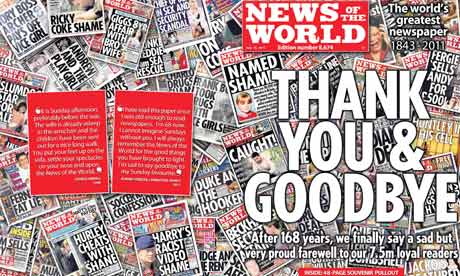
As I tried to make clear in a previous post, carnival festivities have all the features of old rituals which are eventually rooted in scapegoat phenomena. I have some reasons to believe that what happens to our mayor is exactly that: a scapegoat phenomenon. People who use their time and energy to publicly make fun of her, blame their own actions entirely on the way their victim, our mayor, behaved. In other words, they make our mayor a scapegoat, unwittingly transforming themselves into persecutors. They say She had it coming, she asked for it”, while technically, in purely juridical terms, that’s not exactly the case. There is no proof whatsoever that she asked to be videotaped and to be put ‘online’. The passersby are still responsible for their own actions. They were not obliged to film her, as we are not obliged to mock her.

I must admit I find the situation somewhat hilarious myself, but I think we shouldn’t exploit it to the point of ‘public shame’. I can imagine myself, or someone else for that matter, telling some anecdote about an embarrassing moment in my life (at the doctor’s office, anyone?), as I can imagine our mayor joking about something awkward that happened in her life. It all makes a good laugh. But to use the kind of mistake our mayor made to demand someone’s resignation, seems out of proportion to me. Even more so because she is only partly responsible for what happened. She didn’t steal anything, nor committed adultery, nor killed anyone. She was caught in an act many lovers could have been caught in.

There was a time (indeed, “was”) when lovebirds drove to an abandoned public area to make love to each other. It’s one of the more recognizable moments in American Graffiti, a movie by George Lucas. When a couple makes love in a car, near a river, two people pass by, but they leave the couple to itself.

This scene is contrasted by yet another early movie of George Lucas, THX 1138, which seems to be a perfect reflection of our current situation. Like 1984, the famous novel by George Orwell, THX 1138 portrays a future society where people are constantly watched by each other and by cameras. The film shows a totalitarian regime, a world without freedom, where people constantly have to fear their neighbor might give away their ‘mistakes’. In THX 1138, a couple is making love while being watched by a band of ‘Big Brothers’, who eventually convict the couple.

The troubling thing is we don’t need a war to end up in a situation like the one described in George Orwell’s 1984, or portrayed in THX 1138, although the atrocities of war facilitate certain social reflexes. For example, after the second world war people publicly shamed women who were known to have a German, Nazi boyfriend. These women were accused of ‘collaboration’, and since official, legal charges take a lot of time to be followed through, impatient crowds took the matter into their own hands. As said, apparently you don’t need stores of rage and vengefulness, built by a traumatizing war, to seduce people to mock someone. You just need a person who ‘stands out from the crowd’ a bit, a ‘public figure’. A mayor, or some other ‘celebrity’. Kurt Cobain, late front-man of grunge pioneers Nirvana, describes it well when he reflects on how the media constantly try to find sensational stories about him and his lover, Courtney Love: “I think we’re just easy scapegoats… We turn into cartoon characters.” Being an easy scapegoat is one of the burdens of being a celebrity, which allegedly made Kurt Cobain commit suicide at the age of 27. But you don’t have to be a celebrity to be harassed, mocked and bullied. Tyler Clementi, a promising young man, was secretly videotaped by his classmates while having a sexual encounter with another man. The video was posted on the internet, as a ‘joke’. Eventually Tyler jumped to his death from the George Washington Bridge, September 22, 2010. He was only eighteen years old.

There’s no place in this world for over-sensitive people. So it seems. To quote Charlie Chaplin from his magnificent speech in his equally magnificent film The Great Dictator: “Our knowledge has made us cynical. Our cleverness hard and unkind.” Indeed, we seem to use our knowledge to gain power over others and to “turn them into cartoon characters”. Yet I still believe we have a choice, as ‘free’ individuals, not to give in to processes of victimization and of scapegoating. We can give in to the power of a Love that wants to know the person ‘behind the cartoon’, that is concerned with personalities ‘beyond labels’. To ‘murder’ a person is to ‘steal’ his or her ‘nakedness’, his or her soul… We have a choice not to do that…

Alice Nahon, a Flemish poet from Antwerp, puts it this way (free translation):

“Before you go to sleep,

Look into your own heart,

And ask yourself:

Did I hurt someone’s heart

In the time between dawn and dusk?”


In Dutch:

‘t Is goed in ‘t eigen hert te kijken

Nog even voor het slapen gaan

Of ik van dageraad tot avond

Geen enkel hert heb zeer gedaan.

I’m a weak person and a coward in many ways, and I need this advice every day. I once met a drunk man on a bus who made racist remarks to a black woman. He asked me to hold his bottle of whiskey for him, while he kept harassing the lady. I remember the rage in his eyes, and the way he asked my approval of his behavior. I was too afraid to stand up against what he was doing. I forced myself to laugh. At the next stop, I got off the bus, 4 miles from home (around 6 kilometers), and continued walking. To this day I feel ashamed and sad about what happened then. From this experience I learned that it is necessary to question the deeper motivations of our actions at any time, in order not to commit evil where we see ‘no harm’, and where we think we are entitled to ‘defend ourselves’ or even ‘assert ourselves’… ‘creatively’. Not all of our actions are as innocent as they might seem. I don’t want to point fingers. I just made the next video compilation to reflect on what we are capable of as human beings – and I need this reflection as much, or even more so, as you do, dear reader.

Please click the following image to watch the video, and feel free to post comments (the quote on ‘common people’ is by alternative rock band Pulp, from their song by the same name)

– CLICK TO WATCH: