The following is a collection of (tragic) comical references to some of the cornerstones of René Girard’s mimetic theory, especially its analysis of the reality of mimetic desire and rivalry in human relationships. They appeared on Mimetic Margins throughout the years.
Have fun with the short videoclips from Mr Bean, Chris Rock, The Fresh Prince of Bel Air, Seinfeld and The Big Bang Theory!
***
MIMETIC MR BEAN
It’s all there below, in this classic piece of British humour – some of the basic elements of René Girard’s mimetic theory: mimetic desire, mimetic competition or rivalry and the haunting nightmare of the mimetic double. Rowan Atkinson’s Mr Bean really is the master of ceremonies here. Indeed, we often take more than we need when there are other people circling around the same buffet.
Moreover, mimetic dynamics generally are at work in the development of our eating habits. It would be very interesting to create an intensified dialogue between Paul Rozin’s research on the acquisition of likes and dislikes of foods and René Girard’s mimetic theory. Although some scholars already made some connections between the two (for instance in Culinary Cultures of Europe: Identity, Diversity and Dialogue, ed. by Darra Goldstein & Kathrin Merkle, Council of Europe Publication, 2005), much promising work remains to be done. Click here for a previous post on the subject, Mimetic Food Habits.
Enjoy this clever excerpt from Mr Bean in Room 426 (first broadcast 17th Feb 1993):
***
CHRIS ROCK ROCKS MIMETICALLY
American comedian Chris Rock refers to yet another example of mimetic dynamics (in the TV Special Never Scared, 2004), the potential rivalry between two good friends over the same potential partner:
***
WILL SMITH’S FRESH PHILOSOPHY
“I hate all this philosophical mumbo-jumbo! It just doesn’t make any sense!”
I’ve experienced reactions like these from my students quite often while trying to teach them some philosophy. They express the normal frustration people get when they just don’t seem to succeed in mastering the issues they’re facing. To be honest, I more than once imitated their feelings of despair by getting frustrated and impatient myself about their inability to understand what I was trying to say. The story of students blaming teachers for not explaining things well enough, and of teachers responding that their students just don’t try hard enough, is all too familiar. But, at the end of the day, having worked through some negative emotions, I somehow always manage to sit down at my desk and try to improve upon my part of communicating. I can only hope it stays that way.
The writings of Jewish philosopher Emmanuel Levinas are not always easy to understand, let alone agree with. Roger Burggraeve, one of my professors at the University of Leuven, has proven to be an excellent guide to introduce me to the philosophy of Levinas (click here for an excellent summary by Burggraeve). But explanations at an academic level are not always easily transferable to a high school level. Regarding Levinas I’m faced with the challenge to explain something about his thoughts on “the Other” and “the Other’s face”. Although Levinas’ musings often appear to be highly abstract for someone who didn’t receive any proper philosophical training, his thinking springs from very “earthly”, even dark realities and experiences – especially the experience of the Holocaust. Levinas’ response to the threat of totalitarianism is actually very down to earth, but because it wants to be “fundamental”, I can imagine it indeed sometimes comes across as mumbo-jumbo to sixteen year olds.
Luckily enough for me, as a teacher, an episode of The Fresh Prince of Bel Air (season 3, episode 12 The Cold War) can help to make clear what “the encounter with the Other” could be like in a particular situation. Moreover, it also serves as a good way to connect René Girard’s mimetic theory with some of Levinas’ main insights. Here’s the story:
Will and his nephew Carlton have a crush on the same girl, Paula. Carlton had been the first to date Paula, but after introducing her to Will, she also becomes Will’s object of interest. Will imitates the desire of Carlton and, upon noticing this, Carlton in turn reinforces his desire for Paula by imitating his new rival Will. This is a prime and archetypal example of what Girard has labeled mimetic (or imitative) desire, which potentially leads to mimetic rivalry. Will and Carlton become each other’s obstacles in the pursuit of an object (in this case a person, Paula) they point to each other as desirable. They become jealous of each other and try to out compete one another. They both fear the other as a threat to their self-esteem and independency. Ironically however, as they try to differ themselves from each other by unwittingly imitating each other’s desire, they resemble each other more and more. In fact, their sense of “being” becomes truly dependent on the other they despise. They end up dueling each other in a pillow fight, trying to settle the score.
At one moment, near the end of Will and Carlton’s fight, something happens which indeed illustrates what Levinas means with “response to the Other’s face” (click here for some excerpts from Levinas’ Ethics as First Philosophy). Will pretends to be severely injured (“My eye!”), whereon Carlton totally withdraws from the fight. Carlton finds himself confronted with Will’s vulnerability, and is genuinely concerned for his nephew’s well-being. The Other he was fighting turns out to be more than his rival, more than the product of his (worst) imaginations. Indeed, before being a rival the Other “is simply there“, not reducible to any of our concerns, desires or anxieties. Carlton is not concerned for his own sake: he doesn’t seem to fear any punishment, nor does he seem to desire any reward while showing his care for Will. He abandons all actions of self-interest “in the wink of an eye”.
This is an ethical moment, as Levinas understands it. It goes beyond utilitarianism which, as it turns out, justifies itself as being “good” by arguing that self-interest (i.e. what proves useful for one’s own well-being) eventually serves the interest (well-being) of others as well. Putting forward the effect on the well-being of others as justification for utilitarianism is telling, and shows that utilitarianism in itself doesn’t seem to be “enough” as a foundation for ethics. Moreover, utilitarianism serves the interests of “the majority”, which threatens to overlook what happens to minorities “other than” that majority. Sometimes sacrificing a minority might seem “logical” from this point of view. By contrast, in what is “the ethical moment” according to Levinas, one fears being a murderer more than one’s own death. In other words, provoked by the Other’s “nakedness” and “vulnerability” (the Other’s face which lies beyond our visible descriptions and labeling of the Other), OUR FEAR OF THE OTHER IS TRANSFORMED IN FEAR FOR THE OTHER. The mimetic rivalry between Will and Carlton is thus interrupted until, of course, Will reveals he was only joking about his injury… and the pillow fight continues.
CLICK TO WATCH:
Eventually, Will and Carlton quit fighting and start confessing their wrongdoings towards one another. They no longer imitate each other’s desire to assert themselves over against one another, but they imitate each other in being vulnerable and forgiving, recognizing “each Other”. They imitate each other’s withdrawal from mimetically converging desire and rivalry. It is by becoming “Other” to one another that they paradoxically gain a new sense of “self”, as an unexpected consequence…
Enjoy that grand twist of humor in Will Smith’s unexpected philosophy class…
CLICK TO WATCH:
***
SHAKESPEARE MUSTA LOVED SEINFELD
In the book Evolution and Conversion – Dialogues on the Origins of Culture (Continuum, London, New York, 2007), René Girard talks about popular culture and discusses the power of mass media. His approach is very nuanced, as he distinguishes between positive and negative aspects of these phenomena. He even dares to compare television seriesSeinfeldto the works of William Shakespeare (1564-1616). Girard develops his thoughts in a conversation with Pierpaolo Antonello and João Cezar de Castro Rocha. The seventh chapter, Modernity, Postmodernity and Beyond, reads the following (pp. 249-250):
“Guy Debord wrote that ‘the spectacle is the material reconstruction of the religious illusion’ brought down to earth. Could we consider the expansion of the mass-media system, and the ideological use of it, as a ‘kathechetic’ instrument as well?
Of course, because it is based on a false form of transcendence, and therefore it has a containing power, but it is an unstable one. The conformism and the ethical agnosticism induced by media such as television could also produce forms of mimetic polarization at the mass level, making people more prone to be swayed by mimetic dynamics, inducing the much-feared populism in Western democracies.
Do you agree, however, that movies, TV and advertising draw heavily on mimetic principle, therefore increasing our awareness on this score?
Yes and no, because the majority of Hollywood or TV productions are very much based on the false romantic notion of the autonomy of the individual and the authenticity of his/her own desire. Of course there are exceptions, like the popular sit-com Seinfeld, which uses mimetic mechanisms constantly and depicts its characters as puppets of mimetic desire. I do not like the fact that Seinfeld constantly makes fun of high culture, which is nothing but mimetic snobbery, but it is a very clever and powerful show. It is also the only show which can afford to make fun of political correctness and can talk about important current phenomena such as the anorexia and bulimia epidemic, which clearly have strong mimetic components. From a moral point of view, it is a hellish description of our contemporary world, but at the same time, it shows a tremendous amount of talent and there are powerful insights regarding our mimetic situations.
Seinfeld is a show that gets closer to the mimetic mechanism than most, and indeed is also hugely successful. How do you explain that?
In order to be successful an artist must come as close as he can to some important social truth without inciting painful self-criticism in the spectators. This is what this show did. People do not have to understand fully in order to appreciate. They must not understand. They identify themselves with what these characters do because they do it too. They recognize something that is very common and very true, but they cannot define it. Probably the contemporaries of Shakespeare appreciated his portrayal of human relations in the same way we enjoy Seinfeld, without really understanding his perspicaciousness regarding mimetic interaction. I must say that there is more social reality in Seinfeld than in most academic sociology.”
Maybe a small example can lift a tip of the veil. I chose a short excerpt from Seinfeld’s episode 88 (season 6, episode 2, The Big Salad). Jerry Seinfeld is dating a nice lady. However, when he finds out his annoying neighbor Newman is her former lover, his face darkens… One doesn’t have to watch the whole episode to know what will happen next. Indeed, Jerry eventually breaks up with his date, imitating what Newman did and ‘ending it’. The reason Jerry’s desire for his girlfriend diminishes precisely lies in the often imitative or, as Girard would call it, ‘mimetic’ nature of desire. Jerry just doesn’t desire his date directly all the way, but he is – like all of us – sometimes heavily influenced by certain models who point out what he should or should not desire. In this case, Newman turns out to be a model who negatively influences Jerry’s desire…
This scene is fun, because it’s all too recognizable and it mirrors some aspects of our tragic comic behavior – good, refined humor as it should be!
Click to watch:
***
MIMETIC BIG BANG THEORY
Sometimes, just sometimes, quite revealing scientific insights slip into popular culture. I was watching a rerun of an episode of The Big Bang Theory sitcom on Belgian television. More specifically, I found out, I was watching The White Asparagus Triangulation (episode 9, season 2 ).
The title itself can already be connected to a basic concept of René Girard’s mimetic theory, namely mimetic desire. As it turns out, “triangulation” indeed refers to the triangular nature of human desire (beyond instinctive needs) as described by Girard: the desire of a subject towards a certain object is positively or negatively influenced by mediators or models (click here to watch an example of negatively mediated desire from another popular sitcom,Seinfeld). Humans imitate others in orienting their desires – their desire thus is mimetic.
In the case of this episode from The Big Bang Theory: Sheldon tries to positively influence the desire of Leonard’s new girlfriend, Stephanie. After all, she is the first of Leonard’s dates to meet Sheldon’s high intellectual standards, so Sheldon does everything to increase Stephanie’s desire for Leonard. At some point he tries to persuade the girl next door, Penny, to present herself as a rival/model for Stephanie. Here’s the script for this scene.
Sheldon: I see. Apparently my earlier inquiry regarding you and Leonard crossed some sort of line. I apologize.
Penny: Well, thank you.
Sheldon: So, have you and I returned to a social equilibrium?
Penny: Yes.
Sheldon: Great. New topic. Where are you in your menstrual cycle?
Penny: What?
Error
This video doesn’t exist
Sheldon: I’ve been doing some research online, and apparently female primates, you know, uh, apes, chimpanzees, you, they find their mate more desirable when he’s being courted by another female. Now, this effect is intensified when the rival female is secreting the pheromones associated with ovulation. Which brings me back to my question, where are you in (Penny slams door). Clearly, I’m 14 days too early.
Anne E.Pusey andKaraSchroepfer-Walker wrote an interesting article on the subject mentioned by Sheldon, Female Competition in Chimpanzees (find a PDF by clicking here). Apparently, the closer to humans, the more mimetic desire and competition can be found in mammals. Chimpanzee females indeed sometimes develop a “desire” for sexual intercourse with male chimpanzees when potential competitors arrive at the scene, even disrupting their normal biological cycle! From the article:
Several lines of evidence indicate some female competition over mating. First, at Mahale, females sometimes directly interfered in the mating attempts of their rivals by forcing themselves between a copulating pair. In some cases, the aggressive female went on to mate with the male. At Gombe, during a day-long series of attacks by Mitumba females on a fully swollen new immigrant female, the most active attackers were also swollen and their behaviour was interpreted as ‘sexual jealousy’ by the observers. Townsend et al. found that females at Budongo suppressed copulation calls when in the presence of the dominant female, possibly to prevent direct interference in their copulations. Second, females occasionally seem to respond to the sexual swellings of others by swelling themselves. Goodall described an unusual incident in which a dominant, lactating female suddenly appeared with a full swelling a day after a young oestrous female had been followed by many males. Nishida described cases at Mahale in which a female would produce isolated swellings that were not part of her regular cycles when a second oestrous female was present in the group.
The White Asparagus Triangulation eventually gets its title from another scene in the episode. Sheldon tries to establish Leonard as “the alpha male”. Sheldon will pretend that he is unable to open a jar of asparagus. If Leonard then opens the jar he will have won the mimetic competition over the question “who is the strongest?”, resulting in an increase of his sex appeal. Of course, for the sake of comedy, things go terribly wrong :). Here’s the script for this scene.
Scene: The apartment.
Leonard: All I’m saying is if they can cure yellow fever and malaria, why can’t they do something about lactose intolerance?
Steph: Leonard, you’re going to have to let this go. You had a little cheese dip, you farted, I thought it was cute.
Sheldon: Oh, hi Stephanie.
Steph: Hi.
Leonard: Want some more wine?
Steph: Yeah, I assume I’m not driving anywhere tonight. (Sheldon lets out a loud noise).
Leonard: What are you doing?
Sheldon: I have a craving for white asparagus that apparently is destined to go unsatisfied.
Leonard: Excuse me. What the hell is wrong with you?
Sheldon: I’m helping you with Stephanie.
Leonard: By making constipated moose sounds?
Sheldon: When I fail to open this jar and you succeed it will establish you as the alpha male. You see, when a female witnesses an exhibition of physical domination she produces the hormone oxytocin. If the two of you then engage in intercourse this will create the biochemical reaction in the brain which lay people naively interpret as falling in love.
Leonard: Huh? Would it work if I just punched you in the face?
Sheldon: Yes, actually it would, but let’s see how the lid goes. I’m not strong enough, Leonard, you’ll have to do it.
Leonard: Oh, for god’s sakes.
Sheldon: Go ahead, it’s pre-loosened.
Steph: Do you want some help with that?
Leonard: No, no, no, I got it.
Sheldon: No, yeah, yeah, he’s got it, and that’s not surprising. This is something I long ago came to peace with in my role as the beta male. Open it. (Leonard tries again. Then taps jar on counter. Jar breaks.)
Error
This video doesn’t exist
Steph: Oh my god, are you okay?
Leonard: No, I’m not. I’m bleeding.
Sheldon: Like a gladiator!
Steph: Oh, honey, you’re going to need stitches.
Leonard: Stitches? With a needle?
Steph: Well, yeah, I mean, just a few.
Leonard: Oh, okay, yeah, hang on a sec. (Throws up in sink)
Regarding the allegations of child sexual abuse against the late Michael Jackson in the television production Leaving Neverland, people often conclude: “No-one who wasn’t there can possibly know what happened or didn’t happen in Michael Jackson’s bedroom!”
Actually, there is ample proof by now that significant parts of Michael Jackson’s alleged abuse took place in non-existent beds of non-existent rooms on non-existent occasions.
At first sight, to believe that Michael Jackson was a serial pedophile is one of the easiest things to do. It also seems the most rational, even most compassionate thing to do. Well, is it?
Those who believe in Michael Jackson’s guilt often point to his “unusual behavior” as circumstantial evidence corroborating that guilt. However, they do not consider the unusual as well as fraudulent behavior and proven outright lies of accusers like Evan Chandler, Janet Arvizo, Víctor Gutiérrez, Diane Dimond, Dan Reed, Wade Robson and James Safechuck as circumstantial evidence that indicates Michael Jackson’s innocence.
Moreover, Michael Jackson’s accusers often refer to non-existent things as “proof” of Jackson’s guilt. Diane Dimond once enthusiastically referred to anon-existent videotape of Jackson molesting a boy. The videotape was allegedly owned by her convicted fraudulent friend Víctor Gutiérrez. Gutiérrez wrote a graphic pedo-fantasist book about the relationship between Jordan Chandler and Michael Jackson, based on anon-existent “secret diary” of Jordan Chandler. Despite being convicted multiple times for fabricating completely non-existent (pedophile) sex scandals against high profile figures, Víctor Gutiérrez for a long time remains an “expert” regarding Michael Jackson to (tabloid) media. Find out more about Gutiérrez by clicking here.
Víctor Gutiérrez even appears as “investigative journalist” in a 2007 UK television production on the late pop star. The title of that documentary is Michael Jackson: What Really Happened and it is produced by Channel 4. It is the same Channel 4 that, together with HBO, commissioned the 2019 film Leaving Neverland on Wade Robson’s and James Safechuck’s child sexual abuse allegations against the late Michael Jackson. Like the allegations by Robson and Safechuck, director Dan Reed’s “research” for Leaving Neverland seems primarily based on the pedo-fantasist fiction produced by Gutiérrez. Maybe this can be expected, as Reed clearly depends on the Gutiérrez based “information” of Channel 4. After all, in an interview for Slate’s The Gist podcast (with Mike Pesca, on March 1, 2019) Reed describes the origin of the Leaving Neverland film like this:
“At the outset, I had no special interest in Jackson. This project came about in a kind of random way and the timing is quite random.
I wish I could say I’d set out to make a big difference in the #MeToo movement. […]
[The project] came about through a casual conversation with a Channel 4 executive in the UK, and we were talking about what are the big stories out there that are slightly unresolved. […] I commissioned someone to do some research and they [sic] came up with this, I think it was like a foreign page reference to these two guys I’d never heard of, Wade Robson and James Safechuck.”
Dan Reed then goes on to say that he met each of them only once before recording their stories. Well, so far for the “research” of which the results are very similar to the pedo-fantasist fiction by Víctor Gutiérrez – watch:
Error
This video doesn’t exist
James Safechuck in particular tells eerily similar stories about Michael Jackson as the ones found in the book by Gutiérrez and very convincingly claims, in Leaving Neverland, to have been molested numerous times in a 1988 non-existent train station.
James claims the abuse in the train station happened at the start of the abuse period, in the so-called “honeymoon period”. However, the train station opened in 1994, and by the time James could visit Neverland again with Michael Jackson present, it was already 1995. So molestation in that train station would have been, at the earliest, when James was 17 and significantly taller than Michael Jackson. After being confronted with this issue, Leaving Neverland director Dan Reed claimed that the abuse did take place in the train station, but that the time period of the abuse is wrong. This directly contradicts Safechuck’s own lawsuit in which he declares that the abuse began in 1988 and ended in 1992. It also goes against the whole narrative of the film that Michael Jackson was a veritable pedophile and lost interest in the boys once they reached adolescence.
Furthermore, Wade Robson and James Safechuck fail to mention Wade started “dating” Brandi Jackson thanks to her uncle Michael Jackson when Wade was about 9 years old. However, they do refer to Jackson’s non-existent jealousy regarding his alleged victims having relationships with girls. Related to this fact is the following claim by Leaving Neverland director Dan Reed (in an interview for !hit Australia, 12 March 2019). It is Reed’s attempt to discredit the testimony by Brandi Jackson. According to Dan Reed, Brandi only began seeing Wade after the majority of the alleged abuse (“hundreds and hundreds of times”, according to Wade) had already taken place:
“The intense period of Wade’s, it’s terrible to say it but sexual relationship with Michael Jackson was from the age of 7 to the age of 9. That was again, if you like, to use a dreadful word, the honeymoon period. The period when they were really seeing each other a lot and he makes it clear in the film he doesn’t really see Michael much after that.”
Exactly how the period of Wade being 7-9 years old could be the period when Wade and Michael “really saw each other a lot” will forever remain a mystery. At the time, the Robson family still lived in Australia. In short, Dan Reed is referring to a non-existent period of many Michael Jackson visits.
And so on. In any case, the reference to non-existent things as alleged “proof” are numerous in all the tales of Michael Jackson’s accusers. Exactly why these accusers should be believed despite their apparent lies, manipulations and fantasies is never quite explained by “believers” of Michael Jackson’s guilt.
It’s time to take a closer look. The testimonies (see below) of the potential victims of Michael Jackson reveal that the so-called circumstantial evidence accusers love to refer to is actually non-existent circumstantial evidence. Moreover, Michael Jackson rarely slept in the bed where children were sleeping alone, contrary to what many people believe.
Charles Thomson, an awarded investigative journalist (among others because of his work on a pedophile ring) and other journalists clarify key aspects of the Wade Robson and James Safechuck cases which were omitted in Leaving Neverland. They reveal the absurdity of these cases:
Error
This video doesn’t exist
2 #MeToo AND TRIAL BY (MASS) TABLOID MEDIA
HIGH PROFILE CASES OF SEXUAL ABUSE THAT TURN OUT TO BE TOO RIDICULOUS TO BE TRUE, CONTAINING A MYRIAD OF PROVABLE LIES, HURT THE OVERALL CREDIBILITY OF THE VICTIMS OF SEXUAL ASSAULT AND SEXUAL VIOLENCE.
OVER MEDIATIZED CASES, LIKE THE CASES OF ACCUSER CARL BEECH OR LIKE THE CASES OF THE ACCUSED BUT INNOCENT CLIFF RICHARD, SIMON WARR AND BRIAN BANKS CREATE A CULTURE WHEREIN REAL PERPETRATORS CAN SHED DOUBT ON THE ALLEGATIONS OF REAL VICTIMS. NOT TO MENTION THE CASES AGAINST THE AMERICAN DAVID BRYANT AND HIS ENGLISH NAMESAKE, DAVID BRYANT.
BY NOT TAKING INTO ACCOUNT WHAT HAS BEEN DECIDED ABOUT A PERSON’S GUILT IN A COURT OF LAW, AND BY ALLOWING A HIGH PROFILE MEDIA FRENZY REGARDING TWO ALLEGED VICTIMS WHOSE CASES WERE ALREADY DISMISSED TWICE BY A JUDGE, ONE FURTHER PARTICIPATES IN THE CREATION OF A CULTURE OF DOUBT CONCERNING THE ALLEGATIONS OF VICTIMS.
THUS,IF THE #MeToo MOVEMENT REFUSES TO TAKE INTO ACCOUNT HOW EXACTLY AN ALLEGED HIGH PROFILE PERPETRATOR WAS ACQUITTED THROUGH DUE PROCESS AND IF THE #MeToo MOVEMENT ALLOWS FOR NEW ACCUSATIONS IN A “TRIAL BY MEDIA” WITH EASILY PROVEN LIES AND HUGE MONETARY DEMANDS, THEN THE #MeToo MOVEMENT IS ITSELF AN ENABLER OF SEXUAL ASSAULT AND VIOLENCE (AS PERPETRATORS ONCE AGAIN CAN HIDE BEHIND A VEIL OF DOUBT).
SIMPLY LAZILY REFERRING TO A HIGH PROFILE PERPETRATOR’S ALLEGED “POWER” AND “GOOD LAWYERS” IS NOT ENOUGH TO JUSTIFY ANY TRIAL BY MEDIA. IT OPENS THE DOOR FOR WITCH HUNTS.
THAT’S WHY THE #MeToo MOVEMENT SHOULD BE VERY TROUBLED ABOUT A FILM LIKE LEAVING NEVERLAND.
AGAIN, IF THE #MeToo MOVEMENT IS NOT TROUBLED BY A PRODUCTION LIKE LEAVING NEVERLAND, THEN THE #MeToo MOVEMENT IS SIMPLY, HOWEVER TRAGICALLY, ONE MORE ENABLER OF THE RAPE CULTURE IT IS TRYING TO FIGHT.
HENCE, FOR INSTANCE, #WADEANDJAMESDONOTSPEAKFORME USED BY A GROWING NUMBER OF CHILD SEXUAL ABUSE SURVIVORS.
AS MANY AN ACCUSED BUT OFFICIALLY ACQUITTED PERSON WILL TESTIFY, THERE WILL ALWAYS BE PEOPLE WHO SIMPLY DON’T BELIEVE ONE WAS INNOCENT. THIS MAKES IT VERY EASY FOR FRAUDS TO LAUNCH NEW ALLEGATIONS AGAINST SOMEONE WHO WAS ACQUITTED BUT STILL SUFFERS FROM A BAD REPUTATION, ESPECIALLY IF THAT PERSON IS NO LONGER HERE TO DEFEND HIMSELF.
According to a Vox/Morning Consult survey (published April 5, 2018),
“Women who supported #MeToo were actually more concerned than women as a whole about some potential ill effects of the movement. Sixty-eight percent of #MeToo supporters were very or somewhat concerned about false accusations, for instance, compared with 63 percent of all women.”
Why?
According to the same survey,
“Women’s concerns are often rooted in a desire for the movement to succeed.
[…]
–
It’s not surprising that women who were supportive of #MeToo were also more likely than average to have certain concerns, said Sarah J. Jackson, a professor of communication studies at Northeastern University who studies racial and gender justice activism. People who support the movement “understand the stakes,” Jackson said.
–
In her recent interviews with feminist Twitter users, she said, she found a keen awareness of the ways feminist causes can be undermined — an awareness that false rape accusations, for instance, can be portrayed in ways that harm anti-rape activism as a whole.”
Brett Barnes, Karlee Barnes, Omer Bhatti (O-Bee), Aaron Carter, Eddie Cascio, Frank Cascio, Kevin Macaulay Culkin, Bela Farkas, Corey Feldman, Brandi Jackson, Taj Jackson, Sean Lennon, Harriet Lester, Emmanuel Lewis, William Ray Norwood Jr. (Ray J), Danny Oliver, Kelley Parker, Alfonso Ribeiro, David Rothenberg (Dave Dave), Anton Schleiter, Franziska Schleiter.
What do these people have in common?
Well, for one thing, they all got to know Michael Jackson up close and personal when they were young boys and girls.
Secondly, they have all publicly, repeatedly and emphatically denied that Michael Jackson ever approached them inappropriately when they were children. They have claimed the opposite, testifying to nothing but good memories about their experiences with the late pop star.
I will wholeheartedly admit that this doesn’t mean that Michael Jackson didn’t molest any other children. However, often the testimonies in defense of Michael Jackson are read in light of the few allegations of child sexual abuse against him by those who believe that he indeed was a pedophile. Some of the “believers” then go to great lengths to explain the psychology of the people who claim, as adults, that they were never molested by Michael Jackson while they might very probably have been molested. This is a patronizing, belittling and arrogant attitude to listen to people’s testimonies, to say the least.
I would like to propose the opposite approach without, however, “explaining away” the possibility of Michael Jackson as a child molester beforehand on purely speculative psychological grounds. So I suggest to interpret the few allegations in light of the numerous testimonies in favor of Michael Jackson, after which certain non-speculative facts can be considered in relation to the allegations.
Before I go on, some people might want to know if I’m a fan of Michael Jackson. The answer is that I am a fan of his music, although certainly more of his early work as an adult solo-artist. I grew up on his first three albums, but his music generally is not my pick of the day. My taste in music is quite broad, not only in the “classical” sections, but also in the pop and rock sections. Aerosmith, Tracy Chapman, Leonard Cohen, Marc Cohn, DMX, Fleetwood Mac, King’s X, Joni Mitchell, Prince, Todd Rundgren, Bruce Springsteen, The Doors, Toto and U2 are among my favorite artists. One of my all-time favorite bands is Dan Reed Network, which is quite ironic since the director’s name of the controversial HBO-production Leaving Neverland is also Dan Reed.
I wanted to point this out because some people assume all kinds of things when you strongly defend the possibility that Michael Jackson wasn’t a pedophile at all. They assume that Michael Jackson must be your big idol, and that you belong to some sort of “crazy fan cult” that will deny the so-called truth about Michael Jackson being a pedophile at all costs, even in the face of “overwhelming” evidence or indications. I can honestly say that I would not have any problem admitting that Michael Jackson most likely was a pedophile if the evidence or circumstantial evidence would point in that direction. On the contrary, if that were indeed the case, then his victims would be welcome to receive my full support. However, in a world that is founded upon the so-called Age of Reason or Enlightenment, judgments should be made on the basis of facts and these facts point in the direction of false accusations. All the extremely thorough research done by legal and judicial authorities over the years, time and again exonerate Michael Jackson.
Dan Reed (the director of the HBO production Leaving Neverland) believes that Michael Jackson was a serial pedophile, as is also claimed by Wade Robson. There are a number of people who clearly qualify as potential victims because they slept in the same room as Jackson and had a close relationship with him (Jackson could have “groomed” them). Other children, who visited Neverland Ranch under the guidance of tutors and as a group (often in the absence of Michael Jackson) less easily qualify.
The vast majority of people who qualify as potential victims have testified that they never experienced any abuse by Michael Jackson (see below for some of their testimonies). This does not fit the pattern of the serial pedophile Dan Reed and others want to establish so eagerly.
Already in 1993, following the first case of allegations against Michael Jackson by the Chandler family, 40-60 children were interviewed by prosecutors (some sources mention up to 100 children). None of these children corroborated the story of the accuser’s side. So what about the exceptions, the people who did level allegations against Michael Jackson? Are their stories credible? It is time to take a closer look at the specific cases against the late pop star.
4 NOTE ON THE TWO CASES OF CSA DURING MICHAEL JACKSON’S LIFETIME
It is good to remember some important facts about the two cases of child sexual abuse (CSA) that were brought against Michael Jackson during his lifetime.
Regarding the Jordan Chandler case of 1993, people should consider the following facts. Jordan Chandler’s parents are divorced. His father, Evan, is a Hollywood dentist who wants to make it in show business. He becomes very disgruntled with his ex-wife June, his son Jordan and Michael Jackson when they don’t sustain the level of communication he expects from them. In a lengthy taped phone conversation between Evan and David Schwartz (Jordan’s stepfather) Evan reveals his plans to “destroy ex-wife June and Michael Jackson” if they don’t return to his desired level of contact. Evan Chandler suggests his plan is to level allegations of child sexual abuse against Michael Jackson. If his ex-wife and Michael Jackson do re-establish contact with him, he promises not to go through with his plan. In other words, Evan Chandler clearly aims to blackmail Michael Jackson. Whatever really happens between Michael Jackson and his son is of no importance to him. When Michael Jackson resists Evan Chandler’s extortion attempts, Evan Chandler tries everything to force his son to level allegations of child sexual abuse against Michael Jackson. Jordan Chandler denies anything inappropriate ever happened between him and Michael Jackson multiple times, until he finally succumbs to the pressure of his father. Evan Chandler threatens to go public with the allegations if Michael Jackson refuses to pay a settlement. Michael Jackson indeed refuses, after which Evan seeks monetary compensations in an official civil case against Jackson. Michael Jackson and his legal team file for the criminal case to go before the civil case so he can clear his name, but to no avail. After the civil case is settled (for $15,331,250) in which an official document makes sure that this is not an admission of guilt on the part of Michael Jackson, Evan Chandler is no longer interested in pursuing criminal charges against Michael Jackson. The criminal case goes on, though, but is rejected by two different Grand Juries – in any case, Michael Jackson did not buy his way out of court!
Jackson’s legal team had advised him to settle the civil case so they could assure a fair upcoming criminal trial. Moreover, Jackson was mentally and physically exhausted by the turmoil at the time and huge financial interests of his employees were at stake (Jackson had already cancelled part of the Dangerous tour). As the Chandlers eventually didn’t press criminal charges, Michael Jackson would later consider the settlement of the civil case one of the major mistakes of his life.
After the whole circus winds down, Jordan Chandler no longer wants anything to do with his parents anymore and files for legal emancipation. At the trial against Michael Jackson in 2005, his mother declares that she hadn’t been in contact with her son for 11 years. Jordan at some point even obtains a permanent restraining order against the father who had forced him to level allegations against Michael Jackson. If there is one manipulative, abusive person in this whole situation, it is indeed Jordan Chandler’s father Evan Chandler. Not only other people become the victim of his behavior. Eventually Evan Chandler commits suicide, a few months after Michael Jackson’s passing.
Tom Mesereau, Jackson’s lawyer in the 2005 case, refers to Jordan Chandler and the 1993 civil case against Jackson in the following way (in a lecture for Harvard Law School, November 5, 2005) – Mesereau begins by saying that Jordan Chandler never showed up to testify in 2005:
Error
This video doesn’t exist
The second case against Michael Jackson during his lifetime revolves around Gavin Arvizo, which culminates in the 2005 criminal trial. The Arvizo family turns out to have a history of (at times successful) extortion attempts. On August 27, 1998, when he is only eight years old, Gavin steals two school uniforms and two school uniform pants from a J.C. Penney Department Store. Strangely enough, the incident ends with a settlement between the Arvizo family and J.C. Penney in which the store pays the family $152,200. Janet Arvizo, the mother, claimed that she had been touched inappropriately by security guards. The file about the case clearly indicates her manipulative tactics.
Apart from the Michael Jackson and the J.C. Penney cases, the Arvizos get also caught being involved in fraudulent and manipulative activities against actor and comedian Chris Tucker, comedian George Lopez, television host Jay Leno and editor Connie Keenan. Mother Janet Arvizo also committed welfare fraud.
A very important fact is the changing of the timeline of Michael Jackson’s alleged abuse by the Arvizos. The Michael Jackson Allegationswebsite points out the consequences of this (see also below, Rolling Stone’s account of the same situation):
“Initially the Arvizos claimed that the molestation started as soon as they returned from Miami with Jackson, on February 7, 2003. This version of the story is also represented in the prosecution’s initial felony complaint, filed on December 18, 2003.
–
However, later they changed this story and said that Jackson started molesting Gavin afterFebruary 20. As you will see, this timeline change was not just a minor correction. It significantly changed the narrative of the Arvizos’ initial story.
–
[…]
According to the story that the Arvizos ended up with due to the timeline change, Jackson started molesting Gavin while the CPS and the police investigated, while there was a huge public attention on him and Gavin because of the Bashir documentary, and while his PR team was working overtime on damage control because of the public relations backlash resulting from the Bashir documentary. To believe the Arvizos’ story you have to believe that all the while this was happening (including a police and a CPS investigation), Jackson suddenly started molesting Gavin Arvizo, even though for three years he had not touched him and not even trusted him and his family. This is exactly the story that the Arvizo family ended up with after they were forced to change their initial timeline because of the discovery of the ‘rebuttal tape’ raw footage.”
According to some people, Michael Jackson must have had tons of victims of child sexual abuse. During his lifetime, two cases came out. The first case turned out to be concocted by an overambitious, money hungry and abusive father. His son Jordan didn’t want anything to do with him anymore after he was forced to level allegations against Michael Jackson and after the case wound down. The second case was concocted by a family who had a long history of extortion attempts and who were caught lying on all counts during the trial against Michael Jackson in 2005.
Surprise, surprise? Considering all the supportive testimonies of people who knew Michael Jackson when they were children, it is probably no coincidence that of all the alleged potential victims the only cases that came out were clearly non-credible extortion attempts. There is no avalanche of victims coming out of the closet, unlike the cases against Bill Cosby and Harvey Weinstein, for instance. On the contrary, people like Brett Barnes, Kelley Parker, Harriet Lester, Brandi and Taj Jackson and Anton and Franziska Schleiter are asking Wade Robson and James Safechuck to stop lying about Michael Jackson.
5 A REPEATING PATTERN
Concerning the cases of Wade Robson and James Safechuck, the pattern to seek monetary compensations for alleged abuse repeats itself. This is a fact. Moreover, Robson and Safechuck were also caught lying on multiple occasions regarding their cases, not only by investigative journalists, but also by judges. This is a fact. It is no coincidence that their cases were already thrown out of court twice. The judge even reprimanded Robson, saying that “NO RATIONAL FACT-FINDER COULD POSSIBLY BELIEVE ROBSON’S SWORN STATEMENT.”
It is probably also no coincidence that Robson first made allegations when he was experiencing financial troubles and troubles regarding his career (he was not accepted as director for a Michael Jackson Cirque du Soleil tribute show). And it is probably also no coincidence that Safechuck “suddenly realized” that he had been abused by Michael Jackson only days after the Safechuck family business got sued for nearly a million dollars.
The HBO production LeavingNeverland, about the Robson and Safechuck cases, leaves out all the kind of above mentioned information. It is therefore an unethical piece of journalism for several reasons: it contains significant and proven lies; it profits from a deceased person’s bad reputation who can no longer defend himself; it offers a prosecution’s case veiled as a “testimony of child sexual abuse”; it unashamedly profits from the sympathy of victims of proven child sexual abuse during this #MeToo era. In short, Leaving Neverland is a mere “trial by media” – a witch hunt of increasingly low credibility value.
With Leaving Neverland director Dan Reed finds himself in the company of people like Diane Dimond and Víctor Gutiérrez and their stories about Michael Jackson. Both Dimond and Gutiérrez are tabloid journalists of the worst kind, the latter being convicted for blatantly lying and making up stories on multiple occasions, also regarding Michael Jackson.
Víctor Gutiérrez is a proven and convicted pedo-fantasist like Carl Beech. However, the (tabloid) media did not dismiss the NAMBLA sympathizer. Although he was convicted a first time in 1998 for his allegations of pedosexual fantasies against Michael Jackson, Gutiérrez was treated as a reliable source and specialist by the (tabloid) media in the wake of the 2005 criminal trial against Michael Jackson. It’s quite unbelievable, but it happened. Apparently, when it has to do with Michael Jackson, some “journalists” have no problem disregarding even the slightest minimum of rationality and ethics.
It is now proven that Wade Robson read multiple tabloid stories while he was preparing his (ammended) complaint. He mailed those stories to himself. Robson also declared reading books about the pattern of child sexual abuse, supposedly to make sense of his own experience. Whatever the level of truth in his own story, the tabloid stories and the books on child sexual abuse clearly helped Robson to put the pieces of his own story together. It is also proven that Robson knew about information from tabloid stories not being true, and yet he used that information in his (ammended) complaint (an infamous Charlie Michaels story about a certain Mother’s Day in particular). As for James Safechuck, many elements of his story are so comparable to the story that Víctor Gutiérrez concocted in Michael Jackson Was My Lover: The Secret Diary of Jordie Chandler (Alamo Square Distributors, 1996) that they seem copy pasted from that book.
The question to determine Michael Jackson’s guilt should not be whether or not the stories of Wade Robson and James Safechuck “fit the pattern” of child sexual abuse. The question should be whether or not the different elements of their stories, which constitute that pattern of child sexual abuse, are actual facts as opposed to lies.
An approach to reality that reduces reality to “correspondence to a pattern” is an externalization of what Emmanuel Levinas (1906-1995) calls “totality”.
A “pattern” is a way to approach reality. It is not reality itself. Knowledge of a pattern can be used by deceivers to “sell” a story as “truth”. Tabloid journalism excels in this respect. The testimonies below (see also the Open Letter by the Schleiter Family) challenge the standard “totalitarian” story of Michael Jackson as a textbook pedophile.
The tabloid background and multiple proven lies (established by judges) didn’t help the cases of Robson and Safechuck (who contacted Robson and was eventually represented by the same legal team) regarding their credibility. Several victims of child sexual abuse were outraged about Leaving Neverland and spoke out against Wade Robson and James Safechuck once they knew more about the history of their cases.
Those who still manage to be intellectually dishonest by referring to the blatant untruths in Leaving Neverland as “unimportant details misremembered because of trauma” should realize that those so-called unimportant details are not presented as such in Leaving Neverland. They are presented as key elements in the stories of Wade Robson and James Safechuck.
In short, to minimize the untruths regarding those key elements as allegedly “being misremembered because of trauma” is ABUSE OF REAL TRAUMA:
6 THE QUESTION OF VICTIMHOOD
It is patronizing if not arrogant to assume that people who knew Michael Jackson since their childhood only say nice things about him “because they remain under the manipulative spell of his pop star aura.” Let us listen to those testimonies first.
It is patronizing if not arrogant to assume that everyone who defends Michael Jackson “must be a fan.” Let us first find out if his ardent defenders are indeed all fans and if that is the main reason why they defend him.
It is patronizing if not arrogant to assume that big fans of Michael Jackson “would not admit that he was a pedophile even if the evidence pointed in that direction.” Let us first find out why many fans don’t believe that he was a pedophile – do they really have strong reasonable and plausible arguments, or is it mainly a rationalization of emotional impulses?
It is patronizing if not arrogant to assume that the Los Angeles Police Department, the FBI, the Los Angeles Department of Children and Family Services and the Santa Barbara County Superior Court would stand “no chance against the power and money of Michael Jackson.” Let us first find out what kind of investigations were conducted, how the raids on his Neverland ranch were done, how the police took photographs of his genitals and how he was treated when they arrested him.
I think it is important to move beyond those kinds of speculative assumptions because judgment based on assumptions ultimately damages the so-called #MeToo movement big time. The fact that victims have a voice is a breakthrough. As scholars have pointed out, the Judeo-Christian influence on the western world plays a tremendous part in this achievement – Gil Bailie, for instance (Violence Unveiled – Humanity at the Crossroads, The Crossroad Publishing Company, New York, 1995, p. 20):
“There’s plenty of truth in the revised picture of Western history that the young are now routinely taught, the picture of the West’s swashbuckling appetite for power, wealth, and dominion. What’s to be noted is that it is we, and not our cultural adversaries, who are teaching it to them. It is we, the spiritual beneficiaries of that less than always edifying history, who automatically empathize more with our ancestors’ victims than with our ancestors themselves. If we are tempted to think that this amazing shift is the product of our own moral achievement, all we have to do is look around at how shamelessly we exploit it for a little power, wealth, and dominion of our own.
–
The fact is that the concern for victims has gradually become the principal gyroscope in the Western world. Even the most vicious campaigns of victimization – including, astonishingly, even Hitler’s – have found it necessary to base their assertion of moral legitimacy on the claim that their goal was the protection or vindication of victims. However savagely we behave, and however wickedly and selectively we wield this moral gavel, protecting or rescuing innocent victims has become the cultural imperative everywhere the Biblical influence has been felt.“
However, the perversion of the achievement to listen to “the voice of the victim” threatens to silence the voice of real victims again: people pretending to be victims murderously persecute others in the name of “the victim” in order to gain power and end up making ever more victims. As French-American thinker René Girard points out (Evolution and Conversion – Dialogues on the Origins of Culture, Continuum, London, New York, 2007, p. 236):
“We have experienced various forms of totalitarianism that openly denied Christian principles. There has been the totalitarianism of the Left, which tried to outflank Christianity; and there has been totalitarianism of the Right, like Nazism, which found Christianity too soft on victims. This kind of totalitarianism is not only alive but it also has a great future. There will probably be some thinkers in the future who will reformulate this principle in a politically correct fashion, in more virulent forms, which will be more anti-Christian, albeit in an ultra-Christian caricature. When I say more Christian and more anti-Christian, I imply the figure of the Anti-Christ. The Anti-Christ is nothing but that: it is the ideology that attempts to outchristianize Christianity, that imitates Christianity in a spirit of rivalry.
[…]
You can foresee the shape of what the Anti-Christ is going to be in the future: a super-victimary machine that will keep on sacrificing in the name of the victim.“
The #MeToo movement should be about a concern for real victims, also victims of false allegations. The focus, time, energy and money of a society should go to real victims, not pretenders. That’s why the #MeToo movement should be concerned about false allegations. It should not lend itself to sustain the condemnation of people in a mere trial by powerful media, especially if those people are no longer here to defend themselves and were already acquitted on all counts during their lifetime. Regarding Michael Jackson, we should focus on what can be known for a fact before speculating and jumping to conclusions.
In any case, the people who have testified against Michael Jackson in a court of law were all caught on multiple and significant lies, while the people who testified in his defense were not (apart from Wade Robson, who claims to have lied in the only criminal trial against Michael Jackson in 2005). Also, many (if not all) people who testified against Michael Jackson sold their stories to the tabloids for big money. These are facts. It is also a fact that Michael Jackson was acquitted in 2005 and declared not guilty on all counts. Despite this declaration, many still had doubts about him and Michael Jackson would suffer the consequences of this trial mentally and physically. Michael Jackson never really recovered from the 2005 trial and was virtually destroyed. He would die four years later. The HBO production Leaving Neverland, true or not, further kills the reputation of an already dead man who can no longer defend himself “in the name of the victim”.
To get a clearer picture of the “regular” experiences with Michael Jackson, as opposed to the four exceptional cases of child sexual abuse against him (the Jordan Chandler case, the Gavin Arvizo case, and the Wade Robson and James Safechuck cases), below are some voices of people who are speculated about a lot, but are rarely been listened to.
7 VOICES OF “NEVERLAND CHILDREN” ON BEHALF OF AN ACCUSED DEAD MAN
SEAN LENNON (son of the late John Lennon) in exclaim! March 6, 2019 – emphasis mine:
“I think that was a super strange time, but not in a dark way. In an odd way, in a unique way. It was odd because Bubbles was all dressed up in dandy outfits and we were all running around playing videogames with this chimpanzee. It was a surreal scene. It was kind of part Charlie and the Chocolate Factory, part Dr. Doolittle, and part, you know, ‘Motown’s Greatest Hits’ or something. It was a convergence of a lot of disparate universes that merged for a while. And that was a strange scene but it was really fun. I mean it was amazing to hang out with all those animals, but there was also something very eccentric about it, you know?
[…]
He was the coolest dude I’d ever met for sure. I mean people, you know, they have a lot of opinions about him and like anything else, my opinions can only be based on my experience. But he was super fun to hang out with. I mean he was like a big kid, you know?
–
So yeah, the time that I got to spend with him was – it was like Disneyland all day long. He’d set up water balloon fights and pie fights in basketball courts. Just really fun stuff where he’d like invite all his friends over and there’d be two teams and everyone would dress in garbage bags and throw pies at each other. It was like super high-level fun and it was orchestrated fun and insanity.”
ANTON AND FRANZISKA SCHLEITER, An Open Letter, Enough is Enough, March 4, 2019
“In 1995 we first met Michael at a German TV Show. That day, something that we could never have imagined in our wildest dreams happened. It was the start of a unique friendship. A friendship so normal yet so unusual and magical. One that would last until the very last day of Michael’s life and will continue forever in our hearts.
–
From the beginning we knew that what we were privileged to experience, was a treasure worth protecting. Especially regarding the world we live in, with media that wants to make up stories that sell, rather than seeking the truth and people who want to read shocking headlines rather than knowing the truth. Over the years we were offered over a quarter million of Euros for interviews, but no money in the world could ever materialize a value that would stand above the value of our memories with Michael. This is the reason why we have never spoken a word publicly about our friendship.
–
Something has changed our mind about speaking up lately. The utter shocking news of a new documentary that would portray Michael once again as a child molester. Even writing this sentence, putting his name and that word together, makes us feel sick to our stomach. Michael never behaved inappropriately towards us and we neither witnessed nor suspected him doing it to someone else ever.
–
We have been angry with the public treatment of Michael many times in the past, but we chose to stay silent – hoping the truth to run marathons and protecting Michael and his privacy.
–
And we had good reason to be angry, for example when Anton was falsely portrayed in a German tabloid as having a homosexual affair with Michael. We witnessed first hand how ugly the media can be and how they make up most terrible lies just to have a story. When our father denied to talk to an inquiring journalist on the phone, the story read something like ‘Father refuses to defend Michael’. Unfortunately scandals sell much better than anything else.
–
Spending a lot of time with Michael, we experienced two-faced people more than once. When Michael was in the room, they acted most charming with seemingly good intentions, but once he turned his cheek they would become rude and you could sense that their intentions were not that good after all. In front of us, they didn’t care showing their real face. We were only the shy German family in the background, not worth paying attention to. But we were observing and slowly but surely we started to get a glance at the often difficult world Michael was living in. It was a world in which it was so very difficult to trust.
–
And yet Michael was kind to everybody he would meet and believed in the good so strongly. Some would call it naiv, to us it was just one of his character traits that made us look up to him. Giving everybody a chance, even if you’ve been fooled by people over and over, really is remarkable. And it makes us even more sad to know, that many took and still take advantage of this.
–
Being around Michael made us realize that everybody wanted a piece of him. We often wondered why, from all people, he would let us into his circle of trusted friends. Now we understand it was maybe the fact that we didn’t want anything from him and simply enjoyed being together. When he offered to pay for our education, our parents denied because it was too much of a gift. It was a no brainer for us then, but looking back on it now, it was probably something that Michael didn’t experience often.
–
Those who wanted a piece of his fame or his money did not care about Michael as a person or about his kind heart and uplifting spirit. It is truly a shame and we almost feel bad for those people in a way, because blinded by money, they probably didn’t realize that they just had the honor to meet a person that has a uniqueness about him that the world would only witness every other century. His music, his message, his creative and genius mind was truly one of a kind.
–
While our friendship with Michael was very normal in a sense that we hung out, chatted on the phone, went to the movies just like friends do, it was also magical in the sense that Michael had a warmth about him that was captivating. You would immediately feel comfortable and safe around him. He was one of the most humble persons we’ve ever met, always putting the well being of others over his own.
–
There was never a single moment of doubt of his pure heart and intentions, which also led our parents to allow us to travel alone with Michael.
–
Though we’re speaking up today, we still want to protect and respect our personal stories. What we can say though, is that each and every time we had to say good bye to Michael, we all cried because we knew how much we would miss him. The times we spent together were the most fun. And while Michael was always up for a good water balloon fight, he was also a great mentor, teaching us about life and sharing his incredible knowledge. We can remember how excited he was to tell us about the Wright brothers when he learnt that we had never heard of them. He gave us books and movies of stories we could learn from and he was eager for us to develop our talents.
–
We understand that our story can only put a small piece of the puzzle together for those who are still in doubt of what to believe about Michael Jackson. To those who still doubt that he was innocent, we can only plea to simply do your own research. And if the fact that Michael had to endure every possible raid of privacy in his trial in 2005 and still was found NOT GUILTY on ALL CHARGES, if this fact is still not enough for you, then maybe you can simply listen to his music.
–
Meeting many of his fans over the years, we were astounded how much they ‘got him’ as a person, even though they never personally met him. Michael and his fans had a unique friendship of their own. He trusted them and it is no wonder why they continue to trust in his good heart. They simply listened to his music and to his words. If you listen closely you’d know all of his stories and you’d know what kind of person he was. You would know that his mission for his time on earth was not only to bring happiness in form of melodies and rhythm but also to change the world to the better.
–
Boy, how he could inspire us to be our best selves and to show more love and respect to each other! Yet people choose to blow up lies that threaten to overshadow all of the greatness this man has brought.
–
Enough is enough.
– Today we speak up for Michael because he deserves better and because he was the best friend we could have ever imagined.
–
Anton and Franziska and our parents Marlies and Wolfgang
Well, Michael was the big brother I never had quite honestly. He was everything to me as a kid. He taught me so many things. He’s taught me about loving animals, vegetarianism, animal rights, environmental issues, caring about your fans, how to treat your fans, the fact that the moment that you meet your fans may just be a fleeting moment to you and something that you’re in the middle of things that you got to take time for. But to them – they’re going to remember this moment for the rest of their lives. So how important it is with that exchange and how you treat them a lot.
[…]
We discussed everything, you know what I mean, and it was literally like a big brother, little brother relationship where we’ve talked about everything, I would talk about the abuse that I endured in school which is also in the book, the abuse with my parents and also the difficulties of having to go to work everyday instead of being able to play. You know both of us shared that similarity.
–
We were robbed of our childhoods. We weren’t able to just have sleepovers or go play at the arcade with other kids or take your bike down the street and do what you want. That didn’t exist for us. That wasn’t a reality. So instead we ought to, you know, go from meeting to meeting and, you know, sit in a room full of people all day and be judged and have people question you about everything that you do, again, life under the microscope, totally different, a very different perspective than most people ever have the experience of having.”
“I don’t know a lot of things that happened in the years I wasn’t around, but all I can tell you is remarking about the person that I know, the person that was my close friend, that was like a brother to me. Michael was not that guy.
–
He was a guy who was so innocent, so kind of sheltered, you couldn’t even swear around him. You couldn’t talk about drugs, you couldn’t talk about nude women, you couldn’t talk about sex. You couldn’t talk about anything, because he was a very religious man for much of the early stages of his life and career.
–
When I got arrested, I was afraid, to be honest with you, that he’d never talk to me again because he had such a clean image — that I really expected that he’d just be like, ‘see ya!’ you know? And that really showed me the value of what type of person he was.
–
The fact that when I did get arrested, even though his image was still squeaky clean and by all rights he could have stepped aside and moved me back, but he didn’t.
–
He called me. I got that message on my answering machine, which said, ‘Hi Corey, it’s Michael. Is everything ok? Call me if you need me.’ You know, he was a friend. He was supportive. And thank God for that.”
For NBC – The Today Show, Matt Lauer interview, October 30, 2017 – emphasis mine:
FELDMAN: “I told the police [the names of Hollywood pedophiles]. In fact if anyone wants to go back to 1993, when I was interviewed by the Santa Barbara Police Department. I sat there and gave them the names. They are on record. They have all of this information, but they were scanning Michael Jackson. All they cared about was trying about to find something on Michael Jackson.”
–
LAUER: “Who you said, by the way, did not abuse you.”
–
FELDMAN: “Who Michael was innocent. And that was what the interview was about with the pollice in 1993. I told them, he is not that guy. And they said, maybe you don’t understand your friend. And I said, no, I know the difference between pedophiles and somebody that is not a pedophile because I have been molested. Here’s the names, go investigate.”
“I have nothing but amazing memories from the entire time that I knew Michael and was friends with him. I can’t say enough good things. He just had this unconditional love. He was so pure. And… I just have so many great memories.”
KEVIN MACAULAY CULKIN
For CNN, Larry King Live, May 27, 2004 [also talking about the criminal trial back then, in which Macaulay Culkin would eventually testify on behalf of his friend Michael Jackson] – emphasis mine:
KING: “What happened at the house? That’s what all the things that people are concerned about.”
–
CULKIN: “That’s what’s so weird.”
–
KING: “What did happen?”
–
CULKIN: “Nothing happened. You know, nothing really. I mean, we played video games. We, you know, played at his amusement park.”
–
KING: “Did he sleep in the bed?”
–
CULKIN: “The thing is with that whole thing, oh, you slept in the same bedroom as him. It’s like,I don’t think you understand, Michael Jackson’s bedroom is two stories and it has like three bathrooms and this and that. So, when I slept in his bedroom, yes, but you understand the whole scenario. And the thing is with Michael he’s not good at explaining himself and he never really has been, because he’s not a very social person. You’re talking about someone who has been sheltered and sheltering himself also for the last like 30 years. And so, he’s not very good at communicating to people and not good at conveying what he’s actually trying to say to you. So, when he says something like that people – he doesn’t quite understand why people react the way that they do.”
–
KING: “Why do you think he likes young people so much?”
–
CULKIN: “Because the same reason why he liked me, was the fact that I didn’t care who he was. That was the thing. I talked to him like he was a normal human being and kids do that to him because he’s Michael Jackson the pop singer, but he’s not the God, the ‘king of pop’ or anything like that. He’s just a guy who is actually very kid-like himself and wants to go out there and wants to play video games with you.”
–
KING: “Did your parents encourage it?”
–
CULKIN: “They weren’t against it. It wasn’t like they encouraged it or pushing me upon it. I wanted to hang out with him and they were fine.”
–
KING: “What do you make of what he’s going through now?”
–
CULKIN: “Like I said, it’s unfortunate, and you know, it’s a circus.”
–
KING: “Do you think it’s a bad rap?”
–
CULKIN: “You know, I think so. Yes. Listen, look what happened the first time this happened to him. If someone had done something like that to my kid, I wouldn’t settle for some money. I’d make sure the guy was in jail. It just really goes to show as soon as they got the money they ran. I mean, that’s what really happened the first time. And so I don’t know. It’s a little crazy and I kind of have taken a step back from the whole thing, because it is a bit of a circus. And you know, if the same thing was happening to me, I wouldn’t want to drag him into it and vice versa. So I try my best to take a distance from it, but like I said he’s still a friend of mine.”
–
KING: “If they asked you to be a character witness, would you appear?”
–
CULKIN: “I guess so, but probably not. Like I said, it’s crazy, and I don’t really want to be a part of it.”
–
KING: “You like him.”
–
CULKIN: “I like him and he’s a friend of mine. I’m not saying I wouldn’t. It hasn’t been brought up to me and I don’t think he’d want me to either. Just because, like I said, if the same thing was happening to me…”
–
KING: “What reaction has happened to you from all of this?”
–
CULKIN: “What do you mean?”
–
KING: “Do people inquire of you a lot about it?”
–
CULKIN: “Sometimes. You know, people always have their opinions. It’s funny. People always talk to me about him, because you know, I’m one of these people who will tell you anything about my life, really, to get me going. You know, so yes, I mean, I’ve openly and freely talked about him and stuff like that. But overall, you know, he’s just a good friend of mine.”
“It’s almost easy to try to say it was ‘weird’ or whatever, but it wasn’t, because it made sense.
–
He reached out to me ’cause a lot of things were happening big and fast with me. I think he identified with that.
–
[…] I think that’s one of the reasons also why we got along, is that everyone’s always thoroughly impressed by him. So the fact that somebody treated him like a normal person… It was that simple.”
EMMANUEL LEWIS, CBC Television, George Stroumboulopoulos Tonight, October 10, 2012 – emphasis mine (by the way: notice how the website “MJFacts” manipulated the following photo, adding bottles and changing a few other details):
You know this guy is great. You know Michael’s got a heart of gold. You know that he wouldn’t do any of those things that people were talking about. Later on, of course, after he died, a few of those people came forward and said, ‘You know, it never happened, we didn’t do anything, was pressured by parents, by this or that; we needed money real bad…’ and they figured that was a way to get out. And there’s people out there in the press that actually came clean. But it’s a little late, you know. Thanks a lot, you know what I mean? You put him through hell.”
EDDIE AND FRANK CASCIO, Oprah, December 6, 2010 – emphasis mine:
FRANK CASCIO: “We grew up with Michael, literally, since he was three and I was five, and so being around him was just normal.”
–
EDDIE CASCIO: “He really just was so humble and then never really played off on the fact that he was, you know, Michael Jackson, you know. He was just Michael. He was just our friend.”
DAVE DAVE, Larry King Live, September 3, 2009 – emphasis mine:
“I believe that Michael was a great person. He has never hurt a soul and I am happy to have been his friend for all these years, and been a dedicated friend.”
BRETT BARNES
Emmanuel Lewis tweets a couple of times on behalf of Michael Jackson’s defense after the airing of Leaving Neverland, the HBO production containing new allegations against the late pop star. Already on May 8, 2013, after Wade Robson goes public for the first time with his allegations against Michael Jackson, Brett Barnes tweets in Michael Jackson’s defense:
“I wish people would realise, in your last moments on this earth, all the money in the world will be of no comfort. My clear conscience will.”
To this day he keeps defending his late friend.
8 RETURNING ONCE AGAIN TO THE ALLEGATIONS AGAINST MICHAEL JACKSON
1993 – THE JORDAN CHANDLER CASE
In a taped phone conversation with David Schwartz (Jordan Chandler’s stepfather), Evan Chandler threatens to make allegations against Michael Jackson and his ex-wife if they continue to refuse communicating with him. Eventually, Evan indeed forces his son Jordan to make allegations of child sexual abuse against Michael Jackson. Once the allegations are made, Evan manages to make an appointment with Jackson and his lawyers. When he sees Michael Jackson on the day of the meeting, Evan walks up to him and amicably hugs the pop star – the alleged molester of Evan’s son Jordan. The hug is described by Evan’s own brother, Jordan’s uncle Ray, among others. Jackson refuses to settle for money at that point. Therefore, Evan goes public with the allegations.
Michael Jackson and his legal team relentlessly try to get the criminal trial ahead of the civil trial by filing motions, all of which are rejected by Judge David Rothman. California law at the time allows the civil trial to go ahead of the criminal trial. Michael Jackson and his legal team lose four (yes, four) motions in their attempt to postpone the civil suit until the criminal proceeding is completed. In other words, Michael Jackson is eager to go to trial to clear his name! The Chandlers, on the other hand, turn out to be only interested in a civil suit of which they want a settlement before any criminal proceedings.
Eventually, Jackson’s legal team advises him to settle the civil case for $15,331,250 so focus can be on the upcoming criminal trial. Jackson makes sure that an official statement is signed that this is not an admission of guilt. Michael Jackson’s legal team prepares for the criminal trial. The prosecution presents the case to two different Grand Juries, but the case is rejected twice. The Chandlers are not interested in cooperating with the authorities for the criminal case. Clearly they are not interested in a conviction of their son’s alleged molester.
Rolling Stone describes the end of the case as follows (January 29, 2019):
“Jordan Chandler went on to attain legal emancipation from both of his parents. June Chandler testified at Jackson’s 2005 trial and said she had not spoken to her son in 11 years. Evan Chandler, who closed his dental practice in 1994, killed himself in 2009.”
People should make up their own mind about this whole matter, but to me this looks like an extortion plot set up by Evan Chandler, which destroyed his own family and the relationship between parents and son. It seems money was the driving force of the Chandlers, especially since they were not interested in pursuing criminal charges.
2005 – THE GAVIN ARVIZO CASE
Rolling Stone, April 7, 2005 (Inside the Strangest Trial onEarth, p. 36), summarizes the case of child sexual abuse against Michael Jackson in 2005 as follows – emphasis mine:
“The prosecution’s case, seldom satisfactorily explained in the mainstream media, goes as follows. On February 6th, 2003, the Bashir documentary, in which Jackson is seen admitting that he sleeps in his bedroom with young boys, is shown on British TV. Among the children who appear in the video is his accuser in this case, a thirteen-year-old cancer survivor who had been introduced to Jackson during his chemotherapy treatments several years before.
–
According to the prosecution, Jackson had not molested the boy at the time the Bashir documentary aired, but he was sufficiently concerned that the boy might make such allegations that he and a band of Neverland courtiers entered into an elaborate conspiracy to “falsely imprison” the boy and his family for nearly five weeks (in luxury hotels, at Neverland ranch and other places), during which time they coerced the family into denying, on camera, that anything untoward had ever happened between Jackson and the boy.
[…]
At any rate, it was only after the filming of this so-called rebuttal video – which, incidentally, Jackson then sold to the Fox Network for $3 million – and after authorities had begun an investigation into Jackson’s relationship with the boy, that Jackson allegedly molested the child, in early March.
–
The prosecution’s case therefore boils down to this: In a panic over negative publicity, Jackson conspires to kidnap a boy and forces him to deny acts of molestation that in fact never happened, and then he gets over his panic just long enough to actually molest the child at the very moment when the whole world is watching.
–
It is a fantastic argument, a bilious exercise in circular prosecutorial logic: conspiracy to commit conspiracy, false imprisonment for the sake of it, followed by a sudden act of utter self-destructive madness. And none of it makes sense…“
No wonder the prosecution’s case doesn’t stand a chance, and no wonder Michael Jackson is acquitted on all counts in 2005. And rightly so – justice is served.
Michael Jackson’s defense team catches the Arvizos lying, contradicting themselves and each other and changing their stories in significant ways.
Moreover, the Arvizos are not only caught lying in their case against Michael Jackson, they are also caught lying in other cases. They have a history of creating extortion plots.
Again, people should make up their own minds about this, but “if it looks like a duck, swims like a duck and quacks like a duck”, then it probably is a scam – once more.
2013-2019 – THE WADE ROBSON AND JAMES SAFECHUCK CASES
Readers should take a look at the following link to understand how both of these cases fall apart and why they were already twice rejected by a court of law:
Both Wade Robson and James Safechuck continue to seek huge monetary compensations, although a company like HBO recognizes them as victims – well are they?
All the facts that have come to light since the HBO-production Leaving Neverland aired, indicate that these cases too are scams.
9 CONVERSION?
The apostle Paul came to the conclusion that he had been in fact a persecutor while he was under the impression that he was defending (potential) victims. Some people have a similar audacity and spiritual humility regarding the Michael Jackson case and admit that they were wrong in persecuting Michael Jackson. This is what “conversion” looks like, also from a Christian point of view – becoming aware of your own complicity in violence, and turning away from that violence towards love:
I guess we all need redemption from a world that is dominated by greed and lust for power.
Let’s get back to life. Back to reality.
10 FINAL NOTE ON MICHAEL JACKSON AS A “POWERFUL PERSON”
It is weird how some people keep describing Michael Jackson as a “powerful man”. He is dead. He cannot defend himself against the accusations that are now leveled against him by people who are backed by powerful institutions like HBO and Oprah Winfrey. Many assumptions about Michael Jackson’s so-called “power” simply aren’t true.
Michael Jackson’s properties got raided several times by police forces, his computers were meticulously investigated by the FBI, he barely had any privacy, his genitals were photographed by the police, tabloids continuously sought to publish scandalous stories about him (paying huge amounts of money for whoever wanted to tell a story), and he constantly had people around who wanted to take advantage of him (as is also testified by the Schleiters in their Open Letter). In 1993, during the first of two cases leveled against him during his lifetime, Michael Jackson and his legal team relentlessly tried to get the criminal trial ahead of the civil trial by filing motions, all of which were rejected by Judge David Rothman. California law at the time allowed the civil trial to go ahead of the criminal trial. Michael Jackson and his legal team lost four (yes, four) motions in their attempt to postpone the civil suit until the criminal proceedings were completed. In other words, Michael Jackson was eager to go to trial to clear his name, but he didn’t stand a chance. That’s how “powerful” he was.
Even when Michael Jackson was acquitted on all counts in 2005 for a case that was actually too ridiculous to go to trial at all (see above why), he had to face the fact that many people still believed in his guilt. And (tabloid) media kept feeding that perception. Michael Jackson could never defend himself against the bulk of venomous tabloid vomit. Again, that’s how “powerful” he was. Some people keep thinking Michael Jackson was acquitted in the Arvizo case because of his power and money, without looking at the case itself and its ridiculousness. Leaving Neverland of course confirms that assumption (at first sight that is). And anyone who dares to consider even the possibility that Michael Jackson is innocent of the charges leveled against him, is arrogantly labeled “a crazy, irrational fan”. And yet people who are not a fan of Michael Jackson have spoken out against Leaving Neverland and have discredited the allegations by Robson and Safechuck.
If the #MeToo movement wants us to accept that emotionally manipulative and deceitful cinematic productions by powerful media, launched to the world for big money, are more important to determine a person’s guilt than the facts that are revealed through arduous investigative proceedings – selling the former as “rational” and the latter as “irrational” -, then the #MeToo movement will eventually be more about defending grifters than about defending real victims of (child) sexual abuse.
That is not a world that I want to be a part of. This world:
11 MADONNA’S TESTIMONY
Error
This video doesn’t exist
P.S. OTHER CASES KILLING THE #MeToo MOVEMENT
In a reaction on Facebook to this post, Leigh Fetter commented:
“Look at the recent acquittals of Oscar winning actor Geoffrey Rush, actor John Jarrett, the imminent quashing of the guilt verdict against Cardinal Pell et al. not to speak of Ms Amanda Knox and Raffaello Sollecito based on extraordinarily flimsy evidence in a time of moral panic. Accusations contagiously invoke the archaic bloodlust latent in crowds, by a drumming up crimes against the most innocent ‘victims’ such as girls and children. This enables a veneer of righteous indignation and sanctimonious fury, much like the blood-libel accusations of the Middle Ages, to shield the accuser from his own participation in the diabolical genesis of a sacrificial crisis and its desired catharsis, in the condemnation and putting away of the one called ‘diabolical; a predator’. As Girard has taught us, the existence of one voice of doubt destroys the blindness – and therefore the satisfaction and effectiveness – of the sacrifice. The number and intensity of these recent accusations speaks to a profound spiritual crisis at the heart of our ‘post-Christian’ societies and, I dare say, there will be many more victims who will be condemned as ‘rapists’, ‘homophobes’, ‘paedophiles’ etc like the terms ‘Christ killers’ and ‘kidnappers of Christian children’ that gave cover for the the fundamentally arbitrary persecutions in the Middle Ages.”
Important strands of the Jewish and Christian traditions are particularly sensitive to phenomena like mob violence, victim blaming, sexism and racism. Those strands try to give “voice to the voiceless”, whether in situations where the voice of individuals disappears in the roar of a patriarchal group mentality or in situations where the voice of individuals disappears in the roar of the mass media crowd.
–
The Christian tradition interprets the concern for the voice of the voiceless as the work of the “Holy Spirit”, who is also called the “Defender”, “Advocate” or “Comforter” (see, for instance, John 14:16-17, “And I will ask the Father, and he will give you another advocate to help you and be with you forever – the Spirit of truth. The world cannot accept him, because it neither sees him nor knows him. But you know him, for he lives with you and will be in you.”).
–
Therefore, from this perspective the Jewish and Christian traditions will be at once an advocate and a critic of the #MeToo movement, as the movement should represent the voice of the voiceless and not the voice of a blinded and blinding lynch mob.
–
The above article mainly focuses on the case of multiple child sexual abuse against Michael Jackson (although not exclusively) as a prime example of how the roar of the mass media crowd threatens the credibility of the #MeToo movement. That movement should be about giving “voice to the voiceless”.
On Seven Stories – How to Study and Teach the Nonviolent Bible
SEVEN STORIES – GENERAL OUTLINE
In 2017, Anthony W. Bartlett publishes a remarkable book, Seven Stories – How to Study and Teach the Nonviolent Bible (Hopetime Press, Great Britain, 2017). It is the result of a lifelong personal engagement with Biblical texts and their existential, spiritual and cultural implications. The book’s title already suggests its multi-layered character.
First of all, the book presents itself as an instrument for individual and communal spiritual reflection. After an introductory chapter on methodology with key concepts and hermeneutical starting points, the reader is invited to reflect on key Biblical texts by following the development of seven stories throughout the Bible. Each chapter starts off with an overview containing a lesson plan, the main learning objectives, the synopsis of the story as a whole and some key words and concepts. This is followed by three lessons on the actual story, each of them containing the necessary information to understand the Biblical texts that are mentioned. Every lesson also ends with an invitation to further explorations (i.e. lesson questions, questions for personal reflection, a glossary, a list of resources and background reading, and some cultural references).
Secondly, content-wise the book lays bare the often hidden challenge represented by the Biblical texts themselves, which is to understand their two-fold revelation. On the one hand, the Biblical texts reveal how human identity is tarnished and generated by violence, resulting in a wrongful understanding of God as violent. On the other hand, the Bible also reveals that God is actually nonviolent: God is a God of love.
The seven stories thus contain, thirdly, an invitation for a transformational journey: from an awareness about our complicity in the world of violence to our participation in a reality that is not dependent on violence – the reality of the God of Jesus. That’s what the “conversion” experience is all about in a Biblical sense. In his introduction Anthony Bartlett explains the aim of the book as follows (p. 9):
“Today we are on the cusp of an enormous shift, from colluding with inherited tropes of violent divinity, to surrendering completely to the dramatic truth revealed through the whole Bible: nothing less than a nonviolent God bringing to birth a nonviolent humanity. We offer this coursebook as a heartfelt contribution to this worldwide movement.”
Bartlett follows three main interpretive principles that allow him and his readers to understand the Bible the way he does:
an academic and scholarly background of historical-critical research
the anthropology of French-American thinker René Girard (1923-2015) – explained very well in the first chapter
a faith relationship with a God of nonviolence – in the author’s case as part of the Wood Hath Hope Christian Community, among others
These principles counter the temptations of Marcionism on the one hand and of fundamentalism on the other. The God of the Old Testament is consistent with the God of the Sermon on the Mount, but this becomes clear through a collection of Biblical texts that contains both the default human understanding of God as violent and the revelation of God as nonviolent. Again from the introduction (p. 9) – emphasis mine:
“If the Bible is anthropological revelation – showing us the violence of human cultural origins – then the Bible must carry within itself a critique of its own theological forms. If on the one hand the Bible tells about human violence and on the other about God, texts about the latter will always be written and read in tension with texts about the former. It is only over the course of development of the whole Bible that resolution will be possible, but the tension must be always kept in mind. […] The whole labor of the text, from Genesis to Revelation, is a journey of decoding the Bible by the Bible.”
To understand the Biblical texts as texts “in travail”, on the way to a more complete revelation of the human and the divine, allows for a non-fundamentalist approach of the Bible’s authority. Anthony Bartlett explains this very well – once again from the introduction (pp. 12-13), emphasis mine:
“In order to get to that final twist we first must have a continuity of narrative which can bring us to that point. In order for the new to arrive there must first be the familiar and the known. Thus Seven Stories includes cycles on the Land of Israel and the Jerusalem Temple. These institutions and their symbolic value provided the necessary historical and narrative arc within which the plot of the new could emerge. In the Seven Stories understanding, the Land of Israel and the Jerusalem Temple are the stable rock of ordinary human culture in and through which the stresses of the new show themselves, and finally break through into new creation.
–
The upshot of all this is a very clear understanding of the authority of the text. To claim authority for scripture does not depend on an abstract notion of inerrancy, so that somehow every single statement in its literal and grammatical form has the weight of a courtroom statement by or about God. To assert this is to create nothing more than a weapon of authority where the authority is more important than the story, than the transformation wrought by the stories. No, the authority of scripture is much more consistent with a God of creative love, and of loving creation. Its authority lies within the transformative process itself, within its slow, gentle but unfailing agency to bring creation to perfection in peace and love. Is this not a much more credible notion of authority, represented in the slow patient progression of Biblical texts and their final realization in the person of Jesus? Rather than a rock falling from the sky the Bible is a seed sprouting from the earth. Whatever is consistent with this generative process has authority. Everything else is the rock of human culture against which the seed is slowly but irresistibly straining.
[…]
The Bible is always in discussion with itself and the informed student will see and feel this at every point. Genesis is in discussion with Exodus-through-Kings, Job with Deuteronomy, Ecclesiastes with Proverbs, Jonah with Nahum, Ruth with Nehemiah, Song of Songs with Genesis, and Daniel with almost all of the above. For a Christian the point where the discussion is resolved is with Jesus. And so the persona and teaching of Jesus always constitute the third lesson in each cycle, folding into his story the transformative changes detected in his scriptural tradition. He is also mentioned freely in the course of the Old Testament lessons, because he is indeed the final interpretive lens, the final twist that makes sense of everything.”
SEVEN STORIES – CONCRETE EXAMPLE
A concrete example from the book shows how rich and enriching the above described approach truly is. The first of the seven stories bears the title Oppression to Justice and deals with the Hebrews as Hapiru – a class of dispossessed people from different ethnic backgrounds –, their Exodus experience and the interpretation of that experience by Jesus in the Sermon on the Mount. The end of the second lesson, on the Exodus experience, combines all the different layers present in Bartlett’s book. It is but one of many superb examples of how historical-critical research, combined with Girard’s anthropology and an overall interdisciplinary approach open up well-known Biblical texts as if for the first time, allowing for personal and communal spiritual growth in unexpected ways (pp. 59-60) – emphasis mine:
“The Law’s justice includes reciprocal violence. For example, Ex. 21.29-30 (if an ox kills someone then the ox and owner must be killed). This acts as a deterrent to breaking the law – a fear of retributive violence. It also attempts to be commensurate, not excessive. Nevertheless, it remains the effect of generative violence.
–
This reciprocity is at work in the death of the first born, the ultimate violent act of God to free the Hebrews. How can we reconcile the story with a nonviolent God? The answer lies in how the Exodus Hebrews produced an interpretation of real events. The Bible reveals as much about us as it does about God. If we explain the narrative of the ten plagues as a cultural lens by which those who told the story saw God then it becomes simply a layer of text which points beyond itself. The ten plagues can be explained from a factual point of view: natural events which are then constructed as divine violence.
–
For example, the Ten Plagues theory of Dr John Marr (epidemiologist) and Curtis Malloy (medical researcher) understands the plagues as a series of closely linked natural events.
The basic point is there is a plausible natural explanation for disasters which then, in the tradition, are read as a direct effect of divine action. But it is the root change in human perspective that counts and which is the work of revelation – God is on the side of the oppressed and is creating a new people based in this relationship.
–
From a Girardian-anthropological point of view, the Egyptians could also see the plagues as caused by a cursed people who actually had to be expelled (cf. Ex. 11.1). Egyptian historians from the 3rd century BCE in fact report this viewpoint – the Exodus Hebrews were diseased and expelled. (See The Bible, Violence and the Sacred, by James G. Williams.)
–
The Hebrews fleeing Egypt perceive that God is on their side in terms of generative violence, while the Egyptians see the same events based on the same generative violence, but in terms of a cursed group. Both parties interpret the events according to the default human frame of meaning. Nevertheless, in the overall Biblical narrative something amazing is happening: a God of human transformation is being revealed. From the anthropological perspective the Exodus picture of divine violence is an interpretation of natural events, but the underlying truth is God’s intervention on behalf of a group of oppressed people, laying the foundation of a transformative divine and human journey. This is the true work of the Biblical God, changing our human perspective progressively and continually, including our perception of God as violent. In the following cycle we will see how the book of Genesis prefaces the book of Exodus with a profound critique of human violence. So, a deeper change of meaning (semiotic shift) is already set up in the Bible text before we even get to read Exodus! In our next lesson we will see how Jesus reinterprets the Law, reading its radical intent, and teaches us the full revelation of a God of nonviolence.”
Readers who are by now eager to know what more liberating spiritual treasures await them can purchase Seven Stories on Amazon. I cannot recommend it enough.
SEVEN STORIES – THE BROADER MOVEMENT
Anthony Bartlett is but one of those scholars whose theological reflections are deeply inspired by the work of the late René Girard. Not only is Girard’s work very interesting for people who embrace a vastly interdisciplinary approach to social sciences and cultural studies, but it also enables an understanding of theology and Biblical studies as anthropological resources – as resources that give a clear picture of what it means to be human (pointing out humanity’s limitations, pitfalls and possibilities).
Apart from Anthony Bartlett, I would like to take the opportunity to mention a few others (out of many scholars) who adopt a similar approach to theology and Biblical studies, and who are part of a broader movement of contemporary theology that is inspired by the work of René Girard: the late Jesuit Raymund Schwager (1935-2004), Paul Nuechterlein (editor of the highly informative and inspiring Girardian Lectionary), the people from The Raven Foundation and, last but not least, James Alison.
A couple of years ago, in 2013, James Alison in cooperation with The Raven Foundation and Imitatio produced Jesus the Forgiving Victim series (a series of videos, books and a website). In the second book of the series, God, not one of the gods (Doers Publishing, Glenview, 2013), Alison highlights a transformative reading of Joshua 7, in the same vein as Bartlett reads Biblical texts.
Joshua 7 is basically the story of the people of Israel behaving as a lynch mob, blaming a certain Achan for loosing a battle against the Amorites. The story of the stoning of Achan is told from the perspective of people who believe that God demands such a stoning. James Alison shows what a transformative reading of this story looks like by using the Emmaus story in Luke as a reference – thus, in the words of Anthony Bartlett, “the Bible decodes the Bible” (pp. 109-117); emphasis mine:
“In the Joshua passage the voice of the victimized one [can] not be heard. But in the Emmaus story we [find] ourselves in the presence of one who is telling the account of a lynching from the perspective of the person who was lynched. This was a voice that had not been heard before, as indeed it is not heard in the Achan story. It is as though at last, Achan’s version of events is beginning to pour out through the cracks between the stones which had covered him over. What I want to suggest is that when it says of Jesus on the road to Emmaus ‘… He opened up to them in all the scriptures the things concerning himself’ what we are getting is the crucified victim telling the story from Achan’s point of view. The story of how a gang of people needed to find an enemy within and set it up so that one was found, and this was what happened to him. The dead man talking would be Achan giving Achan’s account of his lynching. And indeed you can imagine many other similar stories where someone who is hated without cause can begin to tell their version of events.
–
What I wanted to bring out is that the two stories, the Achan story and the Emmaus story, are structurally identical stories, but told from opposite perspectives. There is the top-down version, the version told by the successful organizers of group togetherness, the persecutors’ account, and then there is the bottom-up version of the same story, told by the victim from under the stones, on the cross, or in the pit. All the elements of both accounts are the same: rivalry leading to a collapse of morale and structure, leaders trying to find a way to recreate morale, managing to do so by setting up a way of getting everyone together against someone else, and when this finally works, and the ‘someone else’ is got rid of, unanimity, peace, is restored, order is born again, and everyone is telling the same story.
–
The only trouble is that the moment that the victim’s story can be heard, it reveals that the other story is untrue. It is a lie. Its perpetrators need to believe it for it to work. They need to believe that they’ve really got the bad guy, and indeed in their account the bad guy even agrees with them. These are two entirely different perspectives on exactly the same story. The perspective of the survivors and those who have benefitted from the lynching, which is a lie, and the perspective which is never normally heard, and starts to emerge into our world thanks to the crucified and risen Lord, the perspective which tells the truth and which reveals the official perspective to be a lie. The survivors needed to believe the lie because they thought it would bring them together. But in fact it won’t. In fact they’ll soon be at each other’s throats about something else, and will need to go through this all over again and get someone else in the neck.
–
I hope you now see why I [refer] to the Emmaus story as not just a story but a paradigm, or model, of interpretation. The structure of how the New Testament operates is that it brings alive the same old story, but told from underneath, and it is this that is the fulfilment of Scripture.
[…]
I want to suggest to you why the Hebrew Scriptures, even a passage like [Joshua 7], are an enormous advance on the world of mythology. I’m going to do so by describing what I call two equal and opposite mistakes regarding the reading of Scripture. One I’m going to label the Marcionite error, in honour of an early Christian interpreter of the Scriptures called Marcion. In a nutshell, Marcion, faced with texts like the one we’ve just seen from the Hebrew Scriptures, said something to the effect of “These are awful stories – it cannot be the same god as the God of Jesus that is at work in them. It’s got to be another god altogether. ” So he proposed ditching the Hebrew Scriptures, as something to do with another god, and in fact he found himself pruning much of the New Testament as well, and ended up making a sort of compendium of the Gospels based on Luke, which he found to be nicer than the rest, making other things fit into it. Church authority, on the other hand, said ‘No! The Scriptures are one, and we receive both Testaments as making sense of each other.’ So Marcion’s view was rejected. Nevertheless, typically, in the modern world, it is Catholics who are tempted to his mistake.
–
The reverse of this, which is the mistake to which Protestants are more tempted in the modern world, is a fundamentalistic reading of Scripture. The fundamentalist position would be to say that, far from it being the case that there are two different gods in the different Testaments, there is in fact one God, and this God is the same at the beginning, in the middle, and at the end. So where the Old Testament says ‘God’ or ‘the Lord’ it means exactly the same as the God of Jesus Christ. Well, if you think like this, then when you are faced with a text like our Joshua text, you are going to have to come up with a complicated account of how God did in fact organize the sacrifice of Achan, but only so as to show in advance by what means he planned to undo the whole sacrificial system later, through the sacrifice of his Son. You can imagine the sort of rigorous mental gymnastics by which people seek to justify the word ‘God’ in the Joshua text, where it manifestly refers to the organizer of a lottery. How do you disentangle the sort of God who does that from doing nasty things to his Son in the crucifixion? You can see why a certain reading of Jesus’ death as being demanded by his Father, with the Father punishing the Son for the sins of others, is so popular. It fits in exactly with the need to say ‘It’s the same God.’
–
What is difficult for both parties to understand is quite how the New Testament works as interpretative key opening up the Hebrew Scriptures. What the New Testament does is allow us to see how, slowly and inexorably, the one true God, who was always making Godself known in and through the texts of the Hebrew Scriptures, was always coming into the world. And in the degree to which God comes into the world, in the degree to which the revelation of Godself as simultaneously God and Victim comes into clearer and clearer focus, so what is being done by us in the human world of victimizing gets clearer and clearer, harder not to see as obvious, before our eyes. It is the growing clarity from the self-revealing victim coming into the world that leads to the stories surrounding victimary happenings getting nastier and nastier, since they are ever less successful in ‘covering up’ and ‘making things nice’.
–
The Joshua text we’ve looked at is a particularly good example of this just because it seems so nasty. It would be easy for us to say ‘But this text is the exact opposite of the New Testament. Marcion could scarcely have asked for a better example of what he’s talking about.’ And that, as I see it, is the mistake. If the Emmaus living interpretative principle I have suggested to you is true, than what you would expect is that as it gets closer and closer to becoming clear that it is the victim who is telling the true story, what you can also expect is that it will become clearer and clearer in the texts what is really going on in the movement towards the lynching. Therefore the texts will look nastier.
–
You can imagine earlier texts, and we have plenty of such texts in mythic literature, in which it is gods who organize things, gather people together, and produce expulsions or sacrifices, and the people take no responsibility at all. Whereas in the text we listened to, from Joshua, the word ‘God’ is very easily switched on or off, but what remains absolutely clear whether it’s on or off is the anthropological dimension of what’s going on. Everything is set out in anthropological terms, without responsibility being displaced onto the gods. You can tell exactly what’s going on here. The text is teetering on the brink of giving itself away. So when we read it, our Gospel-inspired skepticism takes us over the brink. Our skepticism which is provided for us by the gift of faith. If you believe that Jesus, the crucified victim, is God, you stop believing in the gods, you stop believing in weird forces revealing who is ‘really’ to blame, and you get closer and closer to seeing things as they really, humanly, are.
–
What I’m bringing out here is an understanding of progressive revelation. How it is that as the truth emerges more and more richly in our midst we cannot expect the textual effects of that emergence to get nicer and nicer. You would expect them to get nastier and nastier, but clearer and clearer. And finally you see exactly the same story being told from exactly the inverse perspective, so that there are no longer even the remains of any mythical bits at work. It requires no great imagination to think either ‘The Old Testament is bad and the New Testament is good’ or ‘All word values are the same in both Testaments.’ It requires rather more subtlety to imagine a process in which, as the self-manifestation of the innocent victim becomes clearer and clearer, so the understanding of how humans typically are inclined to behave becomes darker and darker, but more and more realistic.
–
Compare this with, say, the story of Oedipus, which is essentially the same story as the one we saw in Joshua. There is a plague and social problems in Thebes, and a conveniently slightly deformed outsider, who has provoked jealousy by marrying a prominent heiress, is forced to agree that he was really responsible for certain things that he almost certainly didn’t do, and even if he had done them, they wouldn’t have caused a plague. He is accused of killing his father and sleeping with his mother, while not knowing that this was what he was doing. He succumbs to confessing to this. And then he is expelled, sent off to exile so that the city can return to peace. Now this story is much nicer than the Hebrew story. The townsfolk were not responsible for a violent expulsion, they were victims of a horrible plague, and were confirmed in their horrible suspicions regarding their interloper, and the guilty one got his just reward. The Greek version remains mired in self-delusion. However, the Hebrew version of the same dynamic is radically more truthful, because it is on the point of giving away what was really going on.
–
Even the editor of the text in the Book of Joshua clearly has doubts about this story – the little hints of skepticism about what’s going on are one of the wonders of the Hebrew Scriptures. The editor starts by saying ‘But the people of Israel broke faith in regard to the devoted things.’ So, it starts with a plural and then moves to a singular: ‘For Achan, son of Cami…’ and so on. And then you have the oddity of God’s behaviour. Although he might be expected to know everything, he appears to need a lottery to help find out ‘who did it’. And in fact, God tells Joshua that it is the people of Israel, in the plural, who have disobeyed him, before giving the instructions for the lottery that will find a singular victim. As you can imagine, an ancient rabbinical storyteller telling this story in a liturgical context, using this text as his Expositor’s Notes – which is very probably how such texts were handled in the ancient world – would have a good deal of fun wondering aloud about these things with his audience.”
There is much more to discover from authors like Anthony Bartlett and James Alison. I hope readers already enjoyed the above mentioned challenging and inspirational ideas.
Happy discovery!
P.S. The RavenCast did a series on Seven Stories that can be watched on YouTube. Here is one of the episodes – Adam Ericksen and Lindsey Paris-Lopez are joined by Linda and Tony Bartlett:
I was ready alright. I saw a clip on YouTube where “white privileged teen boys of an all-male Catholic school (Covington)” were taunting and mocking Nathan Phillips, an Omaha Tribe member and Vietnam veteran. This happened after the March for Life in Washington, D.C. Moreover, some of the boys were wearing caps that said MAGA (“Make America Great Again”), especially also the boy with an apparent smirk on his face who seemed to block Nathan’s way.
Ever since I was a little kid, I have been fascinated by Native American culture, especially since the Kevin Costner movie Dances with Wolves(1990) came out. On the other hand, I’m not a fan of Donald Trump and the way he wants to “Make America Great Again”, to put it mildly.
So I was ready alright. Ready to defend the oppressed, ready to take up the underdog cause. Ready to go on a rant against “conceited racists”. I spontaneously identified and empathized with Nathan Phillips. In doing so, I equally spontaneously vilified especially that smirking boy with the MAGA cap. My primal conclusion run parallel with this kind of meme:
However, luckily some people pointed to other clips about the event and I had to radically alter my vision. Don’t get me wrong. I still sympathize with people like Nathan Phillips, but now I also no longer vilify the teens from Covington Catholic High School. And here is why (thanks for this video by Dinkleberry Crunch):
Error
This video doesn’t exist
Surely this video adds more context to the whole situation, and prevents me from thinking of one side as “noble knights” and the other as “big monsters”. The truth is that the knights (the “Jedi”) aren’t that noble and the monsters (the “Sith”) aren’t that monstrous. Moreover, by choosing sides the way I did, I became somewhat a self-righteous monster myself.
Jesus demands (Matthew 5:44): “Love your enemies.” Father Robert Barron pointed out that this kind of “love is not a sentiment or feeling. It is actively willing the good of the other.” Indeed, if love were a mere feeling, we could never love our “enemies”, for we mostly associate them with negative, dark sentiments. The reality of the love Jesus is talking about cannot be reduced to feelings, though. It has to do with a conscious act of the will. Love demands us to look at a conflict from “the enemy’s side”. This leads to a kind of self-criticism that allows us to restore a healthy relationship with “the enemy”. Love as an act of will operates in the hope that the enemy will imitate this kind of behavior, be self-critical himself, and make a new healthy relationship a reality – in whatever form. In other words, that kind of love has the potential to create a space for mutually reinforcing “good mimesis”.
Anyway, Jesus warns against perversions of “defending victims”. He fully stands with the oppressed, but refuses “to persecute others in the name of victims”. After all, by persecuting others in the name of victims, we tend to become oppressors ourselves, and we become the monsters we wanted to destroy. That’s what kind of happened to me, I must admit, in the case described above. Sometimes we need the words of wise, spiritual people to be more aware of what happens to ourselves and the world. So, to conclude this post, two quotes by the wise voices of Gil Bailie and René Girard:
René Girard in Evolution and Conversion – Dialogues on the Origins of Culture, Continuum, London, New York, 2007, p. 236:
We have experienced various forms of totalitarianism that openly denied Christian principles. There has been the totalitarianism of the Left, which tried to outflank Christianity; and there has been totalitarianism of the Right, like Nazism, which found Christianity too soft on victims. This kind of totalitarianism is not only alive but it also has a great future. There will probably be some thinkers in the future who will reformulate this principle in a politically correct fashion, in more virulent forms, which will be more anti-Christian, albeit in an ultra-Christian caricature. When I say more Christian and more anti-Christian, I imply the figure of the Anti-Christ. The Anti-Christ is nothing but that: it is the ideology that attempts to outchristianize Christianity, that imitates Christianity in a spirit of rivalry.
[…]
You can foresee the shape of what the Anti-Christ is going to be in the future: a super-victimary machine that will keep on sacrificing in the name of the victim.
Gil Bailie in Violence Unveiled – Humanity at the Crossroads, The Crossroad Publishing Company, New York, 1995, p. 20:
There’s plenty of truth in the revised picture of Western history that the young are now routinely taught, the picture of the West’s swashbuckling appetite for power, wealth, and dominion. What’s to be noted is that it is we, and not our cultural adversaries, who are teaching it to them. It is we, the spiritual beneficiaries of that less than always edifying history, who automatically empathize more with our ancestors’ victims than with our ancestors themselves. If we are tempted to think that this amazing shift is the product of our own moral achievement, all we have to do is look around at how shamelessly we exploit it for a little power, wealth, and dominion of our own.
The fact is that the concern for victims has gradually become the principal gyroscope in the Western world. Even the most vicious campaigns of victimization – including, astonishingly, even Hitler’s – have found it necessary to base their assertion of moral legitimacy on the claim that their goal was the protection or vindication of victims. However savagely we behave, and however wickedly and selectively we wield this moral gavel, protecting or rescuing innocent victims has become the cultural imperative everywhere the Biblical influence has been felt.
Kingsnorth’s analysis of many current sociological attitudes towards the environmental crisis is similar to an analysis from a viewpoint inspired by René Girard or Slavoj Zizek, although the latter two wouldn’t fully embrace the conclusion proposed by Kingsnorth. All quotes by Kingsnorth in the discussion below are from the interview in tegenlicht.
First, Kingsnorth describes the myth of progress as the religious story we use in a secular society (oh, the paradox!) to make sense of the way we should behave and act in the face of the current crisis:
It seemed to me for years that the notion of progress is the religious story that we tell ourselves in western civilization. It’s the story that everything will keep getting better, because it just has to. And the more I look around me, the more I think that we don’t really know how to deal with the possibility that that might not be true.
According to René Girard, myths are stories that societies tell themselves to make a distinction between (violent) acts that are taboo (in order to avoid a crisis) and (violent) acts that are allowed to present a solution to crisis situations. The latter acts are often directed at people who are perceived as bringing about the crisis. Not surprisingly, punishing those people or removing them is believed to offer a solution to the crisis. As a myth, the story of progress identifies the so-called ‘monsters’ responsible for the crisis. At the same time, the story of progress justifies a noble ‘fight’ against those monsters: activism. Paul Kingsnorth says:
Activism is predicated on finding an enemy. So you find the bad guys, and then you go out and you campaign against the bad guys in any number of different ways.
Following René Girard, Slavoj Zizek argues that Judeo-Christian tradition gradually dismantled the sacred myths of archaic religion. The story of Christ’s Passion takes the universal pattern of mythology and criticizes it from within. The Gospel reveals that the myths of archaic religion are based on an ever recurring lie: the ones who are presented as ‘monstrous people’ in the religious stories that societies tell themselves to justify the sacrifice of those people, are really innocent or no more guilty for the crisis than other members of the society. In other words, the ‘monstrous people’ are actually scapegoats, which means that their sacrifice can no longer be justified.
The revelation of the scapegoat mechanism as the cornerstone of archaic religion also implies that a crisis situation can no longer be interpreted as ‘the wrath of gods who need sacrifices to be appeased.’ If the violent force of disruptive crisis situations can no longer be transmitted to a so-called sacred realm that would be responsible for those situations, then there are mainly two possible outcomes: or people will take responsibility for their own share in a crisis situation and refrain from further (activist) fighting, or they will become part of an ever more intense ‘endless fight’ that occasionally comes to a temporary halt with the creation of scapegoats. Paul Kingsnorth also points to the disappearance of the realm of the sacred. His ideas on the consequences of this disappearance are similar to the ideas of Zizek and Girard:
We don’t have a religion in the broad sense of the word. But more than that: we don’t have a sense of anything that’s greater than us, that we have to bow our knee to, that we have to humble ourselves before – whether it’s a god or a goddess, or the divinity of nature itself. We don’t recognize those terms really. We see them as antiquated. We see them as old-fashioned and backward and reactionary. Part of the myth of progress that we believe in is the notion that we’re evolving beyond religion. […] It’s been a long journey for me to realize that if we don’t have anything that we believe is above us, then we become destroyers.
Paul Kingsnorth, as many of us, clearly is a child of a culture that is affected by the revelation of the scapegoat mechanism. Kingsnorth criticizes the secular religion of progress that, not unlike the myths of archaic religion, tries to identify so-called ‘monsters’ we should fight against in order to save ourselves. We are ourselves part of ‘the bad guys’, Kingsnorth says:
But what if you’re the bad guy? What if you are the one on the airplane, you are the one driving the car, you are the one using the central heating, you are the one doing the things that are destroying the planet? Which you are! And I am, and everybody watching this is, right? And that’s not a blame game. That’s not anyone’s fault. We’re just born. We’re just living our lives. But by being born into this world, we are part of the problem that we are creating.
Apart from the similarities, maybe the biggest difference between archaic religion and the current secular religion of progress, which is often reduced to ‘economic growth’, lies in their assessment of human desire. Archaic religion tried to keep human desire in check by a system of prohibitions and rituals, often resulting in a structure of society that is hierarchical in principle: as a subject, you couldn’t just desire what belonged to the king, or your parents, or your neighbor. Mimetic (i.e. imitative) desire was strictly regulated. Today, however, society is not hierarchical in principle. We can imitate each other’s ambitions and desires because we are all ‘equal’. In principle, everyone can run for president.
In economic terms, the myth of progress turns into a system that generates ‘scarcity’ by creating ever new demands in order to ensure ‘economic growth’. From an economic viewpoint, human beings have to keep on desiring, which of course leads to a culture of consumerism. This, in turn, has a devastating effect on the environment. Like René Girard, Paul Kingsnorth argues in favor of a kind of spiritual control over greed (which can be understood as a variation of mimetic desire):
What do you think the problem is with this society that we’ve got to this point? I don’t think it’s a technological problem. I think it’s a cultural problem, even a spiritual problem that we’ve got in our relationship with the rest of life, in our relationship with our own desire and our own greed, and our notion of what we mean by progress – which is usually very narrowly defined. To me, there’s a kind of spiritual emptiness at the heart of it. We don’t really know what relationship we want to have with the earth. Okay, maybe you can fuel your capitalist growth society on solar power instead of oil. But you’ve still got the same problems in terms of the world that you’re eating, the amount that you’re consuming, the values that you have, the individualism, the kind of digital narcissism that we have as a culture. It’s not a healthy culture we live in.
In the end, Paul Kingsnorth believes that a type of revived archaic religion, some sort of animism or neo-paganism, might provide the means to regain control over those desires of ours that are destructive and violent:
And the conclusion – if there is a conclusion, maybe it’s just a step on the road –, is: if there’s going to be any future for the kind of culture we’re in or whatever it turns into, it’s got to be in finding some sense of the sacred in nature itself. It’s got to be going back to or going forward to some almost pagan or animist sense of the divinity in everything: the gods in the sea, the gods in the stones, the spirits of the air. I don’t know how you would put it. But if you can’t recognize this web of life that we are part of is anything more than just a resource that you think you can understand and harvest, then you’re doomed.
René Girard would agree with the call to humility and with a greater realization of our possibilities and limitations as ‘human animals’. However, he would not argue in favor of a restoration of archaic religion. At the most, from a Girardian point of view one could argue in favor of a transformation rather than restoration of archaic religion. In any case, also Kingsnorth interprets the violent consequences of the disappearance of a respect for ‘the sacred’ as ‘human violence’ (see higher: “It’s been a long journey for me to realize that if we don’t have anything that we believe is above us, then we become destroyers.”). The ancients would see the violence as a consequence of a lack of respect for ‘the sacred’ as ‘the wrath of the gods’. The Gospel reveals that violence as human violence.
Human beings not only have to come to terms with their own violence, apart from their ability to love. They also have to deal with the cruelty of nature, apart from its beauty. Moreover, apart from being children of nature, human beings are also children of a vocation that is not merely defined by nature. Some people call that vocation ‘grace’.
Paul Kingsnorth formulates the reality of grace in his own way:
Once you drop from your shoulders the self-imposed burden of having to save the world from everything, you can kind of breathe a sigh of relief and say, ‘Ah, okay, now what can I actually still do?’ For me it comes down to the work you have to do on yourself. What values have you got? What sort of person do you want to be? How can you use the few skills you have got to do what you need to do? […] Whatever it is that you have the skills and the ability to do.
P.S. ON ACTIVISM
On social media (especially in certain Facebook groups) several people pointed out that not every form of activism can be reduced to scapegoating. Rebecca Adams, for instance, commented that “telling the truth about oppression and resisting it is not automatically scapegoating.” And she added, “it’s ridiculous for instance to name Dr. Martin Luther King’s very real nonviolent activism as merely looking for an enemy.”
I fully agree with the statement of Rebecca Adams and I believe Paul Kingsnorth would as well. However, the context wherein Kingsnorth makes his claim on activism is quite particular: it is about an activism that does not question the status quo as such. It is not about an activism that wants to change or transform “the system” but about an activism that wants to “repair” the system. As such, this type of activism is a fight amongst “oppressors” themselves; it is not a struggle by “victims” against “oppressors”. In short, it is a fight over victimhood, in the sense that people are saying of themselves, “Well, we are not guilty of this crisis, we’re really the victims of the people that control the system…” The reality in this context, of course, is that we are all more or less responsible for maintaining “the system”.
Rebecca Mead wrote an article for The New Yorker (April 17, 2017) on one of today’s most famous writers, Margaret Atwood, the Prophet of Dystopia. The article particularly focuses on Atwood’s dystopian novel The Handmaid’s Tale:
In writing “The Handmaid’s Tale,” Atwood was scrupulous about including nothing that did not have a historical antecedent or a modern point of comparison. (She prefers that her future-fantasy books be labelled “speculative fiction” rather than “science fiction.” “Not because I don’t like Martians . . . they just don’t fall within my skill set,” she wrote in the introduction to “In Other Worlds: SF and the Human Imagination,” an essay collection that she published in 2011.) […]
With the novel, she intended not just to pose the essential question of dystopian fiction—”Could it happen here?”—but also to suggest ways that it had already happened, here or elsewhere.
As Mead’s article shows, the timeliness of The Handmaid’s Tale could very well rely on the novel’s depiction of women as typical scapegoats:
The U.S. in 2017 does not show immediate signs of becoming Gilead, Atwood’s imagined theocratic American republic. President Trump is not an adherent of traditional family values; he is a serial divorcer. He is not known to be a man of religious faith; his Sundays are spent on the golf course.
What does feel familiar in “The Handmaid’s Tale” is the blunt misogyny of the society that Atwood portrays, and which Trump’s vocal repudiation of “political correctness” has loosed into common parlance today. Trump’s vilification of Hillary Clinton, Atwood believes, is more explicable when seen through the lens of the Puritan witch-hunts. “You can find Web sites that say Hillary was actually a Satanist with demonic powers,” she said. “It is so seventeenth-century that you can hardly believe it. It’s right out of the subconscious—just lying there, waiting to be applied to people.” The legacy of witch-hunting, and the sense of shame that it engendered, Atwood suggests, is an enduring American blight. “Only one of the judges ever apologized for the witch trials, and only one of the accusers ever apologized,” she said. Whenever tyranny is exercised, Atwood warns, it is wise to ask, “Cui bono?” Who profits by it? Even when those who survived the accusations levelled against them were later exonerated, only meagre reparations were made. “One of the keys to America is that your neighbor may be a Communist, a serial killer, or in league with satanic forces,” Atwood said. “You really don’t trust your fellow-citizens very much.”
Error
This video doesn’t exist
In 2006 Margaret Atwood was interviewed by Bill Moyers for his Faith & Reason series. Talking about her novel The Handmaid’s Tale, Atwood already expressed the idea contained in the above mentioned interview, an idea that could have come straight from the work of René Girard. Here are some transcribed quotes from Margaret Atwood during her interview with Bill Moyers:
Quote 1:
“[The Handmaid’s Tale] is a blueprint of the kind of thing that human beings do when they’re put under a certain sort of pressure. And I made it a rule for the writing of this book that I would not put anything into it that human societies have not already done.”
Quote 2:
“The Salem witchcraft trial is in my opinion one of the foundation events of American history.And it was an event where you can call it a clash between mythology and politics if you like. Because it depended very much on a belief in the invisible world. Cotton Mather, who was a very prominent divine at the time, wrote a book called The Wonders of the Invisible World, which was all about the behavior of witches.
And the devil. And this is what people believed. They weren’t being hypocrites when they did these things. They were actually scared of witchcraft and the devil. And they believed that the devil could work his way into their community through witches, so it was serious business. But it was also a hysteria. The surprise to me has been all of the stuff I learned long ago. I thought, ‘Nobody’s going to be interested in this again. You know what good is knowing 17th-century theology ever going to be to me? Or anybody else. Surely nobody’s interested.’ And now suddenly it’s all come back. Because things do go around in cycles.”
Quote 3:
“I think the Salem witchcraft trial is the kind of event that replays itself throughout history when cultures come under stress. When societies come under stress these kinds of things happen. People start looking around for essentially human sacrifices. They start looking around for somebody they can blame. And they feel if only they can demolish that person, then everything’s going to be okay. And it’s of course never true, but there are these periods in history. If things aren’t going well, it must be the Communists. Let’s have Joe McCarthy. You know things aren’t going well. It must be them liberals. Whoever it may be.”
In the words of René Girard (from The Scapegoat – thanks to Brandon J. Brown for providing the quote): “Ultimately, the persecutors always convince themselves that a small number of people, or even a single individual, despite his relative weakness, is extremely harmful to the whole of society. The stereotypical accusation justifies and facilitates this belief by ostensibly acting the role of mediator.”
And here’s one last quote from Margaret Atwood on mimetic rivalry:
“What has amazed me is the theocracy that I’ve put in Handmaid’s Tale never calls itself Christian. And in fact it never says anything about Christianity whatsoever. Its slogans, etc., etc., are all from the Old Testament. So what has amazed me was the rapidity with which a number of Christians put up their hands and said, “This is an insult to us.” What did it mean? It meant they hadn’t read the book. You know they hadn’t read the book.
Because in the book the regime does what all such [totalitarian] regimes immediately do. It eliminates the opposition. The Bolsheviks got rid of their nearest ideological neighbors, the Mensheviks, as soon as they had the power. They killed the lot. You know? Too close to them. They got rid of any other socialists. They wanted to be the only true church brand of socialists. So any theocracy in this country would immediately eliminate all other competing religions if they could. So the Quakers in my book have gone underground.”
For more on women as scapegoats, the gradual Biblical revelation of the scapegoat mechanism and the so-called mimetic theory of René Girard, suggested reading includes:
Here are some highlights from Martha Reineke’s above mentioned brilliant article “The Devils Are Come Down Upon Us: Myth, History and the Witch as Scapegoat:
When we ask of a woman accused of witchcraft, “Was she who her accuser said she was?” and, by appeal to analyses such as those reviewed in this essay, gather evidence, put her on trial again, and pronounce her innocent, we play a strange game with truth. We say that the accuser, speaking as he did about demons, diabolic contagion, and the witch’s pact, was unaware of what he was doing: he was frustrated by changing marriage patterns, confused by economic instability, angered by plague and famine, and embattled over claims to political turf. Angered, frustrated, confused, and embattled, he picked out an innocent woman and killed her. What we do not say in all of this language is that this man was a persecutor. The reason we do not say this is that the language of witch persecution had only one home: sacred myth. If we alter the language of witch persecution, severing it from its roots in myth in order to render its meaning in other terms, we will never unpack the meaning of the word “scapegoat.”
[…]
Two stories highlight René Girard’s analysis of the stereotypes of persecution. In one story a Jewish woman is depicted contemplating two pigs to whom she has just given birth. In another story, a woman has intercourse with a dog and gives birth to six puppies. Her tribe banishes her and she is forced to hunt for her own food. The first story is from a 1575 German text describing the Jewish proclivity for witchcraft. The second is from a myth of the Dogrib people. Each story bears the marks of the stereotypes of persecution. The background for each, explicit in the former and implicit in the latter, is crisis. The women flaunt cultural distinctions, engaging in bestiality. Because they are women, they bear essential victim marks. Moreover, they fail to differ as they should from others, inviting the scapegoat mechanism. That lack of differenceis implicit in the former story of the Jewish woman and explicit in the Dogrib myth, which tells us that the puppy children are really human, having the ability to remove their fur coats at will and reenter the world of human society.
With these examples, we begin to see that lines separating history and myth are arbitrary in stories of persecution. The structure of persecution is indifferent to such categorical distinctions, for the Dogrib and the author of the 1575 German text are telling the same story. Yet we want to read them differently. We want to deny the mythic meaning of the story from Germany and translate its meaning, following rules of witchcraft interpretation represented by scholars such as Midelfort, Klaits, and Larner.
[…]
The key dynamic of the witches’ ordeal is not “brainwashing,” but “ritual.” And the end to be achieved is not psychological catharsis or successful thought reform, but the expiation of sin and the restoration of cosmic order.
This mythic model accounts best for an accuser’s confidence in the truthfulness of his victim’s confession. How could he believe that the witch had real power, that all initiative came from her, that she alone was responsible for the cure as she was for the sickness in the society? Proper neither to political ideology nor to psychological thought control, the logic of his discourse expressed the sacred and appealed to a pattern of causality proper to it: expiatory powers had to cross the threshold of death, and only that which was transcendent and supernatural could cross that line. The witch had to be made to appeal to powers beyond herself if, at her death, those powers were to live on after her.The woman accused of witchcraft had to be tortured and killed because only those actions followed the trail of death and summoned the transcendent powers of good to do battle with the powers of evil, so that sin could be vanquished and godly order reign again.
[…]
If we resist the mythic reading of the witch craze, the persecutors cease to be persecutors. If the persecutors were not persecutors, then the women whose innocence we wish to proclaim were not victims. We must read the tales of persecution through the eyes of the persecutors because in their eyes alone lies the full structure of persecution undisguised.
We will not save the victims of the witch craze by snatching them from the grip of history to put them on trial again and to declare them the innocent victims of economic unrest, political change, or psychological manipulation. Rather we will save them by putting their persecutors on trial. Such a trial will be as much or more the task of the theologian as of the historian or sociologist, for the primary texts of human sacrifice are religious texts whose myths plumb the human spirit at its innermost depths. To truly challenge the persecutors we must challenge them there, on their own turf. Only then will we be able to name the myth that has fueled their violence and to free the victims from the place of their incarceration. Only then will we know enough about the persecutor — his motives and his weapons — to condemn him. We must turn to myth if we are to grasp the persecutory structure at its roots and break its power.
If we are to protect victims of scapegoating we must examine why the religions of the West and, in particular, Christianity, have been religions of sacrifice. We must find out why humans live by myths of persecution, and we must seek alternate myths to live by that can account for crisis, anomie, and angst in human life without need for the expiatory sacrifice. Vigilance is required to protect victims: past and potential. But we practice vigilance on behalf of victims only by turning toward the persecutors and the myths by which they live, seeking them out wherever they may be. Ironically, faithfulness to history is possible only if we embrace myth.
[…]
In a movement directly opposed to that taken by the physicians who viewed the new theory of the plague as part of a persecutory myth, and sought real causes elsewhere, we deny to the witch craze its mythic elements, confident in the truths offered by the social sciences. Both we and the medieval physicians have denied myth in order to make room for truth. The medieval physicians got it backwards. Have we?
My confidence in the adequacy of the discourse of the social sciences to the phenomenon of witch hunting has been profoundly challenged by Girard, who writes that, “if our ancestors had thought in the same mode as do today’s masters, they would never have put an end to the witch trials.” Challenged by his vision, I believe increasingly that, only if feminist scholars look at the mythic investment humans have in the scapegoat, will we be able to come to terms with the terrors of persecution and recount our foresisters’ stories in memoriam.
Even so, when we work to redeem the past on behalf of a future freed from terror, we must wonder whether, in our own time, if humans have not lost the capacity to create scapegoats, we may have lost the capacity to recognize that a scapegoat who has no expiatory powers is no scapegoat. Unless we can confront that problem directly, and take its lessons to heart, the risk of new witch hunts remains high, for we continue to live in a society that searches for scapegoats and lives by the scapegoat myth, even as its capacity to recognize myth fades from memory. The tragedy of this cultural amnesia may be not only that our society can recognize everyone’s scapegoats but its own. The tragedy may be also that, no longer at home in a mythic universe, yet still in need of scapegoats, those who live in the modern age, more than those of the past, may seek them in evermore virulent ways.
A so-called new atheist and a fundamentalist walk into a bar discussing a passage from the fundamentalist’s new Bible on “Richard Dawkins, the one and only true Messiah, who lived about 2000 years ago (at the dawn of the 20th century)”.
Richard Dawkins, the Enlightened One sent by God, had been severely persecuted during his lifetime by “the unenlightened peoples of the world”, but eventually his Spirit lived on. The story of his life had been written down by some of his later followers. None of them, however, had known Dawkins personally. They were all dependent on what eye witnesses had told them. No accounts by Dawkins himself or his immediate followers, the first Dawkinsians, were known.
Fundamentalist Dawkinsian: “It says here that he navigated many dangerous waters in his lifetime. So he was a skipper. This Book comes from God, so I know this claim to be true!”
New Atheist: “Archaeological research reveals that the very first manuscripts of your so-called Holy Book originated in the middle of the desert, among a group of so-called second generation followers of Richard Dawkins. Today researchers generally assume that the movement around Dawkins and the supposed Dawkins himself barely saw any waters at all. So that claim about “navigating many dangerous waters” and Dawkins being a skipper is just bollocks! Moreover, many elements of the stories around Dawkins are present in stories about famous figures of the time as well, like that Moses guy. Some of those celebrities are even completely fictional characters, like Bart Simpson. The story about Richard Dawkins seems assembled from other stories. So if Richard Dawkins ever existed at all remains to be seen!”
Fundamentalist Dawkinsian: “God’s Holy Book contains the true knowledge and science, He can’t be lying. It would be against God’s very own nature to deceive us! You’re an arrogant sinner not to accept the divine truth!”
New Atheist: “Go on then, you idiotic arrogant Dawkinstard, trust those ridiculous revelations! I’ll go with real scientific evidence, though!”
In comes a Dawkinsian Biblical scholar.
Dawkinsian Biblical Scholar: “Hey you guys, 2000 years ago that expression in that context meant that Dawkins encountered many complicated situations during his lifetime. So it is a metaphorical way to express something about a historical experience. Your whole discussion about whether or not Dawkins was a skipper is off-topic. That’s what the science of historical critical research tells us. The writers used the idiom of their time and the stories people already knew.”
Fundamentalist Dawkinsian: “You’re not a true believer, you sinful corrupted traitor! You’re heir to the Catholidical Church of Dawkins, which is the Church of the Devil!”
New Atheist: “You’re a rationalizing apologist, stupid enough to waste your time on fairy tale nonsense. No one read the Bible that way at the time!”
In comes an atheist Biblical scholar.
Atheist Biblical scholar: “I must say my colleague, the Dawkinsian Biblical scholar, is right. He presents the scholarly consensus.”
Fundamentalist Dawkinsian: “You’re a sinner too, you arrogant know-it-all!”
New Atheist: “Well you’re kind of an arrogant prick to claim the truth, you corrupted pseudo-scientist! Of course you defend the scholarly consensus, your career depends on it!”
After which the fundamentalist Dawkinsian and the new atheist continued their mimetic battle. It gave meaning to their lives as it provided them with a sense of superiority over their “stupid, stubborn and evil enemies”. However, as mimetic doubles they eventually became each other’s idiots, hurling similar insults back and forth. It seems every human being becomes that idiot from time to time. They accused each other of being the source of many evils in the world, and therefore saw themselves justified to promote politics that would eliminate the other’s world view.
The Dawkinsian and atheist Biblical scholar, on the other hand, went for a beer together. Or so the story goes…
[ZIE VERDER VOOR GEDEELTELIJKE NEDERLANDSE VERTALING]
THE STORY OF PETER
Peter was the new kid in town. Still he felt rather confident at his new school since he knew at least one of his schoolmates beforehand, a guy named Jesus. What Peter didn’t realize, however, was the fact that Jesus was heavily bullied by Peter’s new classmates, although Jesus was in another class. When he became aware of the situation, Peter made a “wise” decision to battle his FEAR of becoming an outcast. To gain the approval of his new classmates, he disassociated himself from Jesus. He pretended not to know Jesus that well. By playing along with the crowd Peter protected his good reputation and HONOR (see below Matthew 26:69-74). It was also a good way to ensure his position within the group; playing along gave Peter control and POWER over what could have been a precarious situation. After a few weeks Peter felt pretty comfortable going to school. Being among his new friends gave him lots of PLEASURE as he enjoyed the WEALTH of their luxurious parties. The fact that his friends did not accept him but only the image he forced himself into did not seem to bother Peter too much. After all, wasn’t that kind of over-dramatically characterized “selling your soul” self-denial in reality but a small price to pay in order to gain this world of honor, power, pleasure and wealth (see below Mark 8:35-36)? Why respect yourself if the rewards of not respecting yourself felt so good?
To make a long story short, Peter’s new life went pretty well until he ran into Jesus one day. Jesus was severely beaten up by some of Peter’s classmates. From that day onwards, Peter made a decision that would have sounded “foolish” to his friends and to his former self (see below 1 Corinthians 1:20b-25). In the face of the victim of the world he had been a part of, Peter decided to abandon a life that was defined by the pursuit of honor, power, pleasure and wealth (see Matthew 5, 1-11). His whole identity was transformed by the love for the enemy of the group he belonged to (see below 1 John 4:16). The fear of being “dead” to his classmates and of “social punishment” changed into a fear of being the cause of the “murder” of others (see below 1 John 4:17b-18). Peter also no longer considered honor and pleasure as ends in themselves, but as possible consequences of a life in love. If taking sides with the marginalized other made Peter DISHONORABLE in the eyes of some of his classmates, then so be it. Peter chose non-violent conflict in his own “house” over the violent peace and unity at the expense of excluded others (see below Matthew 10:34-36). He did not want that kind of sacrificial peace. He desired a different kind of peace, not based on “sacrifice” (see below John 14:27).
If willing the good of someone who had every reason to hate him made Peter feel UNPLEASURABLE, then so be it. The LOVE that was discovered by Peter and that became the basis of his life did not depend on whatever outcome. He would still love others even if, for instance, their farewell or their suffering or death would make him sad and wouldn’t bring him any pleasure at all. Independent of whatever outcome, the love Peter lived by can be called all-powerful in a paradoxical sense. Even if his classmates and their world would hate him (see below 1 John 3:13-14), Peter wouldn’t avoid being vulnerable and eventually POWERLESS from the perspective of that world (see below John 15:19). He would not seek power to dominate others but as a means to serve them (see below Luke 22:24-27), at most. Equally, Peter would not seek wealth as end in itself but as a means to serve others, at most. His spirit would be POOR in worries with regard to his possessions.
If Peter felt worried and guilty at all it was no longer because he didn’t live up to the expectations of the world of his classmates, but because love informed him that he had hurt others. Peter no longer respected social rules and laws because they would gain him recognition, but only insofar as they would be helpful in the service of love (see below Mark 2:23-28; see also Mark 12:29-31 and Paul on “spirit of the law vs letter of the law”); neither would he transgress rules because it would grant him a new social status among “the cool dudes” (see below Matthew 5:17). Love detached Peter from the addictive desire for approval. He tried to no longer imitate a man-made social environment based on exclusion but tried to imitate the flexible ways of love (blowing like the wind, free from all the man-made attachments – see below John 3:8). Love became his “Creator”. In taking sides with Jesus and the marginalized victim of whatever group, Peter lost a “masqueraded” life that was defined by the attachment to honor, power, pleasure and wealth, and he eventually saved his self-respect (see below Mark 8:35-36).
In short, Peter’s story ends with his refusal to take part in the sacrifice of others and therefore he runs the risk of being sacrificed or crucified himself, although he of course hopes that the world is able to show “mercy, not sacrifice” (see below Matthew 9:13). Peter refuses to “crucify himself” to participate in the masquerade of the attachment to approval and therefore he runs the risk of “being crucified”. Peter is willing to run that risk because of his obedience to the demands of love, which is an obedience that allows him to accept the truth about himself as a former persecutor and which sets him free from the destructive “powers and principalities” often governing this world. Because of love, Peter is no longer dead to himself and others (see below 1 John 3:13-14).
THE STORY OF MARY
Peter’s story is reminiscent of Mary’s story. Mary was the victim of a rape that made her pregnant and she was forced by her family to marry her “boyfriend(-rapist)” Saul. She was often beaten by her husband who could make her feel guilty about the beatings, as if she “deserved” them. In reality, Mary was a scapegoat. She was blamed for things she wasn’t guilty of. Sadly enough it took years for Mary to realize how badly she had been manipulated.
For years Mary lived in FEAR. She forced herself to be someone who would receive the approval of her husband, not his beatings. That’s where her HONOR lay, or so she thought. In trying to gain POWER over her husband’s behavior, however, she lost herself more and more. She was really hunting an illusion in her attempts to turn her family life into a comfortable environment of PLEASURE like the one of her best friend. Moreover, she worried about losing the WEALTH of her husband too. She thought that she would not be able to make a living of her own. It was only when her husband started beating her son too that she regained her self-respect: the love for this victim of the situation she had been part of, opened her eyes for the truth that she had hunted one illusion after the other, and liberated her from the addictive attachment to honor, power, pleasure and wealth.
Both the above stories of Peter and Mary show what the Christian tradition is essentially about. Christianity thus:
subverts any system (religious or secular) that originates from man’s attachment to honor, power, pleasure and/or wealth (attachments that are based on fear of death), even if that system calls itself “Christian”. Explanations on the origin of religion that rely on man’s attachment to honor, power, pleasure and/or wealth thus do not explain the origin of Christianity as such (but of perverted versions of Christianity). Explanations like the one proposed by Yuval Noah Harari’s (in Sapiens) should be evaluated from this perspective.
believes that love is a divine reality, which is not a sentiment or a feeling, but an active willing of the good of the other as other. This divine reality thus is not all-powerful in the sense that it controls everything, but in the sense that it is independent of any calculations about possible outcomes. Love gives itself, regardless of the question whether it is accepted or not. That’s why “grace” is what it is. God as “Creator” should be thought of as a loving dynamic that seeks to hold everything together, although not as an all-controlling entity (see Matthew 27:39-44).
shows the futility of many of the things we consider “meaningful” and thus opens up our eyes for a more comprehensive look on reality.
does not easily comfort because it challenges us to abandon our “comfort zone”.
is not “irrational”. On the contrary, it has a very sharp and clear view on the reality of human life and its absurdities, opening up a logic that could save human life from its absurdities.
testifies to a spirituality of “a love for reality because of reality itself, without ulterior motives” that can be found within other traditions as well.
is non-dualistic, as it does not seek the destruction of a so-called “evil world” but its transformation and fulfilment through love.
is not about “seeking the approval of God”, but is about the paradox of obeying the liberating demands of a love that needs no approval.
To finish, some excerpts from the Bible on which all of the above is based:
Matthew 26, especially 26:69-74: Now Peter was sitting out in the courtyard, and a servant girl came to him. “You also were with Jesus of Galilee,” she said. But he denied it before them all. “I don’t know what you’re talking about,” he said. Then he went out to the gateway, where another servant girl saw him and said to the people there, “This fellow was with Jesus of Nazareth.” He denied it again, with an oath: “I don’t know the man!” After a little while, those standing there went up to Peter and said, “Surely you are one of them; your accent gives you away.” Then he began to call down curses, and he swore to them, “I don’t know the man!”
1 Corinthians 1:20b-25: Has not God made foolish the wisdom of the world? For since in the wisdom of God the world through its wisdom did not know him, God was pleased through the foolishness of what was preached to save those who believe. Jews demand signs and Greeks look for wisdom, but we preach Christ crucified: a stumbling block to Jews and foolishness to Gentiles, but to those whom God has called, both Jews and Greeks, Christ the power of God and the wisdom of God. For the foolishness of God is wiser than human wisdom, and the weakness of God is stronger than human strength.
1 John 4:16: God is love. Whoever lives in love lives in God, and God in them.
1 John 4:17b-18: There is no fear in love. But perfect love drives out fear, because fear has to do with punishment. The one who fears is not made perfect in love.
Matthew 10:34-36: “Do not suppose that I have come to bring peace to the earth. I did not come to bring peace, but a sword. For I have come to turn ‘a man against his father, a daughter against her mother, a daughter-in-law against her mother-in-law – a man’s enemies will be the members of his own household.'”
John 14:27: “Peace I leave with you; my peace I give you. I do not give to you as the world gives. Do not let your hearts be troubled and do not be afraid.”
Matthew 9:13: “Go and learn what this means: ‘I desire mercy, not sacrifice.‘ For I have not come to call the righteous, but sinners.”
Mark 8:35-36: “For whoever wants to save their life will lose it, but whoever loses their life for me and for the gospel will save it. What good is it for someone to gain the whole world, yet forfeit their soul?”
John 15:19: “If you belonged to the world, it would love you as its own. As it is, you do not belong to the world, but I have chosen you out of the world. That is why the world hates you.”
1 John 3:13-14: Do not be surprised, my brothers and sisters, if the world hates you. We know that we have passed from death to life, because we love each other. Anyone who does not love remains in death.
Luke 22:24-27: A dispute also arose among the disciples as to which of them was considered to be greatest. Jesus said to them, “The kings of the Gentiles lord it over them; and those who exercise authority over them call themselves Benefactors.But you are not to be like that. Instead, the greatest among you should be like the youngest, and the one who rules like the one who serves.For who is greater, the one who is at the table or the one who serves? Is it not the one who is at the table? But I am among you as one who serves.”
Mark 2:23-28: One Sabbath Jesus was going through the grainfields, and as his disciples walked along, they began to pick some heads of grain. The Pharisees said to him, “Look, why are they doing what is unlawful on the Sabbath?” He answered, “Have you never read what David did when he and his companions were hungry and in need? In the days of Abiathar the high priest, he entered the house of God and ate the consecrated bread, which is lawful only for priests to eat. And he also gave some to his companions.” Then he said to them, “The Sabbath was made for man, not man for the Sabbath. So the Son of Man is Lord even of the Sabbath.”
Matthew 5:17: “Do not think that I have come to abolish the Law or the Prophets; I have not come to abolish them but to fulfill them.”
John 3:8: “The wind blows wherever it pleases. You hear its sound, but you cannot tell where it comes from or where it is going. So it is with everyone born of the Spirit.”
P.S.: THANKS TO James Alison, Robert Barron, René Girard, Emmanuel Levinas and many others for the inspiring insights into the reality of Christian life.
HET VERHAAL VAN PETRUS
Petrus was net verhuisd. Toch voelde hij zich vrij zelfzeker op zijn nieuwe school omdat hij ten minste een van zijn medescholieren al kende: een jongen genaamd Jezus. Petrus realiseerde zich echter niet dat Jezus hevig gepest werd door sommige van zijn nieuwe klasgenoten, hoewel Jezus tot een andere klas behoorde. Toen Petrus eenmaal begreep hoe de vork in de steel zat, nam hij een “wijze” beslissing om zijn ANGST voor sociale uitsluiting te bezweren: om de waardering van zijn nieuwe klasgenoten te verkrijgen, nam hij afstand van Jezus. Petrus deed alsof hij Jezus helemaal niet zo goed kende. Het bezorgde Petrus de EER van een goede reputatie in de wereld van zijn klasgenoten (klik voor Matteüs 26, 69-74a). Door het spel van de groep mee te spelen en zich niet met Jezus bezig te houden, kreeg Petrus controle en MACHT over de nieuwe situatie waarin hij zich bevond. Gaandeweg verwierf hij zekerheid over zijn positie binnen de groep. Na enkele weken voelde Petrus zich helemaal comfortabel op zijn nieuwe school. Hij ervoer veel GENOT in aanwezigheid van zijn nieuwe vrienden en hij verdronk in de WEELDE van hun rijkeluisfeestjes. Het feit dat zijn vrienden niet hem aanvaardden maar alleen het imago waaraan hij trachtte te voldoen, deerde hem niet al te erg. Zelfverloochening leek helemaal geen dramatische “verkoop van je ziel” als je in ruil daarvoor een wereld van eer, macht, genot en weelde won (klik voor Marcus 8, 35-36). Waarom zou je jezelf respecteren als de beloningen voor een gebrek aan zelfrespect zo goed voelden?
Om een lang verhaal kort te maken: Petrus genoot met volle teugen van zijn leven totdat hij op een dag Jezus opnieuw tegen het lijf liep. Die was in elkaar geslagen door enkele van Petrus’ klasgenoten. Vanaf die dag nam Petrus een beslissing die “dwaas” zou hebben geklonken in de oren van zijn vrienden en van zijn vroegere zelf (klik voor 1 Kor 1, 20b-29). Geconfronteerd met het slachtoffer van de wereld waarvan hij deel had uitgemaakt, besloot Petrus zijn leven niet langer te laten definiëren door het streven naar eer, macht, genot en weelde (klik voor Mt 5, 1-11). Zijn hele identiteit werd getransformeerd door de liefde voor de vijand van de groep waartoe hij behoorde (klik voor 1 Joh 4, 16b). De angst voor “sociale afstraffing” en om “dood” te zijn voor zijn klasgenoten veranderde in een vrees voor de “moord” op anderen (klik voor 1 Joh 4, 17b-18). Petrus beschouwde eer en genot niet langer als doelen op zich, maar als mogelijke gevolgen van een leven in liefde. Als partij kiezen voor de gemarginaliseerde ander hem ONEERVOL maakte in de ogen van sommige van zijn klasgenoten, dan was dat maar zo. Hij was bereid om daarover te discussiëren. Petrus verkoos niet-gewelddadig conflict in zijn eigen “huis” boven de gewelddadige vrede en eenheid die parasiteerde op een gemeenschappelijke externe vijand (klik voor Matteüs 10, 34-36). Hij wou geen vrede die gebaseerd was op uitsluiting. Hij verlangde een ander soort vrede die niet op offers was gebaseerd (klik voor Johannes 14, 27).
Het goede willen voor iemand die meer dan genoeg redenen heeft om je te haten, levert GEEN GENOT op. Het voelt op zijn zachtst gezegd onwennig aan, maar dat hield Petrus niet tegen. De LIEFDE die hij had ontdekt en die de basis werd voor zijn leven, was niet afhankelijk van enig mogelijk resultaat. Petrus zou anderen liefhebben, zelfs als bijvoorbeeld hun afscheid, hun lijden of hun dood hem verdriet zou doen. Onafhankelijk van gelijk welk resultaat kan de liefde die Petrus draagt op een paradoxale manier almachtig worden genoemd. Ook als zijn klasgenoten en hun wereld hem zouden haten (klik voor 1 Joh 3, 13-14), zou Petrus niet ophouden om zich kwetsbaar en zelfs MACHTELOOS op te stellen vanuit het perspectief van die wereld (klik voor Johannes 15, 19). Als hij al een machtspositie zou aanvaarden, dan zou hij dat niet langer doen om anderen te domineren maar dan zou hij die macht gebruiken als een middel om anderen te dienen (klik voor Lucas 22, 24-27). Op dezelfde manier zou Petrus ook niet langer weelde nastreven als een doel op zich, maar opnieuw als een middel om anderen te dienen. In ieder geval zou zijn geest ARM aan zorgen zijn inzake zijn bezittingen.
Als Petrus zich al zorgen maakte en zich schuldig voelde, dan was het niet langer omdat hij misschien niet aan de verwachtingen van de wereld van zijn klasgenoten beantwoordde, maar omdat de liefde hem had geopenbaard hoe hij anderen had gekwetst. Petrus was niet voor of tegen de sociale regels en wetten die heersten (klik voor Matteüs 5, 17), maar terwijl hij vroeger voor of tegen regels was om ergens aanzien te verwerven, stelde hij zich nu de vraag op welke manier de regels het best de doelen van een liefdevolle gerechtigheid dienden (klik voor Marcus 2, 23-28). Met andere woorden, de geest van de wet werd voor Petrus belangrijker dan de letter van de wet (zie Paulus alsook Marcus 12, 29-31). De liefde bevrijdde Petrus van het verslavend verlangen naar erkenning. Liefde werd zijn “Schepper”: de identiteit van Petrus hing niet langer af van een door mensen gecreëerde sociale omgeving, maar van een liefde die, als een frisse wind wars van de bekommernissen om eer, macht, genot en weelde, relaties aanknoopte met al wie en wat zogezegd “geen betekenis” had (klik voor Johannes 3, 8). Door partij te kiezen voor Jezus en het gemarginaliseerde slachtoffer van om het even welke groep, verloor Petrus een onwaarachtig leven in functie van eer, macht, genot en weelde, en redde hij uiteindelijk zijn zelfrespect (klik voor Marcus 8, 35-36).
Het verhaal van Petrus eindigt, kortom, met een Petrus die weigert om nog langer te participeren aan een wereld die is gebaseerd op offers. De liefde heeft Petrus de waarheid omtrent zichzelf doen ontdekken: hij is een vervolger geweest, iemand die zijn medemens kwaad doet. Gehoorzamend aan die liefde wordt hij, paradoxaal genoeg, vrij van de “duistere machten en krachten” die vaak deze wereld beheersen. Omdat hij niet langer in de ban is van de duistere gehechtheid aan eer, macht, genot en weelde, is hij ook niet langer dood voor zichzelf en anderen (klik voor 1 Joh 3, 13-14).
Wie het opneemt voor wie wordt gepest, loopt evenwel het gevaar om zelf ook te worden gepest. Petrus weigert de “afgodendienst van het sociale succes” en weigert aldus iedere vorm van “zelfkruisiging”, maar loopt daardoor ook het gevaar dat hij zal “gekruisigd worden”. Natuurlijk hoopt hij dat de wereld in staat is om te kiezen voor “barmhartigheid en geen offers” (klik voor Matteüs 9, 13), alleen weet hij niet op voorhand of de wereld die keuze zal maken. Wie niet buigt voor het bedrieglijke, vernietigende verlangen naar totale controle (“de almachtige god die alle touwtjes in handen heeft”), maar wel leeft vanuit een God die liefde is, kan anderen redden maar zichzelf niet (klik voor Matteüs 27, 39-44). Als je het opneemt voor wie wordt gepest, leg je je lot immers in handen van anderen die zich al dan niet tot “de liefde” zullen bekeren. Voor hetzelfde geld word je ook gepest. Als er dan toch nog sprake is van “almacht” in deze context, dan ligt ze in het feit dat je zelfrespect niet afhangt van het respect dat je al dan niet van anderen ontvangt als je vanuit de goddelijke liefde leeft. De narcist is afhankelijk van de erkenning die hij van andere mensen krijgt voor een onwaarachtig zelfbeeld. De mens die zich door de liefde gedragen weet, kan de realiteit van en omtrent zichzelf en anderen op een completere manier beleven.
HET VERHAAL VAN MARIA
Het verhaal van Petrus doet denken aan het verhaal van Maria. Maria was het slachtoffer van een verkrachting waardoor ze zwanger werd. Haar familie had haar gedwongen om met haar “vriend(-verkrachter)” Saul te huwen. Ze werd vaak geslagen door haar echtgenoot. Hij slaagde er bovendien in om haar een schuldgevoel te geven over dat geweld, alsof ze de slagen “verdiende”. In werkelijkheid was Maria een zondebok: ze werd beschuldigd van zaken waarvoor ze niet verantwoordelijk was. Jammer genoeg duurde het jaren vooraleer Maria zich realiseerde hoezeer ze door Saul en haar familie was gemanipuleerd.
Jarenlang leefde Maria in ANGST. Ze dwong zichzelf om iemand te zijn die waardering zou krijgen van haar echtgenoot, en geen slagen. Daarin lag haar EER, dacht ze. Terwijl ze MACHT probeerde te verwerven over het gedrag van haar man verloor ze zichzelf echter meer en meer. Ze jaagde werkelijk een illusie na in haar pogingen om GENOT in haar gezinsleven te vinden. Daarbovenop maakte ze zich zorgen over het verlies van WEELDE als haar echtgenoot haar zou verlaten. Ze vreesde dat ze de eindjes niet aan elkaar zou kunnen knopen als ze er alleen zou voor staan. Alleen toen Saul ook hun zoon Stephanus in elkaar begon te slaan, herwon ze haar zelfrespect: de liefde voor het slachtoffer van de situatie waarvan ze deel uitmaakte, opende haar ogen voor de waarheid dat ze de ene na de andere illusie had nagejaagd, en bevrijdde haar van de verslavende gehechtheid aan eer, macht, genot en weelde.
Zowel Petrus als Maria keerden zich af van een leven in functie van een imago dat waardering moest opleveren. Petrus verheerlijkte zichzelf niet langer, waardoor hij respect kreeg voor zichzelf en niet langer op anderen als Jezus neerkeek. Maria verheerlijkte haar echtgenoot niet langer, waardoor ze zich bevrijdde van een minderwaardigheidscomplex en meer respect kreeg voor zichzelf. Bij beiden leidde het herwonnen zelfrespect tot meer respect voor (onderdrukte) anderen. Anderen werden niet langer benaderd als middelen die het onrealistisch zelfbeeld van Petrus en Maria moesten bevestigen, maar als doelen op zich.
Zowel het verhaal van Petrus als van Maria openbaart de bekering tot een levenswijze waarop de christelijke traditie in essentie doelt.
Some stories are more true than others. This statement runs the risk of being loaded so much with criticisms by postmodern epistemologies that it might ultimately be abandoned, destined to become a lone voice crying in the wilderness of supposedly interchangeable cultural narratives. And yet the idea that there are different degrees of truth in storytelling is one of the major claims made by René Girard’s so-called mimetic theory. His work basically explores two sides of the storytelling process regarding the origin and maintenance of culture.
First, human beings make up stories for a number of reasons. On a formal level, however, this make-up seems to maintain some general characteristics, regardless of the specific contexts in which it appears. As a mimesis of reality storytelling always relates to actual events with different degrees of interconnectedness. Stories can represent actual events, can represent a fictional situation that shows what potentially happens in the actual world, or can represent a fictional situation whose fictitious character is realized precisely because it exceeds the limits of what could happen in the actual world. Each representation reveals its own character in a comparison with the actual world. From this comparison we may conclude in what sense a certain representation is true. In any case, every narrative representation always also includes, as a mimesis of reality, a distance from reality. No story is reality itself (outside the story). One of the questions that could be addressed is how and to what extent this distance can be considered positive or negative.
It should be stressed that the acute awareness of a distance, or even a divide, between different representations of reality and reality itself is not as old as humanity itself. It probably coincides with the birth of Western philosophy in ancient Greece. From that time onwards, the cultural experience of reality becomes an issue. Whereas in archaic cultures man seems to mainly consider himself as a receiver or transmitter of truthful stories forged by sacred powers (great ancestors, spirits or gods), in Western culture man begins to discover himself as the author of stories (and gradually as a historical being). This also means that he becomes more aware of his potential to deceive others. Hence traditional stories, as they are told by man, should not necessarily be considered true anymore. Those stories become unreliable myths, while the search for truth becomes the quest for a language that uncovers reality from behind particular cultural deceptions.
The shift from a mythological to a philosophical worldview thus is twofold:
In mythological cultures stories represent the subject of meaningful speech, while man is the object that is spoken to. In other words, man is shaped by the stories of his culture. In post-mythological cultures man gradually becomes the subject of meaning, while stories become objects of inquiry. In other words, man shapes the stories of his culture.
In mythological cultures truth is only accessible to man insofar as sacred powers don’t trick him and grant him knowledge and truth. In post-mythological cultures man himself becomes capable of and responsible for gaining knowledge and truth.
The pinnacle of the belief that there is a culturally independent, universal language for accessing an objective truth is reached in the Age of Enlightenment. Of course, as is known, that universal language is provided by a so-called transcendent reason and the modern scientific method. Today, however, there is a well-established tradition in the humanities where the enlightened reason is believed to have overstepped itself. Enlightened reason not only claimed objectivity regarding the explanation of the natural world, but also regarding the justification and evaluation of cultural values, which became highly problematic on the political level. For indeed, by reducing reality to a so-called objective and inevitable truth, modern political ideologies like fascism and communism became violent totalitarianisms. One could say that, in these contexts, reason became violently unreasonable in ‘forgetting’ that it doesn’t escape being embedded in a cultural narrative as well (a ‘made up’ story).
The unprecedented scale of the violence of modern political ideologies in a paradoxical way reveals the second side of the storytelling process regarding the origin and maintenance of culture. Cultural narratives serve as an attempt to escape social disintegration by distinguishing so-called justified sacrificial violence from so-called unjustified escalating violence. This is essentially René Girard’s definition of myth.
In other words, cultural narratives contain violence. They keep violence in check… by violent means. From the perspective of Girard’s mimetic theory, modern totalitarianisms therefore can be interpreted as failed myths. They were stories that could not ‘make up’ human beings, meaning that they produced more violence than that they provided human beings with protections against violence. Exactly why this kind of mythmaking increasingly fails in the course of history is yet another issue that could be explored.
In short, man and his culture are not only the cause of potential mimetic representations of reality, they are also the result of mimetic dynamics represented in mythic storytelling. As René Girard shows, mythic representations exteriorize the potentially violent nature of those mimetic dynamics (violence in this context is understood as a possible outcome of mimetic desire). This exteriorization at the same time is a kind of exorcism of uncontrollable violence. Through myths man claims to ‘know’ which habits, desires and creatures are taboo or should be ritually sacrificed in order to prevent (social) chaos. The cultural order thus not only produces sacrificial violence, it is itself also the product of such violence; it is the result of violence ‘kept in check’.
Today, however, we find ourselves confronted with the opportunity to be highly suspicious of whatever cultural justification (i.e. myth) for taboos or sacrifices. According to René Girard, Judeo-Christian tradition especially revealed archaic cultural justifications as part of a scapegoat mechanism. Cultural justifications, in other words, were discovered as at least partly blaming the wrong phenomena for certain events. In this sense, Judeo-Christian tradition hurts the ‘ego’ or narcissistic identity of any cultural order, insofar as this order is maintained through scapegoat mechanisms. It is perhaps possible to understand and examine the heritage of Judeo-Christian spirituality, and other spiritual traditions, as a criticism of individual and collective narcissism (as this narcissism is shaped by particular cultures and preserved by their narratives). I would like to show that a spiritual realm of forgiveness allows for individual self-honesty as an epistemic device for truth, as it also allows for freedom and responsibility beyond guilt. If man acknowledges his initial vulnerability and powerlessness in the face of what happens beyond his control, he might neither punish himself nor others to regain power over a certain situation. Instead, he might start looking for the real causes of what happened and no longer exteriorize his fears and frustrations as entities apart from him.
Finally, in this regard it could be investigated how stories can function as ‘safeguards of transcendence’. This could be a major concern. In other words, the question could be how stories do not get locked up in themselves as a kind of tautological reduction of reality (a deviated transcendence). The history of science-fiction stories, and especially the influence of the graphic novel Watchmen as a ‘meta-story’, might be a good way to address this issue. More specifically those stories, under certain circumstances, might help to transform (physically or mentally) violent sacrifice into non-violent sacrifice (a concept that could be developed).
As for now, it seems there are two major pitfalls in storytelling. On the one hand, there is the temptation of using modern technical reason and the scientific method to establish a totalitarian story of universalism wherein individuality is defined within limits relevant to a system of ‘technical management’ (politically speaking this is the temptation of a communist or neo-liberal globalism). On the other hand, there is the temptation of making truth wholly relative of individual particularities and thus establish a totalitarian story of particularism (politically speaking this is the temptation of nationalism). This totalitarian particularism refuses to acknowledge the sameness with others and therefore, paradoxically, excludes otherness. In this context, it would be interesting to bring scientific insights into mimetic processes to the table and also explore what happens when these processes are denied.
Bij veel fervente lezers is René Girard en zijn gedachtegoed al eens langs geweest zonder dat ze ooit van hem hebben gehoord. De geest van Girard waart niet alleen rond in het werk van grote filosofen. Ook grote romanschrijvers laven zich regelmatig aan zijn inspirerende ideeën. De Tsjechisch-Franse auteur Milan Kundera beweert niet toevallig over Girards eerste grote werk – in Verraden Testamenten, Baarn, Ambo, 1994, p. 160: “Mensonge romantique et vérité romanesqueis het beste dat ik ooit over de romankunst heb gelezen.” Daarnaast is ook iemand als J.M. Coetzee, de Zuid-Afrikaanse Nobelprijswinnaar voor Literatuur, een auteur die uitdrukkelijk met René Girard aan de slag is gegaan.
In het Nederlandse taalgebied heeft academisch onderzoek van de afgelopen decennia meer en meer literaire analyses ontplooid vanuit Girardiaans perspectief. Tegelijk wordt duidelijker gewezen op de expliciete invloed van René Girard op verscheidene literaire meesterwerken, bijvoorbeeld op Het verdriet van België.
Het is alweer tien jaar geleden dat uitgeverij De Bezige Bij het zilveren jubileum vierde van Het verdriet van België, een hoogtepunt uit het oeuvre van Hugo Claus. Naar aanleiding van die verjaardag verscheen volgende samenvatting op de website van de uitgeverij:
‘Het moet een boek worden over het leven in Vlaanderen zoals ik dat gekend heb, maar zoals het nu niet meer bestaat.’ Dat zei Hugo Claus een kleine tien jaar voordat hij Het verdriet van België voltooide: gedeeltelijk een bildungsroman gebaseerd op zijn eigen jeugd, gedeeltelijk ook een boek dat een beeld geeft van de politieke verhoudingen in België tijdens de Tweede Wereldoorlog. Maar bovenal een boek over de groezeligheid van de waarneming, de onbetrouwbaarheid, de twijfel en het verraad.
De hoofdpersoon van het verhaal, Louis Seynaeve, is elf jaar en leerling op een nonneninternaat. Verwarring, hunkering en bedrog vormen zijn jongensjaren en alleen door te fantaseren, de werkelijkheid geweld aan te doen kan hij overleven. Het leven in de Tweede Wereldoorlog wordt door Claus opgeroepen in een even complexe als meeslepende roman, die met recht het hoofdwerk uit zijn oeuvre mag worden genoemd.
De publicatie in maart 1983 zorgde in de pers voor een nooit eerder geziene hype. Het boek werd onmiddellijk een grote bestseller en heeft in de voorbije decennia ook in het buitenland veel succes geoogst. Het verdriet van België kan met recht tot een van de klassiekers uit de moderne internationale literatuur worden gerekend.
Op dinsdag 19 september 2006 verdedigde Gwennie Debergh aan de Vrije Universiteit Brussel (VUB) haar proefschrift over het verband tussen René Girard en Hugo Claus. Haar doctoraat kreeg volgende titel (klik hier voor een overzicht van haar hand – pdf): “Zie ik nu dubbel, of word ik zot?” Statische en dynamische mimesis in Het verdriet van België (Hugo Claus).
Hierna volgen twee fragmenten uit Het verdriet van België (Amsterdam: De Bezige Bij – achtentwintigste druk, april 2008) die telkens expliciet een belangrijke pijler vermelden uit het gedachtegoed van René Girard. In het eerste fragment valt de term mimetische begeerte, en in het tweede wordt gewezen op de blijkbaar steeds terugkerende rol van zondebokken bij het creëren van maatschappelijke orde. Betekenisvol in het licht van Girards “mimetische theorie” is ook de manier waarop het joods-christelijke denken over God ter sprake wordt gebracht.
Het hoofdpersonage Louis Seynaeve is in gesprek met zijn mentor op het college, een jezuïet bijgenaamd “De Kei”. De Kei vraagt Louis naar zijn ervaringen in Duitsland, waar Louis een tijdje verbleef – pp. 458-459:
De Kei vroeg: ‘Hoe was het daar?’ en bedoelde: daar in het land van de vijand. Hij zag er steeds minder als een leraar uit, in zijn vlottende toog uitgemergeld als Pater de Foucauld, verteerd in een woestijn, en ontroostbaar.
‘Hebben zij het moeilijk, de gewone mensen? Waar logeerden de Vlaamse jongens? Ik dacht dat ze in kampen zaten, dat alleen de kleintjes tot tien jaar bij pleegouders terechtkwamen? Hoe waren de mensen daar in dat dorp?’
‘Zoals bij ons,’ zei Louis.
‘Dat kunt ge niet nader bepalen?’
‘Neen.’
‘Zijn zij bijvoorbeeld onderworpen? Meer dan de Belgen. Ja? Goed. Zijn ze irrationeler, onverdraagzamer, megalomaner? Ja? Goed. De boer waar ge bij hebt gewoond, bewonderde hij Hitler?’
‘Hij aanbad hem.’
‘Precies.’
‘Er zullen altijd leiders zijn, Eerwaarde.’
‘Ja. Altijd die mimetische begeerte. De liefdesomhelzing van leiders. Men wil bewonderen, opgezweept worden door sprookjes, door die ene zaligmakende mythe. Ja? Omdat in die hypnose de werkelijkheid wegslipt, de angst verdooft. Ja. Ga nu maar.’
In een chronologisch later fragment beklaagt Louis Seynaeve zich over het lot van de joden, voor wie hij gaandeweg meer sympathie krijgt. Louis is in gesprek met zijn Papa, die daarentegen sympathiseert met de Duitse vijand – pp. 516-517:
‘De joden die overal in de weg zitten, die overal weggejaagd worden, het is onrechtvaardig.’
‘Staat dat in dat boek?’
‘Nee. Maar ge voelt het.’
‘Joden kunnen het goed zeggen.’
‘Maar wat ze zeggen is waar.’
‘Ge moet de waarheid van een jood altijd met een korreltje zout nemen.’
‘En die van u niet zeker!’
‘Ge moet daarom niet schreien.’
Louis wist zeker dat dit zijn vader niet was. Ik ben ook het kind van Mama niet. Zij weten het zelf niet dat ik, toen ik in windsels lag in ‘t moederhuis, verwisseld ben met een ander kind. Alleen Peter weet het en die houdt zijn mond hierover, of heeft het alleen aan zijn lieveling, Tante Mona, verklapt, zij doet altijd zo raar tegen mij.
‘En de Boeren in Zuid-Afrika die door de Engelsen in concentratiekampen uitgehongerd en gemarteld zijn? De Ieren, de Indiërs door de Engelsman uitgemoord. En onze jongens in de loopgraven van Veertien-Achttien? Daar spreekt ge niet over. Daar hebt ge geen traantje voor over. Er moeten altijd zondebokken zijn, en nu zijn dat de joden.’
‘Altijd, Papa?’
‘Omdat er altijd zondebokken moeten zijn, hoort ge niet goed? Dat is het leven. ‘t Is hard als ge ‘t zelf moet zijn, maar er is iets als geluk en geen geluk in ‘t leven.’
‘De meeste wetten zijn op geluk gebaseerd, heel de orde van de Staat,’ zei Peter.
‘En de zondebok was een Lam,’ zei de Kei.
‘Nee! Nee!’ riep Louis koppig.
De Kei sprak trager dan ooit, die dag. ‘Hoe onrechtvaardig onze gemeenschap kan zijn, kijk rondom u, toch is zij onze mogelijke redding. Ik zal het niet meer meemaken, maar zij kan gered worden. Gelijkheid en rechtvaardigheid, die begrippen die zo kunstig worden rondgestrooid door precies diegenen die ze elke dag vertrappen, kunnen alleen door de gemeenschap komen, door de staat, maar welke staat? Die van God? Welke God? Hij die het gezicht heeft van de ander. Welke revelatie hebben wij te verwachten voor wij erkennen dat er in de werken van de mensen iets goddelijks is? Géén revelatie? Neen? Toch? Nee. Het beestachtige dat ons overvalt, jongens, de gruwelen zonder weerga waarvan men geen weet wil hebben, ik geef toe, daar valt geen sprankeltje in waar te nemen van het licht dat ik God noem, en dat ik dacht in elke mens te zien gloeien. En toch die God die, zoals Paulus zegt, onbekend zal blijven, waar kan hij zijn als wij willen dat hij er ooit is? In de vernederdsten onder ons.’
Voor meer over de verbanden tussen Hugo Claus en René Girard, zie ook:
Een andere literaire grootheid uit het Nederlandse taalgebied, Willem Frederik Hermans, behandelde dan weer die aspecten van de werkelijkheid die in het werk van René Girard centraal staan, maar dan zonder het werk van Girard zelf te kennen. Daarin kwam verandering toen de halfjoodse Amsterdamse schrijfster Sonja Pos analyses van het werk van Hermans begon te maken vanuit Girardiaanse invalshoek. Uiteindelijk publiceerde ze daarover een proefschrift. Willem Frederik Hermans schreef over haar werk onder andere het volgende aan een vriend, meer in het bijzonder over haar analyse van zijn roman De donkere kamer van Damokles:
Sommige beschouwingen over mijn werk kan ik niet lezen zonder angstgevoelens. Ken jij: Mimese en geweld, beschouwingen over het werk van René Girard, Kampen 1988? Hierin staat een opstel van Sonja Pos over De donkere kamer van Damokles, dat me bang van mijzelf liet worden toen ik het las. Nou ja, ik overdrijf een beetje. Het is een van de beste beschouwingen die er ooit over dat veelbesproken verhaal zijn verschenen.
Tommy Wieringa, een recentere coryfee aan het firmament van grote Nederlandstalige romanschrijvers, heeft dan weer zijn kennis van het werk van René Girard verwerkt in zijn roman Dit zijn de namen (klik hier voor meer en klik hier voor een recensie van Gwennie Debergh). Hij heeft daar in verscheidene interviews op gewezen, onder andere in het onderstaande, waarin hij verwijst naar “het werk van René Girard” (vanaf 25:30):
Op de vraag waar hij zichzelf situeert op het vlak van geloof antwoordt Tommy Wieringa in een interview het volgende:
Een andere bekende Nederlandse auteur die met Girard aan de slag is gegaan, is Connie Palmen. In een interview met de Volkskrant (29 januari, 2021), naar aanleiding van dertig jaar schrijverschap, vermeldt ze dat het denken van René Girard een prominente rol speelt in De wetten, haar weergaloze debuut:
Verder speelde in elk hoofdstuk een driehoeksverhouding die gebaseerd was op de theorie van René Girard, de triangel van de begeerte. En het getal zeven natuurlijk: zeven jaar, zeven mannen, de zeven ‘consten’ uit Mariken van Nimwegen. Dat speelde allemaal een rol.’ Ze lacht. ‘Dat het boek er nog zo eenvoudig uitziet, is een wonder.’
Charles Ducal, een van de beste hedendaagse dichters in het Nederlandse taalgebied, doet sterk vermoeden dat ook hij bekend is met het werk van René Girard, en dan vooral in het gedicht Mimesis (Alsof ik er haast ben – verzamelde gedichten 1987-2012, atlas contact: Amsterdam/Antwerpen 2012 – derde druk april 2014; p. 249). Hij krijgt het voorlopig laatste woord in deze korte verkenning van Girards invloed op de Nederlandse letteren (wordt ongetwijfeld vervolgd):
 The writings of Jewish philosopher Emmanuel Levinas are not always easy to understand, let alone agree with. Roger Burggraeve, one of my professors at the University of Leuven, has proven to be an excellent guide to introduce me to the philosophy of Levinas (click here for an excellent summary by Burggraeve). But explanations at an academic level are not always easily transferable to a high school level. Regarding Levinas I’m faced with the challenge to explain something about his thoughts on “the Other” and “the Other’s face”. Although Levinas’ musings often appear to be highly abstract for someone who didn’t receive any proper philosophical training, his thinking springs from very “earthly”, even dark realities and experiences – especially the experience of the Holocaust. Levinas’ response to the threat of totalitarianism is actually very down to earth, but because it wants to be “fundamental”, I can imagine it indeed sometimes comes across as mumbo-jumbo to sixteen year olds.
 At one moment, near the end of Will and Carlton’s fight, something happens which indeed illustrates what Levinas means with “response to the Other’s face” (click here for some excerpts from Levinas’ Ethics as First Philosophy). Will pretends to be severely injured (“My eye!”), whereon Carlton totally withdraws from the fight. Carlton finds himself confronted with Will’s vulnerability, and is genuinely concerned for his nephew’s well-being. The Other he was fighting turns out to be more than his rival, more than the product of his (worst) imaginations. Indeed, before being a rival the Other “is simply there“, not reducible to any of our concerns, desires or anxieties. Carlton is not concerned for his own sake: he doesn’t seem to fear any punishment, nor does he seem to desire any reward while showing his care for Will. He abandons all actions of self-interest “in the wink of an eye”.
 Do you agree, however, that movies, TV and advertising draw heavily on mimetic principle, therefore increasing our awareness on this score?
 g painful self-criticism in the spectators. This is what this show did. People do not have to understand fully in order to appreciate. They must not understand. They identify themselves with what these characters do because they do it too. They recognize something that is very common and very true, but they cannot define it. Probably the contemporaries of Shakespeare appreciated his portrayal of human relations in the same way we enjoy Seinfeld, without really understanding his perspicaciousness regarding mimetic interaction. I must say that there is more social reality in Seinfeld than in most academic sociology.”
 The title itself can already be connected to a basic concept of René Girard’s mimetic theory, namely mimetic desire. As it turns out, “triangulation” indeed refers to the triangular nature of human desire (beyond instinctive needs) as described by Girard: the desire of a subject towards a certain object is positively or negatively influenced by mediators or models (click here to watch an example of negatively mediated desire from another popular sitcom, Seinfeld). Humans imitate others in orienting their desires – their desire thus is mimetic.
Several lines of evidence indicate some female competition over mating. First, at Mahale, females sometimes directly interfered in the mating attempts of their rivals by forcing themselves between a copulating pair. In some cases, the aggressive female went on to mate with the male. At Gombe, during a day-long series of attacks by Mitumba females on a fully swollen new immigrant female, the most active attackers were also swollen and their behaviour was interpreted as ‘sexual jealousy’ by the observers. Townsend et al. found that females at Budongo suppressed copulation calls when in the presence of the dominant female, possibly to prevent direct interference in their copulations. Second, females occasionally seem to respond to the sexual swellings of others by swelling themselves. Goodall described an unusual incident in which a dominant, lactating female suddenly appeared with a full swelling a day after a young oestrous female had been followed by many males. Nishida described cases at Mahale in which a female would produce isolated swellings that were not part of her regular cycles when a second oestrous female was present in the group.



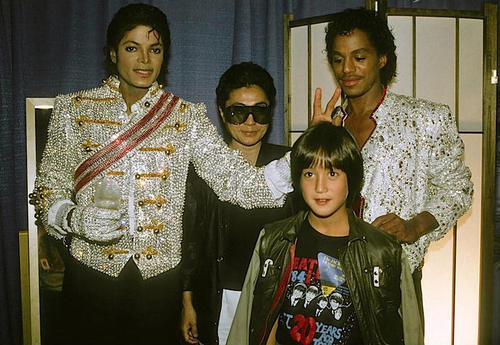













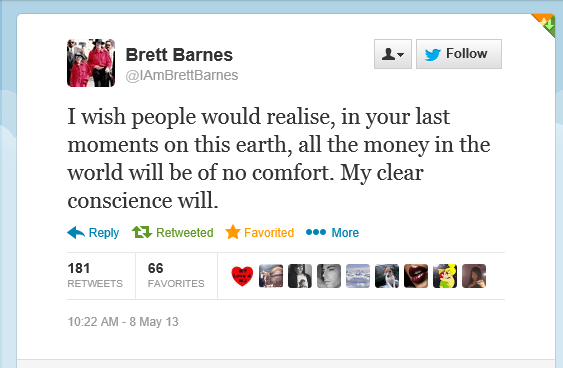




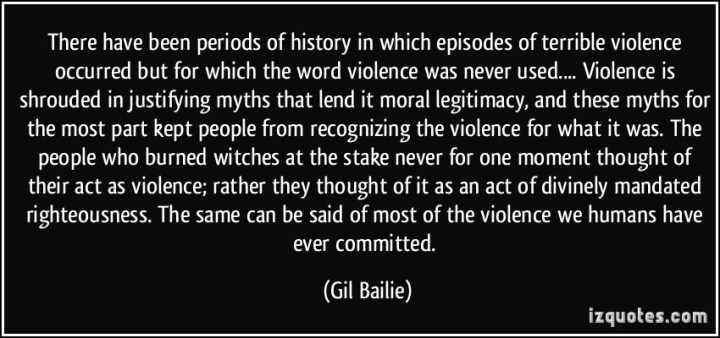


 On social media (especially in certain Facebook groups) several people pointed out that not every form of activism can be reduced to scapegoating. Rebecca Adams, for instance, commented that “t
 “
“ And the devil. And this is what people believed.
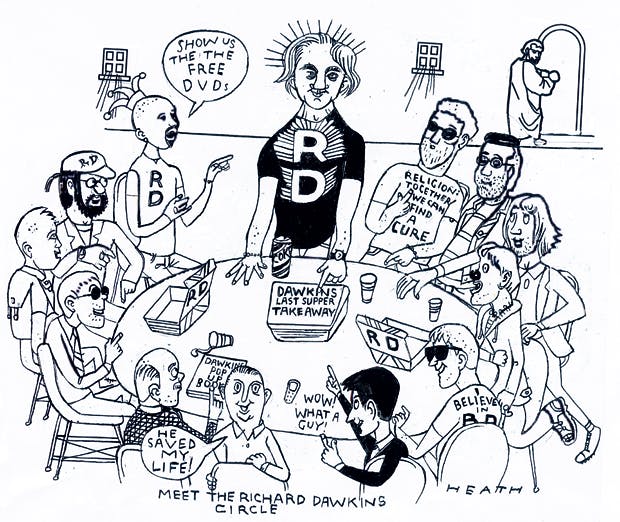

 After which the fundamentalist Dawkinsian and the new atheist
 continued their mimetic battle. It gave meaning to their lives as it provided them with a sense of superiority over their “stupid, stubborn and evil enemies”. However, as




 In een chronologisch later fragment beklaagt Louis Seynaeve zich over het lot van de joden, voor wie hij gaandeweg meer sympathie krijgt. Louis is in gesprek met zijn Papa, die daarentegen sympathiseert met de Duitse vijand – pp. 516-517:
 SCAPEGOAT SHADOWS